REVIEW · KATHMANDU
The Boudhanath Yoga Experience in Nepal
Book on Viator →Operated by Himalayan Advisor Pvt. Ltd. · Bookable on Viator
Yoga in Kathmandu, right by Boudhanath. If you want your practice to feel grounded in place, this hands-on session in Boudha is a great match. I like how it puts you close to the world’s largest Buddhist stupa while you learn a full yoga routine, not just stretch-and-go. You’ll practice asanas (postures) and breathing techniques in a setting that feels spiritually focused, with the stupa right across from the yoga center.
Two things I especially like: first, the teaching covers more than the basics. You get guidance on mudras, pranayama, and even mind and meditation practices like dharana and dhyana. Second, the group size stays controlled (max 14), so it’s easier to ask questions and keep your form on track. One consideration: this is focused on practice, so you’ll need loose clothing and you should expect a busy temple-area atmosphere outside the class even if the session itself stays calm.
In This Review
- Key takeaways before you go
- Yoga by Boudhanath Stupa: why the setting matters
- The day’s rhythm: hotel pickup, stupa time, and a 2.30-hour class
- What you actually learn: from asanas to dhyana
- Asanas: postures with purpose
- Mudras: hand gestures that guide energy flow
- Pranayama: breathing for relaxation and purification
- Dharana: training attention
- Dhyana: meditation that aims to liberate the mind
- How the class feels in a real-world, busy temple area
- Eight-Fold Path and Seven Disciplines: what that means for you
- Price and value: what $110 buys you in Kathmandu
- Who should book this workshop
- Practical tips so you get the most out of it
- Should you book the Boudhanath Yoga Experience?
- FAQ
- What time does the yoga experience start?
- How long is the experience?
- What’s included in the price?
- Do I need to pay for Boudhanath Stupa entry?
- Is food provided?
- How big is the group?
- Can I cancel and get a full refund?
Key takeaways before you go
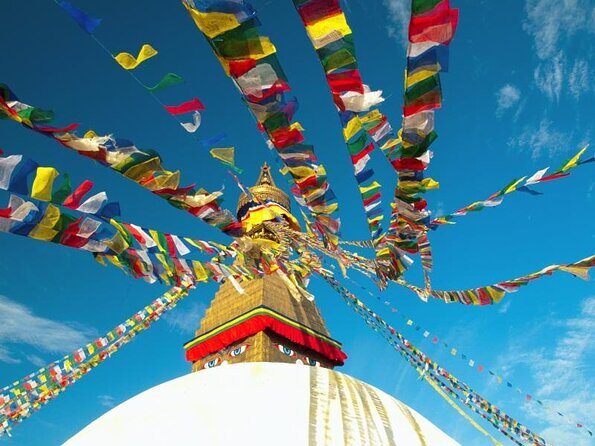
- Boudhanath Stupa location: the stupa is right by the yoga center, so the spirituality is hard to ignore
- Hotel pickup and drop-off: private round-trip transfers keep Kathmandu navigation off your plate
- A full teaching toolkit: asanas, mudras, pranayama, dharana, and dhyana
- Hands-on instruction: step-by-step coaching and time for questions helps you follow along
- Stupa time is part of it: you’ll get a look at Boudhanath during the experience
- 2.5 hours of class time: the workshop is long enough to learn, not just sample
Yoga by Boudhanath Stupa: why the setting matters
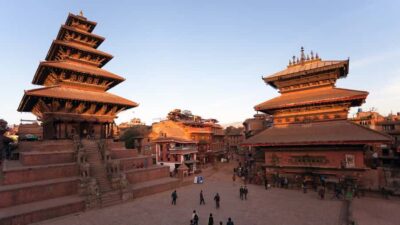
Boudhanath is one of those Kathmandu places where you don’t have to work hard to feel the mood. The huge stupa dominates the area, and there’s a steady flow of pilgrimage life around it. When your yoga class sits near that kind of spiritual gravity, the practice can feel less like a gym session and more like a daily-life skill.
This workshop ties movement and breath together in a traditional way. You’re not only taught how to hold poses. You’re also guided through hand gestures, breathing methods, and mental focus tools. The idea is simple: yoga is not just what you do with your body; it’s also what you train in your mind.
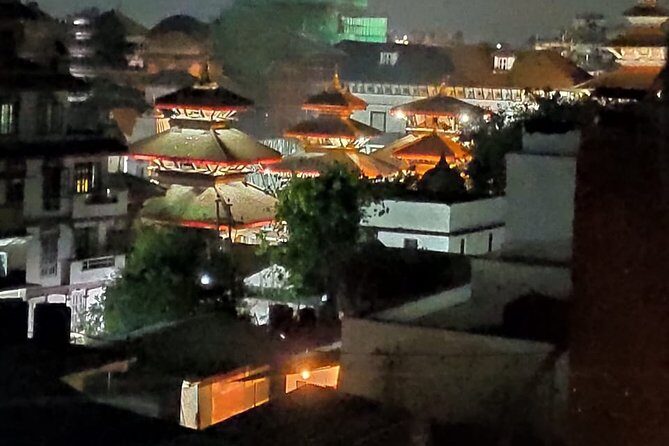
And yes, it’s in a busy part of town. The benefit is that you learn without needing to escape reality. The session is meant to stay grounded even while you’re near a crowded pilgrimage site.
You can also read our reviews of more tours and experiences in Kathmandu.

The day’s rhythm: hotel pickup, stupa time, and a 2.30-hour class
The experience starts at 9:00 am. Your day begins with round-trip hotel pickup and drop-off by private vehicle. For Kathmandu, that’s not a small detail. Traffic and navigation can be tiring. This keeps the morning simple: you show up, get transferred, and spend your energy on yoga instead of directions.
Once you’re in the Boudha area, you’ll have time connected to Boudhanath Stupa. The experience is built around the stupa and a yoga session that’s designed to be practiced in its spiritual orbit. You’ll get a chance to visit the stupa as part of your time there, and you’ll also spend time where you can watch the stupa during the class setting.
Then comes the main event: a 2.30 hours yoga class. Expect an instructor-led workshop that moves through multiple parts of the practice rather than only one or two poses. The flow is important. You’ll build from physical posture into breath work and then into mind training, which is where the session becomes noticeably different from a standard yoga studio class.
After the workshop, you’ll head back to your hotel.
What you actually learn: from asanas to dhyana
This class is structured around the full set of tools the workshop describes. Here’s what that means for you in real terms.
Asanas: postures with purpose
Asanas are taught as proper posturing of the body. The point isn’t to impress anyone. It’s to learn alignment and control so the body supports the breath and the mind. If you’ve done yoga before, you’ll still benefit because the emphasis here is on doing the movements correctly rather than just moving through them.
Mudras: hand gestures that guide energy flow
You’ll also learn mudras, described as proper hand gestures to increase the flow of energy. In practice, this is one of those parts people either ignore or treat casually. Here, it’s part of the instruction, so you’re not guessing what to do with your hands or why you’re doing it.
Pranayama: breathing for relaxation and purification
Pranayama is proper breathing techniques to help you relax and also purify the body and energy. Even if you’re not trying to sound philosophical, you’ll feel the difference when the instructor walks you through the breathing. Done well, pranayama can slow your body down fast, which makes the later mind-focused segments feel more reachable.
Dharana: training attention
Then the workshop moves to dharana, described as controlling the mind for positive energy. This is where yoga becomes less about effort and more about attention. Instead of only stretching, you start learning how to keep your focus from wandering.
Dhyana: meditation that aims to liberate the mind
Finally, there’s dhyana, presented as divine meditation to liberate the mind. You may not leave the class instantly “liberated” in some dramatic movie way. But you should leave with a clearer idea of how meditation is practiced step-by-step—especially because the class is described as teaching you methods for controlling attention before going into deeper stillness.
How the class feels in a real-world, busy temple area
A strong point here is how the experience keeps its calm inside a lively neighborhood. The stupa area is active. Shops and foot traffic exist. But the workshop is designed so the class itself stays focused.
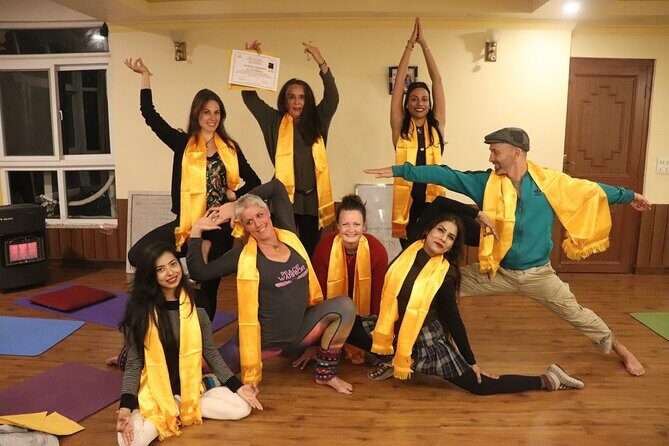
In particular, the teaching style stands out: instruction is explained move by move, and the atmosphere is welcoming. You’re encouraged to ask questions, which matters if you’re new to traditional yoga terminology like mudras or the mental steps like dharana.
If you’ve ever tried to learn yoga in a loud environment, you know how distracting it can be. This one aims for the opposite: you’re near the action, but the practice stays controlled.
Eight-Fold Path and Seven Disciplines: what that means for you
The workshop connects yoga to the Eight-Fold Path taught by Lord Buddha and mentions cultivating the Seven Disciplines. Even if you don’t come in with a deep background, you can still benefit because the class is built as an integrated system.
In a practical sense, this translates into teaching that links:
- how you hold your body (asanas),
- how you channel energy (mudras),
- how you steady and refine your inner state (pranayama),
- how you train attention (dharana),
- and how you move toward meditation (dhyana).
So it’s not just a sequence of exercises. It’s a guided approach to wellness that’s meant to carry beyond the session.
Price and value: what $110 buys you in Kathmandu
At $110 per person, this isn’t the cheapest activity in Kathmandu. But it’s also not trying to be. You’re paying for a focused workshop that includes real logistics support: hotel pickup and drop-off, private transport, and entry fee at Boudhanath Stupa.
A yoga class alone might cost less, sure. The value here is the bundle:
- you don’t have to coordinate transport in the city,
- you get access connected to the stupa visit,
- and you get a longer, more structured practice (2.30 hours).
Also, the experience lists group discounts and caps at 14 travelers. Smaller groups usually mean more attention from the instructor and fewer people competing for clarity.
One more real-world factor: the booking pattern shows this tends to be secured early (on average 113 days in advance). If you’re traveling in peak season, treat that as a sign. Plan ahead rather than hoping for last-minute availability.
Who should book this workshop
This is a good fit if:
- you want yoga that includes breathing and meditation skills, not only stretching,
- you enjoy learning the meaning behind movements (asanas, mudras, pranayama),
- you like the idea of practicing near Boudhanath and seeing the stupa up close,
- you want a guided experience that removes Kathmandu navigation stress.
It’s especially helpful for people who are curious about traditional approaches to yoga and mind training. And if you’re returning to yoga after a break, the step-by-step teaching can help you get your footing.
If you’re looking for a purely physical workout with no spiritual framework, you might find the meditation and mental discipline focus a different style than what you expect. Still, you can participate at your comfort level since most travelers can join.
Practical tips so you get the most out of it
A few small choices make a big difference.
- Wear loose-fitting clothing so you can move comfortably through the poses.
- Bring a neutral mindset: this workshop is described as holistic and traditional, so the breathing and mind training parts matter.
- Plan to skip a heavy meal right before practice. The class is longer than a quick studio session, and you’ll want to feel comfortable during breath work.
- Ask questions early. If you’re unsure about mudras or the purpose of a technique, getting clarification at the start will save you confusion later.
Should you book the Boudhanath Yoga Experience?
I’d book it if you want yoga that’s clearly tied to place and tradition, and you also want your logistics handled. The hotel pickup and drop-off, the private transport, the included stupa entry, and the fact that you get 2.30 hours of guided class time make it feel like a planned experience, not a rushed stop.
The only reason I wouldn’t prioritize it is if you’re mainly after a high-intensity physical workout or you’re sensitive to being in a busy temple area outside the classroom. But if you’re open to a calming practice that’s taught step by step near one of Nepal’s most important pilgrimage sites, this is a strong use of your Kathmandu time.
FAQ
What time does the yoga experience start?
The experience starts at 9:00 am.
How long is the experience?
The total duration is about 4 hours. The yoga class itself is 2.30 hours.
What’s included in the price?
The experience includes hotel pickup and drop-off, private transport, a trained yoga instructor, the 2.30 hours yoga class, and entry fee at Boudhanath Stupa.
Do I need to pay for Boudhanath Stupa entry?
No. The entry fee at Boudhanath Stupa is included.
Is food provided?
No. Food and drinks are not included.
How big is the group?
This activity has a maximum of 14 travelers.
Can I cancel and get a full refund?
Yes, you can cancel for a full refund if you cancel up to 24 hours in advance of the experience start time. Cancellation less than 24 hours before start time isn’t refunded.