REVIEW · KATHMANDU
A day Bhaktapur tour
Book on Viator →Operated by Nature Explore Trekking Pvt Ltd · Bookable on Viator
Bhaktapur feels like a living museum before lunch. This private 4 to 5 hour tour takes you from Kathmandu early, gets you into the city’s old temple and museum world, and helps you read what you’re seeing with a professional guide. I especially love how the tour connects the visuals to real meaning, like Bhaktapur’s devotion-centered identity and the temple stories you’ll hear as you walk. You’ll also get built-in time for browsing old thanka, carpets, and mandalas without scrambling on your own. One possible drawback: the schedule is tight, and you’ll likely cover a fair bit of temple area on foot, so comfy shoes matter.
If you want a focused taste of medieval Newar culture, this works. Bhaktapur is described as dating back to the 9th century, and the tour is built around major landmarks like Durbar Square and the famous Nytapola area, plus smaller sacred spots such as Dattraya Temple and Pujari math. You’ll get transportation and lunch included, which is great value when you’re trying to spend your time sightseeing instead of planning meals.
On the practical side, the tour runs best in good weather. If conditions are poor, it can be canceled and you’ll be offered a different date or a refund, so keep that in mind if you’re visiting in a rainy window.
In This Review
- Key things I’d circle in your plan
- A 7:15 AM start, pickup option, and a well-paced 4–5 hours
- Durbar Square and Bhaktapur’s medieval “devotees” identity
- Nytapola and the pagoda-style wow factor (with 55 windows)
- Dattraya Temple, Pujari math, and the texture of everyday sacred life
- Shopping for old thanka, carpets, and mandalas without losing your budget
- Lunch, entrance fees, and what you’ll pay separately
- Why the guide’s explanations turn Bhaktapur from scenery into understanding
- What to pack and how to plan for temple walking
- Is it worth $70 for a Bhaktapur half-day?
- Should you book this Bhaktapur day tour?
- FAQ
- How long is the Bhaktapur day tour?
- What time does the tour start?
- Is pickup included?
- What’s included in the price?
- What isn’t included?
- Do I get a ticket on my phone?
- Is this a private tour?
- Can I cancel for free?
- Is the tour affected by weather?
Key things I’d circle in your plan
- 7:15 am start with pickup option so you’re not wasting the first hours of your day on logistics
- Bhaktapur’s temple-and-museum focus gives you context, not just photos
- Nytapola area details like the pagoda style and the famous carved figures you’ll want to spot
- Time for shopping aimed at old thanka, carpets, and mandalas (with shopping not included in the price)
- Lunch included, plus entrance fees handled, so you can budget more easily
- Private tour setup means your group moves together with your guide
A 7:15 AM start, pickup option, and a well-paced 4–5 hours
This is the kind of tour that helps you get your bearings fast. You start at 7:15 am, and pickup is offered, which matters in Kathmandu where even short distances can eat time. The total duration is listed as 4 to 5 hours, so think of this as a half-day mission: see a lot, learn a lot, then head back before your evening plan explodes.
Because it’s private, you’re not stuck waiting on a large mixed group. Your guide can shape the pace slightly around your comfort level and your interests, which is especially useful in temple areas where timing and attention really change the experience.
What to expect energy-wise: you’ll be walking through parts of Bhaktapur’s historic core, moving between temples and related sites. The tour is not described as gentle stroller-friendly touring, and you’ll be happiest if you come ready for steps and uneven ground in old-city lanes.
One more practical point: the tour uses a mobile ticket, so you’re not hunting for paper confirmations once you’re on the move.
You can also read our reviews of more tours and experiences in Kathmandu.



Durbar Square and Bhaktapur’s medieval “devotees” identity
Bhaktapur’s story starts long before the first camera comes out. The city is founded in the 9th century, and the tour frames it as a “city of devotees,” pointing to its typical name, Bhadgaon. That’s not just trivia. It helps you understand why so many buildings, squares, and temple spaces are built to support religious life, daily rituals, and community identity.
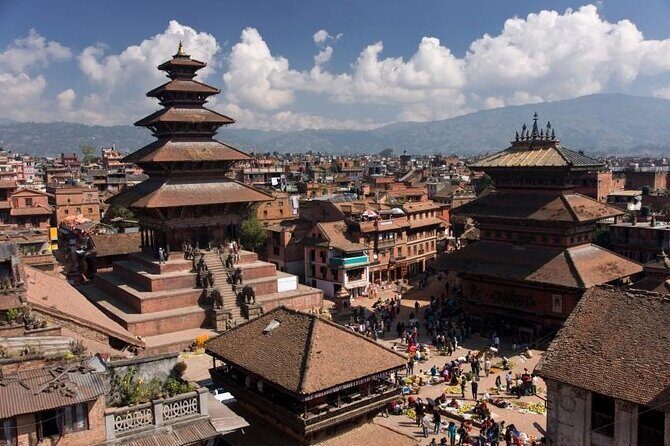
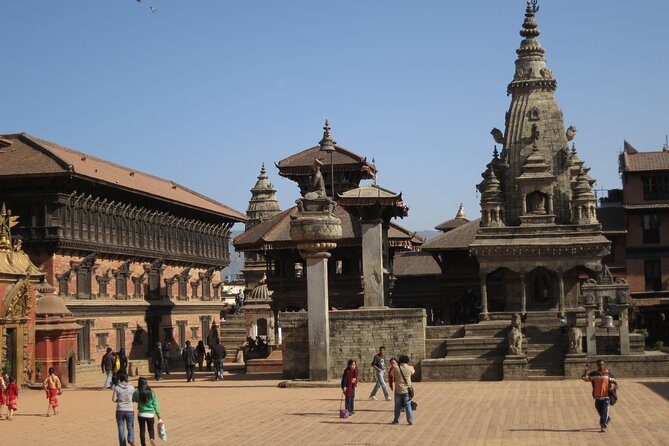
Durbar Square is a key anchor for this. It’s part of Bhaktapur’s medieval architecture ringed by major sights, and it’s where you’ll get that immediate sense of place: carved stone, layered religious symbolism, and an environment that feels less like a theme park and more like a city that never fully stopped practicing its traditions.
A good guide changes how you see this. Instead of reading everything as random ornamentation, you start noticing patterns: which figures repeat, how pagoda-style elements signal sacred purpose, and why certain spaces are important for the community. Even if you’re not a religion buff, you’ll leave with a clearer mental map of what you saw and why it matters.
The tour also includes a stop for the old temple and museum time. That balance is important. Temples can overwhelm you with details. A museum-style setting (even for a limited period) helps you slow down and connect the objects and architecture to the people who made and used them across centuries.
Nytapola and the pagoda-style wow factor (with 55 windows)
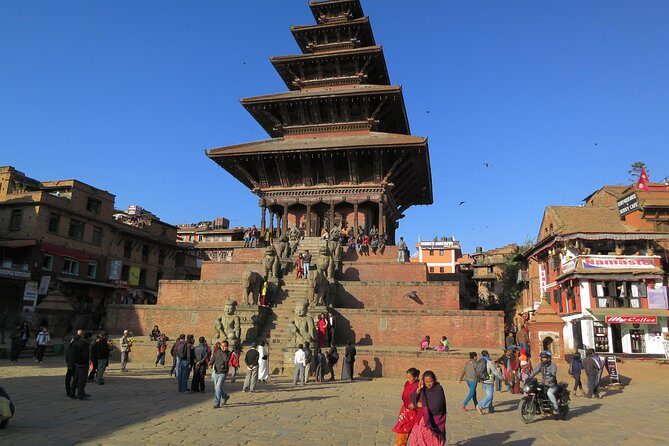
If there’s one stop built for strong visual payoff, it’s the Nytapola area. The tour highlights Nytapola and describes it as an excellent example of pagoda style, built on five terraces. When you’re standing there, the terraces matter because they make the structure feel like it rises in stages—almost like you’re climbing through layers of religious meaning.
The description you’ll hear connects this area with a 55 windows temple built during the reign of King Bhupatindra Malla. That detail is the kind of thing that makes your photos make sense later. Instead of just snapping the façade, you can connect the architecture to a named historical period.
Then there are the famous carved figures, which are practically a scavenger hunt if you like spotting motifs. The tour description calls out a pair of strong men figures, plus elephants, lions, goddesses, and griffins. When you’re watching for these, the temple becomes more than a single viewpoint. You start reading the building like a story panel.
Practical note: terraces often mean steps. Bring shoes you trust on uneven surfaces, and don’t plan this stop if your legs are already toast.
Dattraya Temple, Pujari math, and the texture of everyday sacred life
Not every highlight is a headline monument. The tour also points you toward smaller-but-meaningful sites such as Dattraya Temple and Pujari math, plus a thanka painting presence in the overall route.
This is where the day feels most “local.” Big monuments get attention, but it’s the smaller sacred stops that often show you how religion and daily life stay connected. Pujari math, in particular, suggests a community function tied to worship practice and roles within religious culture.
The tour also references multiple additional temple sites beyond the main names. That’s useful if you like variety, because it reduces the chance you’ll feel like you only saw one building from one angle.
If your brain likes context, this part of the tour delivers. Your guide’s job here isn’t just reciting facts. It’s helping you understand why different spaces exist, and what types of devotion they support.
A helpful example from the tour company’s guiding style: Dinesh Kark has been praised for explaining Hindu traditions and the history and culture of Bhaktapur in a way that’s approachable and tied to what you’re seeing right then. That kind of interpretation is a big deal when you’re in a city where symbols are everywhere.
Shopping for old thanka, carpets, and mandalas without losing your budget
Bhaktapur has a reputation for arts and crafts, and this tour builds in shopping time. The overview specifically mentions browsing for old thanka, plus carpets and mandala items.
Two things to keep in mind so you don’t get frustrated:
- Shopping time is not the same as shopping for hours. It’s built to fit a tight half-day schedule, so go in with a simple goal: one item, one style, one budget.
- Shopping costs are not included, so treat this like a separate spending decision, not part of the base price.
You’ll get the chance to talk with sellers, look closely at materials, and compare pieces. Just don’t expect the process to be fast. Old art and textiles deserve careful inspection, even if you’re on a day plan.
For purchases, practical travel advice:
- If you buy art or textiles, plan for packing carefully right away.
- Ask about condition and what you’re comfortable carrying.
- If you’re also using other tickets or tours the same day, consider how transport will work back to Kathmandu.
And yes, it’s okay to just browse. Half the fun is learning what you’re looking at.



Lunch, entrance fees, and what you’ll pay separately
The value equation is pretty clear. The price is $70 per person, and it includes:
- Lunch
- Transportation
- Entrance fee
- Professional guide
On top of that, the Bhaktapur stop lists an admission ticket as free, which likely means you won’t be hit with a separate entrance charge at the main site. Either way, the important takeaway for your budget is that entrance fees are handled, not dumped on you at the gate.
What’s not included is also explicitly listed:
- equipment
- shopping
- cold drinks
- internet
That last one is easy to ignore until you need it. Don’t plan on constant connectivity. If you need internet for tickets or messages, keep your data plans in mind.
Also, cold drinks cost extra. If you’re out in the morning heat, you’ll want water anyway, so plan to buy drinks during breaks rather than assuming they’re included with lunch.
Why the guide’s explanations turn Bhaktapur from scenery into understanding
Walking through temples is one thing. Understanding the symbols and religious context is another. That’s why your guide matters here.
In examples from this tour company, Dinesh Kark is described as fun, friendly, and able to share Hindu traditions and the history of Bhaktapur. That kind of guiding style matters because it changes how you interpret the carved figures, the temple layout, and the meaning behind religious sites.
Here’s what I think you’ll feel during the day:
- You start noticing repeated themes instead of isolated details.
- You learn how to read architectural choices like pagoda style and terraced construction.
- You get a calmer experience because you’re not trying to guess what each stop is for.
This is especially helpful in a place like Bhaktapur, where the sacred and the everyday are visibly mixed. A good guide helps you respect what you’re seeing without turning it into a lecture.
What to pack and how to plan for temple walking
This day tour is short, so your planning should be simple and practical.
Bring:
- Comfortable walking shoes (terraces and uneven historic streets are a likely reality)
- A hat or sun protection for the early start and temple time
- A light layer if mornings feel cool to you
- Cash for any shopping you decide to do
Skip over-planning. The tour includes lunch and transportation, so you’re not juggling too many moving parts.
Weather matters. The tour notes it requires good weather. If conditions are poor, you’ll get offered another date or a full refund. I’d treat cloudy or rainy days as a “check the forecast and be flexible” situation.
Is it worth $70 for a Bhaktapur half-day?
Let’s be honest about value. $70 per person is not the cheapest option, but for Kathmandu, you’re paying for:
- a guide who can interpret what you see
- transportation out to Bhaktapur and back
- lunch included
- entrance fees handled
If you were to DIY this, you might save a little money, but you’d pay in time and confusion. Temple areas move fast when you’re trying to figure everything out on your own. Here, the structure of the route and the guide’s explanations do part of the heavy lifting.
Also, the private setup means you can get more consistent pacing. That’s not just comfort—it often leads to a better experience because you’re not rushing to “catch up.”
Should you book this Bhaktapur day tour?
Book it if you want a focused, guided half-day in Bhaktapur that combines major sights (Durbar Square and the Nytapola/pagoda-style temple area) with smaller stops like Dattraya Temple and Pujari math. It’s a smart choice if you like history and religion as lived culture, not just postcard monuments.
Skip it if you’re looking for a long, slow wander where you set your own tempo for hours. With a 4 to 5 hour window, you’ll be moving. Also, if your priority is Kathmandu’s other famous world-heritage sites, this itinerary stays concentrated on Bhaktapur.
FAQ
How long is the Bhaktapur day tour?
It runs about 4 to 5 hours.
What time does the tour start?
The start time is 7:15 am.
Is pickup included?
Pickup is offered.
What’s included in the price?
The price includes lunch, transportation, entrance fee, and a professional guide.
What isn’t included?
Equipment, shopping, cold drinks, and internet aren’t included.
Do I get a ticket on my phone?
Yes, there is a mobile ticket.
Is this a private tour?
Yes. It’s private, meaning only your group participates.
Can I cancel for free?
Yes. There’s free cancellation up to 24 hours before the experience start time for a full refund.
Is the tour affected by weather?
Yes. It requires good weather. If canceled due to poor weather, you’ll be offered another date or a full refund.