REVIEW · KATHMANDU
Annapurna base camp -9 days
Book on Viator →Operated by NEPAL LION TOURS AND TREKS PVT LTD · Bookable on Viator
A trek to Annapurna Base Camp hits different. This one mixes high-view days with village walking through Gurung and Magar communities, then finishes in the Annapurna Sanctuary where the scenery turns spare and dramatic. I like the way the route includes both easing-in days and the payoff moments, plus real support on the ground with a licensed English-speaking guide.
Two things I really like: first, the package handles a lot of the moving parts, including private airport pickup/drop, transport to Pokhara, permits/paperwork, and all meals on the trek. Second, I appreciate the human touch in the trip history—names like Sona, Shiva, Binod, and porters such as Rãhül, Rajendra, and Bikash show up in the positive feedback, with people calling out careful guidance and friendly teamwork.
One possible drawback: you’ll still need to budget extra for your own medical/travel insurance and for the porter cost (listed as $220 per person), plus tips and personal expenses along the way. If you’re trying to keep things very lean, that add-on can affect your total.
In This Review
- Key highlights I’d focus on
- Why Annapurna Base Camp still deserves attention
- Price and logistics: what that $693.34 covers (and what it doesn’t)
- Kathmandu to Pokhara: starting in the right rhythm
- Day-by-day walk: from first viewpoints to Annapurna Base Camp
- Day 1: Poon Hill views to set the stage
- Day 2: Phedi to Dhampus, with Gurung village scenery
- Day 3: Landrung and Jhinudanda through oak forests and terraces
- Day 4: Chhomrong area, Sinuwa Danda, and rhododendron forest sections
- Day 5: Machhapuchhare Base Camp and the no-meat valley rule
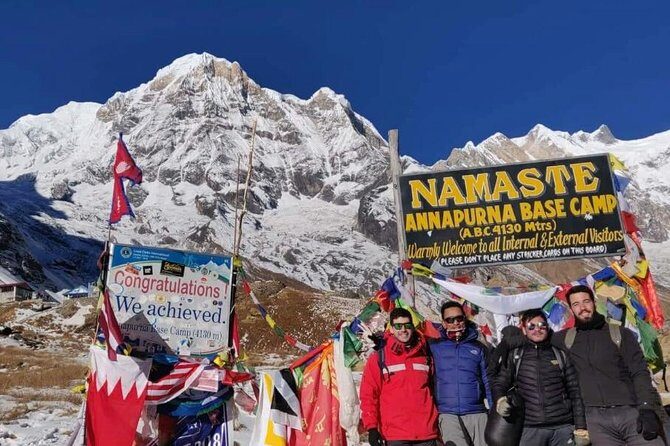
- Day 6: Annapurna Sanctuary trek into Base Camp
- Day 7: Early wake-up sunrise views, then descent toward Bamboo Hut
- Day 8: Sinewa to Chhomrong, then Jhinu hot springs
- Day 9: Nayapul finish, then back to Pokhara
- Guides, porters, and why the team matters more than you think
- Food, guesthouses, and the day-to-day comfort reality
- Gear: down jacket and sleeping bag included, so pack smarter
- Who this trek suits best
- Should you book this Annapurna Base Camp 9-day trek?
- FAQ
- How long is the Annapurna Base Camp trek on this package?
- Where do you meet, and when does the trip start?
- What’s included in the price for the trek?
- Is transportation between Kathmandu and Pokhara included?
- Is Kathmandu hotel accommodation included?
- Are airport transfers included?
- Do I need a porter, and is it included?
- Are meals included while trekking?
- Is this tour private?
- What costs are not included that I should plan for?
Key highlights I’d focus on
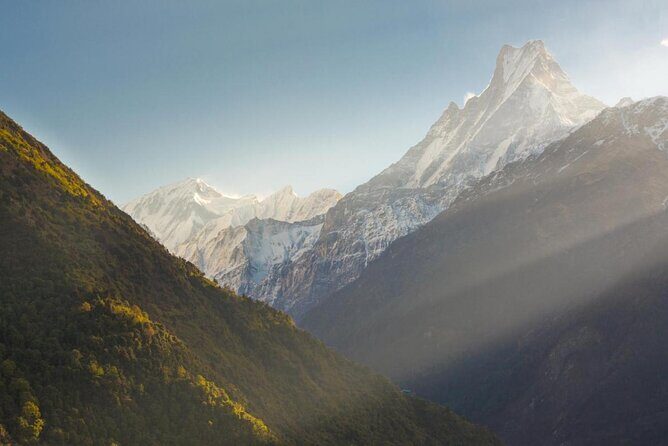
- Spectacle-focused route: Himchuli, Annapurna South, and Mt Fishtail views get built into the first stretch.
- Culture on the trail: walking through Gurung and Magar villages is part of the point, not just a warm-up.
- Sacred rules at Machhapuchhare Base Camp: no meat or fish in that area based on local Hindu/Buddhist practice.
- Annapurna Sanctuary sunrise timing: an early wake-up is planned so you can catch sunrise views.
- Comfort support that’s included: down jacket and sleeping bag are provided, then returned after the trek.
- Solid “care team” model: feedback frequently mentions guides like Binod and Sona and porters like Rajendra and Bikash.
Why Annapurna Base Camp still deserves attention
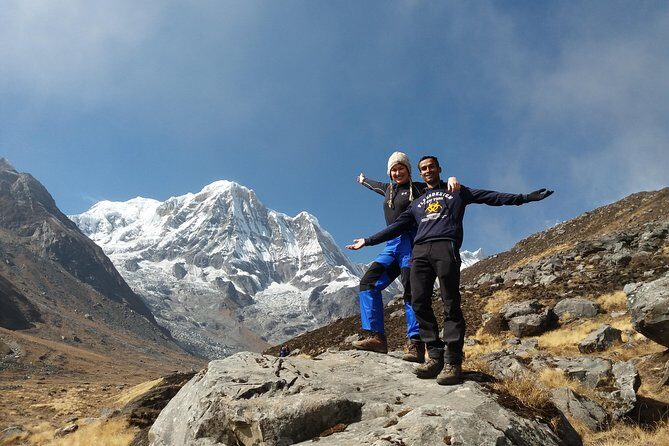
Annapurna’s trekking zone is famous for a reason: it’s not just about a single peak. The region is described as a naturalist’s paradise, with the upper sub-alpine steppe known for rare wildlife such as snow leopards and blue sheep, and with bird life including Impeyan and blood pheasant. You might not spot everything on every trek, but the area’s reputation is the right clue: it’s alive with sights beyond mountains.
This specific route leans into that idea. You’ll start with viewpoints that frame Annapurna and nearby giants, then you’ll walk through terraced fields, oak and rhododendron forests, and finally into the more barren, high-elevation feel of the Annapurna Sanctuary. The scenery changes shape as you go, which makes the hike feel like progress instead of repetition.
Also, Annapurna Base Camp is a place where you’re standing inside a big story of geography. Once you leave Machhapuchhare Base Camp, the description shifts to “desert wilderness” around the sanctuary—no trees, a more stark feel, and wide-open views. It’s the kind of environment where the walk itself becomes part of the experience.
You can also read our reviews of more tours and experiences in Kathmandu.



Price and logistics: what that $693.34 covers (and what it doesn’t)
At $693.34 per person for a 9-day Annapurna Base Camp trek, you’re paying for a package that’s heavy on essentials: a licensed English-speaking trekking guide, permits and paperworks, your guide’s transportation and meals, and your meals plus accommodation during the trek nights.
You’re also getting practical gear support: the itinerary includes a down jacket and sleeping bag that are returnable after you finish. That matters because those are not small items to buy or pack for a one-time trip. In plain terms: this price is built to reduce the major headaches—finding gear, arranging permits, and figuring out who handles what.
Now the fine print that can change your final budget:
- You’re not paying for international airfare or your Nepal visa charges.
- Your medical and travel insurance is not included.
- Personal expenses like bar bills, hot showers, phone use, laundry, and snacks are on you.
- Porter costs are listed as $220 per person, and tips for guides/porters are not included.
So I’d look at the “real cost” as: trek package price plus porter fees (if you need/want one) plus visa/insurance/airfare plus tips and personal spending. If you plan for that upfront, the package can feel like good value.
Kathmandu to Pokhara: starting in the right rhythm
Your meeting point is Tribhuvan Airport in Kathmandu, with a start time of 6:30 am. Airport pickup and drop services are included via private vehicle, and you’ll have private help from the operator when you first arrive and later when you’re heading back out.
One thing that affects your comfort is how you move between cities. This plan uses tourist bus transport from Kathmandu to Pokhara and back (with an optional flight that costs extra). If you’re the type who gets easily motion-sick, it’s worth considering that optional flight early, because it can shrink travel fatigue before your first trekking day.
Also note: Kathmandu accommodation is not included. So you’ll want to budget for at least one hotel night (or more, depending on your flights) before the trek fully kicks in.
Day-by-day walk: from first viewpoints to Annapurna Base Camp
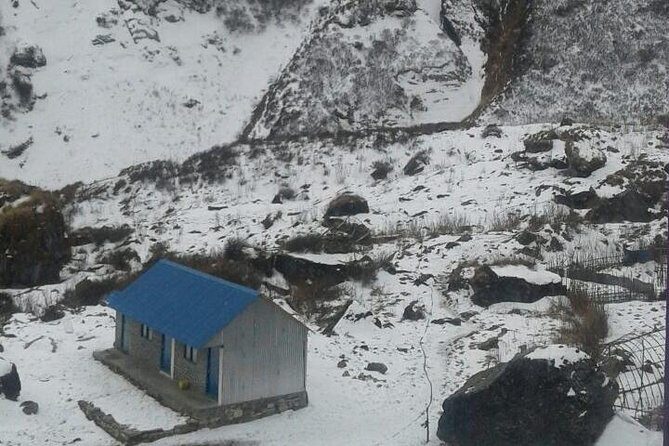
This route is set up as a steady progression: you’ll move through cultural villages, cross into different forest types, then shift into sanctuary terrain. Each day has a purpose. Some days feel like travel between “worlds,” not just distance on a map.
Day 1: Poon Hill views to set the stage
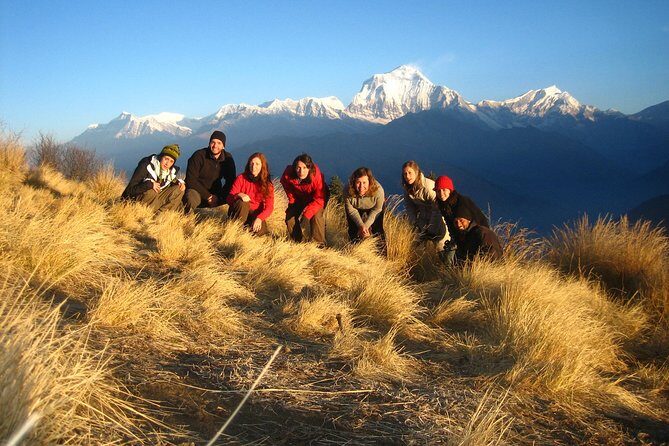
The trek starts with Poon Hill, a stop included as part of the early program (listed at about 6 hours, with an admission ticket included). The role of this day is to get you oriented in the Annapurna area and to set up the kind of views the region is known for.
What you’ll like here is the contrast between Nepal’s busy arrival logistics and the moment you’re actually up on the trail. Even when the days get physically tougher later, the early “look around” phase helps your brain lock onto the journey.
A possible drawback: if you’ve just flown in and slept poorly, a long, viewpoint-heavy start can feel like more effort than you expected. I’d plan an easy first morning and keep your first day pace controlled.





Day 2: Phedi to Dhampus, with Gurung village scenery
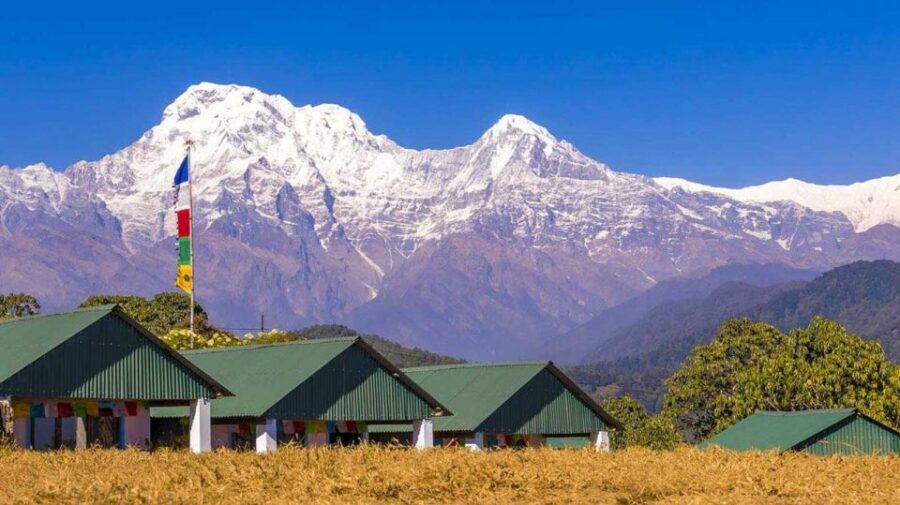
Day 2 begins with a drive to Phedi from Pokhara, then a trek up to Dhampus (about 4 hours). Dhampus is described as a pleasant Gurung village and a place with splendid views of Himchuli, Annapurna South, and Mt Fishtail (Machhapuchchre).
This is a good structure for most people: you get a scenic win without jumping straight into the harder parts of the route. And because it’s a village walk, you’re not only looking at mountains—you’re moving through real local life.
The main consideration is that you’ll still be trekking after a drive. If you don’t like that kind of “start moving immediately” schedule, pack a bit of patience for day two.
Day 3: Landrung and Jhinudanda through oak forests and terraces
On Day 3, the trail goes down to Landrung through oak forest and terraced fields, then continues toward Jhinudanda (about 5 hours). Landrung is described as charming and home to Gurung, Magar, and Brahmins.
This is one of those days where the route makes sense beyond viewpoints. Walking through terraced agriculture gives you a sense of how people live here and why certain trails hold steady over generations.
The drawback to watch: descending early in the trek can be rough on knees if you go faster than your body allows. I’d keep your stride short and steady.
Day 4: Chhomrong area, Sinuwa Danda, and rhododendron forest sections
Day 4 runs about 5 hours and includes a sequence of ups and downs: from Chhomrung across a bridge to Sinuwa Danda, then through thick rhododendron forest toward Khuldighar, followed by a long descent with vertical stone steps down toward the Seti Gandaki (Seti River) area.
This day is more “trail work” than “flat scenery.” The rhododendron forest part can be a sensory relief—cooler, shaded, and visually different from the village terrain. But those stone steps can also be the day you feel your feet start to complain.
If you know your style tends to overdo it, Day 4 is a day to resist the urge to match the strongest person’s pace.
Day 5: Machhapuchhare Base Camp and the no-meat valley rule
Day 5 takes you toward Machhapuchhare Base Camp (about 6 hours). The route follows the banks of the Madi river through a sacred valley, and there’s a clear cultural rule here: no meat or fish in this area to comply with Buddhist and Hindu beliefs. The trail also passes bamboo trees.
I like this day because it’s not just a “check the altitude box.” It’s built around respect, and it gives context for why the area feels different when you’re standing there. Even if you never change your diet, the rule reminds you that trekking happens inside someone’s living belief system.
Possible consideration: sacred-area rules can influence what food is available in local settings. The good news is that the tour includes meals during the trek, so you’re not left guessing.
Day 6: Annapurna Sanctuary trek into Base Camp
Day 6 is where the program focuses tightly on the goal. After Machhapuchhare Base Camp, the route leaves vegetation and moves into what’s described as the Annapurna Sanctuary, a desert wilderness with pristine natural beauty around thickets of dramatic mountain scenery (about 5 hours).
You’ll feel the “gear shift” in your body and mind. The less vegetated environment tends to make the sky feel bigger and the air feel drier. It’s also a day that rewards steady effort: you don’t need to sprint. You need to keep moving and stay calm.
Drawback to plan for: if you’re prone to getting tired late in the day, you might want to start conservatively. Even with a guide, your pace will drive how much you enjoy the arrival feeling.
Day 7: Early wake-up sunrise views, then descent toward Bamboo Hut
Day 7 includes an early wake-up call so you can enjoy sunrise views of the Annapurna Sanctuary. Then you descend, following the Modi Khola River to Bamboo Hut (about 6 hours).
This is a smart use of the morning. Seeing a sanctuary at sunrise is exactly the kind of memory that sticks, and the itinerary explicitly builds it in. The descent afterward also helps because it turns the day into two different experiences: one for views, one for progress downhill.
One consideration: early wake-ups are not optional if you want the planned sunrise moment. If you’re someone who hates mornings, use the guide’s wake-up time as a forcing function, not a negotiation.
Day 8: Sinewa to Chhomrong, then Jhinu hot springs
Day 8 (about 6 hours) starts with an uphill trek to Sinewa, then descends to meet the Chomrong Khola River, followed by another ascent to Chomrong. The day ends with a final descent to Jhinu, where you can visit the natural hot springs.
This is a classic “recovery day with a view” idea. Even if hot springs aren’t a medical miracle, they can make your legs feel less dramatic. Plus, the itinerary puts the hot springs at the end, so you earn them after the hardest walking has already passed.
Drawback: hot springs can mean extra waiting or changing routines in a small area. If you prefer privacy, think about that ahead of time.
Day 9: Nayapul finish, then back to Pokhara
Your last trekking day is about an easy descent to the banks of the Modi Khola River and on to Nayapul. Then you take a private car for about a 1.5-hour drive back to Pokhara (about 5 hours total for the day’s listed trek and transfer pieces).
This final day is your chance to let your body cool down. It’s also where you shift gears from “trek survival mode” into “okay, now we’re done.” Your guide and setup make the transition smoother because the hard logistics are handled.
One consideration: even an easy descent can still take a toll if your legs are already tired. Go slow. Celebrate later.
Guides, porters, and why the team matters more than you think
This trek is led by a licensed English-speaking trekking guide. That’s not just for chatting. It helps with pacing, route choices, and day-to-day problem solving when weather, trail conditions, or guesthouse availability change.
In the feedback you provided, specific people come up often. Names like Shiva and Sona get credited for organization and friendliness, and guides such as Binod appear alongside porters like Rajendra and Bikash. The repeated theme is simple: you’ll get treated like a real person, not just a line item.
Porters are where comfort can swing hard. A porter cost is listed as $220 per person, and tips are not included. If you’re deciding whether to use a porter, think about your knees, your back, and whether you want your energy saved for the moments you’ll actually remember—sunrise, sanctuary views, and the last hot spring dip.
Also keep in mind that the guide carries a first aid medical kit, and the tour includes insurance of the guide during the trip. Your own medical and travel insurance still needs to be handled separately.
Food, guesthouses, and the day-to-day comfort reality
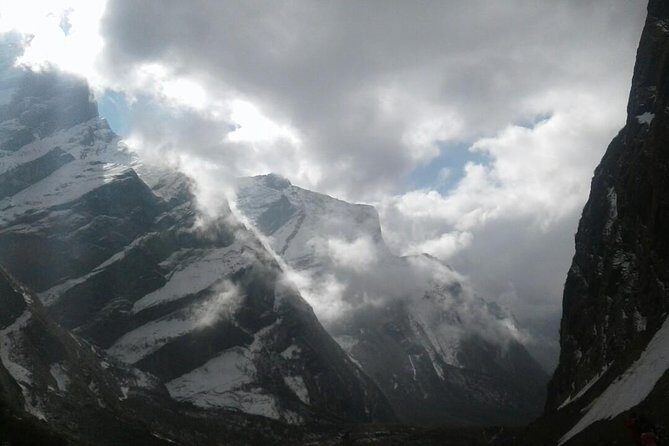
Meals are built in: breakfast, lunch, and dinner are included for the trekking days (9 breakfasts, 9 lunches, 9 dinners). Accommodation is included for 9 nights, and the tour also includes a welcome or farewell dinner in Kathmandu at a cultural restaurant.
What that means for you: you spend less time making decisions on the trail. In a place like Annapurna, food and lodging options can vary by village. Having meals handled in advance removes a lot of uncertainty, especially on days when your energy is low.
Guesthouse comfort is part of the story too. Feedback you provided praises guesthouses as clean, comfortable, and safe, which matters because ABC treks are often won or lost in the quality of sleep. Also, one note from feedback: people liked the food in teahouses, which supports the idea that the included meals are not an afterthought.
Gear: down jacket and sleeping bag included, so pack smarter
The tour includes a down jacket and a sleeping bag that you can return after the trek is finished. That’s a big practical win if you’re traveling from abroad and don’t want to buy equipment you’ll never use again.
What you still need to plan for is your personal items: toiletries, electronics, any medication you rely on, plus the kind of everyday comfort items that make long days feel less harsh. The tour does not include personal expenses like hot showers and bar bills, so treat those as “maybe” or “budget extra,” not defaults.
If you’re deciding what to bring, I’d focus on keeping your own load manageable and your layers flexible for changing weather.
Who this trek suits best
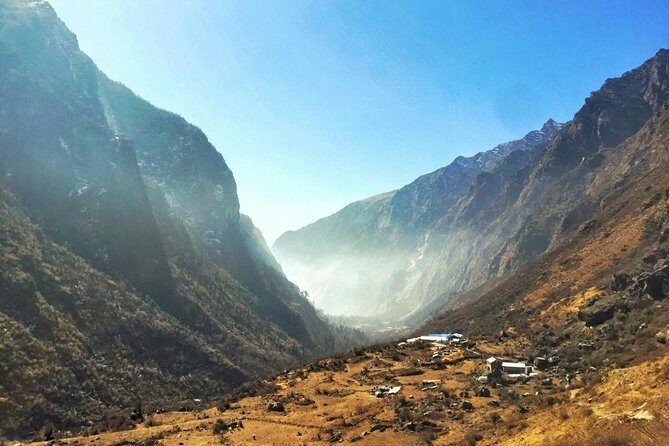
This is a 9-day trek with a moderate physical fitness level requirement. It’s a good fit if you want:
- strong scenery and viewpoint days early on,
- cultural village walking through Gurung and Magar communities,
- the Annapurna Sanctuary payoff and an early wake-up sunrise moment,
- a guided setup that handles permits, meals, and day-to-day logistics.
It may not be ideal if:
- you want zero extra costs beyond the headline price (porter cost and tips aren’t included),
- you dislike early mornings,
- you prefer total self-sufficiency (because the experience is built around a guide and structured support).
Also, the tour is private, meaning only your group participates. That’s usually a plus for pacing and comfort if you’re traveling with friends or family.
Should you book this Annapurna Base Camp 9-day trek?
I’d book it if you want a structured ABC trek where the big pieces are handled: permits, meals, trekking guide support, and key gear like a down jacket and sleeping bag. The route also includes meaningful cultural context, not only a summit goal.
I wouldn’t book it if your plan is to minimize add-ons and travel costs. Budget for the porter fee ($220 per person), tips, visa and insurance, and personal spending. If you’re set on going light without a porter, be honest about how that will affect your knees and energy during the descents.
If you want Annapurna Base Camp with clear guidance, steady pacing, and a real shot at the sunrise moment in the sanctuary, this is a strong match—especially if you value the human side of trekking as much as the views.
FAQ
How long is the Annapurna Base Camp trek on this package?
The duration is 9 days, with a trekking program that spans those 9 days.
Where do you meet, and when does the trip start?
The meeting point is Tribhuwan Airport in Kathmandu, Nepal, with a listed start time of 6:30 am.
What’s included in the price for the trek?
Included items cover licensed English-speaking trekking guide services, permits and paperworks, guide transportation/food/accommodation/insurance during the trip, a first aid medical kit carried by the guide, meals (breakfast, lunch, dinner on the trek days), 9 nights accommodation, airport pickup/drop in a private vehicle, and down jacket plus sleeping bag (returnable after the trek).
Is transportation between Kathmandu and Pokhara included?
Yes. Transportation between Kathmandu and Pokhara and back to Kathmandu is included in a tourist bus. An optional flight is available for extra costs.
Is Kathmandu hotel accommodation included?
No. Food and accommodation in Kathmandu are not included.
Are airport transfers included?
Yes. Airport pickup and drop are included in a private vehicle.
Do I need a porter, and is it included?
Porter service is not included. The porter cost is listed as $220 per person, and tips for guides and porters are not included.
Are meals included while trekking?
Yes. Breakfast, lunch, and dinner are included for the trek days (9 of each as listed).
Is this tour private?
Yes. It is a private tour/activity, so only your group will participate.
What costs are not included that I should plan for?
International airfare, visa charges, your travel and medical insurance, personal expenses (like bar bills, hot showers, phone, laundry, snacks), emergency expenses (including chartered helicopter), food and accommodation in Kathmandu, and tips for guides and porters are not included.