REVIEW · KATHMANDU
Kathmandu: 3 hours night Pashupatinath Aarti Tour
Book on GetYourGuide →Operated by Dream Noble Adventure Pvt. Ltd. · Bookable on GetYourGuide
Pashupatinath at night turns a temple visit into something you remember. This 3-hour Kathmandu tour centers on Lord Shiva worship at one of Nepal’s most important Hindu sites, with a guided look at the complex and time for the special aarti ceremony by the Bagmati River. I like that it’s built to be straightforward—pickup, visit, and drop-off—so you’re not stuck figuring out logistics in the dark. Hotel pickup and a licensed English-speaking guide are the two biggest quality-of-life wins here.
You’ll also get a clear, guided path through what can otherwise feel overwhelming: pagoda-style architecture, the symbolism of Pashupatinath, and the role of the cremation ghat called Arya Ghat. One thing to consider: because it depends on local timing and Kathmandu traffic, you should plan for the possibility of delays, and double-check pickup details so you don’t lose temple time.
In This Review
- Key highlights worth your time
- Why Pashupatinath’s night aarti feels so significant
- The real value in a tight 3-hour schedule
- Pickup in Thamel or at the temple: what to plan for
- Inside the Pashupatinath temple complex: what to look for
- Arya Ghat and the Bagmati River: understanding cremation respectfully
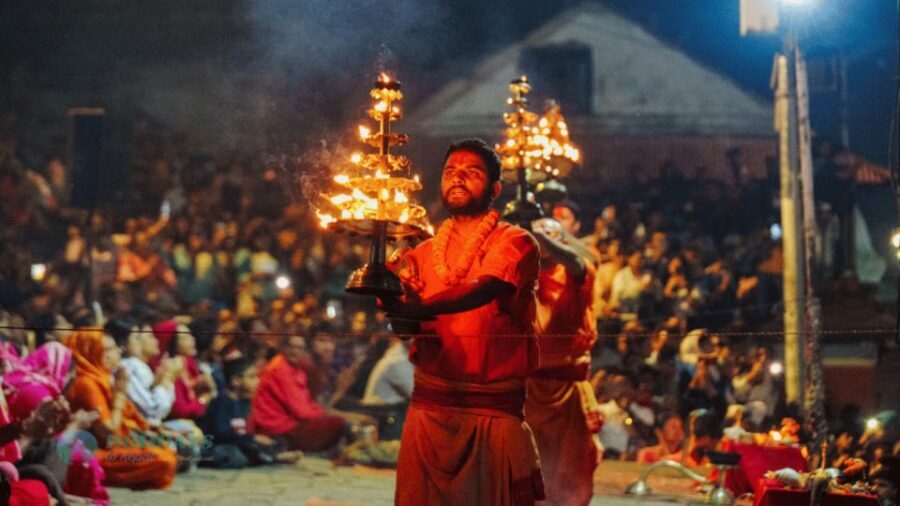
- The aarti ceremony: what you’re actually paying attention to
- Price and value: is $35 a fair deal?
- What to bring (and what to avoid) for a smooth night visit
- Who should book this tour (and who might skip)
- Should you book the Kathmandu Pashupatinath Aarti tour?
- FAQ
- What is the duration of the Kathmandu Pashupatinath Aarti tour?
- Where are the pickup and drop-off options?
- What’s included in the $35 per person price?
- What’s not included?
- What should I bring for the tour?
- Is the tour wheelchair accessible, and what isn’t allowed?
Key highlights worth your time
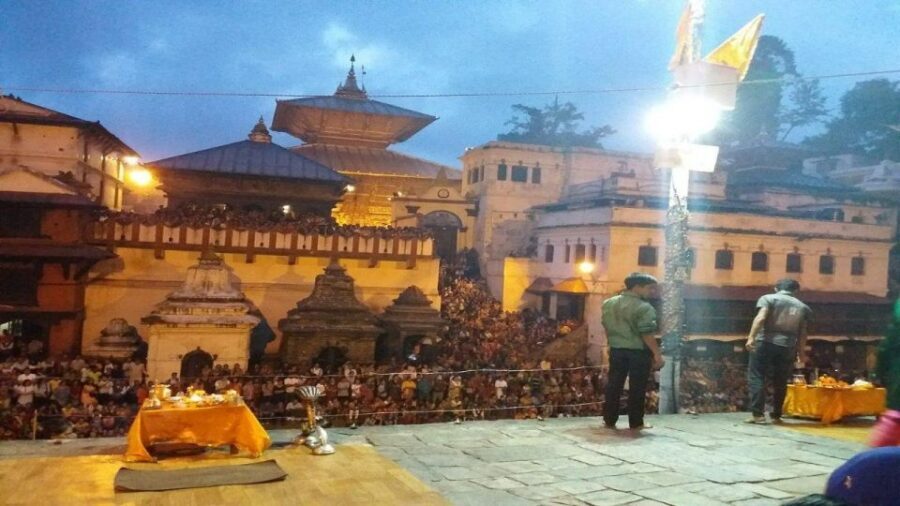
- Night aarti focus by the Bagmati River for a more emotional, less rushed feel
- Licensed guide + English support to connect what you see with what it means
- UNESCO-listed temple complex with pagoda-style architecture and silver door details
- Arya Ghat nearby so you understand the cremation site’s importance and the proper tone
- Multiple pickup/drop options (Thamel or Pashupatinath) for flexibility
Why Pashupatinath’s night aarti feels so significant
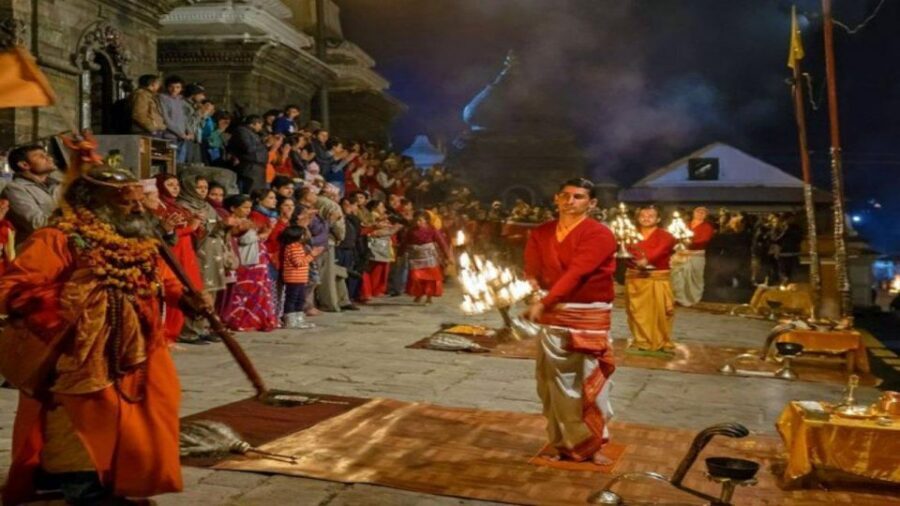
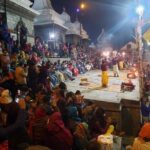
Pashupatinath isn’t just a pretty temple stop. It’s a major Shiva pilgrimage site, and the complex sprawls on both banks of the Bagmati River—so the setting shapes the experience. At night, you’re more likely to notice the rhythm: prayers, movement, and the small ways people show devotion in real time.
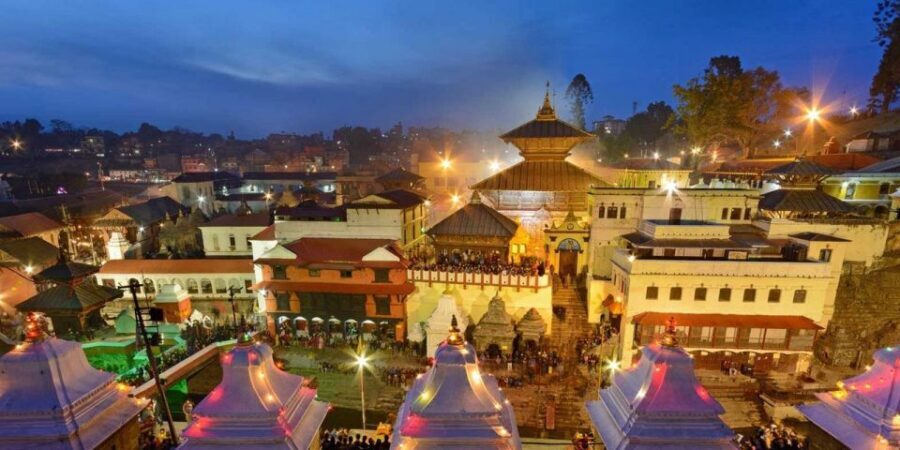
The main temple is known for its pagoda-style design with a golden roof and intricately carved silver doors. Even if you’ve seen photos, being there at night changes how those details land. The guide’s job is to help you connect the architecture and the ceremonies to the religious meaning, so you leave with more than just screenshots.
Also, this isn’t a “museum vibe.” You’re stepping into a working sacred space where cremation and worship both exist alongside each other. That can be powerful, and it means you should be respectful in posture, sound level, and dress.
You can also read our reviews of more evening experiences in Kathmandu



The real value in a tight 3-hour schedule
Three hours sounds short, and it is. But this tour’s compact format is actually practical for Kathmandu. You get enough time for a guided orientation plus the aarti moment, without burning a whole evening chasing temple corners and timing.
Here’s what you can count on: you’ll be picked up, driven to Pashupatinath, then spend about 2.5 hours with a guide at the temple complex. After the visit and aarti time, you’re dropped back at one of the listed locations.
For me, that’s the key: Pashupatinath can be a “go on your own and hope” kind of visit, especially after dark. A short guided block helps you avoid common mistakes, like spending too long on the wrong side of the river or missing the meaning behind what you’re seeing.
Pickup in Thamel or at the temple: what to plan for
The tour offers two pickup options: Thamel and Pashupatinath Temple. That matters because it changes how much you’ll depend on a specific starting point and how fast you can get moving.
If you’re staying in Thamel, you’ll likely find the pickup easiest. Thamel is close to many hotels and is a familiar hub for transport. If you’re already near Pashupatinath, starting there can save time and make the evening feel less like a commute.
One practical note from real-world timing: there have been cases where the guide arrived late due to unusual conditions (including a Kathmandu strike causing about a 1.5-hour delay). In another situation, pickup didn’t happen as arranged and contact was difficult, so the traveler visited on their own instead. That doesn’t mean it’s common, but it does mean you should treat pickup time seriously.
My advice: message or confirm the pickup location the day before, have your hotel address ready, and keep your expectations flexible by staying mentally “buffered” for traffic or disruptions.
Inside the Pashupatinath temple complex: what to look for
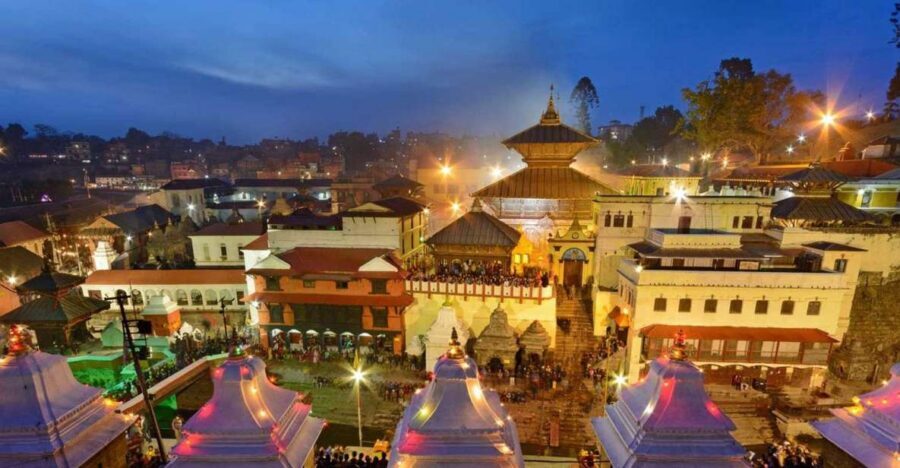
Pashupatinath stretches across both banks of the Bagmati River, so you’re effectively moving through a sacred neighborhood rather than just entering a single building. The guide helps you understand the layout and what each area is for.
You’ll see the pagoda-style main temple with its golden roof and silver doorwork. You’ll also learn how the current structure reflects centuries of reconstruction. It’s believed the temple tradition goes back to the 5th century, while the present form dates to the 17th century after reconstructions. That mix of age layers is part of what makes the place feel alive: it’s old, but it’s also maintained and active.
The complex includes smaller temples and ashrams around the main shrine. Even if you’re not Hindu, the guide’s commentary helps you recognize that these spaces aren’t random. They’re part of how devotion, learning, and ritual flow together.
If you’re the type who loves architecture and symbolism, you’ll likely get more out of this tour than a quick “walk and look” visit. If you don’t want a lot of explanation, you can still treat it as a guided route to the key sights and let the ceremony do the emotional work.
Arya Ghat and the Bagmati River: understanding cremation respectfully
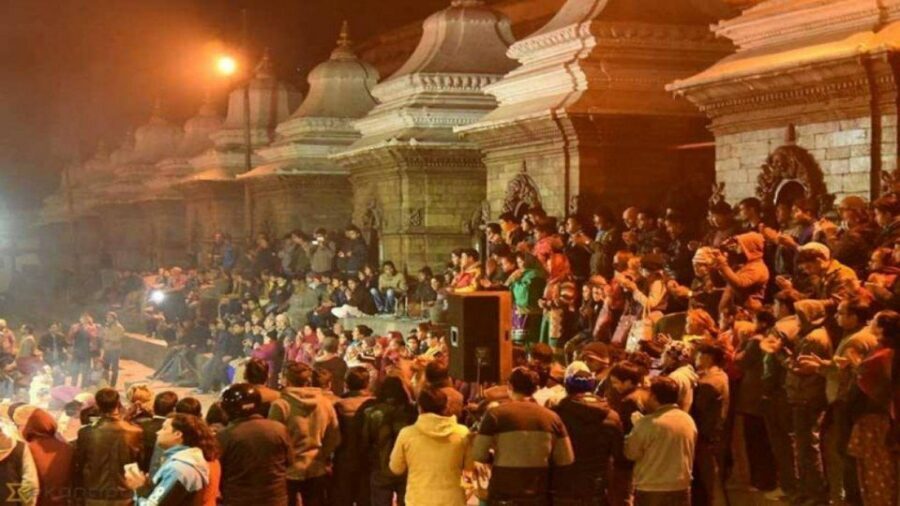
One of the standout aspects of Pashupatinath is that it includes a cremation site: Arya Ghat on the Bagmati River. This is an important place for Hindu cremations, and it’s believed that cremation here supports moksha—liberation from the cycle of rebirth.
That information changes how you should experience the area. You’re not watching a spectacle; you’re witnessing a sacred process connected to deeply held beliefs. If you’re sensitive to death-related rituals, mentally prepare before you go. Keep your voice down, avoid blocking walkways, and follow your guide’s cues on where to stand and when to move.
At night, you may notice people moving between prayer areas and riverfront spaces. The Bagmati River is part of the religious stage, not just scenery. Your guide’s job is to keep you oriented so you don’t accidentally wander into areas where your presence feels intrusive.
Practical tip: wear comfortable clothes that let you move easily. You don’t need “temple formal,” but you do want to avoid anything that looks disrespectful or restricts movement near river edges.
A few more Kathmandu tours and experiences worth a look





The aarti ceremony: what you’re actually paying attention to
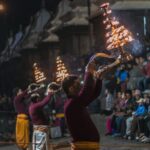
The highlight you came for is the special aarti ceremony at Pashupatinath. Aarti is about ritual lighting and devotion, and your guide’s commentary makes the difference between seeing lights and understanding what those gestures mean.
Because this is a guided tour, you’ll be able to ask questions in the moment. The tour is offered with a live guide who speaks Hindi, English, and Nepali. In at least one case, the guide—Bisham—was noted for being ready to clarify doubts, which tells you something important: this tour isn’t just a slideshow. It’s a “you can ask, and you’ll get answers” experience.
Also, don’t assume the ceremony is the same every day. The complex draws huge crowds, and events can intensify during festivals like Maha Shivaratri, when devotees come from across Nepal and neighboring countries. Even if your visit isn’t on a festival date, the overall energy and devotion style remains central.
If you want the best viewing, arrive with patience. Your time is only a few hours, so you’ll want to keep moving with the group and not get stuck behind someone filming for too long.
Price and value: is $35 a fair deal?
At $35 per person, this tour sits in the “midway” range for Kathmandu activities. Whether it feels like value depends on what you’d otherwise do on your own.
You’re paying for: hotel pickup and drop-off, transport to and from Pashupatinath, a licensed guide, and entry ticket to the site. Food and drinks aren’t included, so you’ll likely add a simple meal elsewhere or grab snacks beforehand.
Here’s how I think about value: if you’re unfamiliar with Pashupatinath and don’t want to coordinate transport, tickets, and timing yourself, the $35 mostly disappears into convenience. The guide is the differentiator. Without a guide, you might still see the temple, but you’d miss explanations that connect architecture, ritual, and cremation to the site’s religious role.
If you already have local transport sorted, and you’re comfortable navigating the complex independently, this might feel pricier. But for most visitors—especially at night—it’s a sensible pay-for-clarity choice.
What to bring (and what to avoid) for a smooth night visit
For this kind of evening temple tour, your checklist is simple and practical:
Bring:
- Passport or ID card
- Comfortable clothes
- Cash
Avoid:
- Drones
- Alcohol and drugs
One more important access note: the tour is marked wheelchair accessible, but non-folding wheelchairs are not allowed. If you use a wheelchair, you should confirm the type ahead of time so you’re not scrambling on the day.
Also, since this is a religious site with active rituals, keep bags manageable and avoid anything that draws attention. You want to move with the flow, not become a distraction.
Who should book this tour (and who might skip)
This tour is a strong fit if you want:
- A guided, short night visit that includes aarti time
- Clear context around Shiva worship, temple architecture, and Arya Ghat’s role
- A no-stress format with pickup and drop-off options (Thamel or temple)
It may be less ideal if:
- You hate any waiting, crowding, or schedule changes. This is Kathmandu and evenings can have delays.
- You’re extremely uncomfortable around cremation sites, even if you’re not witnessing a specific ceremony.
If you’re traveling with limited time in Kathmandu, this kind of compact tour helps you cover one major cultural anchor without eating your entire day.
Should you book the Kathmandu Pashupatinath Aarti tour?
I’d book it if you want a guided night experience at one of Nepal’s most important Hindu pilgrimage sites, and you’re okay with the emotional seriousness of the Bagmati River setting. The tour’s structure makes it practical: pickup, transport, a licensed guide, and the aarti focus, all wrapped into a 3-hour window.
Two cautions though. First, confirm pickup details, especially if you’re starting in Thamel and your hotel is on a busy street. Second, mentally prepare for possible timing changes due to local conditions—one guide delay of roughly 1.5 hours has occurred, so don’t plan anything tight right after the tour.
If you want an easy, meaningful way to see Pashupatinath at night—with explanation included—the $35 price makes sense.
FAQ
What is the duration of the Kathmandu Pashupatinath Aarti tour?
The tour lasts 3 hours.
Where are the pickup and drop-off options?
Pickup options are Thamel or Pashupatinath Temple. Drop-off options are also Thamel or Pashupatinath Temple.
What’s included in the $35 per person price?
Hotel pickup and drop-off, transportation to and from Pashupatinath, a licensed English-speaking guide, entry ticket to Pashupatinath, and all taxes are included.
What’s not included?
Food and drinks are not included.
What should I bring for the tour?
Bring a passport or ID card, comfortable clothes, and cash.
Is the tour wheelchair accessible, and what isn’t allowed?
The tour is wheelchair accessible, but non-folding wheelchairs are not allowed. Drones are also not allowed, and alcohol and drugs are not allowed.