REVIEW · KATHMANDU
Kathmandu: Pashupatinath Temple Aarti Night Tour
Book on GetYourGuide →Operated by Fewa Trail Treks and Expedition Pvt Ltd · Bookable on GetYourGuide
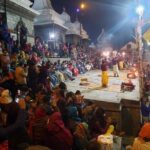
Gold and light on the Bagmati at night. I love the way the golden roof and Pashupatinath’s night Aarti glow as devotion to Lord Shiva plays out at one of Kathmandu’s most important sacred sites. It’s a focused 3-hour experience that connects the sights, the rituals, and the temple’s meaning in plain language.
I also like how hotel pickup and drop-off make the whole thing feel simple, and how you travel with a licensed English-speaking guide who helps you understand what you’re looking at. Seeing the golden roof and silver door details is one thing; knowing why they matter is what makes the evening land.
One caution: timing matters. If your transport runs late, you can miss the opening moments of the ceremony, and the vibe shifts fast once the lights and chants get going.
In This Review
- Key highlights to look forward to
- Pashupatinath at night: why the Aarti feels different
- The 3-hour plan: pickup, drive, and where time goes
- A realistic timing note
- The temple complex: golden roof, silver doors, and the Bagmati River
- What to focus on during your visit
- Arya Ghat and the cremation area: being near the ritual center
- What you might notice while you’re there
- Your guide: what licensed English context really adds
- Safety and comfort for solo visitors
- Price and value: is $71 fair for 3 hours?
- Who should book this night tour, and who might skip it
- Practical tips so you don’t miss the good parts
- Should you book the Kathmandu Pashupatinath Aarti Night Tour?
- FAQ
- How long is the Kathmandu Pashupatinath Temple Aarti Night Tour?
- Where does the tour take place?
- What’s the price per person?
- What’s included in the tour?
- Are food and drinks included?
- What language is the guide?
- Is the tour wheelchair accessible?
- Is this a private group?
- What do I need to bring for the tour?
Key highlights to look forward to
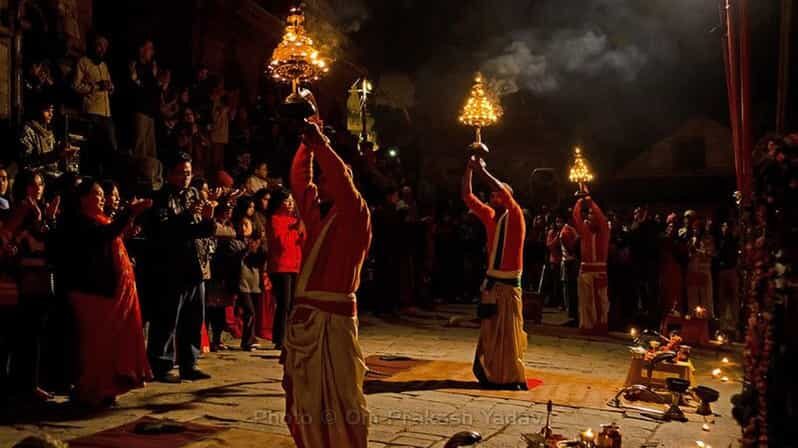
- Night Aarti at Pashupatinath: Watch ritual lighting and hear what it signifies for devotees of Lord Shiva.
- UNESCO-listed temple architecture: Note the pagoda-style main temple, plus the famed golden roof and silver doors.
- Bagmati River setting: The complex stretches on both banks, shaping how pilgrims move and gather.
- Arya Ghat cremation grounds nearby: You’ll be in the area known for Hindu cremations, so expect a serious atmosphere.
- Licensed English guide: You get context and historical stories rather than just a photo stop.
- Private, low-stress 3 hours: Entry ticket, taxes, and transport are wrapped in, so you spend less time figuring things out.
Pashupatinath at night: why the Aarti feels different
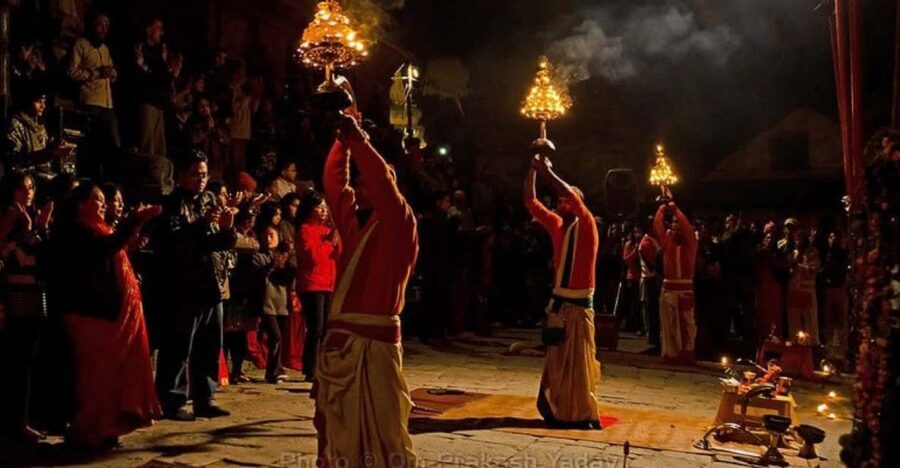
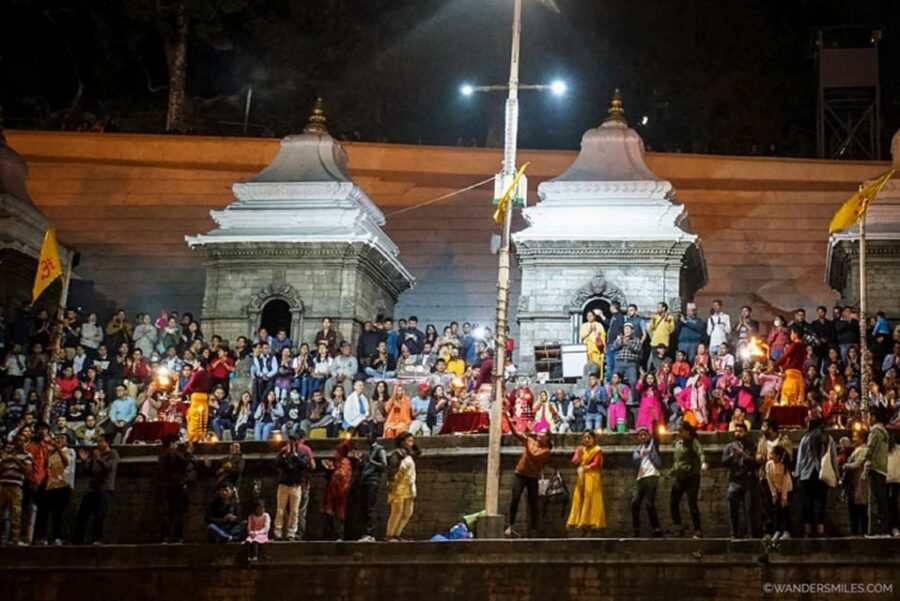
Pashupatinath is one of the most significant Hindu pilgrimage destinations in Kathmandu. It’s dedicated to Lord Pashupatinath, a form of Lord Shiva, and it’s considered extremely holy by Hindus worldwide. During the evening Aarti, the temple’s role stops being abstract. You’re watching a living religious practice, not just an old building.
What makes the night special is the combination of architecture and ritual. The main temple is known for its pagoda-style shape with a golden roof, and the entrance is famous for its carved silver doors. In daylight, you notice design. At night, you notice mood—lights, movement, and voices carrying across the Bagmati River setting.
This tour is built for that effect. You’re not doing a long circuit or trying to squeeze in multiple neighborhoods. You’re going to one place at the right time of day and staying long enough to feel what’s happening.
You can also read our reviews of more evening experiences in Kathmandu



The 3-hour plan: pickup, drive, and where time goes
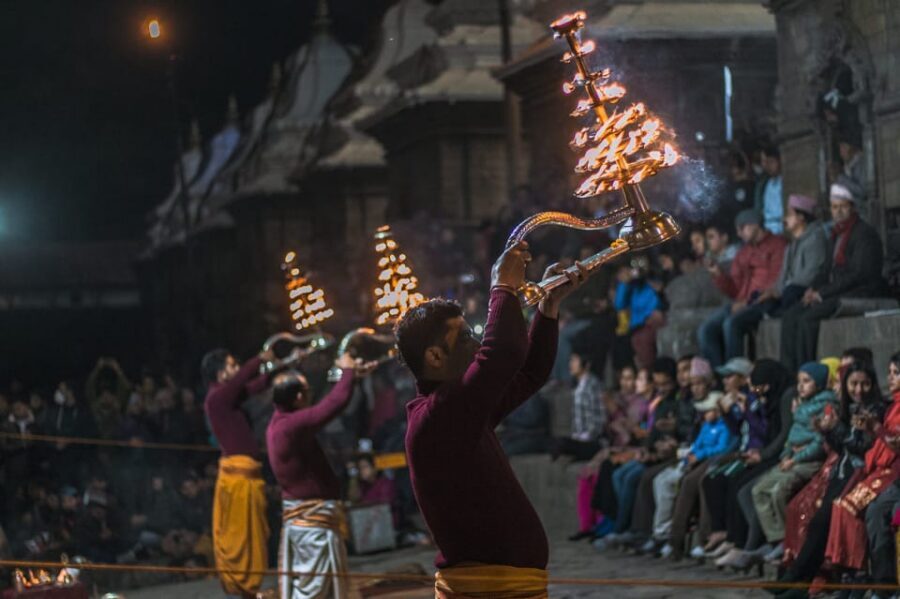
The format is straightforward. You’re picked up from your hotel, driven to Pashupatinath, you spend time viewing the temple area and the special Aarti ceremony, then you’re taken back to your hotel.
That doesn’t sound glamorous on paper, but it matters in Kathmandu. Traffic and timing can turn a “quick visit” into a stressful one. Here, you trade stress for structure: your transport is included, and you don’t have to negotiate your own way to the temple complex.
You’ll also get guidance in what to look for while you’re there. The licensed English-speaking guide is the key to making 3 hours feel like more than just passing sights. One named example from the available information is a guide called Madhu, who’s described as enthusiastic and strong on history and temple-area stories—exactly the kind of guide you want when you’re trying to understand a sacred site quickly.
A realistic timing note
Because the Aarti is a ceremony with a beginning, arrival time matters. There’s an example where a driver was late and the start of the ceremony was missed, even though the visit still worked out. So treat the pickup time like a promise, not a suggestion.
A good rule: be ready early in the lobby. The tour says to wait 15 minutes before departure, and that small habit can protect the experience you came for.
The temple complex: golden roof, silver doors, and the Bagmati River
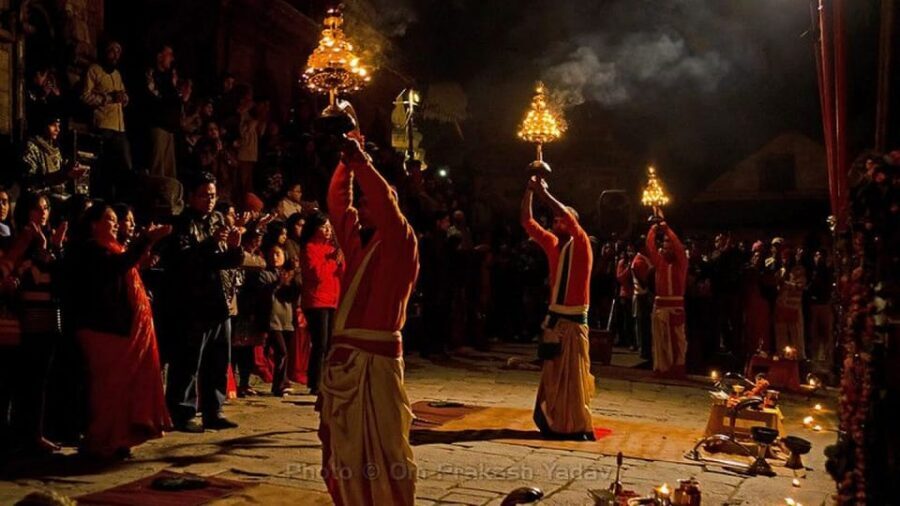
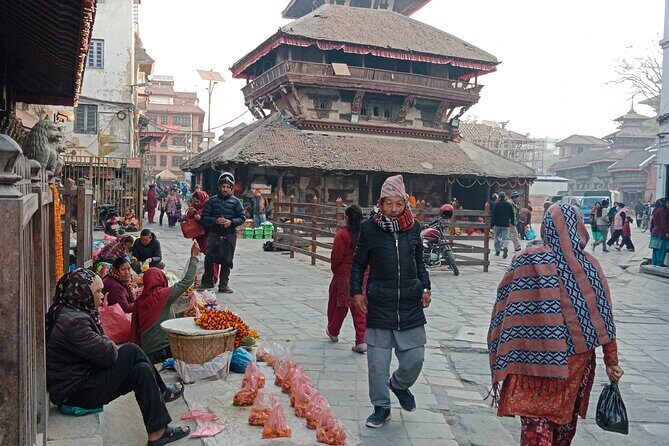
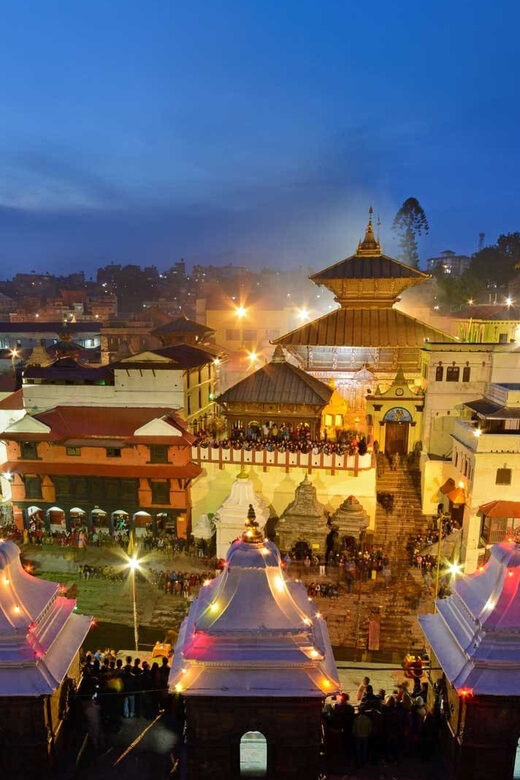
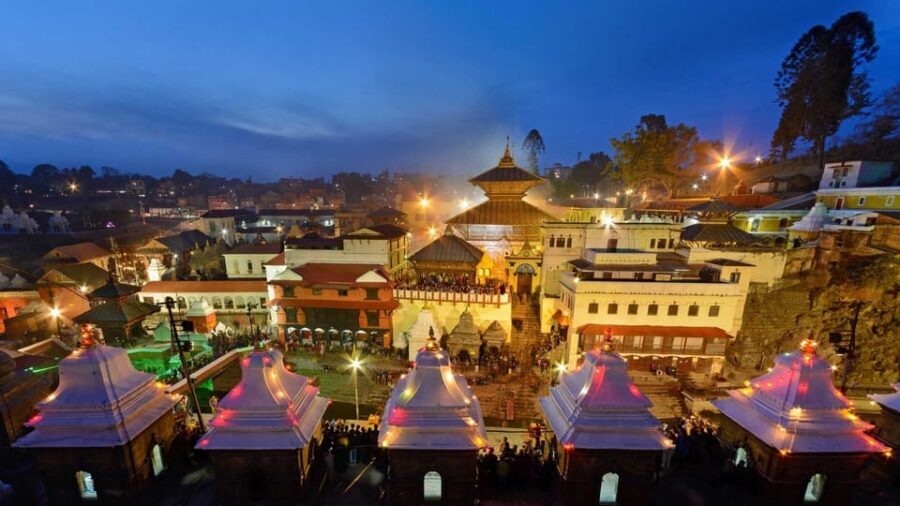
Pashupatinath isn’t one small temple you can see and leave. It’s a complex. It stretches along both banks of the Bagmati River, and that river becomes part of the route pilgrims follow and the way people gather during prayer.
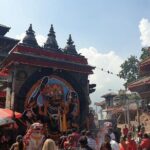
The main temple structure is pagoda-style. It’s often described in terms of its golden roof and intricately carved silver doors, and even if you don’t know the architectural terms, you’ll recognize why it’s famous. It looks ceremonial in a way that matches what’s going on around it.
You’ll also hear that the site’s religious importance goes back centuries. It’s believed to have been built in the 5th century, though the structure you see today dates largely to reconstructions, including one period in the 17th century. That mix—ancient significance plus rebuilt details—helps you understand why the temple looks both old and carefully maintained.
What to focus on during your visit
With a 3-hour timeline, you’ll get the most out of it if you actively look for layers:
- The main temple look (roofline, door details, how the entrance frames the ritual space)
- The flow of people across the complex around prayer time
- The smaller surrounding structures—temples and ashrams within the larger area
Your guide’s job is to point you from scene to meaning. Without that, a UNESCO site can become just a nice photo location. With it, you start understanding the logic of the place.






Arya Ghat and the cremation area: being near the ritual center
One of the most important parts of Pashupatinath’s story is not just worship. It’s also cremation. The complex includes a cremation site known as Arya Ghat on the Bagmati River bank.
This matters because it explains a lot about why people take the site so seriously. In Hindu belief, cremation at a sacred ghat is thought to support liberation from rebirth (moksha). Even if you’re not approaching the site from that perspective, being near the cremation grounds gives you a fuller picture of the cycle of devotion, life, and spiritual practice that defines Pashupatinath.
What you might notice while you’re there
The cremation area has a strong, somber presence. The experience can feel intense because it’s closely linked to real practices, not just staged reenactments.
The information you’re working with also notes that it’s possible to witness a cremation taking place, depending on timing. So keep expectations realistic: you’re visiting an active pilgrimage complex. If a cremation is happening, the atmosphere will be direct and powerful.
If you’d rather have a calmer sightseeing pace, this might still be manageable—but you should know upfront that this isn’t a neutral “museum evening.” It’s a working sacred site.
Your guide: what licensed English context really adds
A guided night visit is only worth it if the guide translates the place into something you can grasp. That’s where this tour seems to score well.
You’re traveling with a licensed English-speaking guide, and the guide’s role is to explain the temple area’s meaning and history as you walk through it. The available details highlight an enthusiastic style and a willingness to share stories, including specific temple-area history.
Why that matters: Pashupatinath can be overwhelming because you’re seeing multiple things at once—major temple architecture, side structures, riverbank activity, and ritual moments. The guide becomes your filter. You stop guessing and start understanding.
Safety and comfort for solo visitors
The information you were given also includes a note about solo female travelers feeling safe and informed throughout. That’s not something you can guarantee everywhere, but it’s a strong sign the operator plans the visit with practical respect for who’s in the group.
Also, private group format helps. You’re not trying to keep pace with strangers while you’re trying to understand a sacred setting.
Price and value: is $71 fair for 3 hours?
At $71 per person for a 3-hour visit, you’re paying for a focused night experience that includes:
- Hotel pickup and drop-off
- Transportation to and from Pashupatinath
- A licensed English-speaking guide
- Entry ticket to Pashupatinath
- All taxes
Food and drinks are not included, so budget for that separately if you need it.
How to think about value: the price isn’t just for “getting there.” It’s for avoiding the friction that often kills time in Kathmandu—sorting transport, figuring out where to stand, and paying for entry while trying to understand what to look for during the Aarti window. In many cities, the cost of a guided, timed experience plus transfers adds up fast; here, it’s bundled so you can focus on the ritual and the meaning.
If you’re the type of traveler who likes to wander freely, you might find a DIY option cheaper. But if you want context during a narrow time window, paying for a guide and entry can be a good trade.
One more detail that supports the value: transport is described as highly rated, with many scores near perfect. In a short tour, comfort and reliability are part of the experience.
Who should book this night tour, and who might skip it
This is a strong fit if you want:
- A short, structured outing instead of a half-day planning project
- Guided context for a major Shiva pilgrimage site
- A night visit built around the Aarti ceremony
- A private group experience with hotel pickup and drop-off
It may be less ideal if:
- You’re extremely uncomfortable around cremation grounds, since the Arya Ghat area is part of the complex you visit
- You need a very relaxed, slow pace, because a ceremony-focused evening can be tighter and more time-sensitive
- You don’t want any chance of missing the start if timing slips, since a late transport could affect the beginning of the Aarti
If you’re visiting Kathmandu and want one “must-understand” cultural stop that isn’t rushed across multiple neighborhoods, this is a solid choice.
Practical tips so you don’t miss the good parts
Here are the practical bits that matter most for this specific tour.
- Be on time for pickup: Wait in the lobby 15 minutes before departure. That helps you protect the ceremony start.
- Bring your passport: A passport is required, and a copy is accepted.
- Plan for no food included: The tour doesn’t provide food or drinks, so decide whether you’ll eat beforehand or bring a simple plan for later.
- Use the guide actively: Ask questions while you’re there. The guide’s job is not just to point; it’s to explain what you’re seeing.
- Know the setting is sacred: This is a working temple complex with devotion and cremation activity in the same overall area. Keep your mindset respectful and watchful.
And one small travel sanity check: because the tour is only 3 hours, you’ll likely get the most satisfaction if you avoid stacking it right after another late commitment.
Should you book the Kathmandu Pashupatinath Aarti Night Tour?
I’d book this if you want a high-impact Kathmandu night experience that blends temple architecture, ritual, and clear guide context in a compact time window. The inclusion list is practical: pickup, transport, entry ticket, taxes, and a licensed English-speaking guide. That reduces the usual headaches that turn short cultural visits into stress.
I’d think twice if you’re sensitive to the cremation-ground proximity at Arya Ghat or if missing the opening moments of the Aarti would feel like a dealbreaker. In that case, look for an option with even tighter timing, or plan extra buffer so you arrive early.
If your goal is to understand why Pashupatinath matters—beyond photos—this tour does that with a focused, guided approach.
FAQ
How long is the Kathmandu Pashupatinath Temple Aarti Night Tour?
The tour lasts 3 hours.
Where does the tour take place?
It takes place in Kathmandu, in the Bagmati zone, at the Pashupatinath Temple complex.
What’s the price per person?
The price is $71 per person.
What’s included in the tour?
It includes hotel pickup and drop-off, transportation to and from Pashupatinath, a licensed English-speaking guide, an entry ticket to Pashupatinath, and all taxes.
Are food and drinks included?
No. Food and drinks are not included.
What language is the guide?
The guide is available in English.
Is the tour wheelchair accessible?
Yes, the tour is wheelchair accessible.
Is this a private group?
Yes, the tour is listed as a private group.
What do I need to bring for the tour?
You should bring your passport (a copy is accepted).