REVIEW · KATHMANDU
Kathmandu: Private Bhaktapur and Patan Sightseeing Tour
Book on GetYourGuide →Operated by Cordial Trek Pvt. Ltd. · Bookable on GetYourGuide
Two kingdoms, one day of old-world detail. This private Patan and Bhaktapur sightseeing loop is a smart way to see two UNESCO-listed Durbar Squares with standout Newari architecture up close, from Patan’s stone Krishna Mandir to Bhaktapur’s Nyatapola temple. The main catch is that monument entrance fees are not included, so you’ll want to budget time and bring cash for those stops.
What I really like about this format is the pacing. You get hotel pickup, a dedicated English guide, and a private AC car/van that shaves off hassle between cities. In past groups, guides like Nilakantha and Sharmila were praised for clear English and for explaining the Hindu and Newari context without turning it into a lecture.
In This Review
- Key Highlights You’ll Actually Feel on the Ground
- Patan and Bhaktapur: Why These Two Squares Matter
- Price and Logistics: What $45 Buys You (and What It Doesn’t)
- Your Day at a Glance: The 10:00 Start and the Best Use of Time
- Stop 1: Patan Durbar Square’s Newar Details (Krishna Mandir Included)
- Drive to Bhaktapur: Short Enough to Enjoy, Long Enough to Reset
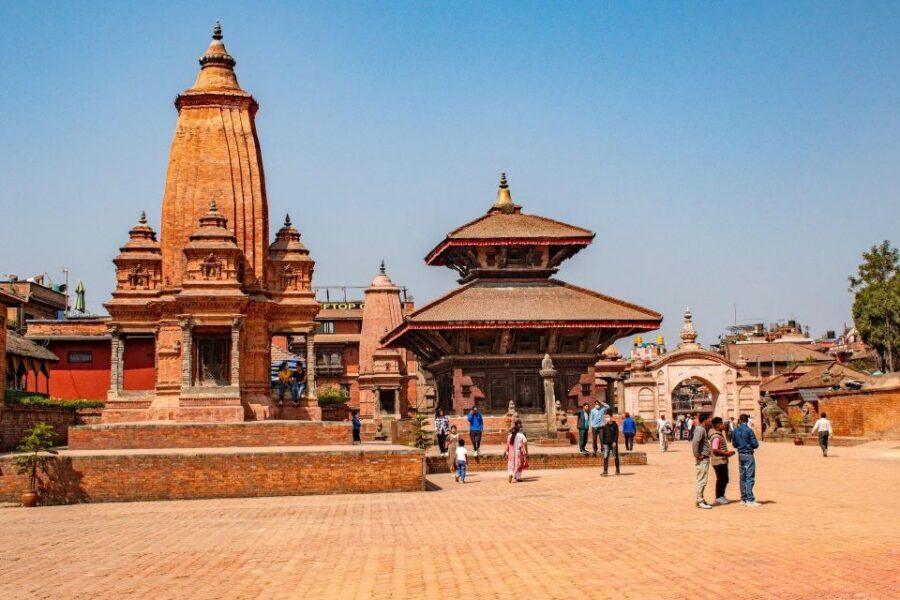
- Stop 2: Bhaktapur Durbar Square, the Golden Gate, and Nyatapola’s Scale
- Golden Gate and 55 Jhyale Durbar
- Nyatapola Temple: Nepal’s Tall Five Tiers
- The Temple Count Feeling
- Pottery Square: Shop Without Leaving the Old Town
- Guide Quality: How English Explanations Make You See More
- What You Should Bring (and What You Should Not Overpack)
- Who This Tour Is Best For
- Should You Book the Private Bhaktapur and Patan Tour?
- FAQ
- How long is the Kathmandu: Private Bhaktapur and Patan Sightseeing Tour?
- What time does the tour start, and where do we meet?
- Is the tour private, and what language is the guide?
- What’s included in the price?
- Are meals included?
- Do I need cash for anything during the tour?
- What should I bring, and is luggage allowed?
Key Highlights You’ll Actually Feel on the Ground
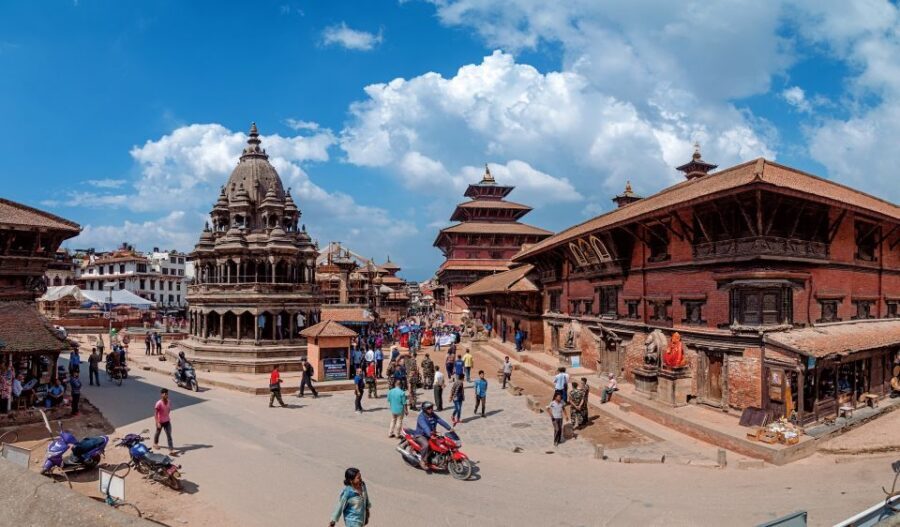
- Two UNESCO World Heritage Durbar Squares in one efficient outing
- Patan Durbar Square with Newar design, red-brick flooring, and the stone Krishna Mandir
- Bhaktapur Durbar Square royal-palace layout plus the Golden Gate area
- 55 Jhyale Durbar wood-carving work from the Malla period
- Nyatapola Temple: a tall, five-tier monument completed in 1702
- Pottery Square for handicraft shopping without leaving the historic center
Patan and Bhaktapur: Why These Two Squares Matter
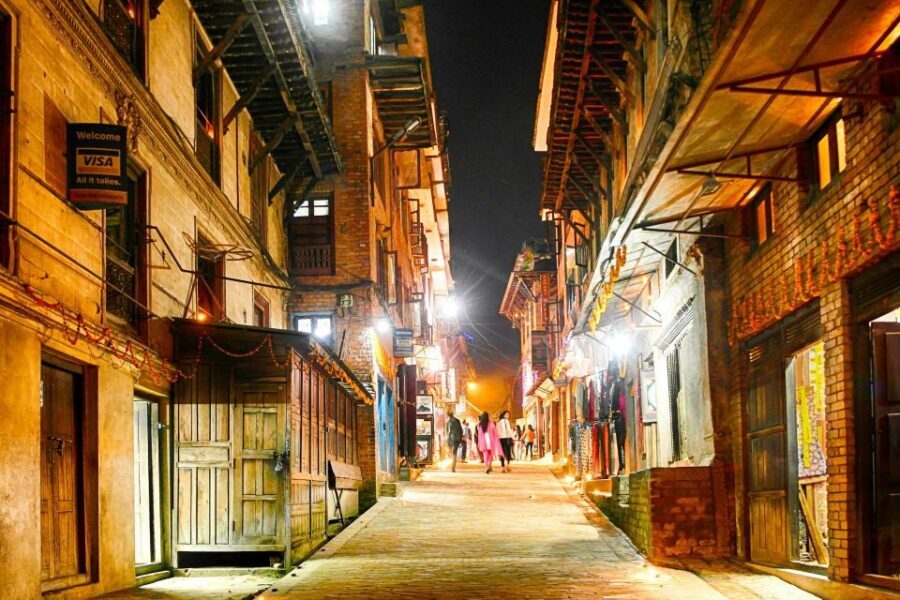
If you want Kathmandu Valley culture without doing a dozen separate outings, Patan and Bhaktapur are the cleanest pairing. Both cities grew around royal power, but they don’t feel like museums. They feel like living neighborhoods wrapped around palaces, temples, courtyards, and craft streets.
Patan is known for tight, elegant temple-and-palace clusters tied to Newar design. Bhaktapur pushes that same style further, with a compact old town where the royal complex is still the organizing idea. In practice, that means you can walk in circles and still keep finding new corners—doorways, shrines, carved windows, and courtyard edges that change what you notice as you turn a corner.
This is also one of the best value ways to see “UNESCO” in a way that makes sense. The sites aren’t just stamped on a sign. You’ll see the logic of where people worshipped, where ceremonies happened, and how kings built their prestige into architecture.
One practical benefit: having a guide matters a lot here. These places are visually busy. A good guide helps you connect what you see—golden gates, five-tier temples, wood carvings, palace courtyards—to the culture and religion that shaped them.
You can also read our reviews of more private tours in Kathmandu

Price and Logistics: What $45 Buys You (and What It Doesn’t)
At $45 per person for a 6-hour private tour, this is priced like a “real day plan,” not a quick drop-off. You’re paying for hotel pickup and drop-off, a guide, bottled water, and a private AC car/van between Patan and Bhaktapur.
Here’s what to note for budgeting: monument entrance fees are not included, and you’re expected to pay them in cash. The tour description also recommends bringing cash for those fees, and that aligns with what you’ll feel in the moment when you arrive at ticket points.
You should also expect walking. Both Durbar Squares involve uneven stone, steps, and time on your feet, so comfortable shoes are not optional. This isn’t a couch-and-view tour.
The upside is that the tour is private and time-managed. You’re not searching for transport, splitting your group, or guessing which courtyard is worth your attention. And the tour includes an express security check, which can save awkward wait time.
Your Day at a Glance: The 10:00 Start and the Best Use of Time
The day runs on a simple rhythm: start at 10:00 AM with hotel pickup, drive to Patan, then continue on to Bhaktapur, and return to your hotel in the afternoon.
You’ll spend guided time at:
- Patan Durbar Square (around 1.5 hours)
- Bhaktapur Durbar Square (around 2.25 hours)
Between them, you’ll transfer by car. The drive from Patan to Bhaktapur is about 40 minutes depending on traffic, and the first leg to Patan is around 30 minutes. That’s long enough to reset—short enough that the tour doesn’t turn into just riding around.
Because the stops are guided, you’re less likely to get “Durbar Square fatigue,” the feeling that everything looks similar after you’ve been squinting at carvings for an hour. The guide’s job is to help you pick the details that actually connect.
Stop 1: Patan Durbar Square’s Newar Details (Krishna Mandir Included)
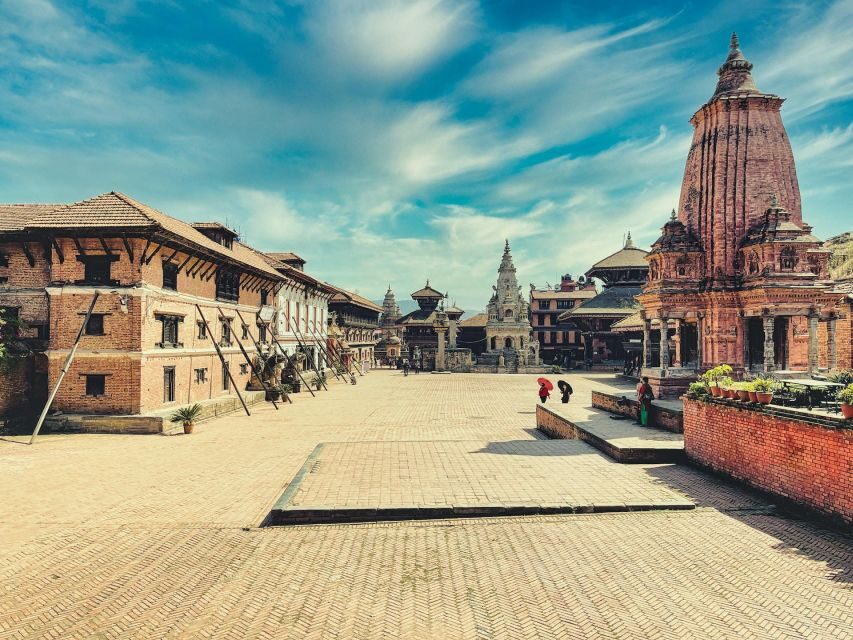
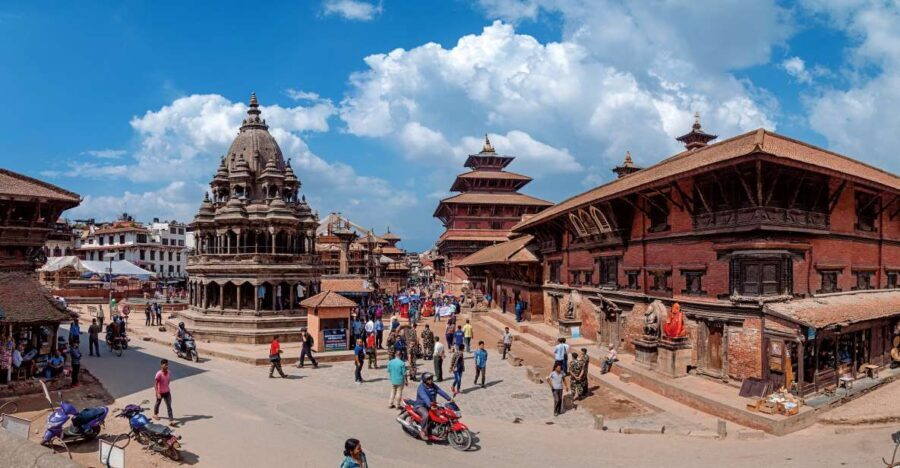
You’ll arrive in Patan around 10:30 AM for Patan Durbar Square, the old royal center of Lalitpur’s Malla kings. This is one of those places where the architecture isn’t background—it’s the story.
What you’re likely to notice first is the overall layout and materials: the square’s tiled floor uses red bricks, and the temples and statues feel designed to be seen from multiple angles. If you’ve only seen Kathmandu monuments from afar, Patan is the closer, more intimate version.
The highlight here is the Krishna Mandir, famous for being made of stone. It’s the kind of detail that rewards stopping instead of rushing through. With a guide, you’ll also understand why Krishna’s presence matters in the local devotional world, and how temples like this fit into the broader royal-religious tradition.
A common pitfall in Patan is treating it like one long street you just walk through. Instead, I recommend using your guided time to slow down at a few anchor points: the main temple cluster, standout statues, and the stonework around the Krishna Mandir area. That’s how you leave Patan with real impressions instead of just photos.
Drive to Bhaktapur: Short Enough to Enjoy, Long Enough to Reset
After Patan, you’ll head toward Bhaktapur (about 40 minutes). During this transfer, you’re not just commuting—you’re changing “visual grammar.” Patan feels denser and slightly more compact in its royal-courtyard rhythm. Bhaktapur feels more like a preserved old town where the palace complex is still the map.
This is when the private AC car/van is more useful than it sounds. Kathmandu Valley travel can mean dusty windows or warm sidewalks later. Having AC helps you arrive without feeling drained.
Also, since it’s a private group, you can adjust for your pace. If you need water or a quick bathroom stop before the next big walking block, this format makes it easier to handle without slowing everyone else down.



Stop 2: Bhaktapur Durbar Square, the Golden Gate, and Nyatapola’s Scale
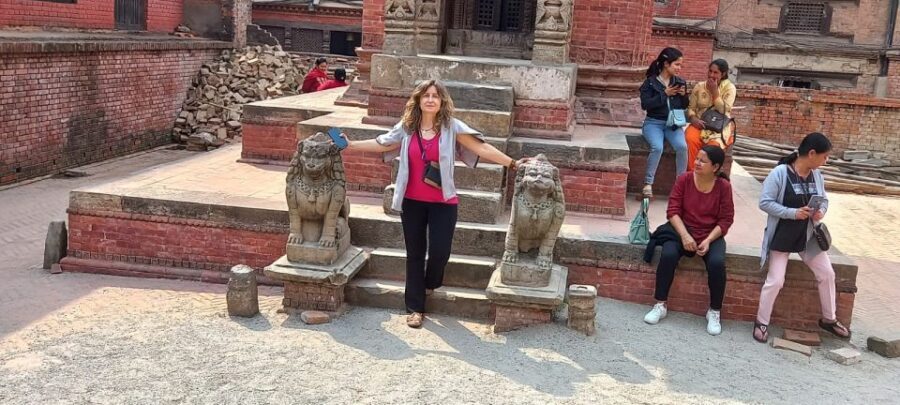
You’ll reach Bhaktapur around 12:40 PM for the main event: Bhaktapur Durbar Square. This palace complex housed Malla kings over centuries and later served as the center for Bhaktapur’s kingdom. Even when kingship changed, the physical complex kept its role as a civic and social space—some parts were used as offices, schools, and private houses.
This matters because you don’t just see temples. You see how a royal heart turned into everyday space.
Golden Gate and 55 Jhyale Durbar
Behind the golden gate, you can look for 55 Jhyale Durbar, known for its wood carvings from the Malla period. The carvings are not the kind of thing you can truly appreciate at a jogging pace. If you’re curious about craftsmanship, this is one of the strongest reasons to book a guided visit rather than just wandering.
A guide helps you understand what you’re looking at—carving styles, where ornamental detail sits, and why the building’s design is a statement, not decoration.
Nyatapola Temple: Nepal’s Tall Five Tiers
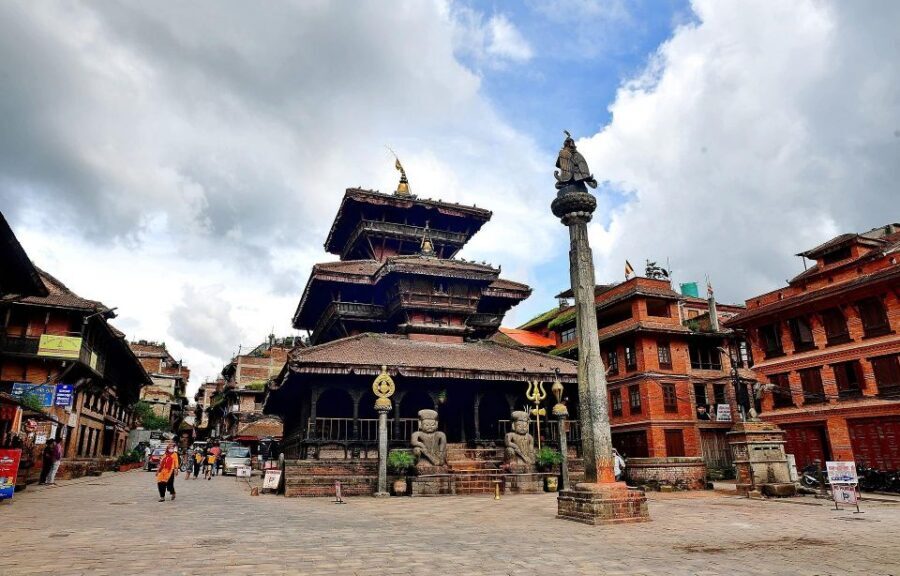
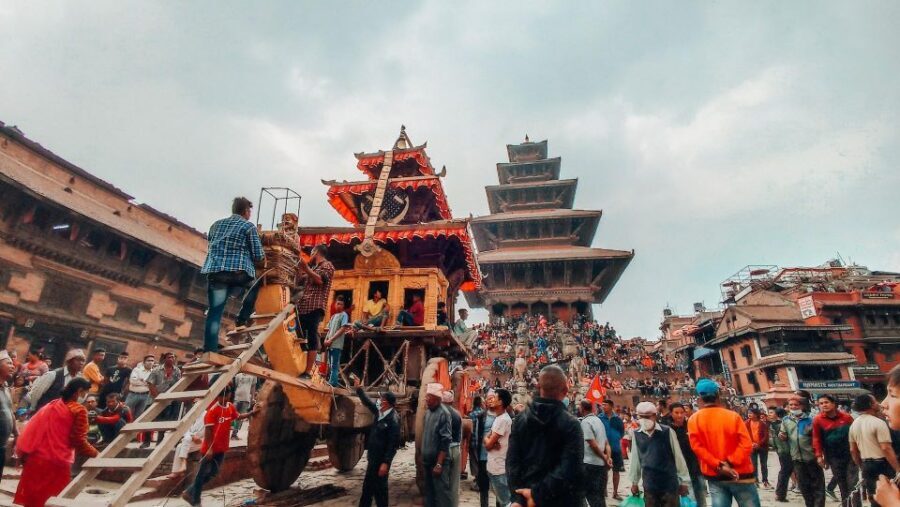
Then there’s Nyātāpola, a five-tiered temple and the tallest monument in the city. It’s also described as the tallest temple of Nepal, commissioned by King Bhupatindra Malla, with construction completed in 1702.
Even if you’re not a temple-architecture nerd, the experience is simple: you can’t miss it. It towers above the surrounding structures, and it gives you a sense of how Bhaktapur’s royal power expressed itself in stone.
What I like about Nyātāpola within this tour is that it anchors the whole square. Once you’ve seen it, the rest of the courtyards and temples start to read like parts of a plan.
The Temple Count Feeling
Bhaktapur’s temple complex is also known for having 170 individual temples. The number can sound abstract until you realize the “dense” feeling comes from lots of small shrines and temple niches. A guide can help you pick where to focus so you don’t spend your limited time staring at carvings you won’t retain.
Pottery Square: Shop Without Leaving the Old Town
Toward the later part of your Bhaktapur time, you’ll reach Pottery Square—a hub for pottery and handicrafts. It may be smaller than the main Durbar Square, but it’s practical for shopping because it’s right in the flow of the historic center.
This is also where you can pick up souvenirs that feel more like local craft than mass-market trinkets. If you buy something, ask a few questions through your guide so you know what you’re getting—type of craft, common uses, and how it’s made.
Guide Quality: How English Explanations Make You See More
Patan and Bhaktapur are crowded with details. The best way to get value from a guided private tour is to let the guide turn the noise into meaning.
In real examples, guides such as Nilakantha and Sharmila have been especially strong at explaining Hinduism and the cultural context around the architecture, with English that stays easy to follow. That matters because you’ll see temples, shrines, and royal symbolism, but the “why” is what makes the “wow” stick.
When you’re with a good guide, you’ll also notice the difference between:
- a temple you just walk past
- and a temple that connects to a particular deity, royal patron, or Malla-era tradition
You can also use your guide to help you prioritize. If you’re tired, ask what’s essential to see before moving on. If you’re eager for craftsmanship, ask where the best carving or woodwork details are.
What You Should Bring (and What You Should Not Overpack)
This tour’s small list is actually the right list:
- Camera
- Cash for monument entrance fees
- Comfortable shoes
- Sunglasses
And for “what not to bring,” the tour notes that oversize luggage isn’t allowed. That’s a good thing to plan around since you’ll be in a car and walking through tight historic areas.
If you’re the type who likes to travel light, this will feel easy. If you’re carrying bulky stuff, it may become annoying.
Who This Tour Is Best For
This is a good fit if you:
- want UNESCO World Heritage sites without spending all day hunting tickets and transport
- prefer a guided pace where the guide helps you read the architecture
- like Newari craft and temple culture, not just big postcard views
- want a private group experience with hotel pickup and an AC vehicle
It may not be ideal if you’re extremely short on energy. You’ll be walking around palaces and temples for guided blocks of time, and the stone surfaces and steps demand decent footwear.
Should You Book the Private Bhaktapur and Patan Tour?
Book it if you want maximum cultural payoff in one afternoon, with the comfort of pickup, AC transport, and an English-speaking guide. The combination of Patan Durbar Square and Bhaktapur Durbar Square gives you two different “faces” of Malla-era and Newar architecture, and Nyātāpola is a real focal point that makes Bhaktapur feel worth the effort.
Skip or rethink it if you’re not willing to pay monument entrance fees in cash or if you hate walking through historic sites. The tour price is fair, but the real cost in your day comes from the entrance fees once you arrive.
If you can handle a few hours of walking and you’re ready to learn what you’re seeing, this private tour is one of the simplest ways to understand why Kathmandu Valley architecture has such a strong identity.
FAQ
How long is the Kathmandu: Private Bhaktapur and Patan Sightseeing Tour?
The tour lasts 6 hours.
What time does the tour start, and where do we meet?
It begins with pickup from your hotel at 10:00 AM.
Is the tour private, and what language is the guide?
Yes, it’s a private group with a live English tour guide.
What’s included in the price?
Included are hotel pickup and drop-off, an experience tour guide, a private AC car/van transportation, and bottled drinking water.
Are meals included?
No, meals are not included.
Do I need cash for anything during the tour?
Yes. You’re asked to bring cash to pay monument entrance fees.
What should I bring, and is luggage allowed?
Bring camera, cash, comfortable shoes, and sunglasses. Oversize luggage isn’t allowed.