REVIEW · KATHMANDU
Kathmandu: Pashupatinath Temple Evening Aarati Tour
Book on GetYourGuide →Operated by Aspiration Adventure Pvt Ltd · Bookable on GetYourGuide
Candles and chants on the Bagmati at dusk. This Pashupatinath Temple evening Aarati tour is interesting because you’re not just seeing a famous site—you’re getting a live explanation of what’s happening while the lights and mantras carry across the river. I like the guided context that turns the ritual into something you can actually follow, and I like the temple views plus the chance to photograph in permitted areas. One consideration: the riverbank is active, so your best photos depend on where you’re standing and what’s allowed at the moment.
I also like that the small details feel handled. Your licensed English-speaking guide—people have reported excellent experiences with guides such as Ramesh, Rajat, and Anjan—helps you make sense of the temple complex before the main ceremony, and even works around photo requests when possible. Transport gets consistently positive feedback too, including reports of a safe, friendly driver such as Santosh.
Plan on a simple flow: late-afternoon pickup in Kathmandu, arrival before the ceremony, then the aarti around 6 p.m., followed by the drive back. This is a 3-hour format, and food and drinks aren’t included, so you’ll want to eat either before you go or after you return. If you want a mostly cultural evening that’s planned and guided, it’s a strong fit.
In This Review
- Key highlights you’ll feel right away
- Pashupatinath at evening: the temple complex before the ceremony
- Bagmati River Aarati: what you’ll actually see and hear
- The guide’s role: making sense of Hindu rituals without slowing you down
- Timing and logistics: why the 3-hour plan works
- Photography at the riverbank: great chances, but follow the rules
- Value check: is $45 for 3 hours a good deal?
- Who should book this, and who might skip it
- Should you book the Kathmandu Pashupatinath Evening Aarati Tour?
- FAQ
- How long is the Kathmandu Pashupatinath Temple Evening Aarati Tour?
- What time does the Aarati ceremony start?
- Does the tour include hotel pickup and drop-off?
- Is an English-speaking guide provided?
- Do I need to buy a ticket for Pashupatinath?
- Are food and drinks included?
- Is this a private group tour?
- Can I cancel for a refund, and is there reserve-now-pay-later?
- Is photography allowed?
Key highlights you’ll feel right away
- Pashupatinath at evening: a guided temple walk plus time to look around before the lights start
- Bagmati River Aarati around 6 p.m.: oil lamps, incense, bells, and Vedic mantras with live music
- Licensed English guide (Ramesh, Rajat, Anjan reported): clear explanations that make the ritual easier to understand
- Skip the ticket line + entry ticket included: less waiting, more time where it matters
- Photography in permitted areas: you can capture moments, but you’ll need to follow local rules
- Hotel pickup/drop-off + private group: smoother logistics than trying to DIY it
Pashupatinath at evening: the temple complex before the ceremony
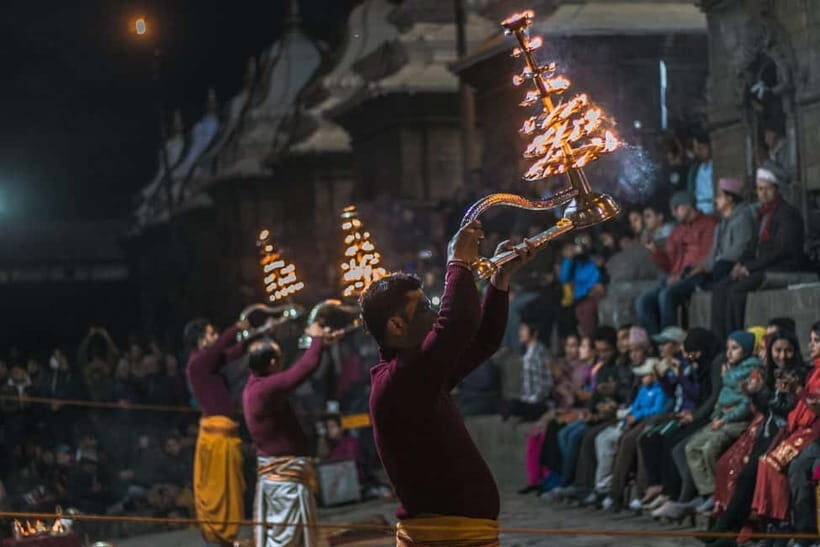
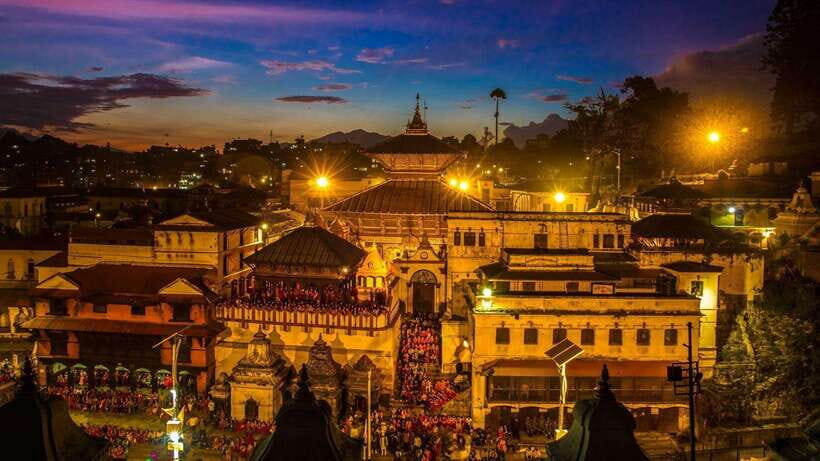
Pashupatinath Temple sits on the Bagmati River, and the evening approach matters. You’re arriving before the main Aarati, so the place feels less like a quick stop and more like a slow build-up to something you can hear and then see.
Your guide typically starts with an orientation to the temple complex—what you’re looking at and why it matters religiously. This is where the tour earns its keep. Without context, the site can feel like lots of stone, people, and small rituals happening at once. With a guide, you start noticing patterns: what’s part of daily worship, what’s specific to the evening, and how the riverbank fits into the ceremony.
You also get time for your own exploring after the guided portion. That free slice is useful because it lets you step back from the explanation, check sightlines, and decide where you want to be when the Aarati begins. If you care about photos, this is the part to use wisely—especially since the main event shifts your focus to the river.
You can also read our reviews of more evening experiences in Kathmandu


Bagmati River Aarati: what you’ll actually see and hear
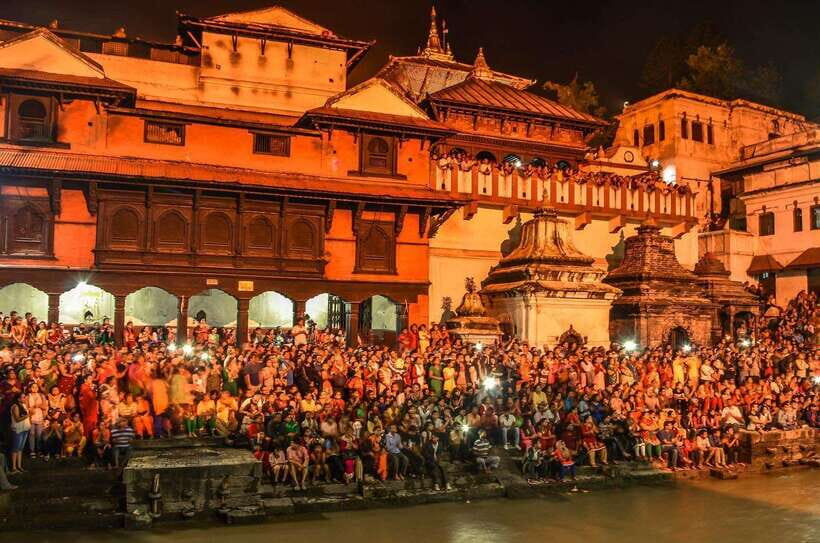
The heart of the tour is the Aarati ceremony along the Bagmati River’s bank on the temple’s eastern side. Around 6 p.m., priests chant prayers and move through the ritual sequence before the Lord Shiva idol. The ceremony draws people in, and the river setting makes the lights and sounds feel closer than they would in a closed hall.
Here’s what the ceremony experience centers on, in plain terms:
- Chanting and Vedic mantras: the sound is a major part of what makes it feel spiritual, not just visual
- Bells and incense: you’ll notice the rhythmic cues as the ritual progresses
- Oil lamps: the light is the visual anchor of the Aarati, with priests waving lamps as part of the worship
- Classical instruments and hymns: a band adds music and singing to the mix, so it feels ceremonial in multiple senses
If you’re the type of traveler who likes to understand what’s going on, this tour is designed for that moment. The guide’s explanation helps you connect the dots between the words being recited, the objects being used, and the reason people are gathering right there.
And if you’re more of a “watch first, ask later” person, you can still enjoy it. The ritual is structured, the lights are visually strong, and the riverbank gives you a natural rhythm to follow as the priests perform.
The guide’s role: making sense of Hindu rituals without slowing you down
A good cultural guide isn’t just translating words. The best ones help you read the room—what matters to locals, what’s symbolic, and what you should pay attention to at the right time.
This tour includes a licensed English-speaking guide, and the differences show up quickly. Many guests have praised guides like Ramesh for being patient with questions and for explaining meaning in a way that doesn’t feel like a lecture. There are also reports of bilingual conversation (Spanish and English mentioned), which can make the evening feel more personal and less like a scripted script.
Even more practical: some guides have been reported as accommodating photo goals. If you’re traveling with a camera, you’ll want that kind of flexibility because timing is everything once the ritual starts. Ask early about where photography is permitted, and use your guide to clarify what you’re seeing rather than trying to guess.
Bottom line: the ritual itself is moving, but the guide is what turns it from “I watched a ceremony” into “I understood what I was watching.”
Timing and logistics: why the 3-hour plan works
The tour is built around an evening window, and the 3-hour duration is a smart constraint. You’re not losing half a day in Kathmandu traffic, and you’re not showing up too late to understand what’s happening.
A typical flow goes like this: hotel pickup in Kathmandu in the late afternoon, drive to Pashupatinath, guided temple tour, independent time to look around, then the Aarati ceremony beginning around 6 p.m., and finally the return ride to your hotel.
This pacing is practical for two reasons. First, you arrive before the main ritual so you can get oriented. Second, you’re back in Kathmandu afterward, which makes it easier to plan your evening meal.
Food and drinks aren’t included, so don’t assume you’ll be covered. I’d treat this as a “ceremony + culture” evening and plan dinner separately. If you’re budgeting, the included entry ticket and guide time help keep the overall cost reasonable.
Photography at the riverbank: great chances, but follow the rules
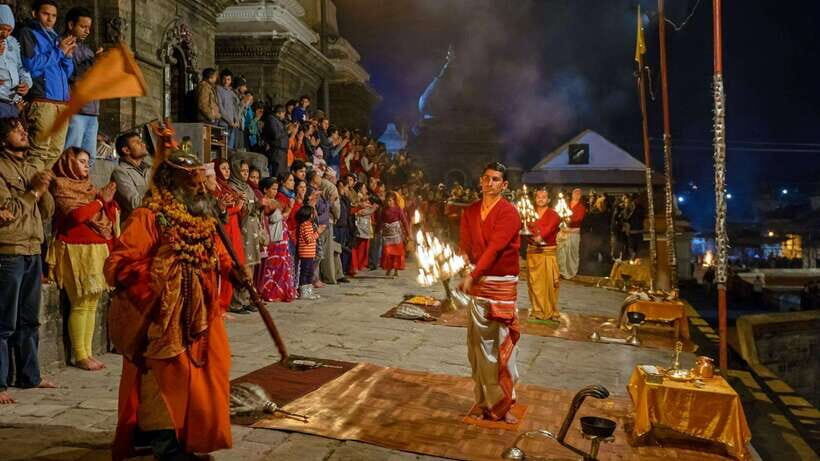
Photography is part of the appeal, and the tour explicitly mentions photos in permitted areas. That’s important because the Aarati involves an active, sacred moment with many people. Even if you’re excited to shoot, you’ll need to be respectful and stay within what’s allowed.
The best way to handle this is to use the time before the ceremony. You’ll have a guided portion and then a chance to explore on your own. In practice, that’s when you can check where you might stand, how the light falls, and what view is realistic once the crowd gathers.
Once the Aarati starts, your priority should shift from experimenting to capturing. The ceremony includes moving priests, changing lamp light, chants, incense, and music. That kind of shifting action makes it harder to plan perfect shots mid-ritual, so it helps to decide your spot early.





Value check: is $45 for 3 hours a good deal?
At $45 per person for about 3 hours, this isn’t a “cheap and cheerful” outing, but it also isn’t priced like a luxury experience. You’re paying for several things that would cost you time and effort if you tried to DIY it: hotel pickup and drop-off, transportation to the temple, an entry ticket, and a licensed English-speaking guide.
For many people, the biggest value is the guide. You’re not just buying access to Pashupatinath—you’re buying someone to help you interpret what you’re seeing, especially during the Aarati. In other words, the price buys understanding, not only sightseeing.
The “skip the ticket line” detail also matters. Waiting around at a temple complex wastes precious evening time. Here, the tour’s structure helps you show up with less friction and more focus on the main event.
Who should book this, and who might skip it
This tour is a strong match if you want:
- A structured evening at Pashupatinath with context before the Aarati begins
- A live ritual experience along the Bagmati River around 6 p.m.
- An English-speaking guide who can answer questions as the ceremony unfolds
- A private group format that feels easier to manage than large group tours
It may not be the best fit if you’re looking for a long, self-directed walk with no explanations, or if you prefer to avoid religious ceremonies altogether. The Aarati is a worship moment, and it’s designed to be participated in through attention and observation.
Also consider that you’ll have a focused 3-hour window. If you want to linger for hours around the temple complex or pair this with lots of extra stops, you might prefer a longer day plan.
Should you book the Kathmandu Pashupatinath Evening Aarati Tour?
Yes, I’d book it if your goal is an evening that feels both meaningful and well organized. The combination of Pashupatinath Temple time, a guided explanation, and the Bagmati River Aarati around 6 p.m. gives you a complete arc: arrive, understand, witness, then return to Kathmandu.
Also, the repeated praise for guides like Ramesh (and others such as Rajat and Anjan) signals that the “meaning” piece is taken seriously here, not treated as an add-on. If you care about getting the most out of the ceremony—rather than just viewing it—this format is built for you.
Just go in with two expectations: food isn’t included, and the riverbank photo experience depends on what’s permitted at the time. If you can plan around those, it’s a memorable way to see Kathmandu’s spiritual side in real time.
FAQ
How long is the Kathmandu Pashupatinath Temple Evening Aarati Tour?
It lasts 3 hours.
What time does the Aarati ceremony start?
The Aarati ceremony starts around 6 p.m.
Does the tour include hotel pickup and drop-off?
Yes. Hotel pickup and drop-off are included.
Is an English-speaking guide provided?
Yes. A licensed English-speaking guide is included.
Do I need to buy a ticket for Pashupatinath?
Entry tickets are included, and the tour also notes a skip-the-ticket-line benefit.
Are food and drinks included?
No. Food and drinks are not included.
Is this a private group tour?
Yes. It’s listed as a private group.
Can I cancel for a refund, and is there reserve-now-pay-later?
You can cancel up to 24 hours in advance for a full refund. You can also reserve now and pay later.
Is photography allowed?
Photography is possible in permitted areas.