REVIEW · KATHMANDU
Mohare Danda Trek
Book on Viator →Operated by Asian Heritage Treks and Travels · Bookable on Viator
Trekking where Annapurna feels close is the best way to start. Mohare Danda takes you off the busier Annapurna routes and up to Mohare hill station for close, clear views of Annapurna and Dhaulagiri, with eco-community lodges that support local community projects.
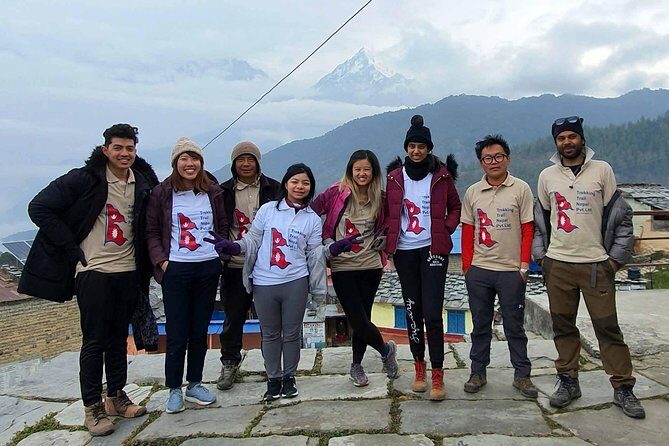
I really like the way this trip builds in early-morning payoff, especially the Poon Hill sunrise experience. I also love the human side of the trek: one review highlighted the care and local storytelling from guide Norris and porter Melan, and that kind of support matters when the trail turns steep or the weather shifts.
Here’s the one thing to plan around: entrance fees and meals in Kathmandu and Pokhara are not included, and you’ll want cash for that plus tips.
In This Review
- Key highlights to know before you go
- Why Mohare Danda feels quieter than the usual Annapurna routes
- Kathmandu warm-up: temples plus craft, with time to adjust
- Road to Pokhara and the Kali Gandaki setup day
- Bans Kharka to Naangi: village paths, farming school energy
- Mohare Khopera to Mohare Danda: oak and rhododendron plus real mountain closeness
- Mohare Danda sunrise and Ghorepani: the best kind of early start
- Poon Hill first ray, then Ghandruk: villages after the mountain show
- Descent day to Pokhara and a Kathmandu reset
- Eco-community lodges: where comfort meets conservation goals
- Price and what’s actually included in this trek package
- Who this Mohare Danda trek suits best (and who should think twice)
- Should you book Mohare Danda Trek with Asian Heritage Treks and Travels?
- FAQ
- Where does the trek start and what time?
- Is pickup included?
- What’s the group size?
- Do I need a moderate fitness level?
- Are permits included?
- How does porter support work?
- What lodging and meals are included during the trek?
- What about food in Kathmandu and Pokhara?
- Are entrance fees included?
- If you want the quick decision
Key highlights to know before you go
- Mohare Danda at 3300m delivers one of the closest-feeling Annapurna and Dhaulagiri viewpoints in this part of the region
- Eco-community lodges keep you sleeping in the middle of the network that supports local projects
- Kali Gandaki gorge suspension bridge adds a classic, dramatic moment during the early trek days
- Organic farm school and Magar settlement visit brings a real look at local life beyond the trail
- Poon Hill (3210m) early start is your big sunrise check-in point before the descent toward Ghandruk
- Small group size up to 12 helps the trek stay manageable and keeps the day-to-day pace more consistent
Why Mohare Danda feels quieter than the usual Annapurna routes
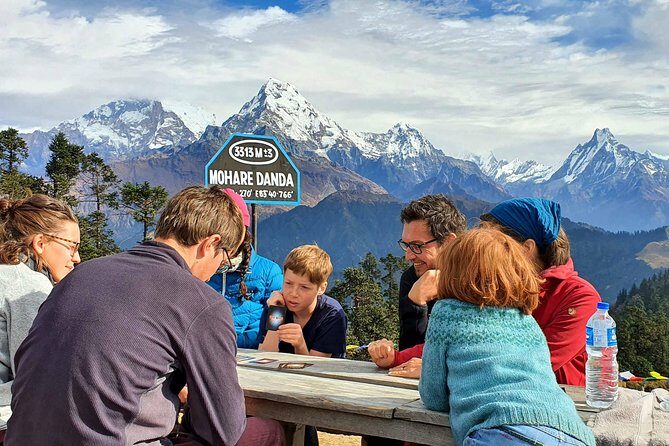
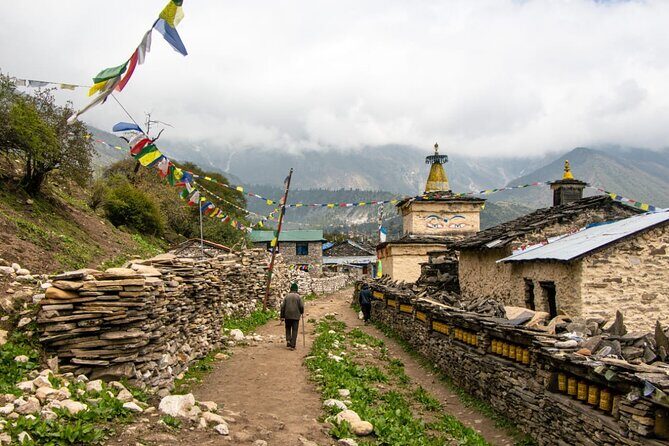
Mohare Danda is all about a calmer rhythm. Instead of being stuck on the busiest Annapurna “corridor,” you hike through forested ridges and small settlements in the foothills, where the trees do a lot of the talking—oak, rhododendron, bamboo, and pine show up along the way depending on the day and elevation.
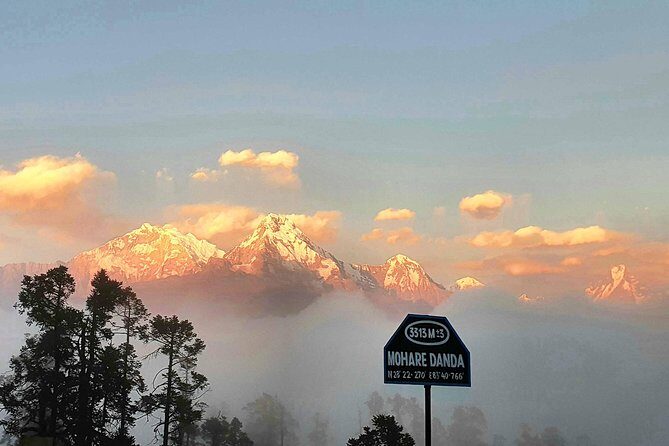
The trek also makes views a real part of the journey, not just a single postcard moment. From the higher viewpoints around Mohare Danda you get strong sightlines toward the Annapurna and Dhaulagiri ranges, and the trek’s design gives you both sunset and sunrise experiences. That split matters: clouds can move overnight, light can change fast, and seeing the mountains in two different lighting styles makes the whole trek feel more complete.
And yes, this is also billed as an eco-community lodge trek. In plain terms, you’re not just buying a hiking package—you’re using a local lodge network tied to community projects. That changes the vibe. You’re more aware of how your presence fits into local life.
You can also read our reviews of more hiking tours in Kathmandu


Kathmandu warm-up: temples plus craft, with time to adjust
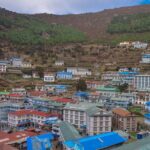
You start in Kathmandu and that’s a smart choice because it gives you a cushion before the long hiking effort. The day-one and day-two plan is designed to help you get your bearings fast while still feeling like real Nepal, not just check-the-box sightseeing.
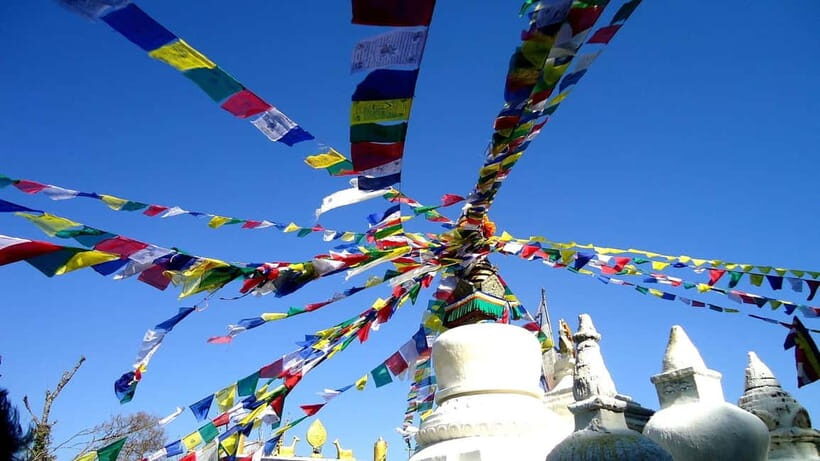
You’ll go to Swayambhunath, also known as the monkey temple. This is one of the best “orientation” sites in the valley because you’re up high and you can look out over Kathmandu while taking in the Buddhist and Hindu coexistence. It’s not a debate on paper—it’s visible in daily life around the stupa.
Then come the big stupa and cremation-side realities. Boudhanath is a major Buddhist pilgrimage site with roots going back to 600 A.D., and it has that slow, devotional atmosphere you can feel as you walk around. Later, Pashupatinath gives you a powerful window into Hindu practice, including the ritual cremations along the Bagmati River. If that feels intense, it is. But it also tells you what spiritual life looks like here, beyond costumes and camera angles.
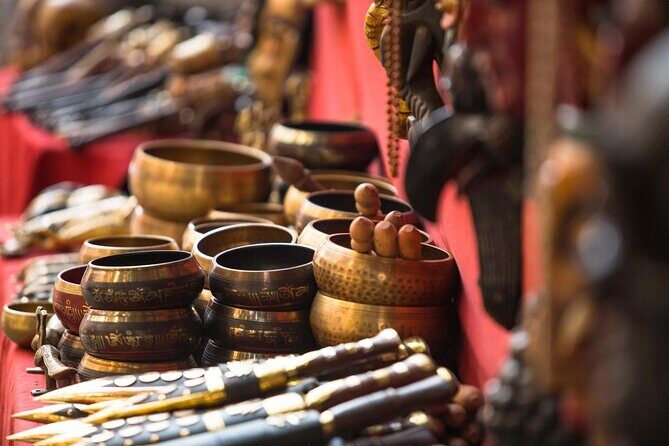
Finally, you land in Thamel for a little practical city time. You’ll have a chance to shop for essentials—things like trekking socks, a warmer layer, or small gifts—without having to figure out transit on your first day. That matters because when you hit the mountains, you’ll want to travel lighter and smarter, not more stressed.
Road to Pokhara and the Kali Gandaki setup day
After Kathmandu, you drive to Pokhara, and you’ll feel the scenery shift. It’s a classic transition: city noise fades, hills fill your view, and you get a cleaner sense of the Himalayan backdrop. Pokhara is famous for mountain views and a general outdoor-life energy, and the valley vibe helps you shake off travel fatigue.
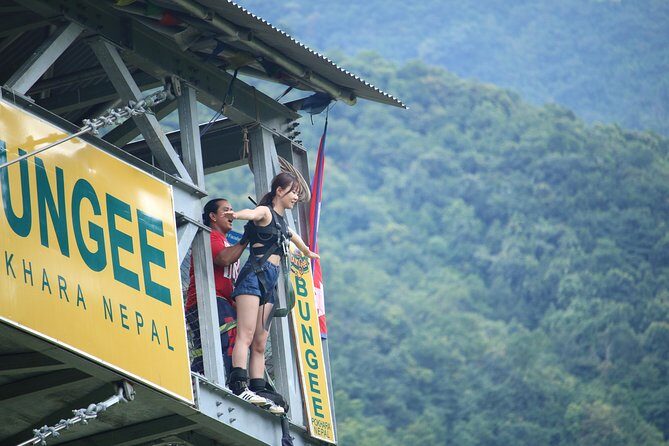
Then you start the trek day by day from the Kali Gandaki river area. One of the earliest highlights is the suspension bridge over the Kali Gandaki River gorge—this is the kind of moment where your brain goes quiet because the depth and movement are immediate. It’s short, but it gives you a real sense of scale in the Annapurna foothills before you settle into the long walk rhythm.
The early day into Bans Kharka is also about building legs safely. You’ll do mostly ascending hiking, crossing the gorge area, and then moving through lush forests. Expect the trail to be a “climb, then settle” pattern more than a smooth flat walk. It’s good training because later days keep asking your body to adjust to up-and-down terrain.
Bans Kharka to Naangi: village paths, farming school energy
From Bans Kharka, you head onward to Naangi, walking for about 6–7 hours. This is one of those days that rewards patience. You’re not racing to a single summit view; you’re moving through villages, farmland, and changing mountain angles as the trail threads its way forward.
The plan includes two value-add stops that help you understand what’s beyond the trail:
- an organic farm school visit
- a Magar settlement visit
That’s the part many trekking itineraries skip. Here, it’s woven into the hiking day. You’ll likely find it makes the next sections of the trek feel more meaningful because you understand where food, skills, and community projects fit in.
On days like this, it also helps to keep a steady pace. You’ll get frequent chances to stop for photos or quick looks, but the real win is walking with enough calm that you don’t burn out early.
Mohare Khopera to Mohare Danda: oak and rhododendron plus real mountain closeness
This is the day you start calling the trek by its name. You move from Mohare Khopera onward to Mohare Danda, around 7 hours of trekking. The route goes through forests of oak and rhododendrons, and the scenery opens in stages so you don’t feel like you’re staring at the same angle for hours.
One of the best parts of this day is the range of mountain names and directions you can watch for as the trail climbs. You’ll pass viewpoints toward Mt. Fishtail, south Annapurna, Dhaulagiri, Tukche, and more. That doesn’t mean you’ll identify every peak instantly, but the way the trek is laid out gives you repeated chances to orient yourself.
Then there’s the evening payoff: you get a glorious sunset view from Mohare Danda station. Sunset is often a highlight in Nepal, but here it feels especially useful because you’re at a higher anchor point. After sunset, you return to the eco-community management lodge, so you’re not chasing a last-minute scramble for a place to sleep.
If you care about comfort without losing the mountain feel, this lodge model is a big part of the appeal. You’re still hiking, still sleeping in the local lodging system, but the trek isn’t treated like a wilderness punishment course.





Mohare Danda sunrise and Ghorepani: the best kind of early start
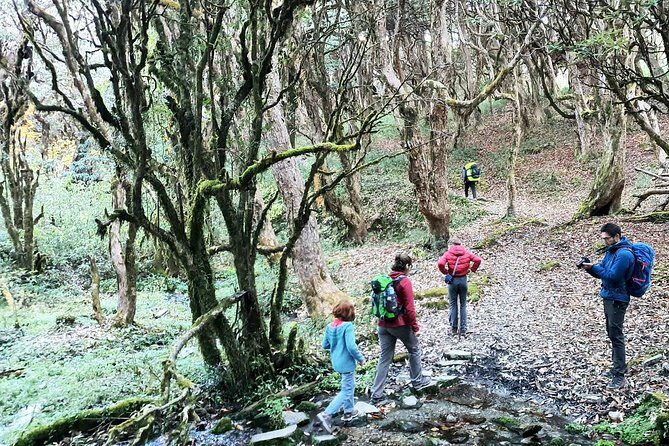
Day seven starts with an early morning plan at Mohare Danda: sunrise and crystal clear mountain views. This is the kind of moment that makes the early hours feel worth it. Depending on cloud cover, you can see a lineup of peaks including Mount Fishtail, Dhaulagiri I and II, Tukche, South Annapurna, and Nilgiri.
After that, you trek toward Deurali and eventually reach Ghorepani, about a 5-hour walk. Ghorepani is a familiar name in the Annapurna region because it sits on routes that connect to major sunrise viewpoints. Still, in this itinerary you reach it by way of Mohare Danda, so it feels like you’re arriving after a quieter route rather than hopping off a crowded trail.
When you arrive, you check in to your lodge and rest. I love how this day is structured: you get the mountain moment, then you transition to downshift time without forcing extra sightseeing before sleep.
Poon Hill first ray, then Ghandruk: villages after the mountain show
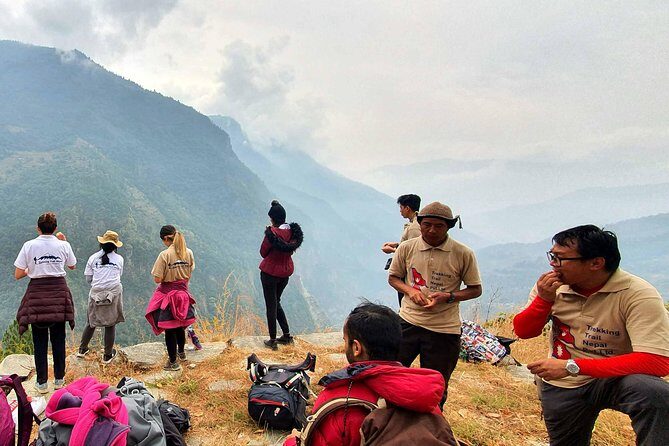
Day eight is a classic sunrise-chasing rhythm. You start for Poon Hill (3210m) early to catch the first ray of sunlight, then return for breakfast at Ghorepani and continue onward to Ghandruk.
The scenic value here is easy to understand. Poon Hill gives panoramic views over Annapurna and Dhaulagiri ranges, and it’s set against culturally rich villages. The walk back doesn’t feel like dead time either. You’re moving through forests, cultivated lands, and suspension bridge scenery over Khumbu Khola. After a sunrise morning, that mix of village detail and trail crossings helps the day stay interesting without feeling exhausting.
Then you arrive in Ghandruk, about 7 hours of hiking total for the day. Ghandruk is known for its village setting, and in an itinerary like this it works well because it’s a logical place to end your longer mid-trek stretch before the final descent.
Descent day to Pokhara and a Kathmandu reset
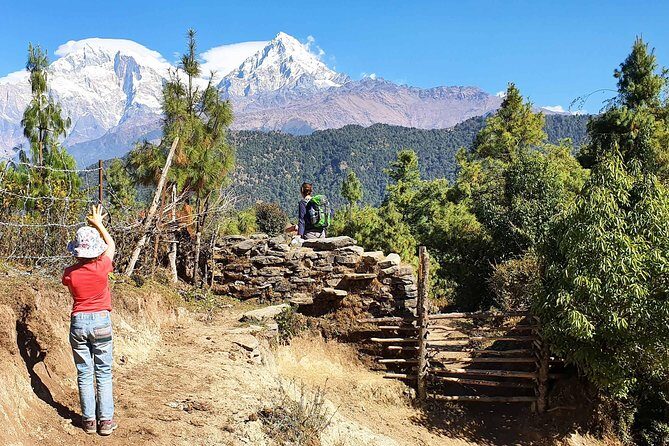
You finish the trek with a descent day toward Nayapul and then a drive to Pokhara. You’ll walk about 5 hours, descending to Nayapul and passing through villages with stone-paved trail sections and terrace farming views.
Crossing Modi Khola and passing Birethanti are part of that steady “trail turns into road-town” transition. It’s the kind of day where you’ll feel proud but also a little tired, because you’ve been hiking uphill or on uneven ground for days.
Once in Pokhara, you’ll be transferred to your hotel, giving you real downtime after the hiking effort. Then the trip loops back to Kathmandu for valley sightseeing and a couple of craft-focused cultural blocks.
In Kathmandu, Bhaktapur Durbar Square is your first UNESCO-style temple square stop. Then you visit Pottery Square and participate in a workshop where a local craftsman teaches you how to make a clay pot. That’s a great balance after trek days because it’s hands-on and grounding, and it’s not dependent on weather.
Finally, Patan Durbar Square rounds out the UNESCO sites with stops that include Krishna Temple and the Patan Museum. You also visit the Golden Temple and Banglamukhi Temple before being dropped back at your hotel. It’s a busy day, but it closes the trip with variety: monuments, learning time, and devotional sites all in one.
Eco-community lodges: where comfort meets conservation goals
This trek’s identity is tied to eco-community lodging and sustainable ecotourism. You’re walking through foothill forests and staying in community-managed lodges on a full board basis during the trek. That matters for two reasons.
First, full board reduces decision fatigue. When you’re hiking all day, you don’t want to spend your evening negotiating menus or searching for open eateries. You can focus on recovery: hot tea, early sleep, and getting your legs ready for the next day.
Second, the lodge model means the local community benefits are part of the system, not an afterthought. The trek is designed to support local community projects that help improve the lifestyle of local and native inhabitants. Whether you look at it as responsible travel or just the better way to operate locally, it gives this trip a purpose beyond scenery.
One practical note: eco lodges are still mountain lodges. Don’t expect the same style of luxury you’d find in Kathmandu hotels. The comfort level is functional and rooted in location.
Price and what’s actually included in this trek package
At $1,375.33 per person, this trek isn’t “cheap,” but it also isn’t just you wandering with a map. Your price covers a lot of the heavy lifting: private vehicle land transportation, an English-speaking local guide, the required permits (including ACAP and TIMS), and porter service with a 2 trekkers to 1 porter ratio.
It also includes accommodations across the trip:
- Kathmandu stays at a 4* option (Yatri Suites & Spa or similar)
- Pokhara stays at Batika Classic Hotel or similar
- Trek nights in eco-community lodges on a full board basis
Meals are included during the trek (breakfast, lunch, dinner as listed), but Kathmandu and Pokhara food is not included. Entrance fees for heritage sites are also not included, and the estimate given is about USD 50 per person. Tipping is not included either.
So the real value question is this: you’re paying for fewer logistics problems, fewer admin headaches, and more structured support in the mountains. If you want the trek to feel smooth and guided without having to organize permits, lodging coordination, and transfers yourself, the price starts to make sense.
Who this Mohare Danda trek suits best (and who should think twice)
This trek is a good fit if you’re looking for short-to-moderate time trekking that still feels like a real journey across villages and viewpoints. The daily walking times are manageable in the sense that you’re not doing ultra-long high-altitude days, and the trip is built for moderate physical fitness.
You’ll probably enjoy it most if you like:
- mountain sunrise and sunset moments
- quieter trails through forests and local settlements
- cultural stops that include a craft workshop and village-life visits
- a small group feel (maximum 12 travelers)
You should think twice if you dislike early mornings. Sunrise days are baked in—Poon Hill and the Mohare Danda sunrise plan happen early. Also, if you want everything fully inclusive in every city meal and every site fee, you’ll need to budget for those add-ons.
Should you book Mohare Danda Trek with Asian Heritage Treks and Travels?
I’d book it if you want the Annapurna region without the loudest crowds, and you care about staying in a community lodge network rather than only chasing views. The structure is solid: guided transfers, English-speaking support, permits handled, and full board during the trek. Add the Mohare Danda sunset plus sunrise views, and the Poon Hill first light, and you get a trip with multiple “wow” moments spread across several days.
But be honest with your planning: budget for Kathmandu and Pokhara meals, heritage entrance fees (around USD 50 per person as estimated), and tipping. If you arrive with that mindset and a willingness to walk a lot (including early starts), this trek can feel like a smart use of limited time in Nepal.
FAQ
Where does the trek start and what time?
The start is at Tribhuvan Airport in Kathmandu, Nepal, with a start time of 9:00 am.
Is pickup included?
Yes, pickup is offered.
What’s the group size?
The maximum group size is 12 travelers.
Do I need a moderate fitness level?
Yes. The tour notes that travelers should have a moderate physical fitness level.
Are permits included?
Yes. The package includes permits, including ACAP and TIMS and other necessary permits.
How does porter support work?
Porter service is included with a ratio of 2 trekkers to 1 porter.
What lodging and meals are included during the trek?
You get 5 nights in eco-community lodges on a full board basis during the trek (breakfast, lunch, and dinner are listed as included).
What about food in Kathmandu and Pokhara?
Meals in Kathmandu and Pokhara are not included, and drinks are not included either.
Are entrance fees included?
No. Entrance fees for heritage sites are not included, with an approximate estimate of USD 50 per person.
If you want the quick decision
If you like sunrise mountain views, forested foothill trekking, and community-based lodges, this is a strong choice. Just plan for entrance fees and city meals so the budget stays calm.