REVIEW · KATHMANDU
Manaslu Larke Pass Trekking
Book on Viator →Operated by Skyway Nepal Treks · Bookable on Viator
Manaslu’s altitude tests you before day four. This trek is interesting because you follow a working route through hill villages and changing terrain, then you hit the big moment at Larke Pass around 5,160m. I love the steady, well-planned pacing with an acclimatization day option, and I love the on-the-ground support led by English-speaking guide Durga (sometimes spelled Durgan in documents). The main consideration: it’s long and high, and you’ll need strong fitness for long trekking days and the thin-air crossing.
Another big reason I think this works is the “logistics are handled” approach: private vehicles for transfers, permits and TIMS taken care of, and all trekking meals included. You’ll also pass through the Manaslu Conservation Area, moving from lower Himalayan foothills toward harsher, more Trans-Himalayan high pasture country as you climb. If you’re hoping for lots of creature comforts, plan differently: drinking water, hot showers, and Wi-Fi aren’t included during the trek.
In This Review
- Key highlights you’ll actually feel on the trail
- Manaslu Larke Pass: what makes this trek different
- Price and logistics: does $1,150 feel fair?
- Kathmandu start: setting up right in Thamel
- The trek in plain terms: from Soti Khola up to Dharapani
- Days 3–5: Soti Khola to Jagat (getting your legs under you)
- Days 6–9: Jagat to Samagaon (villages, views, and climbing work)
- Day 10: acclimatization day in Samagaon (choose your level)
- Day 11: Samagaon to Samdo (the quiet step upward)
- Day 12: Samdo to Larkya Phedi (Dharamsala) (sleep near the pass)
- Day 13: Larke Pass day (Larkya Phedi to Bimthang)
- Day 14: Bimthang to Dharapani (the relief and the reset)
- Your support team: guide Durga and porters that change the experience
- What to pack and what to plan for (no guessing required)
- Who this trek suits best (and who should reconsider)
- Final verdict: should you book Manaslu Larke Pass?
- FAQ
- Where do I meet the group in Kathmandu?
- Is pickup from my hotel included?
- What’s included for the trekking portion?
- What happens in Kathmandu before the trek starts?
- Are international flights or the Nepal visitor visa included?
- Do I get hot showers or Wi-Fi during the trek?
- How difficult is this trek physically?
- What if my plans change and I need to cancel?
Key highlights you’ll actually feel on the trail
- Guide Durga’s hands-on support: English-speaking leadership plus assistants during trekking
- A real acclimatization break in Samagaon, with an optional hike to base camp area views and Birendra Lake
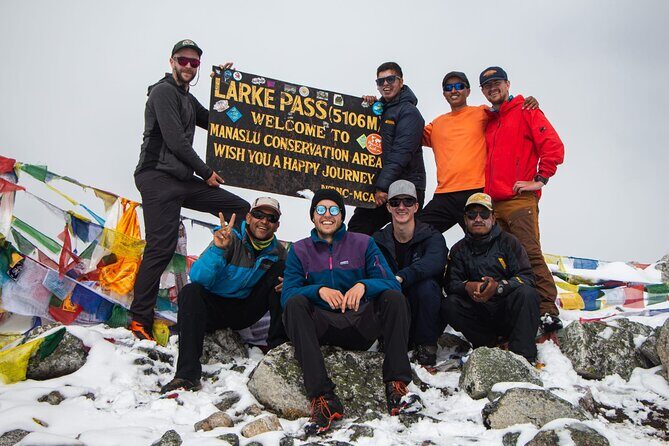
- The Larke Pass push via Larkya Phedi (Dharamsala) to Bimthang, including the high pass crossing around 5,160m
- Meals and permits included: TIMS and trekking permits, plus all trekking meals and Kathmandu breakfasts
- Porter ratio that helps: one porter for every two clients, reducing the load you carry
Manaslu Larke Pass: what makes this trek different
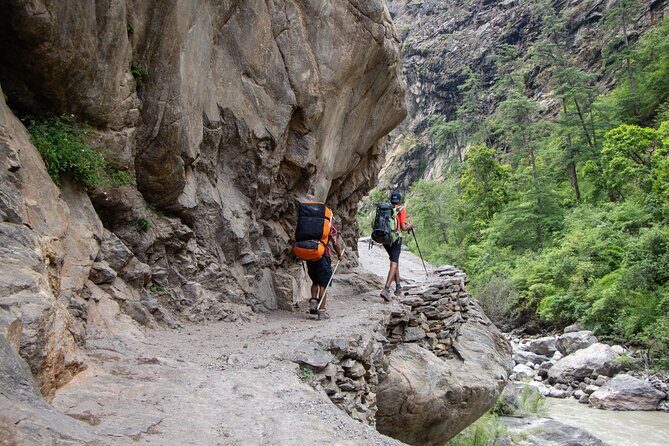
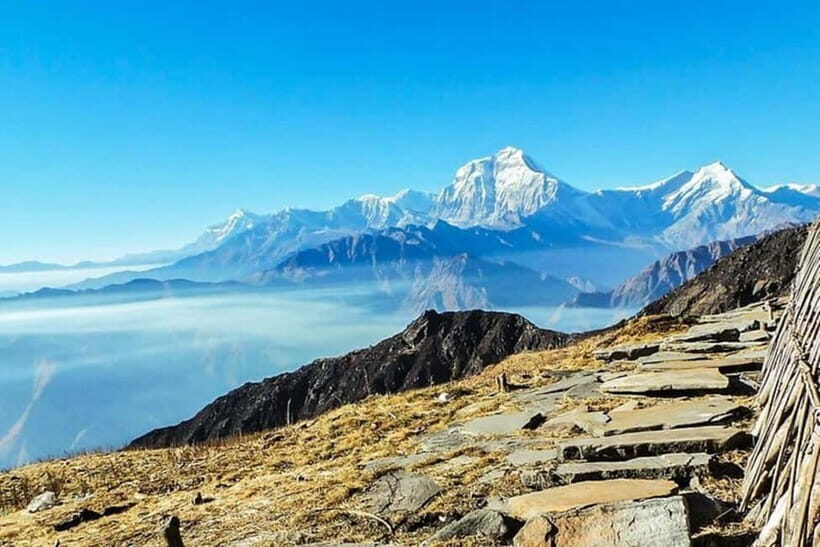
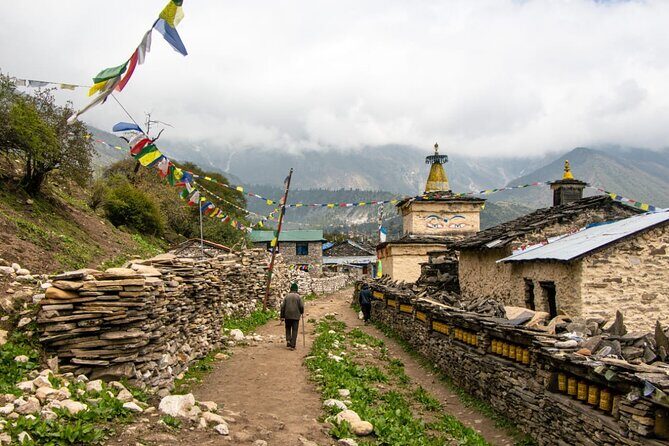
Manaslu (also known as Kutang) sits at 8,163m, and the trek route is built to put you in the mountain’s visual orbit without requiring technical climbing. Instead of only chasing views from one spot, you get a route that climbs through different zones, from lower foothills into high pasture country near Tibet.
The big draw is how you balance effort with payoff. You’ll walk day after day, but the itinerary gives you recovery breaks and a proper acclimatization day rather than just stacking altitude on top of altitude. That matters because the pass at Larke is the headline, but it’s the days around it that determine whether the headline feels good or feels punishing.
You can also read our reviews of more hiking tours in Kathmandu


Price and logistics: does $1,150 feel fair?
At $1,150 per person for about 16 days, this trek isn’t cheap. But you’re also not paying for only a “map and good luck.”
Here’s what that money is buying you, based on what’s included:
- Private vehicle transfers between destinations on the itinerary
- Double-occupancy accommodation throughout
- Trekking permits plus TIMS fees
- All meals during trekking, plus Kathmandu breakfasts, one welcome dinner, and one farewell dinner
- An experienced English-speaking trekking guide and a team of porters (one for every two clients), plus assistants
Where the value gets real is in reducing uncertainty. The trek uses multiple travel days and multiple elevations, and you don’t want to be figuring out permits, meal logistics, or who’s carrying what while you’re tired. This setup also helps if you’re traveling as a group that prefers a smooth process: you’ll be with your group only because it’s a private tour/activity.
Your budget should also assume what’s not included:
- International flight, travel insurance, and visitor visa fee
- Drinking water, snacks, hot shower, and Wi-Fi during trekking
- Personal expenses and any extra costs from unforeseen circumstances
If you price out those items yourself, you’ll likely see why the total lands here. If you already have solid insurance and you know your own water/snack habits, you can control some extra costs. But the core trek operations are clearly part of the package.
Kathmandu start: setting up right in Thamel
Your trip begins back at the same central spot in Kathmandu: Thamel Marg, Kathmandu 44600. The area is close to public transportation, which is handy if you need to get out for supplies before the trekking starts. Pickup is offered, so you’re not forced to wrestle bags across town on day one.
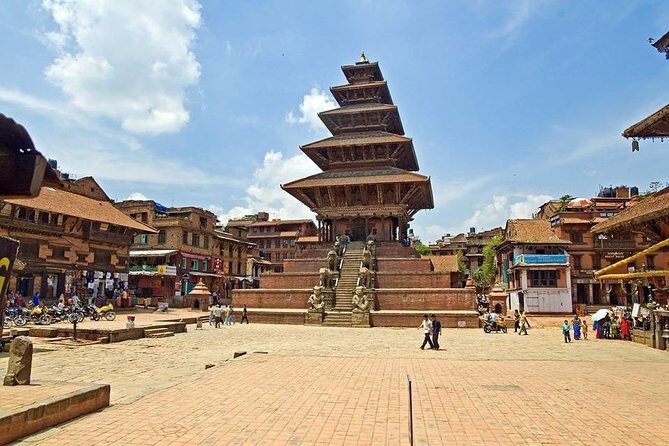
Day 1 is arrival into Kathmandu at roughly 1,300m. Day 2 is Kathmandu sightseeing and trek preparation. That day matters more than it sounds. You’re not just collecting photos; you’re also getting your gear and schedule aligned before you start driving out of the city and into the trekking rhythm.
Also note what the program requires for booking: your passport details (including expiry), and you should have your original passport. That’s worth taking seriously because trekking permits are part of what’s included, and permits depend on correct identity info.
The trek in plain terms: from Soti Khola up to Dharapani
The itinerary is built around a classic rhythm: start lower, walk steadily, climb into villages that change character as altitude rises, then make your push across the big pass and come down into a different climate zone.
Days 3–5: Soti Khola to Jagat (getting your legs under you)
On day 3, you drive to Soti Khola (about 800m) for a long travel day, roughly 8 to 9 hours. Expect the drive to take up mental energy, not just time. Once you start walking, you’ll begin shaping your pace.
Day 4 is trekking from Soti Khola to Machha Khola (about 870m) over roughly 6 to 7 hours. It’s usually the kind of day where you learn how your pack feels once you’re moving for real.
Day 5 continues to Jagat (about 1,340m) in roughly 6 to 7 hours. This is where you start noticing the change in air and effort. Nothing is sudden yet, but you’ll feel the altitude creeping in.




Days 6–9: Jagat to Samagaon (villages, views, and climbing work)
Day 6 goes from Jagat to Deng (about 1,860m) in roughly 7 to 8 hours. Day 7 climbs Deng to Namrung (about 2,660m) in roughly 6 to 7 hours. These are solid walking days, and they set you up for the higher, more dramatic scenery later.
Day 8 moves to Lho Gham (about 3,180m) in roughly 3 to 4 hours from Namrung. Day 9 is Lho Gham to Samagaon (about 3,530m) again around 3 to 4 hours. Shorter days up high can feel like a gift. It’s also part of how you stay fresh for the next steps.
Samagaon is your “settle in” point before the pass season starts. Even if you feel strong, this is the place where the itinerary gives you a chance to adjust.
Day 10: acclimatization day in Samagaon (choose your level)
Day 10 is the standout planning moment: you get an acclimatization day in Samagaon. There’s an optional hike to Manaslu Base Camp area (about 4,800m) and Birendra Lake (about 4,450m), and you’ll return in about 4 to 5 hours.
This option is valuable even if you don’t take it all the way. You’re practicing how you respond to higher elevation while still being able to come back to camp within a short time window. It’s also a morale boost because you’re close enough to feel the height in your lungs, but still in a controlled plan.
If you do go, keep it steady. Your job is altitude management, not speed.
Day 11: Samagaon to Samdo (the quiet step upward)
Day 11 takes you from Samagaon to Samdo at about 3,860m in roughly 2 to 3 hours. That’s not long on paper, but high altitude makes even short walking feel like it counts.
This day is useful for two reasons: you reduce cumulative fatigue, and you move into a launch point for the pass approach.
Day 12: Samdo to Larkya Phedi (Dharamsala) (sleep near the pass)
Day 12 is Samdo to Larkya Phedi (Dharamsala) at about 4,480m in roughly 4 to 5 hours. This is where you can sense the trek shifting. The pass is near, your mornings will get more important, and your schedule becomes about timing and energy conservation.
Dharamsala is also a name you’ll hear tied to the Larke Pass approach. It’s the staging area that turns a long trek into a single, memorable crossing.
Day 13: Larke Pass day (Larkya Phedi to Bimthang)
This is the heart of the route: Day 13 goes from Larkya Phedi to Bimthang (about 3,720m) via Larke Pass (about 5,160m). It’s a long day, roughly 10 to 12 hours.
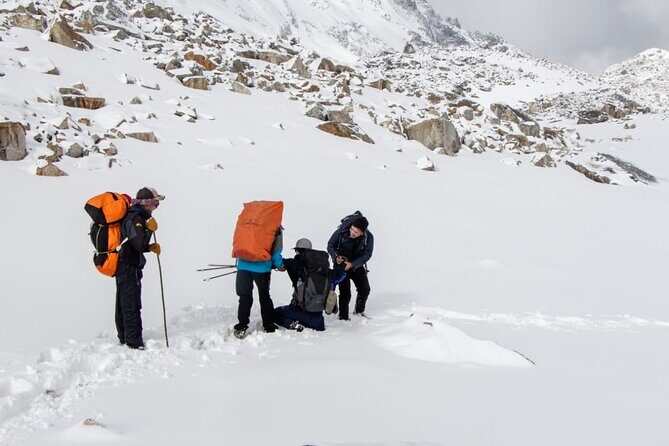
High pass days are about pacing. You’ll start with elevation already in your system and you’ll spend the day moving through a mix of effort and cold-air breath. You’ll then descend toward Bimthang, which helps, but don’t assume you’re done after the pass. Your legs still have to work.
If you’re the type who likes a checklist: plan for layers, slow breathing, and staying calm when the climb feels steep. This is where having an experienced guide matters, because the guide can keep you moving efficiently and help you avoid rushing in the wrong spots.
Day 14: Bimthang to Dharapani (the relief and the reset)
Day 14 trekking is Bimthang to Dharapani in roughly 8 hours. You’re moving back toward lower elevations, and that changes how you feel after a high day.
Dharapani is a good ending point for the walking portion. It’s also where your trek stops feeling like an isolated climb and starts feeling like you’re returning to more connected travel.
Your support team: guide Durga and porters that change the experience
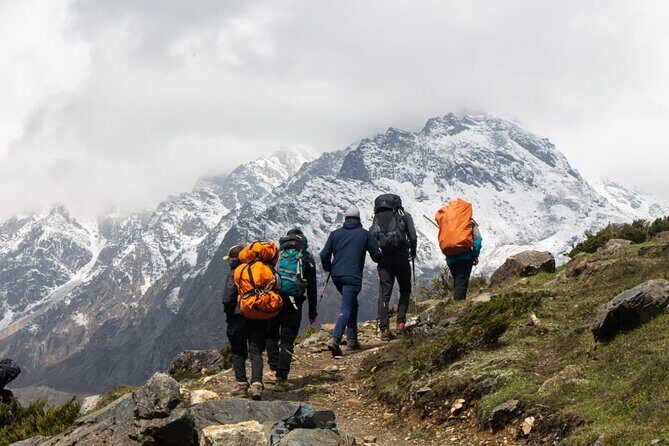
One of the strongest parts of this trek package is the people. The guide is English-speaking, and you also have assistants during trekking. That combination helps with more than navigation; it helps with rhythm. A good team keeps you from burning too much energy too early and makes sure you’re eating and pacing properly.
The porter structure is also meaningful: one porter for every two clients. That means you can travel with a pack that doesn’t turn every uphill switchback into a weight-lifting contest. You’ll still work, but you won’t be fighting your own load the entire time.
In the feedback for this trek, Durga and the broader team show up as the reason the trip feels smooth. It’s not only about the view at the pass. It’s about having people who keep the plan moving while you focus on the walking.
What to pack and what to plan for (no guessing required)
The trek includes a lot: all meals during trekking and Kathmandu breakfasts, plus welcome and farewell dinners. That reduces decision fatigue. But drinking water and snacks are not included during trekking, so you should plan how you’ll handle hydration and small energy boosts.
Hot shower and Wi-Fi aren’t included during trekking either. That’s normal for many Himalayan routes, but it’s worth accepting early so you don’t waste brain space.
What I suggest you bring, based on the realities of high elevation and a long pass day:
- Layers for big temperature swings (especially around the pass)
- Something for cold wind on exposed sections
- Comfortable trekking shoes you trust for long hours
- A way to carry your own water and snacks since those are not included
- A realistic mindset for long days (10 to 12 hours on pass day)
Also remember: you need strong physical fitness for this trek. This isn’t a stroll. If you train a bit before you go, you’ll enjoy it more and suffer less.
Who this trek suits best (and who should reconsider)
This trip is a strong fit if you:
- Want a classic Nepal high-pass trek with a clear itinerary
- Like having meals and permits handled so your time goes to walking
- Appreciate guided pacing and support on higher days
- Are okay with a mountain schedule where comfort is basic
You might reconsider if you:
- Want lots of downtime each day
- Are not ready for a long pass day around 5,160m
- Expect hot shower or Wi-Fi during the trek (those aren’t included)
The private-group nature is also a plus if you don’t want to get shuffled into a mixed group.
Final verdict: should you book Manaslu Larke Pass?
If you want a serious trekking experience with real support, this package makes sense. You’re getting permits, TIMS, trekking meals, accommodations, and a guide team led by Durga, plus the porter setup that reduces the burden on you. The route also has that satisfying structure: steady climbs, an actual acclimatization day, then the Larke Pass crossing and a clean return to Dharapani and Kathmandu.
Book this trek if you’re physically ready and you’re excited by the idea of high-mountain travel done the practical way: clear stages, strong guidance, and less logistical stress. Skip it only if you’re chasing comfort first, not altitude achievement.
FAQ
Where do I meet the group in Kathmandu?
The meeting point is Thamel Marg, Kathmandu 44600, Nepal, and the trek ends back at that same meeting point.
Is pickup from my hotel included?
Pickup is offered, but you should confirm the exact pickup arrangement with the provider when you book.
What’s included for the trekking portion?
Trekking includes all meals during the trek, trekking permits and TIMS fees, accommodation on a double-occupancy basis, and an English-speaking trekking guide with porters (one for every two clients) and assistants.
What happens in Kathmandu before the trek starts?
You arrive on day one, then on day two you’ll do Kathmandu sightseeing and trek preparation, with Kathmandu breakfasts plus a welcome dinner included in the package.
Are international flights or the Nepal visitor visa included?
No. International flights, travel insurance, and the visitor visa fee are not included.
Do I get hot showers or Wi-Fi during the trek?
No. Hot shower and Wi-Fi during trekking are not included.
How difficult is this trek physically?
It’s designed for people with strong physical fitness. The route includes long trekking days and a high pass crossing around 5,160m.
What if my plans change and I need to cancel?
You can cancel for free up to 24 hours in advance of the experience start time for a full refund. If you cancel less than 24 hours before, the amount you paid is not refunded.