REVIEW · KATHMANDU
Annapurna Base Camp, Nepal 10 days
Book on Viator →Operated by Third Eye Adventure P. Ltd · Bookable on Viator
Annapurna Base Camp is no joke, but it’s organized well. This private 10-day trek has a private pace with hotel and teahouse nights, plus guided context about the Annapurna Sanctuary’s spiritual and environmental meaning as you walk. I especially like the hotel-to-teahouse mix that eases you in, and the way the days are planned around steady hiking windows (about 3–8 hours). The main consideration: it’s a high-altitude trek, and you should expect cold conditions plus a few comfort items not included, like hot water/hot showers, Wi‑Fi, and battery charging.
I also like that you’re not stuck in a rigid group rhythm. You can customize the private trek to fit your needs, and you still get practical structure: early starts, included meals most days, and transport that gets you from Kathmandu to Pokhara and back. One more thing I appreciate is that you’ll have guided support through key trail moments, from Gurung villages to suspension bridges, and eventually the big payoff at the base camp area.
A possible drawback worth thinking through now: the itinerary asks for real uphill and downhill work, including long day totals like 6–8 hours on some days. If your fitness is only moderate, you’ll still be fine if you move steadily and don’t rush, but you’ll want to take altitude seriously.
In This Review
- Key highlights worth your attention
- Why this Annapurna Base Camp trek works as a private experience
- Kathmandu to Pokhara: the long ride that sets the tone
- Ghandruk and Chhomrong: classic Gurung villages and big first views
- Chhomrong steps and the suspension-bridge crossing
- Bamboo to Deurali (3230m): the cold-and-steady day
- Toward Machhapuchhre Base Camp and Annapurna Base Camp
- The return from Annapurna Base Camp to Bamboo: easier on paper, still real work
- Jhinu Danda and the long descent day that helps you feel momentum
- Pokhara and then Kathmandu: finish strong, not drained
- Price and logistics: what $848 buys you in real trekking value
- Altitude reality check: what “moderate fitness” should feel like
- Food and teahouses: comfort you can plan for
- Guide support: what helpful coaching looks like on ABC
- What to pack if hot showers and battery charging aren’t part of the deal
- Should you book this Annapurna Base Camp private trek?
Key highlights worth your attention
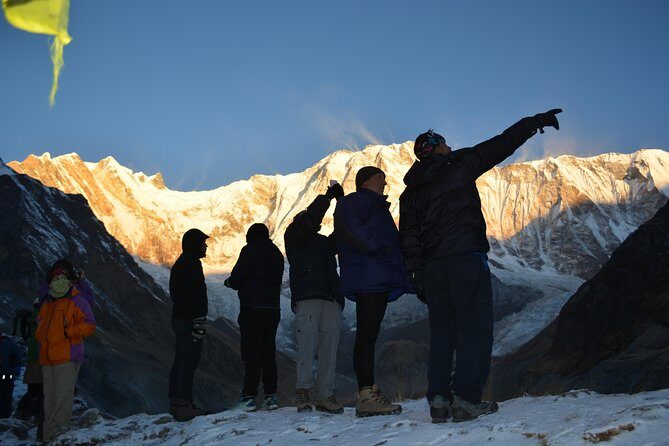
- Private trek, not a cattle-trap schedule: only your group, so your pace and timing matter.
- Real Annapurna village trail: Ghandruk, Chhomrong, and Chhomrong Khola make the walk feel like a living place.
- Teahouse nights with most meals included: breakfasts and dinners are covered, and lunch is included most days.
- Scenic goal day includes Machhapuchhre Base Camp: the route builds toward Annapurna Base Camp with key intermediate scenery.
- Guides who care (names you may meet): you may be guided by people like Sandip, Sandeep, Resham GC, Raju, Nitesh, or others from the operator’s team.
- $848 value tied to transport + meals: the price covers much of the logistics, so your budget goes to the trek itself.
Why this Annapurna Base Camp trek works as a private experience
If you’ve done group treks before, you know the feeling: someone is always trying to keep the slowest person moving, and the fastest walkers get bored. Here, it’s private. That matters on a route like Annapurna Base Camp where your body decides your speed. You’ll spend the day walking, sure, but you won’t feel constantly pushed by other people’s schedules.
This setup also helps with confidence. When the trail changes character—like stepping into a forested stretch, crossing a suspension bridge, or pushing through the cold section toward higher elevations—you’re not doing it alone. Your guide can keep your pace steady and help you interpret what you’re seeing along the way, including the spiritual and environmental importance of the Annapurna Sanctuary area.
The other big “private” advantage is flexibility. The tour can be customized for your needs. That could mean slower stops for photos, more time to acclimatize on a day when your body feels tired, or adjusting how you handle the uphill/downhill rhythm. The itinerary already gives structure, but you’re not locked into one rigid pace.
You can also read our reviews of more tours and experiences in Kathmandu.



Kathmandu to Pokhara: the long ride that sets the tone
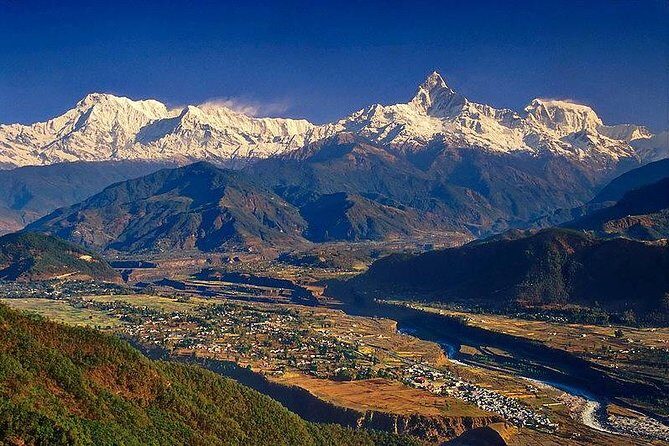
Day 1 is a drive from Kathmandu to Pokhara by tourist bus, about 7 hours. Pokhara sits around 820m, and that lower elevation does help you feel more human before you start climbing in earnest. After a day on the road, you’ll likely appreciate the fact that the next days are trekking-based, not more travel.
Here’s the practical point: that 7-hour drive is not just “getting there.” It’s your first lesson in Nepal timing and road conditions. Expect a long sit, and hydrate early. If you’re the type who forgets until later, start drinking water before you feel thirsty. That’s an easy way to help your legs handle tomorrow’s trekking work.
Ghandruk and Chhomrong: classic Gurung villages and big first views
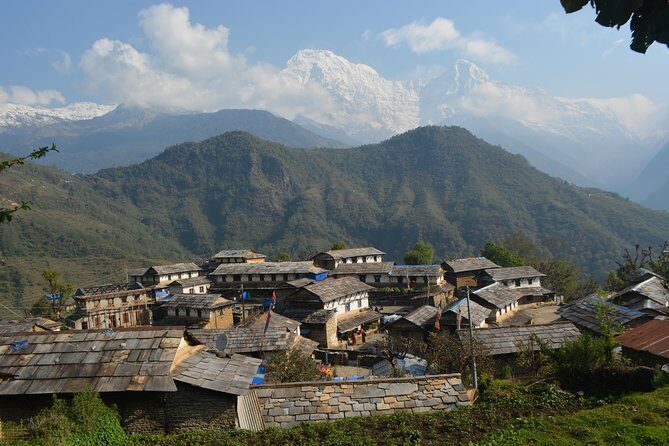
The trek begins after driving to Siwai. From there, Day 2 takes you to Ghandruk, a village mostly inhabited by the Gurung community. The route is described as a 4-hour trek from Siwai to Ghandruk, which is a good “wake-up” day: long enough to feel like you’ve started, but not so punishing that you arrive wrecked.
What I’d look forward to here is the shift from road Nepal to walking Nepal. Ghandruk is the kind of place where you feel the culture through simple, everyday details: village life, guesthouses, and the way locals have built their routines around trekkers. It’s also one of the first places where the Annapurna region starts to feel like a real landscape of peaks rather than a postcard.
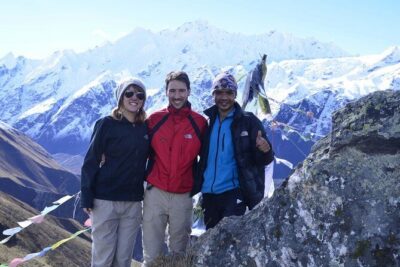
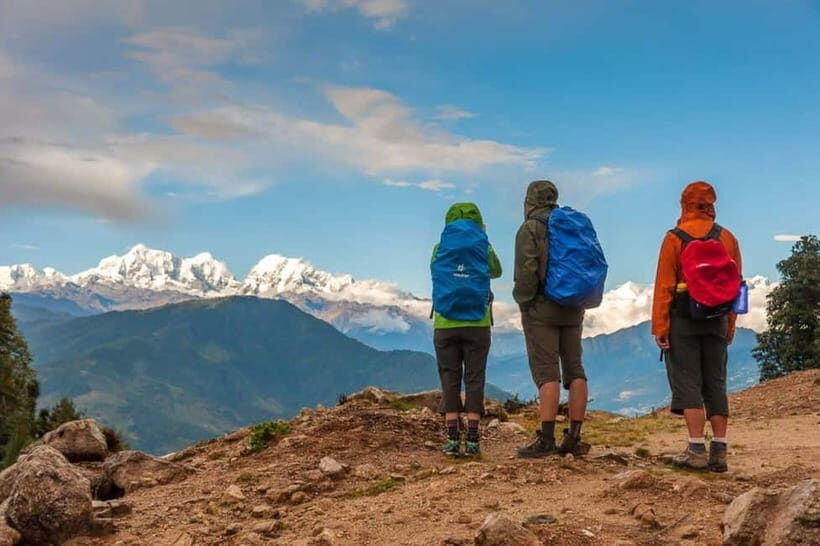
Day 3 focuses on the move toward Chhomrong. You climb toward areas like Kimrungdanda and get views of Annapurna South, Hiunchuli, Fishtail (Machhapuchhre), and Ganggapurna. That’s a lot of named peaks packed into a day, which usually means you’ll be stopping frequently for photos and for the kind of pauses that help your breathing.
Chhomrong is a key hub on this route. You’ll reach it via a mix of uphill and scenic segments, and it becomes the central “base” for a big portion of the trekking plan.
Chhomrong steps and the suspension-bridge crossing
Day 4 is all about losing and earning altitude. The trail out of Chhomrong descends via about 2,500 stone steps and crosses the Chhomrong Khola on a swaying suspension bridge. This is one of those days where your legs will get a workout in two different ways: quads for the descent, then back to effort when the trail climbs again toward Sinuwa and onward to Kuldih… (the route continues toward Kuldih steps and forest segments).
The suspension bridge part isn’t just for thrills. It’s also a useful “mental break” in a trek day. You pause, you look down, you shift your weight, and suddenly the steepness of the trail feels manageable again. Just take it slow. A good guide will help you keep balance and avoid rushing in a windy moment.
Then the day settles into forest walking toward your next stop. Forest trails can feel damp and cooler, and they’re often where you’ll notice how teahouse trekking is a rhythm of short segments and steady walking, not one continuous grind.
Bamboo to Deurali (3230m): the cold-and-steady day
Day 5 is a highlight for many trekkers because it’s the transition from “trail with views” to “trail at altitude.” You trek from Bamboo to Deurali at about 3,230m, and the walking window is 4–5 hours. The route passes through a bamboo forest that’s described as damp and cold, and then climbs steadily with fewer steep sections.
This is a day where pacing matters more than speed. When the climb is steady, you can get tempted to power up it like a workout. Instead, slow your breathing slightly and keep your effort consistent. At higher elevation, consistent effort usually beats hard surges.
Also, this day includes an important comfort tradeoff: the higher you go, the less you’ll want to spend time without warm layers. The tour info explicitly notes hot water and hot showers are not included. That means your strategy matters—warm layers for rest periods, quick rinses if you can, and planning for cold nights in teahouses.




Toward Machhapuchhre Base Camp and Annapurna Base Camp
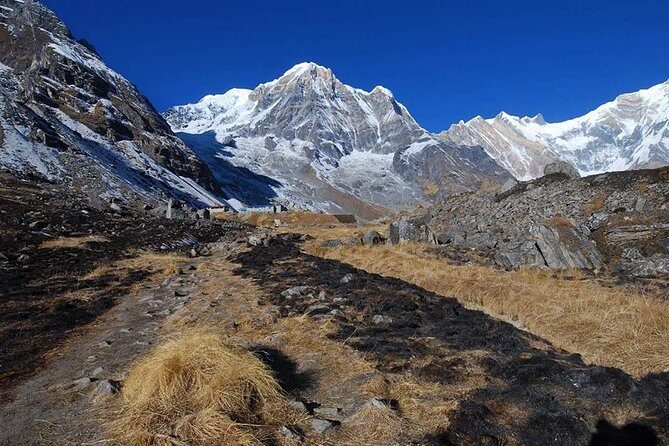
Day 6 is described as a 6-hour trek and includes a route toward Machhapuchhre Base Camp. There’s a climb over a steep section that moves onto the mountainside, and the hike from Bagar to Machhapuchhre Base Camp is called strenuous.
This is the day that often makes or breaks confidence on ABC treks. Not because it’s impossible, but because it tests whether you’ve learned to hike efficiently. You’re not chasing speed. You’re moving your body in a way that helps you acclimatize without exhausting yourself.
Then from Machhapuchhre Base Camp you get an excursion where you see more of the base camp area. This itinerary’s structure is smart: it doesn’t throw you straight from your earlier villages into a single giant wall. It builds toward the day that everyone wants—Annapurna Base Camp—while giving you an intermediate staging area and strong mountain focus (Machhapuchhre is a major visual draw).
When you reach the base camp zone, the feeling is usually part achievement and part awe. You’ll likely want time for slow photos and slow breathing. If your guide has added context about the Annapurna Sanctuary, this is the moment where the story and the views lock together.
The return from Annapurna Base Camp to Bamboo: easier on paper, still real work
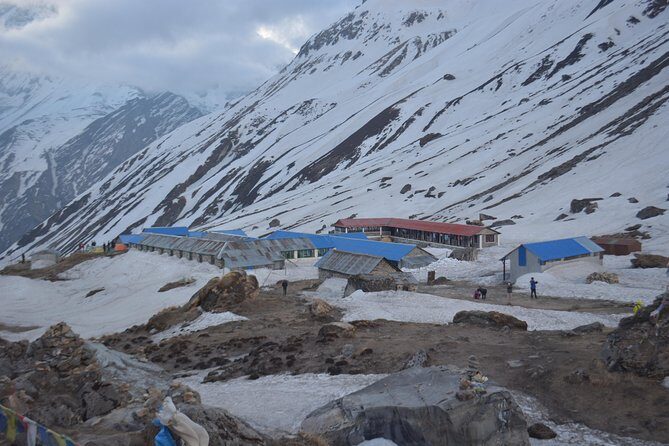
Day 7 is a retrace day. You go from Annapurna Base Camp back to Bamboo, and the day is downhill so it should be less difficult. It still clocks around 8 hours in the plan, though, so don’t interpret “downhill” as “easy.”
Downhill trekking punishes different muscles than uphill trekking. Your knees and quads do more work. A good guide will usually coach you on foot placement and controlled steps. Don’t stride too fast just because you’re heading down.
What I like about this kind of return day is that it lets you re-see the region with a calmer brain. On the way up, you’re often focused on effort. On the way down, you can enjoy the small changes in light and cloud movement and take in the mountains again without the same push to reach a goal.
Jhinu Danda and the long descent day that helps you feel momentum
Day 8 includes a trek described as 6 hours: Bamboo to Kuldighar (uphill), then downhill to Chhomrong Khola, then climbing stone steps back up to Chhomrong, and onward to Jhinudanda for rest. That sequence is a great example of why Annapurna Base Camp trekking is never only uphill or only downhill. It’s a series of legs where your body gets practice with changing effort.
Jhinudanda is a resting point in the itinerary and it usually gives you a psychological boost. You’re on the back half now, and each day is a step closer to Pokhara and Kathmandu. If you’ve been managing your energy well, Day 8 is where you feel you’ve regained control.
Just keep an eye on hydration and calories. Even if the terrain is easier than earlier days, long walking days can still drain you.
Pokhara and then Kathmandu: finish strong, not drained
Day 9 brings you back to Siwai from Jhinudanda, and you board a vehicle toward Pokhara. The plan says about 6 hours total and includes lunch on the way. This day is one of those “quiet victory” days. You’re done with the big mountain effort for now, and you can focus on rest and food without worrying about a steep trail tomorrow.
Day 10 is a drive back to Kathmandu, with time for looking around shops and picking up souvenirs. The itinerary also notes you can take a flight instead, which costs extra $100. That optional flight can be a big deal if you’re tired of long travel days, but if you feel good, the drive can still be a chance to see more of western Nepal.
Either way, this is your recovery window. If you want a comfortable end, treat Kathmandu as a reset day: eat well, sleep, and let your legs stop negotiating with you.
Price and logistics: what $848 buys you in real trekking value
$848 per person for 10 days sounds straightforward, but the value becomes clearer when you look at what’s included.
You get:
- Accommodation in hotels (for parts of the trip) and teahouses (on the trekking days)
- Most meals included: 10 breakfasts, 8 lunches, and 7 dinners
- Transport support: an air-conditioned vehicle, plus the Kathmandu–Pokhara and return drives
- Pickup offered and a mobile ticket
- Private trekking, with customization possible
Then there are clear exclusions:
- Hot water, hot showers
- Wi‑Fi
- Battery charging during trekking
- Tipping to the crew
For budgeting, the meal coverage is the biggest win. On treks like ABC, meals are often where day-to-day costs add up, especially if you end up paying for convenience items. Here, your included meals mean your budget can stay stable while you focus on staying warm and moving safely.
The private format also matters. You’re not paying only for “someone to walk with you.” You’re paying for the whole system: pace control, guided context, and the logistics that keep you from having to manage everything alone in a high-altitude environment.
Altitude reality check: what “moderate fitness” should feel like
The tour is best suited for travelers with moderate physical fitness. That’s not a guarantee that it’s easy. It’s a guarantee that the trekking plan can work if you walk steadily and accept the slow pace of altitude days.
You’ll typically be hiking between 3 and 8 hours per day, and the itinerary includes longer days like 8 hours on the return trek. That means you need endurance more than athleticism. If you can handle steady walking for hours at home, you’re in the right neighborhood.
Your biggest altitude risk is usually going too fast. This is where private pacing is helpful. You can slow down early and still arrive when you should. A guide can also help you manage stops so you don’t run yourself into exhaustion.
Food and teahouses: comfort you can plan for
Teahouse trekking isn’t luxury. Still, the plan does offer real support: accommodation in teahouses on the trekking portion and hotels elsewhere, plus the majority of meals included.
What you should expect practically:
- You’ll get breakfast and dinner as part of the plan (which helps with morning energy and evening recovery).
- Lunch is also mostly covered, so you’re not always searching for food.
- Hot water/hot showers are not included, so you’ll want to treat hygiene as a quick, sensible routine rather than a spa day.
From the type of feedback this operator tends to attract, people often value that teahouses are comfortable and clean enough to rest. Your best strategy is to pack layers you can manage and keep your sleep comfortable even when the temperatures drop.
Guide support: what helpful coaching looks like on ABC
On a trek like this, a good guide doesn’t just point the way. They help you make decisions when your body says no.
This tour is led by a private guide, and the operator’s team includes guides such as Resham GC and Sandip. Other guide names you might see in the operator’s broader trek network include Sandeep, Kamal, Raju, and Nitesh. If you get one of these guides, you can expect a warm, practical approach—helpful with pacing and route knowledge.
What coaching actually looks like day-to-day:
- Keeping your walking rhythm stable.
- Advising how to handle steep or strenuous sections.
- Helping you take in the meaning of the Annapurna Sanctuary rather than treating it like a checklist of peaks.
Even if you’re experienced, having that kind of support can take stress off your shoulders. In a high-altitude trek, lower stress often equals better breathing.
What to pack if hot showers and battery charging aren’t part of the deal
Because the tour info clearly says hot water/hot showers, Wi‑Fi, and battery charging are not included, you should plan your comfort around that.
Bring:
- Layers for damp, cold sections (the bamboo forest day is specifically described as cold and damp)
- A strategy for keeping electronics alive (power banks and charging plans)
- Water habits and snacks you like for “in-between” moments
- Good footwear for stone steps and long descents
Also think about the start time. The trip begins at 6:15 am, so your schedule will be early mornings. That affects how you sleep, how you pack, and how quickly you need to be ready.
Should you book this Annapurna Base Camp private trek?
If you want Annapurna Base Camp with less hassle and more control over your pace, I’d say it’s a strong match. You’re getting private trekking, included meals, and a route that hits classic village days before building toward the base camp goal.
Book this trek if:
- You like structured planning but want flexibility day to day.
- You’re comfortable with a moderate fitness level and can commit to slow, steady hiking.
- You value guided context, not just peak chasing.
Skip it (or consider another option) if:
- You need hot showers and constant Wi‑Fi to feel functional.
- You want a very easy walk. Some days are long, including downhill days that still work your legs.
If your main goal is a real ABC experience with practical support and a calmer pace, this private 10-day plan is worth serious consideration.