REVIEW · KATHMANDU
Bhaktapur and Patan Tour
Book on Viator →Operated by Outfitter Nepal · Bookable on Viator
Patan and Bhaktapur in six hours is a smart move. This tour gives you a focused visit to two UNESCO Durbar Squares with a private guide, so you’re not just walking past temples and palace courtyards—you understand why the Malla dynasty built things the way it did. I like the tight pairing of Patan and Bhaktapur, and I also like the smooth front-door pickup setup. The main thing to consider: entrance fees are not included, and lunch isn’t either, so you’ll want to budget and plan a little.
You’ll start in the morning and spend about two hours at each Durbar Square. That pacing works well if you want “wow” architecture without turning it into a full-day crawl. One possible drawback is that two hours per site is a taste, not a deep, slow wander—so if you like hours of quiet exploring, you may want extra time on your own afterward.
With a licensed guide and a small group size (up to 12), the tour feels orderly while still letting you make choices. In past groups, guides such as Rajan and Birodh have been praised for humor and clear context—exactly the kind of help that makes medieval city centers click fast.
In This Review
- Key highlights worth planning around
- Two UNESCO Durbar Squares in One Day: Patan + Bhaktapur
- Hotel pickup and a private ride that saves your morning
- Patan Durbar Square: stupas at the corners and Malla-era craft
- Bhaktapur Durbar Square: pagodas, courtyards, and a city-center feel
- The guide matters most: Malla dynasty context that changes your route
- Price and logistics: what the $100 covers (and what it doesn’t)
- Timing that works: 2 hours per square, and how to use it
- Who this tour fits best (and who might want something else)
- Should you book this Bhaktapur and Patan tour?
- FAQ
- What time does the Bhaktapur and Patan tour start?
- Is hotel pickup included?
- How long is the tour?
- Is the tour group large?
- Are entrance fees included in the price?
- Is lunch included?
- Do we get a guide?
- What is included in the tour vehicle arrangement?
- FAQ
- What is the cancellation policy?
- When will I get confirmation after booking?
- Is the tour suitable for most travelers?
Key highlights worth planning around
- Private guide context for Malla-era temples, palaces, and court layouts
- Two UNESCO Durbar Squares handled in one day: Patan + Bhaktapur
- Hotel pickup and a private vehicle so you lose less time to logistics
- About 2 hours per square gives a good overview without dragging
- Admission fees not included (budget roughly 2600 NPR per person)
Two UNESCO Durbar Squares in One Day: Patan + Bhaktapur
If you’re in Kathmandu and you only have a limited window, this combo tour is a strong use of time. Patan (also known as Lalitpur) and Bhaktapur are both famous for medieval city-center architecture—the kind of place where you notice details you’d never catch on your own.
What I like most is that this isn’t just a sightseeing checklist. A good guide makes these Durbar Squares feel like living civic spaces from the Malla dynasty era, not frozen backdrops. You’ll see pagoda-style temples and palace structures, and you’ll get context for why certain courtyards and monuments sit where they do.
Here’s the value angle: instead of paying separate tours or spending your day trying to coordinate transport across two different city districts, you’re getting a single structured loop. That reduces decision fatigue, which matters because Kathmandu traffic and timing can be unpredictable.
You can also read our reviews of more tours and experiences in Kathmandu.



Hotel pickup and a private ride that saves your morning
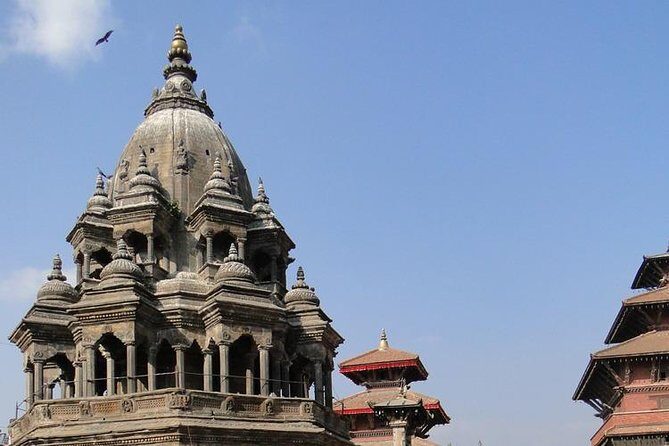
The day starts at 9:15 am, with pickup from your Kathmandu hotel (you provide your hotel name when booking). That sounds like a small detail, but in practice it makes a huge difference. You avoid the early scramble of figuring out where to meet, how to get there, and how long the transfer will take.
You’ll travel by private tourist vehicle, and the tour is described as a small group departure with a maximum of 12 travelers. In plain terms: it’s not a giant bus situation. You still get companionship, but your guide can move you through the sites without turning the visit into a frantic line.
Also, you get a mobile ticket. That’s helpful for a day trip where you’re juggling entry lines, weather changes, and multiple stop points.
Patan Durbar Square: stupas at the corners and Malla-era craft
You’ll begin at Patan Durbar Square, where the vibe is distinctly different from what most people expect from Nepal’s capital city. Patan is known as Lalitpur and is often described as one of the older, more established urban communities in the Kathmandu Valley.
A standout feature here is the way the square relates to four stupas, one at each corner. The tour notes these are said to have been built by Emperor Ashoka. Whether you treat that detail as strict history or part of the local tradition, it’s still a useful way to look: don’t just scan buildings—notice the overall layout and how religious markers frame public space.
You’ll also want to pay attention to the craftsmanship. Patan is remembered for architectural excellence from the Malla period, including stonework, temple forms, and palace-area architecture. With a guide, these aren’t random carvings. They become clues—about power, worship, and how elites shaped civic life.
Two practical notes for Patan:
- You’ll have about 2 hours, which is enough for an overview, key monuments, and photos, but not enough for a super-slow, detail-only day.
- Entrance fees for the heritage sites are not included, so you should plan for that cost before you arrive at the square.
If you like architecture and symbolism, this is the kind of start that gets you in the right mindset quickly. You’ll likely notice more during the Bhaktapur stop because you’ve warmed up on Patan first.
Bhaktapur Durbar Square: pagodas, courtyards, and a city-center feel
Next up is Bhaktapur Durbar Square, and the contrast is real. Bhaktapur is often described as an open exhibition hall—a place where religious monuments, historic social customs, crafts, and old statues all sit in the same broad urban environment.
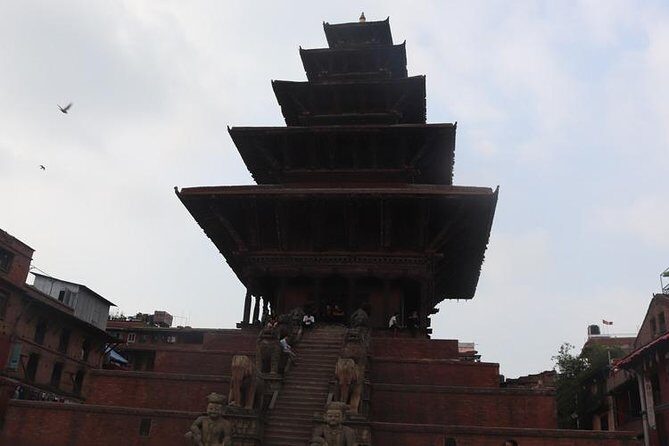
What I like here is the mix of scales. You’re not only looking at temples. You’re also reading the way squares, yards, and traditional houses connect with religious spaces. The tour highlights that Bhaktapur has a bunch of sanctuaries, pagodas, and Buddhist cloisters built on different occasions across history. Even if you only catch a fraction of those details, you’ll still come away with the sense that the town is layered.
Bhaktapur is also commonly framed as a city of religious life. The practical payoff for you: your guide can point out which buildings are devotional, which are palace-related, and which function as communal civic anchors. Once you understand that, the square stops feeling like a collection and starts feeling like a system.
A small caution: because this stop is also about two hours, you’ll want to choose your priorities when you arrive. If you try to look at everything equally, you’ll end up seeing less of what matters to you. I recommend picking a few themes—pagoda temples, palace courtyards, and stonework are good anchors—and letting the rest become background.
The guide matters most: Malla dynasty context that changes your route
A private guide is the difference between seeing buildings and understanding them. The tour is built around that idea: you’re not only touring two famous squares, you’re getting interpretation tied to the Malla dynasty.
In particular, the tour description calls out 17th-century pagoda temples and palaces. That matters because the pagoda style is not just a visual choice—it often signals religious function, patronage, and the way rulers expressed authority through built form.
The reviews attached to this tour (from multiple past bookings) strongly highlight how helpful the guide is. Guides such as Rajan and Birodh have been praised for sharing useful insights and adjusting to the group’s preferences. One helpful theme from those comments: when you show what you’re curious about—religion, philosophy, culture, or art layout—the guide can steer the explanation in a way that makes the square feel personal.
For you, that means you should be ready with two or three questions. Examples:
- What does a particular courtyard or arrangement suggest about power or worship?
- How do the pagoda forms connect to the religious traditions in the valley?
- Where should I look first to understand the layout quickly?
If you go in with those questions, the tour’s “private guide” component stops being a nice-to-have and becomes the main value.





Price and logistics: what the $100 covers (and what it doesn’t)
The advertised price is $100 per person for a 6-hour (approx.) day trip. That’s the kind of price that can be fair or not depending on what you compare it to.
Here’s what’s included:
- Private tourist vehicle
- Small group departure
- Professional licensed tourist guide
Here’s what’s not included:
- Lunch
- Tips for the guide and driver (recommended)
- Entrance fees to the heritage sites, about 2600 NPR per person (approx.)
So how do you judge value? You’re paying for two things you’d otherwise struggle to organize in a short visit:
1) coordinated transport between two Durbar Squares
2) a guide who gives you meaning fast, instead of letting you spend your time googling in-between stops
The entrance fee note is important. If you arrive expecting the $100 to cover everything, you’ll be surprised. If you treat it as a predictable add-on, the trip looks much smarter: the day is essentially “transport + two UNESCO sites + guide.”
Also remember: lunch isn’t included. That doesn’t mean you’ll be stuck hungry, but you should plan to eat on your own between stops or afterward. If your stomach prefers routine, you may want to do a quick snack strategy before you start the tour.
Timing that works: 2 hours per square, and how to use it
The day is structured as two main stops, each listed at about 2 hours:
- Stop 1: Patan Durbar Square
- Stop 2: Bhaktapur Durbar Square
That’s a reasonable pacing model. The benefit for you is energy control. If you only get six hours total, you don’t want to spend four hours drifting and then rush the second site.
But here’s how to make it work better:
- In Patan, use the first 20–30 minutes to orient yourself: where the stupas frame the corners, where key temples and palace-area structures sit, and which monuments look most symbolic.
- In Bhaktapur, switch to a “theme” approach. Pick the pagodas and courtyards you most want to understand, then let other sights fill in around them.
The tour also includes pickup at 9:15 am and runs for about six hours total. If you’re scheduling later activities in Kathmandu, you’ll want a little buffer afterward.
Who this tour fits best (and who might want something else)
This is a good match if:
- you want UNESCO Durbar Square highlights without making transport plans yourself
- you appreciate architecture but also want the story behind it
- you like the efficiency of a morning start with a clear itinerary
It may not be ideal if:
- you’re the type who wants to sit in one place for an hour and sketch or photograph only one monument
- you’re traveling with strict dietary needs and prefer guided lunch planning (since lunch isn’t included)
- you want a fully self-paced day where you can stay longer wherever you feel pulled
The good news: even if it’s not perfect for a slow traveler, it still works as a strong foundation. You’ll know what to revisit on your own later.
Should you book this Bhaktapur and Patan tour?
I’d book it if you want a straightforward Kathmandu heritage day that actually helps you understand what you’re seeing. The combo of Patan + Bhaktapur Durbar Squares, guided by a licensed professional and supported by hotel pickup and a private vehicle, is exactly the kind of structure that makes a short trip feel complete.
Before you commit, do two quick checks:
- Budget for entrance fees (approx. 2600 NPR per person) plus lunch and recommended tips.
- Be honest about your pace. If two hours per square sounds right, you’ll enjoy this format. If you prefer slow roaming, plan extra time elsewhere in addition to the tour.
If you like medieval art and want context without spending the day managing logistics, this is a solid value.
FAQ
What time does the Bhaktapur and Patan tour start?
The tour starts at 9:15 am.
Is hotel pickup included?
Yes. You need to share your Kathmandu hotel at the time of booking so pickup can be arranged.
How long is the tour?
It lasts about 6 hours (approx.).
Is the tour group large?
No. The tour has a maximum of 12 travelers, and it’s described as a small group departure.
Are entrance fees included in the price?
No. Entrance fees for the heritage sites are not included and are listed as approximately 2600 NPR per person.
Is lunch included?
No, lunch is not included.
Do we get a guide?
Yes. It includes a professional licensed tourist guide.
What is included in the tour vehicle arrangement?
A private tourist vehicle is included.
FAQ
What is the cancellation policy?
You can cancel for free up to 24 hours in advance for a full refund.
When will I get confirmation after booking?
Confirmation is received within 48 hours of booking, subject to availability.
Is the tour suitable for most travelers?
The experience notes that most travelers can participate.
If you want, tell me your travel month and whether you prefer temples, palaces, or street details most—I can suggest how to spend extra time before or after the 6-hour window.