REVIEW · KATHMANDU
Kathmandu: Mt Everest Scenic Flight by plane (window seat)
Book on GetYourGuide →Operated by Kathmandu City Tours · Bookable on GetYourGuide
Everest looks close from the sky. This scenic flight out of Kathmandu turns a big dream into real-time views of Sagarmatha and the surrounding peaks, best enjoyed from a plane window in crisp morning light.
I especially love the guaranteed window seat. I also like how this is a low-effort way to see major Himalayas without trekking, plus you get a flight certificate as a real keepsake. The main drawback to factor in is simple: flights run in the morning and are weather-dependent, and the experience is not ideal if you get nervous with heights.
In This Review
- Key Highlights You’ll Actually Care About
- Why This Everest Scenic Flight Works When You Have Limited Time
- What You’ll See Over the Himalayas (and How Everest Fits In)
- The 3-Hour Rhythm: Pickup, Airport, Flight, Return
- Window Seat Reality: Photo Views Without the Head-Aching Line
- Peak Spotting During the Morning Flight (What Makes It Fun)
- Cockpit Visit and Flight Certificate: Small Extras That Actually Land
- Price and Value: Is $295 Fair for an Everest View?
- Who This Experience Suits Best (and Who Should Skip It)
- Before You Go: Practical Tips That Improve Your Day
- Should You Book This Everest Scenic Flight?
- FAQ
- What’s the total duration of the Kathmandu Mt Everest scenic flight?
- How long is the flight time over the Himalayas?
- Do I get a window seat for the flight?
- Which airlines might operate the flight?
- What time do flights usually depart?
- Is a cockpit visit included?
- What peaks can I expect to see?
- What’s the best side of the plane for views of Everest?
- What should I bring and what’s not allowed?
Key Highlights You’ll Actually Care About
- Guaranteed window seat for every passenger, so you’re not stuck looking through someone else
- Early-morning departures with clear-sky odds, giving you the best chance at sharp mountain views and great photos
- Easy peak spotting over eastern Himalayas, with a map provided on many flights
- Optional cockpit visit in some cases, plus a flight certificate you can keep
- Left-side seating is often best for Everest views, so plan based on that
- No trekking required: you get the mountain moment fast, in about half a day
Why This Everest Scenic Flight Works When You Have Limited Time
If you’re in Kathmandu for only a short stretch, this flight is the practical fix. You still get the emotional payoff of seeing mountains that look unreal from the ground. And you avoid the days of planning, pacing, permits, and physical grind that come with a trek.
This also makes sense for first-timers. You learn names quickly because the route is built around recognizable peaks. You’ll often pass over the kind of summits you usually only see in textbooks—then you’ll watch the light change as the plane moves along the range.
It’s not trying to replace the full Everest experience. It’s more like a front-row pass to the Himalayas, with a tight schedule and a friendly, organized flow from hotel to airport and back.
You can also read our reviews of more tours and experiences in Kathmandu.
What You’ll See Over the Himalayas (and How Everest Fits In)
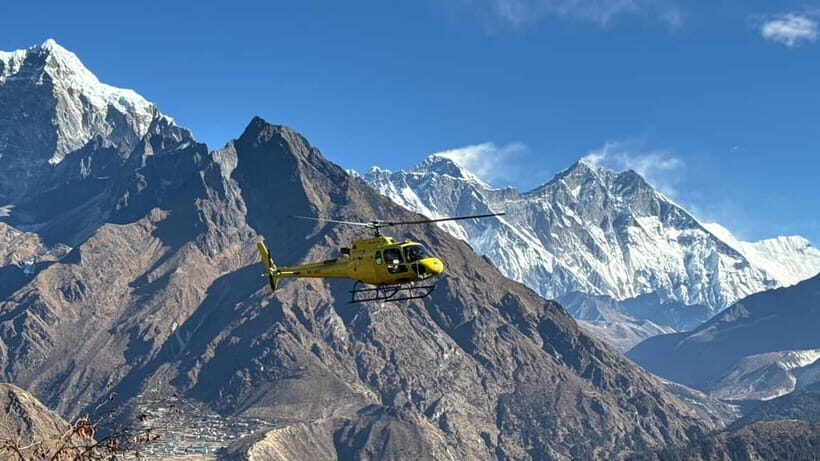
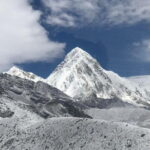
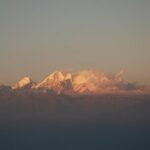
This route flies over the eastern Himalayas, where the peak chain is easier to read from above. On a clear morning, you can pick out a sequence of towering summits and understand why they dominate the skyline.
The star is Mount Everest (Sagarmatha), along with major neighbors like Lhotse and Makalu. You may also see peaks such as Gaurishankar, Langtang Lirung, and Cho Oyu, plus other snow-capped giants along the way. Even if you don’t know the mountain names, the scale is obvious once you’re in the air.
I also like the fact that you’re not just aiming at one point. The flight is designed as a long look over a range, not a quick hop. That means you get multiple chances to spot the big ones as the plane turns and tracks across the mountains.
One more useful detail: many flights provide a Himalayas map onboard. That matters because it helps you match what you’re seeing with what you’re hearing, instead of guessing.
The 3-Hour Rhythm: Pickup, Airport, Flight, Return
The whole experience is planned to stay simple. You’re picked up from central Kathmandu—either Thamel Narsing Chowk or Thamel Marg—then driven to Tribhuvan International Airport. The airport transfer is short, about 15 minutes, so you’re not sitting in transit for long.
From there, you board a small aircraft operated by airlines such as Buddha Air, Yeti Airlines, or Shree Airlines. The flight itself is typically around 50–60 minutes, even though the total time on the schedule is about 3 hours including pickups and transfers.
After the flight, you return to the airport and get transferred back to your chosen drop-off location in Thamel. This makes the day easy to plan around. You can fit it into the first part of your trip, before you decide on a trek, or use it as a consolation plan if you can’t manage longer travel.
A small practical note: because the timing is tight and early, you’ll want to be dressed and ready before you’re picked up. Warm layers and your camera should be ready to go, not hunted for at the last second.
Window Seat Reality: Photo Views Without the Head-Aching Line
A guaranteed window seat is the difference between feeling like you booked a highlight and feeling like you booked a compromise. Here, every passenger gets a window seat, so you’re not forced into the middle of the plane or stuck with partial views.
For photos, the biggest challenge is angle and glare, not technical difficulty. Try to plan your camera settings for daylight contrast, and aim for steady shots rather than frantic bursts. Also, be ready for the plane’s motion: even smooth flight creates small shifts, so use short sequences and check your results quickly.
Weather and light do the heavy lifting. The best photography moments tend to come in the early hours when skies are clearer and the sun hits snow in a way that looks almost metallic. The experience is designed around those morning conditions, and flights generally depart between 6:00 AM and 8:30 AM.
You’ll also be looking down at bright snow. That means your eyes will adapt fast, but your camera may need help. Bring the habit of checking exposure, not just shooting.
And if you care about which side to sit on: the left side of the plane is often best for views of Everest. The exact side can matter a lot when you’re trying to frame specific peaks.
Peak Spotting During the Morning Flight (What Makes It Fun)
This flight is one long puzzle you get to solve with your own eyes. As you rise and move over the mountain chain, you’ll see how the peaks line up in layers, with lower ridges and steep walls adding depth.
Mount Everest is highest on the list, but you’ll usually notice the others too. Lhotse and Makalu can look like giant walls beside Everest, while other peaks like Cho Oyu give you that rolling, jagged horizon effect that makes the Himalayas feel endless from above.
What makes this enjoyable is that you get time to look, not just a quick flyby. The schedule sets you up for sunrise light and scenic viewing across the route, so you’re not watching from a single flat moment.
If you’re the type who likes to identify what you’re seeing, use the map when available. It’s the fastest way to go from random peaks to names you can remember. And if you’re not into names, focus on shapes: the steepness, the way snow sits on ridges, and how clouds thin or thicken around the mountains.
Either way, clear morning skies are the key. If it’s hazy, you still get the thrill of flying over the Himalayas, but visibility can soften.
Cockpit Visit and Flight Certificate: Small Extras That Actually Land
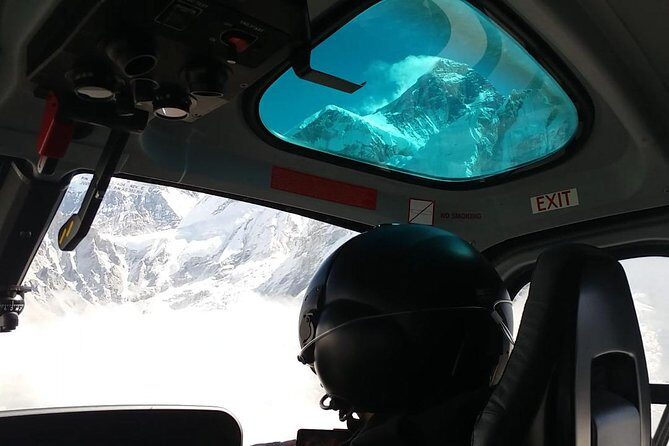
Some flights may allow you to visit the cockpit, giving you a pilot’s-eye view for a rare peek behind the scenes. Even if you don’t go in, the fact that it’s an option adds a layer of excitement beyond sightseeing.
Then there’s the flight certificate. It’s the kind of souvenir that feels honest. It’s tied to your specific experience, and it gives you something concrete to hold after the photos fade from your camera roll.
I also like the overall sense of professionalism. The experience is set up for smooth transitions: pickup, check-in, flight, then return transfer. That matters when you’re dealing with early mornings, airport procedures, and tight schedules.
Price and Value: Is $295 Fair for an Everest View?
At $295 per person for the full experience, you’re paying for three things: the flight time over major peaks, the window-seat guarantee, and the organized hotel-to-airport service. You’re also paying for the weather gamble, since early morning visibility can change.
So is it good value? For the right traveler, yes. If your alternative is weeks of trekking or you simply don’t have the stamina or time, this delivers a strong payoff quickly. You’re not just buying a seat—you’re buying a planned window to see Everest and nearby giants without the logistical weight of a full expedition.
Where the value shifts is if you’re hoping for a detailed, ground-level Everest day. This isn’t that. It’s a bird’s-eye view, and your experience depends heavily on clear skies.
If you do book, I’d treat it like a “best-shot” day. Dress for cold, bring your camera, and set expectations for what an airplane can and can’t do.
Who This Experience Suits Best (and Who Should Skip It)
This flight is a great fit if you:
- Have limited time in Kathmandu and want a fast Everest hit
- Prefer comfort over long treks
- Want a guaranteed window seat and a smooth, guided-style flow
- Like photography and peak-spotting from above
It’s less ideal if you’re afraid of heights. Being in the air is the whole point here, and small aircraft still feel very exposed. Also, if you’re extremely sensitive to cold, plan carefully with warm layers, because mornings near the airport and on the ground can be chilly.
Accessibility-wise, it is wheelchair accessible, and you’ll have an English host or greeter. That helps a lot with navigating early procedures.
One more rule to plan around: alcohol and drugs are not allowed.
Before You Go: Practical Tips That Improve Your Day
Here’s what I’d prepare based on how this experience is set up:
- Bring warm clothing for early morning chill
- Pack a camera and be ready to shoot quickly when peaks appear clearly
- Bring your passport; a copy is accepted
- Choose the left-side advantage if you can when seating is assigned
- Arrive ready for an early start, since flights operate every morning weather permitting
Also, keep flexibility in mind. The best time for this type of flight is generally between September and May, when conditions often support clearer visibility.
If you’re booking with a “maybe we’ll change plans” mindset, there is free cancellation up to 24 hours in advance for a full refund, plus reserve now and pay later options.
Should You Book This Everest Scenic Flight?
Book it if you want a high-impact Everest view without trekking. The guaranteed window seat, the morning timing, and the chance to see iconic peaks like Everest, Lhotse, and Makalu make it a strong use of a few hours in Kathmandu.
Skip it if weather uncertainty would stress you out, or if heights make you uncomfortable. Also, if your dream is a full, ground-based Everest journey, this will feel too short and too far above the action.
For most travelers doing Kathmandu “the smart way,” this is one of those rare days where you trade effort for payoff—and you come back with photos that actually look like you cheated the map.
FAQ
What’s the total duration of the Kathmandu Mt Everest scenic flight?
The total duration is about 3 hours, including hotel pickup, airport time, the flight, and the return transfer.
How long is the flight time over the Himalayas?
The scenic flight segment is typically around 50–60 minutes.
Do I get a window seat for the flight?
Yes. Each passenger is guaranteed a window seat for the best possible views.
Which airlines might operate the flight?
Flights are operated by airlines such as Buddha Air, Yeti Airlines, or Shree Airlines.
What time do flights usually depart?
Flights depart between 6:00 AM and 8:30 AM, weather permitting.
Is a cockpit visit included?
The experience includes an opportunity to visit the cockpit, where available, as part of the included features.
What peaks can I expect to see?
The flight route may include views of Mount Everest (Sagarmatha), Lhotse, Makalu, Gauri Shankar, Langtang Lirung, Cho Oyu, and other snow-capped peaks.
What’s the best side of the plane for views of Everest?
The guidance provided is to sit on the left side of the plane for the best views.
What should I bring and what’s not allowed?
Bring warm clothing, a camera, and your passport (a copy is accepted). Alcohol and drugs are not allowed.