REVIEW · KATHMANDU
Lumbini (Birth Place of Lord Buddha) Buddhist Tour from Kathmandu Nepal
Book on Viator →Operated by Fewa Trail Treks and Expedition Pvt Ltd · Bookable on Viator
Lumbini is where the Buddha story begins. I like how this tour puts the focus on the Maya Devi Temple birthplace and the Ashoka Pillar marker, with enough time for slow, respectful walking through gardens and sacred grounds. It is also a good mix of spiritual stops plus the larger world of Buddhist tradition you can see in the monastic zones.
The only real drawback to watch is logistics: you are doing a long overland ride (about 7–8 hours each way), and even with some sites listed as free, the tour notes entrance fees (about $25 per person) while meals cost extra. Also, the package includes 6 nights even though the trip is described as about 4 days, so confirm your exact dates before you go.
In This Review
- Key highlights I think you’ll actually care about
- Why Lumbini feels like more than a temple visit
- The road from Kathmandu: private transfer, but plan for a long day
- Maya Devi Temple and the Lumbini Garden at the start of your trip
- Ashoka Pillar and the monastic zones: Buddhism in many accents
- Tilaurakot and Devdaha: the story grows beyond the birthplace gardens
- Returning to Kathmandu: transfer time plus included Kathmandu spiritual stops
- Price and logistics: what $330 buys you (and what it does not)
- The human side: your guide and how arrangements can make or break it
- Who this tour suits best
- Should you book this Lumbini-from-Kathmandu tour?
- FAQ
- How long is the Lumbini tour from Kathmandu?
- What’s included in the tour price of $330 per person?
- Are entrance fees included?
- Are meals included?
- Do I need a valid passport for booking and travel?
- Is this a private group tour or shared with others?
- What is the cancellation refund window?
Key highlights I think you’ll actually care about
- Birthplace focus on Maya Devi Temple: you get to experience the heart of Lumbini around the exact sacred area connected to the Buddha’s birth
- Ashoka Pillar at the center of the story: the landmark built by Emperor Ashoka in 249 BCE anchors the visit with big historical weight
- International monastic zones: you’ll visit monasteries linked to countries like China, Japan, Thailand, and Myanmar, each with its own visual style
- Time for quiet breaks, not just sightseeing: meditation and reflection are part of the day plan, not an afterthought
- Nearby ruins that expand the family story: Tilaurakot and Devdaha add context beyond the main Lumbini garden complex
- Service level: pickup, private driver, and a professional guide: the experience is set up as a private group tour with hotel transfers
Why Lumbini feels like more than a temple visit
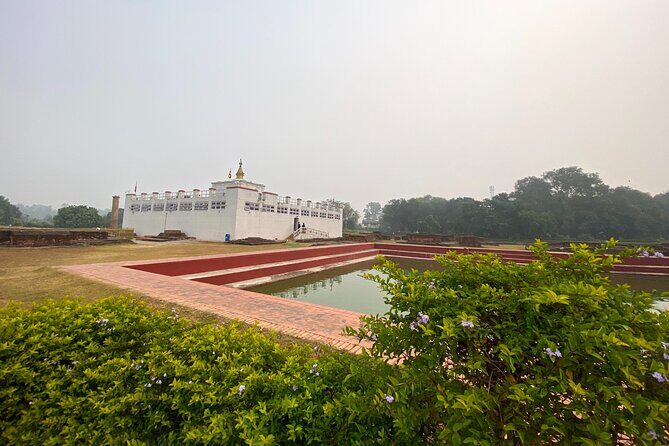
Lumbini is not just another stop on a Nepal itinerary. It is tied directly to the life story of Siddhartha Gautam—later known as the Buddha—and that makes your time there feel intentional, even if you are not a hardcore scholar of Buddhism. The whole complex is built to support quiet attention: landscaped gardens, ponds, and open spaces that invite you to slow down and observe instead of rush.
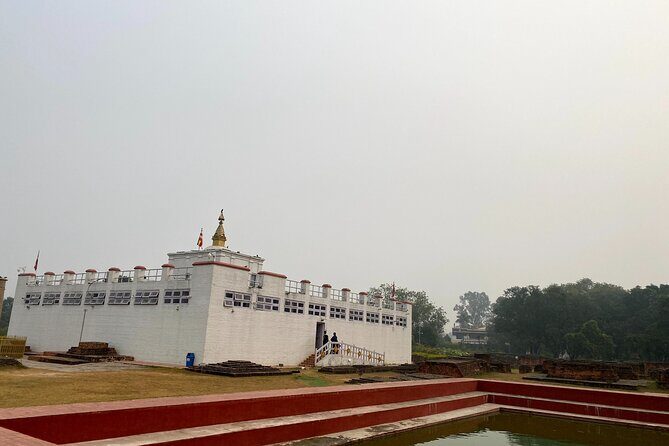
I also like that the tour’s core locations are specific, not vague. Maya Devi Temple is where the sacred tradition places the Buddha’s birth, and the Ashoka Pillar marks the spot in a way that feels grounded in long history. When a tour anchors you to those two places, you stop thinking of Lumbini as a general viewpoint and start thinking of it as a place with a timeline.
One more thing: Lumbini’s layout helps you read the meaning. You move from sacred birth symbolism to historical markers, then outward to monastic zones. That progression makes the visit feel like a story you can walk through.
You can also read our reviews of more tours and experiences in Kathmandu.



The road from Kathmandu: private transfer, but plan for a long day
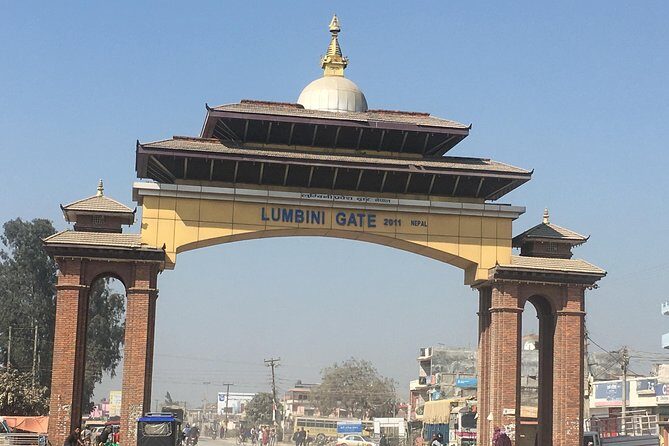
This is a classic “road trip pilgrimage” setup. You depart Kathmandu and drive roughly 7–8 hours to Lumbini, then you do the same kind of return on the last day. That means comfort and timing matter more than anything.
Good news: the tour includes a driver with private transfer, plus hotel pickup and drop-off. So you are not trying to coordinate buses, change transport mid-route, or figure out how to get your group across town. It’s just you, your guide, and your vehicle.
Still, the overland ride is the main reality check. If you do not handle long drives well, or if you hate sitting in traffic for hours, build in patience. Nepal roads can be challenging, and on a day like this, you feel every bump. The private setup helps, but it cannot erase physics.
Practical tip: if you book, treat water, snacks, and rest breaks as part of your plan—even if meals are listed as not included—because the day is long.
Maya Devi Temple and the Lumbini Garden at the start of your trip
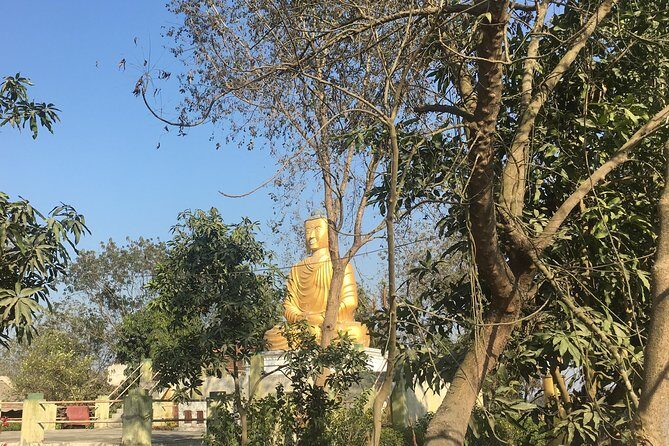
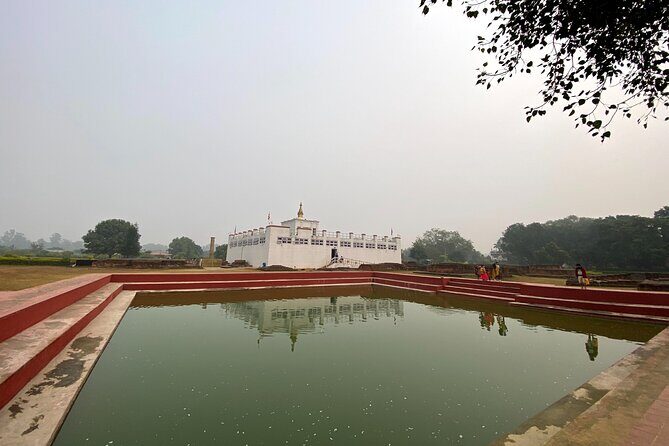
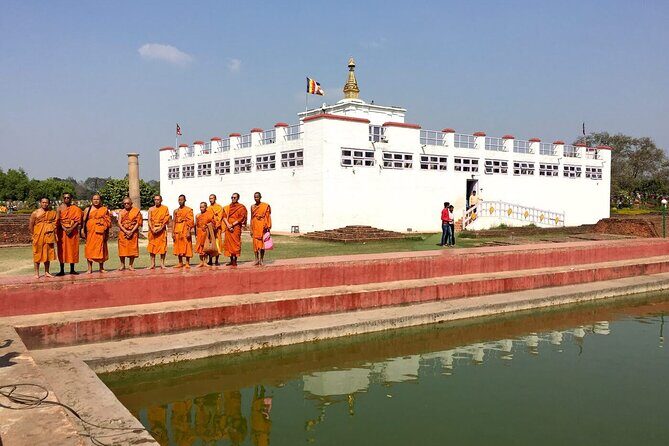
Your first evening focuses on getting oriented in Lumbini. That matters more than it sounds. When you arrive and check in, you then go to the Lumbini Garden, which is a UNESCO World Heritage Site, and you visit the Maya Devi Temple along with nearby monasteries and monuments.
Why I like this approach: it lets you land mentally. Instead of going straight from the highway into a full day of dense history, you ease into it with sacred space and open grounds. You can take in the atmosphere—peaceful, spiritual, and unhurried—and you are less likely to feel like you are “touring.”
In practical terms, the sacred area is meaningful even if you do not know all the names. You can feel the purpose of the visit as soon as you enter the garden zone.
Ashoka Pillar and the monastic zones: Buddhism in many accents
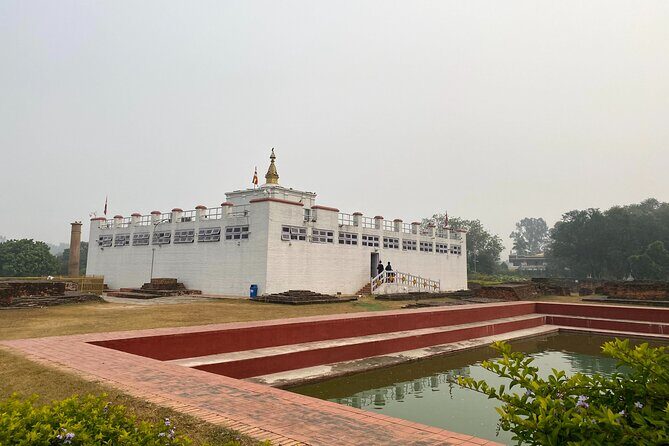
Day two is where Lumbini becomes bigger than one temple complex. You start at the Ashoka Pillar, described as erected by Emperor Ashoka in 249 BCE and connected to the marker of the Buddha’s birth spot.
From there, you move into the monastic zones. This is one of the most interesting parts of the plan because it is not only Nepal’s version of Buddhism. You visit monasteries linked to China, Japan, Thailand, and Myanmar, each with its own architectural look and Buddhist art style.
Here’s how to get more out of it: don’t treat each monastery as a quick photo stop. Use the differences as your “reading lesson.” Notice how details in layout, decoration, and overall design communicate tradition, even though the spiritual purpose is shared. It is a visual reminder that Buddhism traveled far beyond its birthplace.
The tour also includes the Lumbini Museum. Museums are sometimes a “necessary chore” on trips, but in a birthplace setting, it helps you connect what you see on the ground with the story behind it. It can turn your walking tour into something you understand.
And yes—there is time for quieter moments. The day includes meditation and reflection, which is exactly what you want in a place built for calm.
Tilaurakot and Devdaha: the story grows beyond the birthplace gardens
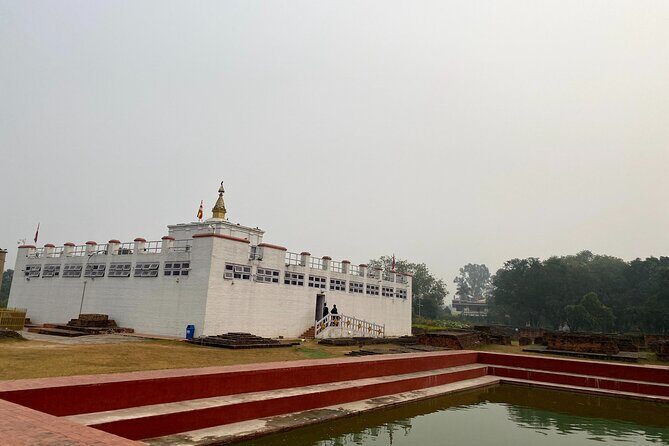
On the third day, you head outside the main Lumbini complex for nearby Buddhist sites. This is important because Lumbini can feel like a “birthplace bubble” if your trip stays only inside the UNESCO core.
First stop is Tilaurakot, described as the ancient capital of the Sakya kingdom and connected to the early years of Prince Siddhartha Gautam. The visit includes the ruins and archaeological remains, including the ancient palace, monastic complexes, and fortified walls.
Even without deep archaeology training, ruins do something special. They show you that the story lived in physical structures—places where people actually moved, studied, and practiced.
Then you go to Devdaha, described as the maternal hometown of Princess Yasodhara, who later became the Buddha’s wife. You visit the maternal palace area and also the Ashoka Stupa and related sites associated with her family.
Why this pairing works: it gives you both sides—childhood setting at Tilaurakot and the family connection at Devdaha. You start seeing the Buddha story as human, not only sacred.
Back in Lumbini, the tour plan includes leisure time for local markets or meditation and reflection. That flexibility is good. If you want a slow end to the day, you can take it. If you want to stretch your legs and browse, you can.





Returning to Kathmandu: transfer time plus included Kathmandu spiritual stops
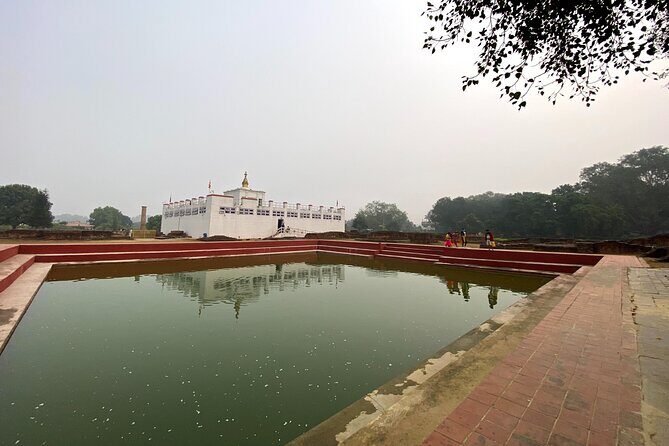
On the last day, you return from Lumbini to Kathmandu by road, again around 7–8 hours. You check out, transfer to your Kathmandu hotel, and the tour ends.
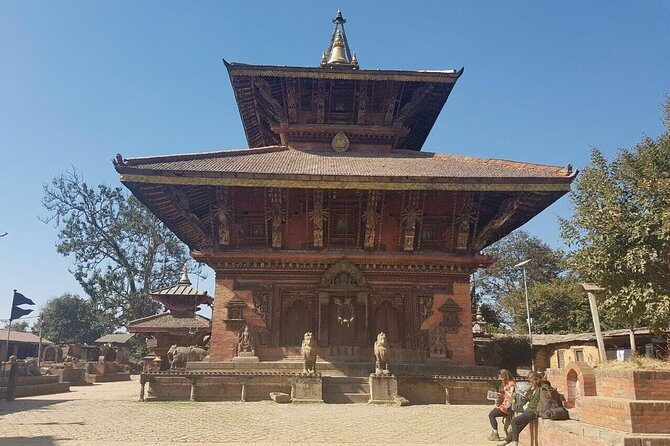
One detail worth noting: the package includes local sightseeing such as Swaymbhunath, Dauddhanath stupa, World Peace Stupa, and Matepani Gumba stupa. Your exact schedule for those Kathmandu stops is not spelled out in the summary here, but the inclusions list is clear that Kathmandu religious sites are part of the overall package.
So if you like your trips to be more than one long drive and one destination, this is a good fit. You get both pilgrimage focus at Lumbini and the classic spiritual Kathmandu circuit that many people come for in the first place.
Price and logistics: what $330 buys you (and what it does not)
The tour price is $330 per person. For this kind of trip, that number is mostly paying for three things:
- Largely private transportation and transfers (hotel pickup/drop-off and a driver)
- A professional guide who can interpret what you’re seeing
- Hotel time (the package lists 6 nights in 2–3 hotels)
There’s also a mention of group discounts and mobile tickets, which can matter if you want things streamlined and paperwork light.
What is not included is equally important:
- Entrance fees (the tour estimates about US$25 per person)
- All meals (you buy these separately)
One more thing to double-check before you pay attention too much: the tour is described as 4 days (approx.), but the included accommodation lists 6 nights. That is not a deal-breaker by itself, but it is something you should confirm so there are no surprises about how many nights you are booked and how the dates line up.
The human side: your guide and how arrangements can make or break it
This tour is run by Fewa Trail Treks and Expedition Pvt Ltd, and it’s set up as a private tour/activity, meaning only your group participates.
In the feedback associated with this style of service, Mr. Sunil Dahal is named as someone who handles arrangements and guidance. That lines up with what you want on a trip that has long drives and multiple sacred stops: clear communication, smooth coordination, and a guide who explains what you’re looking at.
Even if you are a confident traveler, a good local guide saves you from the common mistakes: missing the meaning of a site, timing your visit poorly, or struggling with ticket questions at entry points.
Who this tour suits best
This is a strong choice if:
- you want a Buddhist pilgrimage focused on Lumbini and connected historical sites
- you like structure but also want quiet time for meditation and reflection
- you value a private driver and guide over DIY navigation
It also fits families in a limited way: children are allowed but must be accompanied by an adult. And because the drive segments are long, I’d mentally rate this as a “comfortable pace for active adults,” not a lounge-on-the-bus vacation.
If you dislike road travel, struggle with long seat time, or hate travel days that start with early departures, you might want to rethink the format.
Should you book this Lumbini-from-Kathmandu tour?
I’d book it if you want the pilgrimage done with less hassle and more meaning. The tour’s emphasis on Maya Devi Temple, the Ashoka Pillar, and the monastic zones gives you more than postcard Buddhism. The outside excursion to Tilaurakot and Devdaha is a smart add-on because it broadens the story beyond one sacred garden.
I’d pause and double-check before booking if:
- you are sensitive to long drives (7–8 hours each way)
- you need clarity on the mismatch between 4 days and 6 included nights
- you want meals included (they are not)
If those points check out for you, this is a good-value way to visit a UNESCO birthplace site with a guide, private transfers, and enough time to actually feel the place instead of just ticking boxes.
FAQ
How long is the Lumbini tour from Kathmandu?
The tour is listed as about 4 days.
What’s included in the tour price of $330 per person?
Included items are 6 nights in 2–3 hotels (as listed), local sightseeing, a driver with private transfer, a professional tour guide, hotel pickup and drop-off, and a private tour setup.
Are entrance fees included?
No. Entrance fees are not included and are listed as approximately US$25 per person.
Are meals included?
No. All meals are not included, but they are available to purchase.
Do I need a valid passport for booking and travel?
Yes. You must provide passport name, number, expiry, and country at booking, and you need a current valid passport on the day of travel.
Is this a private group tour or shared with others?
It is private. Only your group will participate.
What is the cancellation refund window?
You can cancel up to 6 days in advance for a full refund. Cancel 2–6 days before for a 50% refund, and cancel less than 2 days before for no refund.