Caves, lakes, and underground rivers in one tidy half-day. This Pokhara private tour mixes holy sights like Gupteshwor Mahadev Cave and Tal Barahi Temple with real, science-y wonder in Seti Gandaki Gorge and Devi’s Fall. I love how the route stays compact but still hits the must-see areas of Pokhara. I also like the private pickup and transport, so you’re not stuck waiting on anyone. One watch-out: time is tight, and admission fees aren’t included, so a few entry stops can cost extra and feel rushed if you’re a slow wanderer.
You’ll start around 8:45am and then move from site to site for about 4 hours total. Because the plan is built around outdoor viewpoints and waterfall areas, good weather makes a difference in what you can see and enjoy.
In This Review
- Quick hits before you go
- A half-day that actually feels like a tour, not a sprint
- Stop 1: Gupteshwor Mahadev Cave and its Shiva shrines
- Stop 2: Tal Barahi Temple on Phewa Lake (the boat is the point)
- Stop 3: Phewa Tal shore time—choose your mood
- Stop 4: Gurkha Memorial Museum near KI Singh Bridge
- Stop 5: Seti Gandaki Gorge and KI Singh Pool viewpoints
- Stop 6: Shree Bindhyabasini Temple and the Kali connection
- Stop 7: Regional Museum in Pokhara—Western Nepal’s ethnic mix
- Stop 8: Devi’s Fall (Patale Chango) and the underground tunnel
- Price and value: what $50 buys you (and what it doesn’t)
- How to get the most out of a day like this
- Should you book the Pokhara City Private Half-Day Tour?
- FAQ
- What is the duration of the Pokhara City Private Half-Day Tour?
- What time does the tour start?
- Does the tour include pickup?
- Is this a private tour?
- Are admission tickets included in the price?
- What major places does the tour visit?
- Where does the tour take place?
- What is the cancellation policy?
Quick hits before you go
- Gupteshwor Mahadev Cave: Shiva shrines inside a cave system fed by water from Davis Falls
- Tal Barahi Temple: a pagoda on a lake island that you reach by boat
- KI Singh Pool: one of the best spots to look down on the Seti Gandaki gorge
- Seti River Gorge: water that disappears underground and reappears as a steep, deep cut
- Bindhyabasini Temple: an older Pokhara temple with Kali connections and local ritual energy
- Devi’s Fall (Patale Chango): a waterfall that turns into a long subterranean passage
A half-day that actually feels like a tour, not a sprint
This is the kind of Pokhara day plan I like for first-timers: you get major landmarks without losing hours to slow logistics. The tour is private, so your timing is guided by the route rather than by a group with different walking speeds.
You’ll see eight major stops, each with a short window on site. That means you’re not going to “live” in any one place for long, but you will get strong first impressions and good photos—especially if you’re okay moving at a reasonable pace.
You can also read our reviews of more city tours in Pokhara
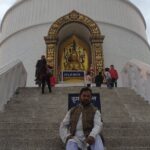
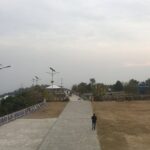
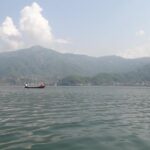
Stop 1: Gupteshwor Mahadev Cave and its Shiva shrines
Gupteshwor Mahadev Cave is one of those places where the setting does half the work. The cave was allegedly discovered in the 16th century by local men who found it while clearing grass, and what they discovered sounds like a story your guide will happily explain.
Inside, you’ll find shrines and statues dedicated to Shiva and other Hindu deities, including Mahadev and Parvati, plus Nageswor and Saraswati. The cave also connects to the local water mystery: at the far end, they found a waterfall running through the cave, and investigation linked it to Patale Chango (later known as Davis Falls).
Practical notes: wear shoes with grip. Cave floors can be uneven, and you’ll be walking in and out of darker spaces. Also, this stop isn’t just a quick look for the view—the interest is the feeling of a holy interior, so give yourself a few minutes to slow down.
Stop 2: Tal Barahi Temple on Phewa Lake (the boat is the point)
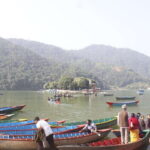
Phewa Lake is the center of Pokhara’s lake life, and Tal Barahi Temple is the reason people plan their day around the water. Tal Barahi is a small island temple in the middle of the lake, dedicated to the goddess Barahi, representing the female force Shakti.
The temple itself is described as a two-storied pagoda. People do come for peaceful viewing, but it also has a ritual side—especially on Saturdays, when devotees may carry male animals and fowl across the lake for sacrifice. That’s not something you need to participate in to understand the place, but it’s part of why the temple feels like a living center of belief.
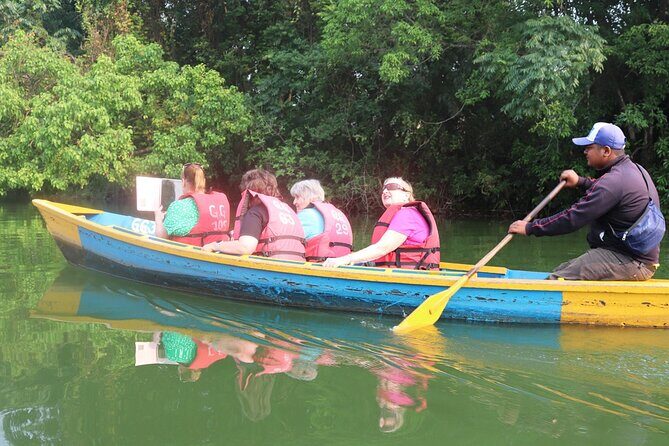
The key detail for your planning: the only way to reach the temple is by boat. That means you’ll spend your time not just on the island, but also on the lake itself—usually calmer than rushing through town streets.
Stop 3: Phewa Tal shore time—choose your mood
Even though the lake is huge and famous, you’ll feel two different atmospheres depending on where you’re standing. The eastern shore (Lakeside/Baidam) is where most hotels, restaurants, and craft shops cluster, so it’s where you’ll find the most traveler-friendly convenience.
Then, as you move toward the southwest, the setting changes. That shore is described as densely forested with birdlife, plus there’s Rani Ban (Queen’s Forest), which gives the lake an emerald tint.
What to do with your short time here:
- If you want gentle scenic time, aim for a viewpoint where you can see the lake opening up.
- If you want to people-watch and reset, head toward Lakeside.
This stop is also a good moment for a quick souvenir browse or a snack, since the rest of the day is more temple-and-nature heavy.
Stop 4: Gurkha Memorial Museum near KI Singh Bridge
After caves and lakes, the Gurkha Memorial Museum is a welcome shift: it’s history you can walk through without needing a textbook. It’s located just north of Mahendra Pul, near KI Singh Bridge.
The museum focuses on Gurkha regiments and covers history from the 19th-century Indian Uprising through two World Wars, and then into modern peacekeeping missions. One detail that makes it more than just a static display is the mention of fascinating exhibits on Gurkhas who received the Victoria Cross.
There’s also sound effects included in the experience, which can add to the sense of time and scale. If you like museums, you’ll probably enjoy the structure: it’s chronological, easy to follow, and it gives context for the reputation of these regiments without turning it into pure propaganda.
Time check: expect about half an hour here, so don’t plan on reading every label. Pick the topics that interest you—then move on.
You can also read our reviews of more private tours in Pokhara
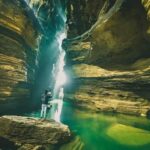
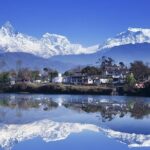
Stop 5: Seti Gandaki Gorge and KI Singh Pool viewpoints
Seti Gandaki is one of Pokhara’s most dramatic natural stories. The river runs through the city, and in places it goes underground. At certain points it can look almost shockingly narrow—about two meters wide—but the depth can exceed 20 meters.
This is where KI Singh Pool becomes your best friend. The view from this small bridge near British Camp gives you a chance to look down on the river’s rush and the gorge it carved.
If you’re the kind of person who likes to understand what you’re seeing, this stop gives you a strong mental picture. The river begins from snowfields and ice sheets around Api and Nampa in the Himalayas, then makes its way toward Pokhara. You’re essentially watching glacier-fed water doing its long-term work—right in front of you.
Practical caution: keep your footing careful at viewpoints. You may be near edges with slippery surfaces, especially if the weather is damp.
Stop 6: Shree Bindhyabasini Temple and the Kali connection
Bindhyabasini Temple, locally called Bindhyabasini Mandir, is a white, dome-like structure that dominates a stone-paved courtyard on a shady hillock. It’s described as one of the oldest temples in Pokhara.
The main sanctuary is dedicated to goddess Bindhyabasini, identified as a manifestation of Kali. On the grounds, you’ll also find smaller temples to Saraswati, Shiva, Hanuman, and Ganesha.
This stop feels less like a photo stop and more like a local hangout. The temple grounds are park-like and suitable for a short pause. It also gets extra energy on Saturdays and Tuesdays, when devotees come to offer sacrifices.
For me, this is the temple stop that feels most grounded in daily worship rather than just sightseeing. If you’re interested in how faith shows up in everyday town life, this one matters.
Stop 7: Regional Museum in Pokhara—Western Nepal’s ethnic mix
The Regional Museum (Pokhara Museum) sits between the bus stop and Mahendra Pul. Instead of focusing on one theme, it reflects the ethnic mosaic of western Nepal.
You’ll see displays on lifestyles and history of groups such as Gurungs, Thakalis, and Tharus, using models, photographs, and artifacts. One highlight mentioned is a display about newly discovered remains of an 8000-year-old settlement in Mustang.
This is the kind of stop that helps you connect the dots: you’re not just collecting landmarks, you’re learning what different communities in the region value and how they live. It’s also indoor, which can be useful when the sun or rain makes outdoor stops less pleasant.
Timing tip: give it a focused pass. If you read everything, 30 minutes will feel too short. Pick the sections that catch your eye, then take that context into the rest of the day.
Stop 8: Devi’s Fall (Patale Chango) and the underground tunnel
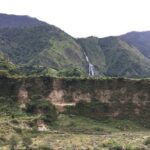
If you want the day’s biggest “wait, how is that possible?” moment, Devi’s Fall delivers. Locally it’s known as Patale Chango, meaning Hell’s Fall, and it sits about 2 kilometers southwest of Pokhara airport on the Siddhartha Highway.
What’s special is the way the water disappears. The fall’s water creates a tunnel that reaches the bottom, with a passage described as roughly 500 feet (150 meters) long and running around 100 feet (30 meters) underground.
This spot also has a well-known story tied to 31 July 1961, when a Swiss couple went for a swim and the lady was caught in a pit during flooding. Her body was recovered three days later. You’ll also hear the naming story around the name David, which changed over time.
When you stand here, it helps to remember the water isn’t just making a splash. It’s moving into a system below ground—so the “fall” is only the surface part of the story.
Practical advice: come prepared for spray and uneven paths, especially if the weather is unstable. And don’t assume you’ll always get a huge waterfall look—conditions can affect how dramatic the flow seems.
Price and value: what $50 buys you (and what it doesn’t)
At $50 per person, the headline value is that you’re getting private transportation with pickup and a mobile ticket, covering a full circuit of major Pokhara sights in about four hours. That’s not bad for an area where traffic and timing can quickly eat your day.
The trade-off: admission tickets are not included, and the listing notes that all fees and taxes are not included as well. So, your final cost depends on which sites you pay for and how quickly you move through them.
From a value standpoint, this tour makes the most sense if you:
- want a high-density sight plan without coordinating rides between stops
- prefer private control over a shared group schedule
- like a mix of nature, temples, and at least one museum
If you’re the type who likes to linger for long stretches, you might feel the pacing. With eight stops in half a day, it’s more “highlights with context” than “slow travel.”
How to get the most out of a day like this
This route works best if you plan your body and your mindset.
Wear comfortable shoes with grip. You’ll move from cave interiors to museum floors to outdoor river and waterfall viewpoints, often with steps and uneven surfaces.
Bring water. Even if you’re not doing heavy hikes, it’s still a lot of walking in warm conditions.
And pick one or two stops to focus on mentally. For me, pairing Gupteshwor Mahadev Cave with Seti Gandaki works well, because you go from holy underground water to natural underground water. If you like that kind of theme, you’ll enjoy the day more.
Finally, keep an eye on the weather. This experience requires good weather, and if it’s canceled due to poor conditions you’re offered another date or a full refund.
Should you book the Pokhara City Private Half-Day Tour?
I think it’s a solid choice if you want a structured introduction to Pokhara in a short window. It gives you the essentials: holy caves and temples, Phewa Lake and Tal Barahi, plus two of the city’s most unusual natural wonders—Seti Gandaki and Devi’s Fall.
Skip it or reconsider if you hate moving often. The schedule is designed for coverage, not lingering. Also, because admission fees and taxes aren’t included, check your expectations so you don’t feel surprised later.
If you like value, convenience, and a day that feels thoughtfully packed, this one fits.
FAQ
What is the duration of the Pokhara City Private Half-Day Tour?
The tour lasts about 4 hours.
What time does the tour start?
The start time is 8:45am.
Does the tour include pickup?
Yes, pickup is offered.
Is this a private tour?
Yes. It’s a private tour/activity, and only your group participates.
Are admission tickets included in the price?
Admission tickets are not included, and all fees and taxes are not included.
What major places does the tour visit?
The tour includes Gupteshwor Mahadev Cave, Barahi/Tal Barahi Temple on Phewa Lake, Phewa Tal, Gurkha Memorial Museum, Seti River Gorge (with the KI Singh Pool viewpoint), Shree Bindhyabasini Temple, Regional Museum, and Devi’s Fall.
Where does the tour take place?
It takes place in Pokhara, Nepal.
What is the cancellation policy?
You can cancel for a full refund up to 24 hours in advance. It also notes that the experience requires good weather, and if it’s canceled due to poor weather you’ll be offered a different date or a full refund.