REVIEW · KATHMANDU
Everest Base Camp Trek
Book on Viator →Operated by Himalayan Recreation Treks & Expedition Pvt.Ltd · Bookable on Viator
Few hikes change your perspective fast. This Everest Base Camp trek is built to handle the big logistics, with domestic flights to Lukla included and a licensed guide for safety and pacing. You also get three nights in a 3-star Kathmandu hotel, so you’re not thrown into the mountains on day one.
The main trade-off: the altitude is real and the Lukla flight can be weather-fragile, so I’d plan with extra flexibility and take the acclimatization seriously. If you’re healthy and prepared, this kind of structure helps a lot when the weather gets moody.
In This Review
- Key takeaways (what matters most)
- Kathmandu Warm-Up: Temples, Thamel, and a real buffer day
- Getting to the trail: Lukla flights and the jump into mountain time
- The Khumbu route, explained day by day (and what to expect)
- Day 2: Phakding and first altitude lessons
- Day 3: Up to Namche Bazaar, plus Dhudh Koshi River
- Day 4: Namche acclimatization plus Everest View Point
- Day 5: Tengboche monastery area and the Ama Dablam moments
- Day 6: Dingboche and higher oxygen limits
- Day 7: Dingboche to Chukhung (with time to acclimatize)
- Day 8: Lobuche and the glacier zone
- Day 9: Everest Base Camp area and Gorak Shep
- Day 10: Kala Pattar and the descent rhythm
- Day 11: Back toward Namche
- Day 12: Namche to Lukla
- Day 13: Lukla to Kathmandu
- Day 14: Kathmandu final day
- Tea houses, meals, and what the included lodging really means
- Your guide matters: licensed leadership and real names to remember
- Price and value: what $999 really buys (and what it doesn’t)
- Packing and altitude safety: the practical stuff that keeps you moving
- Who should book this Everest Base Camp trek?
- Should you book this trek or choose another?
- FAQ
- Is domestic airfare to Lukla included?
- How many nights are included during the trek?
- Are meals included in the trek price?
- What about gratuities?
- What altitude should I expect?
- Do I need travel insurance?
- What documents are needed for the permits?
- Is this trek private and how big is the group?
Key takeaways (what matters most)
- Flights to Lukla round-trip are included, saving you from hunting tickets and handling timing stress on your own.
- Tea-house accommodation is included for 10 nights, which keeps your daily budgeting and packing simpler.
- A government-licensed trekking guide leads the route with first aid know-how and an eye on safety.
- Small group size (max 8) and a private setup make it easier to move at a sensible pace.
- Kathmandu isn’t just a start point: temple stops and a comfortable hotel let you reset before altitude work.
Kathmandu Warm-Up: Temples, Thamel, and a real buffer day
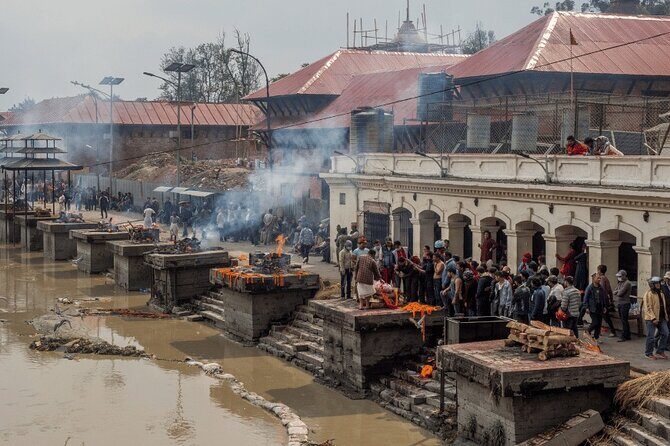
Your trip starts in Kathmandu, with pickup offered by private car for arrival and departure assistance. You’ll also spend three nights in a 3-star hotel in the Kathmandu area (with breakfast on day 1 and day 13). That matters more than it sounds: after long travel days, you want sleep, showers, and a place to sort gear before you head toward 5,000m+ hiking.
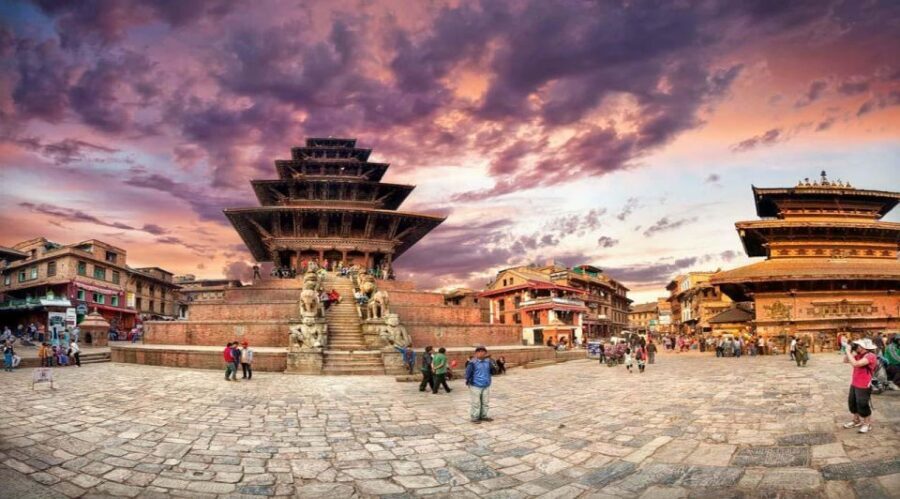
You’ll get time around Thamel, the hub for trek gear and street life. The itinerary also includes stops at Swayambhunath (the Monkey Temple area), Boudhanath Stupa, and Garden of Dreams. Even if you’ve seen temples before, these stops are useful because they get you into Nepal’s rhythm—quiet courtyards, prayer wheels, and the kind of street detail you miss when you rush straight to the airport.
One practical tip: keep an eye on what you actually need for the trek during this warm-up. The tour notes that required trekking gear is available to buy or rent in Kathmandu, and your guide can help arrange it. I like that approach, because it prevents the classic problem of carrying the wrong stuff out to the trail.
You can also read our reviews of more hiking tours in Kathmandu


Getting to the trail: Lukla flights and the jump into mountain time
The biggest “moment” of this trek is the move from Kathmandu to Lukla. Domestic airfare Kathmandu–Lukla–Kathmandu is included, and the flight is listed as about an hour each way. Lukla is famous for weather quirks, and this tour explicitly asks you to consider 1–2 extra days in case of flight delay or cancellation. That’s not alarmism—it’s just reality.
If you can, I’d treat those extra days as part of your planning rather than a last-minute headache. It helps you stay calm if the schedule shifts, and it gives you time to wait without losing the whole trip.
Once you’re in the Lukla area, the trek starts right away. Day 2 includes a hike to Phakding (about a 12-hour day on the itinerary). This is where you begin learning the Khumbu trail rhythm: steady uphill, frequent pauses, and the gentle frustration of carrying everything you need on your back. The tour recommends keeping your own luggage light—under 22 lbs (10 kg)—so you’re not doing “fitness training” instead of altitude acclimatization.
The Khumbu route, explained day by day (and what to expect)
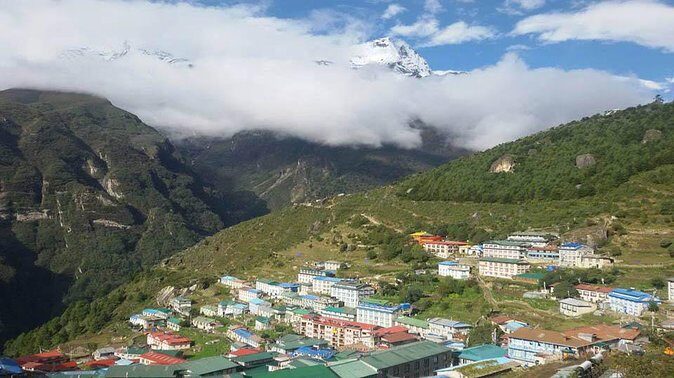
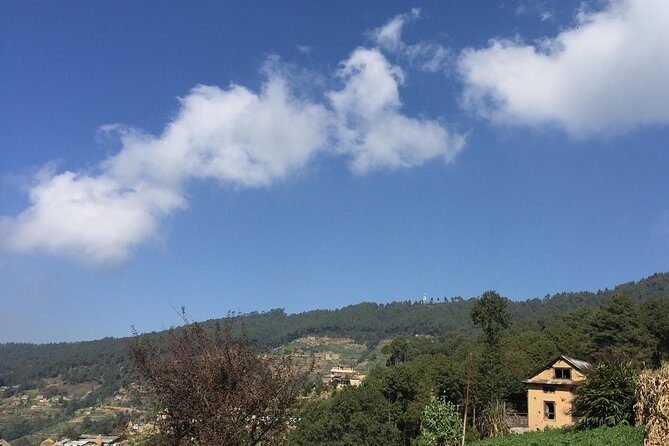
This trek is paced over roughly 14 days, with trekking days that climb gradually through the Everest region. The route includes remote villages and a progression of viewpoints and trekking towns that help you adjust before higher sections.
Here’s how the itinerary plays out, and why each step matters.
Day 2: Phakding and first altitude lessons
After flights, you hike to Phakding. You’ll feel the altitude even early—mostly as breathiness and a need to slow your pace. The good news is that the first days are about finding your rhythm, not racing for mileage.
What I like here: the trip structure doesn’t send you straight to the highest zones. You’ll begin with a long but manageable intro day and then move toward bigger altitude jumps.
Day 3: Up to Namche Bazaar, plus Dhudh Koshi River
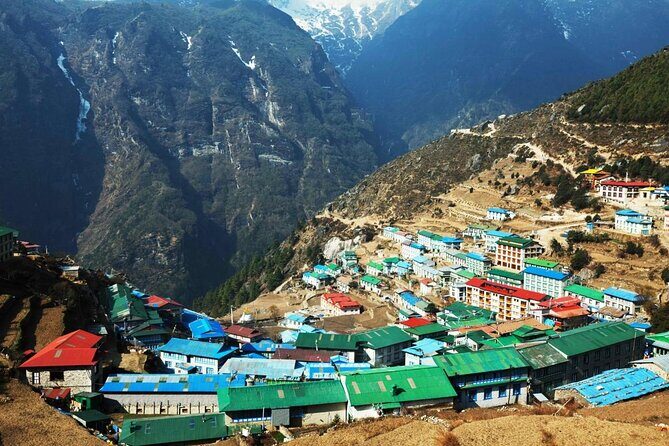
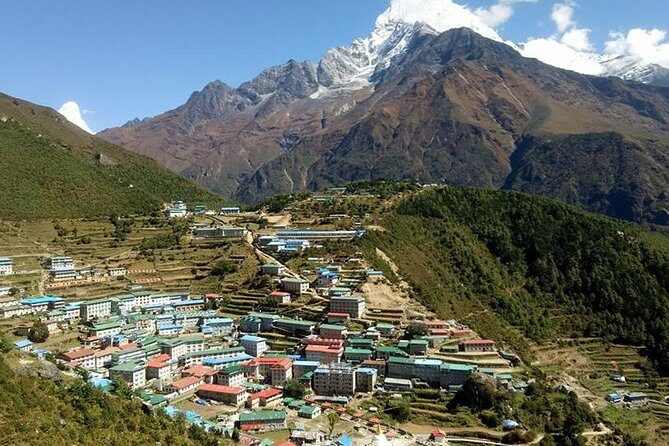
Day 3 heads to Namche Bazaar (listed as about 12 hours), with a stop at the Dudh Koshi River. Namche is a key hub in the Khumbu—busy compared to the villages behind it, and full of trekkers adjusting their plans.
This day is often where people realize that “12 hours” doesn’t mean “all at once.” You’ll likely spend much of it moving slowly, stopping often, and letting your lungs catch up.




Day 4: Namche acclimatization plus Everest View Point
Day 4 is a full acclimatization day in Namche Bazaar, plus a trip to Everest View Point. This is the logic of altitude travel: you gain elevation, but you also give your body time to adjust.
The view point segment is listed as about 2 hours with an included ticket. It’s a morale booster day, the kind where you start understanding why people return to this region.
Day 5: Tengboche monastery area and the Ama Dablam moments
Day 5 moves on to Tengboche (again listed around 12 hours) and includes a visit to Tengboche Gompa. The itinerary also references Mt. Ama Dablam and Mt. Taboche in the region.
This day matters because it’s often when the scenery turns from “pretty” to “wow, that’s a real mountain.” Tengboche is also a mental reset: tea-houses, prayer flags, and monastery calm. I find those cultural pauses help you keep your pace steady.
Day 6: Dingboche and higher oxygen limits
Day 6 goes to Dingboche (listed around 12 hours). This is higher altitude country, and you may feel it more sharply: heavier legs, slower breath, and a need to stop sooner than you planned.
No matter your fitness, altitude makes the body negotiate. The tour specifically warns that adverse health effects are possible at altitudes around 5,364 meters (17,598 ft), and recommends discussing your trip with a doctor. That guidance is worth taking seriously.
Day 7: Dingboche to Chukhung (with time to acclimatize)
Day 7 includes a trek onward around 12 hours and includes Chukhung. Again, this keeps the “climb, adjust, climb” pattern going.
You’ll feel the difference in the terrain and air quality. The point isn’t suffering for its own sake—it’s to gain safely, step-by-step, with planned breathing room.
Day 8: Lobuche and the glacier zone
Day 8 heads to Lobuche (about 12 hours) and includes time at the Khumbu Glacier area (listed around 1 hour). This is where the environment starts to look more severe and less green. The trail feels more “expedition-like.”
Day 9: Everest Base Camp area and Gorak Shep
Day 9 references Mount Everest (listed about 3 hours) and then Gorak Shep (listed around 12 hours). This is the day that most people picture when they book EBC.
It’s also the day where you’ll appreciate a professional guide. The tour notes that your leader has basic first aid training and is aware of closest medical facilities. On big altitudes, that kind of planning is not a gimmick—it’s your safety net.
Day 10: Kala Pattar and the descent rhythm
Day 10 includes Kala Pattar (listed about 1 hour) and then continues through Pheriche–Dughlha Road and Pangboche. The pattern here is important: you’re high, you check the view from Kala Pattar, and then you start dropping elevation.
That’s often the emotional sweet spot—part celebration, part “okay, let’s get you back safely.”
Day 11: Back toward Namche
Day 11 returns to Namche Bazaar (listed about 12 hours). This is where you start feeling the benefit of having moved down slightly already. Descent still demands care, especially on knees and ankles, but it’s often psychologically easier.
Day 12: Namche to Lukla
Day 12 is Lukla (listed about 12 hours). This is a long day, but it’s also a practical one: you’re positioning for your return flight to Kathmandu.
Day 13: Lukla to Kathmandu
Day 13 is Kathmandu. The trek ends, and you shift back to city life. If you’re tired, that’s normal. This is when sleep actually feels like a luxury product, not an expectation.
Day 14: Kathmandu final day
Day 14 stays in Kathmandu. This is a flexible buffer to recover, manage any last logistics, and settle before your departure.
Tea houses, meals, and what the included lodging really means
This tour includes 11 nights of accommodation in total in tea houses during the trekking per the overview, and 10 nights in the itinerary summary-style description. Either way, the core message is consistent: you’ll sleep in tea houses (simple lodge-style stays) rather than camping.
The included items list also doesn’t include most food. You’ll need to budget for food and drinks unless specified at $350 per person, and gratuities of $150 per person. That’s the part people forget when they see the trek price looks “all-in.” The good news: you’ll get to shop and choose meals each day, which helps if you have a sensitive stomach or picky cravings when altitude kills your appetite.
What I like about tea-house lodging is how it changes your packing strategy. The tour also tells you to keep luggage light (under 10 kg). If you had to carry tents and cooking gear, the weight math would be brutal. Here, the trek is more about hiking, not logistics gymnastics.
Your guide matters: licensed leadership and real names to remember
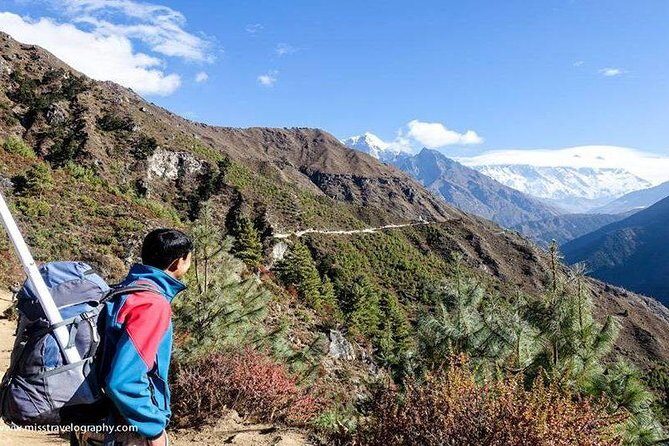
This package is led by a government license holder trekking guide. The guide’s “full facilities” are part of what you’re paying for: local knowledge, safety routines, and a way to keep you on track.
The notes also say all leaders have basic first aid training and know the closest medical facilities. That’s a quiet inclusion, but it’s exactly what you want at altitude.
The reviews include specific praise for staff. One review highlights Bishnu as someone always on top of everything, and mentions Basu as an amazing guide. That’s not just nice to hear—it signals continuity and care, which is what makes a demanding route feel manageable.
Price and value: what $999 really buys (and what it doesn’t)
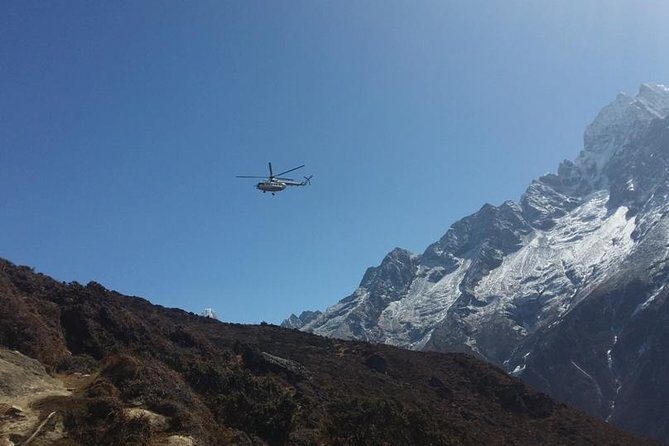
The advertised price is $999 per person for a roughly 14-day trek package in the Everest region. On paper, that can feel like a deal—until you factor in the items that aren’t included.
Here’s how to budget it realistically using what’s stated:
- Included: Kathmandu hotel (3-star, 3 nights), tea-house lodging (about 10 nights), domestic airfare Kathmandu–Lukla–Kathmandu, guide, taxes/VAT/service charges, and a first aid kit plus a Himalayas Recreation t-shirt.
- Not included: food and drinks (listed as $350 per person) and gratuities ($150 per person).
So your “likely total” is about $999 + $350 + $150 = $1,499, assuming you follow the food/drink budget note. Even then, what you’re buying is a guided, structured plan with flights and lodging handled. If you’ve ever tried to piece together a similar trek yourself, you know how quickly time and stress add up.
Also consider the small-group design: max 8 people per booking and a private setup. That’s part of the value story because the guide can actually manage pace and attention rather than herd a big crowd.
Packing and altitude safety: the practical stuff that keeps you moving
The tour’s packing guidance is clear: keep weight under 22 lbs (10 kg), and carry your own luggage. Extra luggage can be left at the office or hotel and picked up on return, which helps a lot. The gear list isn’t provided in the data, but you can buy or rent what you need in Kathmandu and your guide will help arrange it.
Altitude is the other big reality. The tour notes you’ll be walking at demanding altitudes of about 5,364m, with extreme weather possible. It also reminds you that adverse health effects can happen regardless of age or fitness, and strongly recommends a doctor discussion before you go.
What I’d do with that information: treat your plan as “slow and steady.” Follow your guide’s pace. Don’t chase views at the cost of breathing. And keep your hydration and warmth consistent—altitude punishes both cold and neglect.
Who should book this Everest Base Camp trek?
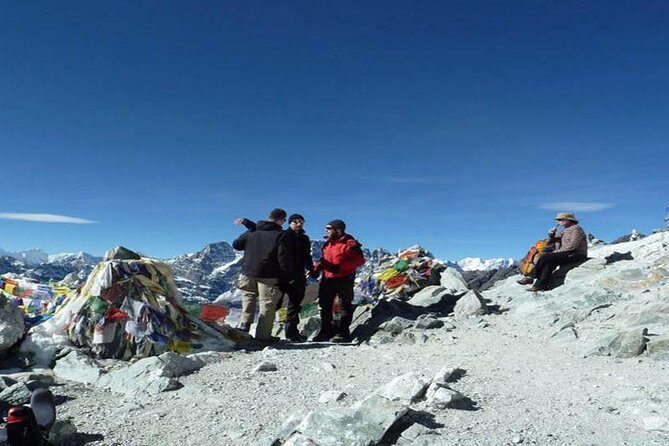
This is a strong fit if you want:
- A guided Everest Base Camp experience with safety and pacing built in
- Flights to Lukla included, so you can focus on the hiking instead of ticket mechanics
- A small group with a private setup (max 8)
- Time in Kathmandu with hotel comfort and meaningful cultural stops
It’s also a good match if you like structure. The route has a logical acclimatization rhythm, and the included lodging reduces daily planning.
It may not be the best fit if you hate flexibility around flight timing, since the tour notes you should consider 1–2 extra days for Lukla disruptions.
Should you book this trek or choose another?
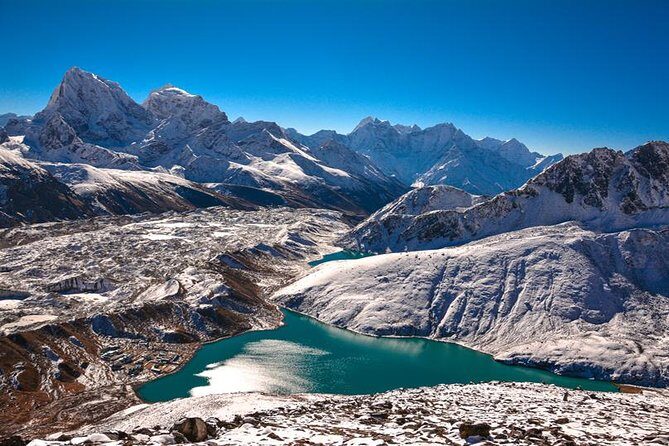
If you want Everest Base Camp with a guided, organized plan—and you’re willing to respect altitude—you should seriously consider booking. The key selling points are practical: Lukla flights included, tea-house stays included, a licensed guide, and Kathmandu comfort before the trek.
Before you commit, do two quick checks:
- Can you realistically hike demanding altitude days and keep a slow pace?
- Can you build in flexibility for Lukla flight delays with 1–2 extra days?
If the answers are yes, this package looks like a good value-driven way to reach Everest Base Camp with less chaos and better support.
FAQ
Is domestic airfare to Lukla included?
Yes. Domestic airfare for Kathmandu–Lukla–Kathmandu, including airport tax, is included.
How many nights are included during the trek?
The package includes tea house accommodation for about 10–11 nights during the trekking portion, depending on how the days are counted in the trek description.
Are meals included in the trek price?
No. Food and drinks are not included unless specified, and the listed allowance is $350 per person.
What about gratuities?
Gratuities are not included and are listed as $150 per person.
What altitude should I expect?
The tour indicates you’ll be walking at demanding altitudes of approximately 5,364 meters (17,598 ft), with possible extreme weather and altitude-related health risks.
Do I need travel insurance?
Yes. You must have travel insurance that covers medical expenses and emergency repatriation, and you’ll need to show proof to the tour leader on the first day.
What documents are needed for the permits?
You’ll need a clear colored copy of your passport photo page (valid for at least 6 months), 2 passport-size photos, and information for occupation and your home address details.
Is this trek private and how big is the group?
It’s a private tour/activity for your group, with a maximum of 8 people per booking.