REVIEW · KATHMANDU
Annapurna Circuit Thorong La Pass
Book on Viator →Operated by Happyland Treks · Bookable on Viator
Thorong La turns a trek into a test. I love the guided support that keeps logistics calm, and I love how the route stacks huge scenery swings from river valleys to high-pass drama. One consideration: this is serious altitude and long walking days, especially the pass crossing.
You start with city comfort in Kathmandu, then it’s bus and foot all the way through villages like Manang and Kagbeni. The payoff is that big mountain moment at 5416m, followed by a long descent toward Muktinath, where the air feels different. You’ll also likely notice how well the team handles real-life trek problems, like being short on gear; in past trips, Bimal and the crew have helped people with what they needed.
Plan on good weather, pacing, and patience. If you want a relaxed walk with zero elevation stress, you’ll want a different trek. If you’re okay earning views the hard way, this one is a winner.
Thorong La at 5416m is the headline and it demands an early start and steady effort.
Guides and staff help you stay organized with an English-speaking team and a real plan day by day.
You get the practical basics handled: permits, TIMS, standard meals, and tea-house nights.
Manang acclimatization matters here so you can make the pass day safely.
Private group travel means only your group participates.
You still manage your own gear and tips since some costs are explicitly not included.
In This Review
- Why the Annapurna Circuit via Thorong La feels different
- Good to know before you go: altitude, timing, and tea-house basics
- Kathmandu warm-up: first night comfort and trek prep momentum
- From Kathmandu to Besisahar and Koto: easing into the route
- Koto to Upper Pisang and Nawal: fast altitude climbing, big view payoffs
- Manang and acclimatization day: the smarter kind of rest
- Yak Kharka to Thorong Phedi: staging for the pass
- Thorong La Pass day: from Thorang Phedi to 5416m, then down to Muktinath
- Muktinath to Kagbeni, then Tatopani: culture transitions and a change of pace
- Tatopani to Pokhara and back to Kathmandu: finish strong, recover smart
- Price and logistics: what $1,750 covers and what you still handle
- Staff support you can feel: guides, safety, and small lifesavers
- Who this Annapurna Circuit trek suits (and who should think twice)
- Should you book this trek with Happyland Treks?
- FAQ
- What time does the trek start and where do we meet?
- Does the price include permits and the TIMS card?
- Are airport transfers included?
- What kind of accommodation do you use during the trek?
- Are meals included while trekking?
- What costs are not included that I should plan for?
Why the Annapurna Circuit via Thorong La feels different
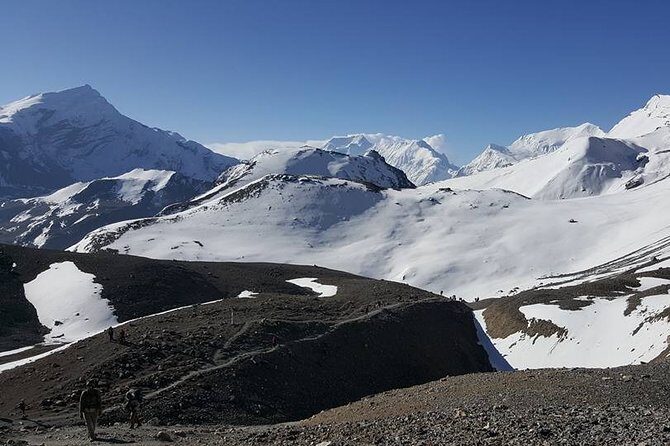
The Annapurna Circuit via Thorong La isn’t just a long hike with mountains in the background. It’s a route that keeps changing the “type” of scenery and weather as you go. One day you’re moving through warmer settlement zones and river country. The next, you’re walking where breathing feels like it needs permission.
What makes this itinerary especially compelling for me is the way it builds toward the pass instead of trying to bully you into it. You’re not dropped into 5000m cold and told to figure it out. You get altitude climbs, then you get a real acclimatization rhythm in Manang. That pacing is a big deal for how confident you feel on the hard day.
The other reason I like this trek is that it’s not only about the top. The circuit also includes classic village transitions: the Tibetan-influenced feel near Kagbeni, the thermal-relax vibe of Tatopani, and the post-trek decompression in Pokhara. It’s the kind of route where you finish with both memories and a body that feels like it earned its rest.
Good to know before you go: altitude, timing, and tea-house basics
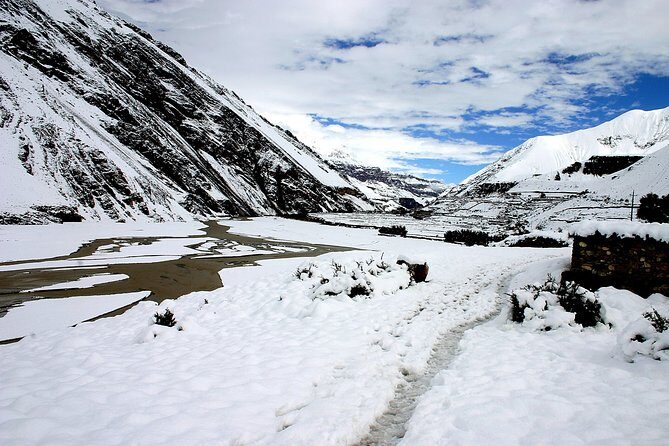
This trek reaches Thorong La Pass at 5416m, with nights along the way in places like Yak Kharka (4200m) and either Thorong Phedi (4450m) or a higher camp option around 4880m. That’s not the terrain for people who treat altitude like scenery. You’ll want moderate physical fitness, and you should expect long walking hours on multiple days.
Timing matters too. The day of the pass climb starts with a 6:00am start, and the pass day itself is listed as roughly 8–9 hours from Thorang Phedi to the pass (5416m) and then down to Muktinath (3800m). If you like slow strolls, this will feel like a workout. If you like a clear goal and a sunrise-type mission, it fits.
Also, tea houses are part of the experience. You’ll be sleeping in tea house accommodations during the trek, so your comfort comes from basic hospitality and warm food, not from luxury rooms. It’s still very manageable, but it helps to arrive with the right expectations about small rooms, simple facilities, and the fact that hot showers and extras usually cost extra.
You can also read our reviews of more tours and experiences in Kathmandu.
Kathmandu warm-up: first night comfort and trek prep momentum
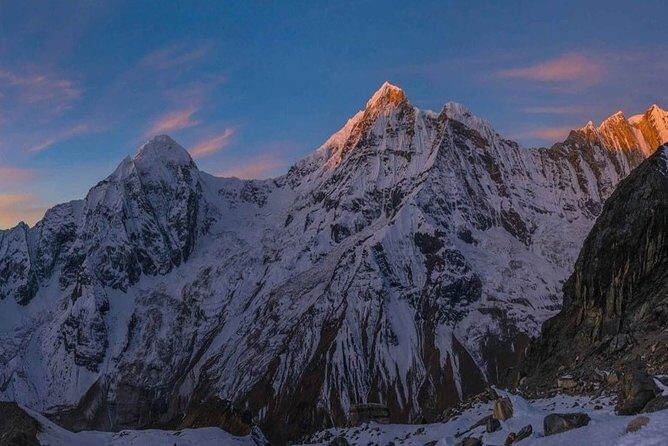
Your trek begins in Kathmandu (1400m approx.), with arrival and a transfer to a hotel for preparation. This matters more than it sounds. After travel, you need time to sort out a few essentials: fit your gear, confirm your packing plan, and mentally switch from city pace to mountain pace.
In this itinerary, you get two nights in Kathmandu with breakfast included, plus airport pickup and drop. That’s the kind of support that makes day one easier, especially if you’re arriving jet-lagged. Happyland’s team has been praised for airport-level care in past trips, including meeting travelers on arrival and helping with practical questions before the trek starts.
If you’re the type who likes to know exactly what’s next, you’ll probably appreciate that there’s an organized flow from the beginning—transfer, preparation, then departure.
From Kathmandu to Besisahar and Koto: easing into the route
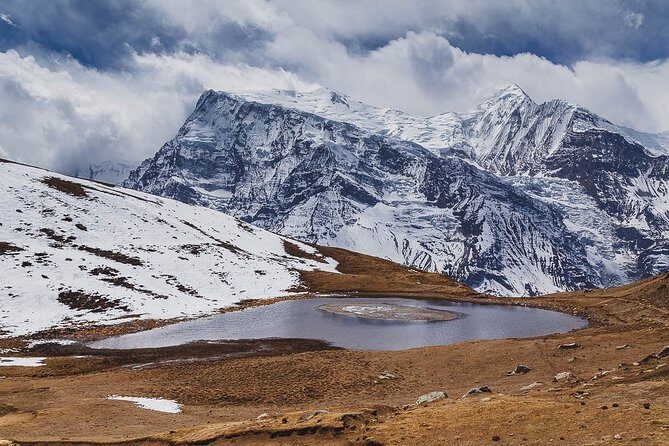
The first big movement is getting out of the Kathmandu area and into the trekking corridor. You’ll take a bus to Besisahar (760m) and then drive to Koto (2700m). These are long ground-transport legs, but they do two helpful things.
First, they reposition you fast so your trekking days can focus on walking and acclimatization. Second, they help you start the trek without an immediate climb from near sea-level. Koto sits at a much higher altitude than Besisahar, which means you’re already in the “mountain mind-set” by the time your trail trekking begins.
This is also where the value of having a guide and company support shows. You don’t have to negotiate every transfer. You just show up, meet the plan, and keep moving.
Koto to Upper Pisang and Nawal: fast altitude climbing, big view payoffs
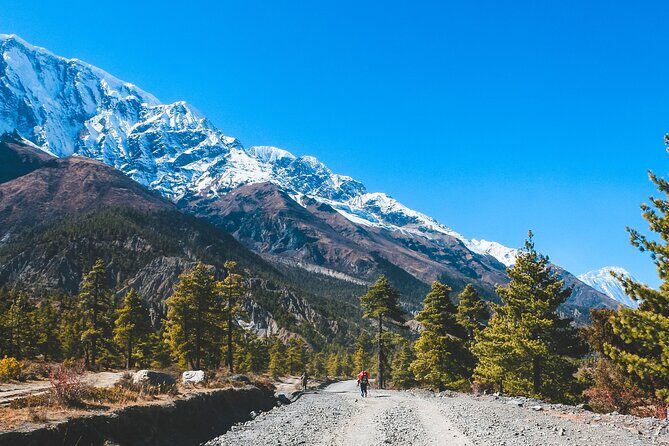
After Koto, the trek begins in earnest with day treks that climb into the higher zones around Upper Pisang (3350m) and Nawal (3650m). The segment Koto to Upper Pisang is listed at about 6 hours, and Upper Pisang to Nawal is about 5 hours.
These days are the kind where the mountains can feel close even when you’re still technically mid-trek. As you increase altitude, you’ll notice air getting thinner and your effort starting to feel heavier. That can be discouraging for some people, but it’s also how you build comfort with the rhythm.
One drawback to flag: these are not short “wander days.” The trek is structured for progress, so you’ll want to keep your pace controlled. Go slower than you think you should. High altitude punishes bragging.
Manang and acclimatization day: the smarter kind of rest
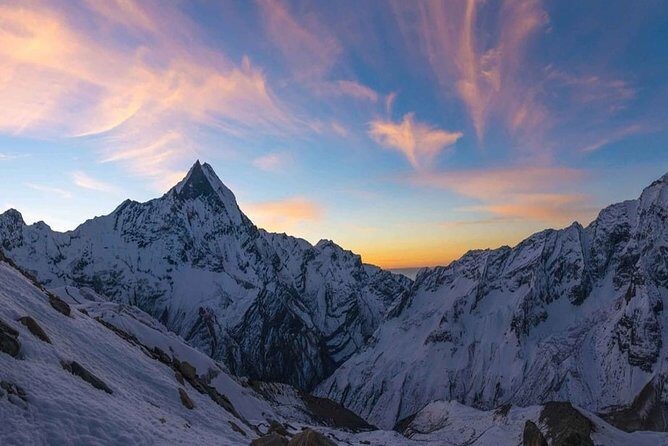
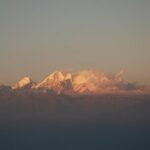
You reach Manang around 3540m, then you get an acclimatization day. The day includes hiking a few hours to visit a lake and the Himalaya mountain range viewpoint.
This is the part of the itinerary I would defend to the end. Acclimatization isn’t a nice extra. It’s the difference between feeling okay during the climb versus feeling wrecked. Manang sits at a good compromise altitude: high enough to benefit, not so high that you’re immediately fighting the worst of it.
You’ll also likely find Manang to be mentally refreshing. After several hiking days, an acclimatization walk gives you movement without the stress of pushing toward the pass. It’s the day you learn how your body responds to thinner air so the next stages feel more predictable.
Yak Kharka to Thorong Phedi: staging for the pass
From Manang you trek to Yak Kharka (4200m) in about 4 hours. This is a clear step up. Then you move to Thorong Phedi (4450m) or an optional High Camp (around 4880m), and that choice depends on stamina and how high you want to sleep.
That decision point is important. Sleeping at higher altitude can help some people feel more prepared for summit-time cold and effort. For others, it can increase the struggle before you even start the main push. Since the trek explicitly gives you that option, you should take it seriously and not treat it like a casual preference.
This is also where you’ll see why the itinerary structure matters. The pass isn’t just “one day of hiking.” It’s a chain of preparation: altitude, pacing, and rest.
Thorong La Pass day: from Thorang Phedi to 5416m, then down to Muktinath
This is the day most people remember for the rest of their lives. You climb about 1200m from Thorang Phedi to Thorong La Pass (5416m), then descend to Muktinath (3800m). The full day is listed around 8–9 hours.
Here’s the plain truth: this is hard. The air is thin, the cold can be sharp, and the climb demands steady pacing. Don’t attack it. Save your legs for the descent too. That downhill is long, and your knees will want a slower approach than you’d use on a lower trail.
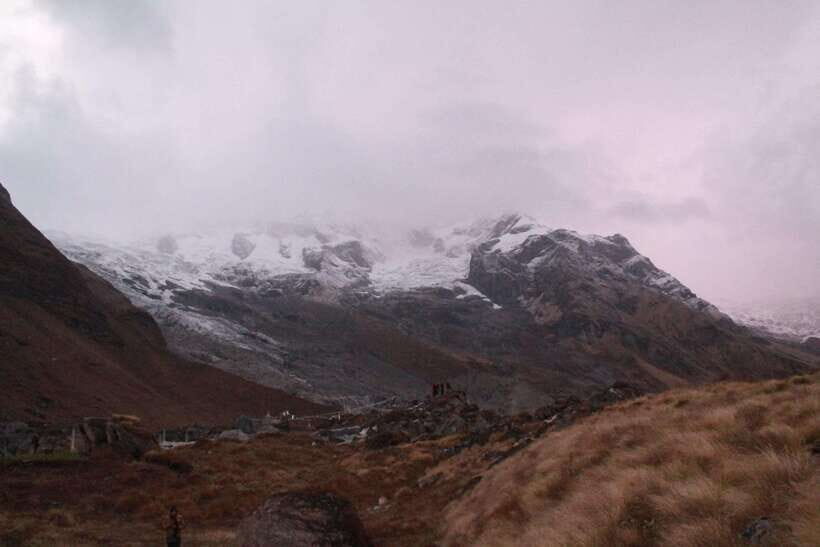
The payoff comes fast. At the pass, you’re in that rare zone where the world looks trimmed to essentials: ridges, snow, and sky. Then, as you drop toward Muktinath, the terrain and mood shift. The fact that you go down to a lower elevation that day is a gift. You feel less trapped, more human again.
Muktinath to Kagbeni, then Tatopani: culture transitions and a change of pace
After Muktinath, the next trek is to Kagbeni (2804m), about 4 hours. This section often feels like a transition out of the high-alpine mindset and into a more settlement-centered view.
Then you shift to ground travel: a bus ride from Kagbeni to Tatopani (1200m) in about 3 hours. Tatopani is famous for a simple reason: you get to recover. Going from 4000m-style trekking down to a much lower elevation gives your body a chance to loosen up, and a warmer temperature makes you want to eat like a normal mammal again.
Tatopani to Pokhara and back to Kathmandu: finish strong, recover smart
From Tatopani to Pokhara you take a local bus, listed at about 825m altitude, and spend one night in Pokhara with breakfast included. Then you go back to Kathmandu by tourist bus.
These final logistics days are underrated. After the pass, you’re tired in a way sleep alone can’t fully fix. Pokhara is a good reset point: you can stretch, hydrate, and enjoy a slower rhythm before you fly out.
If you’re someone who likes a “real end” to the trek, this itinerary delivers it. You don’t end with a chaotic scramble to figure out transport. You move as a group with the planned transfers.
Price and logistics: what $1,750 covers and what you still handle
At $1,750 per person for about 15 days, the price is easier to judge when you map what’s included versus what’s not.
Included highlights that matter in real life:
- Airport pickup and drop in Kathmandu
- Two nights in Kathmandu with breakfast and one night in Pokhara with breakfast
- TIMS card and Annapurna conservation area trekking entry permit
- All standard meals during trekking (listed breakfasts, lunches, and dinners) plus three cups of tea or coffee per day
- Tea house accommodation during the trek
- English-speaking guide
- Porter support (listed as 1 porter between 2 people for basic porter service)
- Medical kit and staff insurance and medicine for staff
- Ground transportation across key legs (Kathmandu–Besisahar via Bulbule/Tatopani–Beni/Beni–Pokhara/Pokhara–Kathmandu by bus)
What you need to budget separately:
- Lunch and dinner during Kathmandu and Pokhara stays are not included
- Travel medical insurance and emergency evacuation cost are not included
- Nepal entry visa fee and international airfare are not included
- Personal equipment
- Tips for guide and porter (tipping is expected)
- Extra personal expenses like alcohol, battery charging, hot showers, and similar costs
Here’s how I see the value: this trek is priced to reduce friction. You’re paying for route structure, permits, meals, and the human buffer that helps you avoid small mistakes turning into big problems at altitude. In past experiences with Happyland, staff like Bimal (Happy) and guides such as Saroj have been described as making people feel safe and supported, including helping travelers with missing gear. That kind of practical care is hard to quantify, but it matters once you’re on a mountain schedule.
Still, you should be honest with yourself about the work: this isn’t a self-guided walk where you can pretend nothing is your responsibility. Bring the basics, carry what you should, and tip your team.
Staff support you can feel: guides, safety, and small lifesavers
The best part of this trek package isn’t a feature on a PDF. It’s the human tone. In the feedback connected to Happyland Treks, people repeatedly mention feeling safe and looked after, with a team that stays available for questions.
Names that show up in the kind of service praise you’d want in the mountains include Bimal (Happy), Karma, Krishna, Aayush, and Saroj. Even in shorter notes, themes repeat: strong organization, friendly help, and communication that doesn’t disappear once you start walking. Some travelers also mention borrowing equipment they didn’t have, which is exactly the sort of “small emergency turned non-issue” that can change how much you enjoy the trek.
One more practical point: because this is listed as a private tour/activity for only your group, you don’t have to worry about being squeezed into someone else’s pace. That can make hard days feel more manageable.
Who this Annapurna Circuit trek suits (and who should think twice)
This trek fits best if you:
- Have moderate physical fitness
- Want a guided experience with meals and tea-house stays handled
- Are okay with long days and a major altitude target (5416m)
- Like the idea of acclimatization rather than rushing to the highest point
Think twice if you:
- Want a short, low-altitude hike
- Struggle with long, early starts on demanding days
- Don’t plan to bring enough personal gear (the essentials are on you)
Also, you should be realistic about weather. The experience is noted as requiring good weather, and if conditions force a change, you may be offered another date or a full refund.
Should you book this trek with Happyland Treks?
If you want the Annapurna Circuit experience with less guesswork, I’d say this is a strong choice. The structure is clear: permits and meals are covered, ground transport is planned, and you get a guide plus porter support. For someone who wants authentic Himalayan trekking without turning it into a logistics project, that’s exactly the sweet spot.
My “book it” checklist:
- You’re excited by the idea of Thorong La (5416m) and you’re okay with hard walking.
- You want a team that helps with real trek needs and keeps communication going.
- You can budget for tips, travel insurance, and personal gear.
My “pause for one more thought” checklist:
- You’re not comfortable with altitude or long pass-day hours.
- You don’t plan to train beforehand or you’re relying on luck for the pass timing.
If those check out, you’ll likely love how this trek moves from Kathmandu comfort to high-pass drama to warm recovery in Pokhara. It’s demanding, but it’s also the kind of journey that feels complete.
FAQ
What time does the trek start and where do we meet?
The start time is listed as 6:00am, with the ticket redemption point at Happyland Treks, Paknajol Marg, Kathmandu.
Does the price include permits and the TIMS card?
Yes. The package includes the TIMS card and the Annapurna conservation area trekking entry permit.
Are airport transfers included?
Yes. The tour includes airport pickup and drop by car/van/bus.
What kind of accommodation do you use during the trek?
During the trekking portion, you stay in tea house accommodations.
Are meals included while trekking?
Yes. Standard meals are included during the trek: breakfast (15), lunch (12), and dinner (11), plus three cups of tea or coffee per day.
What costs are not included that I should plan for?
The package does not include travel medical insurance and emergency evacuation cost, Nepal entry visa fee, international air fare, personal equipment, and tips. Personal expenses like alcohol, hot showers, battery charging, and similar extras are also not included.