REVIEW · KATHMANDU
Everest Base Camp Helicopter Tour
Book on Viator →Operated by Sublime Trails Pvt. Ltd · Bookable on Viator
Want Everest without the grueling trek days? The Everest Base Camp helicopter tour skips the multi-day hike, yet still gives you big bird’s-eye views of Everest Base Camp and Kala Patthar. I love that you’re in and out fast—Kathmandu to the Everest region, then back—so this is an option when your time (or knees) don’t want a long trek. I also like the way the route is paced, with short stops that help you stay oriented and actually enjoy the views instead of rushing.
You’ll feel how well this is run once you’re up early. Sublime Trails, coordinated by Ram, typically works with guide Prakash and porter Laxman, and that shows in the details at 5:00 am departures. The main drawback to plan for is cost add-ons and weather risk: the Sagarmatha National Park entrance fee is payable at Lukla Airport ($55 per person), and breakfast at Hotel Everest View is not included.
In This Review
- Key things I’d lock in before you go
- How the Everest Base Camp helicopter works from Kathmandu
- The 5:00 am start and Tribhuvan International Airport routine
- Lukla refuel stop: a quick altitude reality check
- Pheriche and the split-group weight plan
- The main flight: glaciers, Everest Base Camp, and Kala Patthar from above
- Hotel Everest View: breakfast on a mountain-balcony break
- Price and value: what $1,600 includes (and what it doesn’t)
- Small group size, window seats, and how to get your best view time
- Who this tour fits best—and who should think twice
- Weather rules and your backup plan for clearer skies
- Should you book this Everest Base Camp helicopter tour?
- FAQ
- What time does the Everest Base Camp helicopter tour start?
- How long is the experience?
- Where does the tour begin and end?
- Is pickup offered?
- Is breakfast at Hotel Everest View included?
- Do I need to pay an entrance fee?
- What’s the maximum group size?
- Is there a weight limit?
- What happens if weather is poor?
Key things I’d lock in before you go
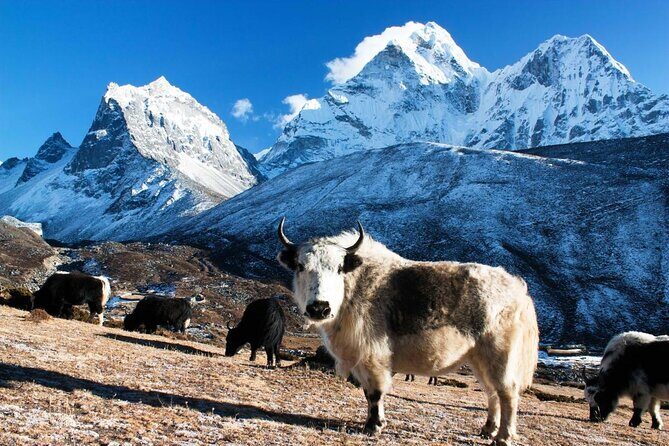
- Early start, short flights, big views: the total experience is about 4–5 hours, with flight legs designed to pack in the sights
- Lukla refuel stop to get your bearings: a brief pause to adjust to the colder Himalayan air
- Pheriche split groups for weight limits: you may see separate staging before the EBC leg
- Glacier + massif views on the approach: you’ll look down at ice fields and snow-capped peaks before landing areas near the base camp zone
- Hotel Everest View breakfast stop (if you add it): a 30-minute terrace break with the mountains right there
- Small group cap (max 16): you’re not lost in a crowd when you’re trying to focus on the view
How the Everest Base Camp helicopter works from Kathmandu
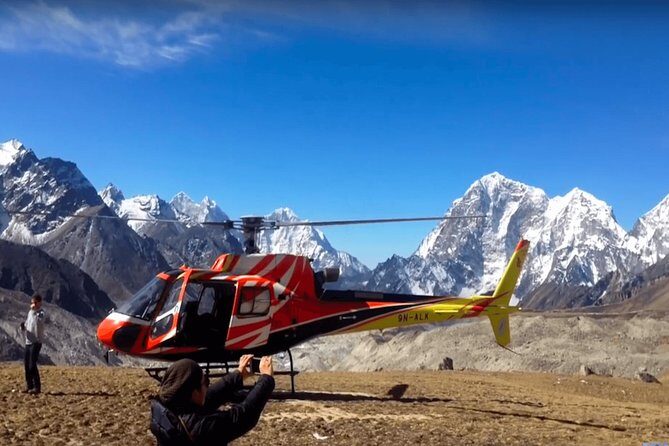
This is built for one thing: seeing Everest’s core from above without spending days walking at altitude. You’re based in Kathmandu, then you head out early to fly into the Everest region and return the same day. The helicopter airtime itself is short—think minutes, not hours—yet the views are the point, and the whole schedule is organized around getting you those views efficiently.
One practical note: this is a small-group experience with a maximum of 16 people. That matters more than you might think. In the mountains, it’s not just about comfort—it’s about keeping sight time smooth. You’re less likely to feel like you’re fighting for a window, and the staff can manage the flow without chaos.
Also, you’ll receive a mobile ticket, and private transportation is included. That’s helpful if you don’t want to figure out airport timing on your own at dawn. The meeting point is Tribhuvan International Airport, and the experience starts at 5:00 am.
A few more Kathmandu tours and experiences worth a look

The 5:00 am start and Tribhuvan International Airport routine
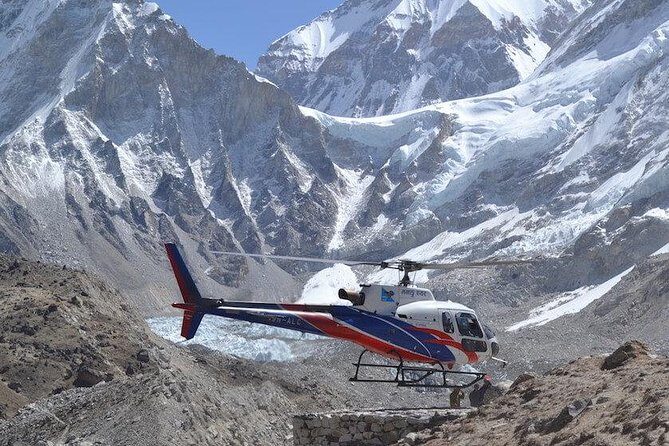
You start at Tribhuvan International Airport (Ring Rd, Kathmandu). If pickup is offered for you, you’ll be shuttled to the airport from your hotel or another chosen location. Since the start time is 5:00 am, treat this like an early museum opening: get a good night of sleep, and keep breakfast simple.
At the airport, the day becomes very straightforward: you board, then you fly out to Lukla for a short refueling break. This is the first “you’re really going to the Himalayas” checkpoint—seeing the aircraft and getting airborne early removes a lot of guesswork.
If you’re thinking about logistics, here’s what stands out as easy: the airport area is near public transportation, but you’re still relying on the included private transport to keep your morning predictable. That’s a big win when you’re rushing daylight and weather windows.
Lukla refuel stop: a quick altitude reality check
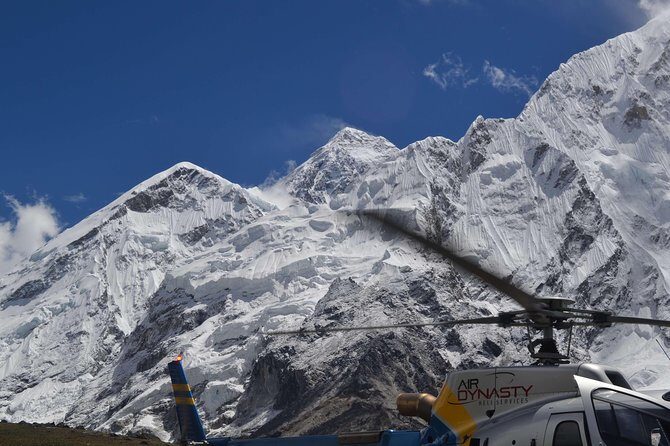
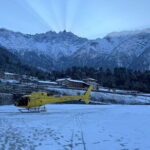
Your first major stop after boarding is Lukla. The schedule calls for about 15 minutes there. The purpose is practical refueling, but it also acts like a brief acclimation moment. The air feels colder; you get a small reset before moving deeper into the Khumbu.
Don’t overthink the stop. It’s short by design, so you’ll want to be ready to move when they’re ready to move you. Dress in layers you can adjust quickly. Even a few minutes outside the helicopter at that altitude can remind you you’re not in Kathmandu anymore.
Pheriche and the split-group weight plan
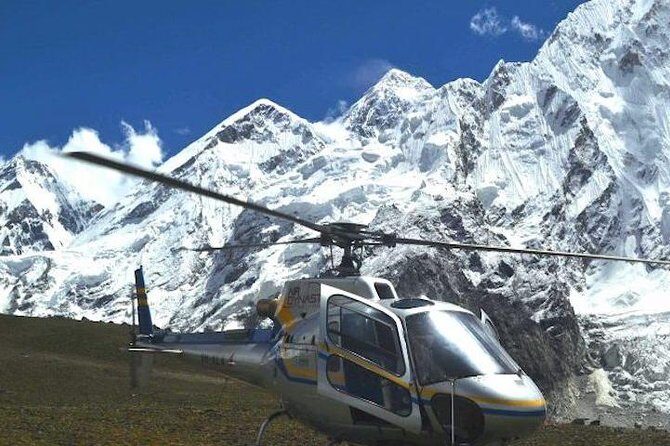
Next comes Pheriche, another key staging point. Here’s where the operation shows its mountain reality: you may be split into two groups due to restricted passenger weight limits at higher altitudes.
This detail is worth understanding. The goal isn’t to stall you—it’s to keep the flight within safety and aircraft constraints. In practice, one group proceeds toward the Everest Base Camp leg, while the other stays in the area for their turn. Either way, the schedule gives you time to adjust and keep things calm rather than letting the whole group run the risk of being squeezed by constraints.
What you can take away as a traveler: expect the day to feel a bit “staged,” especially at Pheriche. If you want uninterrupted adrenaline, this might not be your perfect format. But if you want a smooth, well-managed day with the views still being the highlight, this staging helps.
The main flight: glaciers, Everest Base Camp, and Kala Patthar from above
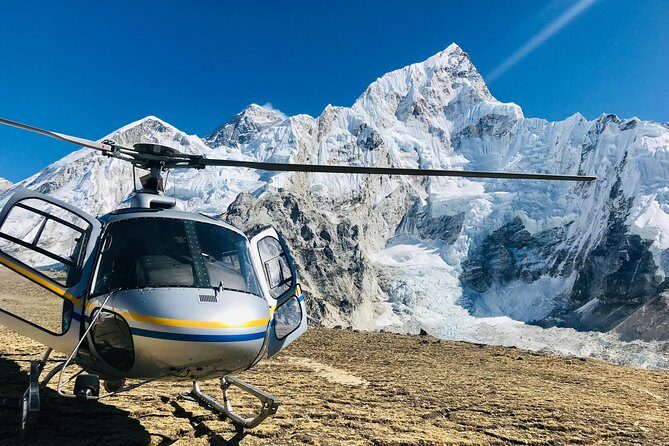
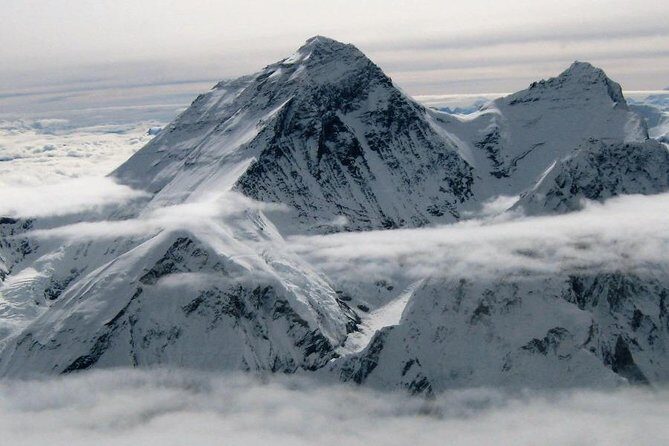
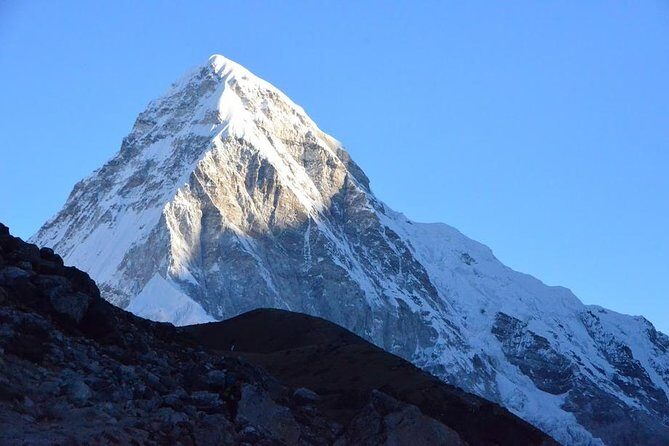
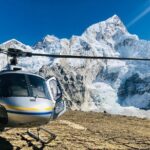
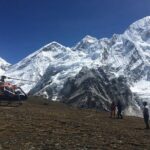
The best part is the approach toward Everest Base Camp. The flight from Pheriche to the EBC area is described as the highlight in itself, and it’s easy to see why. From the air, you don’t just see the base camp area—you see the system around it: glaciers, snow-capped massifs, and the dramatic scale of Everest’s neighborhood.
On the big views, you’re looking for:
- Everest Base Camp from above
- Kala Patthar as a famous vantage point in the Everest region
- Surrounding peaks and ice fields that you’d never appreciate quickly on foot
This is also where timing matters. Because the overall experience is about 4–5 hours, the “in the air” portion is short. So you’ll want your camera and phone ready before takeoff. Not because you need to record everything, but because hesitation costs you angle and light.
If you care about windows: some passengers have been able to secure window seats by request through the team. It’s not guaranteed based on what you share here, but it’s a practical thing to ask about when you confirm your booking, especially if you’re going for photos.





Hotel Everest View: breakfast on a mountain-balcony break
You finish at Hotel Everest View with a breakfast stop option. The terrace time is about 30 minutes, and the payoff is the view: you’re high enough that your coffee feels like it’s being served with the entire Everest region in the frame.
Two important details:
- Breakfast is not included in the tour price you listed, so plan for that extra cost if you want to do it.
- The value is in the atmosphere as much as the food. This is a rare moment where you stop moving and just watch the mountains. Even if you’ve seen photos before, having the scenery right there changes the experience fast.
If you’re deciding whether to add breakfast: if the whole point of this day is to replace the trek with a fast summit-feeling moment, this stop helps you get that payoff. Skip it if you’re on a strict budget, but I’d still consider it the most “human” part of the day—once you’ve been flying over ice and peaks, sitting down with the view is what makes it feel real.
Price and value: what $1,600 includes (and what it doesn’t)
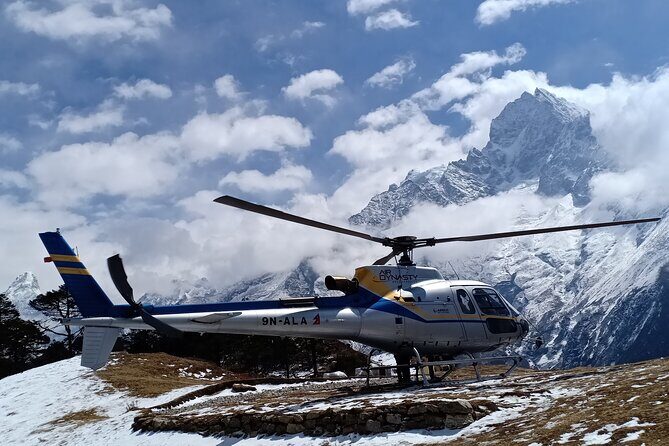
At $1,600, this is not a budget activity. So the smart way to judge it is by what you’re buying: a high-impact Everest experience without the days of trekking and altitude strain that come with the standard approach.
Here’s what’s included based on your details:
- Private transportation
- Helicopter ride from Kathmandu to the Everest Base Camp region and return
Here’s what’s not included:
- Breakfast at Hotel Everest View
- Sagarmatha National Park entrance fee: $55 per person, payable at Lukla Airport
So where’s the value? It’s in eliminating time and complexity. If you only have a day (or a few hours) in Nepal’s Everest region, a helicopter tour can be the only way to experience the central highlights. That’s the core trade: you pay a premium to swap long trekking days for a tightly scheduled day with dramatic aerial views.
If cost is your biggest concern, you might compare this to spending more days in the region doing a shorter trek, but with less “EBC-from-above” payoff. If your priority is seeing Everest Base Camp and Kala Patthar quickly and clearly, the pricing becomes easier to justify.
Small group size, window seats, and how to get your best view time
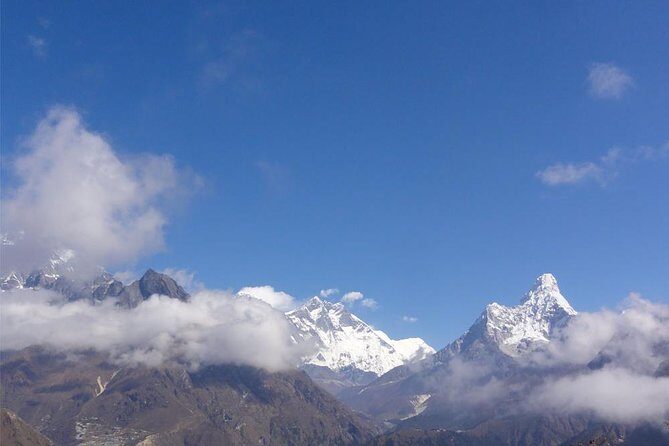
With a max group size of 16, this tour tends to feel more personal than the big-crew options. You’ll also see why the day uses staging points like Lukla and Pheriche: it keeps the flow manageable, which is what you want when you’re trying to hold onto view quality.
For the best experience:
- Ask early about window seat placement. The team has arranged window seats for some people, and if you care about photos, it’s worth requesting.
- Keep your camera accessible before takeoff. The best angles happen right when the helicopter stabilizes.
- Dress for quick changes. Lukla’s stop is short, but it’s still cold enough to notice.
Also, your day likely includes a “moment where you go quiet.” That’s not a joke. When you’re high enough and the peaks are that close, you stop thinking about logistics and just watch.
Who this tour fits best—and who should think twice
This tour is ideal if you want Everest highlights without the physical commitment of a multi-day trek. You might also like it if:
- you’re short on time in Nepal
- you want to experience Everest without spending days hiking at altitude
- you prefer a structured day with minimal uncertainty
It may not fit as well if:
- you hate early starts
- you’re on a very tight budget (this is premium pricing)
- you’re not comfortable with schedule changes caused by weather (clear skies matter here)
There’s also a hard constraint listed: the total passenger weight per person is 265 lbs. If you’re near that limit, it’s worth checking carefully before booking.
Weather rules and your backup plan for clearer skies
This experience requires good weather. If conditions aren’t right, the tour can be canceled, and you’ll be offered a different date or a full refund. That’s a key part of the reality of helicopter tours in the Everest region: flights depend on visibility and conditions, and safety comes first.
Cancellation is also time-based. If you cancel far enough in advance of the experience start time, you can receive a full refund. If you cancel late, you may not get it back. Since your start time is 5:00 am local time, I’d treat the “deadline” like a sunrise appointment: don’t wait until the last minute to decide.
If you’re booking travel around this, plan your Kathmandu schedule with breathing room. A backup day helps you avoid a rushed scramble.
Should you book this Everest Base Camp helicopter tour?
If you want the Everest core—Everest Base Camp and Kala Patthar—without trekking for days, this tour makes a strong case. You’re paying for speed, structure, and big aerial views, and the team’s reputation for handling details (with people like Ram and guide Prakash) helps the day feel organized instead of stressful.
I’d book it if your priorities are:
- getting to the Everest region efficiently
- short time commitment
- a memorable “from above” view experience
I’d think twice if:
- early mornings and weather-dependent plans stress you out
- you need breakfast included in the price
- your budget can’t handle both the base rate and the $55 Sagarmatha National Park fee per person
If you’re the kind of person who wants to say you saw Everest Base Camp—today, not someday—this is one of the most direct ways to do it.
FAQ
What time does the Everest Base Camp helicopter tour start?
The tour starts at 5:00 am from Tribhuvan International Airport.
How long is the experience?
It’s approximately 4 to 5 hours total.
Where does the tour begin and end?
It begins at Tribhuvan International Airport in Kathmandu and ends back at the same meeting point.
Is pickup offered?
Private transportation is included, and pickup from your hotel or a location of your choice is offered (depending on how you arrange it during booking).
Is breakfast at Hotel Everest View included?
No. Breakfast at Hotel Everest View is not included, though you do get a stop there with a listed 30-minute duration.
Do I need to pay an entrance fee?
Yes. The Sagarmatha National Park entrance fee is payable at Lukla Airport at $55.00 per person.
What’s the maximum group size?
The maximum is 16 travelers.
Is there a weight limit?
Yes. The total weight per passenger listed is 265 lbs.
What happens if weather is poor?
This experience requires good weather. If it’s canceled due to poor weather, you’ll be offered a different date or a full refund.