REVIEW · KATHMANDU
10 Days Annapurna Base Camp Trek from Kathmandu
Book on Viator →Operated by Couch Adventure Nepal (CAN) · Bookable on Viator
One early morning later, the Himalaya feel close. This 10-day Annapurna Base Camp trek (from Kathmandu, via Pokhara) mixes long scenic rides with village trails and big payoff days inside the Annapurna Sanctuary. I like the practical way the trip is stitched together: hotel pickup in Kathmandu at 6:30am, then smooth transport to the trailhead.
I also like that you’re not doing this solo. An English-speaking trekking guide is included, and the experience is set up as a private trip for your group, which tends to make logistics easier and pacing more comfortable. One thing to consider: meals and drinks aren’t included, so you’ll want a clear daily budget before you go.
In This Review
- Key things that make this Annapurna trek worth your time
- Why this trek feels like a real adventure (not just a checklist)
- The Kathmandu and Pokhara start: more comfortable than you might expect
- Day-by-day: what you should expect on the Annapurna Base Camp route
- Day 2: From village rhythms to your first real trek day (Ghandruk)
- Day 3: Stone steps, forests, and the Chhomrong/Kimrung area
- Day 4: Suspension bridge day and the long trek forward (Sinwa, Bamboo, Doban)
- Day 5: Deurali—views and a steady push
- Day 6: Annapurna Sanctuary begins—Machhapuchre Base Camp to ABC
- Day 7: Sunrise at Base Camp and a 360-degree mountain day
- Day 8: Jhinu Danda and the hot spring option
- Day 9: Nayapul return and the Pokhara reset (private car)
- Day 10: Kathmandu ending day—tourist bus back
- Guides, service, and the human side (this matters more than you think)
- What’s included, what’s not, and where hidden costs can creep in
- Who should book this trek—and who should think twice
- Booking decision: should you pick this Annapurna Base Camp package?
- FAQ
- How early does the trek start in Kathmandu?
- How long is the Annapurna Base Camp trek?
- Is hotel accommodation included?
- Are trekking permits included?
- Are meals included in the price?
- How do you travel between Kathmandu and Pokhara?
- Is the trek private or shared with other groups?
- Is an English-speaking guide included?
Key things that make this Annapurna trek worth your time
- 6:30am Kathmandu pickup plus a direct route to Pokhara so you waste less time
- Tourist bus Kathmandu–Pokhara round trip with hotel transfers on both ends
- English-speaking guide support on every trekking day
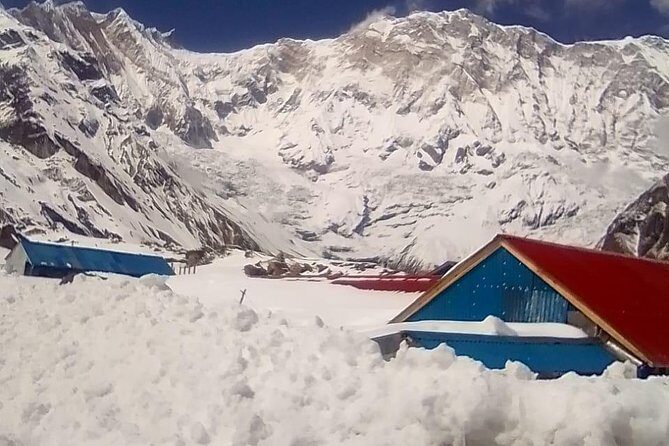
- Classic ABC route beats: Ghandruk, Chhomrong, Deurali, Machhapuchre Base Camp, and sunrise at base camp
- Permits included (TIMS + trekking permit), plus guesthouse lodging on the trek
- Pokhara hotel location in the Lakeside area, walkable to Phewa Lake
Why this trek feels like a real adventure (not just a checklist)
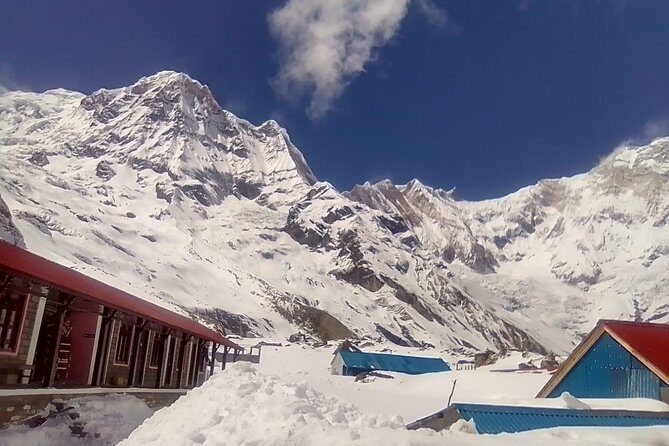
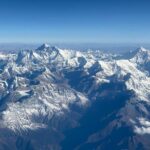
The Annapurna Base Camp trek is famous for one reason: you don’t just see big mountains—you keep meeting them in layers, day after day. First you’re in Nepal’s mid-hill villages. Then you’re in forests and stone staircases. After that, the air thins, the valley walls tighten, and suddenly you’re looking up at peaks from the foot of the Annapurnas.
This version of the ABC trip is built to match that rhythm. It starts with Kathmandu to Pokhara travel (about 7 hours by tourist bus), then shifts you into trekking mode with a steady sequence of climbs and descents. You’ll spend nights in 2-star level accommodation in Pokhara and basic guesthouse lodging during the trek, which keeps things realistic for a 10-day itinerary.
Value-wise, the price (listed at $586.67 per person) is easier to judge when you look at what’s included: guide, transfers, permits (TIMS + trekking permit), lodging, and a private group setup. The biggest “cost surprise” is that meals and drinks are not included, so plan for that from day one.
You can also read our reviews of more hiking tours in Kathmandu
The Kathmandu and Pokhara start: more comfortable than you might expect
Day 1 is mostly about getting you into position. The trip begins with pickup from your Kathmandu hotel at 6:30am, then a drive to the bus station for the tourist bus to Pokhara. The ride is long—about 7 hours—but it’s part of the style. You’re not bouncing around in multiple vehicles, and you’re not waiting around all day to get out of the city.
When you reach Pokhara, you transfer to a hotel on Lakeside, in an area where Phewa Lake is walkable. That’s a practical detail. After the bus day, you can stretch your legs without needing another ride. If you’re the kind of person who likes a calm evening before a big trek, this setup helps.
Also note: the pickup and transfers are explicitly included, which matters when you’re dealing with early mornings. Getting to the next step is one less problem.
Day-by-day: what you should expect on the Annapurna Base Camp route
Day 2: From village rhythms to your first real trek day (Ghandruk)
Your first trekking day takes you to Ghandruk, a well-known Gurung village. You’ll start on a stone-paved tramping track and cover about 6 hours walking.
What I like about Ghandruk as a first major stop is how it eases you in. You’re not thrown straight into high-altitude pressure. Instead, you get village life, local trail surfaces, and a chance to get your legs working before the route tightens up later.
Day 3: Stone steps, forests, and the Chhomrong/Kimrung area
Day 3 pushes a bit more: you climb toward Kimrung Hill, then descend to Kimrung Khola through a forested trekking trail. After exploring a settlement along the river bend, you begin the uphill hike toward Chere Hill and onward to Chhomrong.
This is about 6 hours again. Expect that classic Annapurna feel: lots of up-and-down, and periods where you’re walking in and out of tree cover. Chhomrong is also a key emotional milestone on ABC treks because it often marks when the mountains start to feel closer.
Practical note: trails here can include steep sections and uneven footing. With this itinerary, good boots and a steady pace matter more than speed.
Day 4: Suspension bridge day and the long trek forward (Sinwa, Bamboo, Doban)
Day 4 is memorable because it includes big “trail moments.” You’ll walk a descent toward the Chomrung Khola via thousands of stone staircases and cross a suspension bridge. Then it’s back climb time—about 2 hours—toward Sinwa Village.
From there, it’s a mild forest trail toward Bamboo, then continuing to Doban on the Modi River bank. Total walking time is listed as 6 hours.
This day is where you start noticing the trek’s structure. It’s not random hiking. It’s moving you deeper into the Annapurna world while keeping you on tracks that gradually lift you toward the sanctuary.
If you’re worried about fatigue, this is a good day to keep your goals simple: walk steady, drink water, and let the scenery do the talking.
Day 5: Deurali—views and a steady push
Day 5 heads toward Deurali via mountain trails with views along the way. The trek time is about 5 hours.
Deurali is one of those points where you can feel the trek turning serious. Even if the hike isn’t the longest day, the air and the sense of being higher are noticeable. If you’re someone who likes a pace that still gives you time to stop and look, you’ll probably appreciate this day’s length.
Day 6: Annapurna Sanctuary begins—Machhapuchre Base Camp to ABC
Day 6 is a highlight. You trek to Machhapuchre Base Camp, then continue on to Annapurna Base Camp after an uphill push (about 2 hours from base camp direction in the itinerary).
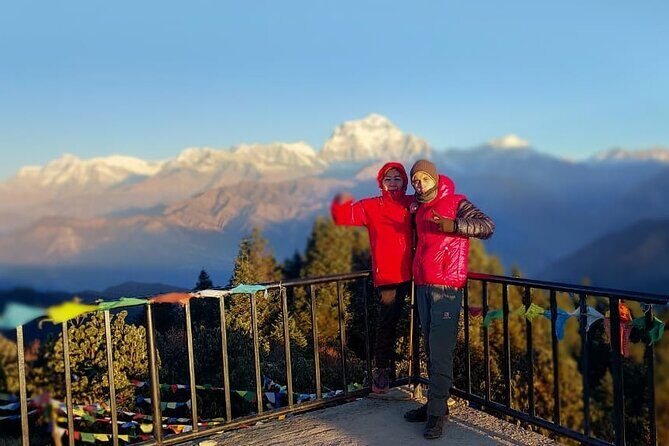
This day is listed as about 5 hours, but it includes multiple phases: first the base camp area with views of peaks such as Mt. Hiunchuli, Annapurna South, Annapurna I, Annapurna III, Gandharvachuli, and Gangapurna, then the uphill effort to actually reach Annapurna Base Camp.
In plain terms: this is the day your camera stops being optional. The Annapurna Sanctuary is known for tight valley views and dramatic angles, and the itinerary specifically calls out the reward peaks you’ll be looking for.
Day 7: Sunrise at Base Camp and a 360-degree mountain day
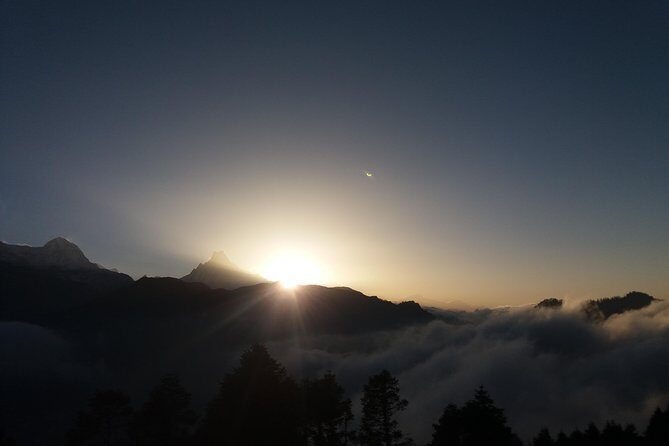
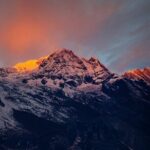
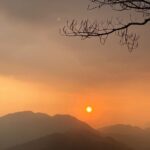
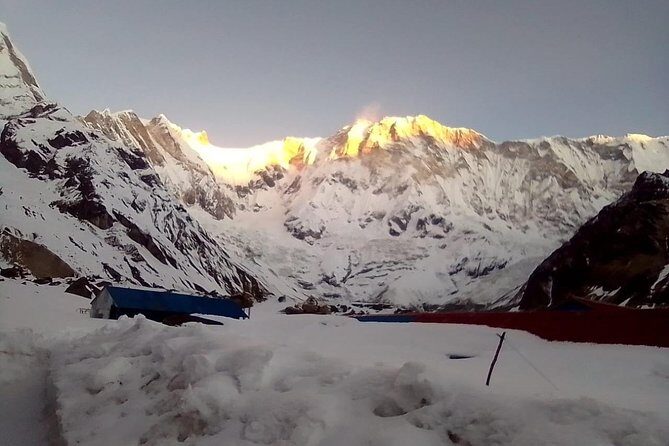
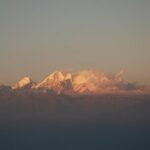
On Day 7 you enjoy sunrise from base camp. The itinerary describes the peaks changing from white to orange—classic Himalayan color shifting when the light hits just right.
From Base Camp, you can see a 360-degree view of mountains such as Annapurna South, Hiunchuli, Annapurna I, Gangapurna, and Machhapuchre (Fishtail), among others. After the morning viewing, you trek back down to Bamboo (about 6 hours).
Two things to know if you’re planning around sunrise: first, you’ll want warm layers even if you think you’re “done with cold.” Second, wake-up timing can feel early, but it’s usually worth it on this route because it’s the clearest way to get the full emotional payoff.
Day 8: Jhinu Danda and the hot spring option
Day 8 moves back toward lower trails. You hike toward Chhomrung, then down to Jhinu Danda. The itinerary also notes a hot spring about 15 minutes from the village if you’re attentive.
This is the day where your body says thanks. A short dip option can help you feel more human after the altitude and steep walking earlier in the week. The trek time is listed at about 6 minutes for this stop, but treat that as a timing detail in the schedule—not the whole day’s hiking reality. What matters is that the day is designed as a recovery-feeling descent day.
Day 9: Nayapul return and the Pokhara reset (private car)
Day 9 brings you to Nayapul, trekking down for about 6 hours. From Nayapul, you transfer by private car back to Pokhara (about 1 hour 10 minutes) and then to your Lakeside hotel (about 10 minutes).
This is a smart finish. Instead of a long bus ride right after the trek, you get a direct car transfer so you can cool down and rehydrate properly. It’s also when you’ll appreciate that guesthouse trekking is over and you can focus on comfortable recovery.
Day 10: Kathmandu ending day—tourist bus back
On the final day, you transfer to the bus station in Pokhara for the tourist bus back to Kathmandu. The ride is about 7 hours, and the trip ends after you’re delivered back to Kathmandu.
This is a straightforward finish: you’re not dragging on with extra hikes. You get a clean “done” ending, which matters if you have onward plans after ABC.
Guides, service, and the human side (this matters more than you think)
A trekking itinerary is the skeleton. What really makes it feel good is how it’s run day to day.
In the feedback for this operator, you’ll see repeated praise for guide quality and friendly support. Names you might recognize from the guide mentions include Prakash and Bisham/Bishum. People highlight service that felt attentive—like the guide was a helpful friend rather than just a person counting checkboxes.
Why you should care: on ABC treks, small decisions matter. Route pacing, when to push, when to slow, how to explain what you’re seeing, and how to manage day-to-day logistics can change the whole experience. An English-speaking guide included in the package is not just a “nice-to-have.” It helps you travel smarter and worry less.
What’s included, what’s not, and where hidden costs can creep in
Here’s the practical breakdown based on what’s explicitly part of the package:
Included:
- Hotel pickup and drop-off
- Tourist bus transfers: Kathmandu–Pokhara–Kathmandu
- 2-star accommodation in Pokhara
- Basic guesthouse accommodation during the trek
- Pokhara–Nayapul–Pokhara private car
- Trekking permit and TIMS
- English-speaking trekking guide
- The experience is listed as private (your group only)
Not included:
- Meals and drinks
- Rescue cost in an emergency
- Gratitude (optional)
So when you evaluate price, focus on your meal budget and your emergency planning. Meals add up on multi-day treks, and they’re usually a major day-to-day expense even when you’re not spending “tourist prices.” I recommend you treat the published tour price as the base package, then add your realistic daily food and drink cost on top.
Also keep in mind: rescue costs aren’t included. That’s not a small footnote in the Himalaya. Get travel insurance that covers trekking and emergency evacuation.
Who should book this trek—and who should think twice
This trek is described for moderate physical fitness. That usually means you need to be comfortable with multi-hour hiking days and a bit of altitude discomfort, but not necessarily extreme technical climbing.
You’ll likely love this if:
- You want a guided ABC trek with a clear structure and included permits
- You like village-to-mountain progression (Ghandruk → Chhomrong → Sanctuary → Base Camp)
- You prefer a private setup where your group’s pace is easier to manage
You might want to think twice if:
- You’re not ready to handle long walks with descents (the route includes plenty of both)
- You hate early starts; the day begins with 6:30am pickup
- You’re trying to keep the trip ultra-budget. Meals and drinks will add to your total
Booking decision: should you pick this Annapurna Base Camp package?
If you want ABC without turning your trip into a logistics project, I think this is a strong match. You get a clear Kathmandu–Pokhara–trek flow, included permits, lodging, and a guide—plus the route includes the big ABC beats like Machhapuchre Base Camp and the sunrise at Base Camp.
My “yes” comes with one condition: plan your meal budget and pack/insure properly for a trek where rescue costs are your responsibility. If you do that homework, this looks like good value and a smooth way to experience Annapurna up close.
FAQ
How early does the trek start in Kathmandu?
Pickup from your Kathmandu hotel is scheduled for 6:30am, and the trip then transfers you to the bus station for the tourist bus to Pokhara.
How long is the Annapurna Base Camp trek?
The total duration is listed as 10 days (approx.), including travel days between Kathmandu and Pokhara.
Is hotel accommodation included?
Yes. You get 2-star level accommodation in Pokhara, and basic guesthouse accommodation during the trek.
Are trekking permits included?
Yes. The package includes the trekking permit and TIMS.
Are meals included in the price?
No. All meals and drinks are not included, but they’re available to purchase.
How do you travel between Kathmandu and Pokhara?
You take a tourist bus from Kathmandu to Pokhara and back. Pickups and transfers are included around those bus rides.
Is the trek private or shared with other groups?
It’s listed as private, meaning only your group participates.
Is an English-speaking guide included?
Yes. An English-speaking trekking guide is included during the trek.