REVIEW · KATHMANDU
Annapurna Circuit with Tilicho Lake
Book on Viator →Operated by himalayan sanctuary adventure private limited · Bookable on Viator
Tilicho Lake is the payoff. This 19-day Annapurna Circuit trek links Tilicho Lake to the big-ticket Thorong La crossing, with an acclimatization rhythm in Manang and a Poon Hill finish for wide-open views.
I love the way the plan builds in smart altitude support. You get a dedicated acclimatization day in Manang, plus an early Tilicho day start to avoid afternoon wind that can make high walking feel colder and slower.
One consideration: this is a serious high-altitude itinerary. You’ll hit 5,416m on Thorong La with an early wake-up and icy air, so if you’re the type who insists on racing the clock, you may feel it.
In This Review
- Key Things I’d Actually Watch for
- Kathmandu Setup: Thamel, World Heritage Stops, and the Trek Brief
- Road to Syange and the First Manang Day: Villages, Rivers, and Morning Light
- Chame and Pisang: Forest Ridges, Hot Springs, and Big Peak Spotting
- Manang Acclimatization: Short Hikes, Rescue Briefing, and a Mental Reset
- Into the Tilicho Country: Siri Kharka, Landslides, and the Route’s Real Toughness
- Tilicho Lake: The Great Ice Lake and Why It’s More Than a Photo Stop
- Down to Yak Kharka and Up to Thorong Phedi: Monasteries, Plateaus, and Pass Prep
- Thorong La Day: 3am Wake-Up, Icy Air, and the Reward Panorama
- Muktinath to Tatopani to Ghorepani: Temples, Hot Springs, and Rhododendron Trails
- Poon Hill Sunrise and the Downhill to Pokhara: Big Views, Then Wind-Down Time
- Comfort and Logistics: What You Get for $1,599
- Who Should Book This (and Who Should Reconsider)
- Should You Book This Annapurna Circuit with Tilicho Lake Trek?
- FAQ
- How long is the Annapurna Circuit with Tilicho Lake trek?
- Do you get airport pickup and drop-off?
- What accommodation do you get in Kathmandu and Pokhara?
- Is the trek done with teahouse lodging?
- Are meals included on the trekking days?
- Are permits included?
- What are the key high points on the route?
- Is this tour private?
Key Things I’d Actually Watch for
- Tilicho Lake day is all about timing: an early start is built in so wind doesn’t steal your energy.
- You get more than one kind of scenery: forests, alpine meadows, Tibetan settlements, and then a full pass-and-descent day.
- Staff support is planned, not improvised: a government-licensed trek leader plus assistant support and a porter system (2 trekkers per porter).
- Comfort shows up in the details: good tea-house choices, thick blankets, and meals that aim to keep you fueled.
- Permits and paperwork are handled: ACAP and TIMS are included, which saves time and hassle once you’re already in the mountain mood.
Kathmandu Setup: Thamel, World Heritage Stops, and the Trek Brief
You start in Kathmandu with an easy landing rhythm: airport pickup, then a night in Thamel. It’s a practical base—close to food, gear shops, and the kind of bustle that helps you feel ready instead of stranded.
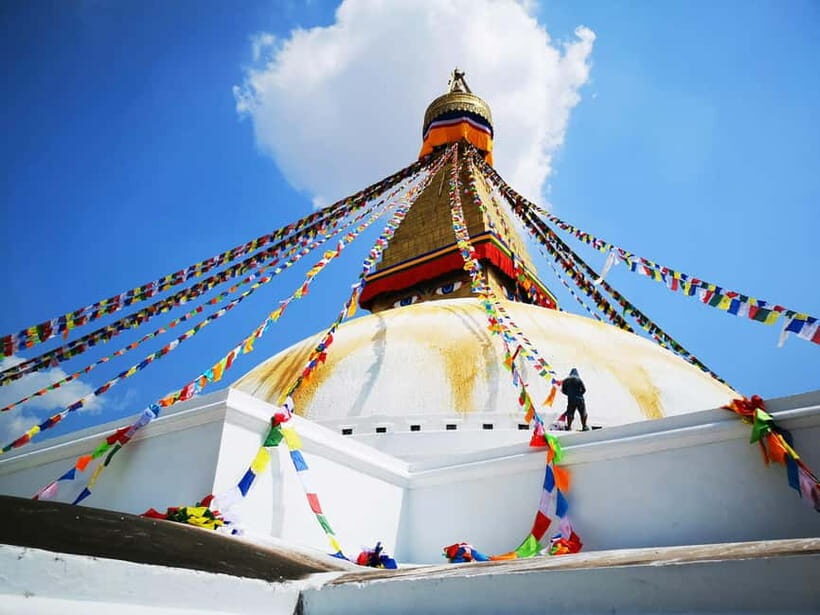
Your first full sightseeing day is a guided loop through some of the region’s most important spiritual and historic sites. You’ll visit Boudhanath Stupa, Pashupatinath Temple, Patan Durbar Square, and Swayambhunath (the Monkey Temple). That last one is especially useful on a trek like this. It’s perched above the valley, and it gives you a fast sense of scale for the mountains you’re about to chase.
Between the sightseeing and the drive out of Kathmandu, you also get a pre-trek discussion. You meet your trek leader and the rest of the group, then the team briefs you on what to expect on the route and how to ask questions before altitude turns everything into a math problem.
A small but important note for your planning: the package includes breakfast during the Kathmandu days, but it also lists lunch and dinner in Kathmandu and Pokhara as not included. That means you’ll want some cash or cards for meals outside the trek plan.
You can also read our reviews of more tours and experiences in Kathmandu.



Road to Syange and the First Manang Day: Villages, Rivers, and Morning Light
Getting out of Kathmandu takes time, and that’s part of the value here. Day 3 is a long drive (about 8 hours) to Syange. You’ll pass countryside of terraces, rivers, and small villages, and you’ll spot mountain views along the way when the weather cooperates.
The trek portion starts after that. You begin Day 4 by crossing a suspension bridge and then climbing into the Manang region. This is where the trek shifts from city-to-mountain to foot-on-trail reality. You’ll move through working landscapes—barley, rice, and potato fields—then pass Kodo, one of the larger villages in the Manang valley. You’ll finish the day in Dharapani, a solid “settle in” point with village life around you rather than a high-alpine emptiness.
If you’re newer to trekking, this first week is the best place to learn how your body reacts to walking at altitude. The climbs aren’t the pass days yet, but your breathing will already start changing.
Chame and Pisang: Forest Ridges, Hot Springs, and Big Peak Spotting
Day 5 is Dharapani to Chame. You walk through forests—pine, fir, oak, and maple—following a river corridor. It’s a different feel from the open views you’ll get later. You get relief from constant staring into the sky, because trees and terrain pull your attention back down to the work of walking.
Chame also brings a bonus: you stop at small hot springs. It’s not a spa day, but it’s the kind of warm break that helps your legs stop feeling dramatic.
Day 6 continues to Pisang. You’re walking through a steeper, narrower valley and you’ll get one of the trek’s early “rock-face wow” moments. Paungda Danda is the curved rock face rising roughly 1,500m from the river. From here, the views can include Annapurna II to the south and Pisang Peak to the northeast.
Day 7 takes you from Pisang toward Manang, with a choice of routes. The plan uses the Upper Pisang route via Geru for the best views. This is one of those decisions that matters. When the trail offers options, choosing the line with better exposure usually means more time staring at mountains and less time asking yourself why you’re not excited.
You’ll also get a stop at Barge Monastery, described as the biggest in Manang. It’s not the kind of detour that eats the day. It adds texture to a trek that can otherwise become only peaks and weather.
Manang Acclimatization: Short Hikes, Rescue Briefing, and a Mental Reset
Day 8 is your acclimatization day in Manang. This is not just “a day off.” It’s a strategy day that keeps you on the right side of altitude. You can hike toward a nearby lake or take the option to reach Vraga Village and the Himalayan Rescue Association briefing.
Even if you don’t visit the rescue organization, you’ll feel the purpose: you’re practicing moving higher without pushing too hard. This matters because the rest of the trek involves serious elevations, including the Tilicho approach and then Thorong La.
It’s also a mental reset. Manang is high enough to feel alpine, but it’s still a place where you can breathe, regroup, and watch the weather change. I like itineraries like this because you stop treating altitude as a jump scare and start treating it as a schedule.
Into the Tilicho Country: Siri Kharka, Landslides, and the Route’s Real Toughness
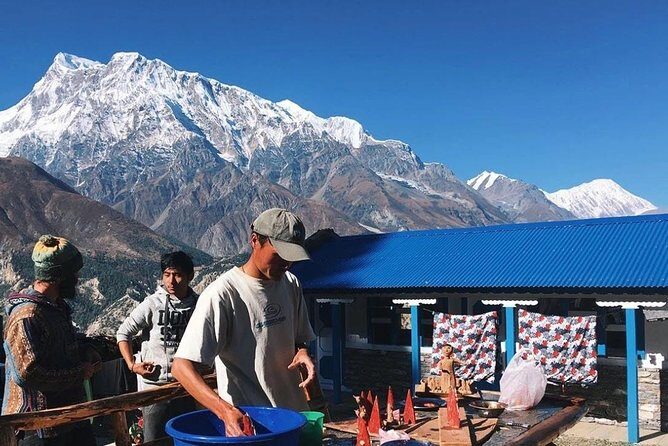
From Manang, Day 9 takes you toward Siri Kharka. You walk through conifer forests, cross into Khangsar Village territory, and keep climbing. Expect uphill effort, but also big backdrops that include Gungang Himal and Mt. Chulu.
Day 10 is Siri Kharka to Tilicho Base Camp. The good news: the trail isn’t described as extremely steep. The hard part is different. You’re walking narrow paths in loose scree and landslide zones, where footing becomes slower and more deliberate. This is the day where your trekking poles earn their keep.
You’ll reach Tilicho Base Camp and sleep in the higher world where the air feels thin and quiet. If you’re prone to getting cold, this is where you’ll start wishing you had packed warmth a day earlier.





Tilicho Lake: The Great Ice Lake and Why It’s More Than a Photo Stop
Day 11 is the big Tilicho Lake visit. The plan stresses starting early to avoid afternoon wind. That’s not a minor detail. On high ridges, wind can turn a manageable walk into an energy drain.
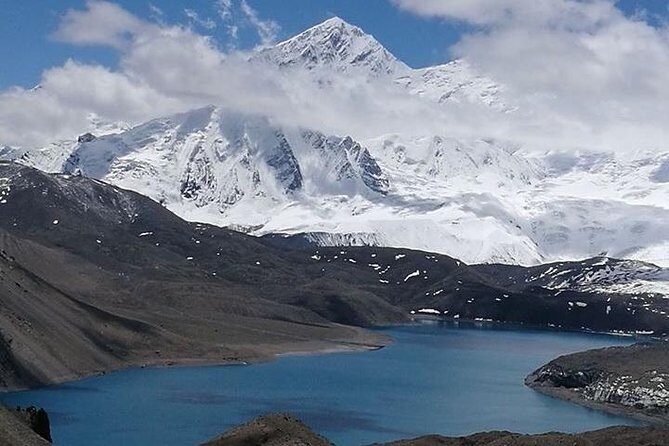
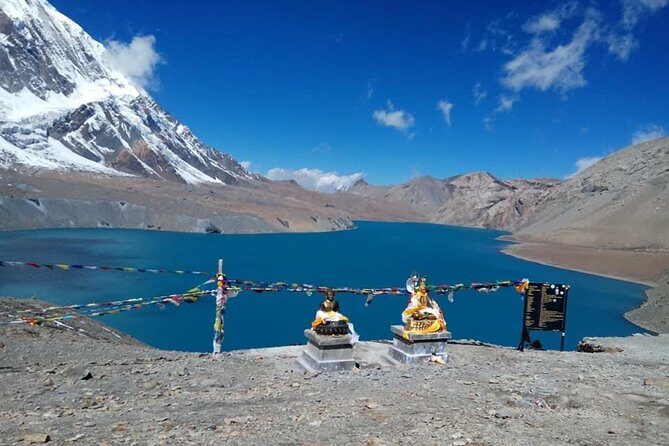
You climb for 2–3 hours to the lake. Then you spend time at Tilicho Lake (4,949m), described as the highest lake in the world and sometimes called the Great Ice Lake. You’re walking to a place that feels like it belongs to another scale of Earth. The view is clear enough that you remember it later, even on the days when you want to focus only on your next step.
The route back follows the same way to Siri Kharka. That matters because it removes guesswork. You’re not discovering new terrain in a high-altitude zone—you’re repeating a known line and focusing on safe pacing.
There’s also a cultural layer here. The trek info notes Tilicho Lake’s importance in Hindu tradition, linked to the Ramayan. So yes, you’ll likely take photos. But you’ll also get a place that carries meaning beyond scenery.
Down to Yak Kharka and Up to Thorong Phedi: Monasteries, Plateaus, and Pass Prep
Day 12 drops from Siri Kharka toward Yak Kharka. You pass through uninhabited Khangsar village and Tare Gumba, a monastery described as about a thousand years old. After that, you head into the Thorong Khola valley, cross rivers, and hike up to a plateau.
The walk to Yak Kharka includes wide mountain views and the chance to spot animals like blue sheep (bharal). The information even mentions snow leopard possibility if you’re lucky, though you shouldn’t plan your day around spotting one.
Day 13 pushes toward Thorang Phedi (4,420m/14,501ft), the last village before Thorong La. This is a short uphill day (about 3–4 hours), but the altitude makes it feel longer. The views include Mt. Gundang, Mt. Syagang, Thorong Peak, and Mt. Khatungkan.
You’ll be setting up for the pass day. Nights here can feel like waiting for weather. You’ll want to keep your energy for the next morning rather than burning it on long chats.
Thorong La Day: 3am Wake-Up, Icy Air, and the Reward Panorama
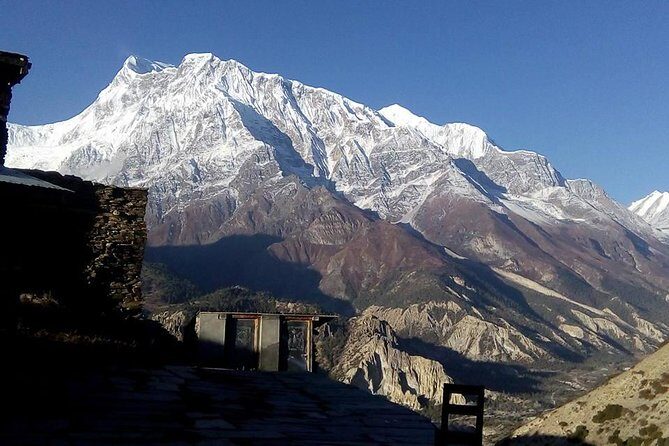
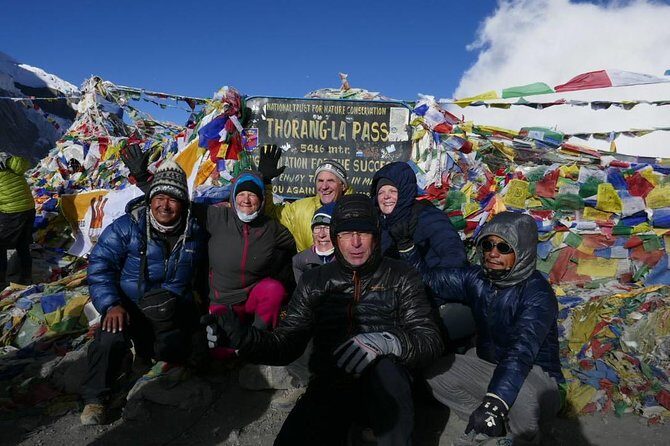
Day 14 is Thorong Phedi to Thorong La pass to Muktinath. You wake around 3am and start the climb. The itinerary highlights that this is the highest point of the trek and one of the highest passes in the world.
Crossing Thorong La is the kind of day where everything becomes simple: step, breathe, pause, repeat. The plan describes the pass crossing from east to west, noted as the easier and safest direction. It’s still the most demanding day you’ll do here.
When you reach the top, you get the panorama: majestic peaks extending northwards into Tibet, with major Annapurna peaks visible behind. Then comes the long descent into the Muktinath valley.
You’ll end the day at Muktinath, a sacred place for both Hindus and Buddhists. The info gives the Tibetan name Chumig Gyatsa, meaning “Hundred Waters.” Even if you’re tired, this is one of those destinations that feels alive with meaning, not just a waypoint.
Muktinath to Tatopani to Ghorepani: Temples, Hot Springs, and Rhododendron Trails
Day 15 includes a visit to Muktinath Temple, then you travel by car to Tatopani. Tatopani is famous for natural hot springs. This is your practical “recovery anchor.” After the pass, a soak helps you feel human again—even if you’re still sore in the way that reminds you walking is no joke at altitude.
Day 16 continues to Ghorepani (2,850m/9,350ft). You climb through villages of Sikha and Chitre, which are described as thakali communities. Then you walk into rhododendron and birch forest. The trek info notes rhododendron blooms can bring pink or red flowers, which is one of the best times to enjoy a forest day when the world isn’t all rocks and snow.
You finish in Ghorepani, a ridge-top village that’s a perfect base for the next morning’s sunrise mission.
Poon Hill Sunrise and the Downhill to Pokhara: Big Views, Then Wind-Down Time
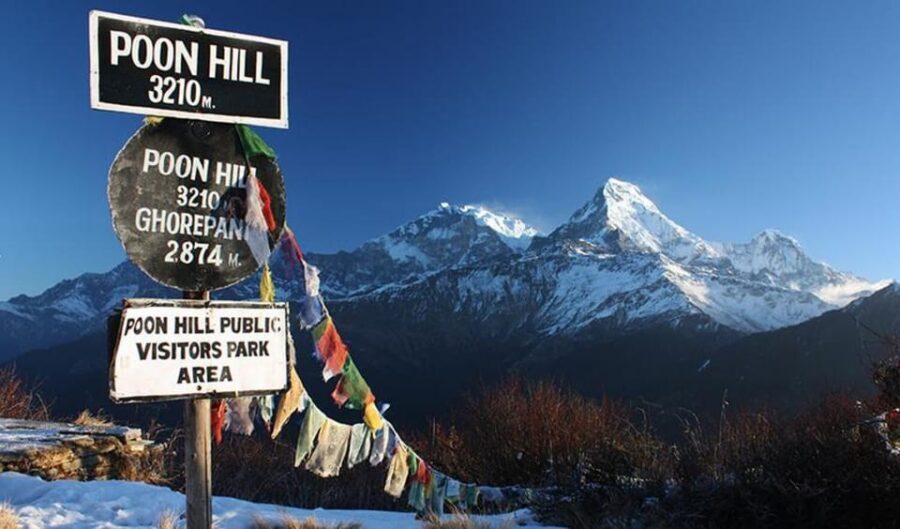
Day 17 starts early to climb Poon Hill (3,210m) for sunrise. The itinerary specifically calls out the sunrise over the Annapurna and Dhaulagiri massif, including Mt. Machhapuchhre (Fishtail), plus Mt. Manaslu and surrounding rice terraces.
After Poon Hill, you trek back downhill to Nayapul, then drive to Pokhara. This is the “from challenge to comfort” transition. You’ve earned the change in rhythm.
Day 18 drives back to Kathmandu. By now, Kathmandu feels like another planet—traffic and shops instead of altitude and prayer flags.
Comfort and Logistics: What You Get for $1,599
At $1,599 per person for roughly 19 days, the value isn’t just the trekking. It’s what’s built around the trek to reduce friction.
Here’s what that money covers, based on the package details:
- Airport pickup and drops in a private vehicle
- 3-star hotels in Kathmandu and Pokhara with breakfast
- Teahouse accommodation during the trek
- All meals (breakfast, lunch, dinner) during the trek days
- An English-speaking, government-licensed trek leader and assistant leader
- Porter service with a defined ratio (2 trekkers per porter)
- Permits and paperwork (ACAP, TIMS)
- A medical kit carried by your trek leader
- Most ground transportation matching the itinerary
In real terms, that reduces the most annoying parts of trekking: arranging permits, sorting meals every day, and carrying too much weight. In the tour feedback you’ll also see comfort emphasized—delicious food and thick blankets, plus an effort to place you in good lodge setups. That’s not a small thing when temperatures drop at altitude.
What you’ll still need to budget for yourself: Nepalese visa fee, international airfare, travel and rescue insurance, and personal expenses like phone calls, laundry, battery recharges, and bottled or boiled water. Tips for guide(s) and porter(s) are also listed as not included. So yes, add those to your real trip math.
Who Should Book This (and Who Should Reconsider)
This is a strong fit if you want the classic Annapurna Circuit feel but also want the special detour to Tilicho Lake. You’ll like it if you can handle steady walking days, cold nights, and the single-big day of Thorong La.
It’s also a good match for travelers who want structure. Your days are planned with acclimatization, early starts on key days, and guided support with permits handled.
I’d reconsider if you know you struggle with altitude or if you hate waking up early. Thorong La day starts around 3am, and the plan notes icy air and high altitude. You don’t need to be a mountain athlete, but you do need to be willing to go slow when the air gets thin.
Should You Book This Annapurna Circuit with Tilicho Lake Trek?
Yes, if your priority is a complete big-name trek that doesn’t feel random. The combination of Tilicho Lake, Thorong La, and Poon Hill gives you multiple “reasons to be here,” not just one.
Before you book, sanity-check two things:
- Are you comfortable with a high pass day and the cold that comes with it?
- Are you okay spending more on a guided package because it includes meals, permits, teahouse stays, and real staffing?
If those answers are yes, you’ll be able to focus on what actually matters: safe pacing, good warmth at night, and watching the Himalayas change character as you climb higher.
FAQ
How long is the Annapurna Circuit with Tilicho Lake trek?
The tour is listed as approximately 19 days, with the itinerary showing day-by-day trekking and travel between Kathmandu, Manang, Tilicho Lake, Muktinath, Pokhara, and back to Kathmandu.
Do you get airport pickup and drop-off?
Yes. The package includes airport pickups and drops in a private vehicle.
What accommodation do you get in Kathmandu and Pokhara?
You stay in 3-star hotel accommodation in Kathmandu and Pokhara with breakfast included.
Is the trek done with teahouse lodging?
Yes. The trek uses teahouse accommodation during the trek.
Are meals included on the trekking days?
Yes. The package includes all meals (breakfast, lunch, and dinner) during the trek. Breakfast is also included in the Kathmandu/Pokhara hotel days, while lunch and dinner in Kathmandu and/or Pokhara are not included.
Are permits included?
Yes. The package lists necessary trekking permits ACAP and TIMS as included.
What are the key high points on the route?
The itinerary includes Tilicho Lake at 4,949m and the pass day crossing Thorong La at 5,416m.
Is this tour private?
Yes. It is described as a private tour/activity, so only your group participates. The plan also specifies staffing support, including an assistant guide and porter service based on group size.