REVIEW · KATHMANDU
Kathmandu Day Tour
Book on Viator →Operated by Ace the Himalaya · Bookable on Viator
A single day can feel packed in Kathmandu, but this route is built to make sense. You’ll move between major spiritual and cultural landmarks—Kathmandu Durbar Square, Swayambhunath, Pashupatinath, and Boudhanath—with an organized plan that keeps you focused on what matters. I like that the stops are short enough to see the key highlights without turning the day into a marathon.
What I like most is the entrance fees are included, so you’re not hunting tickets or rethinking timing for each site. Second, the air-conditioned vehicle and English-speaking city guide make the day calmer, especially if you’re not used to driving around Kathmandu. One drawback to consider: it’s a full 7–8 hour day, so bring water, wear good shoes, and be ready for some temple-site walking and changing vibes with each stop.
In This Review
- Key Things to Know Before You Go
- Why This Kathmandu Day Tour Works in 1 Long Day
- Meeting in Thamel and Planning for a 7–8 Hour Rhythm
- Kathmandu Durbar Square: Palace-Era Power and Museum Corners
- Swayambhu Mahachaitya (Monkey Temple): Hill Views and Living Culture
- Pashupatinath Temple: Hindu Sacred Space and the Shiva Linga
- Boudhanath Stupa: 2500 Years of Pilgrimage and Prayer Wheels
- Price and What Your $85.34 Actually Buys
- The Real Benefit: An English Guide Who Explains Meaning, Not Just Names
- Should You Book This Kathmandu Day Tour?
- FAQ
- How long is the Kathmandu Day Tour?
- What sites are included in the tour?
- Are entrance fees included?
- Is transportation included?
- Are meals and drinks included?
- Where is the meeting point?
- Is this tour a small group?
- Is the tour dependent on weather?
- What is the cancellation policy?
Key Things to Know Before You Go
- Four major Kathmandu icons in one planned loop (Durbar Square, Swayambhunath, Pashupatinath, Boudhanath)
- Tickets for the included sites are covered, so your schedule stays simple
- English-speaking guide helps you connect Hindu and Buddhist symbolism fast
- Small group size (max 15 people) keeps it manageable for questions
- AC vehicle helps a lot during traffic and between hill and temple areas
- Most of the day is outdoors, so good weather matters
Why This Kathmandu Day Tour Works in 1 Long Day
Kathmandu is the kind of city where the streets are part of the story. But if you only have one day, the trick is not trying to see everything—it’s choosing the handful of places that explain Kathmandu’s mix of Hindu and Buddhist culture. This itinerary does that in a smart order, moving you from palace-era heritage to hilltop views, then to major temple worship sites, and finally to a Buddhist stupa that acts like a magnet for pilgrims.
I also like how the timing is realistic for a single day. You get enough minutes at each stop to take in the big details and settle into the atmosphere, without feeling trapped in a long guide monologue. Even at 30–60 minutes per place, you can usually spot what photographers miss: what people are doing there right now—whether that’s worship, prayer-wheel spinning, or quiet museum browsing.
The tour is also built for your convenience. You’re not stuck figuring out tickets, routes, and timing across multiple sites. Instead, you get an organized loop with an English-speaking guide and covered entry fees, which is a big deal if you’re trying to keep your day low-stress.
You can also read our reviews of more tours and experiences in Kathmandu.



Meeting in Thamel and Planning for a 7–8 Hour Rhythm
Your day starts at Ace the Himalaya A1 Business complex on Thamel Marg. Thamel is a handy base because it’s full of guesthouses and easy to orient yourself in. Since the tour ends back at the same meeting point, you don’t need to guess how to get home after the last stop.
The overall duration is about 7 to 8 hours, and that length matters. It’s long enough to cover four major sites, but not so long that it’s automatically miserable. Still, Kathmandu can be hot, busy, and a bit chaotic between attractions, so the included air-conditioned vehicle is a practical win. It gives you a reset between temple areas and helps keep the day enjoyable, not just “efficient.”
Group size is capped at 15 people, which usually means better questions and less standing around. You also get group discounts, plus a mobile ticket, which fits how people travel today.
A simple planning tip: wear shoes that work for uneven stones and temple steps, and bring something small for water. Meals aren’t included, so you’ll either grab food on your own before the tour or plan for a break that you manage yourself when the tour ends.
Kathmandu Durbar Square: Palace-Era Power and Museum Corners
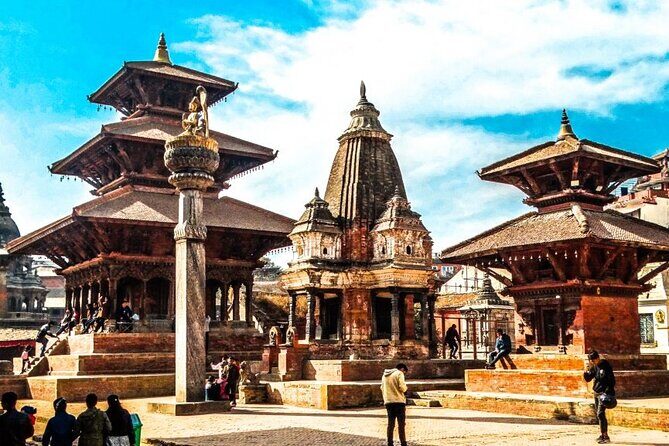
The day opens at Kathmandu Durbar Square, a palace complex made up of courtyards and temples built between the 12th and 18th centuries. This is the historic center of the Malla kings of Kathmandu, so you’re not just looking at pretty buildings—you’re standing in the old political and ceremonial heart of the city.
You’ll typically get around 30 minutes here, which is tight but workable if you know what to aim for. Look at how the structures sit around inner spaces, and notice the mix of temples and palace buildings rather than expecting one single “main view.” This is also one of those places where details reward attention: carvings, layered architecture, and the way different buildings connect like a living complex.
Admission is included, and there are three museums inside the palace building. In 30 minutes, you won’t do all museums the same way you would on a slower day. So if you want to use that half-hour well, pick one museum focus based on your interest—people often enjoy museum rooms when they’re short, because the guide can connect what you see to what it means in Kathmandu’s story.
One consideration: because it’s a major historic site, it can be busy. If you hate crowds, go slowly and focus on the corners. Often the best experience isn’t the most photographed spot—it’s where worshippers, locals, and quiet details share the same space.
Swayambhu Mahachaitya (Monkey Temple): Hill Views and Living Culture
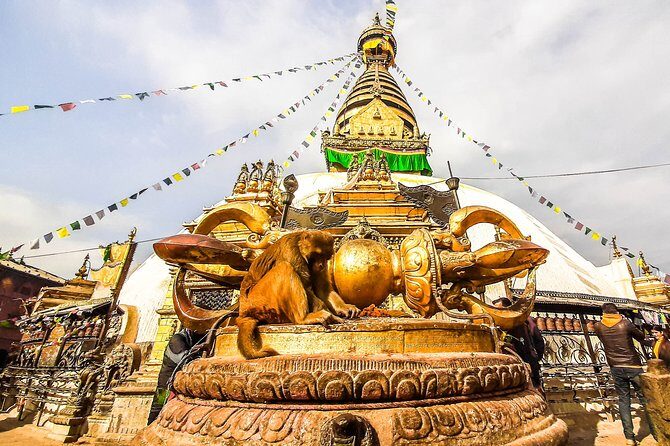
Next up is Swoyambhu Mahachaitya, better known as Samhengu and commonly called the Monkey Temple. This is a hilltop site where you can look over the valley from the top, so you get both architecture and a big orientation view—useful if you’re trying to understand where Kathmandu sits and how the city spreads.
You’ll spend about 1 hour here, which is the right amount of time. A hill temple like this usually involves steps and a bit of walking, plus time to slow down and take in what’s going on around you. The “Monkey Temple” nickname isn’t marketing fluff: monkeys are part of the environment, and you’ll see them around the grounds. Keep your belongings zipped and don’t act like you’re feeding them.
This stop is more than just a viewpoint. It’s also a spiritual site where Buddhist symbolism is central, and it tends to feel different from the palace complex you visited first. If your guide points out key design elements—like stupa shapes, eyes-of-Buddha-style symbolism, and how ritual space works—it helps you see the place as a living religious area, not just a scenic stop.
If you like photos, you’ll probably find this is one of the best places for a “Kathmandu makes sense now” moment. If you hate heights or steep walking, plan for a calmer pace and take breaks. One hour can feel longer if you stop frequently to observe the details.
Pashupatinath Temple: Hindu Sacred Space and the Shiva Linga
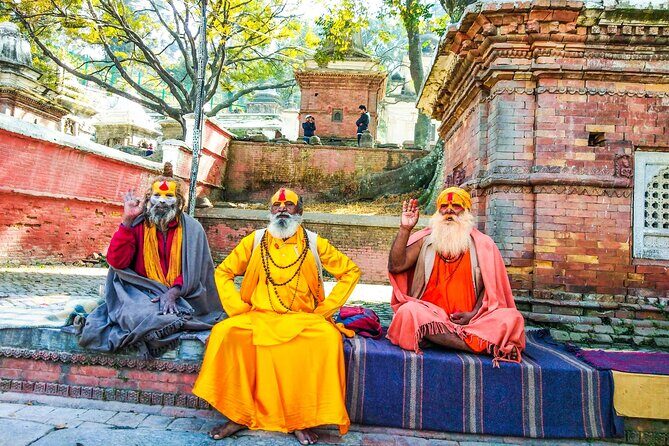
The tour then heads to Pashupatinath Temple, about 5 kilometers east of the city center. This is one of the most sacred Hindu shrines in the world, and the reason it’s famous is also the reason it can feel powerful: the richly ornamented pagoda houses the sacred linga, described here as the symbol of Lord Shiva.
You’ll have about 45 minutes at Pashupatinath. That’s enough time to understand the setting—temple structures, devotional areas, and the way worship happens around sacred objects—but not enough time for full, slow rituals. So the best strategy is to focus on what you can learn quickly: what the temple is dedicated to, where the sacred object relates to temple architecture, and why so many people treat this site as a pilgrimage destination.
A quick practical note: because this is a functioning religious place, dress and behavior matter. Keep your voice down, follow any site guidance, and avoid blocking worship areas for photos. If you’re unsure about what’s appropriate, watch what locals do first. A good guide will help you interpret the rules without making it awkward.
This stop is also often the most emotionally intense of the day. It’s not “cute” or “light.” It’s serious sacred space. That’s part of the value. You finish the day knowing Kathmandu isn’t only about old buildings—it’s about faith that’s still happening.





Boudhanath Stupa: 2500 Years of Pilgrimage and Prayer Wheels
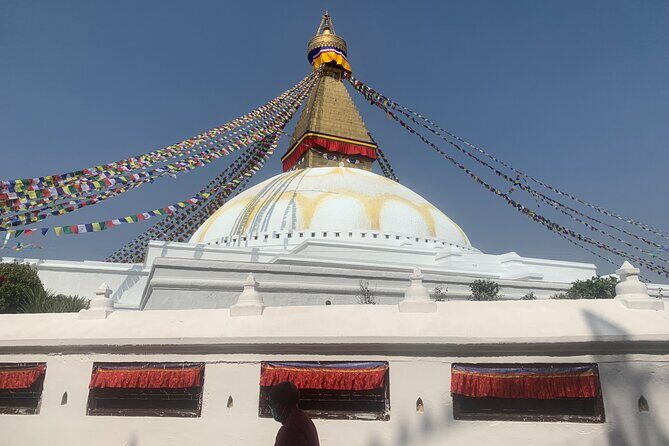
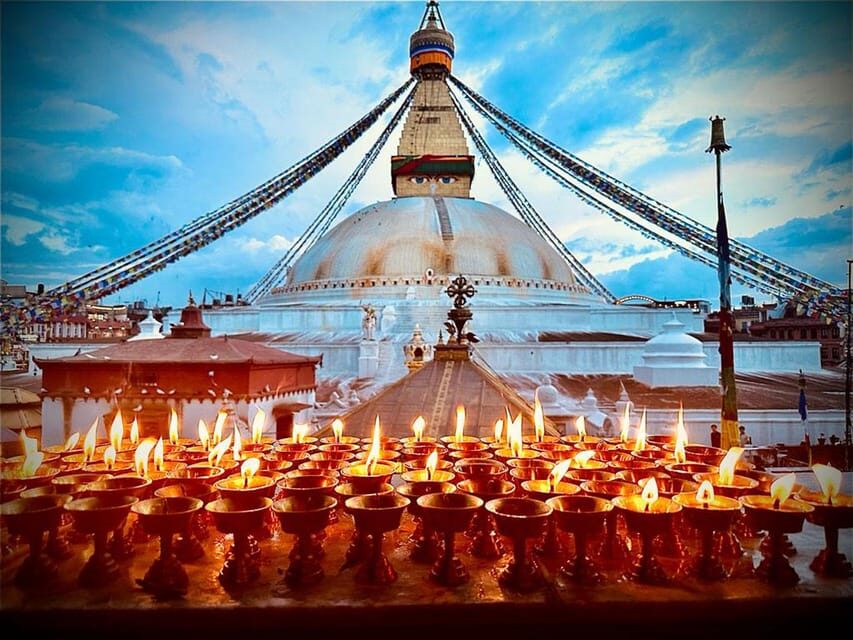
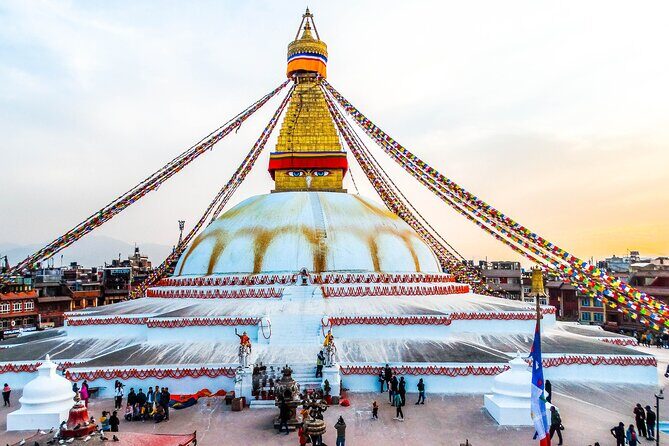
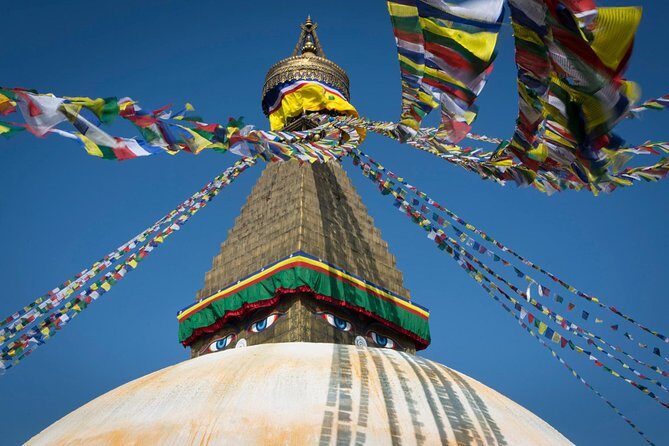
Finally, you’ll reach Boudhanath Stupa, described as about 2,500 years old, built in the 5th century. It’s a Buddhist stupa with four pairs of eyes of Lord Buddha in four cardinal directions, and you’ll likely notice pilgrims moving around it in ritual loops. Many of the worshippers you’ll see come from Tibet, and one key activity here is spinning prayer wheels as people pass.
You’ll get around 45 minutes at Boudhanath, which works well because this stop isn’t about rushing to one photo. It’s about watching the rhythm of ritual. As you walk around, you start to understand why this kind of stupa space keeps pulling people back for generations.
There’s also a cultural pattern to Boudhanath: monasteries and spiritual communities in the surrounding area. One of the guides highlighted in past experiences mentions time spent at monasteries near the stupa, so it’s worth asking your guide if your schedule includes that extra angle on your date.
If you want to end the day on a calm note after Pashupatinath, Boudhanath is a good choice. It’s active, but the atmosphere tends to feel steady and repetitive in a comforting way. Your brain gets a break. You might even find yourself counting the prayer-wheel turns without realizing it—then laughing at yourself quietly, because yes, your brain can do that when it’s tired.
Price and What Your $85.34 Actually Buys
At $85.34 per person, this tour is positioned as a value play compared to piecing together a driver, separate tickets, and a guide for multiple UNESCO-level stops. The big value pieces included are:
- Air-conditioned vehicle
- Authorized English-speaking city tour guide
- Entrance fees for the sites listed
- Official expenses
What’s not included is also important. Meals and drinks aren’t covered, and tips for the guide and driver are expected. That means your true daily cost will be a bit higher than the sticker price once you factor in lunch or snacks.
I’d call this a good deal if you want reliability. If you’re short on time, saving an hour here and there by not dealing with ticket lines and directions is real money—especially if your plan is to see the main highlights and then spend the rest of your evening exploring on your own.
It’s also a good choice if you’re not confident navigating Kathmandu traffic or temple-area routes alone. The included vehicle and plan reduce the mental load. That’s not glamorous, but it’s exactly what makes a day tour worth it.
The Real Benefit: An English Guide Who Explains Meaning, Not Just Names
The itinerary could work even without a guide, but the guide is what turns a list of landmarks into understanding. This tour includes an English-speaking city tour guide, and the best part is how the explanations connect themes across religions and cultures.
In past experiences with guides named Kedar and Dil, they’ve been praised for making history and architecture easier to follow, and for connecting the dots across Buddhism, Hinduism, and the Newari people. That’s the difference between seeing a stupa and understanding why it looks the way it does, or between walking through a palace complex and realizing what kind of power sat behind it.
I also like the way this type of guide helps you manage your expectations. Durbar Square, Swayambhu, Pashupatinath, and Boudhanath each have their own energy. With a guide, you’re prepared for that shift instead of feeling surprised by it mid-day.
One practical tip: bring a couple of questions before you go. Examples: What’s the key difference between the symbolism of a stupa and a temple? What should I notice first at each site? Good guides love that kind of direction, and it makes the time feel even more worth it.
Should You Book This Kathmandu Day Tour?
Book it if you want a structured way to see Kathmandu’s major spiritual and historic sites in a single day without doing logistics math. The covered entrance fees, AC transport, and English-speaking guide are the core reasons this works—especially at a price that’s designed to feel fair.
Skip it (or consider a slower plan) if you hate long days, need a lot of meal breaks, or want lots of museum time at a single location. With stop times ranging from about 30 to 60 minutes, you’ll get highlights, not deep-study.
If your travel style is: see the big icons, learn what you’re looking at, and then go back to explore more on your own, this is a solid match.
FAQ
How long is the Kathmandu Day Tour?
It lasts about 7 to 8 hours.
What sites are included in the tour?
You visit Kathmandu Durbar Square, Swoyambhu Mahachaitya (Monkey Temple), Pashupatinath Temple, and Boudhanath Stupa.
Are entrance fees included?
Yes. Entrance fees for the mentioned cultural sites are included.
Is transportation included?
Yes. You get an air-conditioned vehicle for the tour.
Are meals and drinks included?
No. Meals and drinks are not included.
Where is the meeting point?
You start at Ace the Himalaya A1 Business complex on Thamel Marg, Kathmandu 44600, Nepal.
Is this tour a small group?
Yes. The tour has a maximum of 15 travelers (small group size).
Is the tour dependent on weather?
Yes. The experience requires good weather.
What is the cancellation policy?
You can cancel for a full refund if you do so at least 24 hours before the start time. If it’s canceled due to poor weather, you’ll be offered a different date or a full refund. Service animals are allowed.