REVIEW · KATHMANDU
Kathmandu World Heritage City Sightseeing Cultural Tour From, Kathmandu, Nepal
Book on Viator →Operated by Himal Tourism Pvt.Ltd · Bookable on Viator
Kathmandu’s UNESCO sites hit fast. This 5-hour private sightseeing loop strings together four major World Heritage stops—Kathmandu Durbar Square, Swayambhunath (Monkey Temple), Patan Durbar Square, and Boudhanath Stupa—so you get an instant sense of Nepal’s layers of Hindu and Buddhist culture. You’ll travel in comfortable private transport and learn the stories you’d normally miss when you’re just wandering and guessing.
What I like most is the easy coverage. You see major landmarks in one day without playing taxi-chess or spending your best daylight figuring out logistics. I also like that the tour includes a professional English-speaking city guide and handles the important entry pieces, so you can focus on the sights instead of ticket math and last-minute hassle.
One drawback to plan for: food and beverages aren’t included. After a hill climb and a couple of dense heritage squares, you’ll want water and a simple meal stop, and that part is on you.
In This Review
- Key things to know before you go
- Why this 5-hour UNESCO loop works in Kathmandu
- Entering Kathmandu Durbar Square: temples, old palace, and the Living Goddess
- Swayambhunath (Monkey Temple): hilltop stupas and quick viewpoint magic
- Patan Durbar Square: Newari art, palace power, and a museum stop
- Boudhanath Stupa: Tibetan spiritual atmosphere in Kathmandu
- Private guide and transport: what you gain (and what you should ask)
- Price and value: is $145 a good deal for 4 UNESCO stops?
- Who should book this tour (and who might feel it’s too tight)
- Quick practical tips for each stop
- Should you book this Kathmandu World Heritage City tour?
- FAQ
- How long is the Kathmandu World Heritage City sightseeing tour?
- What places does the tour visit?
- Is pickup offered?
- Are admission fees included in the price?
- Is transportation included?
- Is this tour private or shared with other groups?
- What is not included in the tour price?
- What is the cancellation policy?
Key things to know before you go
- Four UNESCO World Heritage sites in about 5 hours, paced for a first-time overview
- Private transport and pickup, so you don’t waste time zig-zagging across town
- Guided context at every stop, including stories tied to the sites’ religious roles
- Admission fees handled (with Swayambhunath and Patan tickets included; Boudhanath is free)
- Swayambhunath’s monkeys are real, and you’ll be walking around their home base
- Family- and film-crew–level organization from Himal Tourism Pvt.Ltd, built for smooth timing
Why this 5-hour UNESCO loop works in Kathmandu
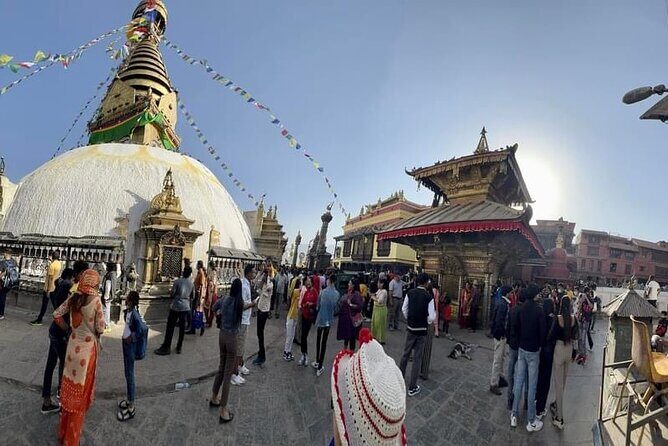
If you have limited time in Kathmandu, this kind of tour can be a smart move. It’s built around the idea that four UNESCO sites can give you a big-picture “how Kathmandu valley works” story—fast. You’ll go from royal and temple power at Durbar Squares, to a hilltop stupa viewpoint at Swayambhunath, then cross into Patan’s arts and craftsmanship, and finish at Boudhanath’s Tibetan spiritual world.
You’ll also appreciate the practical setup. Private transport plus a city guide means you spend less time negotiating rides or trying to read a route map in busy traffic. And because it’s private, you can ask for small tweaks (within the tour structure) instead of being stuck with a rigid group rhythm.
The pacing is described as easy and most travelers can participate. That doesn’t mean it’s “zero walking.” Expect you’ll move around temples and courtyards, and Swayambhunath is on top of a large hill—so plan for some effort and stairs.
You can also read our reviews of more city tours in Kathmandu
Entering Kathmandu Durbar Square: temples, old palace, and the Living Goddess
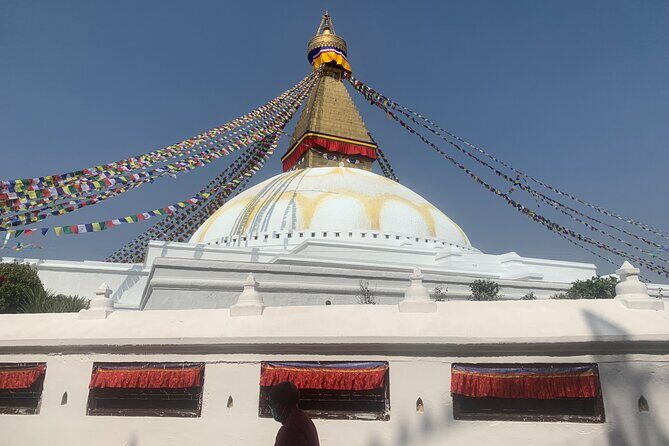
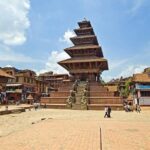
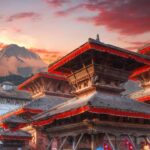
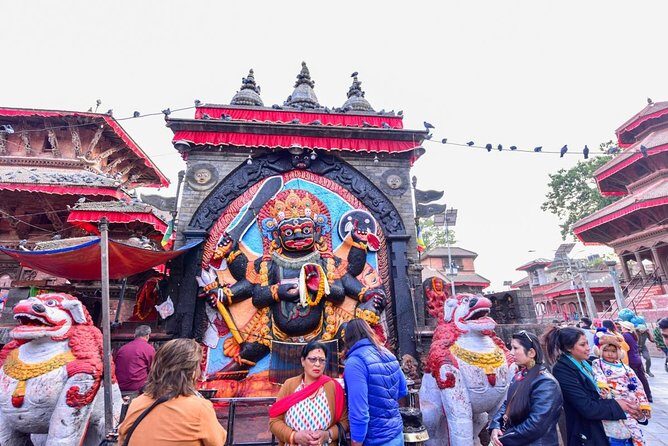
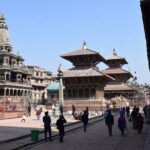
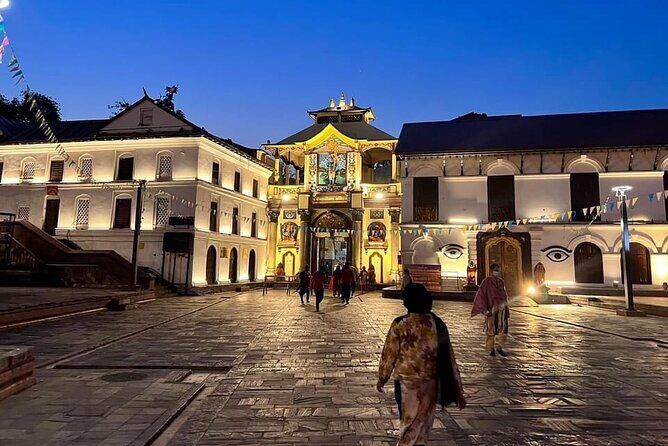
Kathmandu Durbar Square is the cultural heart of the ancient city, and it’s not subtle about it. This place holds over 60 ancient temples and the old Royal Palace complex. In other words, you’re not just looking at one building—you’re entering a dense spiritual and historic core where multiple eras overlap.
One highlight here is the presence of the Living Goddess, who lives here and is often seen. That adds a very specific living dimension to the site. Many heritage stops are just “archaeology on display.” This one carries an ongoing role, which helps you understand why locals treat it as something more than a museum.
The practical note: Durbar Square is visually busy. There’s a lot to see in a small area, from temple details to palace surroundings. A guide matters because they help you pick what to look at first, instead of letting your eyes bounce randomly over dozens of similar-looking carvings.
If you’re visiting for the first time, this is a great opener. It gives you context for what comes next—especially the way Kathmandu valley blends religious meaning into everyday architecture and public space.
Swayambhunath (Monkey Temple): hilltop stupas and quick viewpoint magic
Swayambhunath—often called Monkey Temple—is one of those stops that feels both ancient and alive. It’s described as the oldest Buddhist stupa in the Kathmandu Valley, dating back over 2000 years. The site isn’t a single structure either; it includes many temples, stupas, and monasteries.
And yes, the monkeys are part of the experience. The nickname comes from rhesus monkeys that will entertain you. That can be fun if you keep a calm attitude. It can also be a hassle if you’re expecting quiet. Either way, it’s part of the real setting, not a staged show.
What I’d plan around most is the hilltop position. Swayambhunath sits on top of a large hill, which gives a wonderful overlook of the Kathmandu Valley. Even without perfect weather, that viewpoint is one of the fastest ways to understand how the valley spreads out—where the city sits, how the terrain shapes routes, and how heritage sites act like landmarks.
The tour schedules this as about 1 hour with admission ticket included. That’s enough time to see the main stupa area, notice the surrounding religious spaces, and enjoy the view without feeling like you’re running a sprint. If you want photos, I’d keep one hand free for your camera and the other for basic patience—because the monkeys decide the pacing.
Patan Durbar Square: Newari art, palace power, and a museum stop
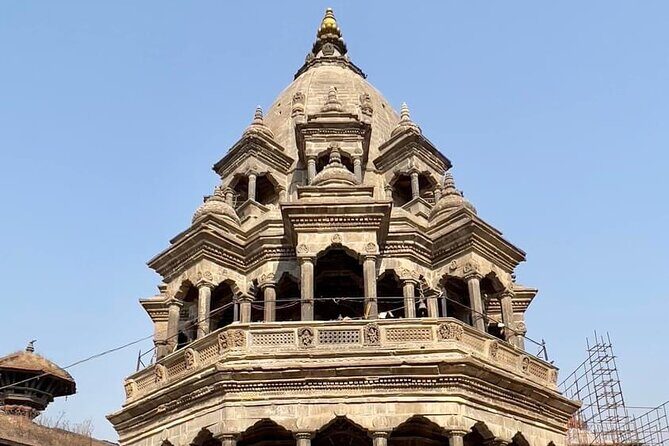
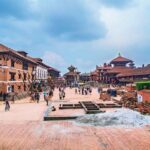
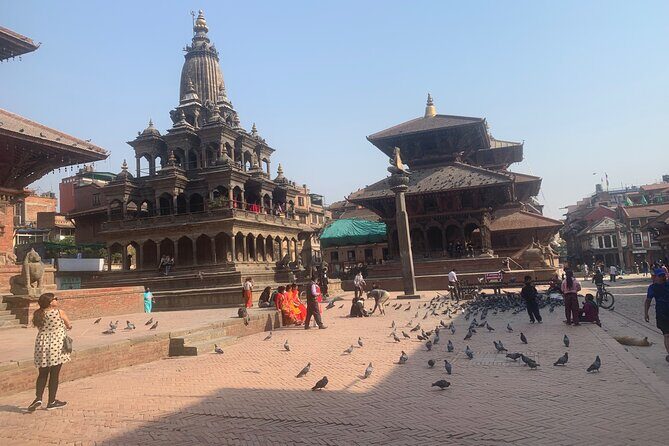
Patan Durbar Square is across the sacred Bagmati River from Kathmandu. Historically, Patan was its own kingdom until 1769, which helps explain why it feels like a separate world rather than just a sister neighborhood. You’ll get that “this was a capital” feeling in the architecture and in the concentration of monuments.
Patan is also known as the city of arts. Here, the Newari people’s craftsmanship shows up in amazing carvings and temples built and shaped over hundreds of years. The site includes a historic royal palace, Hindu temples, and an outstanding museum displaying cultural art from centuries before.
This stop is valuable because it shifts your lens slightly. Kathmandu Durbar Square gives you royal and living religious energy in a dense core. Patan adds more emphasis on artistry and visual storytelling. If you love details—carved windows, temple ornamentation, and the visual language of religious architecture—this is the place where your eyes can slow down.
The tour allots about 1 hour and includes the admission ticket. That museum time (if you choose to use it) can help you turn what you saw outside into something you understand better. The catch is that museum spaces can feel slower than temple courtyards. If you’re traveling with people who prefer outdoor sights, you may want to skim and save energy for the carvings instead.
Either way, Patan is a strong “second act” after Swayambhunath. It keeps the story going: hilltop spiritual view, then royal arts and temple craft close up.
Boudhanath Stupa: Tibetan spiritual atmosphere in Kathmandu
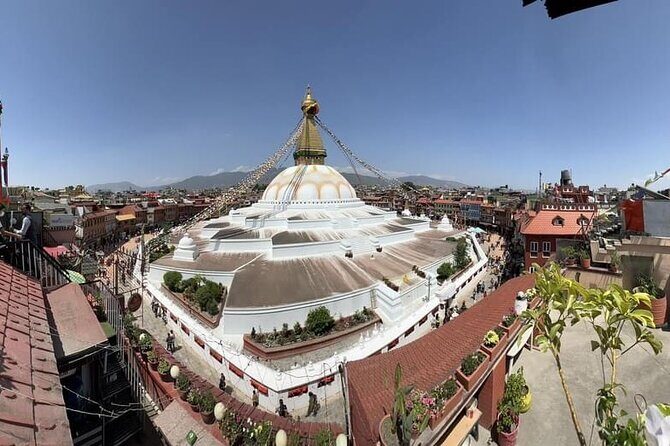
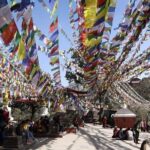
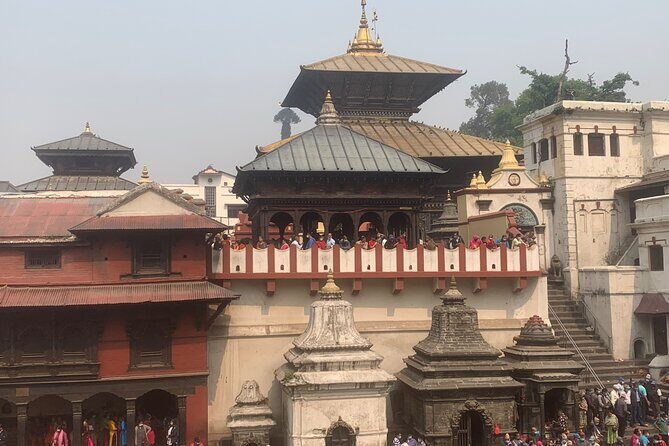
Boudhanath is a different mood—less royal-palace intensity, more slow spiritual focus. It’s home to the 3rd largest Buddhist Stupa in all of Asia, rising to a height of 36 meters (118 ft). That scale changes how you experience the space. Instead of “small details,” you feel the structure as the centerpiece.
One of the most meaningful layers here is the Tibetan community. Boudhanath is described as home to the largest Tibetan refugee community in Nepal. As you explore Tibetan monasteries around the stupa, you’ll notice butter lamps flickering—part of the visual rhythm that gives this area its distinct atmosphere.
The tour schedules Boudhanath for about 1 hour. Admission is free on this itinerary, which is a nice value perk, especially after you’ve already paid tickets at other stops. You’ll also appreciate ending with a site that doesn’t demand the same kind of constant scanning as Durbar Squares.
Practical thought: Boudhanath is a great closing stop because it lets you slow down after a busy sequence. If you’re tired, you can still enjoy it—watching the movement of lamps, people, and monastery spaces gives you an easy way to stay present without rushing.
You can also read our reviews of more historical tours in Kathmandu

Private guide and transport: what you gain (and what you should ask)
This is a private tour, so you’re not stuck with a one-size-fits-all pace. You’ll have a professional English-speaking city guide, and private transportation means you won’t spend your day bouncing between sites with random ride options.
That matters because Kathmandu’s heritage sites aren’t just “points on a map.” Each stop connects to a specific part of the valley’s story. A good guide helps you see the links—how the Durbar Square world of royal-temple space connects to Buddhist practice, how Patan’s Newari artistry differs from Kathmandu’s royal focus, and how Boudhanath’s Tibetan community shapes the area’s spiritual feel.
I also like that this operator—Himal Tourism Pvt.Ltd—seems built for smooth coordination. One of the most interesting signals from past service is that they’ve supported film production logistics, including organizing cameramen and artists for a Bollywood shoot in Kathmandu. That kind of operational skill usually translates into fewer surprises for tourists: timing that actually works and plans that hold together when traffic and crowds get real.
Before you go, I’d ask your guide one simple question: What should we prioritize if the day feels crowded—details, views, or overall understanding? The tour can be customized to suit your needs, and asking that early helps the guide steer you without you having to guess.
Price and value: is $145 a good deal for 4 UNESCO stops?
At $145 per person for roughly 5 hours, this tour can be good value if you count what’s included. You get private transport, a professional English-speaking guide, and admission fees are covered. Two entry situations are clearly spelled out: Swayambhunath and Patan Durbar Square have admission tickets included, while Boudhanath is free. For your budgeting brain, that’s helpful—less uncertainty on the spot.
You also get structure. Kathmandu heritage days can turn expensive or chaotic if you’re paying for lots of short rides, changing plans, and repeatedly buying tickets. Here, you pay one price and you’re guided through a logical route.
The main value question isn’t the cost—it’s your time and energy. If you’re in Kathmandu for only a short window, a focused UNESCO highlight tour usually beats trying to cover all of this alone. If you have a flexible schedule and love slow travel, you might choose to spread the sites across multiple days. But for a first-time visitor trying to make sense of the valley quickly, this pricing and format are built for you.
One more value angle: since the tour is private, it can be especially reasonable for small groups who would otherwise pay for separate taxis and separate guide time.
Who should book this tour (and who might feel it’s too tight)
This fits best if you’re:
- Visiting Kathmandu for the first time and want a clear overview of key heritage sites
- Short on time and want one day that covers the essentials
- Interested in understanding context, not just taking photos
- Traveling with family or in a group that benefits from private transport
You might reconsider if you:
- Hate any chance of close-up monkey encounters at Swayambhunath (the site’s nickname is tied to rhesus monkeys)
- Prefer food and breaks to be fully your choice from start to finish (because food and beverages aren’t included)
- Want a very slow, deep study day where you linger for long periods at fewer locations
Overall, the tour’s design is for getting your bearings fast. It’s not trying to replace days of independent exploration; it’s helping you start with a strong foundation.
Quick practical tips for each stop
Here’s how I’d set yourself up so the day feels smooth:
- For Kathmandu Durbar Square, expect lots of temples and visual density. Let your guide point out the key story elements so your photos don’t become random.
- For Swayambhunath, plan mentally for monkeys. Keep your belongings secure and give yourself time around the stupa area so you don’t feel rushed by crowd movement.
- For Patan Durbar Square, give yourself a moment for the carvings. Even if you don’t spend a lot of time in the museum, the craftsmanship is a main reason people remember Patan.
- For Boudhanath, use it as your “slow down” stop. The stupa scale and butter-lamp atmosphere are easier to enjoy when you’re not chasing time.
Should you book this Kathmandu World Heritage City tour?
If you want a structured UNESCO highlights day that hits four major sites in about five hours, this is a solid bet. The biggest win is that you’re not just touring—you’re learning the roles these places play, from Durbar Square’s Living Goddess presence to Boudhanath’s Tibetan community atmosphere.
Book it if your priority is: get oriented, see the key heritage anchors, and do it without transport headaches. Skip or swap to a slower plan if you want lots of free time for food stops you control, or if you strongly dislike the idea of being near monkeys at Swayambhunath.
If you’re deciding right now, my advice is simple: if this matches your time window, book it. This is the kind of day that turns Kathmandu from confusing into understandable.
FAQ
How long is the Kathmandu World Heritage City sightseeing tour?
The tour lasts about 5 hours.
What places does the tour visit?
It includes Kathmandu Durbar Square, Swayambhunath Temple, Patan Durbar Square, and Boudhanath Stupa.
Is pickup offered?
Yes, pickup is offered.
Are admission fees included in the price?
Admission fees are included. Swayambhunath Temple and Patan Durbar Square include admission tickets, while Boudhanath is listed as free on this itinerary.
Is transportation included?
Yes. The tour includes private transportation.
Is this tour private or shared with other groups?
It’s a private tour/activity, so only your group participates.
What is not included in the tour price?
Food and beverages and gratuities are not included.
What is the cancellation policy?
You can cancel for a full refund up to 24 hours in advance of the experience start time, with no refund if you cancel within 24 hours.