REVIEW · KATHMANDU
UNESCO Seven World Heritage Tour in Kathmandu
Book on Viator →Operated by Himalayan Advisor Pvt. Ltd. · Bookable on Viator
Kathmandu Valley is one of those places where one wrong turn can cost you hours. This tour stacks all 7 UNESCO World Heritage Sites into a single day, using a private car and an English-speaking guide so you’re not stuck figuring out logistics between neighborhoods.
I especially liked the mix of religion, art, and city life—Buddhist stupas, Hindu temples, palace courtyards, and the carved stone details that you’d miss if you wandered alone. You’ll also get entry tickets included for each heritage stop, which means less hassle and fewer last-minute money details during a long day.
The main catch is simple: it’s a long day with a lot of walking and stairs, including climbs at Swayambhunath. If your legs are already tired or you hate crowds, you’ll want to pace yourself and bring water.
In This Review
- Key highlights you’ll feel in your day
- Price and value: what $180 buys you in Kathmandu
- The day’s rhythm: why 12 hours can still feel manageable
- UNESCO route overview: how all 7 sites fit together
- Stop-by-stop: what to expect (and how to enjoy each one)
- 1) Swayambhunath Stupa and the Monkey Temple climb
- 2) Amideva Buddha Park for a calmer reset
- 3) Kathmandu Durbar Square and Kumari Chowk
- 4) Patan Durbar Square, the palace courtyards, and Krishna temple stonework
- 5) Hiranya Varna Mahavihar (Golden Temple) for bronze-and-silver details
- 6) Patan Museum and Keshav Narayan Chowk
- 7) Bhaktapur Durbar Square area: Nyatapola, Dattatreya, 55 Window Palace, Siddha Pokhari
- 8) Changu Narayan Temple: the hilltop tempo shift
- 9) Pashupatinath Temple complex and its scale
- 10) Boudhanath Stupa: one of the biggest Buddhist pilgrimage hubs
- Logistics that make or break your enjoyment
- Guides and driving: why the human piece matters
- Who this tour is perfect for (and who should pass)
- Should you book the Seven World Heritage tour in Kathmandu?
- FAQ
- How much does the UNESCO Seven World Heritage Tour cost?
- How long is the tour?
- Are entry fees to the heritage sites included?
- Is hotel pickup and drop-off included?
- Is lunch included in Bhaktapur?
- What should I wear for this tour?
- What’s the cancellation policy?
Key highlights you’ll feel in your day
- Private car, tight routing: less backtracking across Kathmandu’s busy roads.
- All 7 UNESCO sites in one shot: a smart option for short stays.
- Guide-led context across Hindu and Buddhist sites: the stories make the carvings and rituals click.
- Swayambhunath views with a climb: prayer wheels, temples, and city panoramas.
- Bhaktapur’s older-city texture: Nyatapola and the durbar-square details you can’t fake.
- Changu Narayan hilltop temple time: you get a slower, longer stop compared with the rest.
Price and value: what $180 buys you in Kathmandu
At $180 per person for a ~12-hour day, you’re paying for speed and coordination more than for a “thing” you take home. The value is strongest if you want to see a lot without renting your own driver, sorting tickets, or spending your best sightseeing hours in traffic wrangling.
Here’s what’s included that really matters:
- Hotel pick-up and drop-off
- A private vehicle
- An English-speaking guide
- Entry fees for the 7 UNESCO heritage sites covered on this route
What’s not included is also useful to know. Lunch in Bhaktapur is on you, and tips/gratuities aren’t included. That’s actually a good setup for most people, because it gives you freedom to eat where you want in the older-city area instead of being locked into one quick meal.
If you’re traveling in a group, you may get group discounts, which can make the per-person value jump. Also, this tour is often booked about 37 days in advance, so if your dates are fixed, don’t wait too long.
You can also read our reviews of more historical tours in Kathmandu

The day’s rhythm: why 12 hours can still feel manageable
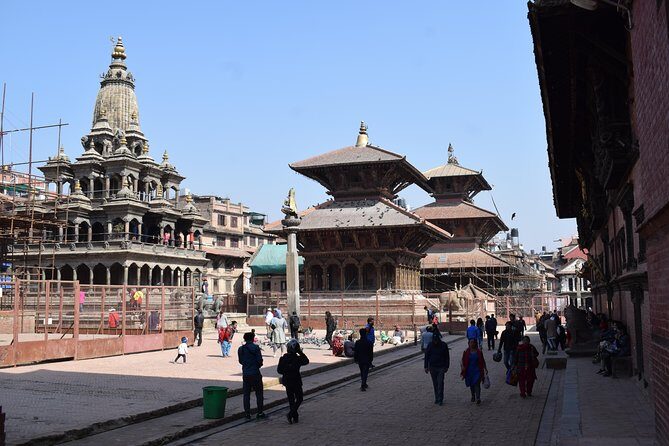
The tour is built around staying in motion—private car transfers between clusters of sights—then slowing down for key temple/courtyard moments. That approach is perfect for first-timers because you get structure: you’re never wondering what you’re looking at, or what’s worth extra minutes.
Still, you should treat it like a stamina day. Several stops involve stairs and uneven stone. Swayambhunath in particular is famous for the climb—expect a hike before the reward views over Kathmandu.
My practical tip: wear shoes you can walk in for hours, not “pretty tourist sandals.” Bring sun protection and plan to drink water often, especially once you’re moving between temple courtyards and palace squares.
UNESCO route overview: how all 7 sites fit together
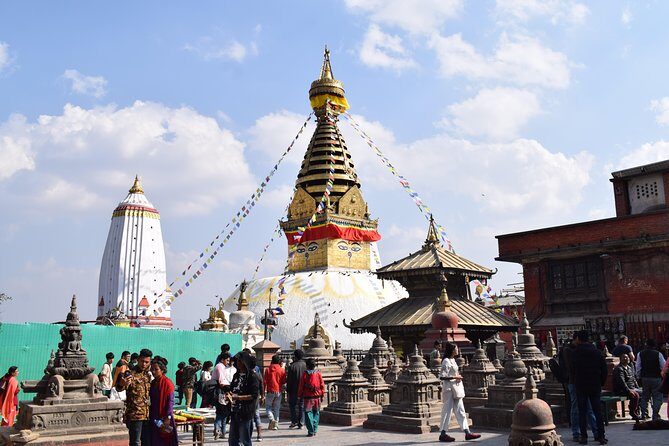
This itinerary is designed to cover these UNESCO Kathmandu Valley sites:
- Swayambhunath
- Kathmandu Durbar Square (Hanuman Dhoka area)
- Patan Durbar Square
- Bhaktapur Durbar Square
- Changu Narayan
- Pashupatinath
- Boudhanath
Even though the day includes many named locations, the key is that each “cluster” aligns with one UNESCO site. A great example is the Bhaktapur portion: you’re not just checking one building—you’re moving through the durbar-square area and nearby iconic temple/palace landmarks that people connect with the UNESCO listing.
That’s why this works so well for limited time. You get the big picture fast, then you can return on your own to the one or two places that really grab you.
Stop-by-stop: what to expect (and how to enjoy each one)
1) Swayambhunath Stupa and the Monkey Temple climb
You’ll start at Swayambhunath, often called the Monkey Temple. It sits up on a hill, so you start the day with a climb and end it with one of Kathmandu Valley’s best “wow” views. Plan for it to be religiously active too: you’ll see prayer wheels you can spin and lots of small shrine spaces around the main stupa.
A big reason this stop works on a guided day: the guide can explain how Hindu and Buddhist traditions coexist here in real, visible ways—shrines and deities mixed into the same sacred setting. That context turns what can feel like “a lot of stuff” into a meaningful pattern.
Good to know: Swayambhunath time is relatively short on this tour (around 15 minutes). If you want photos and time to linger, you’ll want to move efficiently and save your longer attention for the main viewpoint level.





2) Amideva Buddha Park for a calmer reset
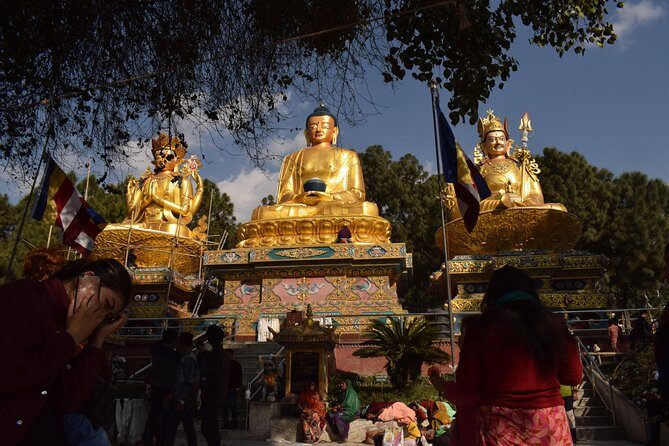
After Swayambhunath, you’ll head to Amideva Buddha Park, where you’re met with large Buddha statues. This stop is short, but it’s a useful reset: after stairs and crowds, it gives your brain a breather and helps the day feel less like nonstop “checklists.”
If you’re mentally tired, this is the place to slow your pace and just look.
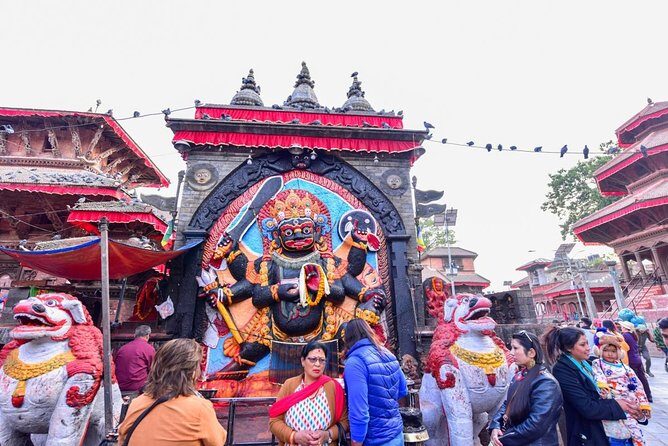
3) Kathmandu Durbar Square and Kumari Chowk
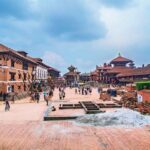
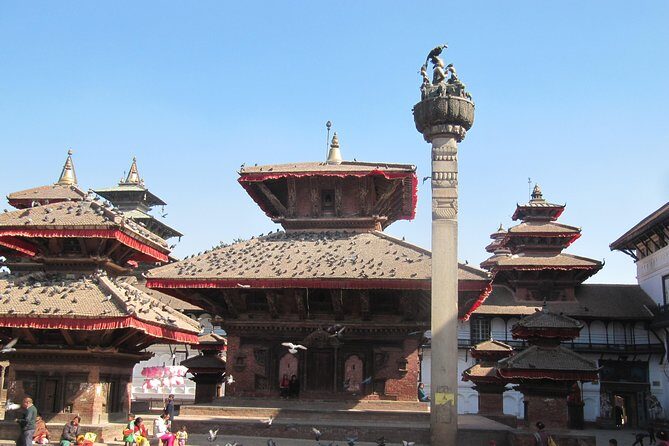
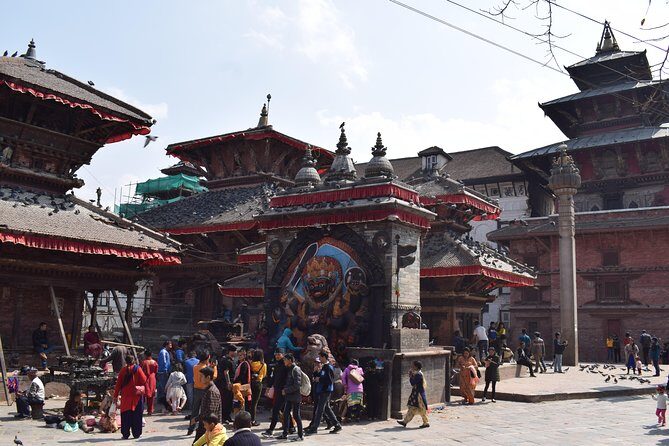
Next comes the heart of old royal Kathmandu: Kathmandu Durbar Square. The area is still in motion, with parts of the complex in reconstruction. That matters because the UNESCO value here isn’t only about finished beauty—it’s about seeing living heritage, including how restoration happens.
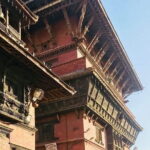
Near this area, you’ll visit Kumari Chowk, a courtyard in a red-brick, three-level building connected to the Kumari tradition. This is the living goddess setup (chosen until puberty), and it’s one of the most distinctive cultural elements tied to Kathmandu’s heritage identity.
The reason a guide helps here is that Durbar Square can be overwhelming: you’re looking at courtyards, temples, and carved stone from different angles and eras. With a good explanation, you understand what you’re seeing instead of just taking pictures.
Reality check: the time at this cluster is limited (Kumari Chowk is about 10 minutes, Durbar Square about 25 minutes), so choose a few “must-see” corners and don’t try to read everything.
4) Patan Durbar Square, the palace courtyards, and Krishna temple stonework
Then you swing to Patan Durbar Square, in Lalitpur. Patan is known for its Newari architecture and a strong sense of crafts and courtyard-palace design. You’ll spend about 25 minutes around this zone, which again means it’s a “fast orientation” stop—ideal if you want to understand the overall layout.
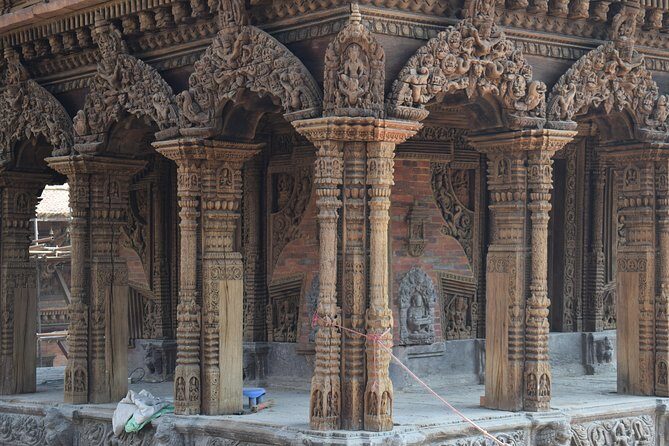
One of the highlights mentioned for this area is the Krishna Temple, built through stone artistry. This is the kind of detail you’ll appreciate more with a guide’s narration—stone carving becomes a story, not just decoration.
5) Hiranya Varna Mahavihar (Golden Temple) for bronze-and-silver details
At Hiranya Varna Mahavihar, also known as the Golden Temple, you’re in for pagoda-style architecture and statue work. The focus here is art materials: bronze statues plus silver elements are part of what makes this site feel special on the ground.
This stop is quick (around 10 minutes), so keep your attention on the main temple form and the most noticeable statue work. If you miss the center details, you’ll likely miss what makes it “Golden Temple” famous.
6) Patan Museum and Keshav Narayan Chowk
Right after the temple stop, you’ll visit the Patan Museum at Keshav Narayan Chowk. This is a smart counterbalance to the temple-hopping pace because it gives you a structured way to understand what you just saw in Patan’s courts and streets.
The museum stop is about 15 minutes. It’s not a long read session, so treat it like a “set the context” stop rather than a deep research visit.
7) Bhaktapur Durbar Square area: Nyatapola, Dattatreya, 55 Window Palace, Siddha Pokhari
This is one of the most satisfying sections of the day because Bhaktapur still feels like old-city Kathmandu in a way that’s easy to notice even when you’re rushing. Bhaktapur is often described as the City of Devotees, and the atmosphere matches that idea: temple density, carved facades, and palace courtyards.
Within the Bhaktapur portion, you’ll hit:
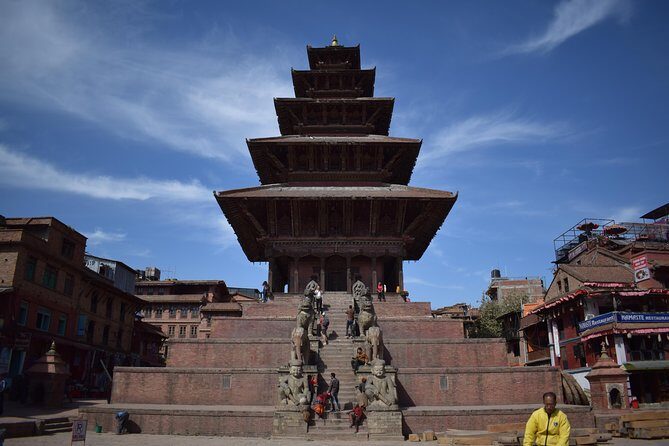
- Nyatapola Temple (a sculpted, five-leveled pagoda-style temple; about 10 minutes)
- Dattatreya Temple (associated with Dattatreya Square; about 10 minutes)
- 55 Window Palace (about 10 minutes)
- Siddha Pokhari (a man-made pond near the first gate; about 5 minutes)
If you only remember one thing from Bhaktapur, make it this: you get a sense of how architecture and daily life share the same space. These landmarks aren’t isolated—they’re part of how Bhaktapur’s older core works.
Tip: This section is walk-heavy, and you’ll likely be on stone surfaces and steps. If you pace your photos and let your guide keep you moving, you’ll enjoy it more than if you stop to stare at every doorway.
8) Changu Narayan Temple: the hilltop tempo shift
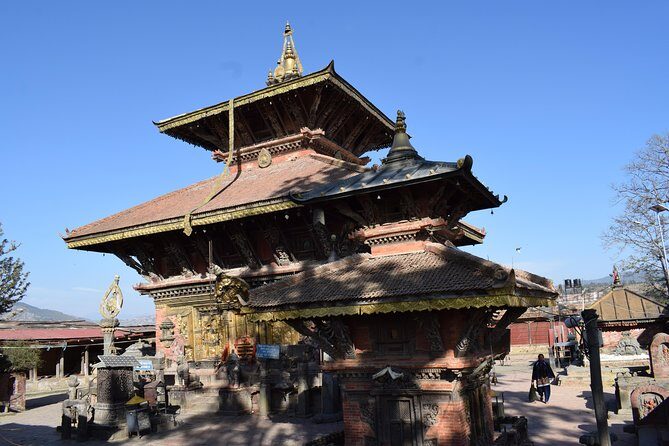
Changu Narayan Temple is the longest single stop on the day (around 1 hour). It sits on a hilltop and is one of the oldest temples in the Kathmandu Valley, with roots in the Licchavi period. The temple is built with stone and decorated with stone and wooden carvings.
This is your chance to slow down. If the earlier stops felt like “see everything,” Changu Narayan is where the day starts to feel like “understand what longevity looks like.”
What to watch for: the carvings. With time and a guide’s explanation, you’ll notice more than just the main structure—details become a map of beliefs and craftsmanship.
9) Pashupatinath Temple complex and its scale
Then it’s Pashupatinath Temple, a huge Hindu temple complex. The tour’s description highlights a scale fact that’s hard to ignore: it includes more than 500 temples and shrines across a site area of about 0.64 hectares.
You’ll spend about 1 hour here. Again, the guide’s role matters because with so many shrines and views, you’ll want someone to point out what’s important rather than wandering in circles.
Practical note: this is a working religious space, so keep your behavior respectful and your photo strategy thoughtful. If you’re unsure where you can stand or look, wait and follow your guide’s cues.
10) Boudhanath Stupa: one of the biggest Buddhist pilgrimage hubs
Last main UNESCO stop: Boudhanath Stupa. This is a major Buddhist pilgrimage site, with a 36-meter-tall mandala and over 50 gompas around it.
You’ll have about 1 hour. This is a great closer because after temples and palace squares, Boudhanath gives you a calmer, open-centered feeling. Prayer practices, the stupa’s scale, and the surrounding gompas make it feel like a sacred city.
If you’ve been walking all day, use this time to sit for a minute. It’ll help you remember what you saw earlier, not just what you photographed.
Logistics that make or break your enjoyment
Here’s what will shape your day more than people think:
- Wear smart-casual layers: the tour calls for smart casual dress, and temples often mean you’ll need to cover up or adjust quickly.
- Bring walking shoes and hydration: Swayambhunath stairs and Bhaktapur’s stone steps add up.
- Expect a schedule that’s fixed but flexible: several guides are praised for adjusting pacing to your needs, so you’re not always forced into a rush.
- Lunch is not included: you’ll choose your Bhaktapur meal on your own, which is useful if you want local options rather than a set group stop.
- Tips are extra: plan a small budget for gratuities so you don’t feel stuck at the end of the day.
Guides and driving: why the human piece matters
The consistent theme from guide feedback is that the English-speaking guidance tends to connect religion and architecture in plain language. People cite guides like Shanti, Kabita, Pankaj/Pankaz, Som, and Sarita for being friendly, organized, and comfortable answering questions about Hinduism, Buddhism, and temple history.
That’s not fluff. Kathmandu’s UNESCO sites are dense. If you don’t understand what you’re looking at, the day can blur into “lots of temples.” When a guide gives you the story, the carvings and rituals become memorable.
On the driving side, the driver is also part of the value. Kathmandu traffic can be intense, and safe, skilled navigation is what keeps you on time for short temple windows.
Who this tour is perfect for (and who should pass)
This tour is a strong fit if:
- You’re on a tight schedule and want all 7 UNESCO sites in one day
- You want a private car and a guide so you don’t lose time navigating
- You like history and religious architecture enough to walk, climb, and pay attention
It may not be the best choice if:
- You can’t handle stairs and long walking
- You prefer slower sightseeing with fewer stops
- You want free time to wander independently at each site for a long stretch
Should you book the Seven World Heritage tour in Kathmandu?
I’d book it if you’re doing Kathmandu Valley as part of a short trip and you want a clean route that covers the big UNESCO hits without car-rental stress. The included entry fees and hotel pickup/drop-off do a lot of behind-the-scenes work for you, and the guide connection is what turns the itinerary into a real education.
I would skip or adjust your plan if your energy is low. This is a full-day push. If you want one gentle “temples only” day, pick fewer sites instead and plan time to sit.
If you do book: put on the walking shoes, carry water, and treat the day like a guided museum tour in the open air. You’ll finish knowing exactly why each UNESCO site matters—and you’ll also know which one deserves a second visit.
FAQ
How much does the UNESCO Seven World Heritage Tour cost?
It costs $180.00 per person.
How long is the tour?
The tour runs about 12 hours.
Are entry fees to the heritage sites included?
Yes. All required entry fees for the 7 heritage sites are included.
Is hotel pickup and drop-off included?
Yes. The tour includes hotel pick-up and drop-off.
Is lunch included in Bhaktapur?
No. Lunch in Bhaktapur is not included, but you’ll have choices available to eat there on your own.
What should I wear for this tour?
The dress code is smart casual.
What’s the cancellation policy?
You can cancel up to 24 hours in advance for a full refund. Canceling within 24 hours does not get a refund.