REVIEW · KATHMANDU
Kathmandu Spiritual Sites: Bodhnath & Pashupatinath Tour
Book on Viator →Operated by Intrepid Urban Adventures - India · Bookable on Viator
Kathmandu’s sacred river runs after dark. In just about four hours, this small-group tour strings together Boudhanath Stupa and Pashupatinath Temple with two moments I really love: rotating prayer wheels with locals and settling in for the Pashupatinath evening aarti lights ceremony. The one real catch is the crowd around the Bagmati River—keep close to your guide, and you’ll need to avoid photos during cremation moments.
I also like that you’re not stuck in a closed vehicle all evening. You travel by public transport for a more local rhythm, and you get a real Nepali guide’s explanations—names I’ve seen attached to the experience include Amit, Rozit, Rita, Subash, Bipin, and Ramhavi—so questions don’t feel like an interruption. One more thing to know: you’ll do around 2 km of walking, so good shoes matter.
In This Review
- Key Points to Know Before You Go
- The 3:00 pm Start: Why Evening Works So Well
- Boudhanath Stupa: Prayer Wheels, Butter Lamps, and a Tibetan Center
- The Short Stretch From Stupa to Temple: Walking With Purpose
- Pashupatinath Temple: Shiva, Sadhus, and the Meaning Behind the Crowd
- Aarti at Pashupatinath: Watching the Lights Without Losing Your Group
- Cremations on the Bagmati River: Powerful, Respectful, and Photo-Restricted
- Public Transport in Thamel: A Small-Group Way to Feel the City
- Price and Value: What $60.56 Covers (and What It Doesn’t)
- Who This Tour Fits Best (and Who Might Want to Skip It)
- A Quick Note on Renovations After 2015 Earthquakes
- Should You Book Kathmandu Spiritual Sites: Bodhnath & Pashupatinath?
- FAQ
- What time does this tour start, and how long is it?
- Which UNESCO sites are included?
- Do you take part in the aarti ritual at Pashupatinath?
- Is admission included?
- Is palm reading included?
- Are photos allowed during cremation ceremonies?
Key Points to Know Before You Go
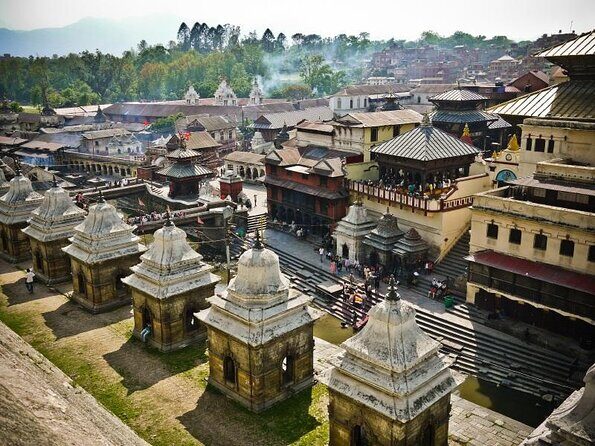
- Two UNESCO spiritual sites in one evening: Boudhanath Stupa and Pashupatinath Temple
- Prayer-wheel time at Boudhanath plus a butter-lamp style offering moment
- Pashupatinath aarti ritual at dusk—lights offered to Lord Pashupatinath as the crowd gathers
- Cremation ceremonies along the Bagmati River are part of the experience, with strict respect rules (no photos)
- Public transport + max 12 people helps you move with the city instead of floating above it
The 3:00 pm Start: Why Evening Works So Well
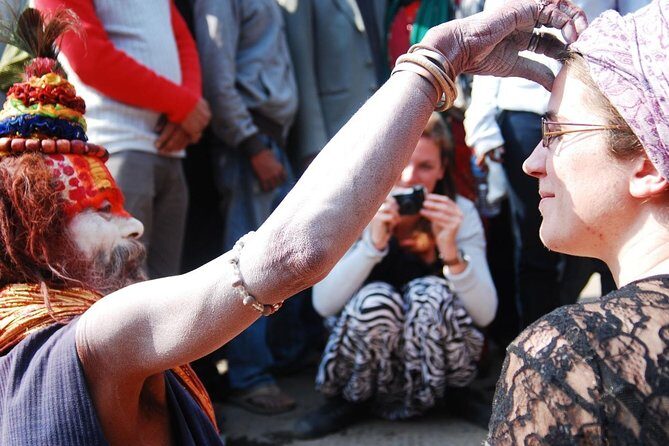
This tour begins at 3:00 pm and runs for about four hours, looping back to the same pickup point at Hotel Marshyangdi in Thamel. That timing is smart in Kathmandu. The day’s heat starts to fade, and both sites feel more layered as light changes—especially Pashupatinath, where the aarti draws people in right when you’re ready to watch.
You also get an evening mix of people: locals running daily routines, monks in traditional clothing, and visitors trying to understand what they’re seeing. It’s not a museum vibe. It’s temple-life, and your guide’s job is to explain what’s happening and where you should stand so you don’t end up swept into the wrong corner of the crowd.
You can also read our reviews of more tours and experiences in Kathmandu.



Boudhanath Stupa: Prayer Wheels, Butter Lamps, and a Tibetan Center

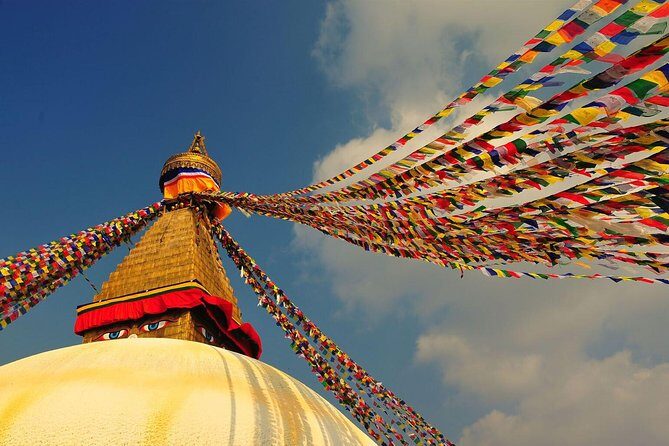
Your first major stop is Boudhanath Stupa, a UNESCO World Heritage site and one of the largest stupas in the world. The focus here is participation. You’ll rotate the prayer wheels with local Buddhists as you circle the massive white dome, then offer prayers to Lord Buddha by lighting a traditional butter lamp.
A few things make this stop more meaningful than a quick photo stop. First, the act is simple and repeatable. Spinning the wheels feels physical—your body is doing something, not just watching. Second, it sets the tone for the evening. You start in Tibetan Buddhist space, then shift to Hindu Pashupatinath within walking distance and guided explanation.
Practical note: even with a small group, Boudhanath can be busy. The good news is that the stupa layout is clear, and your guide keeps you moving as a unit so you’re not constantly asking where to go next.
The Short Stretch From Stupa to Temple: Walking With Purpose
After Boudhanath, you move toward Pashupatinath Temple, with about a 15-minute walk separating the areas. The total walking for the tour is listed as around 2 km, which isn’t huge, but it adds up in sandals-free evening time. This is also when you’ll feel the shift in energy—from prayer-wheel repetition to the thicker, louder pull of Hindu temple activity.
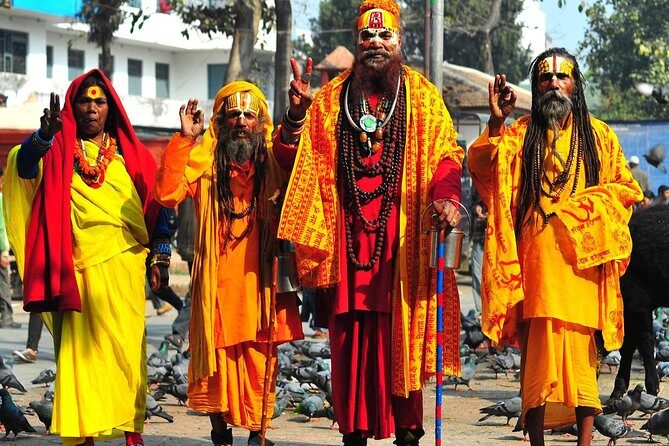
This stretch is also where your guide’s context matters. You’ll hear explanations of Hindu beliefs, including the cycle of birth and death and why rituals at Pashupatinath are so emotionally intense. That context helps when you see people dressed as sadhus (holy men) and when the space starts to feel packed with meaning rather than just motion.
Pashupatinath Temple: Shiva, Sadhus, and the Meaning Behind the Crowd
Pashupatinath is dedicated to Shiva, and it’s another UNESCO World Heritage site. Your visit runs about 2 hours 20 minutes, which gives you time to slow down even though the location is never quiet.
A big part of what makes this stop hit is the way your guide frames what you’re seeing:
- You’ll learn about the beliefs behind the temple and rituals.
- You’ll get an explanation about sadhu monks, including the idea of sacrifice of material possessions as a sign of devotion.
- You’ll see the colorful garb worn by the sadhus and understand why it isn’t just costume.
One reason I like a guided visit here is simple: Pashupatinath isn’t arranged for easy “wander and guess.” With the right guidance, you’re not just staring at stone and smoke—you’re understanding how people interpret life, death, and devotion in real time.
Aarti at Pashupatinath: Watching the Lights Without Losing Your Group
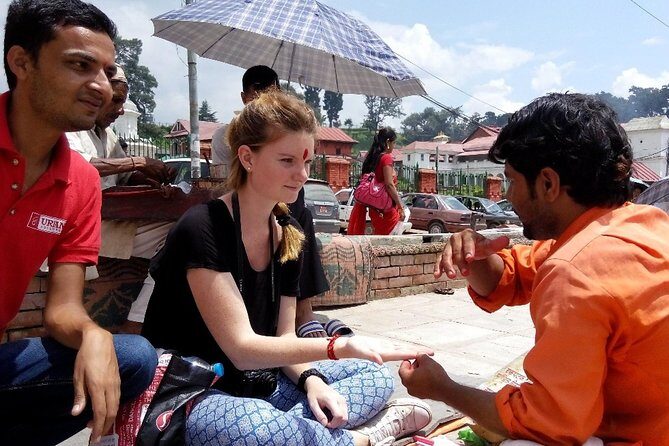
As the sun goes down, Pashupatinath becomes a magnet. You’ll find throngs of locals gathering along the Bagmati River on the eastern side of the temple, and you’ll watch the evening aarti—an offering of lights to Lord Pashupatinath.
This is where your guide’s role becomes more than “pointing.” In a tight crowd, staying together is safety and sanity. The tour guidance specifically notes you should keep near your guide and your group so you don’t get separated as people surge forward.
What you should expect during aarti time:
- You’ll be standing close enough to feel the ritual’s energy.
- The crowd can be dense, and your view will depend on where you’re positioned.
- The experience is less about capturing the perfect shot and more about being present for what’s happening.
If you’re the kind of person who gets stressed by crowds, tell your guide early. You’ll likely be able to choose a position that feels workable, especially if you’re traveling with a small group of up to 12.





Cremations on the Bagmati River: Powerful, Respectful, and Photo-Restricted
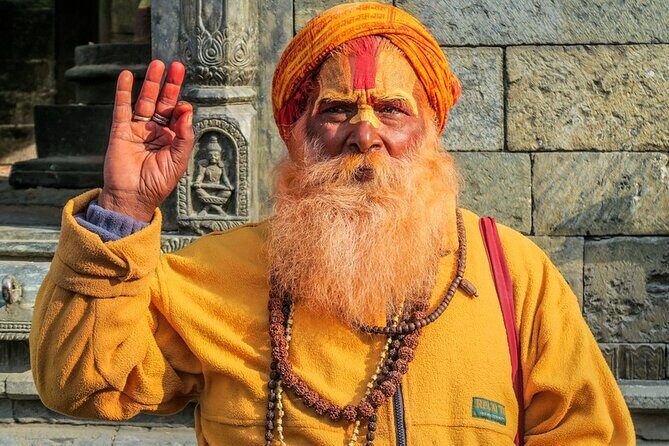
Just outside the entrance area to Pashupatinath, cremation ceremonies take place along the Bagmati River. The tour includes witnessing these moments, but with clear boundaries: out of respect for mourning families, you should refrain from taking photos or watching the rituals.
That line matters, because this is not the kind of experience where “curiosity” should turn into intrusion. It’s also one of the main reasons this tour is better with a guide than on your own. Your guide can help you keep respectful distance and understand when to look and when to step back.
Be mentally prepared: this is one of those places where the reality of death is treated with ritual seriousness. You don’t have to feel comfortable to appreciate that it’s important to local life. If you’re sensitive to heavy scenes, plan for that ahead of time.
Public Transport in Thamel: A Small-Group Way to Feel the City
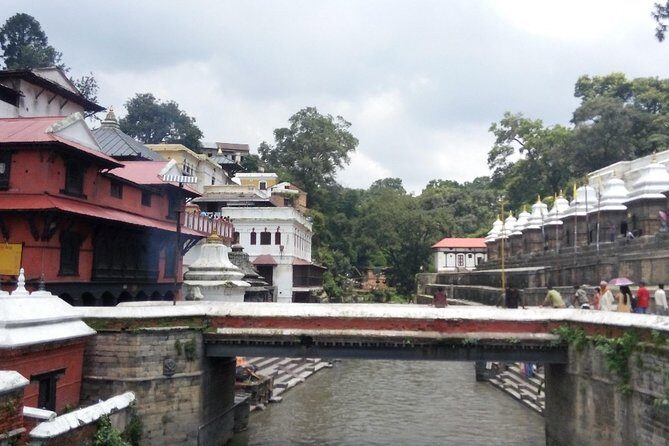
The meeting point is in Thamel, at Hotel Marshyangdi (Chaksibari Marg). From there, you’ll head to Boudhanath and then back from Pashupatinath to end where you started. Transportation costs for those transfers are included.
The tour also highlights using public transport to keep things local. That’s a plus for value and for authenticity. You’re not just traveling; you’re moving through the city’s everyday lanes, seeing how locals flow between religious spaces and daily life.
The group limit—maximum 12 people—is another big advantage. In Kathmandu crowds, a larger group can turn you into luggage. Here, small-group size tends to make it easier to hear explanations and stay together during aarti and transitions.
Price and Value: What $60.56 Covers (and What It Doesn’t)
At $60.56 per person, this is priced like a short evening tour, but it includes several costly essentials that add up quickly if you do it alone.
Included in the tour price:
- English-speaking Nepali guide
- Entrance tickets to both UNESCO sites: Boudhanath and Pashupatinath
- Participation in evening aarti at Pashupatinath
- Prayer-wheel rotation and the butter-lamp style offering moment at Boudhanath
- Transportation between the sites and back
- A local palm reader visit as part of the program (but fees are not included)
- The experience includes witnessing the cremation ceremony, with respect rules
Not included:
- Lunch/dinner
- Palm reader fees
- Any optional costs tied to offerings
So the value isn’t just “getting into temples.” You’re paying for:
1) time-efficient navigation between two major sites,
2) entrance fees,
3) guide context that keeps you from missing what matters, and
4) crowd management support where it counts.
Two more practical things: it’s listed as a mobile ticket experience, and it’s also commonly booked ahead (on average, 27 days in advance). If your dates are fixed, reserve early so you don’t end up searching for an alternative the day you want to go.
Who This Tour Fits Best (and Who Might Want to Skip It)
This is a strong match if you want an evening plan that combines Buddhist and Hindu practices in real settings. It also works well if you like having a guide handle the “what do I do now?” moments—especially during aarti and around the Bagmati River crowd.
Consider skipping or choosing a gentler option if:
- You don’t handle crowds well.
- You’re uncomfortable with death-related rituals even when your viewing is respectful and controlled.
- You’re expecting lots of free time to roam without structure. This is a guided experience built around key moments.
It’s also child-friendly, with children under 6 free, and the group size makes it feel manageable for families who can handle temple steps and a slower evening pace.
A Quick Note on Renovations After 2015 Earthquakes
The tour information flags that some sites were affected by the 2015 earthquakes, and that the sights you visit have been renovated. That’s helpful because it means you’re going to see these UNESCO spaces in functioning condition, not half-finished rebuilding zones—while still understanding they’re places that have been through real hardship and recovery.
Should You Book Kathmandu Spiritual Sites: Bodhnath & Pashupatinath?
I’d book this if your schedule is tight and you want a guided, local-feeling way to see two of Kathmandu’s core spiritual hubs. The value is in the combination: UNESCO entrance tickets, evening aarti participation, and a guide who explains what’s happening while you move through real crowds.
I’d think twice only if cremation scenes and dense evening crowds would stress you out. If you fall into that category, you might still enjoy the Boudhanath portion, but you should be honest with yourself about the Bagmati River moment.
If you can be flexible, also remember you can cancel for a full refund up to 24 hours before the start time, which is a nice safety net.
FAQ
What time does this tour start, and how long is it?
It starts at 3:00 pm and runs for about 4 hours.
Which UNESCO sites are included?
You visit Boudhanath Stupa and Pashupatinath Temple, both UNESCO World Heritage sites.
Do you take part in the aarti ritual at Pashupatinath?
Yes. The tour includes joining the evening aarti, an offering of lights to Lord Pashupatinath.
Is admission included?
Yes. Entrance tickets for both Boudhanath Stupa and Pashupatinath Temple are included.
Is palm reading included?
You’ll visit a local palm reader as part of the tour, but the palm reader’s fees are not included.
Are photos allowed during cremation ceremonies?
No. The tour notes that, out of respect for mourning families, you should refrain from taking photos and also avoid watching the cremation rituals.