REVIEW · KATHMANDU
TOP 4 UNESCO World Heritage Sites Tour
Book on Viator →Operated by Green Valley Nepal Treks & Research Hub Pvt Ltd · Bookable on Viator
Four UNESCO sites, one smooth Kathmandu day. You’ll stitch together Hindu and Buddhist spiritual life across Pashupatinath, Boudhanath, Swayambhunath, and Patan Durbar Square, with comfortable door-to-door pickup to keep the day from feeling like a logistics puzzle.
What I like most is how the route lets you see two religions up close without you having to bounce around the city on your own. The second big win is the private format, which keeps the pace humane even when temples get busy. The one thing to plan carefully around is the dress code and the fact that Pashupatinath has a strict entry rule.
If you’re not meeting the rules (covered knees/shoulders, and Hindu-only access for Pashupatinath), you can be refused entry. That’s the main drawback, but it’s also easy to fix with a little preparation before you step out.
In This Review
- Key things to know before you go
- Why this Top 4 UNESCO day tour makes sense in Kathmandu
- Pashupatinath Temple: Shiva by the Bagmati, plus the Hindu-only rule
- Boudhanath Stupa: one of the biggest Buddhist stupas in the world
- Swayambhunath Monkey Temple: the hilltop view plus the painted eyes
- Patan Durbar Square: Newari architecture and a royal past in one core plaza
- Timing, pickup, and the reality of Kathmandu roads
- Price and budget math: $50 plus the real extras
- Guides and service quality: what you’ll feel from the first hour
- Who this tour fits best (and who should think twice)
- Should you book the Top 4 UNESCO World Heritage Sites Tour?
- FAQ
- How long is the Top 4 UNESCO World Heritage Sites Tour?
- Which UNESCO World Heritage sites are included?
- Are entrance fees included in the price?
- Do I get hotel pickup and drop-off?
- Is the tour private or shared with strangers?
- Do I receive a mobile ticket?
- What are the dress requirements?
- Can anyone enter Pashupatinath Temple?
- Is tipping included?
- Can I cancel and get a refund?
Key things to know before you go
- Private, door-to-door transport across Kathmandu Valley so you spend time seeing, not commuting
- Morning or afternoon departures so you can match your energy and schedule
- Four UNESCO stops in 6–7 hours, each with enough time to actually look and absorb
- Spiritual practices you can observe, from Shiva rituals to Buddhist devotion and daily motion around stupas
- Dress requirements are strict, and Pashupatinath requires you to be Hindu for entry
Why this Top 4 UNESCO day tour makes sense in Kathmandu
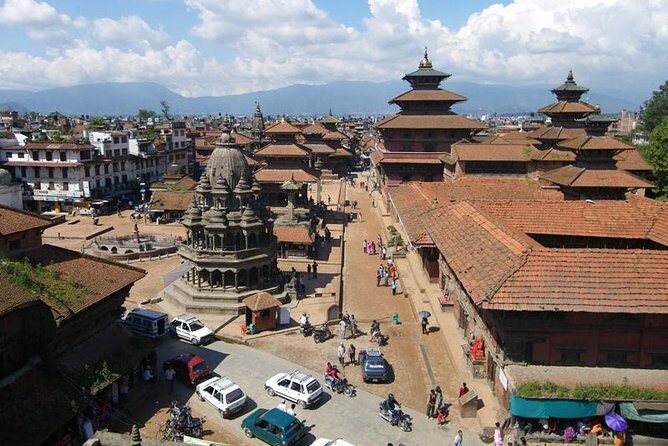
Kathmandu Valley is famous for its mix of faiths, art, and holy places. The challenge is that the most important sites are spread out, and a half-day plan usually ends in frantic travel and rushed photos. This full-day private route solves that by packing four UNESCO World Heritage sites into one logical loop, with hotel pickup and drop-off handled for you.
I like the way the itinerary is built around observation. You’re not just ticking boxes at impressive monuments. You’re walking into living religious spaces where people come to pray, circumambulate, and ask for blessings. That changes how the places feel. A stupa isn’t just architecture. A temple isn’t just a landmark.
The private format also matters for day-to-day comfort. You can ask questions, get pacing help, and adjust if you need a short pause. In the experience, English-speaking professional guides do the heavy lifting: explain what you’re seeing and help you get oriented fast.
There’s also a practical advantage for budgeting: it’s priced as a straightforward $50 per person for the tour service, with entrance fees and tips handled separately. That lets you control costs without surprises—so long as you remember the monument entry fees aren’t included.
You can also read our reviews of more historical tours in Kathmandu

Pashupatinath Temple: Shiva by the Bagmati, plus the Hindu-only rule
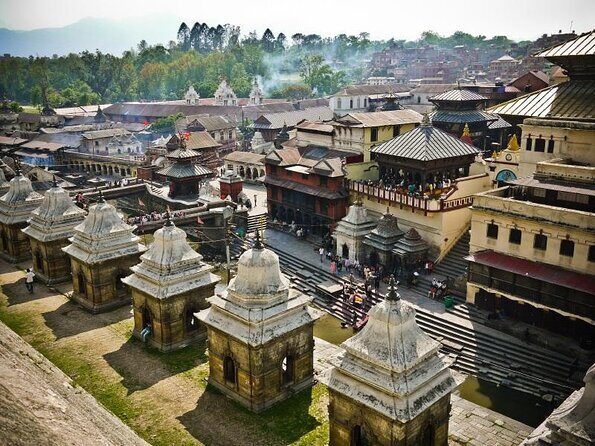
Pashupatinath Temple is dedicated to Lord Shiva and sits about 5 kilometers east of Kathmandu along the Bagmati River. It’s known for its striking rooflines—two golden roofs—and there are silver doors that give the main temple area a very distinctive look from the outside. Even before you go in, you’ll feel like you’ve arrived at one of Nepal’s most important Hindu pilgrimage hubs.
This stop gets about 1 hour, which is usually enough time to see the temple area and watch rituals from a respectful distance. One important consideration: the tour notes that customers must be Hindu to enter Pashupatinath Temple. So if you’re not Hindu, you’ll likely need to plan for what you can observe from outside instead of expecting full entry.
Dress matters here, too. The tour requires knees and shoulders covered for both men and women, with no shorts or sleeveless tops allowed. If you show up not meeting that, you risk refused entry. That can be a frustrating start to a big day, so I’d treat the clothing rule as non-negotiable.
The best “why this works” detail is timing and crowd management. In the experience, the guides are praised for practical help when it’s busy—one guide was noted for helping someone pray at Pashupatinath despite a huge crowd by arranging a way to proceed. Even if your goal is simply to observe respectfully, having a guide who can read the situation and steer you smoothly makes this stop feel less stressful.
What to watch for
- The temple’s Shiva identity and how that shapes rituals and prayer behavior
- The river setting and how people move in the temple precinct
- The entry rules and how dress checks can affect your plans
Boudhanath Stupa: one of the biggest Buddhist stupas in the world
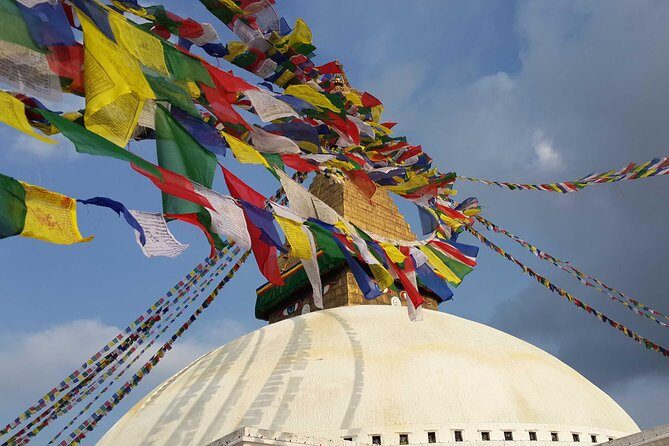
Boudhanath Stupa is about 6 kilometers east of Kathmandu and is believed to date back to the 5th century AD. It’s often described as one of the largest Buddhist stupas in the world, and when you arrive, you can see why. The stupa dominates the space, and it’s surrounded by Buddhist lamas and monasteries—so the setting feels active even when you’re just standing and looking.
You get about 1 hour here, which is a solid chunk of time. A stupa isn’t a quick photo spot. People gather, move, and focus on devotion. If you’re the kind of traveler who likes to watch how daily life and religion overlap, this is where you’ll notice it most.
A helpful detail: since the tour is private, you’re not forced to keep pace with a bus group. You can choose how long to stay for watching prayer routines and how quickly to move on once you’ve gotten your bearings.
One practical note for your day: the tour doesn’t include monument entrance fees, and it lists an estimated total around NPR 2700 for city sightseeing sites. Boudhanath may or may not fall into that total depending on what entrances you use and what’s open, so I’d treat it as a budgeting line item rather than assuming everything is covered.
What to watch for
- The stupa’s scale and its influence on the surrounding area
- The presence of Buddhist lamas and monastic atmosphere around the site
- How people relate to the stupa through repeated devotional movement
Swayambhunath Monkey Temple: the hilltop view plus the painted eyes
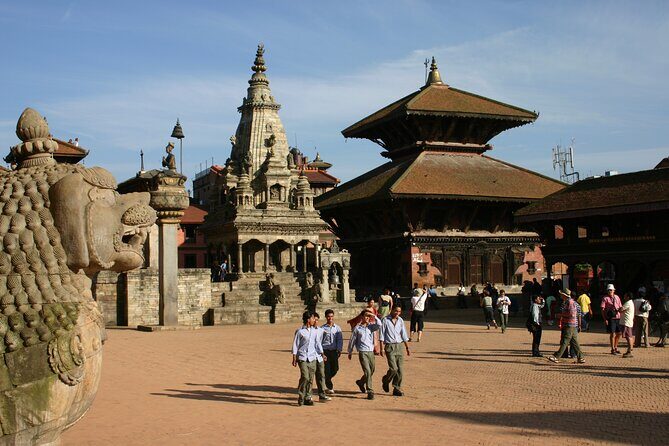
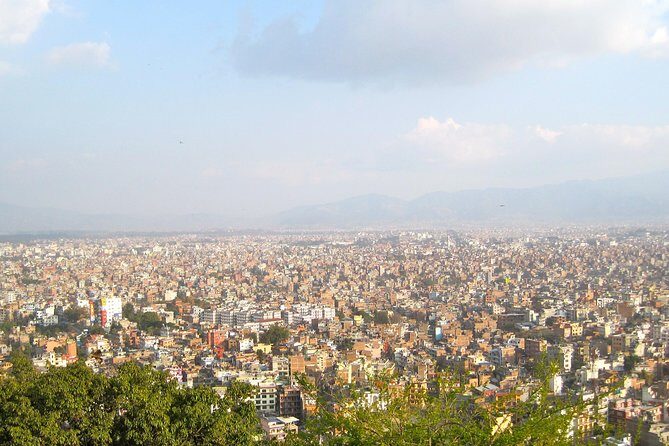
Swayambhunath—often called Monkey Temple—is about 2,500 years old and sits on a hillock roughly 77 meters above the surrounding ground level. That height is the whole point. You don’t just see the stupa. You see Kathmandu Valley from above, which gives you context for how spread out the heritage sites really are.
This stop is shorter, around 45 minutes. That’s enough for the main religious sights and for taking in the view, but it won’t be a slow wander all day long. If you love rooftops and valley panoramas, you’ll want to use that time well: pause, look, then move on.
The tour description points out the dome with painted eyes. Those eyes are an iconic feature and a good anchor for your first look, because they’re what make the stupa feel like it’s watching you back.
Also, since this is a temple area, your clothing still has to meet the tour’s rules (covered knees and shoulders). It’s easy to forget once you’re on your third site, but it’s enforced across worship locations and selected museums.
What to watch for
- The view down into Kathmandu Valley from the hilltop
- The painted eyes as your first visual reference point
- Keeping an eye on time, since the stop is only about 45 minutes
Patan Durbar Square: Newari architecture and a royal past in one core plaza
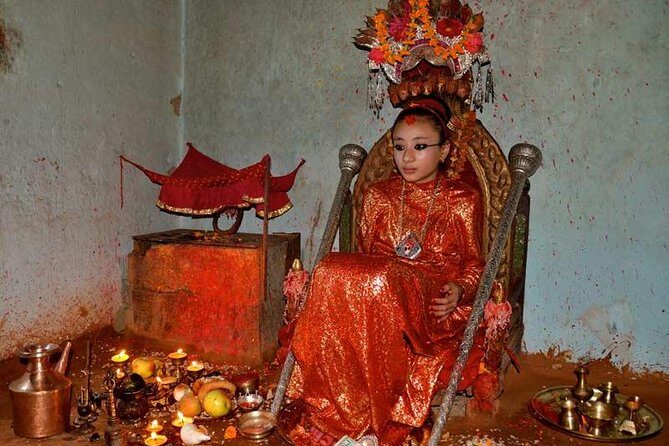
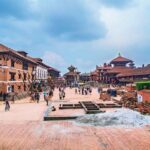
Patan Durbar Square is known for Newari architecture and for its connection to the former Patan Royal Family. Among Kathmandu’s three Durbar Squares, it’s often considered the most photographed, and that tracks with what you’ll see once you arrive: carved stone, layered facades, and a sense of design that feels intentional rather than random.
This stop is about 1 hour. That’s a good length for appreciating the plaza’s layout and key monuments without feeling like you’re rushing. In a day packed with sacred sites, Durbar Square gives your eyes a different kind of focus: craft, symmetry, and history expressed through buildings.
The main “value” here is balance. After the intense spiritual atmosphere of Pashupatinath and Buddhist devotion around Boudhanath, you get a place where heritage shows up as architecture and civic identity. It helps the whole day feel coherent instead of like four unrelated stops.
As with other monuments, entrance fees aren’t included, and tipping is expected. Plan for that so the end of the tour doesn’t get awkward.
What to watch for
- Newari-style details that take a moment to notice
- The way the royal-story identity shapes the square’s feel
- Using your hour to look slowly, not just walk through





Timing, pickup, and the reality of Kathmandu roads
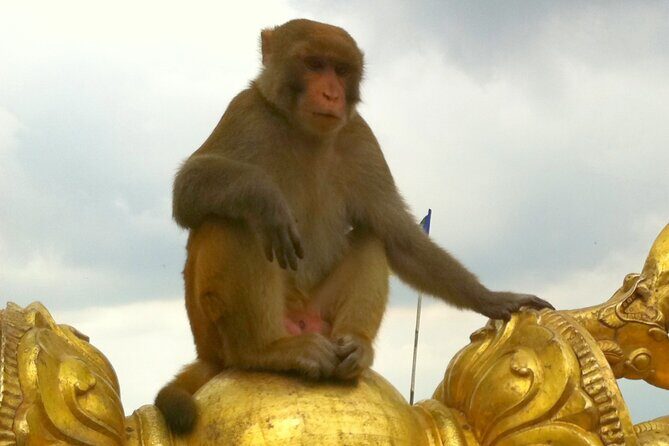
Your day runs roughly 6 to 7 hours, and you can choose morning or afternoon departure. That flexibility matters because Kathmandu’s traffic can be unpredictable. A private vehicle helps, but timing still affects comfort and how much you enjoy the transfers.
The tour includes pickup and drop-off from anywhere in the capital, plus an air-conditioned private vehicle. That’s not just comfort theatre. In a long day, getting from one UNESCO site to the next without dealing with public transport crowds or route confusion makes your time feel protected.
The strongest signal from the experience notes is that the drivers are good at navigating the streets with patience and care. In feedback, drivers like Ram and Suman were praised for friendly, attentive service, including small help like offering water when needed. That kind of “quiet competence” is exactly what you want when your schedule depends on multiple stops.
One more practical point: the tour notes it’s near public transportation. That’s useful only if you need a backup plan, but it’s also a hint that you’re not completely trapped in a bubble. Still, the whole idea is to let the pickup/drop-off do the work.
Price and budget math: $50 plus the real extras
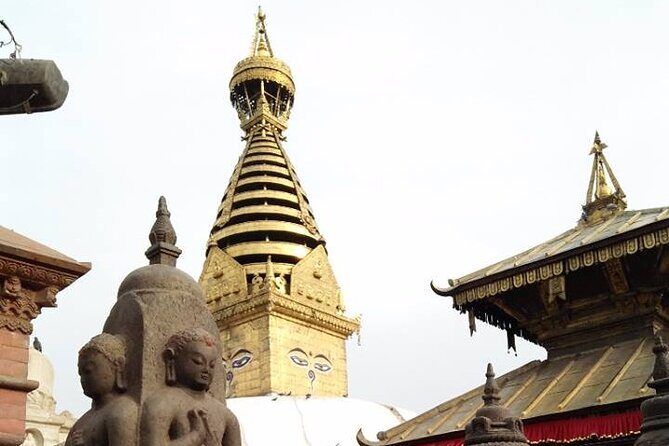
At $50 per person, this tour is priced as an affordable private UNESCO day. The value comes from three things: all four sites in one day, door-to-door transport, and an English-speaking professional guide.
But don’t confuse the headline price with total cost. Monument entrance fees are not included, with an estimate around NPR 2700. Tips for the guide and driver are also expected.
So here’s the real-world way I’d budget it:
- Tour price: $50 per person
- Add entrance fees: roughly NPR 2700 total (for city sightseeing monuments)
- Add tips: plan for it, because it’s part of the local service culture
If you’re traveling as a couple or small group, a private day like this can be good value because you’re effectively buying coordination plus guidance. The moment you tried to replicate it solo—finding guides, juggling entry rules, and managing routes—you’d likely spend time you’ll never get back.
Guides and service quality: what you’ll feel from the first hour
In feedback tied to this tour, the highest praise repeatedly lands on guide communication and caring service. Specific names come up often, including Kapil (also Kapil Pandey) and Saraswati Ghimire. What they were praised for wasn’t just knowing facts. It was clear, concise explanations and an ability to answer questions in a way that makes the sites click.
Another strong point: flexibility. In feedback, the guide style is described as patient and able to adapt, which is a big deal on a day with four major sites. One guide was credited with helping make prayer possible at Pashupatinath despite crowds, by managing the practical steps you’d otherwise struggle with.
Even the drivers get credit for a calm, helpful presence. Ram is described as friendly and attentive, and Suman is praised for navigating traffic smoothly. That matters because the tour is only 6–7 hours—every delay is visible. A good driver helps keep your day from sliding downhill.
Who this tour fits best (and who should think twice)
This is a strong fit if you:
- Want a single-day route that covers major UNESCO sites without city-hopping stress
- Enjoy religious and cultural observation, not just architecture photos
- Prefer a private setting where questions and timing can be adjusted
It may be a mismatch if:
- You’re not Hindu and you were hoping to enter Pashupatinath Temple itself. The tour explicitly says Hindu customers must enter there. You’ll need to plan for what you can do without entry.
- You struggle with dress rules. If you can’t cover knees and shoulders, you risk refused entry at worship sites.
Should you book the Top 4 UNESCO World Heritage Sites Tour?
I’d book it if you want a guided, door-to-door UNESCO day that makes sense in Kathmandu’s layout and you’re comfortable following the dress rules. The private format is a real advantage, especially on a schedule packed with Pashupatinath, Boudhanath, Swayambhunath, and Patan Durbar Square.
I’d think twice or at least plan ahead if Pashupatinath entry matters to you personally, because the tour requires Hindu customers for entry. If that rule is a deal-breaker, you may still enjoy the Buddhist sites and Patan Square, but you’ll want to align your expectations before you start.
If you do book, spend five minutes prepping your outfit for covered knees and shoulders. It’s the easiest way to protect your day.
FAQ
How long is the Top 4 UNESCO World Heritage Sites Tour?
The tour lasts about 6 to 7 hours.
Which UNESCO World Heritage sites are included?
The tour includes Pashupatinath Temple, Boudhanath Stupa, Swayambhunath (Monkey Temple), and Patan Durbar Square.
Are entrance fees included in the price?
No. Entrance fees for city sightseeing monuments are not included, and they’re estimated around NPR 2700.
Do I get hotel pickup and drop-off?
Yes. Hotel pickup and drop-off by private vehicle is included, and pickup is offered from anywhere in Kathmandu capital area.
Is the tour private or shared with strangers?
It’s private. Only your group participates.
Do I receive a mobile ticket?
Yes. The tour includes a mobile ticket.
What are the dress requirements?
You must wear clothing that covers knees and shoulders. No shorts or sleeveless tops are allowed. You may risk refused entry if you don’t comply.
Can anyone enter Pashupatinath Temple?
No. The tour notes that customers must be Hindu to enter into Pashupatinath Temple.
Is tipping included?
Tipping is expected, and it isn’t included in the tour price.
Can I cancel and get a refund?
Yes. You can cancel up to 24 hours in advance for a full refund. If you cancel within 24 hours of the start time, the amount paid is not refunded.