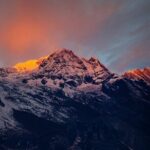
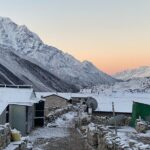
Hitting Larke-La is where the circuit turns serious. This 14-day Manaslu Circuit has that rare feel of being remote but still doable, with teahouses along the way and constant views of Manaslu and nearby peaks. You’ll also get a classic high-point challenge in Larke-La Pass, plus big “Tibetan culture without the crowds” moments.
I love how the trek is built around teahouses at stop points, so you’re not carrying a tent or hauling your own food and cooking gear. I also like the practical value of what’s included: a licensed guide, first-aid support, and even your sleeping bag and down jacket.
One drawback to plan for: some days include steep climbs and long hours, and the pass approach can be windy and rocky. If you’re not used to sustained uphill hiking, you’ll feel it.
In This Review
- Key highlights you’ll notice fast
- Why this Manaslu Circuit feels less like a conveyor belt
- Price and value: what you’re really paying for
- Getting to the trail by road: Kathmandu to your first hiking day
- Day-by-day: Machhakhola through Jagat, Deng, and Namrung
- Shyala sunrise, Pung Gyen Gompa, and reaching Samagaun
- Birendra Taal, Samdo, and the approach toward Layung La
- Larke-La day: windy, rocky, and worth the effort
- Tilche to Dharapani: farms, descent, and a calmer finish
- Back to Kathmandu: jeeps, minibus, and river views
- Guides, gear, and safety: what’s provided and what to bring
- Who should book this Manaslu Circuit, and who shouldn’t
- Should you book this 14-day Manaslu Circuit Trek?
- FAQ
- What meals are included during the trek?
- Do I need to bring camping gear or carry food?
- Are the permits for the Manaslu region included?
- What kind of fitness level should I have?
- How large is the group?
- Can I cancel for a full refund?
Key highlights you’ll notice fast
- Teahouses along the route keep the circuit more accessible than camping-style treks
- Larke-La Pass is the main achievement, with spectacular morning views of Larke Peak (6,249m)
- Restricted-area + conservation permits included, which matters for getting into Manaslu region properly
- Sleeping bag and down jacket included, so you can pack lighter and stay warmer
- Land-based access from Kathmandu cuts out the need for flights just to start hiking
- Group cap of 25 means you’ll likely move at a manageable pace with one team
Why this Manaslu Circuit feels less like a conveyor belt
This version of the Manaslu Circuit is designed for the kind of trek where you can actually notice the mountains changing through the day. You’re not just walking from “A to B.” You’ll spend real time in valleys and villages where the trail life is local, and the hardest moments have payoff—especially when you reach the pass.
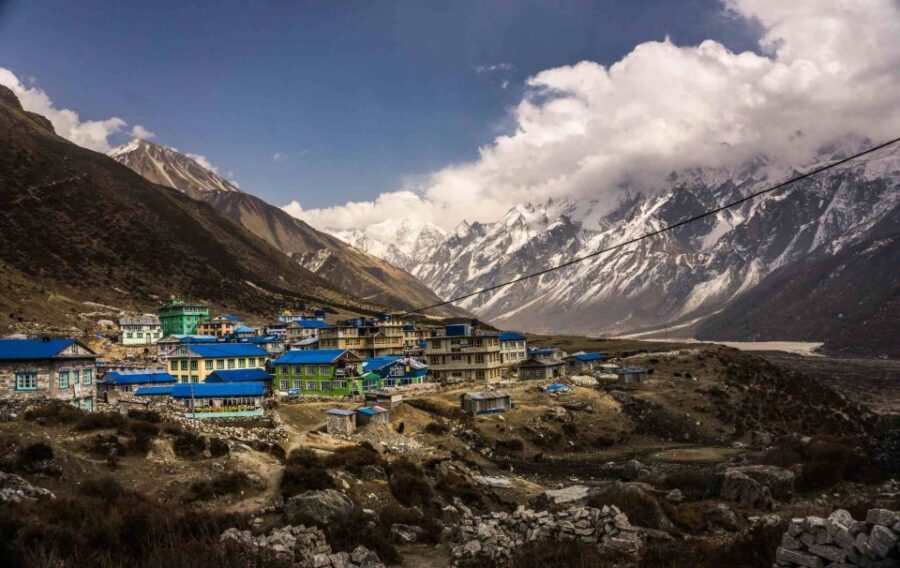
What I found most compelling is the balance between isolation and support. The route is remote and “undomesticated” in feel, yet you still have teahouses at the stop points, which turns what could be a heavy logistics trip into something far more budget-friendly. That means less weight on your back and less stress about meals and shelter.
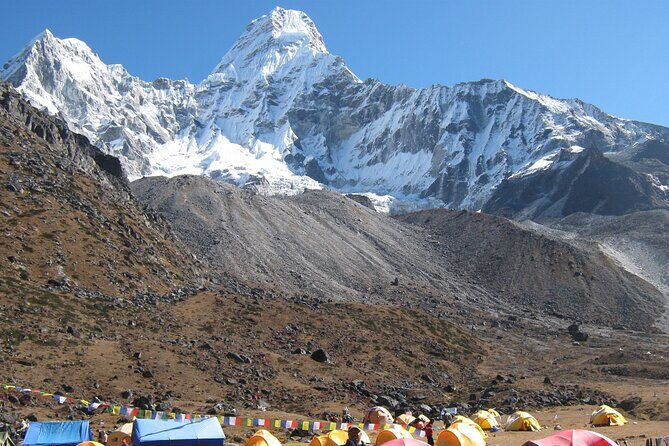
Another reason it’s special: you get a full spectrum of scenery around the Manaslu region—big peak views like Himalchuli, Manaslu, Chamar, and Ganesh Himal II, plus iconic high points like Larke-La. Even before the big pass day, you’ll start seeing how the Himalaya “arrives” slowly on the trail.
You can also read our reviews of more hiking tours in Kathmandu


Price and value: what you’re really paying for
At $227 per person, the key is understanding what’s included. This price isn’t just “a guide and a prayer.” Your trek package includes:
- 13 nights of mountain teahouse accommodation
- A professional, government-licensed trekking guide for the full duration
- Manaslu & Annapurna conservation area permit plus a restricted-area permit
- Sleeping bag and down jacket (important for comfort at higher elevations)
- A first-aid kit on the trip
- Staff support: food, salary, and transport for guide and porter
- Insurance for guide and porter
- Emergency rescue help supported by your travel insurance (your plan handles this part on your end)
- Meals on the trek: 14 breakfasts, 14 lunches, and 13 dinners
What’s not included matters too. Drinks (hard and soft) aren’t covered, and all meals in Kathmandu are extra. You’ll also need your own personal travel insurance, plus you’ll handle visa and international airfare.
So the value call is: if you want permits, guide, teahouse nights, and key cold-weather gear all bundled, this is the kind of price that can make sense. If you want everything fully customizable, luxury rooms, or premium add-ons on top of the trek, you’ll want to compare other options because this one is clearly built for practical trekking.
Getting to the trail by road: Kathmandu to your first hiking day
Most Nepal trekking starts with a flight. This one keeps things simpler by getting you to the trailhead overland. You begin in Kathmandu, then your journey heads toward Gorkha by local regular bus.
On the first trek-relevant day (Day 1), you’ll travel via the Prithvi Highway along the Trisuli River and reach the area around Machhakhola. The day includes a lot of transit time, plus the early start means you’ll likely feel it even before the trail begins. But that’s also why the trek later feels like a “real move outward,” not just a quick hop into hiking.
You’ll also notice a practical rhythm in the itinerary: buses and shared vehicles set you up for the walking days, and the trekking days then narrow your focus to trail time, altitude, and mountain views.
Tip for your comfort: bus days in Nepal can mean limited breaks and bumpy roads. Pack a small dry bag for the stuff you’ll actually need immediately—water, a warm layer, sunscreen, and a basic snack—because you may not have the chance to organize later.
Day-by-day: Machhakhola through Jagat, Deng, and Namrung
This first stretch is about settling into trail pace and learning the local rhythm of checkpoints, climbs, and tea-house stops.
Day 2 (Machhakhola → Jagat): After breakfast, you start toward Khorla Bensi, then reach Tatopani. From there, the trek shifts into those classic up-and-down sections that teach your legs how tomorrow will feel. You finish at Jagat after about 7 hours.
Day 3 (Jagat → Deng): You’ll cross the Jagat Checkpoint early. Then the day brings a memorable combo: waterfall scenes, a steep climb over a ridge, and a downhill after reaching Salleri. You end in Deng with another 7 hours of trekking.
Day 4 (Deng → Namrung): The morning begins with crossing the Budhi Gandaki, and then you hike into the Budhi Gandaki valley. This is one of those sections where you’ll feel the valley pulling you forward—steeper than a relaxed stroll, but very rewarding for people who like sustained walking.
Day 5 (Namrung → Shyala): Expect more checkpoint time—Namrung Checkpost comes up—and then a walk through pine forest toward villages such as Bhanjam. There’s also a steep climb section (about one hour) that helps turn this day into a stepping stone toward the higher, drier-feeling areas.
How to judge these days: If you’re doing okay on Day 2 and Day 3, you’ll likely be fine for the rest—because each day is long enough to build stamina, but not described as a single brutal marathon. That matters for altitude planning. You’re gaining elevation gradually.
Shyala sunrise, Pung Gyen Gompa, and reaching Samagaun
When people picture Manaslu, they picture peaks. The Shyala area delivers peaks in a very specific way.
Day 6 (Shyala → Pung Gyen Gompa → Samagaun): You start with sunrise views from Shyala, when the top of Manaslu shifts to golden color. After breakfast, you head toward Pung Gyen Gompa. Then you continue down around 2–3 hours to Sama Gaon, spending the night in a tea house.
This is a great day for two reasons. First, you’re not just walking—you’re getting a “wait for the light” moment. Second, the pace changes: a shorter side trip to a gompa-style stop before you settle in for the night.
Day 7 (Samagaun → Manaslu Base Camp → back to Samagaun): Base Camp day is where the trip “locks in.” You start with about one hour of mostly flat hiking with a view of Manaslu, then the steep climb begins for roughly three hours. You reach Manaslu Base Camp, spend time there, and then return to Sama Gaon for lunch and a chance to explore village life and culture of local Tibetan people.
If you like trekking days that feel like a story arc—approach, climb, payoff—this is that. The only caution: base camp comes after a steep section, so pace yourself. You don’t need to sprint for photos.






Birendra Taal, Samdo, and the approach toward Layung La
After Samagaun, the trek starts feeling more high-altitude and more “austere.” The stops still have teahouses, but the scenery and the walking vibe shift.
Day 8 (Samagaun → Samda → Samdo): You travel toward Birendra Taal and pass an old monastery in the Samagaun area plus a Tibetan cultural library. After visiting the lake, you descend back toward the main trail and continue to Samdo. The route includes Kermo Kharka, noted for panoramic views of Manaslu and Pangpoche.
Day 9 (Samdo → Layung La): This day is built around the big views you start seeing up close—Mount Samdo, Gyala Peak (5,973m), and the Larkya Bazar area. You’ll trek around 4–5 hours of ascending from Samdo, finishing at Layung La after about 6 hours.
These days are where your gear matters. That’s one reason I like that down jacket and sleeping bag are included. Even if you don’t feel cold while walking, cold can show up quickly once you stop.
Larke-La day: windy, rocky, and worth the effort
The Larke-La crossing is described as the big goal, and the trip doesn’t sugarcoat it. You’ll hike early on steep trails to reach the pass. The approach can be windy sometimes and rocky, and the morning views of Larke Peak (6,249m) are called out as spectacular.
Day 10 (Samdo area → Dharamsala / Larkya B.C.): You start around 4–5 hours trekking to Dharamsala/Larkya B.C. You then begin a descent past the northern valley and cross the Budhi Gandaki. The itinerary mentions grassy terrain with juniper above Syacha Kh—a detail that hints at how you’ll feel the ground underfoot: less flat, more textured, more “trail by the minute.”
Day 11 (Larke-La Pass → Bimthang): You start early, climb to the pass, take in the views, then tackle a steep descent to Bimthang. On the way down (toward Phedi), you’ll get views of Nimjung, Himlung, and Kanguru mountains. This is a long day—listed at about 9 hours.
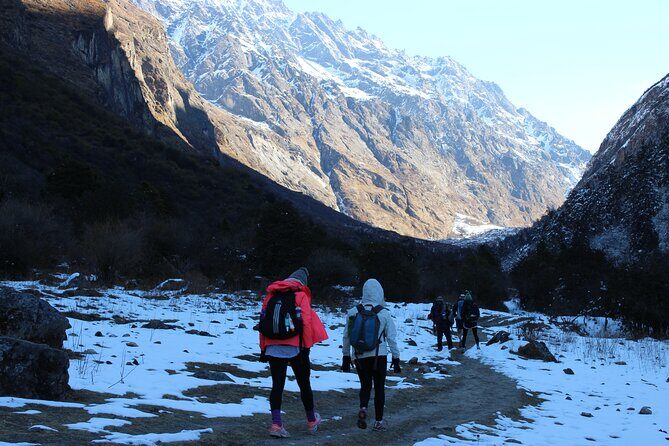
My practical advice: for days like this, your best strategy is not speed. It’s steady breathing, planned stops, and warmth control. If you’re hot on the climb, you’ll sweat. If you’re cold at the pass, you’ll stiffen. Bring your layers and change them early.
Tilche to Dharapani: farms, descent, and a calmer finish
After the hard pass day, the mood usually shifts. Your body relaxes a bit because you know you’re moving away from the highest point.
Day 12 (Bimthang → Tilche): You trek around 6–7 hours. It starts with a descent, and you’ll enjoy breakfast with views of Manaslu. The rest of the day is a steady grind down toward Tilche.
Day 13 (Tilche → Marsyangdi Valley → Dharapani area): You hike through farmlands of Tilche, cross to the east bank of the river, and then descend gradually toward the Marsyangdi Valley. From there you reach Dharapani (this is the staging point for the vehicle ride).
This part is psychologically helpful. You’ve done the “big geology days.” Now you get more human scale—farms, river valleys, and the sense that the trek is winding down.
Back to Kathmandu: jeeps, minibus, and river views
Day 13 transport (Dharapani → Besisahar): The itinerary includes a sharing jeep ride, around 3–4 hours. You’ll see waterfalls and lush scenery on the drive to Besisahar.
Day 14 (Besisahar → Kathmandu by minibus): You ride about 6 hours back to Kathmandu, with the route following the Marsyangdi and Trishuli rivers. It’s not hiking anymore, but it’s still a travel day—one where the mountain views can linger even from the road.
This finish is a good reminder: even after a tough trek, you’re not suddenly “done and home.” The last day is part of the experience, just in a gentler way.
Guides, gear, and safety: what’s provided and what to bring
The trip includes a government-licensed trekking guide and support from a porter team. Based on prior trek feedback tied to this operator, the experience has a pattern of professionalism. One guide mentioned by name—Ganesh—was described as very good and well informed about trekking.
You also get a basic safety layer: a first-aid kit, and emergency rescue help supported by your travel insurance. There’s no claim that this replaces real personal insurance, so make sure your plan truly covers trekking and possible evacuation.
Gear-wise, the included sleeping bag and down jacket can be a big deal. It reduces what you must buy or rent in Kathmandu, and it keeps you focused on actual hiking gear: boots or sturdy shoes, trekking poles if you use them, rain protection, and layers for wind and cold.
You should also keep in mind the trek is listed as moderate fitness. That’s usually code for: you don’t need to be a mountain athlete, but you do need to handle steep trails, long walking days, and altitude fatigue without falling apart.
Who should book this Manaslu Circuit, and who shouldn’t
This trek fits you best if you want:
- A teahouse trek (no camping setup and no heavy food carrying)
- A serious high point in Larke-La Pass
- Strong support from a licensed guide and a team that knows the route
- Mountain focus: Manaslu region peaks and Tibetan-influenced village stops like around Samagaun, including the monastery and cultural library
It may not be ideal if you’re looking for an easy stroll. The itinerary includes steep climbs, multiple checkpoint crossings, and at least one day that’s described as windy and rocky. If you’re nursing an injury or you struggle with long descents, you’ll want to think carefully.
Should you book this 14-day Manaslu Circuit Trek?
If you can handle long hiking days and you’re excited by a remote, authentic-feeling route with teahouse support, I think this is a strong booking choice. The value is real when you look at what’s bundled: permits, licensed guidance, teahouse nights, trek meals, and key cold-weather gear.
Book it if you:
- want overland access from Kathmandu
- care about getting to Larke-La with early morning views
- prefer a guided, structured route over planning permits and logistics yourself
Skip or reconsider if:
- you want a lighter walking schedule than this itinerary provides
- you’re uncomfortable with rocky, windy pass terrain
- you haven’t trained enough for steep climbs and long descents
FAQ
What meals are included during the trek?
Your package includes 14 breakfasts and 14 lunches, plus 13 dinners during the trek. Meals in Kathmandu are not included.
Do I need to bring camping gear or carry food?
You stay in mountain teahouses along the route, so you don’t need to carry a tent or plan food supplies like a camping trek. The trek also includes a sleeping bag and down jacket.
Are the permits for the Manaslu region included?
Yes. The package includes the Manaslu & Annapurna conservation area permit plus a restricted area permit.
What kind of fitness level should I have?
The trek is listed for travelers with moderate physical fitness. Expect days with steep climbs and long hiking hours, including the pass approach that can be windy and rocky.
How large is the group?
The group maximum is 25 travelers, with a professional guide and porter support.
Can I cancel for a full refund?
Yes. You can cancel up to 24 hours in advance for a full refund. If you cancel less than 24 hours before the start time, the amount paid is not refunded.