REVIEW · POKHARA
2 Days Very Short Poon Hill Trek from Pokhara
Book on Viator →Operated by CAN Travels · Bookable on Viator
A sunrise viewpoint in just two days? That is the appeal here. You get a short Poon Hill trek with a real shot at Himalayan panorama views—Annapurna, Dhaulagiri, and Machapuchare—plus a trek route through villages and forested hills. I especially like how the trip is planned around momentum: a first day that gets you to Ghorepani, and a second day that pushes you up to Poon Hill before the light show.
What I also like is the human touch. Guides can make this type of fast trek feel much safer and more meaningful, and in this group you’ll have a government-licensed English-speaking guide. When I look at the feedback, two names keep coming up—Amrit and Biru—both praised for being supportive and for explaining what you’re looking at beyond just the walking.
One thing to consider: a 2-day trek leaves little room for delays, and sunrise visibility depends on weather. If clouds roll in (one rainy-season traveler couldn’t see sunrise), you may still get big mountain views, but the timing can change the payoff.
In This Review
- Key Highlights I’d Prioritize
- From Pokhara to Ghorepani: The Part That Sets Your Rhythm
- Ghorepani Night: Guest-House Reality (Comfort, Not Luxury)
- The Climb to Poon Hill: Sunrise Is the Main Event
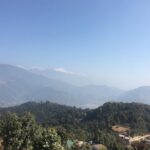
- What You’ll Actually See: Annapurna Views Without the Long Trek
- Your Guide Matters More Than You Think
- Transportation: How the Road Time Gets Handled
- What’s Included (and Why That Drives Value)
- Fitness and Pace: Who This Trek Fits Best
- Weather Reality: Rainy Season Can Still Be Worth It
- Should You Book the 2-Day Poon Hill Trek from Pokhara?
- FAQ
- How long is the Poon Hill trek?
- What is the starting point for this trek?
- Is hotel pickup and drop-off included?
- Do I need a trekking permit?
- Is the guide included, and what language do they speak?
- Where is accommodation provided during the trek?
- Are trekking poles included?
- Is the sunrise experience included?
- Are meals included?
- What is the cancellation policy?
- Is it a private tour?
Key Highlights I’d Prioritize
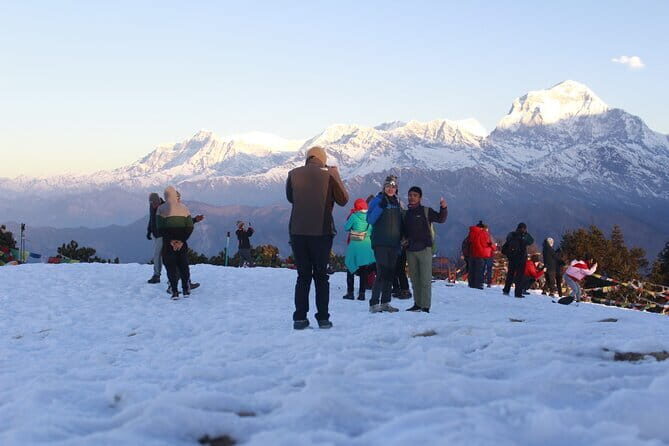
- Poon Hill sunrise timing: your second day is built around getting to the viewpoint for the early light.
- Ghorepani overnight: a guest-house night that lets you wake up and focus on the climb.
- Licensed English-speaking guide: you get both trail support and on-the-spot mountain/culture context.
- Permits, entrance, and poles included: less hassle for you, fewer things to pay for separately.
- Scenic road segments from Pokhara: the long travel is handled with a shared jeep or bus and a scenic route to the trail area.
- Short schedule, moderate fitness: a good fit if you want big views without a longer trek.
From Pokhara to Ghorepani: The Part That Sets Your Rhythm
Most people come to Pokhara for the lakes, the cafés, and the breathing room. The trek experience starts when you trade that easy pace for the trail. The first day includes a scenic road ride from Pokhara toward Nayapul, with mountains, rivers, and green fields along the way. You’re not walking right away for hours upon hours, which matters for a two-day plan.
Then you shift onto the hiking side of the route and work your way toward Ghorepani. The goal is simple: get high enough to make the next day’s viewpoint meaningful, but do it without burning your legs too early. This is a smart pacing choice for first-timers and for anyone who wants the experience without a multi-day slog.
Along the way, the trek route is described as passing through rhododendron forests and local Gurung villages. Even when you only have a day, those details matter. Rhododendron season can mean flashes of color and a tunnel of fragrance, while villages give you a sense of how daily life fits around the mountains.
Practical note: you’ll cover real uphill terrain, but because the trip is short, your technique matters more than your endurance. If you tend to rush, slow down. Short treks are won by rhythm, not by speed.
You can also read our reviews of more hiking tours in Pokhara
Ghorepani Night: Guest-House Reality (Comfort, Not Luxury)
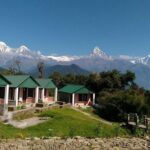
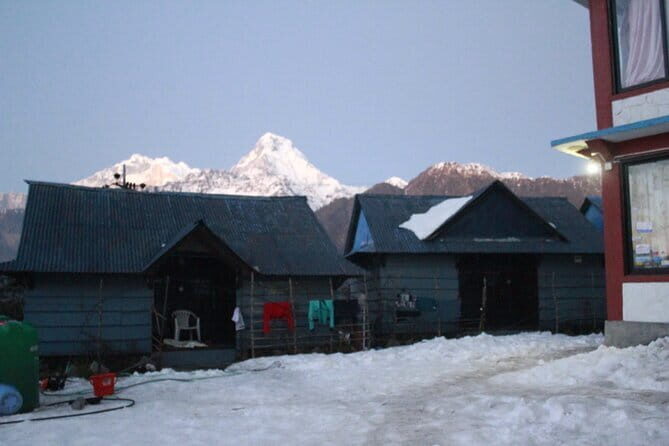
Ghorepani is where you spend the night. The tour includes accommodation in a guest house, so you’re not juggling lodging decisions. This is a common trekking base in the Annapurna region, which usually means you’ll find places set up for hikers and hikers’ schedules.
Why the guest-house night is valuable on a two-day trek: it gives you a proper rest block before the early push to Poon Hill. It also reduces stress. When your “morning plan” is Sunrise + Steps, you do not want to spend the night figuring out where to sleep.
I also like that the tour includes trekking poles. In many mountain towns, poles cost extra and you might not get the right height. Having them provided makes the first-day walking and the early-morning descent after sunrise feel more controlled.
What you should keep in mind: guest houses in trekking areas are practical. Expect basic comforts and heat/flushing water situations to vary by season and weather. If you’re the type who needs hotel-level consistency, this part might feel rustic.
The Climb to Poon Hill: Sunrise Is the Main Event
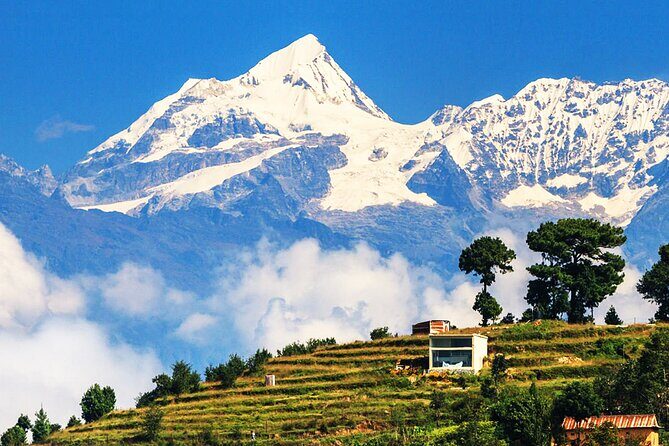
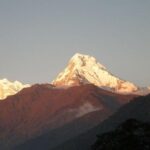
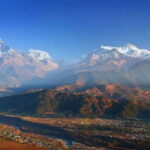
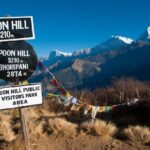
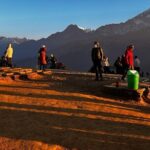
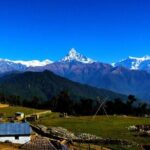
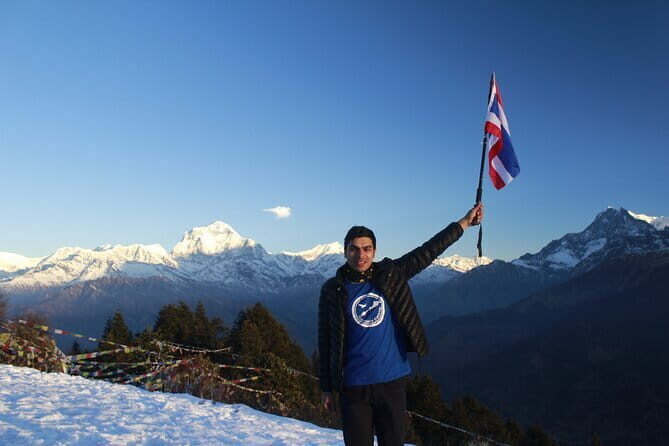
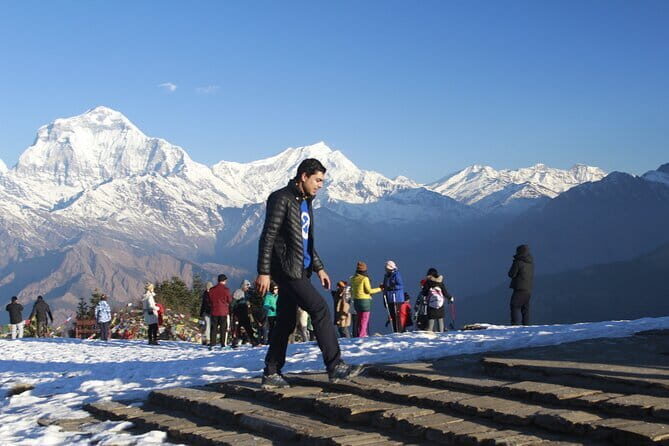
Day two is the headline. You head to Poon Hill and witness the beauty of the Himalayan range—specifically mentioned are Dhaulagiri and the Annapurna stretch. The entire day’s excitement is tied to that moment when sunrise hits the peaks.
In real terms, this means you’re doing a climb with an early start. The reward is that Poon Hill is famous for panoramic views. You’re positioned to see a chain of peaks catch the first light, which is exactly why so many people plan their Annapurna experience around it.
When you’re moving that fast, it’s helpful to have a guide who can manage pace and keep you oriented. The guide is included, and in the feedback Amrit is repeatedly described as professional and attentive—ensuring people felt comfortable and safe. Another guide name that comes up is Biru, who was praised for explaining culture, nature, and mountains along the way. That kind of commentary changes how you experience the climb. You’re not just watching; you’re learning what you’re looking at.
Drawback to plan for: if you cannot see sunrise due to clouds, you may still enjoy mountain views, but the experience can feel different. One traveler noted that during the rainy season they couldn’t see sunrise, yet Dhaulagiri and Annapurna showed their faces intermittently. Translation: you might get partial views through breaks in the weather. Don’t count on a perfect sky.
What You’ll Actually See: Annapurna Views Without the Long Trek
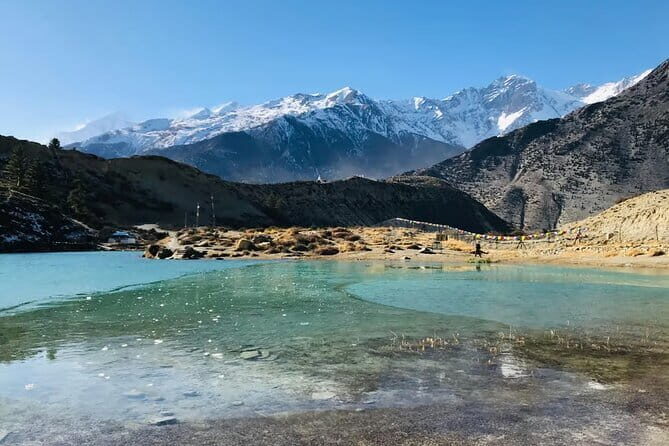
A two-day Poon Hill trek doesn’t replace a full Annapurna trek. But it does deliver what most people want from the Annapurna region: big mountain presence, quick. You’ll hear the names a lot for a reason—Annapurna, Dhaulagiri, and Machapuchare are part of the described panorama.
You’ll also see “in-between” scenery that makes the hike feel alive, not just like a stair drill. The route’s mention of rhododendron forests and Gurung villages is meaningful because it gives your eyes something to do when the sky is cloudy or when your legs are tired.
Even in off-season or rainy conditions, the mountains can pop in and out. One review highlighted greenery and quieter trails during rain season, which can be a trade-off you might actually like if you enjoy slower, softer scenery over peak crowds.
My practical take: if your main goal is summit dreams, this trek won’t satisfy that. If your goal is a dramatic introduction to the Himalayas in a tight schedule, it hits the mark.
Your Guide Matters More Than You Think
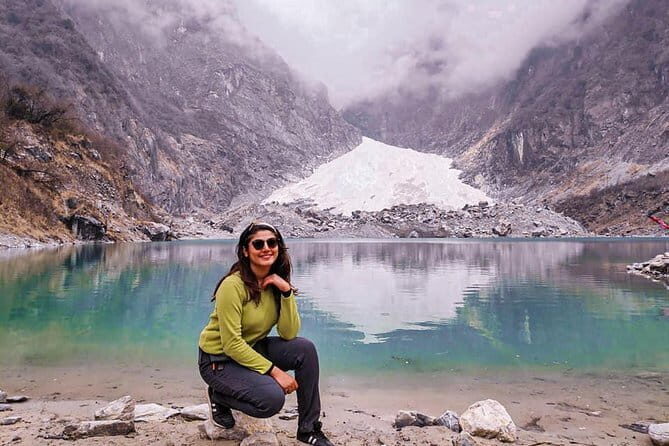
In short treks, the guide is your multiplier. They handle paperwork, keep the pace realistic, and can explain what you’re looking at right when your brain is too tired to Google it.
This tour includes a government-licensed English-speaking guide, and it also includes a normal first aid kit for emergencies. That matters when you’re far from immediate help and you have only two days to make it count.
The most praised guide impact in the feedback comes down to:
- support and attentiveness (Amrit),
- culture and nature explanations (Biru),
- and a focus on comfort and safety during the climb and timing.
If you’re newer to trekking or you’re traveling with a partner and want things to feel smooth, a guide who speaks clearly and stays proactive is a bigger value than extra “amenities” that don’t help on the trail.
A few more Pokhara tours and experiences worth a look

Transportation: How the Road Time Gets Handled
A two-day trek has two clocks: the trail clock and the road clock. The included transfers help manage the road side of the schedule.
The tour includes Pokhara to Ulleri to Pokhara round trip transfer by shared jeep or bus. That means you’re not doing all the logistics yourself. On top of that, you also get hotel pick up and drop off in Pokhara.
For the first day, the plan includes a scenic road ride from Pokhara to Nayapul. This combination—shared vehicle segments plus pickup/drop-off—usually reduces the hassle factor a lot for short trips. Less waiting around means more walking time when you’re supposed to walk.
One consideration: shared jeep/bus travel can be bumpy. If you’re prone to motion sickness, bring what works for you. Short treks can feel harder when your body is already tense from the ride.
What’s Included (and Why That Drives Value)
Let’s talk money and what you’re really buying.
Price is $220 per person. For Nepal short trekking, that can feel reasonable when you look at what’s included:
- hotel pickup and drop-off
- trekking permit and official documents
- a government-licensed English-speaking guide
- guest-house accommodation during the trek
- private tour (only your group participates)
- trekking poles provided for each person
- a basic first aid kit with the guide
- entrance fees at Poon Hill
- the Pokhara–Ulleri–Pokhara transfer by shared jeep or bus
What’s not included is food and drinks. You’ll be buying meals along the way, but that flexibility also means you can choose what feels right for your stomach and appetite.
Here’s why I think this package is good value for the specific goal: sunrise at Poon Hill in two days is mostly about coordination—getting you to the right places at the right times and removing paperwork friction. If you have to hire a guide separately, handle permits, arrange entrance fees, and source poles, costs add up fast.
Also, the tour includes a mobile ticket and you receive confirmation at booking, which reduces day-of uncertainty. The listing being booked roughly two months in advance (58 days on average) suggests decent planning demand, not a last-minute experiment.
Fitness and Pace: Who This Trek Fits Best
The trek is listed for travelers with moderate physical fitness. That is exactly what you want to hear for a two-day Poon Hill itinerary. It’s not labeled as a technical climb, but you should expect sustained uphill hiking and early starts.
This trek suits you if:
- you want a Himalayan view experience without a longer trek,
- you prefer a structure-led itinerary,
- you’d rather spend money on guidance and logistics than on cobbling things together,
- you can handle a moderate effort for 2 days.
It may be less suitable if:
- you want lots of free time to roam slowly,
- you expect a gentle walk with no steep sections,
- you rely on long breaks to reset.
Tip that helps instantly: wear shoes with good grip and break them in before you go. Two-day treks compress the discomfort window. If your feet hurt on day one, day two will feel twice as long.
Weather Reality: Rainy Season Can Still Be Worth It
Weather in the Annapurna region can shift fast. The tour is built around sunrise at Poon Hill, so in clear conditions you get the full effect: golden light over snow-capped peaks.
But you should also know the realistic backup. One rainy-season experience said sunrise wasn’t visible, yet the mountains still appeared at times, and the greenery was excellent. That tells me the trail still delivers visual rewards even when the sky refuses to cooperate.
If you’re planning for the rainy season, set expectations this way: you’re buying access to the viewpoint, not a guaranteed clear sky. Bring layers for damp air and expect mist.
For the best odds at sunrise views, pick a time window when local forecasts historically look favorable, and keep your mental plan flexible.
Should You Book the 2-Day Poon Hill Trek from Pokhara?
If your priority is big mountain views on a short schedule, I think this is a strong choice. The included guide, permits, guest-house night, poles, and Poon Hill entrance fee are exactly the pieces that can wreck your timing if you try to DIY it on a two-day clock.
Book it if:
- you want the Poon Hill sunrise experience or at least a strong shot at it,
- you appreciate having a guide handle the trail and paperwork,
- you value convenience from Pokhara with pickup/drop-off and ground transfers.
Skip it or consider another format if:
- you need a guaranteed sunrise view (weather can interrupt it),
- you dislike early starts and fast turnaround,
- you’re looking for a longer cultural immersion than two days allow.
For many people, this trek is the most practical way to taste the Annapurna region without taking a full week. And if your guide is Amrit or Biru—based on the feedback—you’ll likely end up with more than photos. You’ll come away knowing what you saw and why it matters.
FAQ
How long is the Poon Hill trek?
The trek is listed as 2 days (approximately).
What is the starting point for this trek?
The experience is based in Pokhara, with hotel pickup included.
Is hotel pickup and drop-off included?
Yes. The tour includes hotel pick up and drop off.
Do I need a trekking permit?
You do. The trekking permit and all official documents are included.
Is the guide included, and what language do they speak?
Yes. A government-licensed English-speaking trekking guide is included.
Where is accommodation provided during the trek?
Accommodation is included in a guest house during the trek.
Are trekking poles included?
Yes. Trekking pole per each person is included.
Is the sunrise experience included?
Yes. The second day includes climbing to Poon Hill and witnessing the sunrise, and entrance fees at Poon Hill are included.
Are meals included?
No. Food and drinks are not included, but you can buy them along the way.
What is the cancellation policy?
Free cancellation is offered up to 24 hours in advance for a full refund.
Is it a private tour?
Yes. It is listed as a private tour/activity, with only your group participating.