REVIEW · KATHMANDU
Adventurous Annapurna Base Camp Trekking
Book on Viator →Operated by Adventure Thirdpole · Bookable on Viator
Annapurna calls with sunrise and altitude. This 14-day trek links Poon Hill mornings with a real night at Annapurna Base Camp, where the views feel close enough to study. I also like that it’s built around the Annapurna Sanctuary’s natural “amphitheater” feel and a classic loop through Gurung villages and river valleys. One thing to consider up front: the walking days are long, and there’s a lot of climbing early on, including serious step-ups like the Ulleri climb.
Where this trip really wins is how it’s run. With a professional trekking team (including guide Raj, plus support from Deepak, Mahila, and Ram in past departures), you get a “plan in motion” approach: guides meet you at the right time, permits are handled, and the group stays moving without the usual awkward gaps. You’ll also appreciate the porter support setup, which keeps you from turning a trekking holiday into a hauling contest.
If you’re looking for a smooth, well-organized adventure that balances mountains with culture and lake-time, this hits the mark. But if your idea of trekking is short daily walks and lots of downtime, you may find the pace and early departures demanding—still worth it, just be honest about your fitness.
In This Review
- Key highlights that make this Annapurna Base Camp trek special
- Why Annapurna Base Camp feels like a mountain amphitheater
- Kathmandu heritage days that set the tone before the trek
- The Pokhara transfer: riverside views and Fewa Lake decompression
- Ulleri to Ghorepani: where the trek starts to feel real
- Ulleri (the step-climb lesson)
- Ghorepani (forests, ridges, and the big panorama payoff)
- Poon Hill sunrise and Tadapani: the “big eyes” day
- Tadapani viewpoint time
- Chhomrong and Ghandruk: Gurung villages plus river-canyon walking
- Chhomrong
- Ghandruk via deep gorge scenery
- Reaching Annapurna Base Camp: the snow-surrounded payoff
- Sunrise return and the descent plan: bamboo, Khuldighar, and Jhinu
- Bamboo descent
- Khuldighar sheep farm stop and the Sinuwa to Chhomrong section
- Pokhara comforts and Kathmandu farewell dinner
- Price and logistics: what you’re really paying for
- What’s included (the practical stuff)
- What’s not included (so you can budget realistically)
- The weather factor
- Who should book this trek, and who should think twice
- Small planning tips that make a big difference
- Should you book Adventure Thirdpole’s Annapurna Base Camp Trek?
- FAQ
- How long is the Annapurna Base Camp trekking experience?
- Where does the trip start and end?
- Is this a private group?
- Are permits included?
- What trekking support do you get?
- What meals are included?
- What’s required for booking coverage and emergencies?
Key highlights that make this Annapurna Base Camp trek special
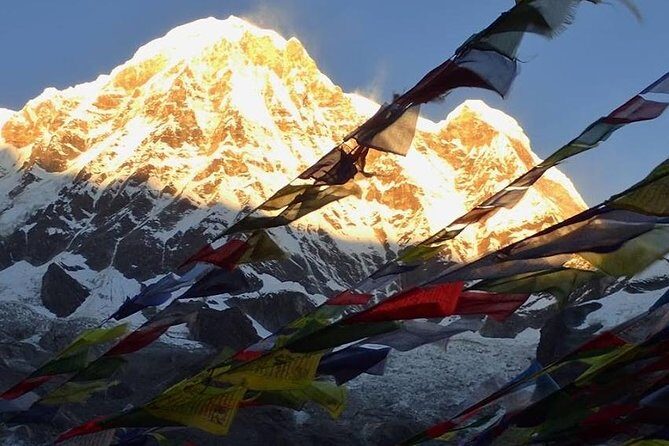
- Poon Hill pre-dawn hike to a high-impact sunrise at 3,210m, timed so you reach the viewpoint by torch light
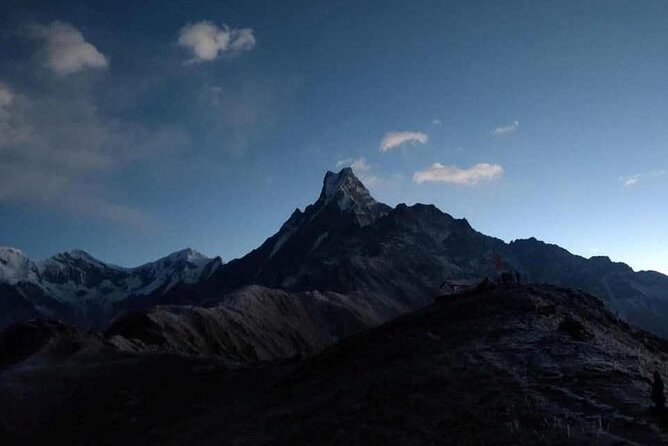
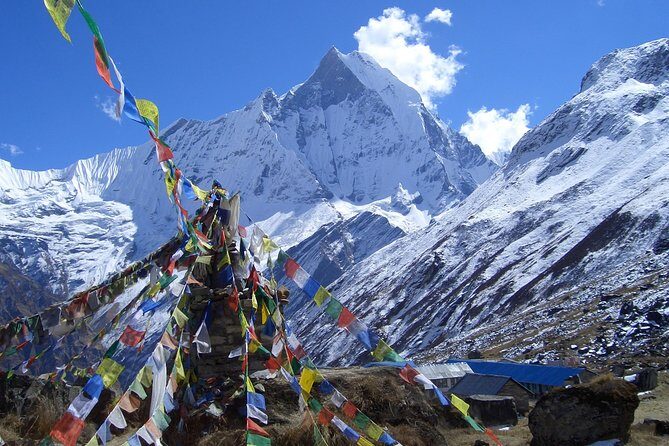
- A night at Annapurna Base Camp with close views of Annapurna I (8,091m) and the surrounding range, including Machhapuchare/Fishtail
- 360-degree “amphitheater” style scenery inside the Annapurna Sanctuary feeling like the mountains wrap around you
- Gurung villages and local Buddhist culture as part of the day-to-day trek, not just a side stop
- Pokhara recovery time with a Fewa Lake boat ride after the lower-altitude Kathmandu sightseeing
Why Annapurna Base Camp feels like a mountain amphitheater
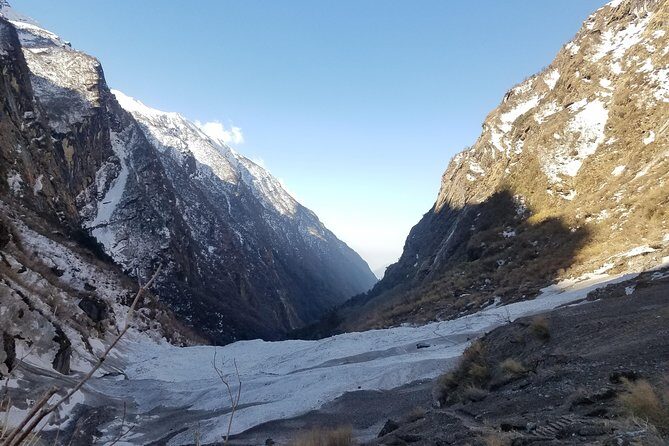
Annapurna Base Camp is one of those places where the altitude does something emotional. The trek builds toward a “ring of peaks” feeling: snowfields, ridgelines, and towering mountains looking close enough to measure with your eyes.
What I like about this route is the way it promises both scale and familiarity. You’re not only chasing a single summit-style moment. You get sunrise at Poon Hill, village life in Gurung settlements, and then a base camp night that’s meant for the closest views of major players in the Annapurna region. That includes Annapurna I and the dramatic presence of Machhapuchare (Fishtail), plus the broader range panorama that makes the Sanctuary feel like a natural arena.
If you’re the type who likes photos, you’re in luck. Several days are set up for early starts or afternoon viewpoints. If you prefer actually soaking it in and talking with your guide, you still get time to do that—especially once you’re at higher elevations where the world slows down.
You can also read our reviews of more hiking tours in Kathmandu



Kathmandu heritage days that set the tone before the trek
Your trip starts in Kathmandu, and it’s not just a checkbox day. After airport arrival and transfer to your hotel, you get a welcome dinner and a crew introduction. That matters more than it sounds, because you’ll meet the people who’ll guide (and carry key logistics) during your trek.
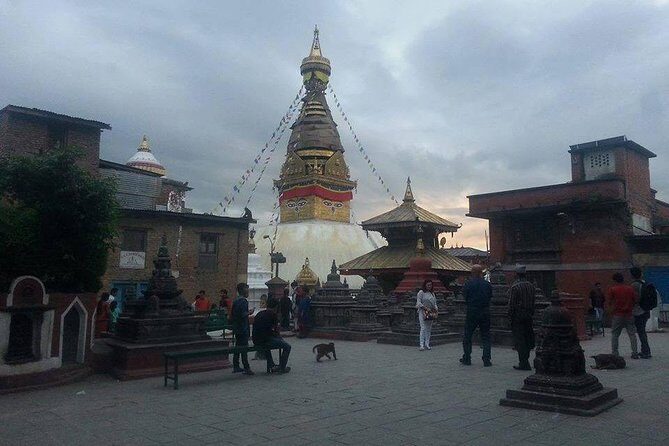
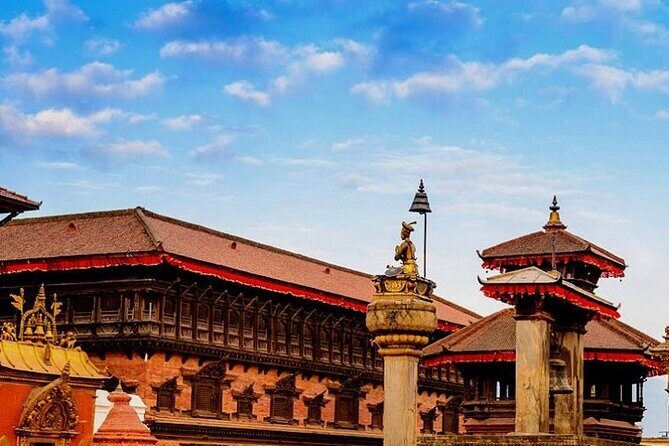
The next day is Kathmandu Valley heritage sightseeing. You’ll visit four major UNESCO sites: Pashupatinath Temple, Kathmandu Durbar Square, Swayambhunath (Monkey Temple), and Boudha Nath. This is a smart pairing for an active trek for one simple reason: your legs might be tired later, but your brain gets to recalibrate first. Cities can feel chaotic in a good way; temple time gives you a smoother mental landing.
Practical note: expect a full day of walking between sites. It’s not trekking distances, but it’s enough to remind you that Nepal travel often means stairs, hills, and moving.
The Pokhara transfer: riverside views and Fewa Lake decompression
On the way from Kathmandu to Pokhara, you travel by tourist bus early in the morning, passing alongside the Trisuli and Marshyangdi rivers and through rural village scenery. It’s one of those drives where the road feels like part of the adventure.
Once you arrive in Pokhara, you check into your hotel, freshen up, and then switch into lighter mode. Your guide takes you boating on Fewa Lake and includes some walking around the lakeside area. For me, that’s a key value moment. You’re about to start a trek with early mornings and altitude. A calm water setting helps you reset before your body learns a new rhythm.
Pokhara also plays well with group travel. You’re more likely to feel ready for the next day when you’ve had a gentle activity instead of a second “sightseeing sprint.”
Ulleri to Ghorepani: where the trek starts to feel real
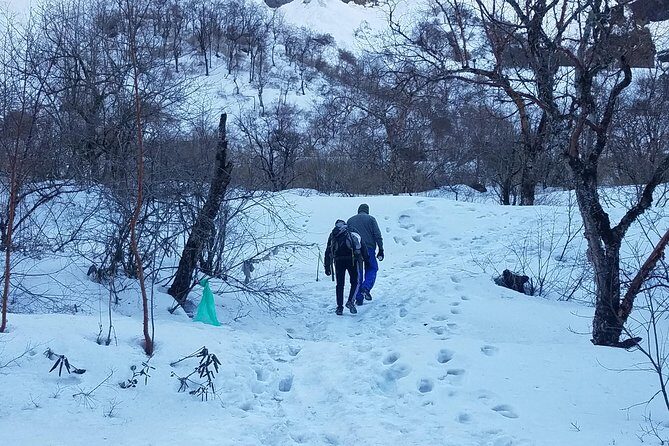
You begin the trek portion after breakfast with a drive to Nayapul, then you start hiking through the foothills. This is the phase where your pace and footwork get established.
One important detail: trekking permits are checked at Birthanthi, so you’ll want to keep your documents handy and ready. From there, the trail threads through forests and waterfall scenery, crossing rivers like the Modi Khola and Bhurungdi along the way.
Ulleri (the step-climb lesson)
You reach Thikhe Dhunga and Ulleri for your first overnight. Ulleri is famous for a big stair climb—nearly 3,000 steps after crossing suspension bridges near Tikhedungda. This is where a “moderate fitness” label becomes very practical. You don’t need to be an athlete, but you should be comfortable with sustained uphill effort.
My advice: slow down on the steps. Short, controlled effort beats sprinting and burning out.






Ghorepani (forests, ridges, and the big panorama payoff)
From Ulleri, you continue gradually upward. Dense rhododendron and oak forests show up here, plus villages like Banthanti and Nangethani. When you arrive in Ghorepani, the views come into focus—especially from a ridge a short trek away.
Ghorepani is also a staging area for Poon Hill, and it’s set up well for that next morning effort. Even if you’re tired from the day before, the evening at Ghorepani gives you a chance to settle, eat, and sleep with the sunrise plan fresh in your head.
Poon Hill sunrise and Tadapani: the “big eyes” day
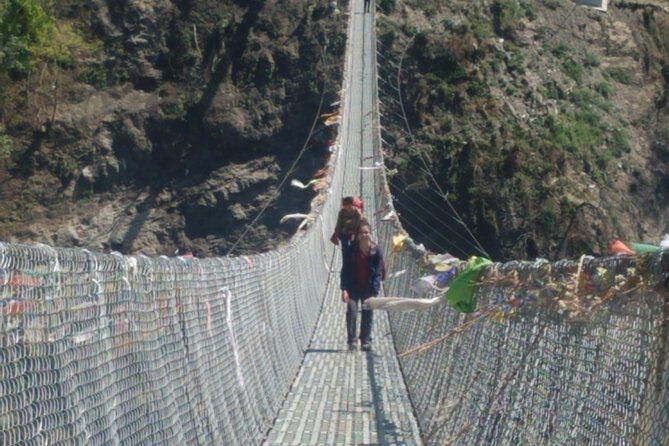
Poon Hill is one of those trekking moments that’s worth the early start. You get a wakeup call and head out hiking in the dark with torch light, reaching the viewpoint in about 45 minutes. At 3,210m, you’re close enough to feel the air change. Then you get around half an hour to watch sunrise unfold over the Dhaulagiri and Annapurna ranges.
Walking to a viewpoint in pre-dawn dark is not glamorous, but it’s practical. You’re moving when it’s cooler, and you’re arriving before the sky fills in. You’ll return down for breakfast afterward, so you’re not just suffering for scenery.
Tadapani viewpoint time
After breakfast, you pack up and continue toward Tadapani (2,650m) via Deurali and Banthanti. Along the way, you might see monkeys and birds, which makes the forest edge feel alive. Tadapani itself is described as a view point for close sights of Annapurna South, Hiun Chuli, and the Fishtail.
If you want a trek that mixes “wow” with “variety,” this part delivers. You’ve got sunrise pressure behind you, and now the trail eases into scenic lookout energy.
Chhomrong and Ghandruk: Gurung villages plus river-canyon walking
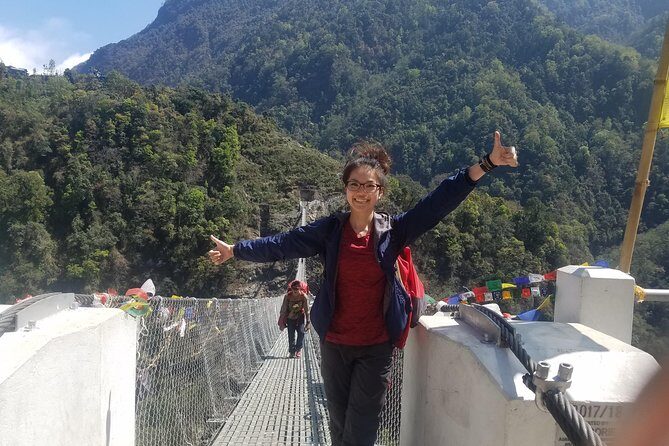
This section shifts from ridge energy to village rhythm.
Chhomrong
You go downhill for about 2 hours and then gradually climb through Gurung settlement areas to reach Chhomrong, where you rest for the day. Chhomrong is a bigger Gurung community, which means you’ll feel the culture more strongly than in smaller hamlets.
Meals are included here (breakfast, lunch, and dinner), which matters for two reasons: you reduce decision fatigue, and you avoid spending time hunting for food as you adjust to altitude.
Ghandruk via deep gorge scenery
Continuing toward Ghandruk, you walk through a deep gorge on the banks of the Modi river. You’ll hear the river noise and birds in the background, and the day is framed as more focused and grounding.
There’s also a chance of spotting wildlife like monkeys and Himalayan goats. Whether or not you catch animals, the bigger point is the setting. The trail sounds different in a gorge. It’s quieter in some places and louder in others, and that changes how you experience the walking day.
Reaching Annapurna Base Camp: the snow-surrounded payoff
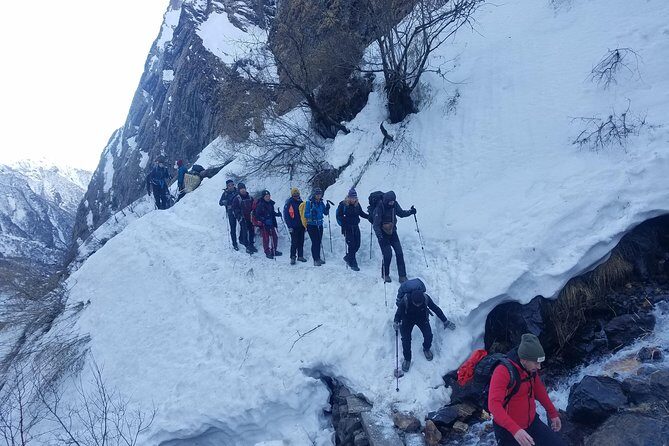
This is the headline. On your way to Annapurna Base Camp, you trek into a world that feels surrounded by snow-capped mountains. When the scenery becomes that intense, it’s less about distance and more about being ready for the emotional hit.
In the afternoon at base camp, your guide takes you for close views around the Annapurna region—specifically highlighting Annapurna I and the Annapurna glacier, plus nearby peaks like Annapurna South, Hiun Chuli, Machhapuchare (Fishtail), and Annapurna III.
What I appreciate is how this approach doesn’t treat base camp as a one-stop photo moment. You’re given time for a close viewing experience in the afternoon, and you’re also set up with an early next day sunrise return. That’s how you get more than one “peak moment.”
Sunrise return and the descent plan: bamboo, Khuldighar, and Jhinu
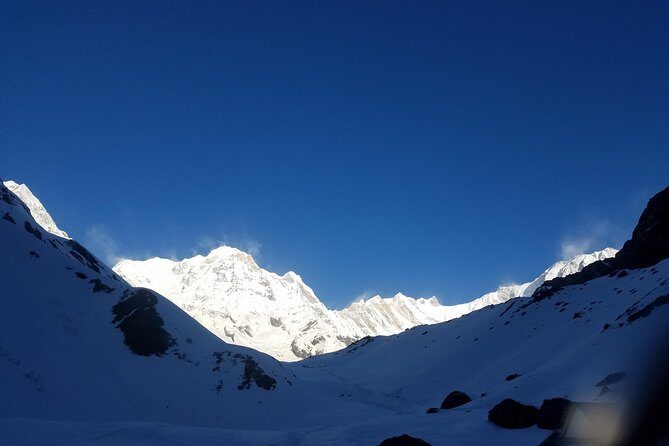
After base camp, the plan turns into a controlled descent—always tricky, because “downhill” still stresses your body.
Bamboo descent
You wake early for sunrise, take photos, and eat breakfast. Then you head back to Bamboo, losing about 2,000 meters over 6–7 hours. This is a long descent. Your knees will feel it if you don’t pace well.
Khuldighar sheep farm stop and the Sinuwa to Chhomrong section
Leaving Bamboo, you climb about 30 minutes to Khuldighar, described as an experimental sheep farm. From there, the trail is gradual at first, then flat and downhill until Sinuwa. After that, you trek downhill again, cross the Chhomrong Khola, then head uphill up to Chhomrong village.
Then comes the steep push down to Jhinu. After crossing to Jhinu, you drop your bags to go for bathing in the hot springs. This is a very practical reward: your body has done hard work, and hot springs are an easy way to feel human again before the drive back.
Pokhara comforts and Kathmandu farewell dinner
Your last trek day transitions from the mountains back toward roads and vehicles. You descend from Jhinu, follow the flat route to Birethanti, then return to Nayapul. A vehicle is waiting to drive you back to Pokhara, where you check into your hotel.
You also get a happy hour after arrival. It’s a small detail, but it helps you mark the finish line and unwind without planning every minute.
From Pokhara to Kathmandu, you get a choice: drive back, or take a 30-minute flight at an additional cost. Either way, you end with a farewell dinner. After that, you get a transfer to Tribhuvan International Airport for departure.
Price and logistics: what you’re really paying for
At $1,650 per person for around 14 days, the value comes less from the trekking buzzwords and more from what’s handled for you.
What’s included (the practical stuff)
You get:
- land transfers as per the plan, including Kathmandu day sightseeing
- accommodation in Kathmandu and Pokhara
- a professional guide
- one porter for every two persons
- TIMS and the Annapurna Conservation Area Permit (ACAP)
- breakfast, and multiple lunches/dinners as specified in the plan
- trekkers information management support
In other words, you’re paying for logistics, documentation, and guiding quality—plus a system that keeps the group organized when altitude and tiredness could otherwise cause small chaos.
What’s not included (so you can budget realistically)
You’ll need to plan for:
- personal drinks and snacks
- tips
- travel insurance
- medical evacuation coverage
- meals not specified in the plan
- sleeping bag and down jacket
- personal spending money
This matters because the “mountain gear” part can surprise first-timers. If you don’t have a proper sleeping bag and down jacket, you’ll be forced to rent or buy locally, and costs can add up. If you already own gear, you’ll be in much better shape.
The weather factor
This trip requires good weather. If it’s canceled due to poor weather, you’ll be offered another date or a full refund. That’s the honest reality of trekking in the Himalayas, and it’s also a reason to pack patience into your timeline.
Who should book this trek, and who should think twice
This trek is aimed at people with moderate physical fitness. You’ll be on long hiking days, and the program includes early starts like the pre-dawn Poon Hill hike and the steep stair climb near Ulleri. If you can handle a steady effort outdoors and you’re comfortable walking uphill and downhill for hours, you’ll likely do well.
You might hesitate if:
- you dislike early departures
- you’re hoping for a low-effort hike
- you’re not prepared for basic lodge stays and simple mountain logistics
- you’re short on time and expect the trip to be fully flexible around weather day-by-day
That said, the trek’s structure makes sense: it builds gradually, then gives you bigger scenery payoffs in the middle and a strong “finish feeling” with Jhinu hot springs and Pokhara decompression.
Small planning tips that make a big difference
You’ll make your trip easier by thinking ahead on three areas:
Gear you must bring: this plan doesn’t include a sleeping bag or down jacket. Cold nights and early mornings are part of the experience, especially when you’re higher up.
Pace control: the stairs near Ulleri and the long descent after base camp are the moments where speed becomes a problem. Move slower than you think you should.
Keep your documents ready: permits are checked early on the trek. You’ll be happier if you know where everything is before you reach the check point.
Finally, rely on your guide team. The program’s strength is coordination, and past seasons have highlighted the team’s prompt, calm approach—including responsiveness and flexibility when plans need to adapt.
Should you book Adventure Thirdpole’s Annapurna Base Camp Trek?
I’d recommend booking if you want a classic Annapurna Base Camp experience that balances big mountain views with cultural stops and real recovery time in Pokhara. The included permits (TIMS and ACAP), porter support (one for every two persons), and the guide-led schedule are exactly the kind of structure that makes a Himalayan trek feel less stressful.
I’d think twice if you’re not comfortable with early starts, long days, and the fact that weather can affect outcomes. But if you’re prepared for that reality, this trek is built around the essentials: Poon Hill sunrise, a base camp night, Gurung village culture, and a satisfying return with hot springs.
If you want, tell me your current fitness level and whether you already own trekking gear (especially a sleeping bag and warm down layer). I can help you sanity-check if this pace fits you and what to prioritize before you go.
FAQ
How long is the Annapurna Base Camp trekking experience?
It’s listed as 14 days (approximately).
Where does the trip start and end?
It starts at Kathmandu Guest House in Kathmandu and ends back at the same meeting point.
Is this a private group?
Yes. It’s described as a private tour/activity, with only your group participating.
Are permits included?
Yes. TIMS and the Annapurna Conservation Area Permit (ACAP) are included.
What trekking support do you get?
A porter is included at a ratio of one porter for every two persons, and you’ll have a professional guide.
What meals are included?
Breakfast is included, and lunch and dinner are included on days specified in the plan. Meals where not specified are not included.
What’s required for booking coverage and emergencies?
Travel insurance is listed as mandatory. Medical evacuation coverage is not included, and the trip notes it separately as not included.