REVIEW · KATHMANDU
14-Day Private Annapurna Base Camp Trekking and Multi Activity
Book on Viator →Operated by Himalaya Arirang Trek Private Limited - Kathmandu Sightseeing · Bookable on Viator
Snow peaks appear on schedule. That’s the magic of this 14-day private Annapurna Base Camp trek, built for steady progress and big-view days that don’t feel rushed, from Kathmandu transfers to the final drive back to Pokhara. I love the mix of classic trekking stops—Ulleri, Ghorepani, and Poon Hill—plus the long, satisfying push toward Annapurna Base Camp and Machhapuchhre views. I also like the human side: guides including Ramesh and GP were highlighted for making people feel welcome and safe, with food and lodges that keep the comfort reasonable. One consideration: this is a moderate-fitness trek, so you’ll want to be realistic about daily walking time and altitude effort.
The itinerary is straightforward enough to trust: hotels in Kathmandu and Pokhara, then guesthouses/lodges/teahouses once you start trekking. You’ll pass through rhododendron forest walking, see waterfalls along the way, and get your culture moments as you move through villages. If you’re trying to balance adventure with dependable support, the private setup is a big plus, especially when conditions change and you need your route handled smoothly by people who know the area.
Possible drawback to plan around: the trip is weather-dependent, and high-mountain days can hinge on visibility and conditions. If clouds roll in, you might not get the same view quality day-for-day—so pack patience alongside your hiking shoes.
In This Review
- Key Highlights You’ll Actually Feel Day to Day
- Why Annapurna Base Camp Still Works as a 14-Day Private Trek
- Kathmandu to Pokhara: the Setup Day That Makes Trekking Easier
- Trek Day 1 to Day 3: Ulleri and Ghorepani as Your Training Ladder
- Poon Hill: the Sunrise Payoff That People Remember
- The Middle Trek: Tadapani to Sinuwa to Deurali
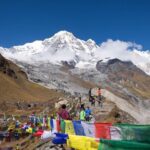
- Annapurna Base Camp Day: Reaching the Big Turning Point
- Day 9 to Day 11: Base Camp to Dovan to Chhomrong to Ghandruk
- Ghandruk to Nayapul and Back to Pokhara: the Taste of Recovery
- Logistics That Make or Break ABC: Private, Meals, Permits, Porters
- Price and Value: What You’re Getting for $925
- Who This Trek Fits Best (and Who Might Want to Think Twice)
- Should You Book This 14-Day Private Annapurna Base Camp Trek?
- FAQ
- Where does the trek start?
- How long is the Annapurna Base Camp trek?
- Is this a private tour?
- What kinds of accommodations are included?
- Are meals included?
- What’s included for permits and fees?
- Is transportation included?
- Do I need to pay for a visa or travel insurance?
- Are tips included?
- What if weather is bad?
Key Highlights You’ll Actually Feel Day to Day
- Ramesh and GP support: praised for positivity, practical help, and making the trip feel safe.
- Poon Hill sunrise views: singled out as the best viewpoint for many people who do this route.
- Permits and TIMS included: Annapurna Conservation Area Permit and TIMS fee are already covered.
- Comfort-focused basics: hotels in Kathmandu/Pokhara and teahouse stays on the trek, with included meals.
- Porter help: luggage carried by porters so your days focus on walking.
- Private group format: only your group participates, which keeps pacing and decisions easier.
Why Annapurna Base Camp Still Works as a 14-Day Private Trek
Annapurna Base Camp isn’t just famous because it has a dramatic end point. It works because the route creates a rhythm: start easy with transport and village trekking, build your legs through forest and uphill days, then land at a base camp area where the scenery can feel unreal. You’re also in a region known for biodiversity, so you’re not only chasing peaks—you’re moving through varied environments with chances to see local life along the trail.
This specific itinerary leans into that pacing. You begin in Kathmandu, sleep in hotels for the first part of the trip, then transition into guesthouse and lodge nights once you start hiking. That matters because ABC can feel like a long effort if you’re thrown into rough sleeping right away. Here, the structure gives your body time to adapt.
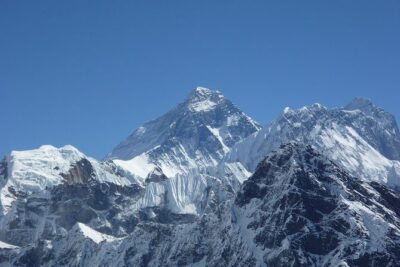
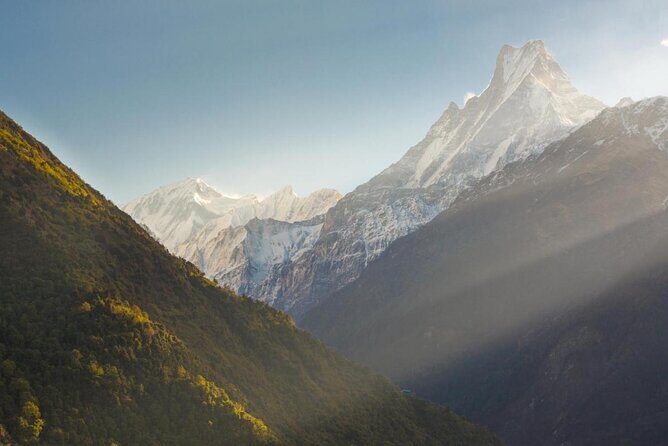
Also, the destination is more than a postcard. You’re in the Annapurna and Machhapuchhre (Fishtail) area, with views of peaks like Annapurna ranges, Machhapuchhre, and Hiunchuli described in the route overview. The sense you get is that you’re hiking through the foothills into an amphitheater of mountains.
You can also read our reviews of more private tours in Kathmandu
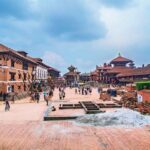
Kathmandu to Pokhara: the Setup Day That Makes Trekking Easier
Day 1 is arrival in Kathmandu and transfer to your hotel. Day 2 is a drive to Pokhara with breakfast included. This isn’t just transport for the sake of logistics—it’s where the trek “begins” in a practical way. You’re checking in, getting settled, and giving yourself a day to reset before the walking starts.
Pokhara is also where many trekkers feel their headspace change. You swap city noise for lakeside calm and get ready for the trail start at Nayapul the next day. The itinerary keeps this part simple: breakfast included, hotel accommodation included, and an air-conditioned vehicle for the driving segments.
One practical tip: if you’re sensitive to travel days, use this time to hydrate and keep your meals light. The trek starts the next morning from the Nayapul area, and you’ll appreciate not feeling heavy or sluggish before the first uphill.
Trek Day 1 to Day 3: Ulleri and Ghorepani as Your Training Ladder
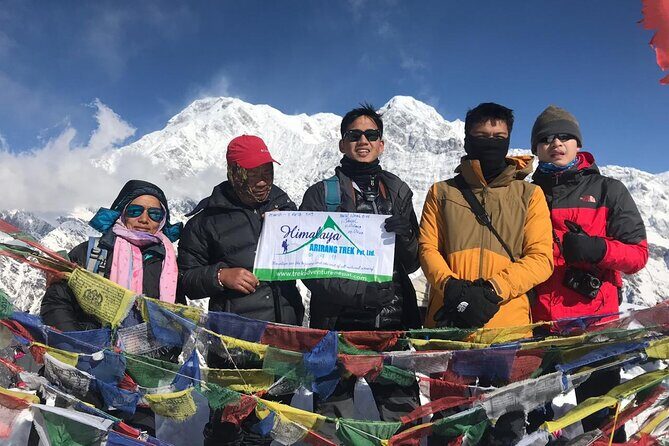
On Day 3, you drive to Nayapul and trek to Ulleri. The route continues on Day 4 from Ulleri to Ghorepani. These days are the classic “start-and-build” pattern of the Annapurna circuit-style trekking experience: you’re moving through villages and stepping your way up toward viewpoint country.
What I like about the way this itinerary layers the effort is that it doesn’t drop you straight into the most intense section. Ulleri and Ghorepani give you early rhythm: walk steadily, take breaks often, and use the village stops to refuel. Even if the daily distance isn’t what you expect, the walking style matters more than speed.
You’ll also start to sense the region’s character here. The route description points to rhododendron forest walking and waterfalls. Even if you don’t get every “wow” moment in the first days, you’re building toward it.
Poon Hill: the Sunrise Payoff That People Remember
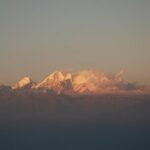
Day 5 is a big one: you explore Poon Hill, then trek to Tadapani. Poon Hill is famous for a reason, and it’s been the single most praised viewpoint in the trip feedback you shared. Many people describe Poon Hill as the best viewpoint they’ve ever seen on a trekking journey.
Here’s why that matters for your decision-making: Annapurna Base Camp can be spectacular, but Poon Hill is often the first “I get it” mountain moment. It’s a psychological boost as much as a visual one. After you’ve watched the light change over the peaks, you usually walk the rest of the trek with a calmer confidence.
What to plan for: sunrise viewpoints typically mean early mornings. That’s not a reason to avoid it—it’s a reason to set expectations. If you’re not into early starts, you can still enjoy the view, but you may not get the exact sunrise moment that people rave about.
The Middle Trek: Tadapani to Sinuwa to Deurali
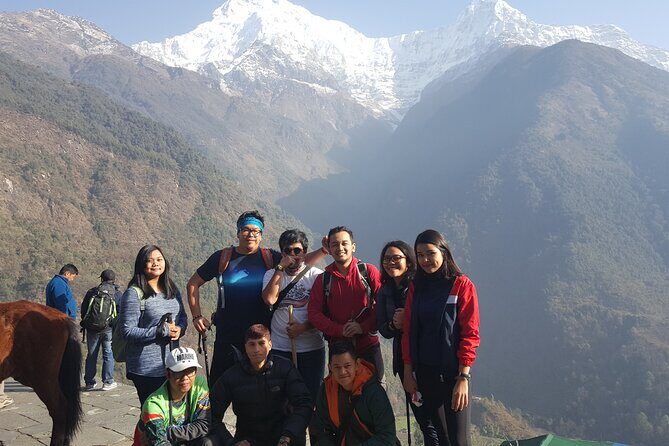
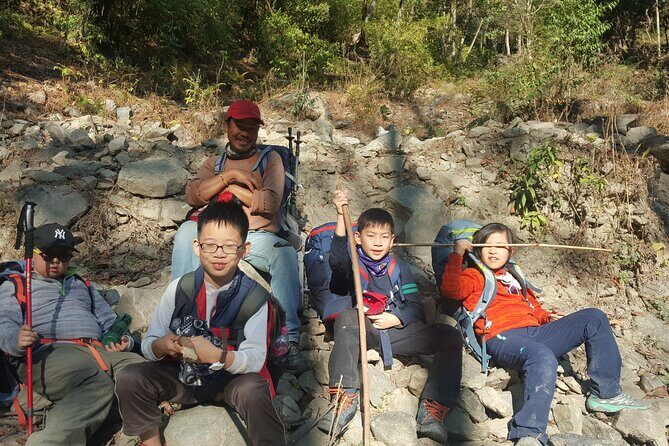
Day 6 takes you from Tadapani to Sinuwa. Day 7 goes from Sinuwa to Deurali. These days are about staying consistent and letting the mountains build gradually in your mind.
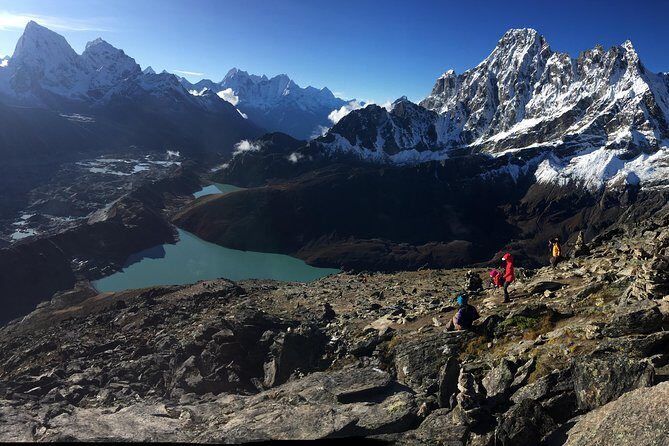
Why this stretch is valuable: it’s where your body starts to understand altitude pacing. You learn to walk with your breath, not against it. And you continue moving through the region’s mix of forest and open terrain as you climb toward higher elevations.
The route details also mention diverse landscapes and the chance to enjoy cultural encounters along the way. That’s usually what you notice in these middle days: the villages and the way people live change slowly, but enough that you feel like you’re traveling through a living region, not just passing through a trail corridor.
Sleep and food matter here too, because days 6 and 7 set you up for the major push to base camp.
You can also read our reviews of more hiking tours in Kathmandu
Annapurna Base Camp Day: Reaching the Big Turning Point
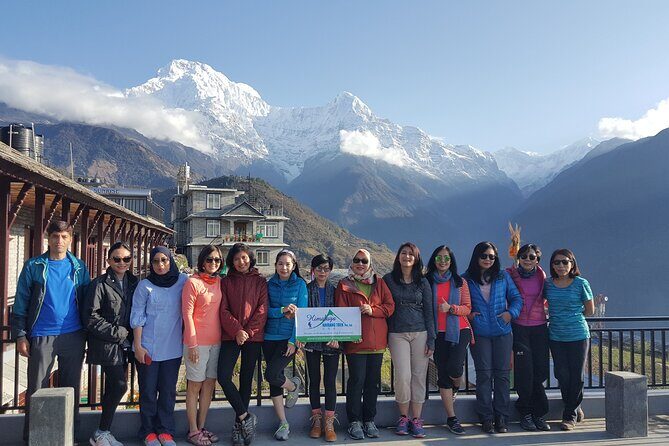
Day 8 is the big ascent from Deurali to Annapurna Base Camp. The itinerary keeps meals included—breakfast, lunch, and dinner—and your accommodation is a lodge/teahouse style stay in the base camp area.
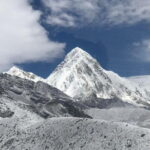
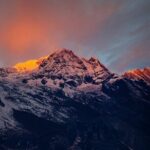
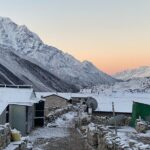
This is the day where the trek’s main promise lands: the surreal views. You’re looking for the sightlines tied to Annapurna ranges, Machhapuchhre, and nearby peaks like Hiunchuli. Even when weather isn’t perfect, the moment of arriving at base camp is often when the whole trek clicks.
Practical reality check: base camp doesn’t mean “flat and easy.” You’re still in high terrain, and the final leg usually requires focus. If your group is new to trekking, this is the moment where your guide’s pace control is worth its weight in yak wool.
What I find smart in this itinerary is the staging. You arrive at base camp, then you don’t immediately rush downhill the next morning. You get time to be there and soak in what you came for.
Day 9 to Day 11: Base Camp to Dovan to Chhomrong to Ghandruk
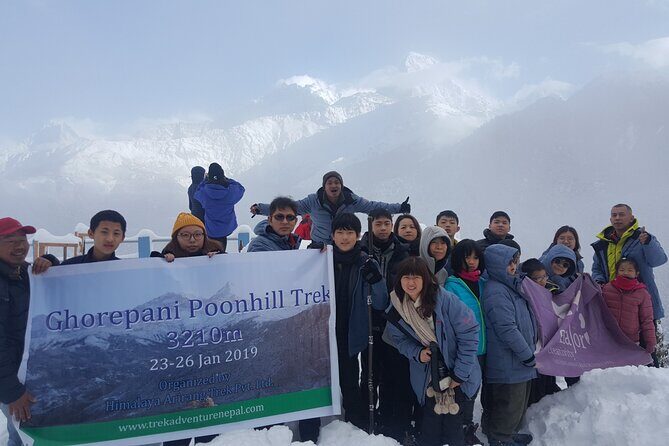
Day 9 is explore Annapurna Base Camp, then trek to Dovan. Day 10 takes you from Dovan to Chhomrong. Day 11 is Chhomrong to Ghandruk.
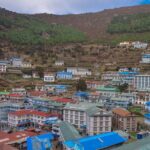
This section is where many people feel two things at once: satisfaction and effort. The route is moving you through some of the most memorable village areas in the Annapurna region. You’re also transitioning from the base camp atmosphere into a more human trail pattern—villages, lodges, and the steady work of descending and then re-climbing.
Why this sequence matters:
- You’re not just trekking up and then quitting. You experience the region on both sides of the peak.
- You get an extra day to actually be at base camp before leaving it, instead of treating it like a drive-through stop.
- Chhomrong and Ghandruk tend to be the kinds of places where you feel the village culture more clearly because you’re spending more time in populated areas.
The itinerary also keeps meals included on these days, which helps. When you’re tired, “included” becomes a real comfort: you’re not scrambling to figure out food logistics at the end of long days.
Ghandruk to Nayapul and Back to Pokhara: the Taste of Recovery
Day 12 is the descent to Nayapul, then drive back to Pokhara. Day 13 is the drive back to Kathmandu with breakfast included. These are your decompression days, and the plan makes them smoother by including hotels again.
This is where you’ll feel the difference between a trek that’s organized and one that’s improvised. Having your transport sorted means you can focus on recovery: warm shower, proper rest, and a meal that doesn’t require choosing from a limited teahouse menu.
Also, the itinerary keeps a clear end timeline. Day 14 is departure. That structure is underrated when you have limited time in Nepal.
Logistics That Make or Break ABC: Private, Meals, Permits, Porters
A lot of trekkers underestimate how much “small” support changes the experience. Here are the practical pieces that matter in this package:
Meals are fully covered
Breakfast, lunch, and dinner are included throughout the trekking days. In practice, that means you can pace your day without constantly thinking about where you’ll eat and what time. It also helps keep energy steady on longer walking legs.
Permits and fees are covered
You get the Annapurna Conservation Area Permit and the TIMS fee included. Those aren’t just paperwork. They’re part of staying within the rules that keep the trekking routes managed and safer.
Porters carry luggage
You’ll have porter support for carrying your luggage. That doesn’t remove the need for trekking stamina, but it usually makes a noticeable difference in comfort, especially on days when you’re already tired from altitude.
Private means your pace matters
This is a private tour/activity. Only your group participates. If your group has different comfort levels, a private setup usually makes it easier for your guide to adjust the day’s rhythm.
And from the feedback you provided, the guide team is a strong point. People highlighted Ramesh’s positivity and safety-focused support, plus GP’s impact as an amazing guide. One review even noted that guides listened to form and adapted routes accordingly—exactly the kind of flexibility you want on a mountain trail where conditions can change.
Price and Value: What You’re Getting for $925
At $925 per person, this trek is priced as a mid-range organized private ABC experience. What makes it feel like value is what’s already bundled:
- Hotel stays in Kathmandu and Pokhara
- Teahouse accommodation on trek
- Breakfast/lunch/dinner included
- Air-conditioned vehicle for the drive segments
- Permits (Annapurna Conservation Area Permit and TIMS)
- Porter support for luggage
- All fees and taxes
Could you do ABC for less by booking cheaper lodging and self-managing permits? Probably. But you’d be trading away convenience and coordination. This package reduces the number of decisions you have to make while moving through Nepal’s mountain logistics.
The one budget caution: tips are not included, and neither is travel insurance or visa costs. That doesn’t make the trip overpriced. It just means you should budget for those items so the final tally doesn’t surprise you.
Who This Trek Fits Best (and Who Might Want to Think Twice)
This works best for people who:
- Want a famous, high-reward trek without building the whole plan themselves
- Prefer private support and a guide team that communicates well
- Are comfortable with moderate fitness demands
- Like the idea of teahouse trekking with included meals instead of full DIY
It might be less ideal if you:
- Hate early mornings (Poon Hill sunrise can require a very early start)
- Are extremely altitude-sensitive and need total flexibility (weather can also affect view quality)
That said, the trek’s pacing and the presence of guide support are specifically the kind of things that help most people manage the effort.
Should You Book This 14-Day Private Annapurna Base Camp Trek?
If you want Annapurna Base Camp with a plan that feels guided rather than chaotic, I’d say yes, this is worth serious consideration. The biggest selling points are practical: included permits, included meals, porter luggage help, and a private setup with guides like Ramesh and GP who were praised for keeping groups feeling safe and cared for.
Book it if your priority is a classic ABC route with reliable support and memorable peak moments like Poon Hill. Hold off if you’re not ready for moderate trekking days, early sunrise timing, and the fact that mountain weather can change what you see.
FAQ
Where does the trek start?
The trip is based in Kathmandu, Nepal, with meeting at Himalaya Arirang Trek Pvt Ltd in Thamel Marg, Kathmandu. Pickup is offered.
How long is the Annapurna Base Camp trek?
The itinerary is for 14 days (approx.).
Is this a private tour?
Yes. It’s a private tour/activity, and only your group participates.
What kinds of accommodations are included?
You get hotel accommodation in Kathmandu and Pokhara. During the trek, you stay in guesthouses/lodges/teahouses depending on the day.
Are meals included?
Yes. Breakfast, lunch, and dinner are included.
What’s included for permits and fees?
The Annapurna Conservation Area Permit and the TIMS (Trekkers’ Information Management System) fee are included, along with all fees and taxes.
Is transportation included?
Yes, you’ll have an air-conditioned vehicle for the driving segments.
Do I need to pay for a visa or travel insurance?
Visa to Nepal and travel insurance are not included.
Are tips included?
No. Tips to the guide, porter, and driver are not included.
What if weather is bad?
This experience requires good weather. If it’s canceled due to poor weather, you’ll be offered a different date or a full refund. You can cancel up to 24 hours in advance for a full refund.
If you’d like, tell me your rough hiking experience level and whether you prefer sunrise viewpoints or relaxed mornings—I can suggest how to best pace the days on this route.