REVIEW · KATHMANDU
Kathmandu: Private/Group Unesco Heritage Sites Guided Tour
Book on GetYourGuide →Operated by Welcome Nepal Treks P.Ltd · Bookable on GetYourGuide
Four temples, one clear Kathmandu story. This guided day strings together religious sites you keep seeing in photos, but also explains the meaning behind them. I love the way the tour pairs UNESCO temples with real local context, and I love the chance to spin prayer wheels and see the city from a hilltop. One thing to plan for: entrance fees are extra, and you’ll do a fair amount of walking around stairs and temple steps.
You’re picked up from your hotel in Kathmandu, Bhaktapur, or Patan, then transported in an air-conditioned vehicle between stops. The guide works in English (and there’s an English audio guide too), so you’re not left guessing what you’re looking at. I also like that the day flows from viewpoints and pilgrimage sites into sacred Hindu space and finally into the calmer Boudhanath atmosphere.
If you get a guide such as Manoj KC, or a driver like Chotu with guide Nerry or Shawshank Kumar, you’ll likely see an extra-care approach: clear explanations, helpful food and shopping suggestions, and sometimes a bit more time built into the visit. The focus is on seeing the important places without turning the day into a photo-drive.
In This Review
- Key highlights worth planning around
- Price and logistics for a 6-hour UNESCO day
- How the itinerary works: a smart flow through Kathmandu’s sacred map
- Patan’s temple culture: where art and devotion meet
- Swayambhunath (Monkey Temple): hilltop pilgrimage views with meaning
- Pashupatinath and the Bagmati River: Hindu worship at world-famous scale
- Boudhanath Stupa: spinning prayer wheels and the four-eyed gaze
- What you’ll actually do (not just what you’ll see)
- Who this tour fits best
- A note on guides: where the experience tends to level up
- Before you go: small prep that saves time
- Should you book this Kathmandu UNESCO heritage tour?
- FAQ
- What sites are included on this Kathmandu UNESCO tour?
- How long is the tour?
- Where does pickup happen?
- Is the tour private?
- What language are the guides?
- What’s included in the price?
- Are entrance fees included?
- What should I bring?
- Is the tour suitable for people with mobility impairments?
Key highlights worth planning around
- Hotel pickup in Kathmandu Valley means less time hunting meeting points and more time at temples.
- Three UNESCO sites in one day keeps the schedule tight but still gives you real time at each stop.
- Swayambhunath hilltop views are a big part of the payoff, not just a quick look.
- Pashupatinath + Bagmati River spiritual setting adds depth to the Hindu story you’ll hear from your guide.
- Boudhanath prayer wheels and the four-eyed stupa are visually memorable and easy to appreciate at any pace.
Price and logistics for a 6-hour UNESCO day
This tour is priced at $29 per person, which is a solid deal for a guided circuit covering multiple UNESCO World Heritage temples plus hotel pickup/drop-off and an air-conditioned vehicle. The trade-off is that sightseeing entrance fees are not included and are listed at $25 USD per person. Food and drinks aren’t included either.
So, when you estimate the true cost, think: tour price plus entrance tickets, then add lunch on your own. It still tends to be good value because you’re paying once for transport + guide time across several major sites, instead of piecing together separate tickets and guides.
The day runs about 6 hours (start times depend on availability). You can choose a private group option if you want a quieter pace or a more flexible feel. Your guide is English-speaking, and an English audio guide is included as a backup when you want to read the story at your own speed.
You can also read our reviews of more guided tours in Kathmandu
How the itinerary works: a smart flow through Kathmandu’s sacred map
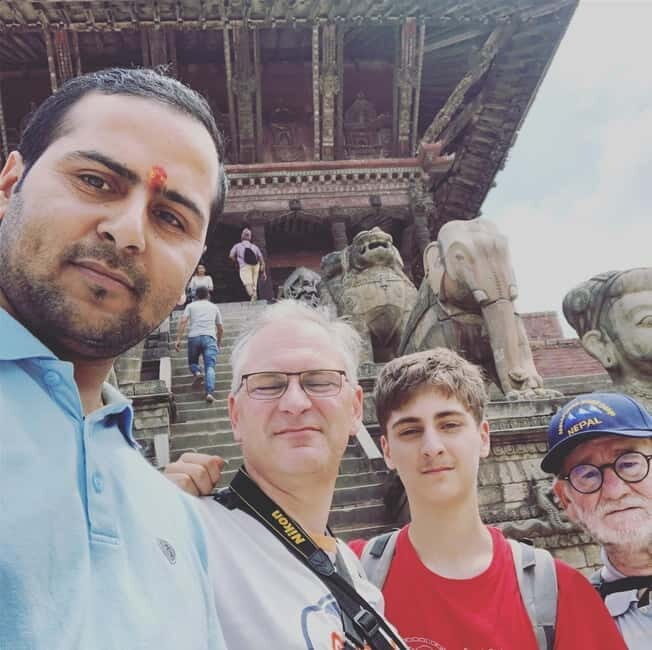
The tour is designed as a clear “spiritual geography” route. You start with Swayambhunath, a pilgrimage hill that gives you a dramatic overview of Kathmandu Valley. Then you head to Patan (Lalitpur), where the focus shifts to historic art and temple culture. After that, you move into one of the most important Hindu pilgrimage zones at Pashupatinath, tied directly to the Bagmati River. The day ends at Boudhanath, where the stupa’s calm rhythm and huge scale give you a different kind of experience than the busier riverfront and temple complexes.
That sequence matters. If you do these sites out of order on your own, it’s easy to feel lost. With a guide, the day becomes easier to follow: you’ll learn what each place represents, why it looks the way it does, and what locals do there beyond taking photos.
Also, you’re not just racing between gates. The schedule includes guided time plus room for photos and some breathing space.
Patan’s temple culture: where art and devotion meet
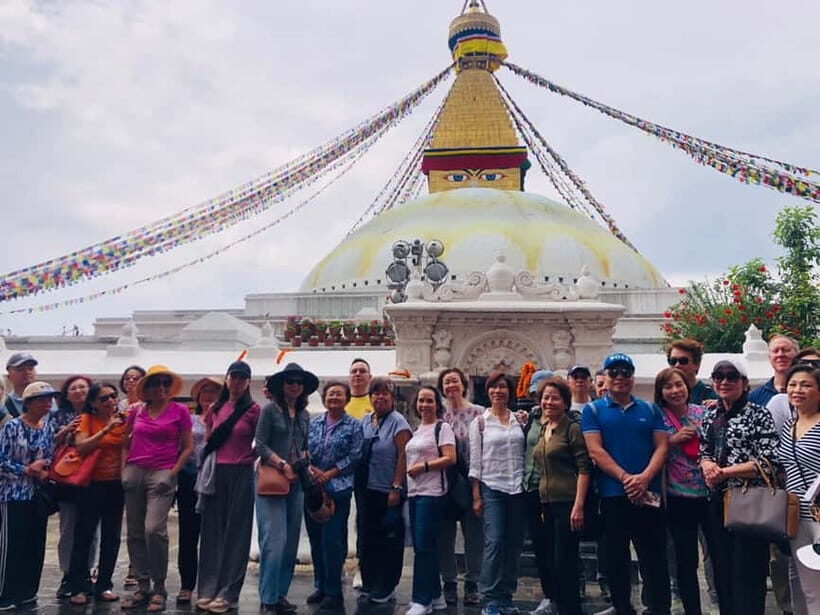
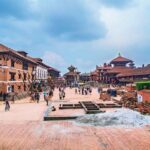
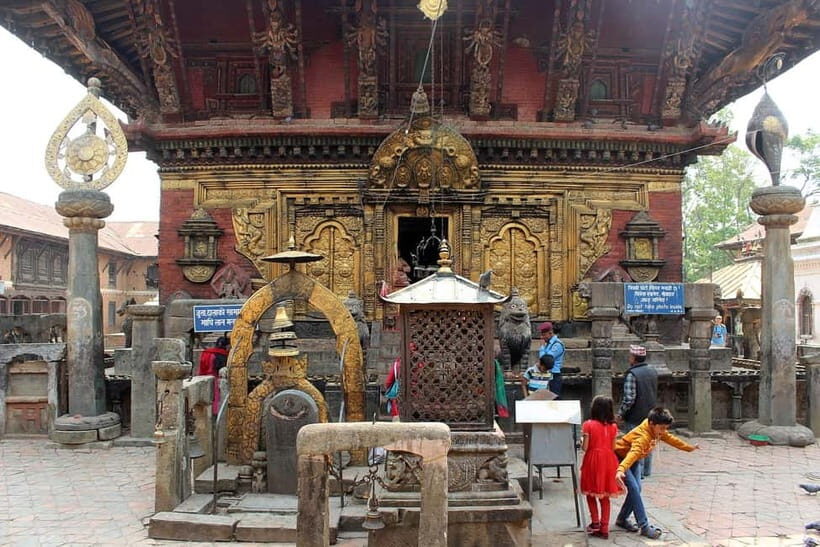
Your day includes a Patan stop with photo time, guided touring, and free time to wander at your own pace. Patan is known for its cultural and artistic heritage, and this is the point in the day where you’ll feel the temples shift from “must-see” landmarks into lived-in religious spaces with their own details.
What I like about building in a Patan block is that it slows you down just enough. You can step back from the biggest-name sites and notice how the valley’s Hindu and Buddhist architecture influences the feel of the streets, courtyards, and carved stone.
You’ll also have time for lunch of local cuisine here. Since food isn’t included, this is where your guide’s instincts matter. Based on what I’ve heard from guides on this route, you can often get solid suggestions for where to eat nearby and what to buy if you want a souvenir without wasting time.
Practical note: wear comfortable shoes. Patan’s best “wow” moments come when you’re walking and looking closely, not when you’re standing still.
Swayambhunath (Monkey Temple): hilltop pilgrimage views with meaning
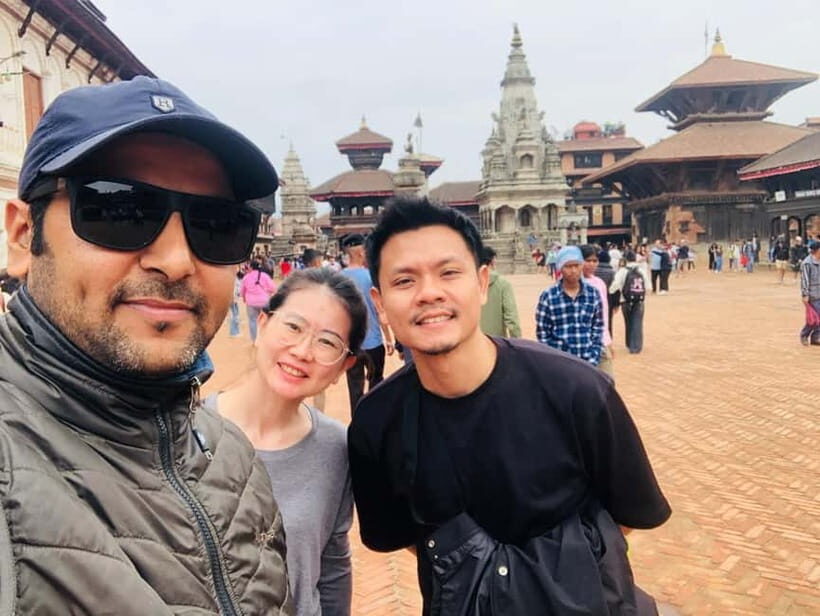
Swayambhunath is the tour’s big viewpoint moment. You’ll spend around 1.5 hours exploring with guided time and time for photos, and you’ll get an overview of Kathmandu that you just can’t replicate from street level.
Swayambhunath is described as the oldest temple in Nepal, and that age matters here. It’s not only a scenic spot; it’s also an important pilgrimage site. Your guide can help you connect what you see on the ground with the bigger religious story, which turns it from a viewpoint into a place with layers.
The best advice for Swayambhunath is simple: plan to take your time at the top. Yes, it’s a temple. But it also gives you that rare travel feeling of seeing a city from above and then realizing the city below has grown around these sacred nodes for centuries.
Timing tip: if the hill feels crowded, don’t fight for the exact best photo angle. Walk a little, look from slightly different angles, and you’ll usually find a better rhythm without getting stuck in the densest clusters.
Pashupatinath and the Bagmati River: Hindu worship at world-famous scale
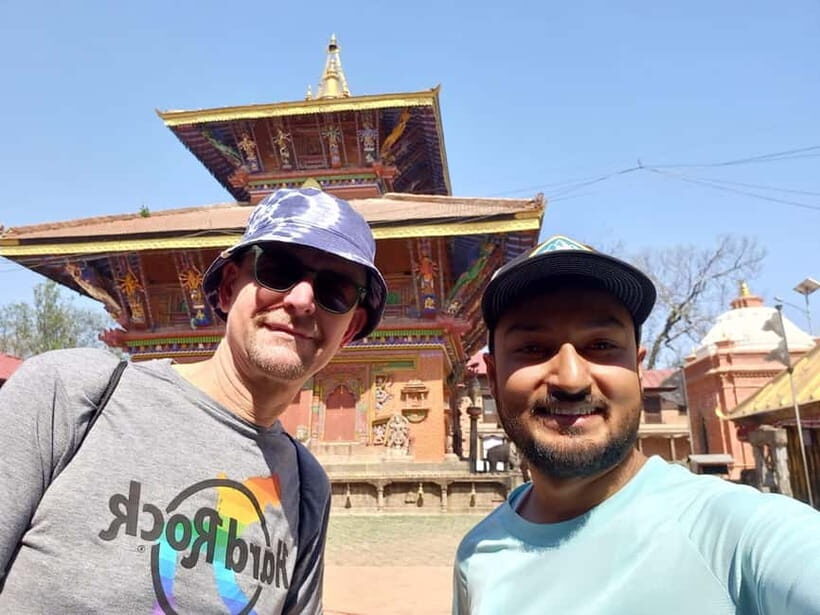
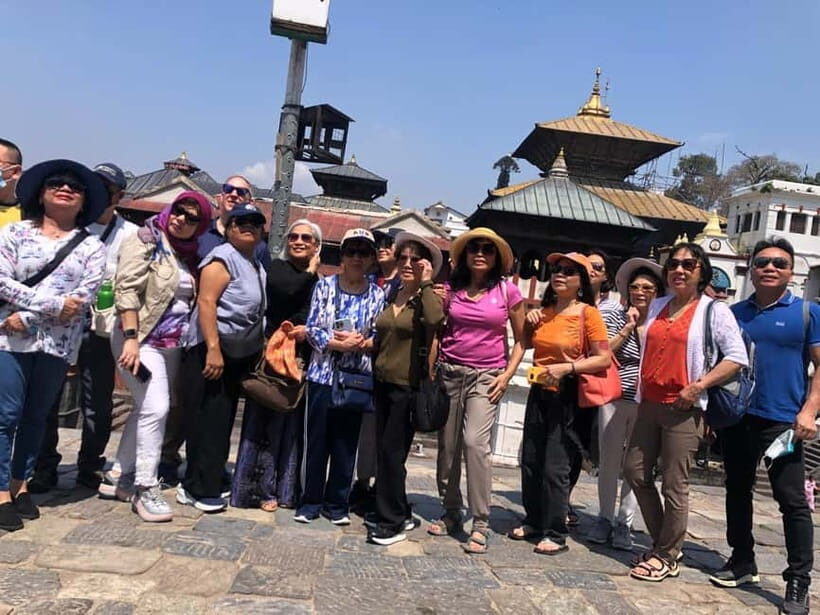
The tour then heads to Pashupatinath Temple, one of the most famous and sacred Hindu shrines in the world. Expect a guided visit that explains Lord Shiva’s importance to Hinduism, plus time for photos and sightseeing.
This stop has a different tone than the hilltop. It’s more solemn, more ritual-focused, and it’s closely tied to the Bagmati River. The experience is described as a spiritual swim in the river area, believed to help wash away sins. Whether you treat that part literally or just observe it respectfully, it’s a powerful cultural detail because it shows how religion and everyday sacred practice can share the same space.
A fair caution: this is a place with real worship happening, so keep your behavior low-key. Follow your guide’s cues, especially around where you can stand, where you should avoid blocking pathways, and what to do with cameras.
Also, this is usually a good moment to mentally reset before the final stupa visit. Pashupatinath can be intense in a way that’s hard to describe until you’re there. If you go in expecting a calm, postcard temple, you might miss the value. If you go in ready to observe and learn, you’ll walk away with a much clearer understanding of why this site draws people from far away.
You can also read our reviews of more private tours in Kathmandu


Boudhanath Stupa: spinning prayer wheels and the four-eyed gaze
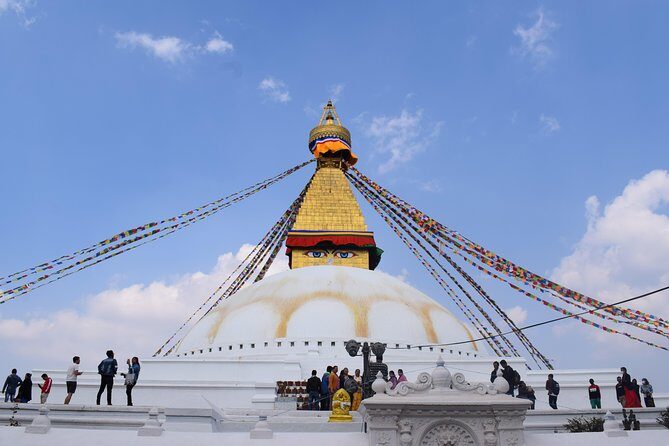
After the riverfront energy, the day ends at Boudhanath stupa, known for its massive presence and its very distinctive “eyes” design. You’ll get guided time and free time here, plus a break and a chance to shop nearby.
The stupa’s four pairs of eyes facing four directions are a big part of why Boudhanath is so memorable. The design is thought to be eternally watching over people and their actions, which gives the place a quiet, focused feeling even when it’s busy.
The highlight many people remember is spinning the prayer wheels. That’s more than a gimmick. When you try it (and your guide tells you the basic idea of what the spinning represents), it becomes a physical way to participate in the atmosphere.
Photography tip: Boudhanath is one of those places where your best shots often come from watching hands, flags, and the stupa’s scale from slightly different angles. Don’t just aim for a front-on “complete view.” Move around slowly and you’ll start seeing better details.
This final stop also gives you the chance to buy small items you’ll actually use later—snack-sized souvenirs, incense, or simple prayer-related keepsakes—without feeling like you’re rushing through a market.
What you’ll actually do (not just what you’ll see)
This tour mixes several types of time:
- Photo stops so you don’t arrive, look once, and move on.
- Guided touring so you understand what the place is and what to notice.
- Free time so you can set your own pace.
- Walking time between viewpoints, courtyards, and temple areas.
In other words, it’s not a “sit on a bus” itinerary. It’s a day where your feet get used, but you’re not stuck doing long hikes. Still, it’s important to be comfortable with stairs and uneven temple surfaces. The activity data also notes it isn’t suitable for people with mobility impairments, so if that applies to you, it’s worth looking for a gentler alternative.
Who this tour fits best
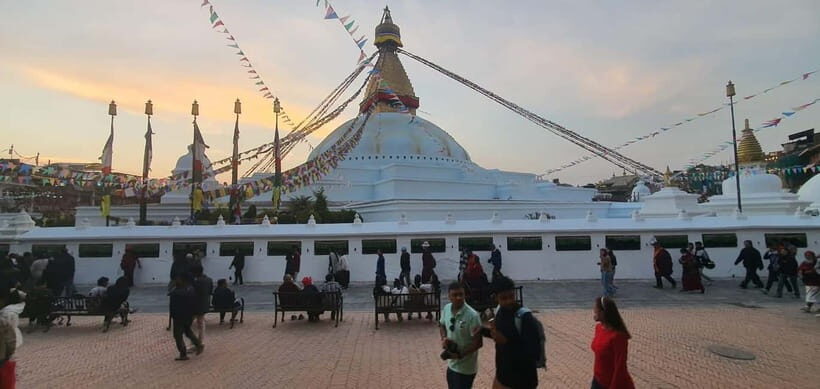
This is a strong choice if you want to hit the headline Kathmandu UNESCO sites in one organized day and still get explanations you can remember later. It’s also a good match if you appreciate religious culture and want context—especially at Swayambhunath and Pashupatinath, where the symbolism is a big part of the experience.
It’s also ideal for people who like structure. You’ll know where you’re going next, when you’ll have breaks, and how each stop connects to the bigger story of Kathmandu Valley.
If you prefer total independence and don’t care about guided context, you might feel constrained by the schedule. But if you want the “meaning behind the monuments,” the guide factor is the value driver.
A note on guides: where the experience tends to level up
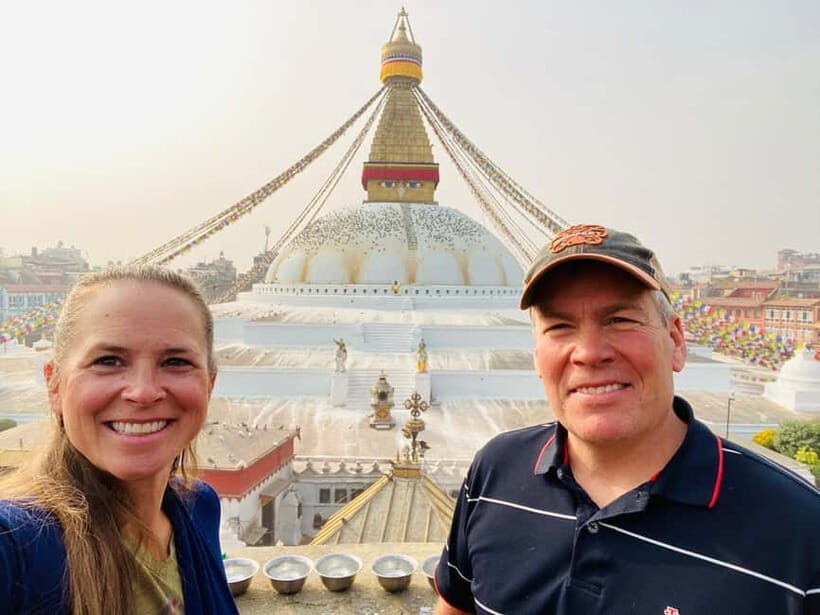
The guide is the difference between seeing sites and understanding them. On this route, guides like Manoj KC, plus others such as Nerry or Shawshank Kumar, have a reputation for strong site explanations and for being attentive to the group.
One especially useful thing to hope for: flexibility. Some guides on this kind of tour are willing to add a little extra time at places when the group pace allows, rather than cutting you off at the first hint of enthusiasm. That matters at temples where you’ll only notice the details after your eyes adjust.
Guides also tend to offer practical ideas for the day: where to eat locally during lunch time and where to shop near Boudhanath so you don’t waste energy guessing.
Before you go: small prep that saves time
The essentials are simple. Bring:
- Passport or ID card
- Cash
You’ll need cash because entrance fees are separate, and you’ll likely want spending money for food and small purchases. If you’re sensitive to sun or dust, plan accordingly for outdoor temple areas and walking time, since this is a “step outside” kind of day.
Also, wear shoes you trust. Kathmandu’s religious sites are beautiful, but the ground can be uneven and the stairs are real. Comfortable footwear turns the day from tiring into just manageable.
Should you book this Kathmandu UNESCO heritage tour?
Book it if you want a guided, efficient way to see Swayambhunath, Patan, Pashupatinath, and Boudhanath in one day with enough context to make the experience stick. The combination of a viewpoint start, a temple-art stop, a Hindu pilgrimage highlight, and a calm stupa finale is a smart arc.
Skip it (or at least think hard) if entrance fees and personal food costs would be a stretch, or if walking and stairs aren’t workable for you. Also, if you already know you’ll only want quick photos and don’t care about guided explanations, you might be happier with a more self-directed plan.
If you do book, lean into the guide. Ask quick questions as you go. That’s where this tour tends to pay off the most.
FAQ
What sites are included on this Kathmandu UNESCO tour?
You visit three UNESCO World Heritage temples: Swayambhunath, Pashupatinath Temple, and Boudhanath stupa. The tour also includes time in Patan (Lalitpur).
How long is the tour?
The duration is about 6 hours (one day). Starting times depend on availability.
Where does pickup happen?
Pickup options include Lalitpur, Bhaktapur, and Kathmandu. You’re also dropped off back to Kathmandu, Bhaktapur, or Lalitpur.
Is the tour private?
A private group option is available, and you can also take part as part of a group depending on availability.
What language are the guides?
The live tour guide is English, and an English audio guide is also included.
What’s included in the price?
Included are hotel pickup and drop-off, a professional city tour guide, an air-conditioned vehicle, and all toll, tax, VAT, and service charges.
Are entrance fees included?
No. Sightseeing entrance fees are not included and are listed at $25 USD per person.
What should I bring?
Bring your passport or ID card and cash.
Is the tour suitable for people with mobility impairments?
The activity data states it is not suitable for people with mobility impairments.