REVIEW · KATHMANDU
Full Day Guided Tour in Kathmandu
Book on Viator →Operated by Himalayan Scenery Treks and Expedition - Private Day Tours · Bookable on Viator
Kathmandu’s faith trail is shorter than you think. This full-day guided tour links major spiritual sites—starting at Patan Durbar Square and moving to Pashupatinath—then continuing on to Boudhanath and the Monkey Temple for a day that feels like Kathmandu Valley in fast-forward. You ride in a private car/jeep/van, you’re guided by a government-licensed specialist, and you’re set up to see rituals, not just buildings.
I like that the tour includes pickup and drop-off plus purified drinking water, so you spend your energy on what’s in front of you. I also like the small group limit (up to 15), which helps the day stay human-sized instead of rushed and chaotic.
One consideration: entry fees aren’t included (listed as about $20 per person for the sightseeing attractions), and you’ll be walking around active religious sites, including stairs at Swayambhunath.
In This Review
- Key takeaways
- Why this Kathmandu Valley loop is a smart way to use one day
- Patan Durbar Square: carvings, courtyards, and the feeling of living history
- Pashupatinath Temple: riverfront Hindu tradition and how to watch it right
- Boudhanath Stupa: the prayer-wheel circuit and a chance to meet monks
- Swayambhunath (Monkey Temple): hilltop views, stairs, and a guide-led back route
- Price, what you actually pay, and why the value can be real
- Pickup at 9:15, pacing, and how festivals change the day
- What this tour is best for (and who should be cautious)
- Should you book this Kathmandu full-day guided loop?
- FAQ
- How long is the Full Day Guided Tour in Kathmandu?
- What time does the tour start?
- Does the tour include hotel pickup and drop-off?
- Are entry fees to the sightseeing attractions included?
- What’s included in the tour price besides the guide?
- Is the tour dependent on weather?
Key takeaways
- Pickup to drop-off: You start at 9:15 am with hotel pickup and end back at your place.
- A tight 4–6 hour focus: Four major stops, each given time to actually look and ask questions.
- Licensed guidance for ceremonies and etiquette: Your guide is government-licensed and is built into the experience.
- Boudhanath is more than a photo stop: Expect the prayer-wheel circuit and a chance to meet monks.
- Swayambhunath is the playful finale: Monkeys, hilltop views, and a guide-led route that aims to show you more.
Why this Kathmandu Valley loop is a smart way to use one day
This tour is designed for people who want big landmarks without losing the day to transit. The total duration is listed as about 4 to 6 hours, which is a sweet spot in Kathmandu: long enough to feel like you saw something real, short enough that you can still eat well afterward and keep your energy.
I also like the “guided, not just guided” vibe. You’re not simply pointed at a list of sights. The descriptions emphasize seeing ceremonies and understanding what you’re looking at, especially around the major Hindu and Buddhist sites. That matters because Kathmandu’s spiritual places can feel confusing if you don’t know what to look for or how to behave.
Logistically, the tour uses a car, jeep, or van depending on group size. That means less time wrestling with local transport and more time spending your minutes where you’ll actually remember them.
You can also read our reviews of more guided tours in Kathmandu
Patan Durbar Square: carvings, courtyards, and the feeling of living history
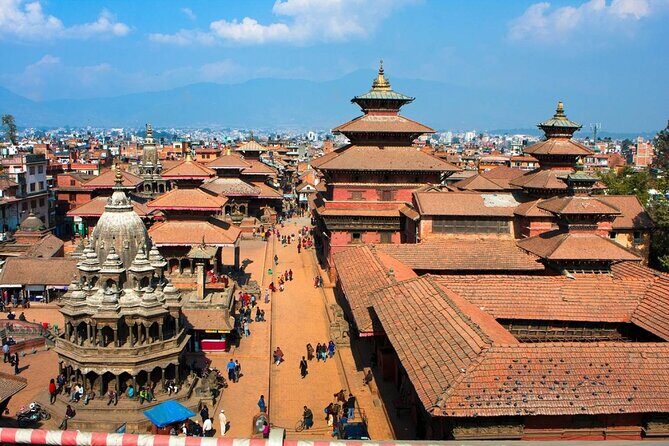
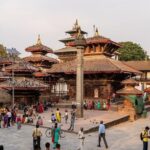
You start at Patan Durbar Square, set up like an open-air museum of palace-temples and stonework. The vibe here is different from a single “monument.” It’s a whole complex of courtyards, corners, and detailed carvings—exactly the kind of place where a guide helps you notice things you’d otherwise miss.
The visit is listed at about 2 hours, which is useful. You need time here because the details aren’t the kind you catch in one quick glance. Think layered stone craftsmanship, old structures, and the sense that this place has long been part of daily life rather than sealed-off museum territory.
The tour plan also hints at special ceremonies at Patan. Even if you don’t catch a full ritual, you’ll likely see the atmosphere of active religious and cultural practice. That’s a big reason I like this first stop: it sets the tone for the rest of the day so later temples don’t feel disconnected.
Practical note: admission tickets aren’t included for sightseeing attractions, and you should expect that at Patan. Budget for that when you’re calculating total cost.
Pashupatinath Temple: riverfront Hindu tradition and how to watch it right
Next you head to Pashupatinath, described as a major Hindu temple by a river. This stop is listed for about 1 hour, which is enough time to understand the flow of the place and take in what’s happening around you without feeling trapped at a single spot.
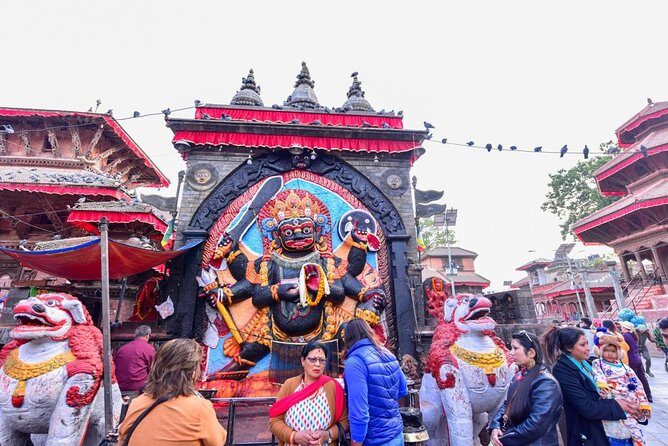
The key here is respectful attention. The tour description explicitly calls out tradition and the presence of flames dancing, which usually means you’re seeing (or at least being near) fire-based ceremonial moments. That can be powerful, but it also means you’ll want to be calm, follow your guide’s direction, and keep a little space.
Why I think this stop works in a short tour: it’s not only architecture. It’s rhythm. You get the sense of how devotion looks in real time—people praying, making offerings, and moving with purpose. A good guide helps you interpret what you’re seeing instead of turning it into a background spectacle.
Boudhanath Stupa: the prayer-wheel circuit and a chance to meet monks
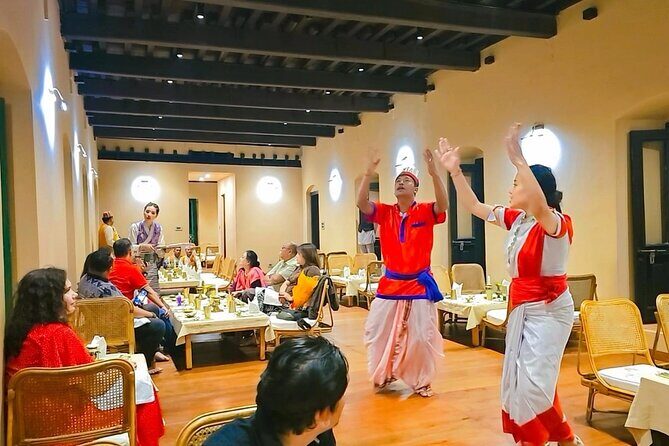
Then the day shifts to Buddhism at Boudhanath, a large white stupa that you walk around. The description leans into the experience here: chanting atmosphere, prayer wheels, and the chance to climb stairs to a viewpoint within the stupa area.
This stop is listed at about 1 hour. That’s a good length for Boudhanath because you can do the walking circuit at a comfortable pace and still have time to look upward and around. If you rush, you miss what makes stupa visits meaningful: the motion, the repetition, and the way people treat the space with routine respect.
A highlight in the description is that your guide may take you to meet monks and learn their secrets. I’d interpret that practically as learning-focused time—someone answering questions and explaining what you’re observing—rather than a guaranteed one-on-one meeting. Still, the intent matters. It’s trying to turn your visit into understanding, not just sightseeing.
Also remember: entry fees are not included for sightseeing attractions, so you’ll want to confirm what portion of your day’s total cost comes from Boudhanath.
Swayambhunath (Monkey Temple): hilltop views, stairs, and a guide-led back route
The final stop is Swayambhunath, commonly known as the Monkey Temple, and it’s built for a dramatic ending. It sits up on a hill, with panoramic views over Kathmandu, and the description also mentions cheeky monkeys near the stairs.
This visit is listed at about 1 hour. That’s enough time to climb, take in the views, and enjoy the chaos on the ground without exhausting yourself. Just keep expectations realistic: Swayambhu is a popular place, and stairs mean you should wear shoes that can handle uneven stone.
One small but meaningful detail in the description: the guide knows a secret back way to see hidden things and hear amazing stories. That’s exactly what makes a guided tour worth considering. Even if the route differences aren’t dramatic on a map, they can change how quickly you find good sightlines and quieter corners for photos and storytelling.
If you’re the type who likes an ending that feels playful and alive—monkeys included—this stop usually lands well.
A few more Kathmandu tours and experiences worth a look


Price, what you actually pay, and why the value can be real
The tour is listed at $5.00 per person, which is strikingly low for a full-day guided program. Here’s the honest way I’d think about it: the entry fees and your own spending can easily add up, but you’re not paying extra for transportation, the guide, or the built-in water.
What’s included:
- Car, jeep, or van transportation based on group size
- Government licensed tour guide
- Purified drinking water
- Pickup and drop-off from and to your hotel
- Government taxes and office service charges
What’s not included:
- Entry fee of sightseeing attractions, listed as $20 per person
- Food and drinks
- Tips and gratuities for the guide and driver (personal expenses)
So your realistic budget often looks like: low base price + attraction entry fees + a meal (and a few small extras). If you’re already planning to pay for admissions anyway, the included guide and transportation can make the day feel like a bargain. If you’re hoping to spend almost nothing beyond the base price, then the added admissions will change the math.
Also, the tour notes mention group discounts and a mobile ticket. Those aren’t guarantees of savings for every case, but they do suggest the operator is set up for smooth check-in and group handling.
Pickup at 9:15, pacing, and how festivals change the day
The start time is listed as 9:15 am, with hotel pickup. That timing matters because a lot of Kathmandu’s biggest sites get crowded as the day goes on. Earlier starts give you better breathing room, especially for the places where people gather for ceremonies.
The tour also includes a maximum of 15 travelers, which I like for pacing. With a smaller group, your guide can slow down for questions and avoid the awkward feeling of being herded from sight to sight. One note from prior experiences that fits this setup: a guide named Jaya has been described as keeping a nice pace and even accommodating a slightly later start request. That’s the kind of flexibility that helps when your morning is messy.
One more practical point: major religious festivals can make the day feel more intense and crowded. When it lines up with your visit, your guide’s job becomes even more important—helping you keep your footing, understand what you’re seeing, and not get lost in the crowd noise.
What this tour is best for (and who should be cautious)

This tour fits well if you’re:
- In Kathmandu for a short time and want a clear “best of” circuit
- Interested in Hindu and Buddhist practices (not just monuments)
- Happy with walking around active religious sites and moving between them as a group
It might be a less ideal match if you:
- Hate stairs or have limited mobility, since Swayambhunath involves climbing stairs
- Expect a day with no extra costs beyond the base price, since admission fees are extra
The good news is the tour states that most travelers can participate, and the visits are short enough that you’re not stuck all day in one location.
Should you book this Kathmandu full-day guided loop?
I’d book it if you want a practical way to cover four of Kathmandu Valley’s anchor sights in one guided morning-to-afternoon block. The included guide + transportation + purified water + hotel pickup is a strong bundle, especially given the low base price.
I wouldn’t book it blindly if you’re trying to avoid admissions, or if stairs are a deal-breaker for you. In that case, look at what you’d have to spend at entry points and whether you’re comfortable with the physical side of Swayambhu.
If you do book, bring comfortable shoes and plan to pay the attraction fees. Then let your guide steer the day—this tour is at its best when you’re learning what you’re seeing while the city is doing what it does best.
FAQ
How long is the Full Day Guided Tour in Kathmandu?
The tour is listed as about 4 to 6 hours.
What time does the tour start?
The start time is 9:15 am.
Does the tour include hotel pickup and drop-off?
Yes. Pickup and drop-off from and to your hotel are included.
Are entry fees to the sightseeing attractions included?
No. The entry fee is not included, and it’s listed as $20 per person for sightseeing attractions.
What’s included in the tour price besides the guide?
The tour includes transportation (car/jeep/van based on group size), a government licensed tour guide, purified drinking water, and government taxes and office service charges.
Is the tour dependent on weather?
Yes. It requires good weather. If it’s canceled due to poor weather, you’ll be offered a different date or a full refund.