REVIEW · KATHMANDU
Kathmandu Guided Tour
Book on Viator →Operated by Escape Himalaya Trek and Expedition · Bookable on Viator
Four temples, one focused day. This guided route is interesting because it ties together Hindu and Buddhist sacred spaces, with World Heritage stops that feel very different from each other in just a few hours. You get a clear story through the day, from royal courtyards and a living goddess, to big stupa rituals and Shiva worship.
I especially love how Kumari Bahal at Kathmandu Durbar Square gives you a close look at Nepal’s living-goddess tradition, including the usual visitor queue. I also like the steady rhythm at Boudhanath Stupa, where the main activity is simple: walk the circuit and chant while monks go about their day.
One drawback to plan for: this is a compact schedule, so you’ll move through busy temple areas and courtyards with limited time to linger.
In This Review
- Key highlights to keep on your radar
- How this Kathmandu guided tour strings Hindu and Buddhist sites together
- Kathmandu Durbar Square and the living goddess at Kumari Bahal
- Swayambhunath Monkey Temple: stupa symbolism plus city views
- Boudhanath Stupa: how the clockwise circuit works
- Pashupatinath Temple on the Bagmati River: Shiva’s big complex
- Timing, pacing, and what 4 to 6 hours really feels like
- Price and value: why $120 makes sense for four major sites
- Comfort and logistics: pickup, mobile ticket, and what to plan yourself
- Who this tour suits best
- Should you book the Kathmandu Guided Tour?
- FAQ
- How long is the Kathmandu Guided Tour?
- What does the $120 per person price include?
- Is hotel pickup and drop-off included?
- Which sites are visited during the tour?
- What are the tour hours?
- What happens if weather is poor?
Key highlights to keep on your radar
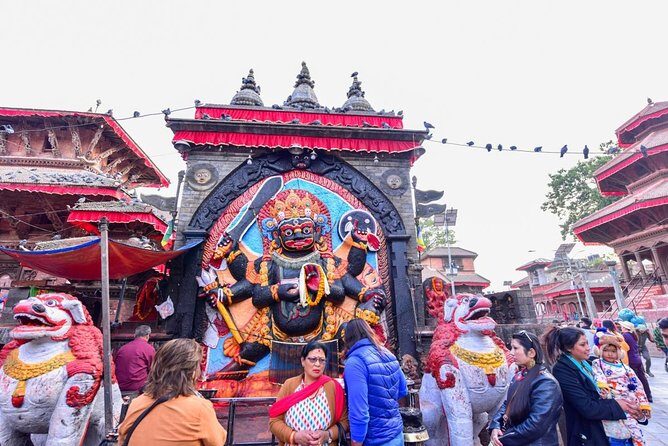
- Four major World Heritage sites in one outing: Kathmandu Durbar Square, Swayambhunath, Boudhanath, and Pashupatinath
- Kumari Bahal at Durbar Square with a chance to observe the living goddess viewing setup and visitor line
- Swayambhunath’s panoramic viewpoint over Kathmandu Valley, plus the stupa’s eye symbolism
- Boudhanath’s stupa-circle ritual with the clockwise walk and the chant Om Mani Padme Hum
- Pashupatinath’s riverbank setting on the Bagmati River and the scale of the temple complex
- Private, hotel pickup and drop-off plus an air-conditioned vehicle for an easier day
How this Kathmandu guided tour strings Hindu and Buddhist sites together
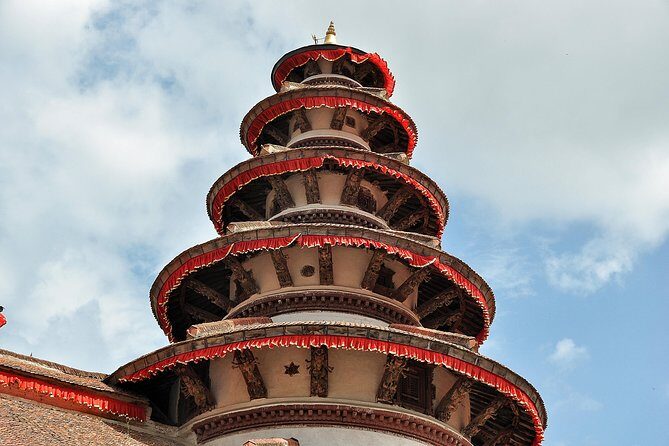
Kathmandu can feel like a maze of temples, squares, and side streets. This tour helps you make sense of it by moving through four landmark sites that each show a different side of Nepal’s spiritual world. In a few hours, you’ll go from royal-era architecture to Buddhist stupa symbolism to one of the biggest Shiva centers in the country.
What I like about the structure is that it isn’t random sightseeing. Each stop adds a new lens: Durbar Square gives you Hindu temple power and a royal palace legacy. Then Swayambhunath shifts to Buddhist stupa design and city views. After that, Boudhanath brings you into a wide, devotional atmosphere where people gather to circle and chant. Finally, Pashupatinath lands on the Hindu side again, with a sprawling Shiva complex along the Bagmati River.
Also worth noting: it’s a private tour. That means it’s just your group, not a mixed crowd shuffle. Your guide can keep the pace realistic and explain what you’re seeing as you go.
You can also read our reviews of more guided tours in Kathmandu
Kathmandu Durbar Square and the living goddess at Kumari Bahal
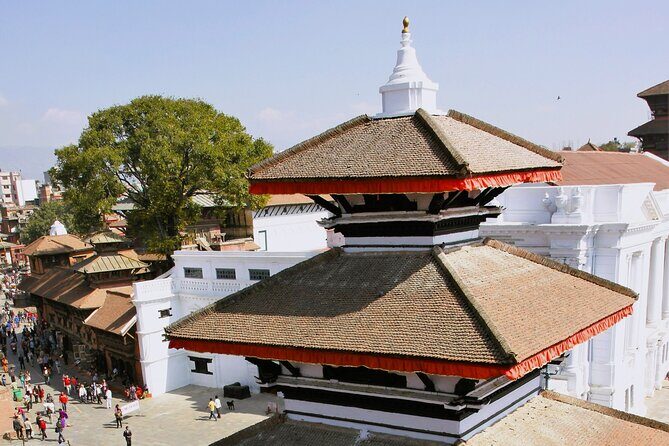
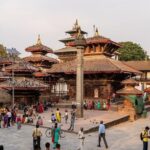
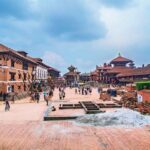
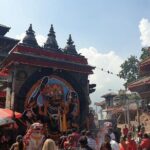
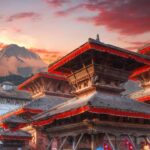
Kathmandu Durbar Square is the kind of place where you immediately understand why it’s protected. It was built in the 16th century and connected to royal palaces of the Malla and Shan dynasties, so you’re looking at sacred architecture that grew out of political power.
Your stop here centers on temple clusters and key courtyards. You’ll visit several named shrines and sacred buildings, including Kal Bhairav Temple, Taleju Temple, Swet Bhirav Temple, Akash Bhirav Temple, and the Shiv-Parvati Temple. That list matters because it shows how many gods and forms are layered into the space, not just one single monument.
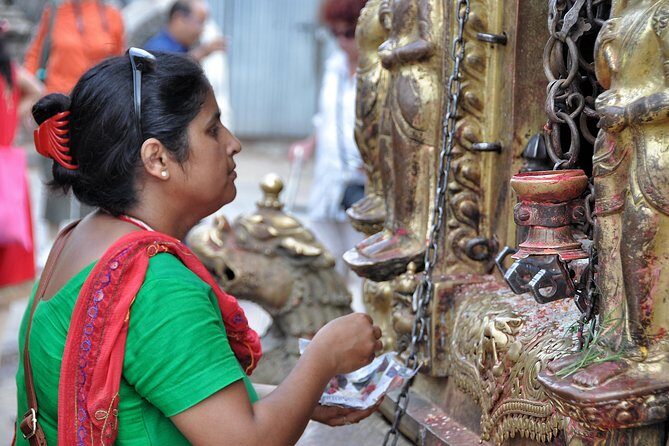
The headline moment is Kumari Bahal, described as the temple of Nepal’s living goddess. Even if you’re not sure what to expect, you’ll likely see the visitor queue setup designed for a short glimpse. It’s one of those experiences where the mood is different from typical tourism. People aren’t wandering in a carefree way. They’re waiting, watching, and respecting the tradition.
Practical consideration: Durbar Square can be very busy, and the sacred parts of the complex tend to draw attention. Since this is about an hour at the stop, I’d treat it as a “see and understand” window, not a “take your time forever” window.
Swayambhunath Monkey Temple: stupa symbolism plus city views
Next comes Swayambhunath Temple, also known as Monkey Temple. It sits northwest of Kathmandu Valley and acts like a natural lookout point over the city. Even without chasing big photo angles, you’ll feel that shift as the view opens up and you’re no longer trapped in street-level crowds.
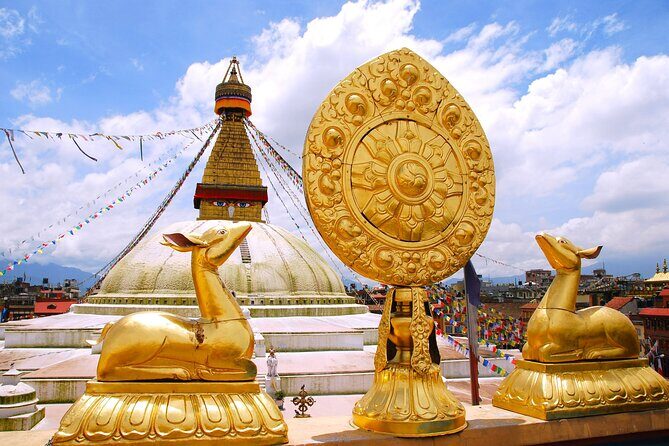
The name Swayambhu is explained as self-existent, and the stupa design includes eyes on all sides. Those eyes are meant to represent faith and peace, so it’s not just decorative. The architecture is also described as having multiple shrines and monasteries, which helps you see Swayambhunath as a complex devotional zone rather than a single viewpoint.
A few details here connect Buddhism to a wider visual language:
- gold-plated Vajra is mentioned on one side
- a Buddhist statue is described on another
- there’s a temple of goddess Harati, believed to have been converted by Lord Buddha into a caretaker of children
- you can also see the Dewa Dharma Monastery area with Buddha statues and Tibetan paintings
This blend is a big part of why the stop is worth it. You get Buddhist ideas shown through art, architecture, and story, and you can spot those themes as you walk around.
Practical consideration: the best parts of this stop are visual and symbolic, but that usually means you’ll want a bit of time to look up. With roughly an hour here, plan to take in the stupa and major landmarks rather than trying to cover every small shrine.
Boudhanath Stupa: how the clockwise circuit works
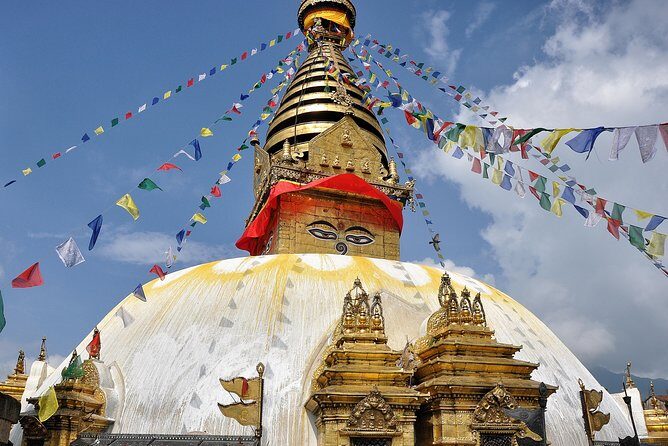
If Durbar Square is about royal-era temples, Boudhanath Stupa is about devotion at scale. It’s described as the largest and holiest stupa in South East Asia, and it’s essentially a giant mandala built with symbols of enlightenment. That framing matters: this is a place built to communicate spiritual ideas through design.
Boudhanath’s architecture includes engraved elements tied to earth, water, space, fire, and air. As you enter through the gates, you’ll see the stupa ringed by a 16-sided wall. Around the stupa, monks praying are part of the daily scene, which makes the atmosphere feel active even when you’re not doing much yourself.
The main activity is beautifully simple: walk the stupa clockwise and chant Om Mani Padme Hum. You don’t need a scholar’s background to join in. It’s more like joining a steady flow. Watch how people set their pace, how they hold the rhythm, and how the chant becomes a background sound rather than a performance.
Also, the area around Boudhanath includes monasteries like Shechen Monastery and lots of practical comforts. The description mentions broad areas with cafes and restaurants, which is helpful if you want a short pause and a view directly toward the stupa.
Practical consideration: because this is a central devotional hub, you may feel a stronger sense of crowd flow than at a quieter stop. With about an hour allotted, it’s smart to commit to one clear experience: the clockwise circuit and a few minutes of just watching how people pray.
Pashupatinath Temple on the Bagmati River: Shiva’s big complex
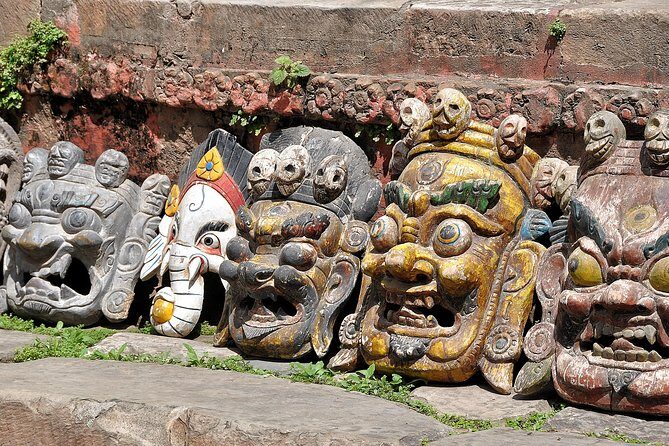
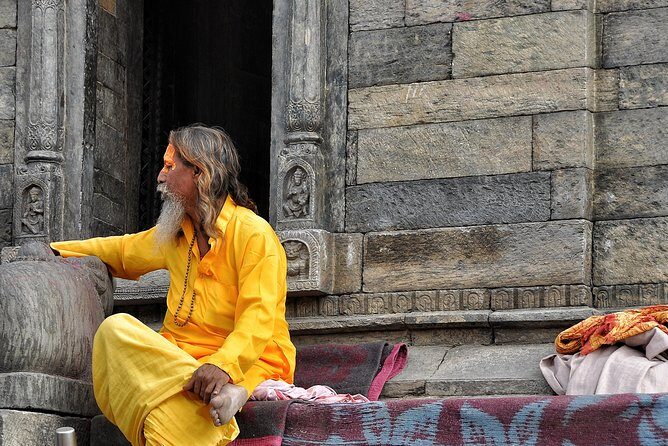
For the final spiritual stop, you move to Pashupatinath Temple, a sacred Hindu site on the Bagmati River banks. This is described as the largest temple in Nepal, and the scale is the first thing your guide will help you grasp.
The temple complex is explained as a blend of cultural and spiritual significance, with 492 temples, 15 Lord Shiva shrines, and 12 Jyotirlinga (phallic shrines). That number-heavy description isn’t just trivia. It helps you understand why Pashupatinath can feel like a whole world instead of a single courtyard.
The setting matters too. Being on the Bagmati River banks adds a strong sense of place, and it’s one reason the site holds such deep meaning. You’re not looking at a standalone temple. You’re seeing a religious center tied to water, movement, and daily spiritual practice.
Architecturally, the description calls it beautiful, and that matches what you’ll likely notice as you move through the area: layered shrines, multiple designated spaces, and lots of visual focus on Shiva.
Practical consideration: Pashupatinath is intense and busy. Since the stop is about an hour, aim for understanding what your guide is pointing out—especially the specific shrine categories they’ll take you to—rather than trying to scan everything alone.
Timing, pacing, and what 4 to 6 hours really feels like
The whole tour is listed as about 4 to 6 hours, with each major stop taking about an hour. That structure is common for city heritage routes, but it’s still worth mentally preparing for a “move, look, learn, repeat” day.
You’ll also want to factor in travel time between sites. The good news is you’re in an air-conditioned private vehicle with hotel pickup and drop-off. That matters in Kathmandu, where traffic and walking distances can add up fast. The vehicle makes this a more comfortable experience than an all-on-foot day.
Another small but important point: it’s private and designed around your group only. That means the guide can slow down if your group has questions, or keep things moving if you’re eager to see everything.
Price and value: why $120 makes sense for four major sites
At $120 per person, this tour isn’t a budget-only bargain, but it also isn’t priced like a luxury custom day. The value comes from the mix of what you get for that money.
Here’s what you’re paying for in practical terms:
- Hotel pickup and drop-off plus an air-conditioned private vehicle
- a professional tour guide to connect what you’re seeing to what it means
- entry coverage for the main stops: Kathmandu Durbar Square, Boudhanath Stupa, Swayambhunath, and Pashupatinath
It’s the guide and the entry coverage that usually change the math. Without a guide, you can still visit many of these sites, but you might spend extra time figuring out what matters most, where to focus, and how the religious themes connect.
If you care about having a structured day—especially if your schedule is tight—this price can feel fair. You’re essentially buying a guided route through four big heritage anchors, with comfort built in so you’re not exhausted before you even start sightseeing.
Also, from the operator’s broader reputation in Nepal, there’s a pattern of smooth trip planning and strong guide support. On other experiences with the same company, guides like Raj and Vishma have been praised for being careful, communicative, and helpful. That’s not a guarantee for this city tour, but it is a good sign that this operator takes guide quality seriously.
Comfort and logistics: pickup, mobile ticket, and what to plan yourself
The tour includes pickup offered and uses a mobile ticket. That’s helpful because it reduces the friction of coordinating with multiple stops. You’ll also have hotel drop-off at the end, which keeps the day from turning into an extra navigation project.
What’s not included is also clear. Food and drinks aren’t included, so plan for a lunch or snack pause either before the tour or during the gaps around Boudhanath’s restaurant area. Airport pickup and drop-off also isn’t included, so if your tour timing is near your flight, you’ll want separate ground plans.
One more detail that affects your day: this experience requires good weather. Temple visits are outdoors or semi-outdoors, and poor weather can disrupt comfort and views. The tour description indicates that if it’s canceled due to bad weather, you’ll be offered a different date or a full refund.
Who this tour suits best
This guided route is a strong fit if:
- you want a fast orientation to Kathmandu’s sacred landmarks without building your own route
- you’re curious about how Hindu and Buddhist traditions are visible in architecture and ritual
- you prefer private pacing and comfort over hopping around with random groups
It’s also a good option for mixed ages and fitness levels since it’s described as suitable for most travelers and focuses on heritage sites rather than physical endurance challenges.
If you’re the type who loves taking it slow, you might find it moves a bit fast. In that case, treat this as the “foundation tour,” and come back later for longer stays at your favorite stop.
Should you book the Kathmandu Guided Tour?
I’d book it if you want a guided, entry-supported day that covers four of Kathmandu’s biggest spiritual anchors without guesswork. The mix of Kumari Bahal, Swayambhunath’s stupa symbolism and viewpoint, Boudhanath’s clockwise chanting ritual, and Pashupatinath’s vast Shiva complex gives you a lot of meaning per hour.
Skip it—or at least plan extra time on your trip—if your travel style is slow wandering and you know you’ll want more than an hour at the places that grab you most. Also, if your dates are tightly tied to flight or weather-dependent plans, you’ll want to keep a flexible mindset since the tour depends on good weather.
If you’re trying to get your bearings fast and still understand what you’re looking at, this is a practical way to do it.
FAQ
How long is the Kathmandu Guided Tour?
It runs about 4 to 6 hours total, with roughly 1 hour allocated at each of the four main stops.
What does the $120 per person price include?
You get a professional tour guide, an air-conditioned private vehicle with hotel pickup and drop-off, and entry/admission for Kathmandu Durbar Square, Swayambhunath, Boudhanath Stupa, and Pashupatinath Temple.
Is hotel pickup and drop-off included?
Yes. The tour includes hotel pickup and drop-off using a private vehicle.
Which sites are visited during the tour?
The tour visits Kathmandu Durbar Square, Swayambhunath Temple, Boudhanath Stupa, and Pashupatinath Temple.
What are the tour hours?
The listed opening hours are Monday through Sunday from 7:45 AM to 1:15 PM.
What happens if weather is poor?
The experience requires good weather. If it’s canceled due to poor weather, you’ll be offered a different date or a full refund.