REVIEW · KATHMANDU
UNESCO Heritage Sightseeing in Kathmandu Private Tour
Book on Viator →Operated by Yakthung Tours and Travels · Bookable on Viator
Four UNESCO sites, one well-paced day. Kathmandu’s sacred map can feel confusing fast, but this private tour lines up the big UNESCO stops and pairs them with clear guidance on how Buddhism and Hinduism share the same city. You’ll move with pickup from a set meeting point and get a mobile ticket, so the day starts without hassle.
I especially like the balance of spiritual sights and real context. The tour uses professional Tour Leaders of Nepal, and it also includes a professional lady guide for the comfort of female travelers—an advantage if you want extra ease while navigating busy streets.
One thing to factor in: admission tickets are not included, so you’ll want to budget for entry fees on top of the tour price.
In This Review
- Key Highlights You’ll Feel Right Away
- How Kathmandu’s UNESCO Mix Works in One 6-Hour Loop
- Start Smart: Pickup, Meeting Point, and a Mobile Ticket That Saves Time
- Stop 1: Swayambhunath (Monkey Temple) on the Hill West of Kathmandu
- Stop 2: Kathmandu Durbar Square and the Living Goddess, Kumari
- Stop 3: Pashupatinath Temple and the Hindu World of Shiva
- Stop 4: Boudhanath Stupa, Pilgrimage Lanes, and Kora Circles
- Guide Style That Changes the Day: Nepal’s Professional Leaders and Solo-Female Comfort
- Time Management: What 6 Hours Means When You’re Seeing Four Major Stops
- Food and Breaks: Don’t Skip the Nepalese Touch
- Price and Value: Why $55 Can Be a Smart Deal (If You Budget Entrance Fees)
- Who This Tour Suits Best (and Who Might Want a Different Plan)
- Should You Book This UNESCO Kathmandu Private Tour?
- FAQ
- What UNESCO sites are included in this Kathmandu private tour?
- How long does the tour last?
- Is pickup included, and where does the tour start?
- Is this tour private?
- Are admission tickets included?
- Do I get a mobile ticket?
- What are the tour operating days and hours?
- When will I receive confirmation after booking?
- Is there a guide option for female travelers?
- Is free cancellation available?
Key Highlights You’ll Feel Right Away
- Private, solo-friendly setup with only your group participating
- Female guide option for added comfort when traveling as a woman
- Four UNESCO sites in one loop: Swayambhunath, Kathmandu Durbar Square, Pashupatinath, Boudhanath
- Stops are timed well for a 6-hour day (about 1–2 hours each)
- Mobile ticket plus pickup keeps logistics simple
How Kathmandu’s UNESCO Mix Works in One 6-Hour Loop
Kathmandu Valley’s UNESCO sites are famous for a reason: you can stand in one place and feel multiple religious worlds happening side by side. This tour takes you to two major Buddhist landmarks and two major Hindu landmarks, then your guide connects the dots in plain language. The result is not just photos. It’s understanding why these places matter and how people actually use them.
The timing also helps. This is roughly a 6-hour day, with about 1 hour at Swayambhunath, 2 hours at Kathmandu Durbar Square, 2 hours at Pashupatinath, and 1 hour at Boudhanath. That structure matters because Kathmandu traffic and walking can eat time. A fixed route keeps you from “decision fatigue” when you’re trying to see a lot with limited days.
And because it’s private, you can ask questions as you go. That matters at places where names, statues, rituals, and symbols can blend together quickly. A good guide keeps it organized so you don’t leave with a pile of random facts.
You can also read our reviews of more private tours in Kathmandu


Start Smart: Pickup, Meeting Point, and a Mobile Ticket That Saves Time
You start and end at Narsingh Chowk Marg in Kathmandu (44600). The tour also offers pickup, which I consider a big value in Kathmandu—less time hunting for meeting points, fewer stress points before temples.
You’ll also get a mobile ticket. That’s not just a nice-to-have. Digital tickets usually mean less fiddling and fewer last-minute surprises. It’s one less thing to worry about when your day is already packed with stops.
One practical note: the tour runs Monday through Friday, with opening hours listed as 9:30 AM to 4:30 PM. So if you’re the kind of traveler who wants sunrise everything, this schedule may not match that. Still, it’s a strong daytime window for heritage sightseeing.
Stop 1: Swayambhunath (Monkey Temple) on the Hill West of Kathmandu
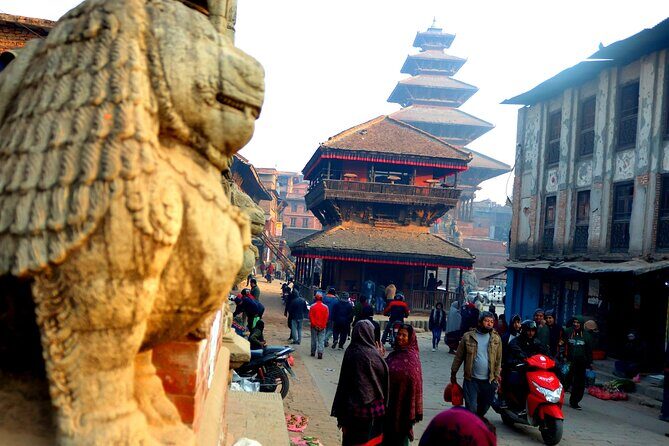
Swayambhunath is a 5th-century stupa, and it’s also known as the Monkey Temple. It sits atop a hill in the west of the Kathmandu Valley, and it’s considered holy to Buddhists. That hilltop setting is part of the experience. Even before you understand the details, the location tells you it’s meant for pilgrims who are willing to make the climb.
You get about 1 hour here, which is enough to take in the stupa area, notice the details your guide points out, and still move on without feeling rushed. Since this stop is shorter, I treat it like the day’s “orientation” temple: it’s where you start seeing Kathmandu’s religious layering clearly.
A small consideration: stupa areas often involve uphill walking and steps. Wear shoes you can handle without pain turning into a mood killer. If you like good photos, plan for a steady pace rather than sprinting up, because you’ll want time to look, not just reach.
Also, the Monkey Temple nickname is not subtle. You might see monkeys in the area, so keep food and loose items secured. Think practical here: no drama, just good habits.
Stop 2: Kathmandu Durbar Square and the Living Goddess, Kumari
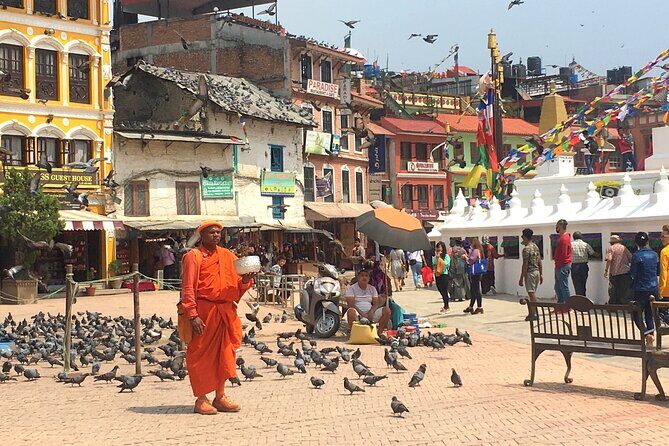
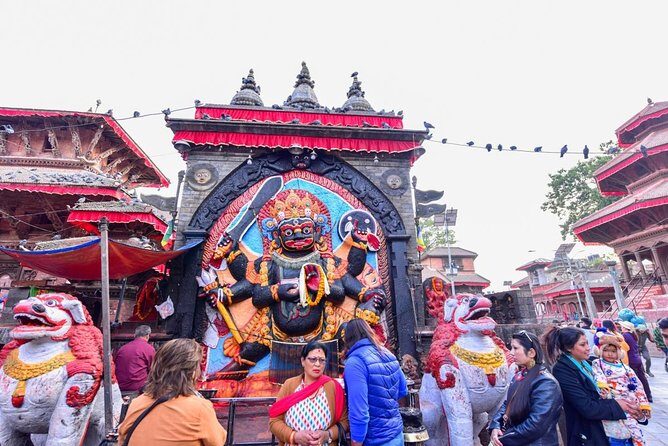
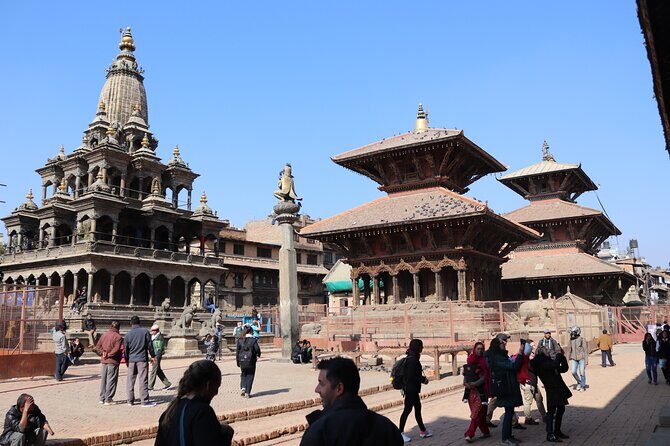
Kathmandu Durbar Square is a 16th-century royal palace area mainly built by Pratap Singha Malla. It sits in the heart of Kathmandu Valley, and it’s one of those places where architecture becomes history in brick and timber.
The main attraction is Kumari, often described as the living goddess. This is where the tour’s guidance really pays off. Without context, you might see people pointing and cameras clicking. With context, you understand what the space represents, why it’s treated with respect, and how daily life and sacred status intersect here.
You’ll spend about 2 hours at this stop. That’s a good amount of time because Durbar Square isn’t only one viewpoint. It’s a cluster of structures and courtyards. Two hours lets you slow down enough to appreciate details rather than just checking a box.
One more practical angle: this part of Kathmandu can involve busy lanes and lots of foot traffic. If you’re someone who likes quiet, you won’t get total quiet here—but you do get energy and authenticity. A guide can help you navigate smoothly and keep your attention on what’s important.
Stop 3: Pashupatinath Temple and the Hindu World of Shiva
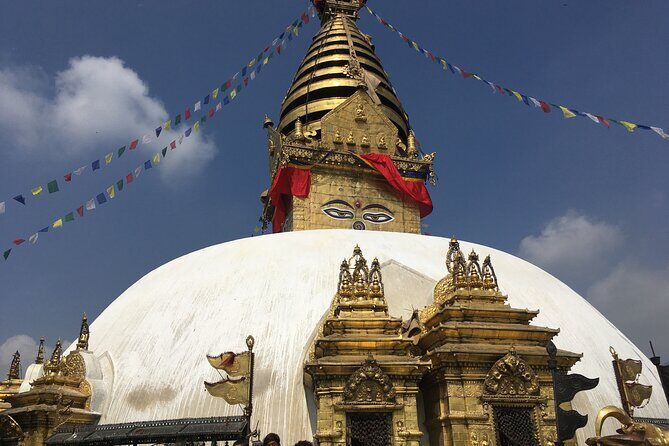
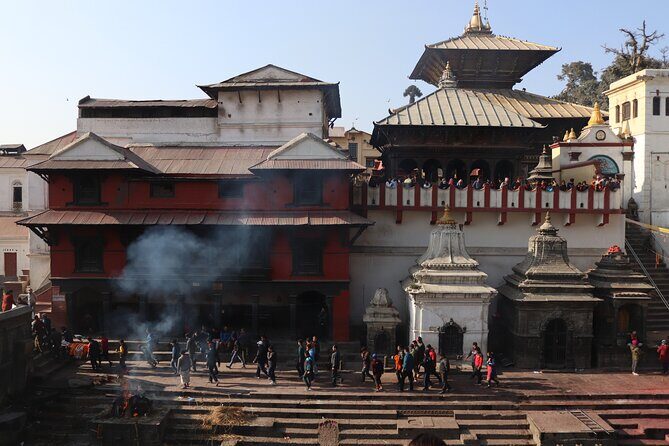
Pashupatinath is dedicated to the Hindu Lord Shiva and is described as a 1st-century temple. It’s one of the most important Hindu shrines, and the tour notes that many pilgrims from India come to pay homage here.
You’ll spend about 2 hours at Pashupatinath, which is helpful because this isn’t a single landmark-and-go stop. It’s an active sacred space. Even if you’re not there to participate in worship, the place communicates devotion through movement, clothing, and ritual behavior you can’t fully capture in a single photo.
The tour also points out that Saturday is known as the day of Shiva. Since this tour is listed as Monday–Friday, you may not catch the Saturday peak energy during your visit. But it still helps to know the calendar meaning, because it changes how pilgrims experience the site.
If you’re sensitive to crowds or prefer slower pacing, plan to lean on your guide’s timing. Ask where to stand for the best sightlines and where to walk so you don’t keep backtracking. Good route choices turn a busy temple visit into a smooth one.
You can also read our reviews of more historical tours in Kathmandu

Stop 4: Boudhanath Stupa, Pilgrimage Lanes, and Kora Circles
Boudhanath Stupa is a 5th-century ancient stupa and a major Buddhist pilgrimage site from ancient times. It’s the kind of landmark that feels instantly recognizable once you’re there, and it’s also a place with ongoing religious rhythm.
One detail the tour highlights is Kora—circumambulation. In the early morning and evening, there’s a mass of local people gathered to do Kora. That’s the heart of the experience: not just looking at the stupa, but watching how devotion moves around it.
You’ll spend about 1 hour at Boudhanath. That’s enough for a first look and a short, guided understanding of what you’re seeing. If your timing lines up with Kora crowds, you’ll get extra meaning from the movement and the prayerful pace.
Because your day runs from 9:30 AM to 4:30 PM, you might miss the most intense early morning or late evening flow. Still, you can often see active use during the daytime. The guide’s timing choices here matter because it’s a “read the room” site.
Guide Style That Changes the Day: Nepal’s Professional Leaders and Solo-Female Comfort
This is where the tour earns its strong reputation. The tour is guided by professional Tour Leaders of Nepal, and it includes a professional lady guide for the comfort of female travelers. That’s not a small detail. In a place like Kathmandu, where you’re navigating crowds, scooters, and narrow lanes, a guide who keeps you feeling at ease can turn a stressful day into a confident one.
In past experiences tied to this tour, guides like Kabita and Anjal have been praised for making solo visitors comfortable, for planning an efficient route, and for explaining culture and religion in a way that sticks. You don’t need a PhD to get value here—just someone to translate what you’re seeing into human meaning.
I also like that the tour setup supports questions as they come. When you’re standing in front of Kumari or watching Kora, you’ll naturally want to ask how things work. A guide who can respond in the moment makes the whole day feel connected instead of fragmented.
Time Management: What 6 Hours Means When You’re Seeing Four Major Stops
Six hours sounds simple until you factor in driving, walking, and the mental load of moving through different sacred spaces. This route helps because it assigns realistic chunks: 1 hour, 2 hours, 2 hours, 1 hour.
Here’s how I’d plan your energy:
- Use the first stop (Swayambhunath) to get oriented and calm.
- Treat Durbar Square and Pashupatinath like your “two-hour deep attention” blocks.
- Finish with Boudhanath when you want a slower, more reflective vibe.
If you’re the type who wants lots of photos, you’ll still be able to do it, but I’d focus on getting the key viewpoints first and then letting your guide point out details afterward. That order usually works better than trying to capture everything instantly.
Also, because the tour is private, the pace can flex slightly based on how you’re doing. If you’re tired from walking, you can ask for adjustments. That’s one of the main benefits of a private format.
Food and Breaks: Don’t Skip the Nepalese Touch
The basic itinerary doesn’t list a dedicated lunch stop. But in custom day plans arranged alongside this style of sightseeing, lunch and Nepalese food stops have been built into a full 6-hour schedule.
So if food is part of your travel story, you don’t have to treat lunch as an afterthought. Ask for a lunch break that doesn’t break your flow. Even a short meal stop can add a lot—especially in Kathmandu, where tastes are part of how culture shows up in everyday life.
My practical advice: if you’re going to eat, keep it simple and pace yourself. Your day includes temple visits that can involve walking and standing. A meal that sits heavy on your stomach can turn “heritage day” into “regret day.”
Price and Value: Why $55 Can Be a Smart Deal (If You Budget Entrance Fees)
At $55 per person for a private 6-hour UNESCO sightseeing day, the value depends on what you compare it to. If you’re trying to DIY all four sites with minimal effort, you’ll pay in time, navigation stress, and transportation hassles.
This tour includes pickup and is private (only your group participates). You’re also getting a professional guide and a mobile ticket. Those pieces usually cost more when you book piecemeal.
What to watch: admission tickets are not included for Swayambhunath, Kathmandu Durbar Square, Pashupatinath, and Boudhanath. That means your final spend isn’t just the headline $55. Still, for many travelers, paying entrance fees directly at each site feels straightforward and transparent.
I’d think of it like this: you’re paying for route planning, guidance, and smooth transitions. Then you handle entry costs separately. If that fits your style, this is a sensible spend for a day in Kathmandu.
Who This Tour Suits Best (and Who Might Want a Different Plan)
This tour fits best if you:
- Want a single day to hit four UNESCO sites without building a route yourself
- Travel as a solo woman and appreciate a lady guide for comfort
- Like your sightseeing with explanations about religion and cultural context
- Have limited time in Kathmandu and want a clear structure
It may be less ideal if you:
- Want to spend extra hours at only one site (you’ll be moving on on a set schedule)
- Are chasing a super early morning start, since the tour is scheduled for daytime hours Monday–Friday
If you’re traveling with family or friends, private touring can also feel calmer than joining a group with a strict pace you didn’t choose.
Should You Book This UNESCO Kathmandu Private Tour?
Yes, if you want a guided day that makes the UNESCO sites understandable fast. I’d book it when you’re trying to make the most of a short Kathmandu stay and you don’t want to lose time figuring out where to go next.
I’d also book it if you value comfort and safety—especially as a solo female traveler—because the tour specifically includes a professional lady guide option. Add pickup, a mobile ticket, and a route with realistic time blocks, and the day starts to look manageable.
If you’re already comfortable navigating temples and you’re focused only on photos, you might feel the price isn’t essential. But if you want meaning and direction, this tour has the right ingredients.
FAQ
What UNESCO sites are included in this Kathmandu private tour?
The tour visits four UNESCO heritage sightseeing stops in Kathmandu Valley: Swayambhunath, Kathmandu Durbar Square, Pashupatinath Temple, and Boudhanath Stupa.
How long does the tour last?
The duration is about 6 hours.
Is pickup included, and where does the tour start?
Pickup is offered. The tour starts at Narsingh Chowk Marg, Kathmandu 44600, Nepal, and ends back at the meeting point.
Is this tour private?
Yes. It’s a private tour/activity, and only your group will participate.
Are admission tickets included?
No. Admission tickets are not included for the stops listed in the itinerary.
Do I get a mobile ticket?
Yes. The tour includes a mobile ticket.
What are the tour operating days and hours?
Opening hours are Monday through Friday, 9:30 AM to 4:30 PM.
When will I receive confirmation after booking?
Confirmation is received within 48 hours of booking, subject to availability.
Is there a guide option for female travelers?
The tour description states that there is a professional lady guide for the comfort of female travelers.
Is free cancellation available?
Yes, you can cancel up to 24 hours in advance for a full refund.