REVIEW · KATHMANDU
Kathmandu: Wood Carving Workshop with Local Artisan (Thamel)
Book on GetYourGuide →Operated by Relax Getaways Pvt. Ltd · Bookable on GetYourGuide
Chisels and wood scent in Kathmandu. This wood carving workshop in Thamel turns Nepal’s temple craft into something you can actually do: you’ll learn outlining, chiseling, and detailing while the artisan explains what the motifs mean. I like the hands-on pace and the fact you leave with a real souvenir, and I especially like the small-group attention that helps you correct mistakes early. One consideration: you’re working with tools, so wear comfortable clothes and be ready to focus for the full 3 hours.
The session runs about 3 hours and is capped at a small group of up to 4 people. You’ll meet at the agreed meeting point, spend your time in the workshop setting, and finish back where you started, with everything needed for carving supplied.
In This Review
- Key things to know before you carve in Thamel
- Why a Kathmandu wood carving class feels more personal than a museum stop
- The 3-hour rhythm: what happens from meet-up to take-home souvenir
- Tools, wood types, and motifs you’ll actually use (not just hear about)
- The hands-on carving part: outlining, chiseling, and getting your details right
- The cultural thread: why Nepali wood carving means more than decoration
- Workshop energy in Thamel: convenient, but plan for a lively area
- Price and value: what $45 buys you in real terms
- Who should book this wood carving workshop (and who might skip it)
- Should you book this Kathmandu wood carving class in Thamel?
- FAQ
- How long is the wood carving class?
- Where does the activity start and end?
- Is the class beginner-friendly?
- What’s included in the price?
- What should I bring?
- Is the workshop instruction in English?
Key things to know before you carve in Thamel
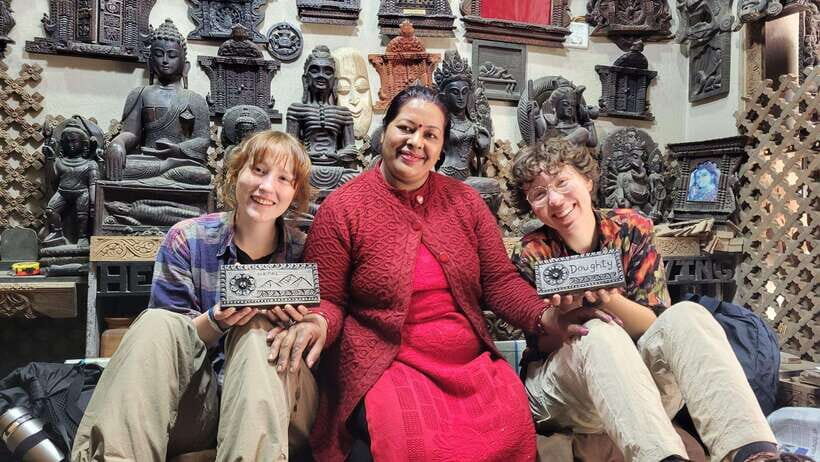
- Small group (up to 4) means you get real help, not a quick demo and a ticket to the shop next door.
- Tools and materials are provided, so you can show up light and still make something substantial.
- You’ll learn both technique and symbolism, from basic carving steps to motifs tied to Hindu and Buddhist imagery.
- A local artisan leads the class in English, making it easier to ask questions as you work.
- You take home your own carved piece, so you’re not leaving with only photos.
- Designed for beginners through advanced learners, based on your comfort level with the tools.
Why a Kathmandu wood carving class feels more personal than a museum stop
Kathmandu is full of carved wood. Doors, struts, window frames, and temple details seem to appear everywhere, and it’s easy to admire them from a distance. This workshop is the fix for that. You’re not just looking at craft—you’re practicing it, one careful line at a time.
I like that the class doesn’t treat carving as a mysterious art only for experts. You start with the basics and then build. And because the instruction is in English, you can actually understand what you’re doing, not just copy the motion.
The other big reason it works is the size. With a small group, you can ask questions and get corrections while you carve. That changes everything. With wood, small adjustments matter fast.
A few more Kathmandu tours and experiences worth a look


The 3-hour rhythm: what happens from meet-up to take-home souvenir
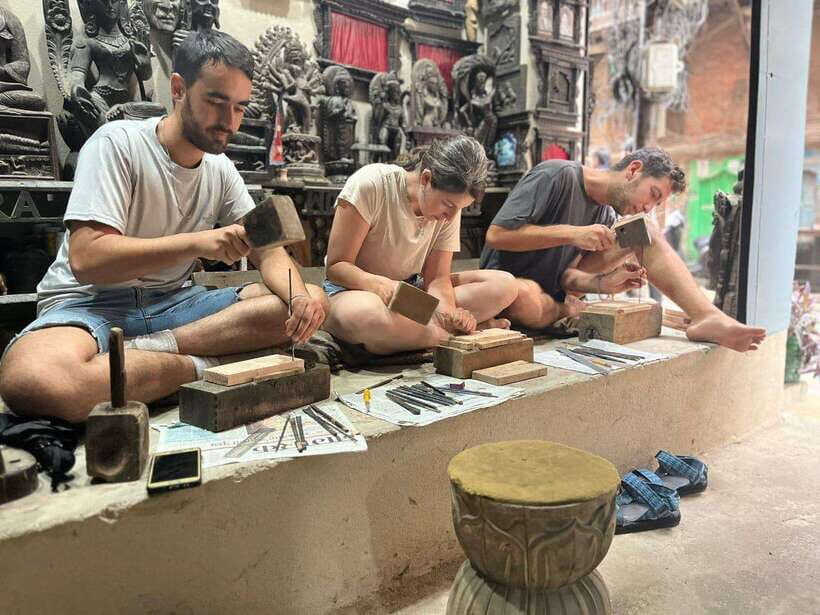
Your workshop time is listed as 3 hours, and the activity ends back at your meeting point. The overall flow is straightforward, but the value is in how much hands-on practice you get inside that window.
First comes a setup and orientation. You’ll get introduced to the tools and materials used in traditional carving, including common carving implements like chisels and hammers. You’ll also learn about wood choices mentioned for Nepalese carving, such as sal and teak, which helps explain why different blocks handle the way they do.
Next comes the “how to start” part. The artisan helps you understand patterns and motifs, including design elements often linked to Hindu and Buddhist iconography. You’ll see examples like lotus flowers, mandalas, and mythical creatures, then connect those images to real carving steps.
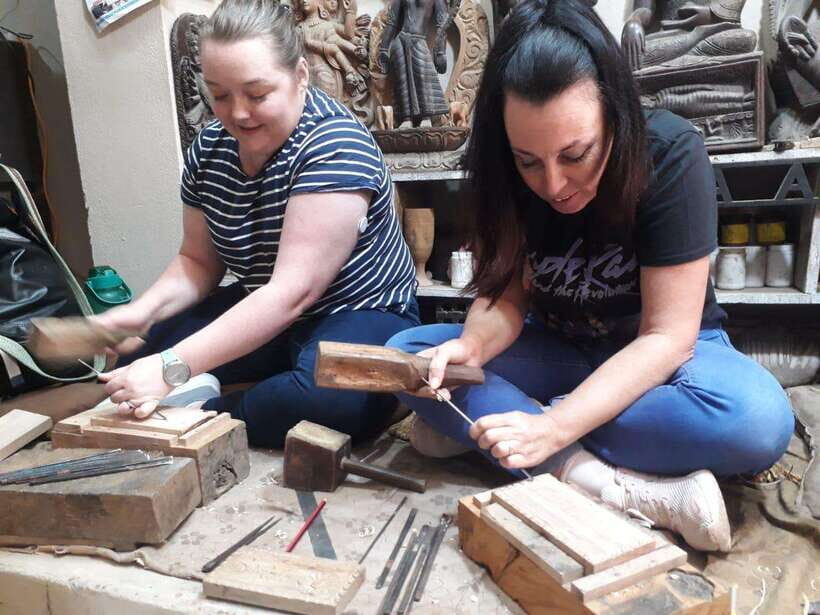
Then you move into the practical section. You’ll carve on a pre-cut wooden block and work through a sequence like outlining, chiseling, and detailing. The instructor checks your progress and guides your corrections so your lines stay clean.
Finally, you spend the remaining time finishing your piece—enough to take home something that feels like yours, not a half-finished project. Your finished work becomes a meaningful souvenir because you made it, and you understand what you chose and why.
Tools, wood types, and motifs you’ll actually use (not just hear about)
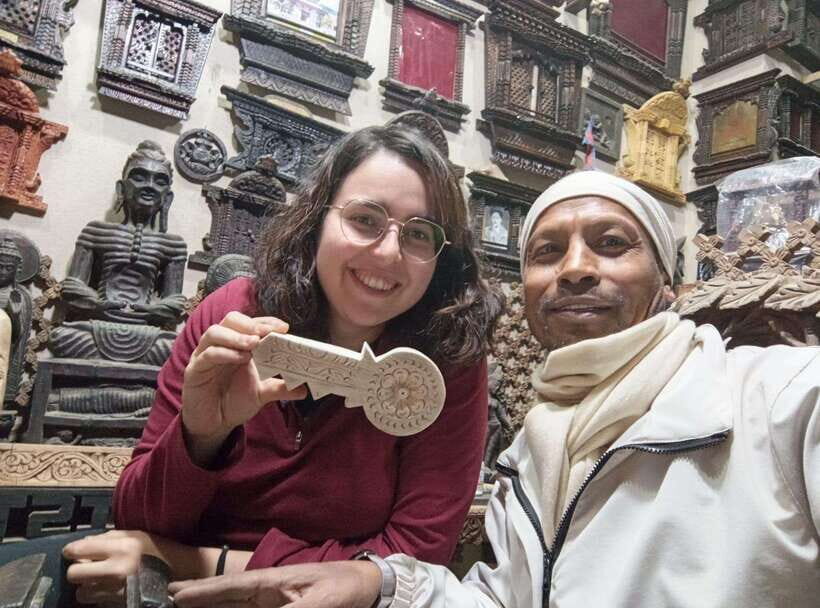
Nepali wood carving is not only about technique. It’s also about symbols. That’s why this class is more than a craft lesson—it’s a way to read Nepal’s visual language.
You’ll begin with the practical essentials: the kinds of tools used and how they’re used for carving and refining details. Traditional woodworking relies on sharp chisels and controlled strikes, plus a steady sense of where the line needs to go next. Even if you’re new, learning the purpose behind each tool helps you avoid random, frustrating cuts.
On the wood side, the class includes discussion of wood commonly used in Nepal, like sal and teak. Even without turning you into a wood scientist, that context matters. It helps you understand why carving behaves differently depending on the block.
Then you get the design side. Nepalese carved motifs often draw from Hindu and Buddhist iconography, and you’ll learn about common motifs such as lotus flowers, mandalas, and mythical creatures. The artisan shows how those ideas become patterns you can carve—so you’re not staring at a blank block and guessing.
The hands-on carving part: outlining, chiseling, and getting your details right
This is where the class earns its spot on your Kathmandu list. Carving looks simple until you try it, and the best part of the workshop is that you learn the process in the right order.
You’ll start with outlining, which is the stage where you decide where everything will live. A clean outline makes the rest easier. If you rush this part, details become messy fast, especially on a small block with limited space.
After outlining comes chiseling. The artisan guides you through how to remove material carefully and how to think about depth. You’re not only making the design shape—you’re controlling how the carving reads.
Then comes the part most beginners enjoy most: detailing. This is where carved motifs start to look like they belong on a temple window or a traditional frame. The instructor offers tips and corrections along the way, which is a huge help if you tend to press too hard or you lose your line.
Because the class is capped at 4 participants, you’re more likely to get the exact kind of fix you need at the moment you need it. That’s the difference between leaving with a decent souvenir and leaving with a souvenir you feel proud of.
The cultural thread: why Nepali wood carving means more than decoration
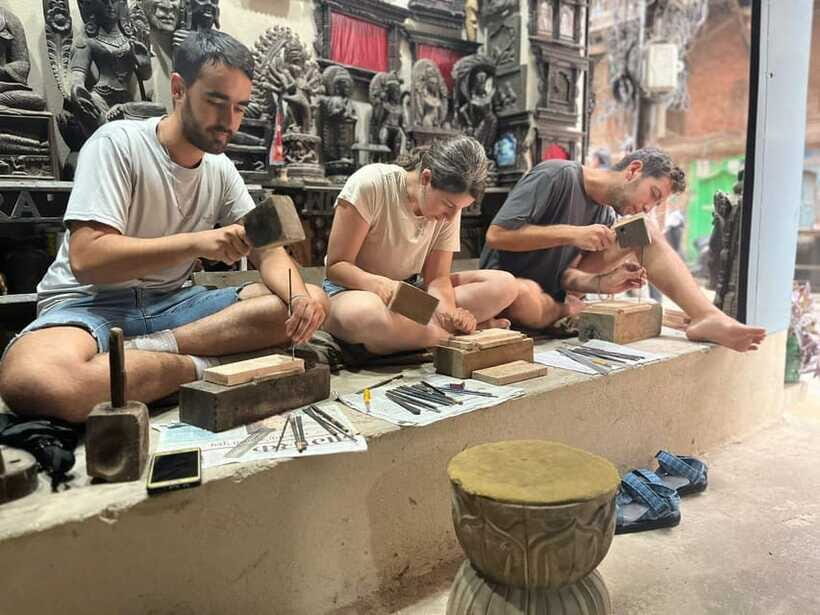
Wood carving in Nepal is tied to major periods of architecture and craft. The class connects your project to a longer story, so your carved piece lands with more meaning.
Carving in Nepal is traced back to the Licchavi period (4th–9th century), when artisans began adorning temples and palaces with intricate wooden designs. Later, it flourished during the Malla dynasty (12th–18th century), which produced many of the wooden masterpieces people still admire today.
A key point you’ll hear is the role of the Newar community in preserving and mastering the art form in the Kathmandu Valley. When you hear that, it helps you understand why many of the most impressive examples you see across the valley have such consistent attention to pattern and detail.
The class also places motifs in context. Carvings often depict deities, mythical creatures, and symbolic patterns—images that carry spiritual and cultural meaning. That’s why learning the motifs isn’t just fun. It turns your souvenir from decoration into a small piece of Kathmandu’s visual heritage.





Workshop energy in Thamel: convenient, but plan for a lively area
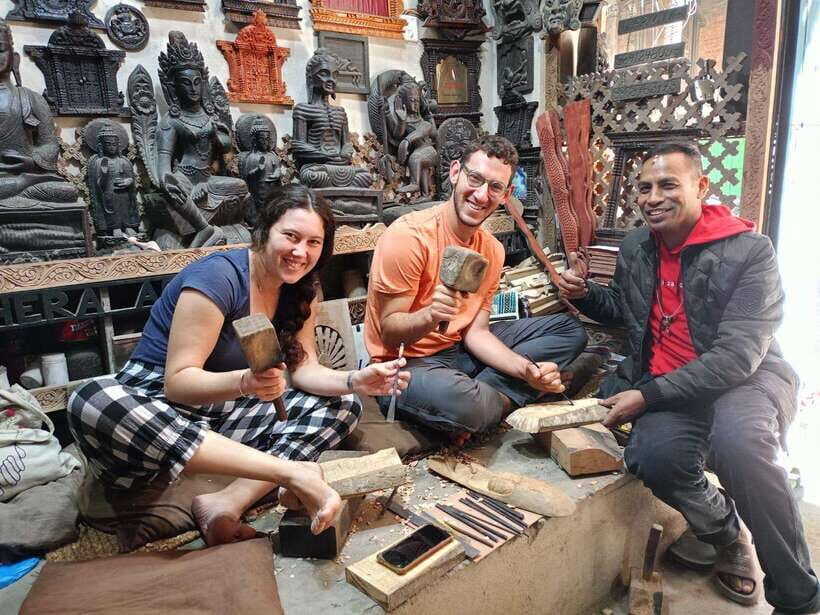
This class is in the Thamel area, which is one of Kathmandu’s most active neighborhoods. That’s convenient because it’s easy to build the workshop into a day of walking, snacks, and sightseeing.
At the same time, Thamel’s energy can mean the workshop isn’t the quiet countryside version of craft. Expect the general hum of the neighborhood while you’re working. Once you’re seated with tools in hand, it becomes a focused bubble, but you won’t feel like you’ve escaped the city completely.
Because the class is set up for visitors, the workshop format is practical. You’ll learn the sequence, get materials, and carve your piece without needing to source anything yourself. You simply show up with comfortable clothes and carve.
Price and value: what $45 buys you in real terms
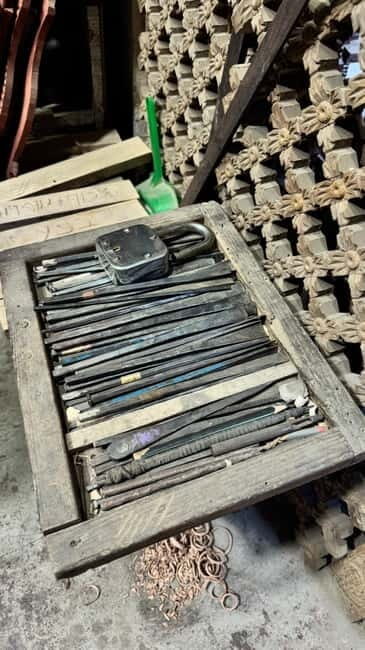
The price is listed as $45 per person for a 3-hour session. The value isn’t only in the lesson—it’s in what’s included.
You get guided instruction from a local artisan, and you also get all necessary tools and materials. On top of that, the package includes government taxes and Vats, plus you take home your own handcrafted wooden piece.
That combination matters. Many craft experiences charge similarly but then require extra purchases for materials or tools. Here, you’re paying for the full experience: teaching, the supplies to practice, and the finished souvenir you leave with.
The small group size is part of the value equation too. With a limit of 4 participants, you’re more likely to get feedback on your carving while your piece is still at the stage where adjustments help most.
Who should book this wood carving workshop (and who might skip it)
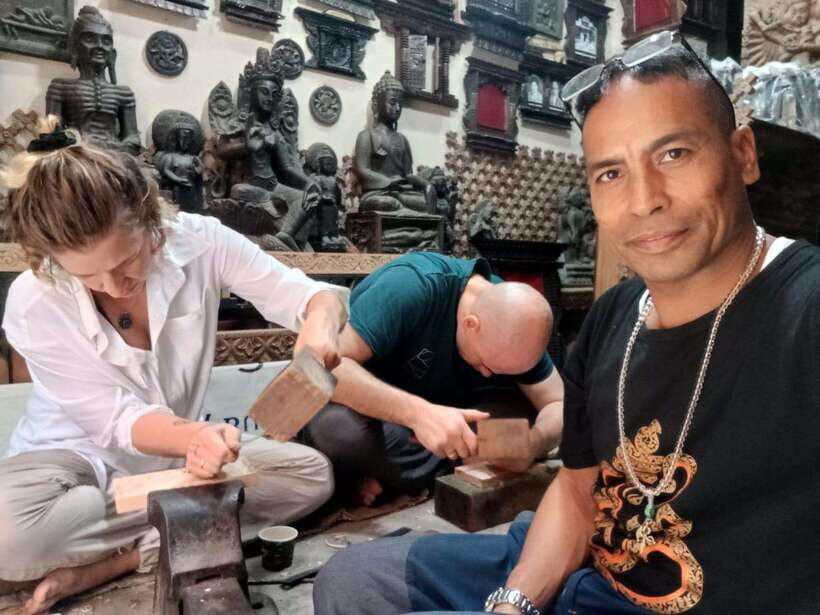
If you like making things with your hands, this class fits well. It’s also a strong choice if you’re the type who wants context, not just a product. The combination of carving technique and cultural motifs gives you both a skill and a story.
It’s also a reasonable fit for families and teens, as long as everyone is comfortable sitting and working with tools. The workshop format is built for different skill levels, including people with no prior experience.
You might consider skipping if you’re short on time and only want a quick photo stop. This is a focused 3-hour activity, not a 15-minute look-around. And because tools are involved, it’s best if you’re willing to slow down and concentrate.
Should you book this Kathmandu wood carving class in Thamel?
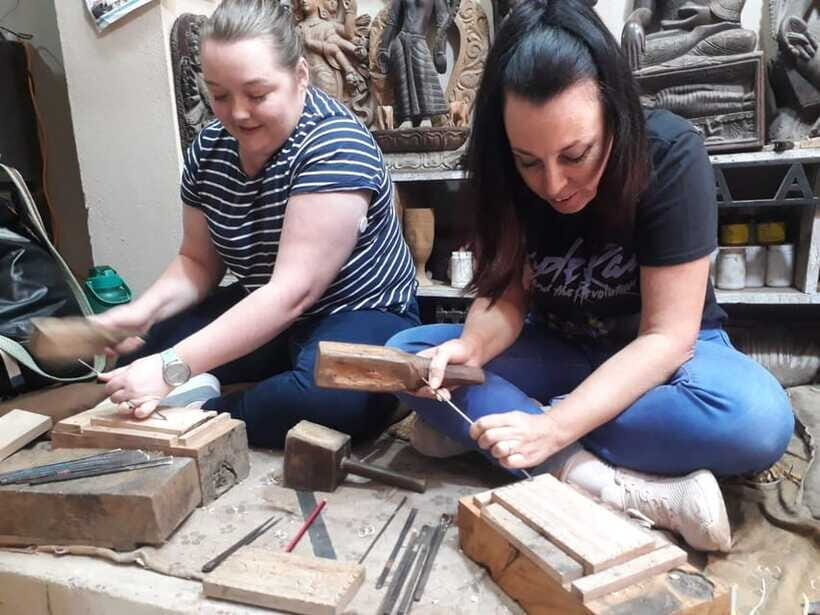
I’d book it if you want a souvenir with real meaning and you enjoy learning by doing. The class does a smart job of keeping things practical: tool basics, step-by-step carving, motif context, and then time to finish your own piece.
I’d also book it if you want something different from the usual Kathmandu itinerary. A temple tour shows you the craft’s end result. This workshop teaches you the path that gets there.
One last check: go in with comfortable expectations. You’re learning technique and making an object, not auditioning for a master wood carver competition. If you treat it like a patient, hands-on lesson, you’ll leave with something you’ll want to keep and show.
FAQ
How long is the wood carving class?
The session is listed as 3 hours.
Where does the activity start and end?
You meet at the provided meeting point, and the activity ends back at the same meeting point.
Is the class beginner-friendly?
Yes. The workshop is tailored for all skill levels, including people with no prior experience.
What’s included in the price?
It includes a guided class with local artisans, all necessary tools and materials, your own carved wooden piece to take home, and government taxes and Vats.
What should I bring?
You only need to wear comfortable clothes.
Is the workshop instruction in English?
Yes, the instructor provides instruction in English.