REVIEW · KATHMANDU
Knife (Khukuri) Making Workshop- Forge of the Gurkhas
Book on Viator →Operated by I. Experience Nepal · Bookable on Viator
The forge in Kathmandu turns scrap into a blade. This khukuri workshop is interesting because you’re not shopping for a souvenir. You’re working with a real blacksmith, in a small setup, while the craft and culture behind the Gurkha knife get explained along the way.
I especially loved two things: the chance for hands-on work (you’re doing hammering and key grinding steps), and the fact that the finished knife feels like a real tool, not a decorative prop. One consideration: for safety, the host handles the hottest grinding step, so you won’t be standing in the sparks yourself.
In This Review
- Quick highlights
- Why the Khukuri’s Meaning Matters Before You Hammer
- From Pickup to Indra’s Forge: How the Day Gets Moving
- What You Actually Do: Hammering and Finishing Your 6-Inch Blade
- Safety Rules at the Forge: When the Host Takes Over
- Your Finished Khukuri: What to Look for When You Get It Home
- Price and Logistics: Does $68 Make Sense?
- Who Should Book This Khukuri-Making Workshop (and Who Might Not Love It)
- Should You Book Forge of the Gurkhas? My Decision Guide
- FAQ
- How long does the khukuri making workshop take?
- Where does the workshop take place?
- What does the workshop cost?
- Is hotel pickup included?
- What size khukuri will I make?
- How many people are in a group?
- What steps will I do myself?
- Does the host do any of the work for safety?
- Will I get a mobile ticket and booking confirmation?
- What is the cancellation policy?
Quick highlights
- A small group capped at 5 people, so you get attention without a crowd vibe
- You make a 6-inch khukuri blade, shaped from raw iron and finished into a sharp keep-sake
- Cultural context as you work, including the meaning of the blade’s nick and Gurkha loyalty symbolism
- Safety-first workflow, with the host doing the final blade grinding while you tackle safer stages
- Hotel pickup is offered, plus you get a mobile ticket and clear timing in the day plan
Why the Khukuri’s Meaning Matters Before You Hammer
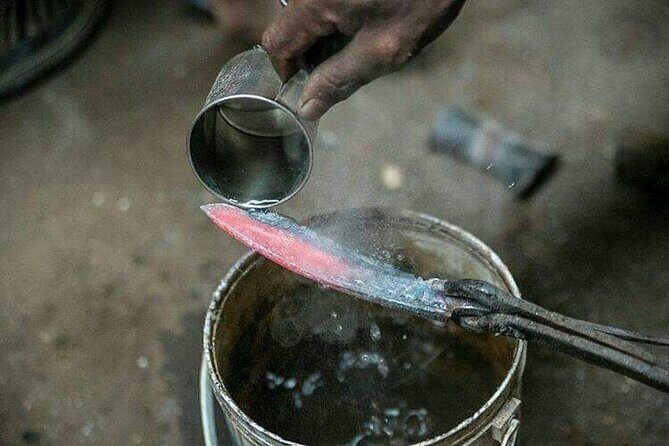
A khukuri is not just a knife shape. It carries meaning across Nepal’s hill communities and is tightly linked with the Gurkhas—loyalty, identity, and the idea of a dependable tool for real life. When the workshop starts, you’ll hear why this blade is treated like more than an object.
Even the basic design has purpose. The khukuri blade is traditionally tempered steel, usually slightly curved and very sharp. The handle is often wood or buffalo horn, and there’s a nick near the handle that helps prevent blood from reaching the grip. That nick is also symbolic—tied to Hindu Trinity ideas connected with Brahma, Vishnu, and Shiva. You may not think about philosophy when you hold a hammer, but those details change how you see the end product.
This matters for you because it turns the workshop into more than a craft demo. You’re not only learning how a knife is made; you’re learning why that knife shape and those design details mattered enough to keep surviving for generations.
A few more Kathmandu tours and experiences worth a look



From Pickup to Indra’s Forge: How the Day Gets Moving
The workshop is set in Kathmandu, and pickup is offered, with a mobile ticket issued for your day. In practice, that means you should plan to start from your hotel and ride out to where the smith works—away from the main shopping streets.
A big part of the value here is that you’re not stuck watching from the edge of a souvenir stall. You’re going to the blacksmith’s workspace and home environment, where the forge feels practical and real. You’ll meet the people running the process—commonly the expert blacksmith Indra, and a guide who helps with English and explanations (names you might hear include Swoyam and Namrata, depending on the booking).
The group size stays small—maximum 5—so you’re not lost in a line. You’re able to ask questions, hear explanations clearly, and get a pace that feels human.
Timing-wise, plan on around 4 hours total, give or take. That’s enough time to do real shaping and finishing, but not so long that it turns into a half-day slog.
What You Actually Do: Hammering and Finishing Your 6-Inch Blade
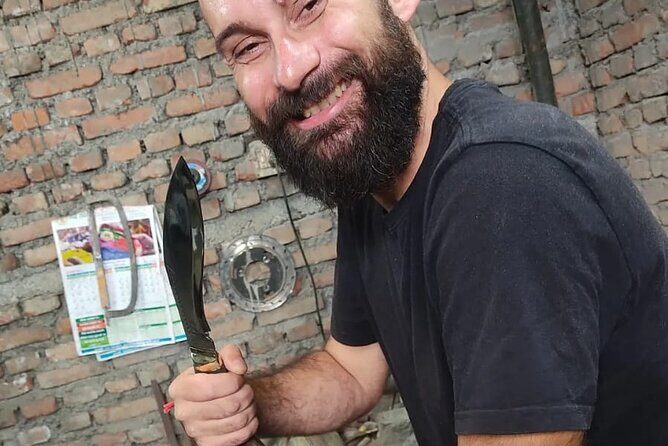
This workshop is built around the idea of taking part in creating your own khukuri. The standard size is a small 6-inch blade, and the experience is structured so you can participate without needing years of training.
Here’s the core sequence you should expect:
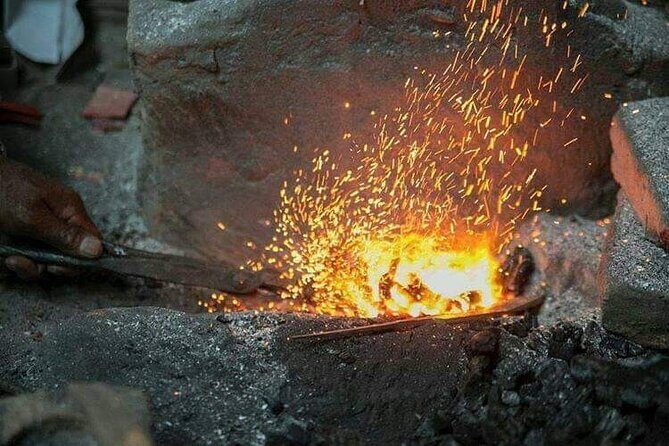
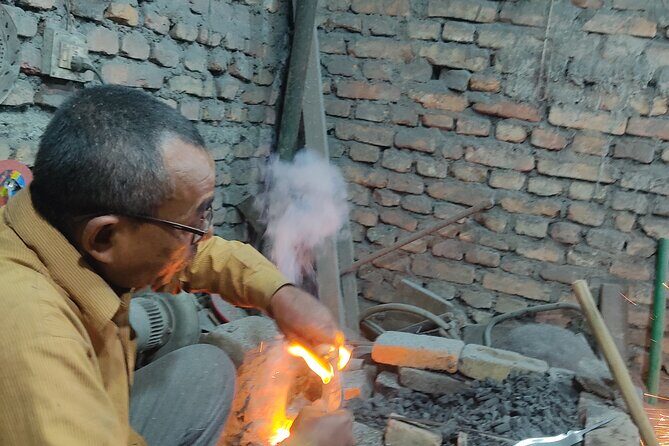
First, you’ll help with hammering the iron. This is where the blade begins to look like a blade. You’re working with a raw piece of iron and turning it toward the khukuri form. It’s physical work, but it’s also satisfying because you can see progress while you’re still there doing the steps.
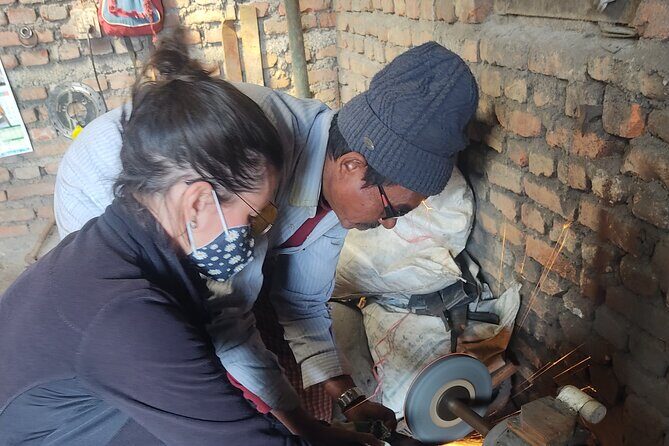
Next comes the first grinding. You’ll participate in early shaping using grinding steps that don’t require you to manage the most dangerous part of the forge process. One practical detail: the workshop notes that guests should stay clear of sparks during the grinding stage handled by the host. That means your participation is real, but it’s also safety-managed.
Finally, you’ll take part in the last stage: buffing and polishing. This is the part that feels like magic. After the heavy shaping, polishing is what turns a rough blade into something that looks clean, intentional, and ready to live on your wall—or, better yet, in your hands.
Depending on how the day flows, you’ll also move through handle and final assembly steps as part of making a complete knife. The end goal isn’t just a shaped piece of metal. You should leave with the knife as your souvenir.
If you’re the type who wants a “show-and-tell” class, this one might surprise you—in a good way. People who expected a quick tourist demo often end up feeling like they did actual work, because you do.
Safety Rules at the Forge: When the Host Takes Over
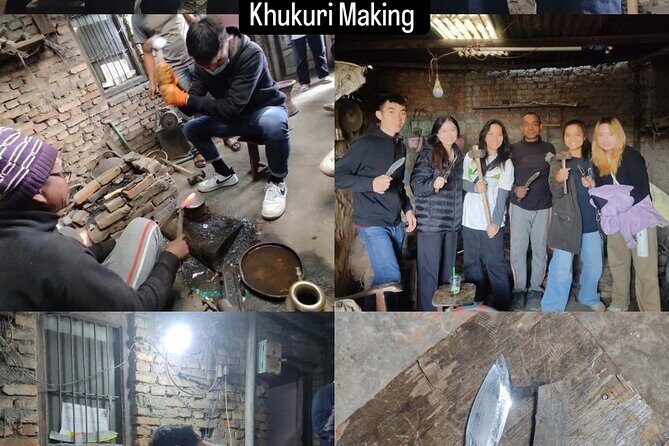
Forging is hot, fast, and not a place for guesswork. That’s why the workshop is careful about what guests do versus what the host does.
For safety reasons, blade grinding is only done by the host, and you’re advised to stay clear of sparks during that process. So even if you’re enthusiastic and ready to work, there’s still a boundary around the highest-risk step.
This matters in two ways for you:
1) It keeps the session moving without someone improvising technique with unknown equipment.
2) It lets you still have a meaningful role. Hammering, early grinding participation, and polishing are the parts where you can contribute directly without needing expert control of the hottest sparks.
In short: you’re not watching a professional do everything while you take photos. You’re working on the knife in the steps that are designed to be safe for guests to do.
Your Finished Khukuri: What to Look for When You Get It Home
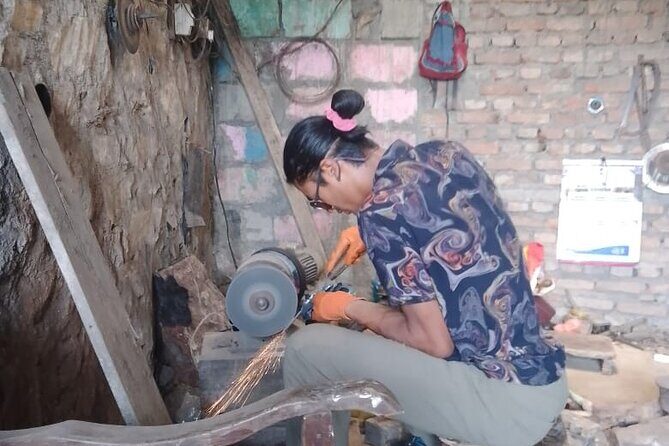
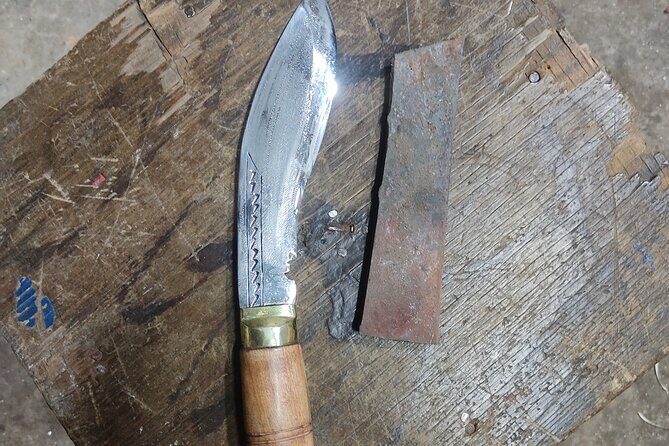
The best souvenir is the one that teaches you what you’re holding. When you finish this workshop, you’ll have a small khukuri blade that’s shaped, polished, and made into a functional knife-style object.
Here are the details worth noticing when you’re back in your room:
- Sharpness and finish: A well-finished edge and clean polishing are obvious. Even people who came in skeptical about what a workshop knife would be often end up impressed by how sharp the result feels.
- The curved profile: The khukuri’s slightly curved shape is not just decoration. It’s part of why the knife is so recognizable.
- The design logic: You’ll probably remember the explanation about the nick near the handle and the meaning tied to Hindu Trinity symbolism. It’s a small detail, but it’s the kind of thing you remember because someone explained why it exists.
- Scabbard and presentation: The workshop context includes that a traditional khukuri comes in a scabbard of wood and leather. Even if your blade is small, you’ll likely see how the knife is meant to be stored and carried respectfully.
A nice bonus: some bookings mention that personalization is possible. If that’s something you care about, ask during the session while there’s still time.
One caution: there can be quality surprises with metalwork. In at least one account shared with the tour team, finished knives had cracks that appeared later during crafting. The team’s response in that case was to offer a replacement and delivery. You can’t fully eliminate risk in metalcraft, but it’s comforting to know the provider has a plan when something goes wrong.





Price and Logistics: Does $68 Make Sense?
At $68 per person, this workshop isn’t priced like a cheap craft demo. It’s priced like skilled labor plus time plus a real take-home item.
Here’s why I think the value works:
- You get a finished 6-inch khukuri, not just participation photos.
- The process includes skilled work that can’t be rushed. A blacksmith with long experience is doing real forging and finishing.
- You’re also getting cultural explanation as you go, including why the khukuri’s features matter.
- Small group size helps. Maximum 5 people means less waiting, more attention, and a better chance to actually do the steps you came for.
If you want a bigger blade, there’s an option mentioned in the shared information: for an additional fee, you may be able to make a 10-inch khukuri. That changes the value math in your favor if you want something that feels more substantial.
Logistics are mostly handled for you: pickup offered and drop-off after the workshop is part of the experience style. You’ll just want to be on time and communicate pickup location clearly if you’re staying outside the most convenient central zones.
Who Should Book This Khukuri-Making Workshop (and Who Might Not Love It)
This is a great match if you like hands-on activities, small groups, and real local craft. You’ll enjoy it if you’re curious about Nepal beyond temples and viewpoints—especially if you like learning why objects are built the way they are.
It’s also a strong fit for people who want a tangible keep-sake. A purchased khukuri from a shop can be nice. But making one means you remember the hammers, the heat, the grinding steps you did, and the explanations you got while the work was happening.
A practical caution: the workshop takes around 4 hours, and forging is not a quick sit-and-watch thing. If you’re bringing young kids, expect patience limits. One family account specifically noted that children ran out of patience during the time required for the process, so it can be smart to plan distractions or skip the class with very small kids if your tolerance for waiting is low.
Also, if you’re expecting to control every step with your own hands, read the safety approach closely. The host manages the highest-risk grinding, so your role is meaningful but still guided.
Should You Book Forge of the Gurkhas? My Decision Guide
If you want one Kathmandu experience that feels practical, personal, and tied to a real craft, this is a strong pick. I’d book it if:
- you want a 6-inch khukuri you can truly claim as yours
- you like learning craft details, from steel shaping to handle logic
- you prefer small-group culture over a scripted museum-style hour
I’d think twice if:
- you dislike hands-on work or can’t handle basic physical activity
- you need a fully hands-on role at every dangerous forge step (the host will do the sparks part)
- your schedule is so tight that 4 hours feels impossible
Bottom line: for the money, you get real skill labor and a take-home knife you’ll actually remember. And for many people, that’s the difference between a trip photo and a story.
FAQ
How long does the khukuri making workshop take?
It lasts about 4 hours (approx.).
Where does the workshop take place?
It’s in Kathmandu, Nepal.
What does the workshop cost?
The price is $68.00 per person.
Is hotel pickup included?
Pickup is offered.
What size khukuri will I make?
For this workshop, you’ll make a small 6-inch blade.
How many people are in a group?
The maximum group size is 5 people.
What steps will I do myself?
You’ll participate in hammering the iron, the first grinding, and the buffing and polishing at the end.
Does the host do any of the work for safety?
Yes. For safety reasons, the blade grinding is only done by the host, and you’re advised to stay clear of sparks.
Will I get a mobile ticket and booking confirmation?
Confirmation is received at the time of booking, and a mobile ticket is used.
What is the cancellation policy?
You can cancel for free up to 24 hours in advance for a full refund. If you cancel less than 24 hours before the experience starts, the amount paid is not refunded.