REVIEW · KATHMANDU
Annapurna base Camp trek 10 Days
Book on Viator →Operated by Nepal Himalayan Hiker (P) Ltd. · Bookable on Viator
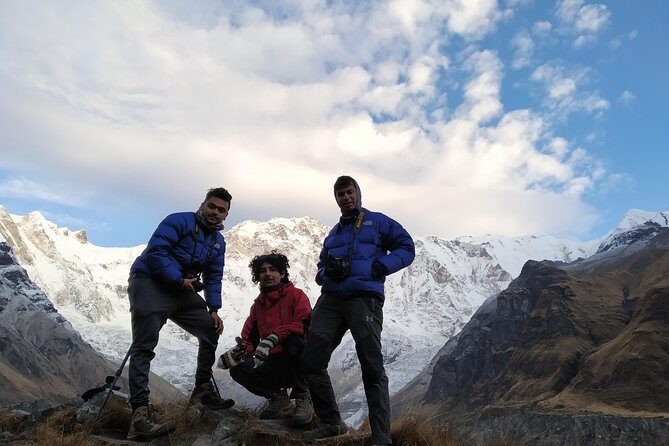
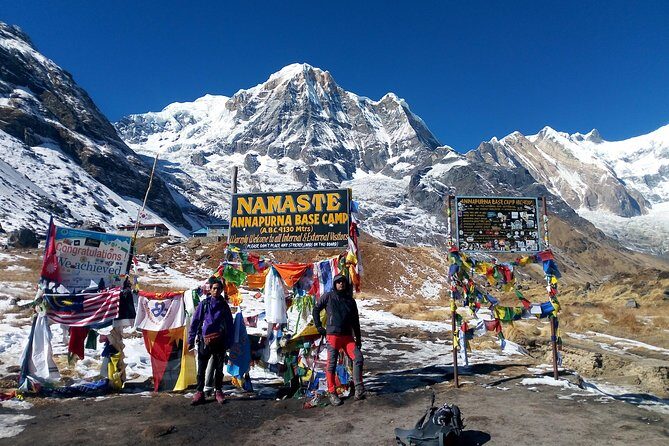
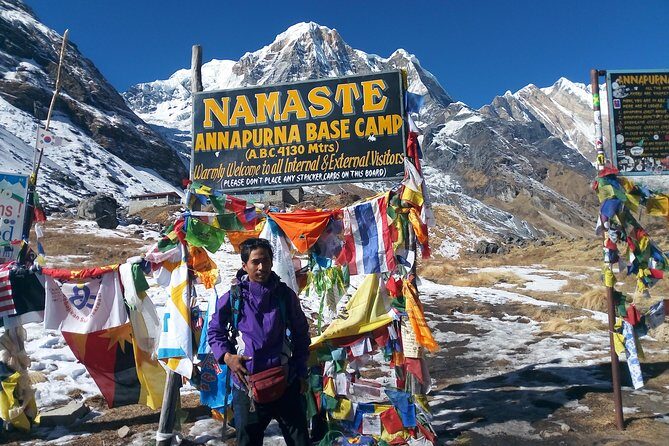
Early mornings here feel like altitude magic. This Annapurna Base Camp trek strings together Poon Hill sunrise views and Gurung village days, then finishes at Annapurna Base Camp (4,130m) in a natural amphitheater of giants.
I really liked the way the trip is run, especially the human side. With a guide like Prakash (plus porters and support staff such as Raj, Kum, and Papa Nepal), the pace felt managed, explanations were clear, and nobody was left guessing what came next.
One thing you should think about up front: this is a real mountain trek. Even with good support, the climbing and early starts can feel like a lot if you’re coming in with limited fitness or expecting an easy walk the whole time.
In This Review
- Key highlights you’ll feel right away
- Setting off from Thamel: Kathmandu first, then the mountains
- The value question: why this trek costs $853.34 per person
- Day-by-day: how the trek actually flows on Annapurna
- Day 1: Annapurna Region viewpoints and peak awareness
- Day 2: Kathmandu free/arrangement day before the route starts
- Day 3: Kathmandu to Pokhara by road (6–7 hours)
- Day 4: Pokhara to Nayapul, then trek to Ghandruk (about 5–6 hours)
- Day 5: Ghandruk to Sinuwa (about 5–6 hours)
- Day 6: Sinuwa to Deurali (about 6 hours)
- Day 7: Deurali to Annapurna Base Camp (about 5 hours)
- Day 8: Annapurna Base Camp to Bamboo (about 6 hours)
- Day 9: Bamboo to Jhinu Hot Spring (about 5 hours)
- Day 10: Jhinu Hot Spring to Nayapul, then drive to Pokhara (about 7 hours)
- Who this trek suits best (and who should reconsider)
- Your guide team: the real difference is how you feel day to day
- Poon Hill + Base Camp: why the views feel like a storyline
- Practical advice so you enjoy it more (not just survive it)
- Should you book this Annapurna Base Camp trek?
- FAQ
- FAQ
- Where does the trek start and end?
- What time does the tour start?
- How long is the experience?
- What is the highest elevation on this trek?
- Is this a private tour or shared group?
- Does the route include Pokhara and road transfers?
- What places do you trek through on the main route?
- Do you climb Machhapuchhre?
- What cancellation window is offered for a full refund?
- What kind of guide support should you expect?
Key highlights you’ll feel right away

- Poon Hill viewpoint: big peak names in one morning sweep, including Machhapuchhre (Fishtail) from afar
- Gurung village culture: your walking days include time with local communities, not just trails
- Annapurna Base Camp at 4,130m: you reach the classic bowl of peaks that makes this trek famous
- Stone-to-steam recovery: Jhinu Hot Spring gives your legs a chance to loosen up after the high days
- Guided, private feel: it’s set up as a private activity, so your group gets dedicated attention
Setting off from Thamel: Kathmandu first, then the mountains
Most trips start with nerves. Yours starts with location. The meeting point is Thamel, Kathmandu, and the start time is listed as 5:00am. That matters because day-one momentum affects the whole trek: you’ll move quickly, then get used to the idea that mornings come early in Nepal.
You’ll land in Kathmandu, then have time to arrange your trip and get your bearings. Kathmandu days are not about altitude yet, but they are about getting your head right. You’ll want a practical mindset: water, snacks, a warm layer for cold mornings, and a plan for how you’ll handle small annoyances like changing money, charging devices, or finding the right socks.
You also have to notice a small mismatch in the trip info. The overview mentions an approx. 2 days duration, but the day-by-day plan runs for 10 days. When you book, confirm the final schedule with the operator so your expectations match the actual trek length.
You can also read our reviews of more hiking tours in Kathmandu


The value question: why this trek costs $853.34 per person
At $853.34 per person, this is not a bargain trekking bargain, but it also isn’t price-gouging for a guided Himalayan trek route. The value here is mainly in three places that matter to you once you’re on the trail:
1) Dedicated guidance and planning
Multiple reviews call out that the guide felt informative and attentive, and that everything was well organized. On a trek like Annapurna Base Camp, that organization isn’t just convenience. It helps you avoid wasted time and reduces uncertainty when weather or trail conditions shift.
2) A managed pace for mixed experience levels
One review specifically notes the plan fits people even without mountaineering experience. That’s a big deal: Annapurna is about hiking hours and altitude, not technical climbing for most travelers.
3) Route support, including porters and team members
The names mentioned in reviews (Raj, Kum, Papa Nepal, alongside Prakash) point to a staffed experience. That means you’re not hauling everything yourself, and you’re less likely to run into logistics problems mid-trek.
The main “cost consideration” is what you should bring yourself. You’ll still be responsible for your personal trekking gear, and you’ll want to budget for personal expenses not listed in the provided details (snacks, hot drinks, and small extras along the way). The trip price covers the structured trekking and the human support components you’ll rely on.
Day-by-day: how the trek actually flows on Annapurna
Here’s what the mountain timeline feels like, from Kathmandu down to Pokhara and back again.
Day 1: Annapurna Region viewpoints and peak awareness
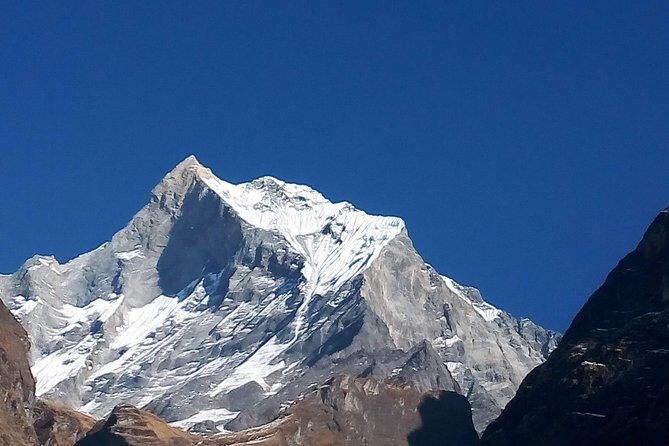
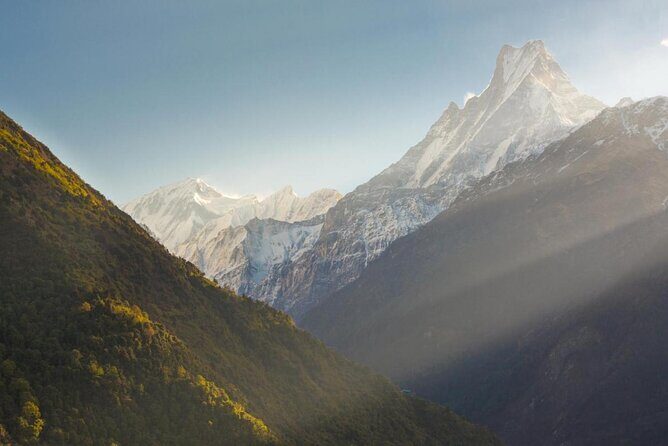
Your early story includes Annapurna Mountain Range perspective time. From the classic viewpoint at Poon Hill, you’re looking at a lineup of major peaks such as Annapurna South, Hiunchuli, Nilgiri, and the sacred Machhapuchhre (Fishtail). Machhapuchhre is revered as sacred to Shiva, and climbing it is off-limits, which is why this trek is about seeing the mountain rather than summiting it.
This viewpoint day is useful because it changes how you read the landscape. Instead of random ridges, you start to understand the geography and the scale of what you’re hiking toward.
One small practical note: viewpoint mornings can be cold. Even if the trek is long and sunny later, early hours are where you’ll want that warm layer ready.
Day 2: Kathmandu free/arrangement day before the route starts
You get an arrangement day in Kathmandu. This is the day that makes the trek easier later. Use it for basics: confirm what time you’ll depart, double-check your trekking essentials, and plan how you’ll handle altitude prep. If you’re the type who likes to be calm and prepared, this day is your friend.






Day 3: Kathmandu to Pokhara by road (6–7 hours)
Then comes the drive: Kathmandu to Pokhara in about 6–7 hours. Long road days are never fun, but Pokhara is a helpful base because it sits lower in altitude and breaks the journey into manageable steps.
If you’re prone to motion sickness, consider planning for it here. Also, keep your body hydrated. Even though this isn’t a trek day, your legs still need a little recovery mindset.
Day 4: Pokhara to Nayapul, then trek to Ghandruk (about 5–6 hours)
After the drive, you’ll head toward Nayapul, then start trekking to Ghandruk (1,940m). Ghandruk is a classic stop for a reason: it’s where the trip starts to feel more village-and-rhythm than just transport.
This is also where the culture aspect becomes real. You’ll pass through local Gurung villages and get a sense of how people live around the Annapurna region. That’s one of the things I like about this style of trek: it’s not only about altitude; it’s also about sharing time with places shaped by the mountains.
A drawback you might notice: going from road day to hiking day can feel like a snap change. Don’t overreach your pace on Day 4. Your best strategy is steady and controlled.
Day 5: Ghandruk to Sinuwa (about 5–6 hours)
Next is Ghandruk to Sinuwa (2,360m). This day is where walking time starts stacking up. The trail here is part of the Annapurna story: more stone paths, more frequent pauses for views, and more moments where you notice the flora and fauna changing with altitude.
You’ll likely settle into a routine by now: a warm-up period early, a steady middle, then a slower approach to the end because your legs start demanding more from you.
Day 6: Sinuwa to Deurali (about 6 hours)
Then: Sinuwa to Deurali (3,230m). Deurali is a key altitude zone, and it’s where you start feeling the trek as a whole, not just a route on a map.
This is a good day to take altitude seriously in your habits. Eat what you can, drink what you can, and keep your effort smooth rather than heroic. You’ll thank yourself later when the climb to Base Camp appears on the horizon.
Day 7: Deurali to Annapurna Base Camp (about 5 hours)
Now you reach Annapurna Base Camp (4,130m) after about 5 hours from Deurali. This is the big payoff day. The description of Base Camp as a natural amphitheater isn’t just poetic. Once you’re there, the peaks ring you in, and the view feels like a wall of stone and snow.
This is also where your earlier mountain-name learning becomes practical. Seeing the peak lineup in context helps you feel like you’re participating in the geography, not just walking to a dot.
Day 8: Annapurna Base Camp to Bamboo (about 6 hours)
After the high point experience, you move to Bamboo (2,340m) in about 6 hours. This is a smart recovery direction: you’re heading down, and your body gets a chance to reset.
Expect the trek to feel different on the way down. Downhill can be easier on your breathing, but tougher on your knees. Walk with control and don’t let your steps get too fast just because the altitude drops.
Day 9: Bamboo to Jhinu Hot Spring (about 5 hours)
Then you get the reward: Jhinu Hot Spring (1,780m) after about 5 hours. Hot springs on a trekking trip are not a luxury-only thing. They’re functional. Your muscles will feel the benefit, and the warmth gives your day-to-day recovery a boost.
This day is also where you get a moment of mental relief. After spending days focused on distance and altitude, switching your attention to comfort helps you feel human again.
Day 10: Jhinu Hot Spring to Nayapul, then drive to Pokhara (about 7 hours)
Finally, Jhinu Hot Spring to Nayapul and then a 7-hour drive back to Pokhara. It’s a long travel finish, and it’s easy to mentally wander during the ride. Keep your hydration up and prepare for that “trip taper” feeling at the end: relief mixed with mild sadness that the walking days are over.
Who this trek suits best (and who should reconsider)
This trek has a fit that looks pretty broad. The info says most travelers can participate, and the reviews reinforce that it works even if you don’t have mountaineering or heavy trekking experience. If you want a guided route with structure and you’re comfortable walking for several hours a day, it’s a solid choice.
You may want to reconsider (or at least set expectations carefully) if:
- You expect a leisurely vacation with minimal effort
- You know altitude typically hits you hard
- You’re very sensitive to early starts and cold mornings
The upside is that your guide team seems built for reassurance. Reviews mention a guide who is attentive and keeps checking in so you can do the trek well. That kind of support can make a big difference if you’re nervous about committing to a mountain route.
Your guide team: the real difference is how you feel day to day
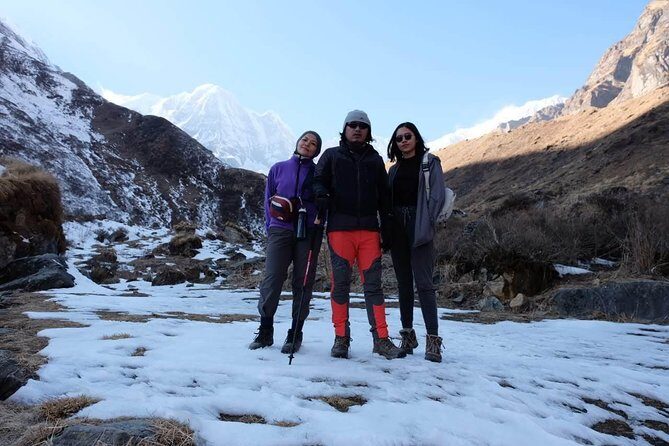
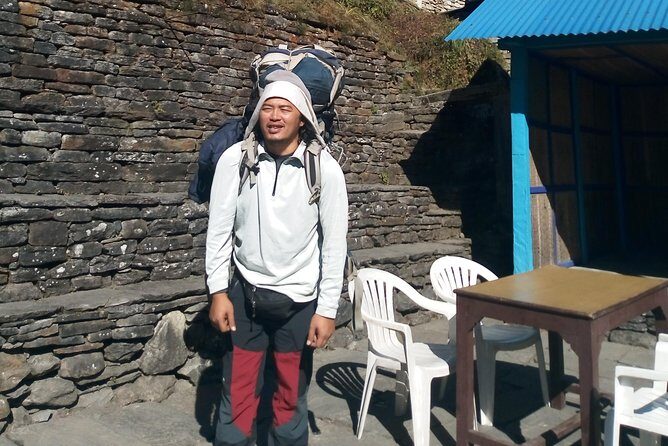
Two names show up strongly: Prakash as the main guide, and Raj as part of the support team (with other names like Kum and Papa Nepal mentioned too). That matters because Annapurna Base Camp is not only a physical journey. It’s also an information journey.
When your guide is described as informative and professional, you get more than directions. You start understanding what you’re seeing: why certain peaks matter, why Machhapuchhre is off-limits for climbing, and how the villages and vegetation change as you gain altitude.
One review also highlights the guide’s humor and relaxed presence. That’s not just entertainment. Humor helps you keep stress low when you’re dealing with cold, fatigue, or the occasional frustrating moment on a trail.
Poon Hill + Base Camp: why the views feel like a storyline
A lot of trekking routes give you one big view at the end. This one gives you a narrative of views.
- Poon Hill sets the stage. You learn the peak names and see the shape of the Annapurna range like an atlas made of clouds and rock.
- Annapurna Base Camp pays it off. The amphitheater effect makes the landscape feel engineered by nature for scale and drama.
- Jhinu Hot Spring finishes the emotional arc. It’s a grounded, human ending to an otherwise intense altitude stretch.
If you care about scenery, this rhythm keeps you engaged every day. You aren’t waiting for the final payoff without anything to notice in the meantime.
Practical advice so you enjoy it more (not just survive it)
A trek is a gear test and a rhythm test. With Annapurna, here are the simple moves that tend to make days better:
- Pack layers for cold morning starts and warmer afternoons.
- Keep a small stash of snacks for low-energy moments.
- Take altitude seriously without panicking: slow effort beats speed.
- Don’t ignore your feet. Good socks and careful footwear reduce day-to-day misery.
- On the downhill stretches (like returning from higher points), protect your knees with controlled steps.
And if you get stuck thinking too hard, use a guide strategy: ask what you’re looking at. The more you understand the landscape, the easier it is to stay calm and enjoy the work.
Should you book this Annapurna Base Camp trek?
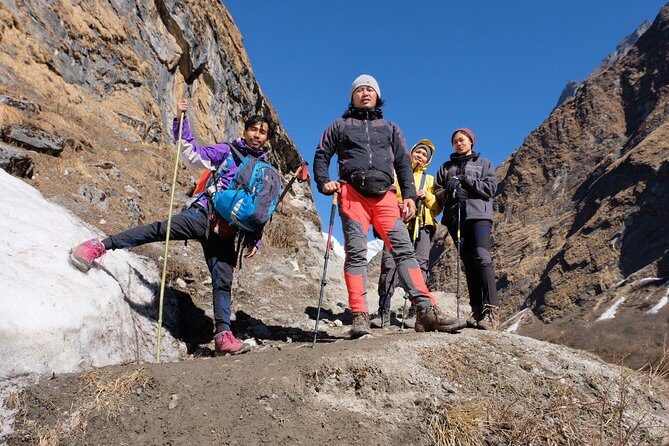
Book it if you want a guided trek with a strong support feel, especially if you like the idea of combining Poon Hill views, Gurung village culture, Annapurna Base Camp at 4,130m, and Jhinu Hot Spring for recovery. The named guide team and the repeated notes about organization, professionalism, and reassurance are exactly what you want in the mountains.
Think twice or confirm details first if you’re trying to fit this into a strict schedule, because your purchase info includes an approx. 2-day mention while the trek plan runs 10 days. You don’t want a calendar surprise after you’ve planned flights and vacation days.
FAQ
FAQ
Where does the trek start and end?
It starts in Thamel, Kathmandu (44600), Nepal, and the activity ends back at the same meeting point.
What time does the tour start?
The start time is listed as 5:00 am.
How long is the experience?
The overview shows 2 days (approx.), but the provided day-by-day plan runs for 10 days. You should confirm the final schedule when booking.
What is the highest elevation on this trek?
The trek reaches Annapurna Base Camp at 4,130 meters.
Is this a private tour or shared group?
It’s listed as a private tour/activity, meaning only your group participates.
Does the route include Pokhara and road transfers?
Yes. The plan includes a drive from Kathmandu to Pokhara (6–7 hours), plus drives connected to the trek between Pokhara, Nayapul, and back again.
What places do you trek through on the main route?
The plan includes Ghandruk, Sinuwa, Deurali, Annapurna Base Camp, Bamboo, and Jhinu Hot Spring, plus Nayapul as a connection point.
Do you climb Machhapuchhre?
No. Machhapuchhre is considered sacred and is off-limits for climbing, though you can see it from viewpoints.
What cancellation window is offered for a full refund?
You can cancel up to 3 days in advance for a full refund, and cancellation within 3 days does not receive a refund.
What kind of guide support should you expect?
The reviews highlight a guide named Prakash described as informative and attentive, with additional support from Raj and other team members like Kum and Papa Nepal. The overall tone is professional and reassuring.