REVIEW · KATHMANDU
Annapurna Tilicho Lake Trek
Book on Viator →Operated by Accessible Adventure Pvt. Ltd · Bookable on Viator
One of Nepal’s toughest weeks, with big payoffs. This Annapurna Tilicho Lake Trek links the Annapurna Circuit rhythm with the push to the world’s highest lake, Tilicho, then rolls you over Thorong La and into Poon Hill’s early-morning view show. You’ll walk through thick forest, then dry Manang country, then high-alpine moonscapes that feel like they belong on a different planet.
Two things I like a lot: you get a thoughtful acclimatization day in Manang, and you’re not left guessing with a supported setup that includes an English-speaking trek leader plus porter help. One consideration: you’re moving through serious altitude, including Thorong La at 5,416m, so you’ll want to take pacing and rest seriously, not just chase the summit vibes.
In This Review
- Key things to know before you go
- Why Tilicho Lake plus Thorong La feels like two treks in one
- Price and logistics: what $1,430 really covers
- Day-by-day pacing from Kathmandu to Syange and Dharapani
- From Chame to Manang: forests, apple country, and dry-air acclimatization
- Tilicho Lake: steep scree, glacier steps, and the payoff
- Thorong Phedi to Muktinath: the pass day and the descent mood swing
- Poon Hill sunrise and the route down to Pokhara via villages
- Comfort, gear, and the support system that matters on this trek
- Who should do this trek, and who should think twice
- Should you book this trek with Accessible Adventure?
- FAQ
- How long is the Annapurna Tilicho Lake Trek?
- Where does the trip start and what airport is used at the end?
- What’s the maximum group size?
- Are permits included?
- Is a trek leader provided?
- Are porters included?
- What gear is provided?
- Are meals included during the trek?
- Do I need travel insurance?
- What are the main altitude highlights on this route?
Key things to know before you go
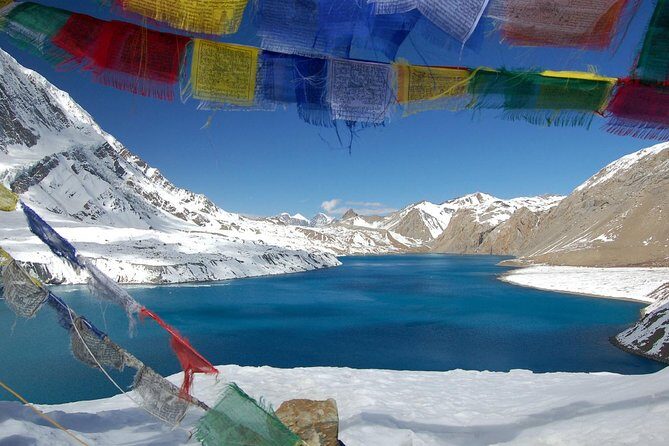
- Tilicho Lake is the headline: expect scree, boulder sections, and a real high-lake approach rather than an easy lake stroll.
- Small group size: up to 12 travelers, which usually means less bottlenecking on narrow trails.
- Support and load-sharing: porter service is included, plus both a trek leader and assistant trek leader.
- Gear is partly handled for you: down jacket and sleeping bag are provided (and returned after the trip).
- Thorong La timing matters: an early start from Thorong Phedi sets you up for that long, strenuous crossing.
Why Tilicho Lake plus Thorong La feels like two treks in one
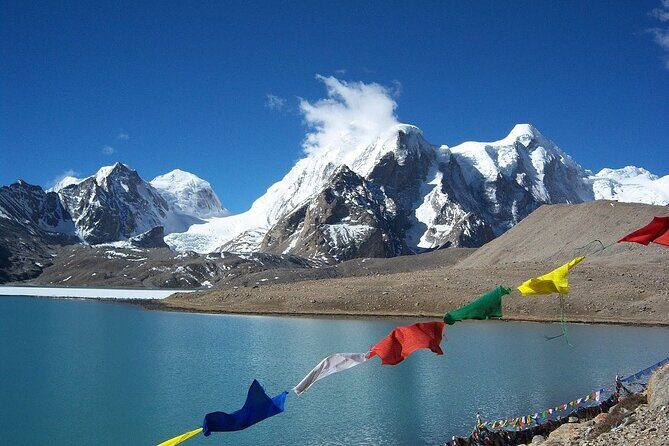
This route doesn’t just tack on one extra viewpoint. It’s built like a double-feature: first, the Annapurna Circuit-style trekking days that steadily shape your legs and breathing, then a dramatic detour to Tilicho Lake in Manang’s higher, drier country.
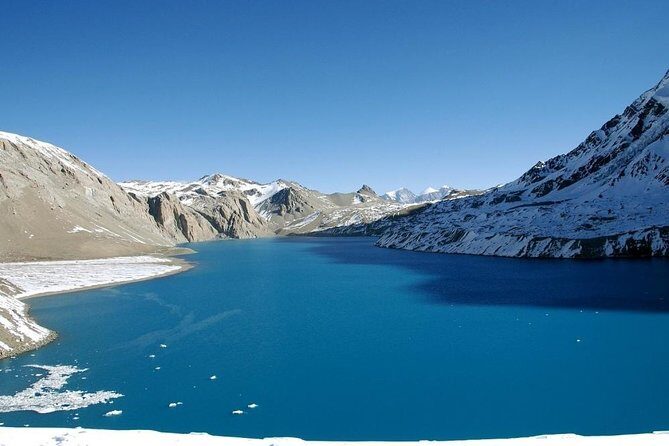
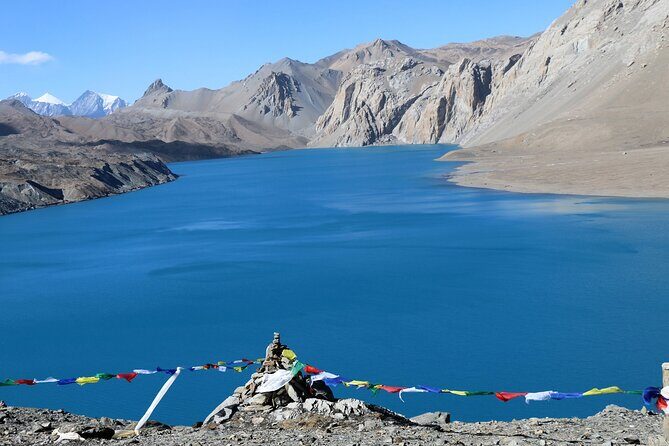
Tilicho is the “wow” that most people remember. The approach described in the trek flow includes a steep push with loose scree and boulders, plus a section across a safer-looking glacier area with no crevasses mentioned. In plain terms: you’ll work for the lake, and when you reach it, it doesn’t feel like a checkmark. It feels earned.
Then comes the second big act: Thorong La. The climb is described as long and strenuous, with a steady stream of false summits before the pass at 5,416m. After that, the whole mood shifts to descending travel—still tough, just in a different way. If you like challenge, this trek gives you challenge in two flavors.
You can also read our reviews of more hiking tours in Kathmandu


Price and logistics: what $1,430 really covers
At $1,430 per person for a roughly 20-day trip, the value isn’t just the route. It’s what you’re paying for in organization, permits, and on-the-ground labor.
Here’s the practical breakdown you should care about:
- Permits handled: ACAP and TIMS paperwork is included. That’s a big deal in Nepal, because it keeps your trip from turning into a last-minute scramble.
- Guiding and assistant support: the trek includes an experienced, English-speaking trek leader plus an assistant trek leader. The ratio listed supports smaller-group handling.
- Porters: porter service is included (with a stated ratio of 2 trekkers to 1 porter). This matters because trekking with altitude fatigue is no joke; taking weight off your back is one of the clearest ways to improve your odds of finishing well.
- Gear support: a down jacket and sleeping bag are provided, then returned after completion. That reduces what you need to pack or rent.
- Transportation and transfers: you’re not only dropped at the trailhead. The itinerary includes transfers such as Kathmandu-to-Syange and transfers around the end of the trek, including the bus from Pokhara to Kathmandu.
- Dinners included: welcome and farewell dinners are part of the package.
What’s not included matters too: travel insurance, international airfare, Nepal entry visa, and most on-trek meals are marked as not included. There are also no hot showers during the trek listed as included. So if you want full comfort, you’ll need to budget and accept the basic mountain-lodge reality.
Day-by-day pacing from Kathmandu to Syange and Dharapani
Your trek begins with an easy win: Kathmandu arrival, visa/custom formalities, then a private vehicle to your hotel. You’re greeted on arrival with the organizer’s signboard and name pickup, so you’re not stumbling around the airport wondering where to go. That sets a calm tone for a trip that later turns very physical.
On Day 2 you ride out to Syange. This is a long travel day (listed at about 8 hours), using a mix of paved highway and more winding roads before reaching Syange over a bumpy stretch. It’s scenic, but think of it as your legs’ “warm-up” day, not your first training hike.
Day 3 is your first real trekking day: Dharapani (with a temple mention) through a trail that includes a suspension bridge, oak forest, and a dramatic valley narrowing into a deep gorge. One of the helpful details in the walk description is the rhythm: villages, bridges, and waterfall scenery become a repeated pattern for the next few days. You also get a cultural touch—mani stones and a local custom to walk on the left-hand side of the mani walls.
Logistics-wise, Day 3 is also where you’ll learn your pace. You’re walking about 6–7 hours and sleeping in a local lodge. This is the part where you should keep an eye on how your breathing feels, because you’re building a pattern before the altitude escalates.
From Chame to Manang: forests, apple country, and dry-air acclimatization
Day 4 takes you to Chame. The path is described as a gentle climb at first, then you’re rewarded with views toward Annapurna II (7937m). You also move through a vegetation shift—pine and fir appear as you gain height. A lot of trekkers underestimate how much this matters. When trees thin out and air gets drier, you’ll feel the trek differently, even before the real pass days.
Day 5 goes toward Pisang. Expect rich forest of blue pine and fir, then cliff-side trail sections and a steep climb after crossing bridges. The route includes a big visual moment described as a massive rock face of Mui Tscho (Paunde Danda). You also pass remnants of a Tibetan resistance-era presence, though what you see today is more “local life” than history museum vibes—orchards, tea houses, and the normal Himalayan village pace.
Day 6 arrives at Manang, and this is where the trek starts acting like a high-altitude expedition. Manang is described as a drier area with less monsoon influence because of the Annapurna Range. The route also mentions different options on either side of the Marshyangdi River and specifies that the northern route is taken for better views. You’ll notice the terrain is drier, the villages look tougher, and the air starts to feel like a separate thing from the ground you’re stepping on.
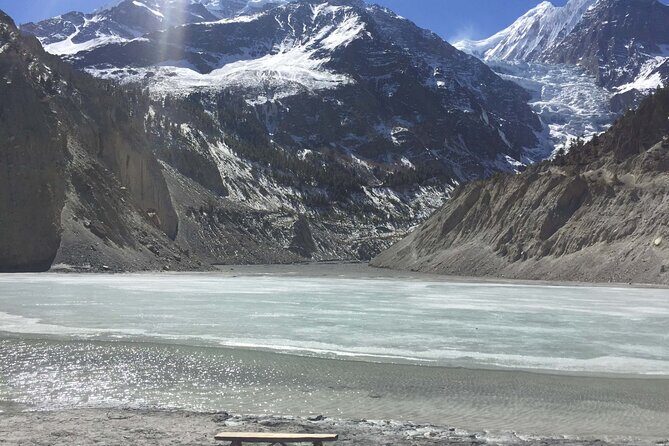
Day 7 is your acclimatization day in Manang. This is one of the most valuable pieces of the itinerary: you don’t just rest and hope for the best. You’re encouraged to stay active with short walks to higher ground, and there’s time to visit sites like Bodzo Gompa or Gangapurna Lake. It also mentions that Manang has an Himalayan Rescue Association presence, including volunteer western doctors during trekking season. Even if you don’t need medical help, it’s a reassuring “this place prepares” signal.
Tilicho Lake: steep scree, glacier steps, and the payoff
Tilicho is on Days 9–10 in this itinerary, and the day-by-day structure is built around a gradual push before the final lake approach.
Day 9 reaches Tilicho Base Camp. The trek includes a recently constructed path up toward a high ridge, with an intersection where you’re told a route keeps altitude but is steep and scree-heavy (described as the old path), while the newer route goes a different way. Then you descend on switchbacks carved through scree slopes into a side valley, with Tilicho Base Camp at the bottom. In real terms: the trekking team is managing risk and fatigue via route choice, not just following a fixed “old-school” line.
Day 10 is Tilicho Lake day. The approach begins from Tilicho Base Camp, with a walk that goes along the shore to a plain, then aims for a saddle in the ridge above. The description is direct about the conditions: steep path, loose scree, and boulders. You then cross and step onto a glacier area described as safe, without crevasses, and follow it up on the left (south) side. After multiple saddles and a watershed pass, you descend into a small valley where the path turns south—then the lake experience is what you’ve been building toward.
Here’s the key practical takeaway: even though this is the “Tilicho day,” it’s not a casual hike. You’ll want proper footwear for loose ground and a steady pace that doesn’t spike your breathing.






Thorong Phedi to Muktinath: the pass day and the descent mood swing
On Day 12 you reach Thorong Phedi. The itinerary notes Thorong Phedi is a busy settlement for tired trekkers and climbers, and some visitors attempt a hike to High Camp. But the trek leader team described here discourages that for safety and sleep quality reasons, because tomorrow’s pass day is already tough enough. That’s a smart strategy: the body needs sleep more than “extra altitude practice” on the night before.
Day 13 is Thorong La to Muktinath, and the pass day is framed as both strenuous and long. You start with a gradual climb, but the route includes false summits and rising altitudes before you reach the pass at 5,416m. When you’re at that altitude, the work isn’t just legs. It’s breath control and pacing discipline. The description even hints that at such height, you might feel lethargic—so you keep moving, but don’t rush.
Then you reach Muktinath and Day 14 continues onward to Marpha. The itinerary includes an early visit to Muktinath temple area, then a downhill walk toward Ekley Bhatti. This is where trekking poles become more than a “nice-to-have.” The descent is described as steep, and rushing is the easiest way to tighten up your knees.
The route also mentions Jomsom and wind management: a note says a full face mask and wind stopper jacket help protect you from windblast. If you’re sensitive to cold and wind, plan for that. High passes may be the obvious part, but valley wind can be the sneaky discomfort.
Poon Hill sunrise and the route down to Pokhara via villages
After Day 14 and Day 15, the trek enters a more “people-and-goods” phase. Day 15 includes Marpha apple country vibes and a mention of stopping in Tukuche with views toward Dhaulagiri icefall. You also walk through villages such as Tukuche, Largung, and Kobang to reach Kalopani.
Day 16 drops you to Tatopani. The itinerary highlights views of Annapurna I, then a descent over about 3 hours after lunch stop at Dana. It also flags the deep Kali Gandaki gorge for scenery. Tatopani includes a natural hot spring, which is basically your recovery reward after days of downhill stress.
Day 17 heads to Ghorepani, with a long climb from about 1,190m to about 2,780m. The route passes villages like Ghare, Shika, Phalate, and Chhitre, including communities from Magar and Gurung backgrounds. Then you go to bed early because sunrise at Poon Hill is the next day’s big moment.
Day 18 is Poon Hill sunrise, then the trek continues down toward Nayapul (with Ulleri, Tikhedhunga, and Birethanti named along the way). After that, you connect to Pokhara. This is a satisfying shift: after high passes and lake grit, sunrise and village trails feel human-scale again. And you’re still rewarded with new angles on the Annapurna range.
Comfort, gear, and the support system that matters on this trek
This trek’s comfort level is mostly about logistics and fatigue management, not luxury.
The big practical help points:
- You get down jacket and sleeping bag provided, returned after completion. That’s valuable if you don’t want to buy or rent cold-weather gear.
- Porters reduce load stress with a stated ratio of 2 trekkers per porter. That can be the difference between finishing strong and limping into the finish.
- Lodges along the route keep you moving through a familiar pattern: walk, lodge, eat, sleep. The itinerary includes local lodge stays such as Dharapani, then later points like Yak Kharka, Thorong Phedi, and so on.
- Meals are not fully covered in the package description. Welcome and farewell dinners are included, and Kathmandu/Pokhara accommodations include breakfast. But trek-day lunches/dinners are marked not included, so you should budget for food along the way.
One more subtle but important detail: the included “medical kit carried by your trek leader.” You don’t want to need it, but for altitude trekking, it’s a serious layer of responsibility.
Who should do this trek, and who should think twice
You should strongly consider this trek if:
- you’re comfortable with a multi-day plan that includes steep climbs and long walking days
- you want the mix of culture + high-mountain challenge, not just a scenic loop
- you like early mornings and long effort days, like the Thorong La crossing and the Poon Hill sunrise
You should think twice (or ask lots of questions before booking) if:
- you get discouraged by frequent altitude changes and long pass-day exertion
- you’re hoping for a gentle, low-stress route. This itinerary includes a true high pass (Thorong La) and a committed Tilicho approach with scree and steep sections
- you’re counting on hot showers as part of “standard comfort” (not listed as included)
The route is built for moderate fitness, but altitude punishes overconfidence. The itinerary itself signals that: acclimatize in Manang, then handle the pass days with patience.
Should you book this trek with Accessible Adventure?
If you want a guided Annapurna route that handles the important stuff—permits, leaders, porter support, key gear, and transport links—this is a strong fit. The package also includes welcome and farewell dinners, and the trek structure is clear about acclimatization and managing the hardest days.
I’d book if you match the energy: willing to work, respect altitude, and enjoy the long walk as part of the experience—not just the big photo moments. The route rewards that mindset with Tilicho Lake, Thorong La at 5,416m, and a Poon Hill sunrise that turns early starts into a personal victory.
I’d hesitate if you need maximum comfort, guaranteed meal coverage, or a fully relaxed pace. This is adventure trekking. The support helps, but your body still has the final vote.
FAQ
How long is the Annapurna Tilicho Lake Trek?
It’s listed as about 20 days total, including trekking days and travel days.
Where does the trip start and what airport is used at the end?
It starts in Kathmandu. At the end, you’re transferred to TIA airport in Kathmandu about 3 hours before your scheduled international flight.
What’s the maximum group size?
The tour is listed as having a maximum of 12 travelers.
Are permits included?
Yes. The itinerary states that necessary permits are included, including ACAP and TIMS paperwork.
Is a trek leader provided?
Yes. It includes an experienced, English-speaking trek leader and an assistant trek leader.
Are porters included?
Yes. Porter service is included, with a listed ratio of 2 trekkers to 1 porter.
What gear is provided?
The package includes a down jacket and a sleeping bag. It also includes a trekking bag/duffel bag, a t-shirt, and a trekking map (to keep).
Are meals included during the trek?
Meals during the trek are marked as not included, while welcome and farewell dinners are included. Breakfast is included with some accommodations (and the included list mentions breakfast items), so it’s best to confirm the exact meal plan per day before you go.
Do I need travel insurance?
Travel insurance is listed as not included.
What are the main altitude highlights on this route?
The itinerary includes Tilicho Lake and the Thorong La pass at 5,416m, plus a significant rise to Ghorepani and the early hike to Poon Hill.