REVIEW · KATHMANDU
Everest Gokyo Lake Trek
Book on Viator →Operated by Accessible Adventure Pvt. Ltd · Bookable on Viator
Gokyo Lakes hit different than Everest Base Camp. I love the turquoise glacial lakes framed by 8000m peaks, and I love that Gokyo Ri puts big views right behind the third lake. One possible drawback: this trip leans on the short-but-serious flight to Lukla and a moderate trekking pace, so it’s not ideal if you want zero effort days.
I also like how organized this feels on the ground: airport pickup in Kathmandu, a small group (max 20), and real human support from guides and porters such as Shiva and Himal (with porters like Shobit highlighted in feedback). Plus, you get down jacket and sleeping bag use while trekking, which helps a lot if you’re traveling light.
In This Review
- Key Highlights You’ll Actually Care About
- Why the Gokyo Lakes Feel Worth the Effort
- Price and Inclusions: What $1,290 Really Buys You
- What’s included (the big-ticket items)
- What’s not included (so you don’t get surprised)
- Day 1 in Kathmandu: Arrive, Settle, and Don’t Rush
- Day 2: Lukla to Phakding and Your First Real Khumbu Walk
- Day 3: Namche Bazaar and the Acclimatization Core
- Day 4: Syangboche, Everest View Hotel, and Sherpa Museum Time
- Day 5: Rhododendron Forests to Dole (Plus Those High-Pasture Kharkas)
- Day 6: Into Gokyo Valley and Onto the Ngozumpa Glacier Area
- Day 7: Gokyo Ri Sunrise Views and a Big Peak Checklist in Real Life
- Day 8: Downhill Toward Namche via Waterfalls and Spring Rhododendrons
- Day 9: Namche Back to Lukla—Crossing Suspension Bridges and Getting Air Back
- Day 10: Lukla to Kathmandu and a Farewell Dinner Near Thamel
- Day 11: Airport Transfer Out of Nepal
- Pacing, Altitude Reality, and What to Pack
- Is This Tour for You? Best-Match Checklist
- Should You Book This Everest Gokyo Lake Trek?
- FAQ
- What is the duration of the Everest Gokyo Lake Trek?
- Where does the trek start and end?
- What time does the activity start?
- How much does the trek cost?
- What level of fitness do I need?
- How many people are in the group?
- What’s included in the price besides trekking?
- Are meals included during the trek?
- Can I cancel for a full refund?
Key Highlights You’ll Actually Care About
- Lukla flight reality check: you’ll fly Kathmandu–Lukla and plan around early clear weather.
- Four or five of the six Gokyo lakes: Dudh Pokhari, Thonak Tsho, and Ngozumpa Tsho are the main stars.
- Gokyo Ri viewpoints: early climb (about 2 hours up) for wide panoramas of Everest-region giants.
- Ngozumpa Glacier time: you’ll get onto/near the glacier moraine area and learn as you walk.
- Private bathrooms at key villages: provided in Phakding, Namche, and Lukla.
- A guide who tells stories: you’ll even hear Bigfoot Yeti-style tales from a crew member during the trek.
Why the Gokyo Lakes Feel Worth the Effort
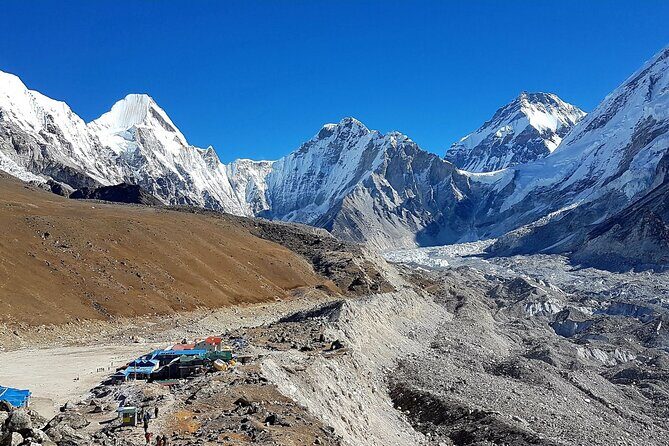
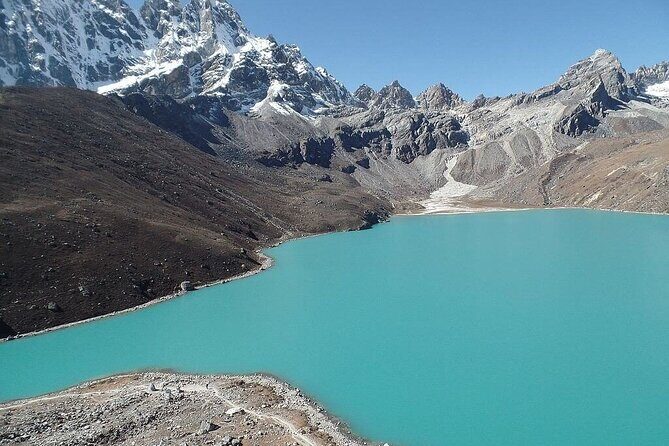
If you’re choosing between Everest-region routes, Gokyo has a strong argument: you’re not just chasing a single landmark. You’re trekking through a whole valley of glacial terrain where the color of the lakes looks almost unreal—turquoise water sitting under some of the world’s tallest peaks.
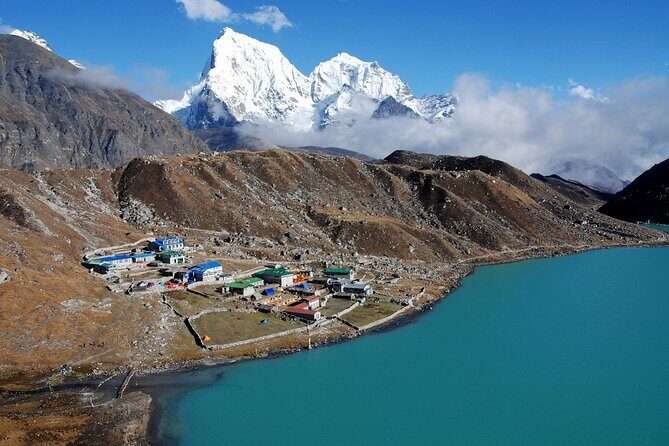
What makes this itinerary especially appealing is the way it’s built around viewpoint stacking. You start in the Khumbu tradition (Namche acclimatization), then you shift your attention toward the Gokyo Valley. From the Gokyo Lakes side, Gokyo Ri rises behind the third lake and gives you that wide, layered view of Everest and neighboring giants—exactly the kind of “wait, I can see all that?” moment trekkers chase.
I also appreciate that the lakes aren’t just a quick photo stop. The plan focuses on multiple lakes (4–5 among the six) rather than turning the day into a checklist. You’ll also get time near the Ngozumpa Glacier and along the moraine areas, which changes the feel of the trek from mostly walking through villages to walking through glacial scenery.
Finally, there’s a small-but-fun human ingredient: during glacier time you’ll hear a story about the Bigfoot Yeti. It’s the kind of thing that makes the trek feel like more than moving from one stone milestone to the next.
You can also read our reviews of more hiking tours in Kathmandu


Price and Inclusions: What $1,290 Really Buys You
At $1,290 per person for an 11-day trek, the value depends on what you usually have to arrange yourself. Here, the package is doing the heavy lifting.
What’s included (the big-ticket items)
You’re covered for:
- Round-trip flights Kathmandu–Lukla and back, including departure taxes
- Airport transfers in Kathmandu via private vehicle
- 2 nights in Kathmandu at a 3-star category hotel with breakfast
- Lodges during the trek with best-available twin sharing
- Private bathrooms in Phakding, Namche, and Lukla
- One guide plus porters (notably: 1 porter for two people)
- Down jacket and sleeping bag use during trekking
- Permits: Sagarmatha National Park permit and TIMS fee
- Trek paperwork: trekking map and a trip achievement certificate
- A duffle bag, first aid kit, and accident insurance for staff
That’s a lot of operational cost baked in—especially the Lukla flights and the permit setup.
What’s not included (so you don’t get surprised)
You’re not covered for:
- Three daily meals with tea/coffee during the trek (the only listed meals are breakfast in Kathmandu)
- Tips and gratuities for trekking staff and drivers
- Fuel surcharge and GST
- Any extra internet/phone costs if they aren’t free
- Things like “private transportation” that aren’t part of the standard pickup/transfer
So my practical advice: budget extra cash for lunch and dinner during the trek, plus tipping. If you already know lodge food prices aren’t cheap in peak season, you’ll avoid that late panic.
Day 1 in Kathmandu: Arrive, Settle, and Don’t Rush
The trek starts in Kathmandu at Tribhuvan International Airport. An airport representative meets you and you’re transferred to your hotel in a private vehicle. You’ll also have the official welcome vibe—an Accessible Adventure signboard outside the terminal—so you’re not playing guessing games with drivers.
This day matters more than it looks. You want a good sleep, especially if you’re heading to Lukla early the next day. And since you get two Kathmandu hotel nights later (including a farewell dinner near Thamel), the operator keeps Kathmandu time practical instead of stuffing it with extra tours.
Tip: if you can, do one easy task today—buy essentials like sunscreen, a refillable water plan, and any last-minute socks—then go to bed early.






Day 2: Lukla to Phakding and Your First Real Khumbu Walk
Morning takes you to Lukla, and that flight is its own special kind of nerves. The Lukla airfield is high altitude, and the runway is short with a notable elevation difference—so expect a real takeoff/landing experience.
Once you land, you trek toward Phakding. The route gives you that quick shift from airport reality to mountain reality: green slopes, river valleys, and first views of towering peaks like Kusum Kangraru.
This isn’t the hardest day, but it’s where you start syncing your body to the pace. Don’t chase speed. Walk steady, take breaks before you’re out of breath, and keep your pack weight sensible.
Day 3: Namche Bazaar and the Acclimatization Core
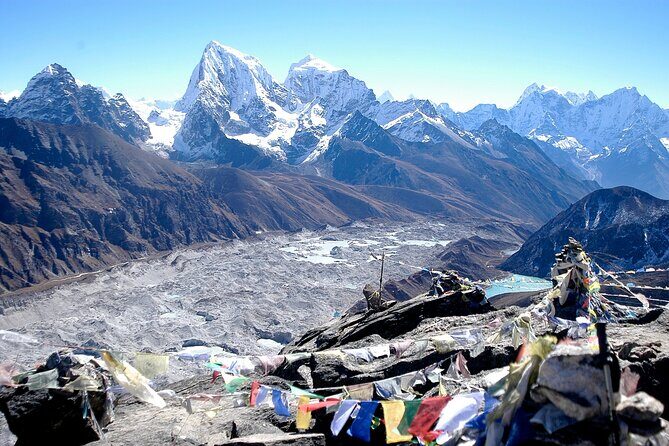
You follow the Dudh Koshi river, climbing through pine and cedar forests until Namche Bazaar. Namche isn’t just a trekking stop—it’s a historic trading post where Nepalese and Tibetan traders swapped goods like salt, dried meat, and textiles.
This is one of the best places on the Everest-region map to get your head around how mountain life works: markets, crafts, and that Sherpa community energy you keep hearing about.
You’ll spend two days in Namche for acclimatization. On this first arrival day, you’ll also get first glimpses of Everest and neighboring peaks along the hike—those moments that make the altitude effort feel worth it.
Day 4: Syangboche, Everest View Hotel, and Sherpa Museum Time
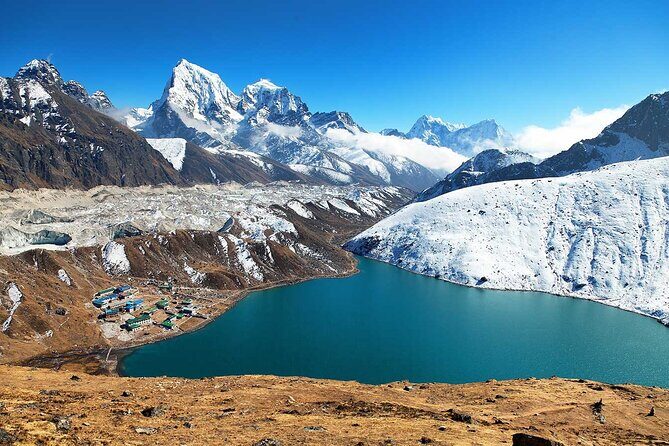
Today is your “eyes on Everest without overreaching” day. You climb to Syangboche Airport (around 3700m), which is described as among the highest airports in the world, then continue to Everest View Hotel for big panoramic views of Everest, Lhotse, Amadablam, Tawache, and more.
On the way back, you visit:
- Sherpa Culture Museum
- Everest Photo Gallery
This combination is smart. The views feed the dream, and the museum helps turn the dream into context. You’ll understand a bit better how communities relate to mountains—because trekking in this region isn’t just scenery, it’s livelihoods and history.
Day 5: Rhododendron Forests to Dole (Plus Those High-Pasture Kharkas)
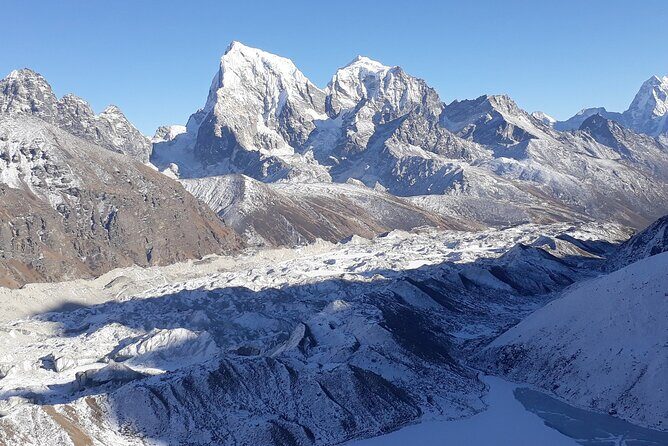
The day starts with easier trail walking, then climbs more steeply out of the valley. You move through rhododendron forests and then into areas with juniper and large conifers. If you’re traveling in spring, this day can be extra pretty because rhododendrons are blooming.
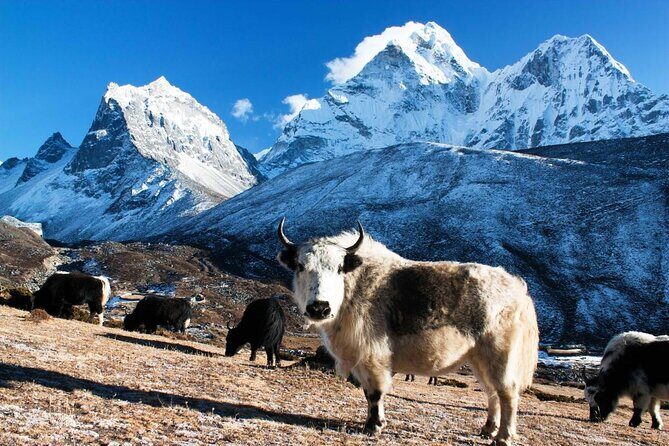
You’ll pass kharkas, the summer grazing settlements where herders bring yaks to higher pastures. The route goes through Tongba (around 3950m) and Gyele (around 3960m) before reaching Dole, where there are only a few hotels.
This day is a good test of your trekking rhythm. It’s not only about lungs. It’s about legs managing steady uphill while you’re already building altitude tolerance.
And yes, views of Khumbila and Tawache (6542m) can be incredible throughout the walk.
Day 6: Into Gokyo Valley and Onto the Ngozumpa Glacier Area
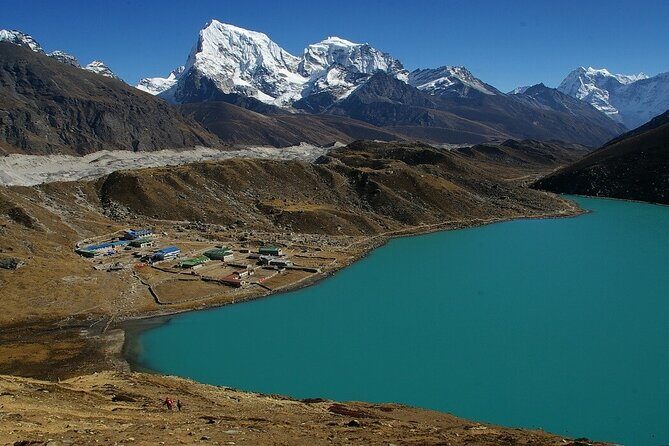
This is the day many people remember as the shift from Khumbu villages to true glacial terrain.
You climb up a ridge for views down the valley toward Kantega and up toward Cho-Oyu (8201m). After the ridge, the valley widens as you pass Pangka (around 4390m). Then you descend toward the riverbank before a climb begins again—this time onto the terminal moraine of the Ngozumpa Glacier.
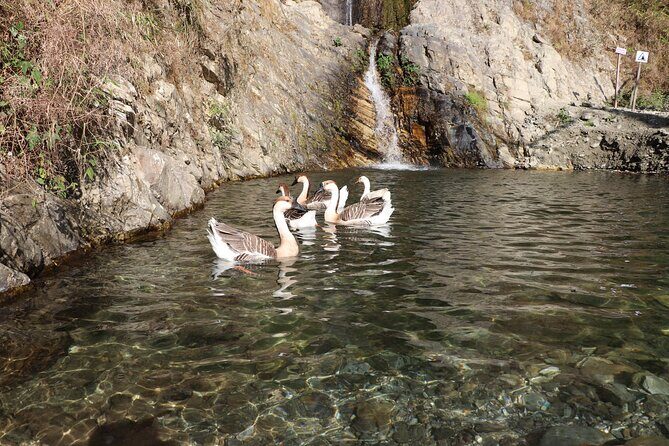
From there, the walking gets more “mountain-process” feeling: a steep climb up the moraine with switchbacks alongside the stream. You reach the first small lake at about 4650m, where a family of green Brainy ducks lives.
That detail sounds small, but it’s exactly why this trek stands out in memory. When the trek gets tough, tiny signs of life keep you grounded.
Day 7: Gokyo Ri Sunrise Views and a Big Peak Checklist in Real Life
Early wake-up and a climb to Gokyo Ri is the peak moment of the trek for many hikers. The climb takes about 2 hours up.
From the top, you get sweeping views of the Mahalangur Himalayan range, including Cho-Oyu, Gyachung Kang, Everest, Lhotse, Makalu, Cholatse, Tawache, plus a clear look at Ngozumpa Glacier (called the largest glacier in Nepal in the trek description).
This is where the itinerary earns its keep. Gokyo Ri works like a 360-degree altitude reward: you finally see how the lakes and surrounding ridges fit into the bigger Everest-region picture.
Practical note: dress warm. Even if you start calm, mountain mornings can stay cold, especially if clouds roll in.
Day 8: Downhill Toward Namche via Waterfalls and Spring Rhododendrons
After Gokyo Ri, the trek follows a downhill route with views that keep changing as the angle shifts toward Cho-Oyu.
You’ll walk through areas with waterfalls and experience spring growth conditions if you’re traveling in the right season—there’s mention of Himalayan flora and fauna and rhododendron trees blooming.
As you descend, you may get chances for a dual view of snow-capped peaks like Amadablam, Tawache, Thamserku, and more, including a far look at Tengboche from Mongla.
Then you descend toward Sansa, which connects you back to the main Everest trail, bringing you to Namche Bazaar.
This is also a good day mentally because your body knows it’s moving toward lower elevations, even though you still have to walk.
Day 9: Namche Back to Lukla—Crossing Suspension Bridges and Getting Air Back
Today repeats the downhill logic from earlier, but downhill in mountains is still downhill effort—just a different kind.
You start with some Namche time. There’s mention of Everest-related souvenir shopping and a large market event on Saturdays in Namche where trekking and climbing gear gets traded.
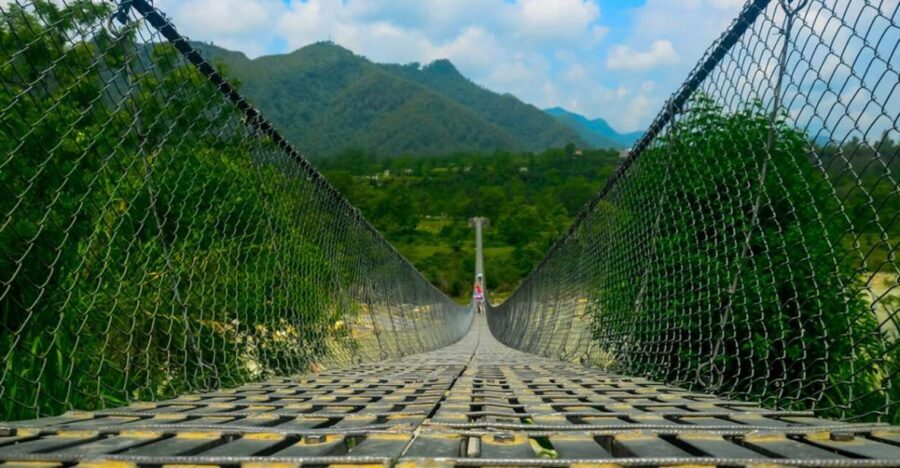
Then you descend along the route back toward Lukla, crossing the Dudh Koshi River multiple times using suspension bridges. As elevations drop, the breathing generally becomes easier and easier, and the whole trekking feel turns more relaxed.
This day is your momentum builder. You’re not climbing toward the clouds anymore—you’re walking your way back into the living-world feeling of lower valleys.
Day 10: Lukla to Kathmandu and a Farewell Dinner Near Thamel
You take a morning domestic flight from Lukla to Kathmandu, typically scheduled early for clearer weather. Once you land, you’re assisted with checking in at your hotel.
Then you get an invitation to a farewell dinner at a cultural restaurant near Thamel. It’s the kind of night that helps the trek land emotionally—food, rest, and a chance to reflect while your body still remembers the trail.
Day 11: Airport Transfer Out of Nepal
Your last day is straightforward: you’re transferred to Tribhuvan International Airport with assistance that gets you there about 3 hours before your international flight.
It ends where it started, but with a different feeling: you’ll look at Kathmandu air and feel like you’ve come back from another world.
Pacing, Altitude Reality, and What to Pack
This trek is listed as requiring moderate physical fitness. That sounds generic, but the itinerary gives you a clear hint: you’ll do a mix of steady climbs, a couple acclimatization-focused days in Namche, and then multiple days where you’re going up and down between valleys and glacial terrain.
My best advice for keeping things smooth:
- Walk at a pace you can sustain for hours. Don’t sprint short sections; you’ll pay later.
- Use acclimatization time in Namche like it’s part of the plan, not downtime. It’s there to help you adjust.
- Expect cold mornings around altitude and rely on the provided down jacket and sleeping bag use during the trek, but still bring gloves/hat if you own them.
- Keep your daypack light so you’re not dragging extra weight on moraine switchbacks and lake-area climbs.
Also, because private bathrooms are provided in Phakding, Namche, and Lukla, you can plan for comfort at key points. That doesn’t mean every lodge is the same, so don’t treat bathrooms like a guarantee everywhere—just like a nice upgrade at those villages.
Is This Tour for You? Best-Match Checklist
You’ll probably love this tour if:
- You want Gokyo Lakes and glacier scenery more than a single iconic destination
- You like the idea of a big viewpoint climb at Gokyo Ri
- You’re okay with a trek that includes early starts, a couple climb-heavy days, and altitude management
- You want a structured package that handles flights, permits, and guide/porter setup
You might want to reconsider if:
- You’re extremely sensitive to flight day logistics (Lukla is part of the plan both directions)
- You’re looking for a very easy stroll with no uphill days
- You want every meal included (lunch and dinner during the trek are not listed as included)
Should You Book This Everest Gokyo Lake Trek?
If you’re torn between Everest-region options, I think this one is a smart choice when your priority is the Gokyo Lakes + Gokyo Ri panoramic views. The package value is strongest because it includes the big moving parts: Lukla flights, permits, guides/porters, and even trekking comfort gear like a sleeping bag and down jacket use.
I’d book it if you’re comfortable with moderate trekking and you can budget for meals and tips during the trek. I’d hesitate if you dislike flight-dependency or you’re hoping for fully included meals every day.
One final nudge: if you care about organization and a calm, supportive team feel, the feedback names that show up—guides like Shiva and Himal, plus porters like Shobit, and strong coordination from leadership such as Hari—are exactly the kind of human details that matter when you’re tired, cold, or just trying to keep your pace steady.
FAQ
What is the duration of the Everest Gokyo Lake Trek?
It runs for about 11 days.
Where does the trek start and end?
It starts in Kathmandu at Tribhuvan International Airport, and it ends back at the same meeting point area.
What time does the activity start?
The start time listed is 6:30 am.
How much does the trek cost?
The price is $1,290.00 per person.
What level of fitness do I need?
The tour lists moderate physical fitness as the requirement.
How many people are in the group?
The maximum group size is 20 travelers.
What’s included in the price besides trekking?
Included items include Kathmandu hotel nights (2), round-trip flights between Kathmandu and Lukla (with departure taxes), airport transfers, trekking permits (Sagarmatha National Park permit fee and TIMS fee), and trekking gear use like a down jacket and sleeping bag, plus guide and porter support.
Are meals included during the trek?
Three daily meals with tea/coffee during the trek are not included. Only breakfast in Kathmandu is explicitly listed as included.
Can I cancel for a full refund?
Yes. You can cancel up to 24 hours in advance for a full refund.