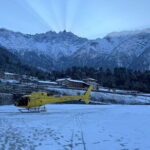
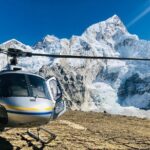
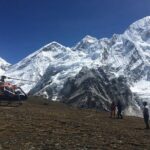
Everest Base Camp by helicopter is one of those plans that sounds unreal until you’re staring down the Khumbu from above. You’ll get big-mountain views that include Everest and neighbors like Lhotse, Nuptse, Pumori, Cho Oyu, and more, plus aerial time over Sagarmatha National Park. The real draw is hovering over Everest Base Camp, where even a short moment feels like a lifetime achievement.
What I like most is how efficiently the flight time is built for views: the helicopter ride runs about 1 to 3 hours inside an overall day of roughly 4 hours, and your package also covers park fees and taxes. The other strong point is the tight group size, with a maximum of 5 travelers, so it doesn’t feel like you’re stuck in a bus line with strangers. One consideration: this is an early start, with a 5:15 am departure time, and the price is a serious chunk of change—so you’ll want to be sure you’re chasing the helicopter-only viewpoint rather than a cheaper, slower option.
In This Review
- Key things to know before you go
- Everest Base Camp from the air: what you really see
- The early-morning rhythm at Tribhuvan Airport
- The flight window: about 4 hours total, 1–3 hours in the air
- Peaks and glacier views: how the scenery unfolds
- What’s included: you’re paying for more than flying time
- The human side: coordination that keeps stress down
- Group size and how it affects your experience
- Price and value: what $1,785 really buys you
- Who this tour fits best (and who should pass)
- Should you book Everest Base Camp by helicopter?
- FAQ
- Where does the helicopter tour start?
- What time does the tour begin?
- How long is the tour?
- How much time is spent flying?
- Is pickup included?
- What’s included in the price?
- What is not included?
- What information do I need to book?
- Is alcohol included, and is there an age limit?
- What’s the cancellation policy?
Key things to know before you go
- Hover over Everest Base Camp for that once-a-year-from-nowhere photo moment
- Up-close aerial views of Everest plus surrounding giants like Lhotse, Nuptse, and Pumori
- Sagarmatha National Park from the air helps you understand where the region sits on the map
- Small group size (up to 5) keeps things calmer at check-in and around the flight window
- Costs are bundled with taxes/fees and national park fees included in the listed price
Everest Base Camp from the air: what you really see
This tour is built around one idea: you get the Everest region in a single, fast visual hit. No grinding days of hiking, no waiting for a trail to reveal the mountain. Instead, you’re trading long effort for a more direct payoff—helicopter time with the peaks spread out like layers.
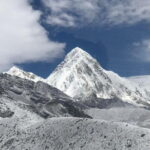
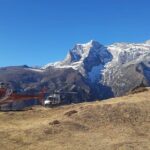
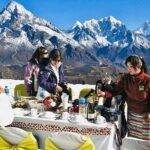
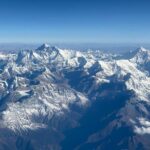
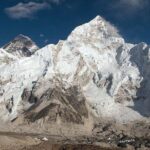
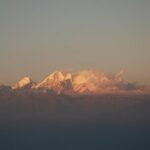
From the air, Everest doesn’t sit alone. You’ll have views of adjoining giants such as Mt. Lhotse, Mt. Nuptse, Mt. Pumori, Mt. Cho Oyu, and other nearby peaks. The “adjoining peaks” part matters because it changes how you understand Everest. Up close, you start seeing the entire Khumbu puzzle—how the ridges and valleys frame the taller summits rather than treating Everest as one isolated icon.
Another detail that stands out is the mention of the Khumbu Glacier near the Lhotse–Nuptse ridge. From ground level, glaciers can feel abstract. From above, you’re more likely to grasp the scale: ice fields that look like fixed white geometry, not just snow patches. Even if you don’t know every ridge name, you’ll likely leave with a clearer mental picture of how the mountains connect.
Finally, you’ll also get aerial sightseeing of Sagarmatha National Park, which is the region’s protected heart. That matters because it turns your trip into more than a view-only flight. You’re spending time inside the boundaries that define the Everest region’s landscape and conservation story—again, from a vantage point most people never reach.
A few more Kathmandu tours and experiences worth a look
The early-morning rhythm at Tribhuvan Airport
Your day starts at Tribhuvan International Airport (Ring Rd, Kathmandu). The listed start time is 5:15 am, and the tour ends back at the same meeting point. In other words: you’re not doing a long sightseeing crawl across the city that day. You’re doing a focused airport-to-air-to-airport schedule.
The package also notes pickup is offered, and you’ll use a mobile ticket. Practically, that usually means less hassle for you on the ground, especially if you’re juggling jet lag or you’re new to Kathmandu traffic. Still, because the start time is so early, I’d plan to treat the “pickup offered” part as helpful—not as permission to arrive late. Arrive ready so you don’t get stuck watching the clock.
You’ll likely spend part of the morning doing the airport-side steps (check-in and coordination). The good news is the tour isn’t described as a huge group operation; it has a maximum of 5 travelers, which typically keeps lines short and communication simpler.
The flight window: about 4 hours total, 1–3 hours in the air
The overall duration is listed as about 4 hours, with flight time ranging from 1 to 3 hours. That range is your clue that the flight portion can vary, so you should mentally treat the itinerary as time-flexible rather than locked down like a movie schedule.
What you’ll want to take away from the timing isn’t just the total. It’s that you’re spending a meaningful chunk of the tour “in the moment,” looking out the helicopter window while the peaks and ridges slowly come into view. For many people, that’s the real value: you get enough airtime to enjoy the scenery, not just a quick fly-by.
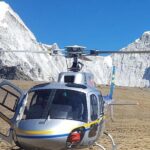
The tour description specifically calls out the experience of hovering over Everest Base Camp. That word—hover—is a big deal. A hover gives you a steady window to look down and frame photos, not just a blur while you pass overhead. It’s the difference between seeing Everest Base Camp as a dot and seeing it as a place with scale.
Peaks and glacier views: how the scenery unfolds
Here’s what you should expect your eyes to do during the flight. At first, you’re scanning the big shapes: Everest first, then neighboring ridges that help you orient what you’re looking at. The tour listing names several peaks, including Ama Dablam, Thamserku, Lobuche, and others along with Lhotse and Nuptse.
Then the view shifts from “spot the peak” to “understand the region.” Mt. Everest is the headline, but Lhotse and Nuptse help you see the geometry of the Khumbu area. With the tour mentioning the Khumbu Glacier along the Lhotse–Nuptse ridge, you’re not just getting summit shots. You’re getting a sense of how ice, ridges, and snowfields line up.
Aerial sightseeing over Sagarmatha National Park also matters because it gives you context for why this area is so tightly protected. Even from a helicopter, you’re not just watching mountains—you’re watching a protected region shaped by extreme elevation, fragile conditions, and conservation rules that exist for a reason.
What’s included: you’re paying for more than flying time
The price is $1,785.00 per person, and the inclusions are unusually clear about what you’re getting with that number.
Included:
- Accommodation as per itinerary
- All taxes, fees, and handling charges
- Local taxes
- National Park fees
That bundle is where the value starts to make sense. Many trips advertise a low base price and then add on taxes, park costs, and “handling.” Here, those items are already included. It doesn’t make the helicopter cheaper, but it helps you avoid surprise add-ons that can inflate the final bill.
Also included in the overall activity info:
- Pickup offered
- Mobile ticket
Not included:
- Excess luggage charges (where applicable)
- Alcoholic drinks, available to purchase
- Food and drinks, unless specified
So if you like to travel with a stuffed day bag, I’d keep an eye on your luggage plan. Excess charges can turn a smooth trip into an unnecessary expense. And because food is listed as not included unless specified, don’t assume there’s a meal waiting for you during the 5:15 am schedule. Plan to eat appropriately before the airport steps, or check what your package includes day-of.
The human side: coordination that keeps stress down
A helicopter to the Everest region is naturally high stakes. You’re up early, moving through airport processes, and expecting clear coordination. That’s where the operator support matters.
From the kinds of feedback associated with this provider, Hari comes up as a helpful coordinator—responsive, organized, and actively involved in getting things lined up. There’s also mention of support beyond the helicopter day, including help with arrival to and from the airport and recommendations for hotels and things to do in Kathmandu.
Why does that matter? Because helicopter logistics are unforgiving if you’re uncertain about timing, transportation, or what to do when you land back at the meeting point. When someone like Hari is responsive, you waste less time guessing and more time enjoying the view.
Group size and how it affects your experience
This is capped at maximum 5 travelers. That number matters in real life. It usually means:
- easier communication at check-in
- fewer delays from crowding
- a calmer feel around the flight window
It also shapes your expectations. This isn’t a sprawling, carnival-style helicopter event. It’s more likely to feel like a compact outing with a focused schedule. If you prefer small groups where you can actually follow what’s happening, this setup is a plus.
Price and value: what $1,785 really buys you
Let’s talk money honestly. $1,785 per person isn’t casual. You’re not paying for a scenic bus route; you’re paying for:
- helicopter flight time (about 1 to 3 hours)
- the rare add-on of hovering over Everest Base Camp
- aerial sightseeing over multiple landmark peaks
- Sagarmatha National Park fees and a long list of taxes/handling already included
- accommodation as per itinerary
- pickup and mobile ticket convenience
So the value isn’t that it’s cheap. The value is that the experience is concentrated. You’re buying time and access: a bird’s-eye understanding of the Everest region in hours, not weeks.
If you’re someone who wants the closest possible view of Everest Base Camp without committing to a full expedition, the price can start to feel less shocking. If you’re chasing a bargain, you’ll be happier putting that money into a lower-cost trekking plan. But for many travelers, the helicopter is the point.
Who this tour fits best (and who should pass)
This experience is a strong match if you:
- want Everest views but can’t spare many days
- like “see it now” trips with clear pacing
- are excited by aerial perspectives of glaciers and ridge systems
- value a small group and organized coordination
It might not fit you as well if you:
- hate early mornings (the day begins around 5:15 am)
- want food included as part of the package (food and drinks aren’t included unless specified)
- are sensitive to luggage costs (excess luggage charges may apply)
- are mainly looking for a cultural deep dive on the ground (this is primarily an airborne sightseeing format)
Should you book Everest Base Camp by helicopter?
If you’ve dreamed about Everest Base Camp and you want that “I’m really here” feeling without hiking to reach it, I think this is one of the most logical ways to do it. The key reasons are the hover over Base Camp, the named views of major peaks and the Khumbu Glacier area, and the fact that park fees and taxes are included so you can budget with fewer unknowns.
Before you book, do two quick checks:
- Confirm what your package includes under accommodation as per itinerary, so you know how the helicopter day connects to where you’re staying.
- Keep your luggage lean to avoid excess charges, and plan for food timing since food isn’t included unless specified.
If those boxes work for you, you’ll probably walk away with the kind of Everest memory that doesn’t need a long story. You’ll just remember the view, and how close it felt.
FAQ
Where does the helicopter tour start?
The tour starts at Tribhuvan International Airport on Ring Rd, Kathmandu 44600, Nepal.
What time does the tour begin?
The start time is 5:15 am.
How long is the tour?
The duration is approximately 4 hours.
How much time is spent flying?
Flight time is listed as 1 to 3 hours.
Is pickup included?
Pickup is offered, and the meeting point is Tribhuvan International Airport.
What’s included in the price?
Accommodation as per itinerary, all taxes/fees/handling charges, local taxes, and national park fees are included.
What is not included?
Excess luggage charges (where applicable), alcoholic drinks (available to purchase), and food and drinks unless specified are not included.
What information do I need to book?
You need the passport name, number, expiry date, and country for all participants.
Is alcohol included, and is there an age limit?
Alcoholic drinks are not included (they can be purchased), and the minimum drinking age is 18.
What’s the cancellation policy?
You can cancel up to 24 hours in advance for a full refund.