REVIEW · KATHMANDU
Everest Base Camp Trek with Island Peak Climbing
Book on Viator →Operated by Ace the Himalaya · Bookable on Viator
Two mountains, one tightly run plan. This Everest Base Camp trek plus Island Peak climb is built for active travelers who want real Himalaya time with acclimatization days that make the altitude feel more manageable, and small-group attention capped at 15. You’re also not stuck planning flights, permits, and gear logistics.
I especially like that the Kathmandu start is practical, not just a photo stop. You get picked up, get oriented, and there’s sightseeing before the trek, with guides who stay focused on how you’re doing, not just where you’re walking. On the trek, names like Sandip, Deepak, and Ram show up in trip support stories for being steady, patient, and careful about altitude pacing.
One drawback to consider: this is a physical challenge. Long walking days at high elevations come with real cold, thin air, and demanding segments like Everest Base Camp, Kala Patthar, and Island Peak’s headwall. If weather goes sideways, the schedule has to flex, and flights are planned around Lukla timing.
In This Review
- Key highlights worth your attention
- Kathmandu first: the calm start before the altitude
- Lukla flight and the gentle-until-it-isn’t start
- Namche Bazaar: your acclimatization day has a plan
- Tengboche to Dingboche: monasteries, mani stones, and big mountain sightlines
- The Nangkartshang hike: acclimatization that feels like a reward
- Lobuche and the glacier approach: where thin air starts to feel real
- Everest Base Camp: your closest look without mountaineering gear
- Kala Patthar: the hardest morning that pays back fast
- Chukhung to Imja Valley: from trekking to “training mode”
- Summit focus: Island Peak’s climbing training and the 4–6 hour push
- Weather spare day: flexibility when Lukla flights are the constraint
- The return: Tengboche, forests, and a Lukla finish with room to breathe
- Price and real value: what $3,300 is buying you
- Who this trip is best for (and who should think twice)
- Should you book it?
- FAQ
- What is the maximum group size?
- Where does the tour start and what time does it begin?
- Are airport transfers included?
- What kind of accommodation do you get in Kathmandu?
- What about accommodation on the trek?
- Is climbing equipment included for Island Peak?
- What permits are included?
- Is travel insurance included?
- Can you cancel for free?
- What happens if weather is poor?
Key highlights worth your attention
- Acclimatization built into the trek so you don’t just “go higher and hope”
- Small group size (max 15) for better guidance and quieter logistics
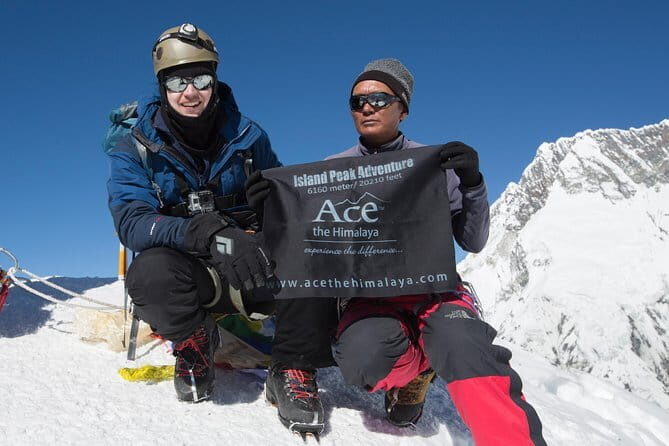
- Island Peak support that includes real training with climbing gear and technique
- Everest Base Camp plus Kala Patthar for maximum high-altitude payoff
- Filtered water on the trail using a Katadyn Pocket Water Filter
Kathmandu first: the calm start before the altitude
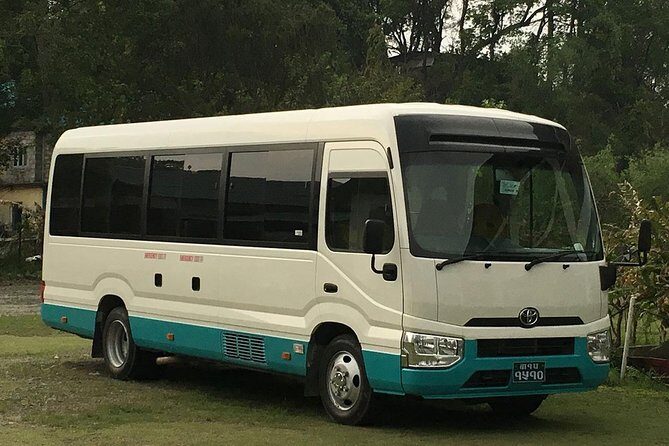
This trip begins in Kathmandu with airport support that helps you get oriented quickly. An Ace the Himalaya representative meets you at Tribhuvan International Airport, with an Ace signboard outside the terminal, and transfers you to your Kathmandu hotel in a private tourist vehicle. If your arrival is after 4 pm, your guide handles a trip briefing as a pre-trip meeting, so you can ask questions before the trek really starts.
The meeting timing matters because the Himalaya is not the place to hunt for details. You’ll be introduced to your trek leader/guide, and you’ll want your passport ready for the process. Your start time is listed as 8:00 am, so you’ll want to arrive with enough margin to settle in, sleep, and prepare mentally for the next day.
Value tip: the Kathmandu hotel is twin-sharing in a three-star property, with breakfast included for four nights. That’s not just comfort; it gives you a stable base to pack, charge devices, and keep your routine before the mountains strip everything down to essentials.
You can also read our reviews of more hiking tours in Kathmandu


Lukla flight and the gentle-until-it-isn’t start
The trekking route kicks off with a scenic domestic flight to Lukla (Tenzing and Hillary Airport) at about 2,804 m. It’s short—around 35 minutes—but it matters because it’s your first real altitude jump. After landing, you get a briefing and meet the porter crew before beginning the trail toward Phakding (about 2,610 m).
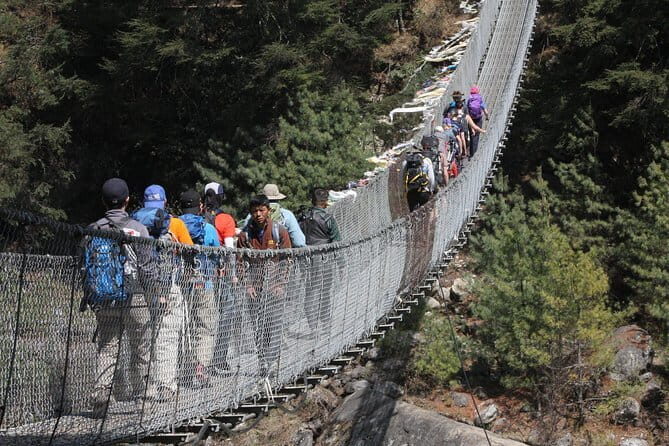
Phakding is the warm-up phase. You descend toward the Dudh Kosi River area and connect with the main trail, crossing suspension bridges decorated with prayer flags. Walking is described as easy that day, and that’s exactly what you want early on: steady effort, controlled breathing, and time to notice how your body reacts at altitude.
Small detail that’s a big deal: suspension bridges and lots of river crossings can be tiring even when the walking feels “easy.” If you’re prone to knee fatigue, take your time on the bridge steps and don’t rush the rhythm. You’ll thank yourself later when the days get longer.
Namche Bazaar: your acclimatization day has a plan
Namche Bazaar is the gateway town on the Everest route, and it’s also where your itinerary turns from walking into altitude strategy. The trail follows the Dudh Kosi banks, crossing multiple suspension bridges before entering Sagamartha National Park. As the path climbs steeply, the views start rewarding you for the effort.
Namche itself is a real hub: restaurants, lodges, shops, money exchange services, and internet cafes. That convenience matters because it helps you handle practical needs without losing trekking days. At the same time, it’s not a theme park. You’ll still feel the Sherpa culture clearly through daily life and local services.
The acclimatization day in Namche is one of the best parts of the trip because it blends altitude work with culture and viewpoint time. You’ll spend a day adjusting to the thinning air and head to a museum focused on Sherpa traditional customs. Then you hike up toward Syangboche Airport and the Everest View Hotel area—high enough to make the mountain views feel close, and just high enough to teach your body that rest and movement both matter.
In the support style stories I saw, guides like Sandip and Deepak are described as attentive and careful with how people feel. That focus is what you want on an acclimatization day: not just “go walk,” but “go walk, then reset.”
Tengboche to Dingboche: monasteries, mani stones, and big mountain sightlines
From Namche, you continue along the Dudh Kosi glacial-water route toward Tengboche at around 3,860 m. Tengboche is famous for its monastery, and the on-the-ground experience is more than sightseeing. Inside the gompa are ornate wall hangings, and there’s a 20-foot sculpture of Buddha. You’ll also have a chance to observe a prayer ceremony—scheduled either morning or evening based on how the day’s trekking works.
The next segment climbs toward Dingboche through Debuche and Pangboche, with bridges over Imja Khola and thousands of mani stones along the way. Dingboche sits at a higher altitude where you’ll want to take it slow. The trip emphasizes not rushing on this phase, which is smart. At these elevations, slow progress often feels like “nothing is happening,” but it’s how you arrive fresher for the glacier and summit viewpoints later.
You also get mountain sightlines here, including Lhotse, Island Peak, and Ama Dablam in the Dingboche area. Seeing Island Peak from the trekking world is motivating, but also a good reality check: you’re not just hiking now. You’re training for climbing later.
The Nangkartshang hike: acclimatization that feels like a reward
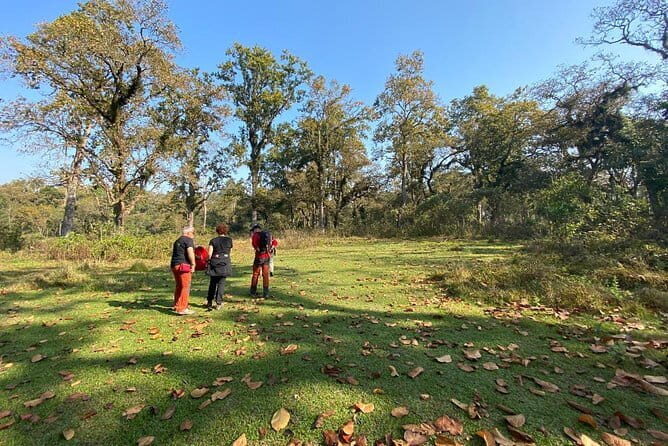
One full acclimatization day is built around a hike to Nangkartshang peak just above Dingboche. This day doesn’t push progress toward Everest Base Camp. Instead, it’s a viewpoint strategy with a clear payoff: if weather is kind, you can get sweeping views of Ama Dablam.
The afternoon is left open for resting or strolling around the village. That matters because fatigue at altitude isn’t only from walking. It’s also from cold nights, the effort of breathing, and the mental grind of constant “how am I doing?” checks.
Practical advice: treat this day like a rehearsal. Test your layering. Practice how often you sip water. Keep an eye on energy levels—before you’re forced to manage them on a big glacier day.






Lobuche and the glacier approach: where thin air starts to feel real
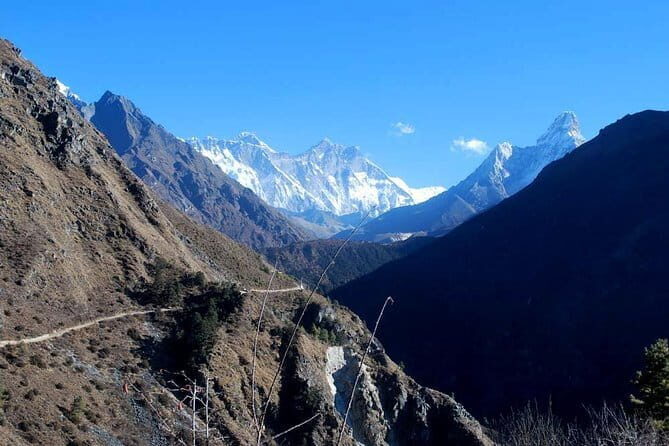
The route continues to Lobuche, moving along the Khumbu Glacier’s lateral moraine. The walking here becomes more serious. You pass stone memorials for climbers who perished on nearby summits—an emotional reminder that this route is part of real mountaineering history, not a casual hike.
It’s also flagged as a day where breathing problems may arise due to altitude. That’s your cue to keep effort moderate and stay consistent with hydration and warm clothing. If you get a headache or feel unusually drained, speak up early. The support model on this trip is designed for guides to keep tabs on how you’re feeling, and stories from past groups highlight that steady monitoring.
Everest Base Camp: your closest look without mountaineering gear
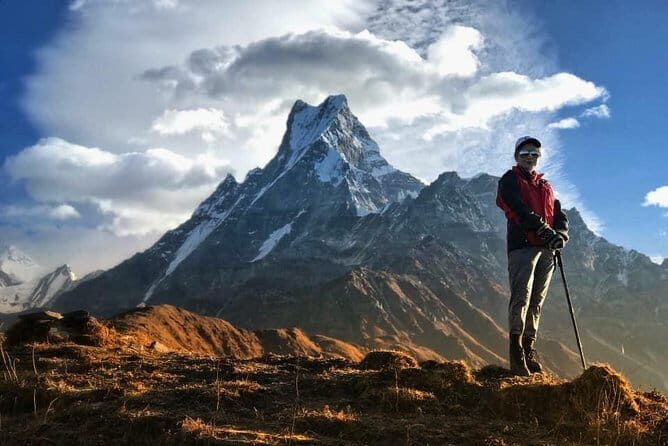
Everest Base Camp day is big: the trek climbs along the Khumbu Glacier and up to Base Camp at about 5,365 m. This is the closest you get to Mt. Everest without mountaineering equipment. In spring, it’s noted that expedition teams may be present preparing for summit attempts, so the place can feel both historic and very current.
The view of the Khumbu Icefall from Base Camp is described as spectacular. That makes sense—this is one of the most iconic “Everest in your face” scenes. It can be crowded depending on season, but even then, it doesn’t feel like a normal tourist stop. You’ll feel how exposed Base Camp is.
After Base Camp, you return to Gorak Shep for the night. Gorak Shep is high and cold, so this is not the time to celebrate with “I’ll skip dinner” bravado. At altitude, fuel and warmth are part of safety.
Kala Patthar: the hardest morning that pays back fast
Kala Patthar is one of those days where “difficult” is accurate, but so is “worth it.” You climb toward Mt. Kala Patthar at about 5,555 m. It’s demanding, and you may feel the altitude strongly. But the reward is mountain panorama viewing that stretches in all directions.
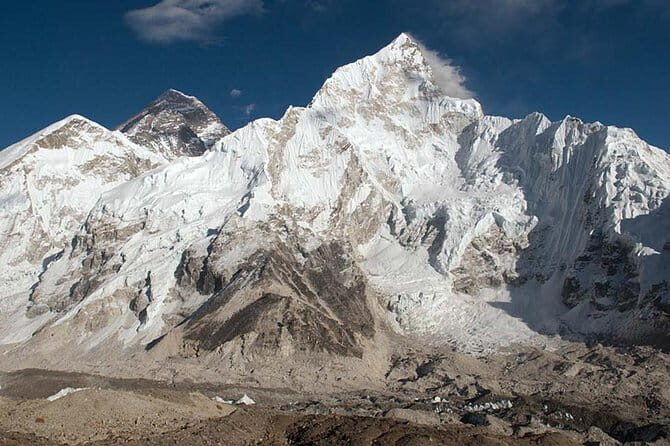
The big names you’ll likely see from Kala Patthar include Everest, Nuptse, Pumori, Chagatse, Lhotse, and more. That’s why this route is paired with Base Camp: you get both the base camp viewpoint and a higher vantage that makes Everest feel like it’s sitting directly in front of you.
The schedule calls for a quick descent back to Gorak Shep and hot breakfast, then trekking down toward Pheriche. This descent is where you’ll start to feel your body unclench. Cold mornings don’t vanish, but your breathing often improves.
Chukhung to Imja Valley: from trekking to “training mode”
After descending to Pheriche, the route heads toward Chukhung by moving back through Dingboche and ascending into the Chukhung valley. This section is important because Chukhung sits at a higher, more dramatic part of the trek area, and it helps you acclimatize while building momentum toward the climbing part.
From Chukhung, you follow the Imja Valley. Ama Dablam dominates the skyline. You also follow moraines flowing from the Lhotse region toward Pareshaya Gyab, then continue to Island Peak Base Camp, reaching mid-afternoon.
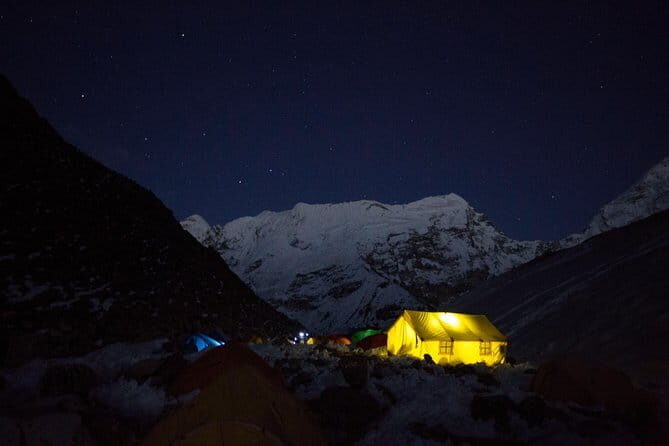
Island Peak Base Camp is where the trip shifts from hiking to mountaineering lifestyle. You stay in a tented camp, and the camp food is cooked by a professional camping team. That’s not just comfort—it’s practical. You’ll want predictable hot meals when your energy and temperature control are both under pressure.
Summit focus: Island Peak’s climbing training and the 4–6 hour push
The plan allows two days for Island Peak in case of bad weather. The key detail is how the strategy is decided. The climbing Sherpa leader makes the call based on your acclimatization, weather, and snow conditions.
Before the summit push, you receive ice climbing training. You’ll learn how to use climbing gear such as ropes, ice pick, harness, crampons, and other tools mentioned for the climb. The trip’s group equipment includes items like climbing rope, ice screws, snow bars, and ice hammers. In other words, you’re not just handed gear and told to figure it out.
Then comes the summit day: you leave very early for the final climb. The climbing time is described as around 4 to 6 hours. Even though Island Peak is not framed as technically extreme, the route includes crevassed snow slopes and a reasonably steep headwall. If you struggle with heights, this is where you’ll want your head in the right place.
Practical mindset: willpower and stamina are emphasized, and that’s fair. This summit day is as much about pacing and focus as it is about strength.
Weather spare day: flexibility when Lukla flights are the constraint
There’s a spare day built into the schedule around the Island Peak section. The rationale is obvious: mountain weather is unpredictable. If conditions on the planned day are extremely bad, you can attempt the summit on this spare day.
If weather improves, you continue as planned and use the spare day for trekking or rest until you reach Lukla. There’s also a timing reality: flights from Lukla to Kathmandu are pre-booked, so you can’t always make immediate changes in peak season. That’s the tradeoff you accept when you choose a package designed around logistics and permits.
I like this approach for one reason: it protects the trip from turning into chaos. You’re not left improvising with unreliable options at high elevation.
The return: Tengboche, forests, and a Lukla finish with room to breathe
After Island Peak, the descent brings you back through Tengboche and the surrounding villages. You’ll move through towns like Dingboche and Orsho and Shomare, then descend to cross the suspension bridge over Imja Khola. From there, the trail continues gradually through Debuche and back toward Tengboche.
The next leg moves through forests of juniper, rhododendron, and fir, which is a welcome shift from glacier grit. You get breaks, tea moments, and a rhythm that feels more like “trekking again” instead of climbing mode.
The route contours high above valleys through Shanasa. There’s also an option to visit Kunde and Khumjung villages before returning to Namche for the night. These side options matter because they give your brain a break from constant altitude math.
Finally, you return to Lukla as the last trekking day. The afternoon is free, and hot showers are called out as a perk. In the evening, you can celebrate with your trekmates and share the kind of stories that only happen when everyone survives the same cold nights and steep days.
Then you fly back to Kathmandu in about 35 minutes. On arrival, you’re met and transferred back to your starting hotel, and the trip wraps with an airport drop for your departure.
Price and real value: what $3,300 is buying you
At $3,300 per person (for roughly 19 days), this is priced like a true guided package, not a DIY logistics plan. What you’re paying for is a stack of expensive, hard-to-coordinate pieces:
- Domestic flights Kathmandu ↔ Lukla included
- Park permits and TIMS included for the trek
- Island Peak permits and documents included
- Guides and porters, plus staff support costs
- Accommodation and most meals on the trek, plus a tented camp setup at Island Peak Base Camp
- Group climbing equipment included for Island Peak
- A water filter (Katadyn Pocket Water Filter) included for filtered water on the trails
- A duffel/kit bag and sun hat included (kept by you)
That list is the value story. If you tried to piece those items together yourself, the admin headaches would eat time—and mistakes at altitude can get expensive fast.
Budget items you should still plan for: tips for trekking staff and drivers are expected, and your own travel insurance is not included. Alcohol and extra drinks aren’t included either, and international airfare plus your Nepal entry visa aren’t part of the package price.
Who this trip is best for (and who should think twice)
This is best for active travelers who want structured support and a realistic approach to altitude. The trek is physically demanding: long days, high elevations, and a real climb component on Island Peak. If you train regularly, hike with elevation gain, and you understand that you’ll be cold and tired, this trip fits well.
It’s less ideal if you want a mostly easy vacation. Even the “short” days are still at elevation, and the route includes some of Everest’s most famous hard segments like Base Camp and Kala Patthar.
One more “think twice” note: if you hate height exposure, Island Peak’s headwall and crevassed slopes may be mentally challenging even with good training and guide support. You can still do it, but you’ll want to be honest about how you feel during planning.
Should you book it?
If you want an Everest Base Camp experience that includes Island Peak climbing with real training, plus strong logistics support and a small group cap, this package is a solid choice. The built-in acclimatization, the emphasis on guide-led pacing, and the fact that a climbing Sherpa leads the summit effort are exactly what reduce guesswork.
Book it if you’re ready for a physical, cold, high-altitude trip and you like clear structure. Skip it if you’re hoping for an easy stroll, or if you aren’t willing to take altitude seriously from day one.
FAQ
What is the maximum group size?
The group size is capped at a maximum of 15 travelers.
Where does the tour start and what time does it begin?
It starts at Tribhuvan International Airport in Kathmandu, and the start time is listed as 8:00 am.
Are airport transfers included?
Yes. Airport pickup and drop-off are included using a private tourist vehicle.
What kind of accommodation do you get in Kathmandu?
You stay in a twin-sharing three-star hotel in Kathmandu with breakfast included for four nights only.
What about accommodation on the trek?
You get twin-sharing guesthouse accommodation in Lukla, Phakding, and Namche (with attached toilets). At Island Peak Base Camp, you stay in a tented camp.
Is climbing equipment included for Island Peak?
Yes. Group climbing equipment is included, and you also receive ice climbing training for using climbing gear.
What permits are included?
The trek includes Everest National Park permits and a TIMS permit, and the necessary permits/documents for climbing Island Peak are included.
Is travel insurance included?
No. Travel insurance is not included, and it’s specifically not listed as covering emergency high-altitude rescue and evacuation.
Can you cancel for free?
Yes. You can cancel up to 24 hours in advance for a full refund.
What happens if weather is poor?
This experience requires good weather. If it’s canceled due to poor weather, you’ll be offered a different date or a full refund.