REVIEW · KATHMANDU
Highlights of Nepal Tour 10 Days
Book on Viator →Operated by Asian Heritage Treks and Travels · Bookable on Viator
Nepal hits fast. In just 10 days you’ll stack Kathmandu culture, Chitwan wildlife, and Pokhara mountain views without sweating the logistics.
What I like most is the pace control: private transport means you’re not stuck waiting on a bus full of strangers, and you’ll have your own guide to explain what you’re seeing.
I also like that your days are built around real places, not just photo stops: from Swayambhunath to the lakeside at Pokhara, you get context plus time to wander on your own. One consideration: entrance fees for major sites are not included, so you should budget extra on top of the tour price.
In This Review
- Key things I’d bet on before you book
- Why this 10-day route feels efficient (and not rushed)
- Price and logistics: what $1,098.06 buys you
- Day 1 in Thamel: the easy start that helps jet lag
- Day 2 Kathmandu’s “big four” sacred stops
- Kathmandu Durbar Square (wood carvings and old-city feeling)
- Swayambhunath Temple (monkey temple + panoramic views)
- Boudhanath Stupa (a calm place to reset)
- Pashupatinath Temple and Guhyeshwori (Hindu rituals by the Bagmati)
- Day 3 travel to Chitwan + a Tharu culture intro
- Day 4 Chitwan National Park jeep safari: the animals day
- Day 5 Lumbini Monastic Site: Buddha’s birthplace in walking time
- Day 6 Pokhara lakeside: easy afternoon with mountain energy
- Day 7 Sarangkot sunrise + World Peace Pagoda views
- Day 8 Bandipur old town break before Kathmandu return
- Day 9 Bhaktapur Durbar Square: the second Kathmandu valley jewel
- Day 10 airport transfer: a clean finish
- Who this Nepal highlights tour suits best
- Should you book this tour?
- FAQ
- What’s included in the tour price?
- Are entrance fees included for the major sites?
- Is pickup and airport transfer included?
- Is this a private tour?
- How large is the group in the vehicle?
- What kind of rooms and meals should I expect?
Key things I’d bet on before you book
- Private car with an English-speaking guide for the whole trip means fewer “where do we go next?” moments.
- Thamel as a first base keeps your arrival day calm and walkable.
- Chitwan jeep safari plus a Tharu culture show gives you wildlife and local traditions in the same region.
- Sunrise at Sarangkot is the kind of early start that pays off with big mountain views.
- Entrance fees are extra (world heritage sites and other attractions), so plan your spend.
Why this 10-day route feels efficient (and not rushed)
This tour is built like a best-of highlight reel, but it’s not a mad dash. You’re bouncing between four big Nepal “moods”: the spiritual capital (Kathmandu), the jungle and Tharu culture (Chitwan), Buddhist pilgrimage (Lumbini), and lakeside relaxation with Himalayan viewpoints (Pokhara).
You’ll also benefit from private transportation and a guide who can shape timing day to day. Many tours bundle people onto crowded vehicles and then rush through stops. Here, the max group size per vehicle is up to 10 guests, and the tour is set up as private for your group—so you’re more likely to get questions answered and detours handled.
You can also read our reviews of more tours and experiences in Kathmandu.



Price and logistics: what $1,098.06 buys you
At about $1,098.06 per person for 10 days, you’re paying for the big cost drivers: lodging, an English guide, and private air-conditioned ground transport. You’re also getting convenience items like pickup, plus reservation features such as a mobile ticket and group discounts (useful if you’re traveling with friends or family).
Here’s the value picture in plain terms:
Included
- Accommodation in twin sharing private rooms
- Air-conditioned vehicle with driver (max 10 guests per vehicle)
- English-speaking guide for sightseeing
- Staff costs (salary, insurance, equipment, accommodation)
- Meals: Breakfast (9), Lunch (2), Dinner (2)
- Round-trip transport style coverage across the route
Not included
- Entrance fees for world heritage sites and other attractions (approx. $60 per person)
- Nepal visa fee
- Food and drinks beyond the stated meals
- Personal expenses and temple donations
- Tips for guide and driver
The practical takeaway: if you hate planning, this price reduces your mental load. If you’re very budget-minded and don’t mind self-guiding, you might find cheaper options—but you’d be trading away the guide’s time, the private car, and the hassle-free room and logistics.
Day 1 in Thamel: the easy start that helps jet lag
You land at Tribhuvan (Kathmandu International Airport), and a driver meets you outside the terminal. Then you’re transferred to a hotel base in Thamel, Kathmandu’s tourist district.
Why Thamel matters: it’s walkable, full of services, and generally low-stress after a flight. Your Day 1 is intentionally light—enough time to settle, grab something simple, and take a first look at Kathmandu’s street life without a tight schedule.
Day 2 Kathmandu’s “big four” sacred stops
Day 2 is where Kathmandu goes from city to spiritual city. You’ll hit four iconic places, and the order keeps the day moving while still giving you time to absorb what’s in front of you.
Kathmandu Durbar Square (wood carvings and old-city feeling)
You start at Kathmandu Durbar Square, known for its carved temples and historic buildings. This is a great first dose of architectural detail, especially if you’re the type who likes to slow down and look at patterns rather than just buildings-in-the-distance.
Entrance for this stop is not included, so budget for the ticket.




Swayambhunath Temple (monkey temple + panoramic views)
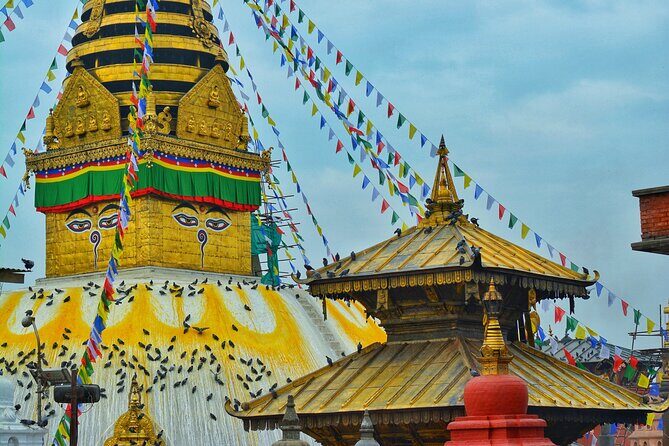
Next comes Swayambhunath, often called the monkey temple. The best part here is the mix of religious traditions—Hindu and Buddhist practices show up side by side. And yes, the views over Kathmandu are a major payoff.
Another plus: the stop is listed as about 1 hour, which is usually enough time to climb, look around, and still avoid feeling “templed-out” before the next stop.
Boudhanath Stupa (a calm place to reset)
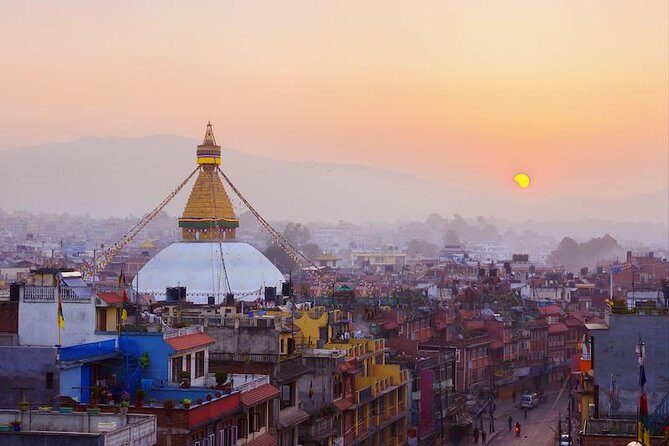
Then you head to Boudhanath, an ancient stupa dating back to around 600 A.D. The experience is more atmosphere than rush. You’ll have time to explore and then free time for lunch, so you can eat without feeling pushed.
Again, ticket costs are not included here.
Pashupatinath Temple and Guhyeshwori (Hindu rituals by the Bagmati)
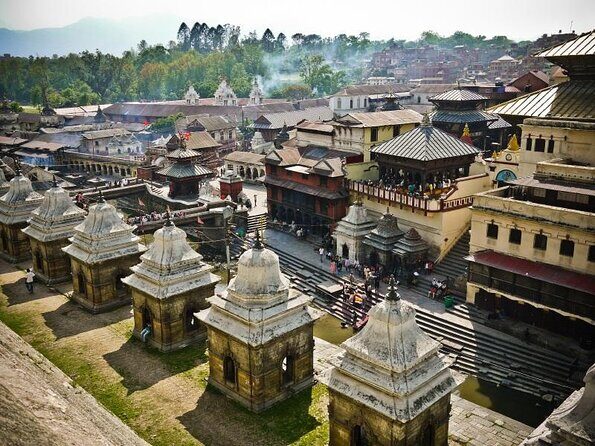
Finally, you reach Pashupatinath Temple and then Guhyeshwori Temple, adjacent to it. This is a powerful stop because it connects you to Hindu religious practice, including ritual cremation ceremonies on the banks of the Bagmati River.
This one is not a “quick photo and go” moment. If you’re sensitive to how sacred rituals are visible in public spaces, plan your emotions accordingly and let your guide explain what you’re seeing.
Entrance fees for these are also not included.
Day 3 travel to Chitwan + a Tharu culture intro
You drive from Kathmandu to Chitwan in a private vehicle and visit a Tharu Culture House at Sauraha. Chitwan is Nepal’s wildlife magnet, but the region’s people matter just as much—Tharu songs and dances (including the stick dance) give you context for what you’ll notice later in the jungle area.
This is scheduled for about 2 hours, and it’s included at no additional admission ticket based on the tour notes.
Day 4 Chitwan National Park jeep safari: the animals day
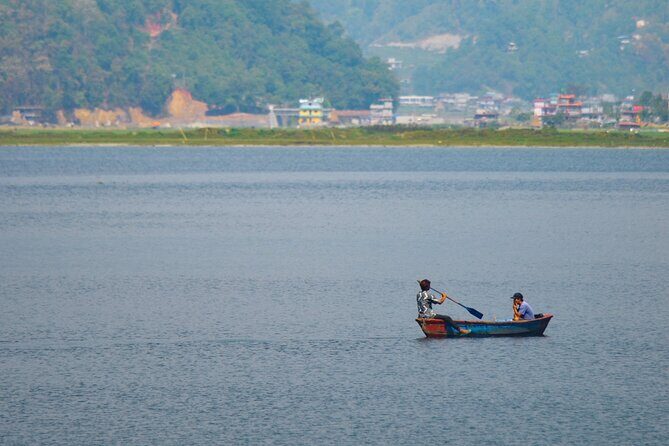
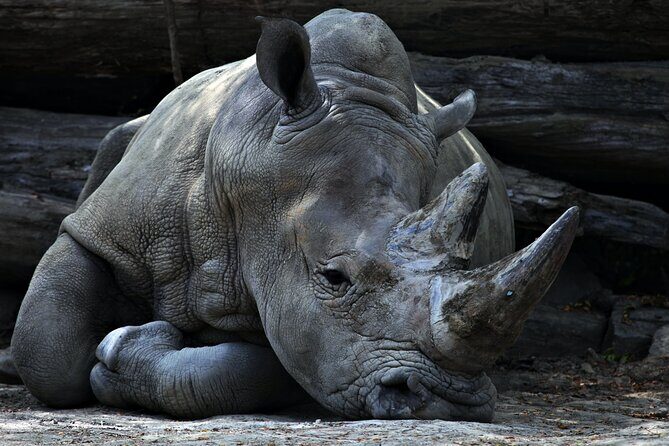
Today’s centerpiece is a jungle jeep safari in Chitwan National Park, aimed at spotting wildlife like rhinos, elephants, deer, and possibly tigers (with the usual wildlife reality: you can’t guarantee every sighting).
The safari is listed as 4 hours, and it’s included with admission. That duration matters because wildlife in the park is unpredictable. A longer safari window increases your chances compared to short half-hour rides.
Practical tip: bring patience and comfortable layers. Even if the day is warm, a safari can still feel cooler once you’re in motion and waiting.
Day 5 Lumbini Monastic Site: Buddha’s birthplace in walking time
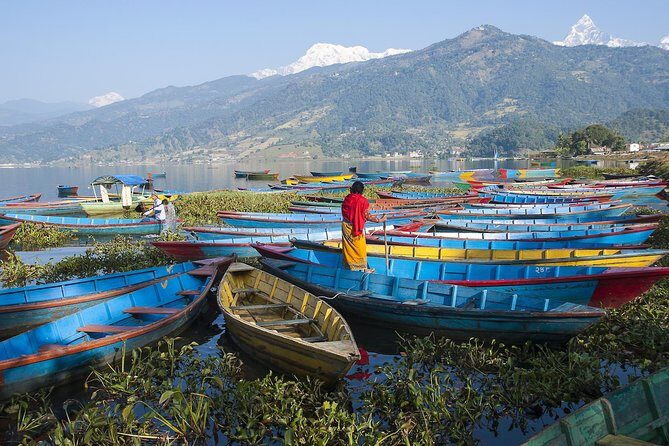
You head to Lumbini and meet a local guide who shows you around the temples and special places. The highlight here is the birthplace of Buddha, and the experience tends to feel reflective rather than action-packed.
Your time on site is around 3 hours, and the admission ticket is not included for this stop. Still, it’s a major spiritual anchor for the whole route because it shifts the theme from sightseeing to pilgrimage context.
If you’re the type who likes religious sites beyond the Instagram version, Lumbini rewards you. If you need pure adventure energy, you might find it calmer than the Chitwan day—but that contrast is kind of the point.
Day 6 Pokhara lakeside: easy afternoon with mountain energy
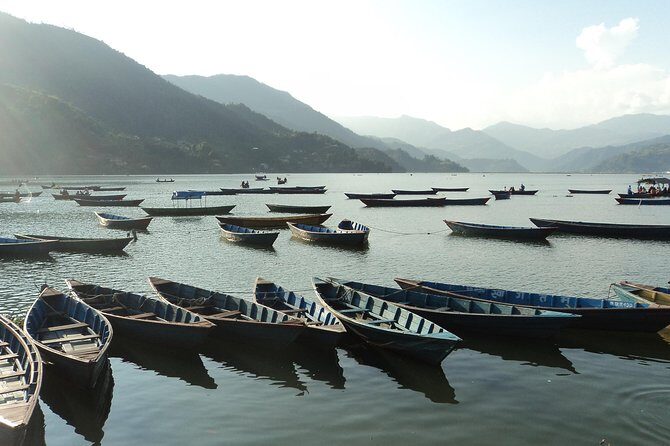
After breakfast, you drive from Lumbini to Pokhara. Pokhara is famous for its relaxed pace and as a gateway to the Annapurna region. Once you arrive, you get free time in the afternoon around the lakeside area.
This is a good kind of free time. You can wander shops, find a lakeside café, and enjoy views over Phewa Lake without a strict plan. The tour notes list admission ticket as free for this segment, so it’s low-friction.
Day 7 Sarangkot sunrise + World Peace Pagoda views
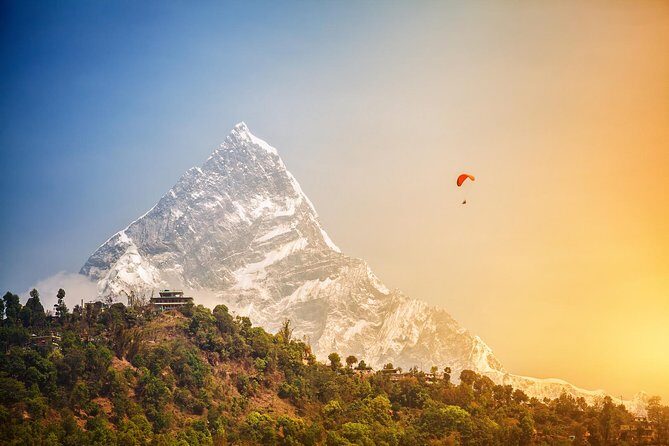
Day 7 is early. You head to Sarangkot very early in the morning for sunrise and mountain views. If you’ve never tried a Nepal sunrise before, here’s what to expect: cold minutes at the start, a slow reveal, and then that feeling when the mountains look close enough to touch.
After sunrise, you go back for breakfast at your hotel, then shift into a set of Pokhara highlights:
- World Peace Pagoda: a hilltop temple with views over Fewa Lake and the mountains
- International Mountain Museum: an exhibition space focused on Nepal’s mountaineering industry and peaks
- Devi’s Fall: a waterfall area where the water continues underground
- Gupteshwor Mahadev Cave: a nearby holy cave with a stalagmite worshipped as a Shiva lingam
All of those attractions list admission as not included, and the time blocks range from about 30 minutes to around 1 hour.
The “gotcha” on this day isn’t difficulty—it’s how full the schedule is. If you’re someone who likes slow sightseeing, you may want to pace your energy by doing fewer stops on foot and asking your guide for the best viewpoints fast.
Day 8 Bandipur old town break before Kathmandu return
You drive back toward Kathmandu, with about 3 hours of driving before a stop in Bandipur. You’ll explore Bandipur for about 1 hour, then continue to Kathmandu after lunch (at your own expense).
Why Bandipur works: it’s a break in scenery and tempo. It also gives you that “old town in the middle of a travel route” feeling, without swallowing the entire day. Admission for this stop is listed as free.
Day 9 Bhaktapur Durbar Square: the second Kathmandu valley jewel
Your final full sightseeing day is in Bhaktapur. You’ll visit Bhaktapur Durbar Square, one of the three famous “king squares” of the Kathmandu Valley, alongside Kathmandu and Patan.
This stop is listed as about 1 hour, and admission is listed as free in the tour notes. Bhaktapur is a smart final pick because it feels different from Kathmandu Durbar Square—less chaotic, more focused on the artistry of the city center.
Day 10 airport transfer: a clean finish
Your last day ends with a transfer to Tribhuvan International Airport. You’ll head to the airport about 3 hours before departure, which is the right window for calm check-in and security.
This also helps if your flight is earlier than you expected. You’ll arrive with time, not stress.
Who this Nepal highlights tour suits best
This tour is ideal if you want:
- Private transport and an English-speaking guide so you’re not figuring out logistics in a new country
- A mix of major Nepal highlights in a short, manageable time window
- A comfortable base with accommodation already handled
- A spiritual-cultural day in Kathmandu, wildlife in Chitwan, pilgrimage in Lumbini, and mountain views in Pokhara
It might be less ideal if you want a deep hiking focus (this is not an extended trek) or if you strongly prefer a totally independent travel style.
Should you book this tour?
I’d say book it if you value time efficiency and hate logistics. The combination of private car, guided sightseeing, and included lodging is where the value really shows—especially across multiple regions that would be a hassle to plan yourself.
I’d pause if you’re the type who counts every extra fee, because entrance tickets for several major sights are not included (and you should plan roughly $60 per person for that). Also, Day 7 is packed, so if early mornings and tight schedules annoy you, build in mental breathing room.
Overall, this route is a solid choice for a first-time Nepal trip where you want the headlines—temples, jungle, Buddha’s birthplace, and Pokhara sunrise—without the headaches.
FAQ
What’s included in the tour price?
The price includes twin-sharing private-room accommodation, transport in an air-conditioned vehicle with a driver, and a fully guided sightseeing program with an English-speaking guide. Breakfast is included for 9 days, plus lunch for 2 days and dinner for 2 days.
Are entrance fees included for the major sites?
Not all. World heritage sites and other sightseeing entrance fees are not included, and the tour lists an estimated extra cost of about $60 per person for these tickets.
Is pickup and airport transfer included?
Yes. You’re met at the airport on arrival with a driver transfer to your hotel, and on the last day you’re transferred to Tribhuvan International Airport about 3 hours before departure.
Is this a private tour?
Yes. It’s described as a private tour/activity, with only your group participating.
How large is the group in the vehicle?
The transport is set up for up to 10 guests per vehicle, even though it’s private for your group.
What kind of rooms and meals should I expect?
You’ll get accommodation in twin sharing private rooms. Meals included are daily breakfast (9), lunch (2), and dinner (2). Food and drinks beyond those are not included.