REVIEW · KATHMANDU
Kathmandu: 7 UNESCO Sites Tour with Optional Dinner
Book on GetYourGuide →Operated by Enticing Himalayas Travels Private Limited · Bookable on GetYourGuide
Seven UNESCO stops, one long Kathmandu day. Seeing 7 UNESCO sites in a single route makes the city feel readable fast, from sacred hilltop views to the Bagmati River rituals near Pashupatinath.
I love how the site timing is handled so you’re not stuck in endless lines or rushed through the important bits. I also love the human touch of the licensed English guide, with storytelling that turns carvings and temple courtyards into real context.
One consideration: this is a long day with plenty of walking and stair climbing, plus car transfers that can feel intense if you get motion sick.
In This Review
- Key Highlights Worth Your Time
- Kathmandu’s 7 UNESCO Loop: Why This Day Tour Works
- Price and Tickets: Figuring Out the True Cost
- Pickup, Transport, and a Full-Day Reality Check
- Stop 1: Swayambhunath Stupa and the Valley Views
- Stop 2: Kathmandu Durbar Square, Where Royal Power Looks Alive
- Stop 3: Patan Durbar Square and the Feel of Artisan Detail
- Stop 4: Bhaktapur Durbar Square and the Medieval Pace
- Stop 5: Changunarayan Temple, a Short Finish with Big Stone Detail
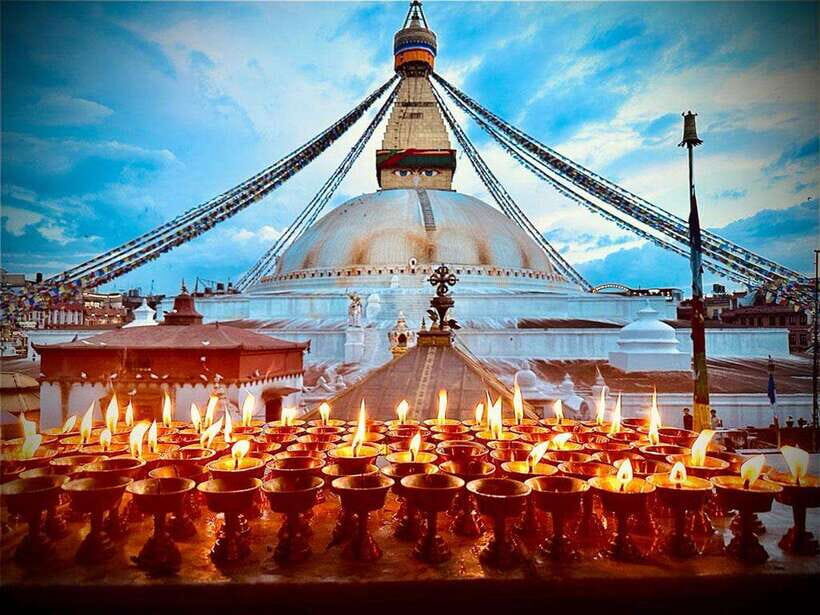
- Stop 6: Boudhanath Stupa, Pilgrims in Motion
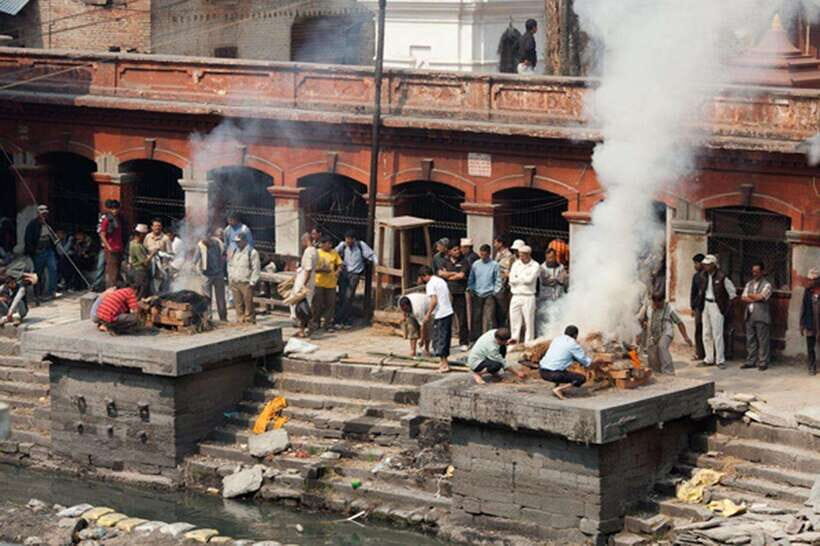
- Stop 7: Pashupatinath Temple by the Bagmati River
- Optional Dinner with Cultural Show: When It’s Worth It
- How Guides Make or Break This Tour (Practical Clues)
- Who Should Book This UNESCO Day Tour
- Should You Book This Kathmandu 7 UNESCO Sites Tour?
- FAQ
- What’s included in the Kathmandu 7 UNESCO tour?
- Are heritage site tickets included?
- How long is the tour?
- Do I get help with entry lines?
- What language is the guide?
- What should I bring, and what’s not allowed?
Key Highlights Worth Your Time
- A tight 7-site UNESCO circuit across Kathmandu Valley, all with a guide
- Swayambhunath hilltop views plus a photo stop that actually works for your schedule
- Durbar Square comparisons across Kathmandu, Patan, and Bhaktapur so you see how styles shift
- Bagmati River ritual viewing at Pashupatinath, one of the most powerful spiritual experiences in the city
- Boudhanath focus with a circumambulation-style visit and time for arts and crafts
Kathmandu’s 7 UNESCO Loop: Why This Day Tour Works
If you’re spending limited time in Kathmandu, this tour is one of the most practical ways to wrap your head around the Kathmandu Valley. You’re not just ticking off monuments. You’re moving through the living layers of Hindu and Buddhist practice, plus the royal-era architecture that shaped daily life for centuries.
I like the way the route creates momentum. You start with a hilltop Buddhist icon, shift to royal squares tied to Nepal’s older power centers, then move through medieval Newari city fabric. After that, you end up at two of the most spiritually charged places in Kathmandu: Boudhanath and Pashupatinath.
The other thing you’ll notice quickly is pacing. Even though it’s a full day (about 8–9 hours), the format uses timed photo stops, guided segments, and real breaks. That matters in Kathmandu, where traffic, crowds, and entry lines can eat your day.
And yes, the tour is built for people who want value. The listed price is extremely low for a private or small-group style day—especially once you consider that hotel pickup/drop-off and transport are included, and you get a licensed English guide for the whole circuit.
A few more Kathmandu tours and experiences worth a look

Price and Tickets: Figuring Out the True Cost
The price for this experience is listed at $5 per person, with heritage site tickets not included. That single detail can change what you actually pay at the end of the day, so I’d treat the advertised price as the baseline for the tour service itself, not the full sightseeing bill.
Here’s what you’re generally getting for that base:
- Hotel pickup and drop-off
- Transportation between the sites
- A licensed guide in English
- Ticket-line convenience (you’re helped at entry points)
Also, there’s an optional dinner with a cultural show only under the private-tour option. If food + entertainment at night is part of your plan, it’s worth checking whether your booking includes that dinner add-on.
Bottom line: if you already know you’ll pay for heritage tickets anyway, the value here comes from the guide time and the transport logistics. If you hate unpredictable extra fees, do a quick budget check for tickets before you book.
Pickup, Transport, and a Full-Day Reality Check
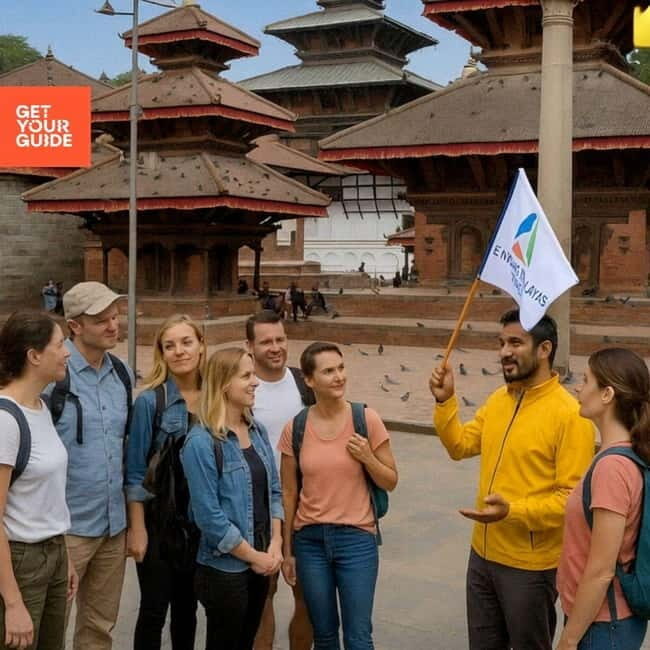
The tour starts with pickup in Kathmandu. A driver or guide confirms details ahead of time, and you’ll wait in your hotel lobby when they call. You should expect a full day that mixes vehicle travel with site walking.
Two practical notes:
- The day includes stair climbing and uneven temple-area paths. If stairs are hard for you, you’ll feel it by the middle of the route.
- Car transfers can be bumpy. If you’re prone to car sickness, bring what you normally use, and sit where you feel least motion.
Also, there are some simple rules for the vehicle and day:
- No alcoholic drinks in the vehicle
- No nudity
- No weapons or sharp objects
Bring a passport or ID card since you may need it for day-entry and organization.
Stop 1: Swayambhunath Stupa and the Valley Views
The day begins with a visit to Swayambhunath, the hilltop stupa known for its all-direction views over the Kathmandu Valley. You’ll have a photo stop plus a guided visit, with scenic viewpoints on the way.
What makes this start smart is timing. Hilltop sites tend to reward an early visit: the views are dramatic, and the crowd energy is manageable compared with later in the day. Even if you’ve seen photos online, being up there in person helps you understand Kathmandu’s geography—how the city spreads between valleys and ridges.
You’ll also get a spiritual introduction that sets the tone for the rest of the tour. Buddhist symbolism, temple layout, and how pilgrims move through the space all become easier to read once you’ve anchored your understanding here.
Practical tip: wear shoes that handle stairs and slopes. This is one of the stops where your feet do more work than your eyes.
Stop 2: Kathmandu Durbar Square, Where Royal Power Looks Alive
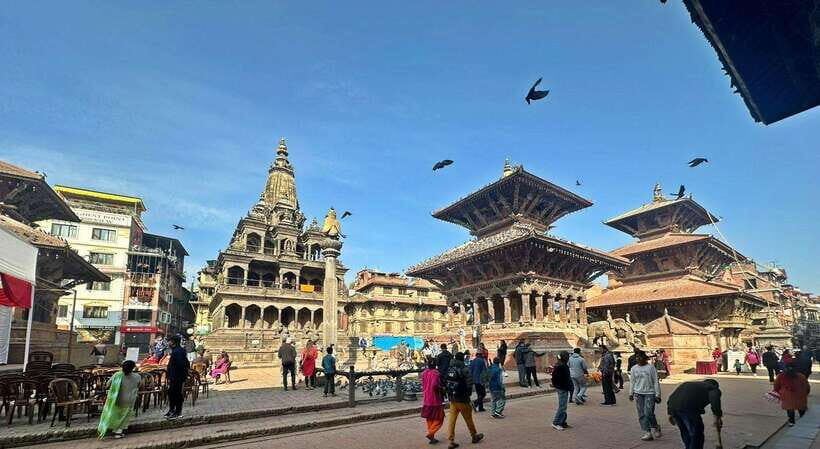
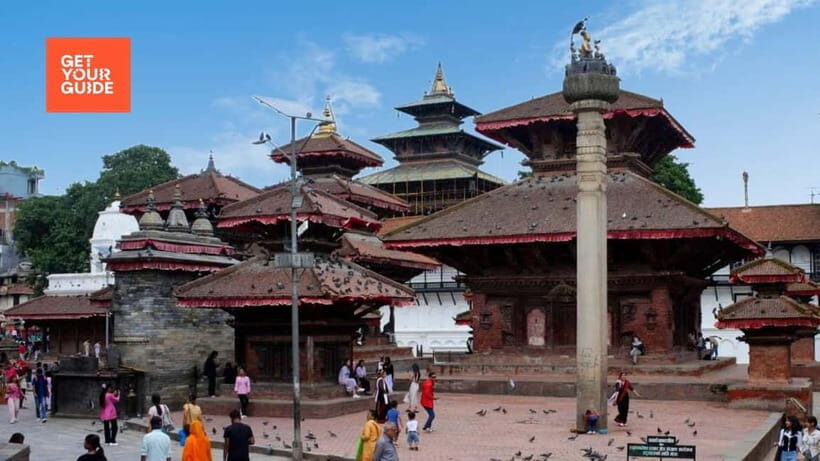
Next comes Kathmandu Durbar Square, with a photo stop, guided tour, free time, and a walk. This is one of those places where you can feel the layers of Nepal’s past in stone—courtyards, temples, and palace-like architecture that shaped city life.
Why I like this stop for first-timers: it teaches you how to “read” the architecture. A guide helps you spot what’s ceremonial, what’s decorative, and what’s structural—so you don’t just see pretty carvings. You see why they’re there.
You’ll also get a bit of free time, which is important. Durbar Squares can be intense. A short self-paced moment lets you slow down, look up close, and take photos without feeling like you’re always catching up to the group.
Watch-outs:
- It can be crowded and noisy around the busy points.
- You’ll walk more than you think, even with planned photo stops.
A few more Kathmandu tours and experiences worth a look
Stop 3: Patan Durbar Square and the Feel of Artisan Detail
Then you head to Patan Durbar Square, again with photo stops and guided time plus free time for exploring. Patan is often associated with craft, and this stop reflects that in how the spaces feel—more attention to surface detail, symmetry, and temple ornamentation.
What you gain by visiting both Kathmandu Durbar Square and Patan Durbar Square in one day is comparison. You start seeing how similar “royal square” ideas show up with different emphasis: variations in temple placement, courtyard structure, and decorative style.
If you’re the kind of traveler who likes architecture more than museums, this is your middle-of-day payoff. The guide helps you understand what you’re looking at, and the free time lets you follow your own curiosity.
Practical tip: bring a small amount of patience for getting around tight corners and busy lanes. The point isn’t speed; it’s quality looking.
Stop 4: Bhaktapur Durbar Square and the Medieval Pace
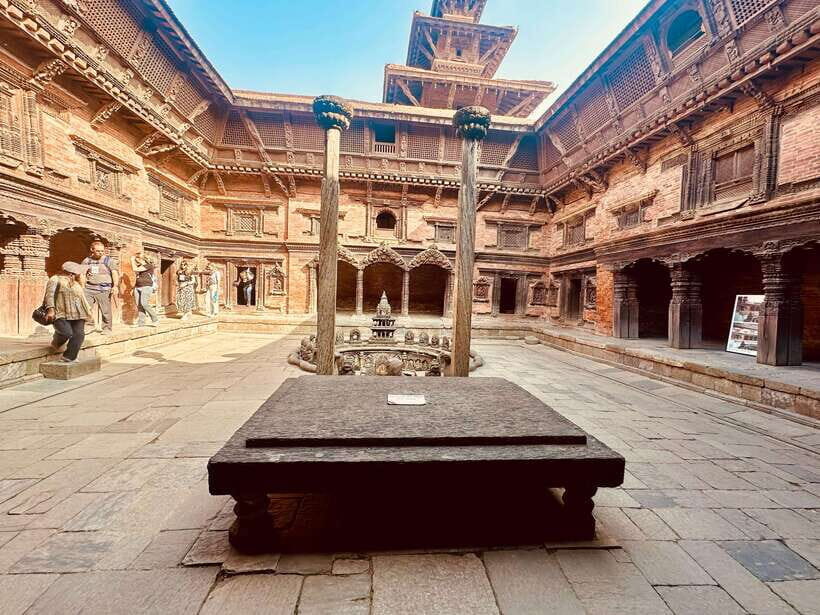
Bhaktapur Durbar Square is longer on your schedule, with a break time and about 2 hours of guided and free exploration. This is a shift from the busier city-feel to something closer to a medieval rhythm.
Why Bhaktapur tends to land well on a UNESCO day tour: the squares and temple areas are well preserved in the way you experience them. You don’t just tour from point to point; you walk through a dense cluster of heritage spaces that feel like part of the living city fabric.
You’ll notice:
- Temples and palace areas create multiple “mini routes” as you wander
- The guided storytelling makes the carvings and layouts more understandable
- The longer time window means you can rest, take photos, and avoid the feeling of constant rushing
This is also where you’ll want to use your break time strategically. The day is long. If you wait too long, you’ll start moving slower, and that’s when stairs feel worse.
Stop 5: Changunarayan Temple, a Short Finish with Big Stone Detail
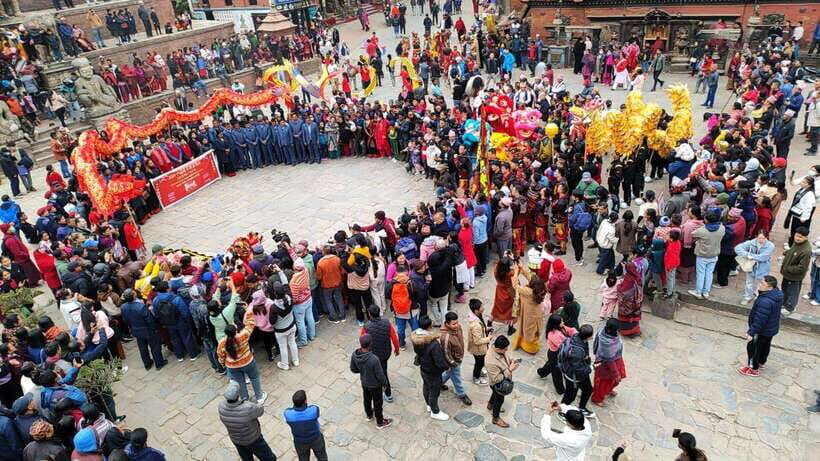
After Bhaktapur, you finish with Changunarayan Temple for a shorter guided visit and sightseeing time (around 30 minutes). This stop is often the kind of place where you think you won’t learn as much because the time is short.
But short time can still mean high impact. The value here is in the stonework and the older feel of the temple site. You get a guided look at sculptures and inscriptions, which helps you interpret why this temple matters in the broader UNESCO story of Kathmandu Valley.
Practical tip: if you’re going to spend extra time anywhere, you can do it here. The guide gives you the visual cues, then you can linger a moment to see the details without burning the whole schedule.
Stop 6: Boudhanath Stupa, Pilgrims in Motion
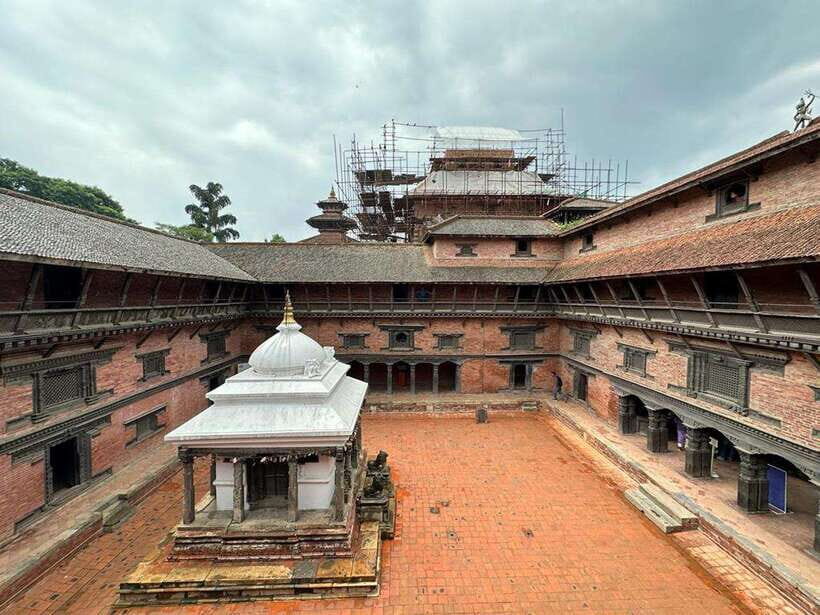
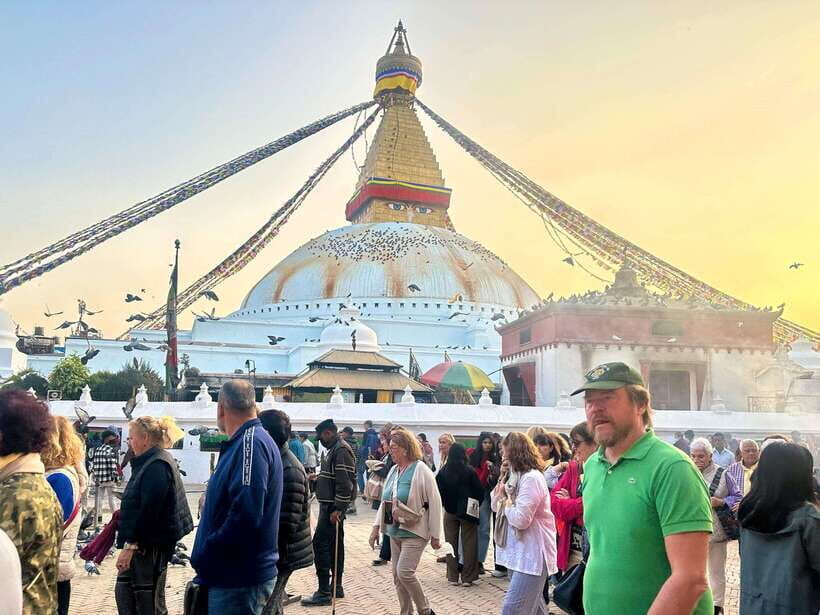
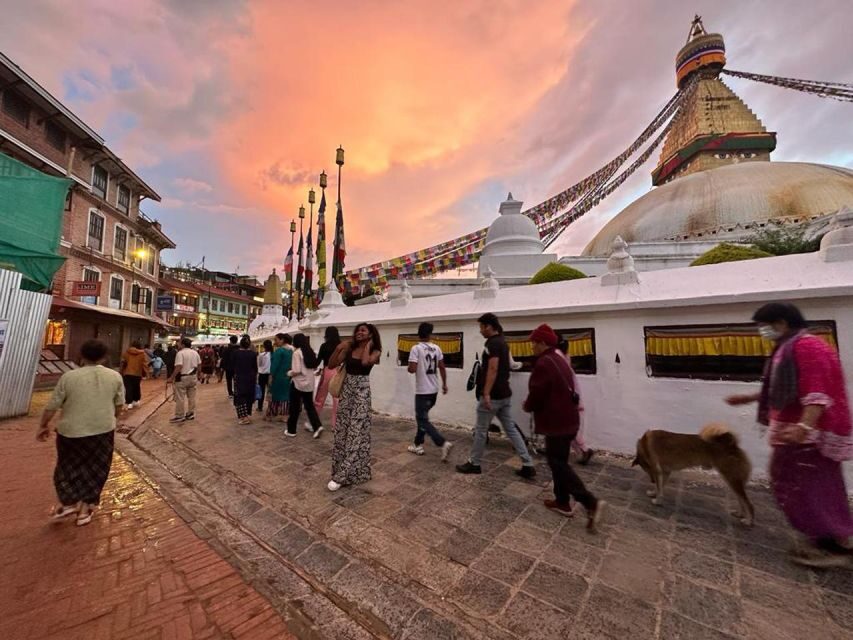
Next up is Boudhanath Stupa, one of Kathmandu’s biggest Buddhist landmarks. You’ll have a break time, photo stop, guided visit, and free time, with time for lunch and a visit to an arts and crafts market.
This stop brings a different kind of energy. The stupa is a focal point for pilgrims, and the guided visit helps you understand the purpose and symbolism behind how people move around the monument. If you’ve only ever seen Boudhanath in photos, the scale hits you in person.
What’s practical about the market time: it’s a controlled window to browse without sacrificing the core heritage experience. If you want a small souvenir that feels tied to local craft, this is your moment.
Note on timing: you’ll have enough space to breathe here, which matters because you’re about to end with Pashupatinath, a high-emotion site.
Stop 7: Pashupatinath Temple by the Bagmati River
The final major stop is Pashupatinath Temple, with guided sightseeing and a longer arrival-time focus on the sacred area by the Bagmati River. The highlight here is the Hindu rituals, including cremation activity along the riverbank.
This is the stop that changes the whole mood of the tour. It’s spiritual, but it’s also real-life religious practice. Even if you don’t share the faith, you’ll feel how ritual shapes place. The guide’s job here is essential: they help you understand what you’re seeing and why it matters to the people who come here.
Practical guidance:
- Expect a quieter, more serious atmosphere than at Durbar Squares.
- Bring your comfort level for watching ceremonies. If seeing cremation rituals is uncomfortable, talk to your guide during the day so you can adjust how close you stand.
This is also a good spot to slow your pace. You’ll likely take fewer photos and pay more attention. That shift is part of the point.
Optional Dinner with Cultural Show: When It’s Worth It
If you book the private tour option, there’s an optional dinner with a cultural show. You’re still on a full schedule, so this is best if you want your day to keep going without needing to coordinate transportation and plans for the evening.
I’d treat it as a bonus, not a requirement. If you’d rather eat at your own pace nearby and explore nightlife independently, you can skip it.
How Guides Make or Break This Tour (Practical Clues)
One reason this tour scores highly is guide quality and flexibility. You’ll hear names like Pranav, Pooja, Karma, Razz, Anish, Dipendra, and Raj Kumar associated with smooth pacing and strong storytelling.
What I’d watch for when you’re communicating your needs:
- Do they explain what you’re looking at, not just recite facts?
- Can they adapt if you want to stay a little longer at a specific spot?
- Do they handle questions calmly and give clear answers?
Some guides in particular have been praised for adjusting the day pace—an important skill on a long itinerary. If you get a guide who can tailor time, the tour feels like your day, not a schedule you survive.
Who Should Book This UNESCO Day Tour
This tour fits you if:
- You want a first-pass orientation to Kathmandu Valley’s top UNESCO sites
- You prefer guided context over wandering alone
- You have limited time and still want religious and architectural highlights in one day
It may not fit you if:
- You need wheelchair access or have major mobility limits (walking and stairs are part of the day)
- You’re sensitive to long car rides and motion sickness
- You’re planning with a very strict energy budget for the entire day
If you’re traveling with kids, the best move is to tell your guide you want a pace that keeps your group engaged. Some guides have handled family groups well by staying flexible with timing.
Should You Book This Kathmandu 7 UNESCO Sites Tour?
I’d book it if you want maximum value from one day and you like the idea of learning as you go. The combination of hotel pickup, a licensed English guide, and a route that links Buddhist and Hindu sacred sites makes it a strong option for first-time visitors.
Skip this tour if your priority is slow, in-depth time at one or two sites only. Seven stops means you’ll never be “alone” with any one place for long. But that trade-off works in your favor if your goal is seeing the major landmarks and understanding how they connect.
If you do book, go in with the right mindset: wear good shoes, plan for a long day, and let the guide do what they’re good at—translating stone, ritual, and symbolism into something you can actually use on the ground.
FAQ
What’s included in the Kathmandu 7 UNESCO tour?
Hotel pickup and drop-off, transportation, and a licensed English guide are included. If you choose the private tour option, dinner with a cultural show is included as well.
Are heritage site tickets included?
No. Tickets to the heritage sites are not included in the price, so you should budget for them separately.
How long is the tour?
The duration is about 8 to 9 hours, depending on the starting time.
Do I get help with entry lines?
Yes. The tour includes skip-the-ticket-line support.
What language is the guide?
The live tour guide is available in English.
What should I bring, and what’s not allowed?
Bring a passport or ID card. Alcoholic drinks are not allowed in the vehicle, and nudity, weapons, or sharp objects are not allowed.