REVIEW · KATHMANDU
Kathmandu: Nepalese Cuisine dinner with traditional dance
Book on GetYourGuide →Operated by Sarita Holidays · Bookable on GetYourGuide
Kathmandu can surprise you with how quickly dinner turns into a show. This 3-hour Nepalese cuisine night in Thamel pairs classic dal bhat comfort food with region-based dances, plus a memorable yak encounter that makes the evening feel special. I love the chance to eat a full Nepalese spread that’s heavy on flavor and variety, and I also like that the program includes hands-on moments (you can learn a few steps) rather than just watching from your seat. One thing to consider: the night includes photo ops and a set program, so if you’re hoping for a perfectly timed, perfectly lit experience or highly detailed English narration every minute, this may not match your expectations.
You’ll get picked up around 6:00 pm from your Kathmandu hotel and taken to the restaurant, where you’ll start with soup and snacks and then move into a traditional platter. Along the way, you’ll see dances representing different parts of Nepal, including a standout lake dance and the yak interaction. In one English-guided experience I’ve seen mentioned, a guide named Pranav stood out for explaining the details clearly, and that kind of host touch really improves the cultural context.
In This Review
- Key Highlights You’ll Actually Care About
- From Hotel Pickup to Thamel Dinner Show: What the 6 PM Start Feels Like
- The Food: Momo, Mustang Potatoes, Rakshi, and a Real Nepalese Platter
- Dal Bhat Meets Dance: How the Performance Program Works
- The Lake Dance Moment
- The Sherpa-Referenced Energy
- Getting Up to Try Steps
- The Yak Encounter: Fun Photos, Real Animal Etiquette
- Timing, Atmosphere, and What Might Go Wrong (So You Can Plan Around It)
- Price and Value: Is $32 a Fair Deal for This Night?
- Who Should Book This Dinner Show (And Who Might Skip It)
- Quick Practical Checklist Before You Go
- Should You Book Sarita Holidays’ Cuisine and Dance Night?
- FAQ
- How long is the Kathmandu Nepalese cuisine dinner with traditional dance?
- What time do they pick me up from my hotel?
- Where does the dinner show take place?
- What food is included in the dinner?
- Is rakshi included?
- Can I choose a vegetarian option?
- What does the yak interaction include?
- What should I bring and what is not allowed?
- Is it wheelchair accessible and suitable for children?
Key Highlights You’ll Actually Care About
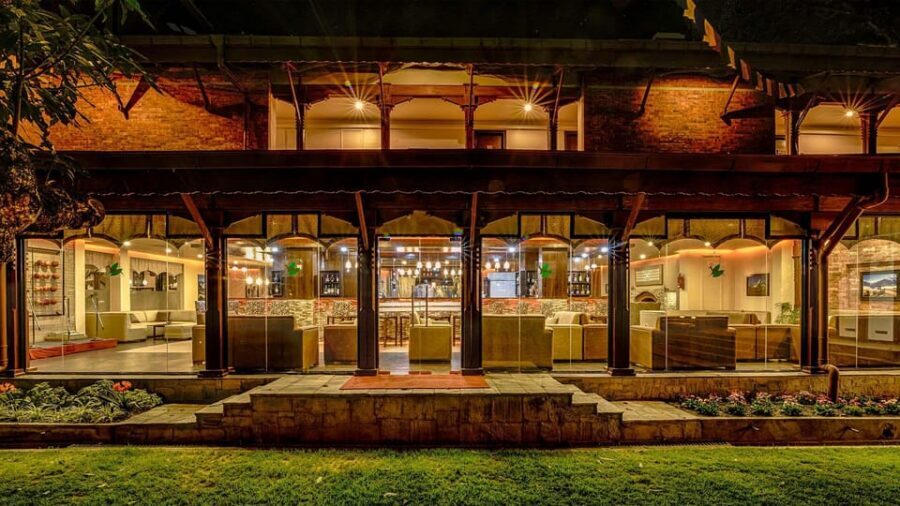
- Full Nepalese meal structure: soup and snacks first, then a traditional platter with rice/lentils/vegetables and a protein choice
- Momo plus dal bhat basics: you’re not just sampling one dish; you’re eating the real core of Nepali comfort food
- Yak photo moment: you can pose with a Himalayan yak for memorable pictures
- Lake dance: a specific, indigenous-style performance tied to Nepal’s waterways
- Region-based dance program: dances reflect Nepal’s geography, from the plains up toward the Sherpa areas
- You can join the dance: you’ll be invited to try a few steps, not just sit and watch
From Hotel Pickup to Thamel Dinner Show: What the 6 PM Start Feels Like
Plan on an evening that begins with convenience. You’ll be picked up from anywhere inside Kathmandu (even farther stops can be arranged by talking with a representative on WhatsApp). Pickup is around 6:00 pm, so this works best if you want a simple plan instead of figuring out transport and tickets on your own.
After pickup, you’ll head to Thamel—Kathmandu’s main tourist zone—where the restaurant show runs for about 3 hours. The experience uses a separate entrance, so you’re not stuck in a general line before the meal and performances begin. That matters because it keeps the evening from getting chopped up by waiting.
Once you arrive, you’ll get an English-speaking host/greeter and then settle into the flow: food first, performances as the meal progresses, and then the standout moments (yak and lake dance) later in the program. If you’re the type who likes to know what happens next, this schedule style usually feels easier than an event where everything comes all at once.
A few more Kathmandu tours and experiences worth a look
The Food: Momo, Mustang Potatoes, Rakshi, and a Real Nepalese Platter
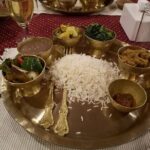
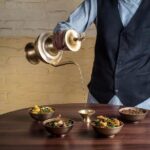
This is not a tiny tasting menu. You’re set up for a proper meal, starting with soup and snacks, plus complimentary Nepali rakshi (the house alcohol). Then the night shifts into a traditional platter format built around rice and lentils, with mixed vegetables and a protein choice.
Here’s what you can expect on the table, in plain terms:
- Momo dumplings to kick things off
- Mustang potatoes, served as part of the snack/side spread
- Fried chicken and soybeans mentioned as part of the included food
- Then the main platter: rice, lentils, mixed vegetables, and a choice of fish, chicken, or wild boar for non-vegetarian options
- If you go vegetarian, you’ll get paneer as the protein option
For many first-time visitors, this is the best part: dal bhat is simple in concept, but it’s satisfying and practical. The rice-and-lentil base works as comfort food, and the side dishes keep you from feeling like you’re eating the same thing on repeat. The momo and potato elements help bridge familiar and unfamiliar flavors.
If you’re vegetarian, the good news is that you’re not limited to a generic veggie plate. You’ll still get the platter structure with the core Nepalese components, and paneer is specifically offered as the alternative protein.
One practical note: this dinner includes rakshi, but it does not include other drinks like beer, soft drinks, or bottled water. So if you plan to drink more than one round, set aside extra cash and don’t count on the included items to cover everything.
Dal Bhat Meets Dance: How the Performance Program Works
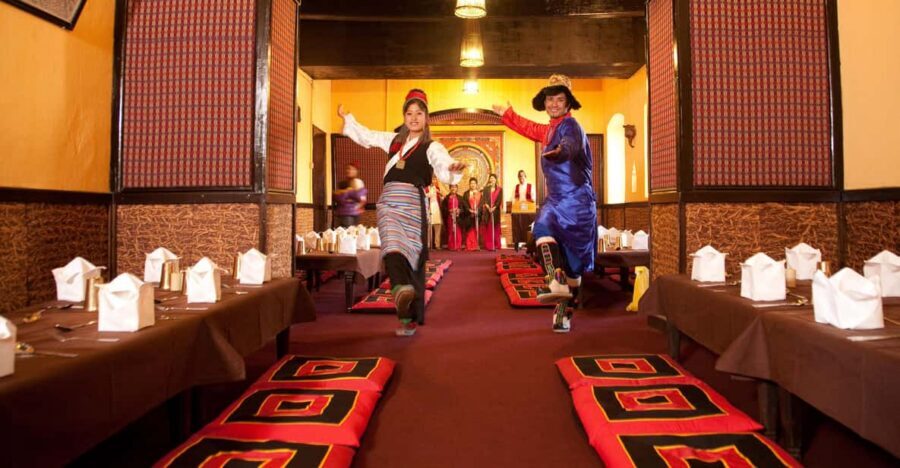
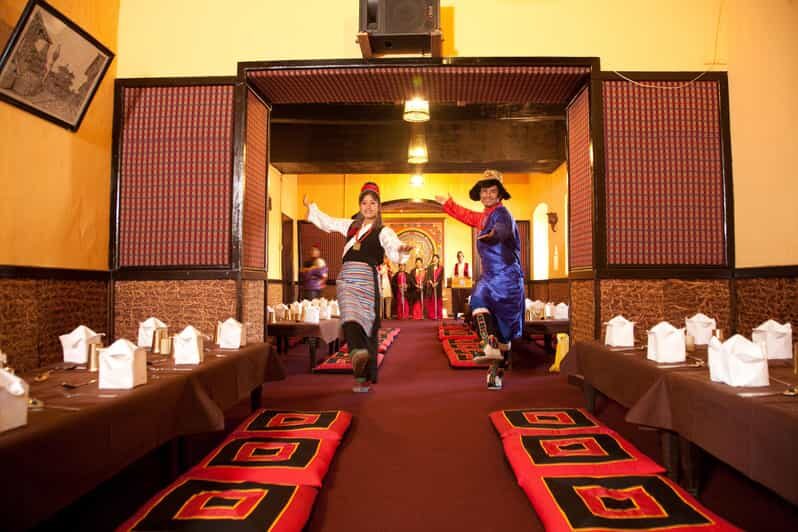
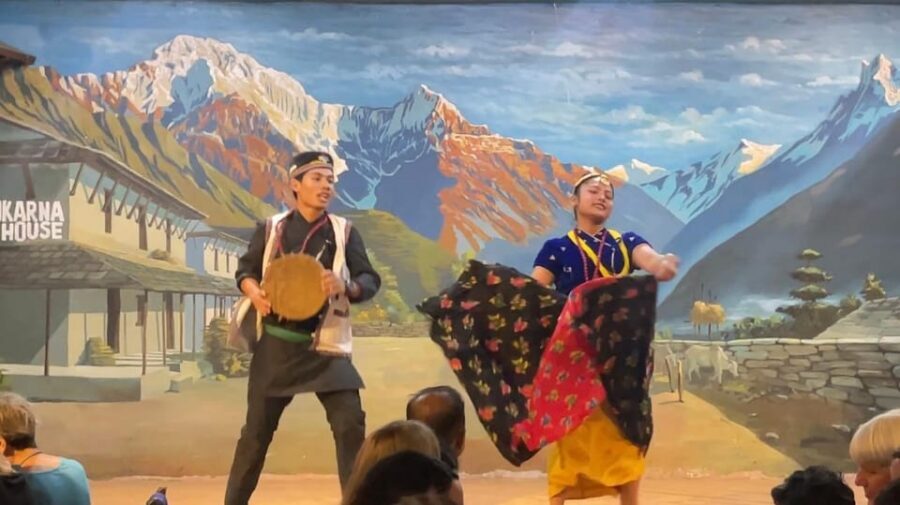
The whole point of this night is that the meal connects to the culture. As you eat, you’ll watch traditional performances that represent different geographical areas of Nepal. That matters because it turns dancing from background entertainment into something with context—each style is linked to where people live and how communities move and celebrate.
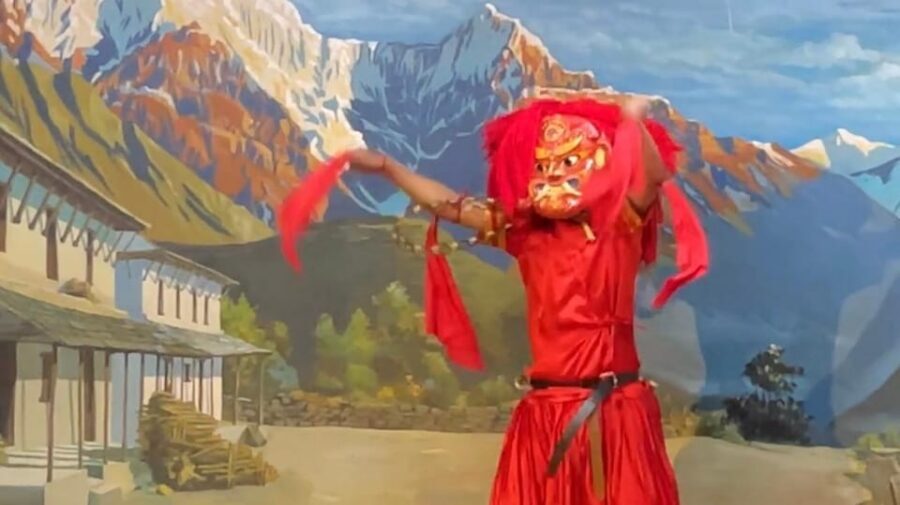
The program includes the kind of “headline moments” that you’ll remember even if you’re tired after a day of sightseeing:
The Lake Dance Moment
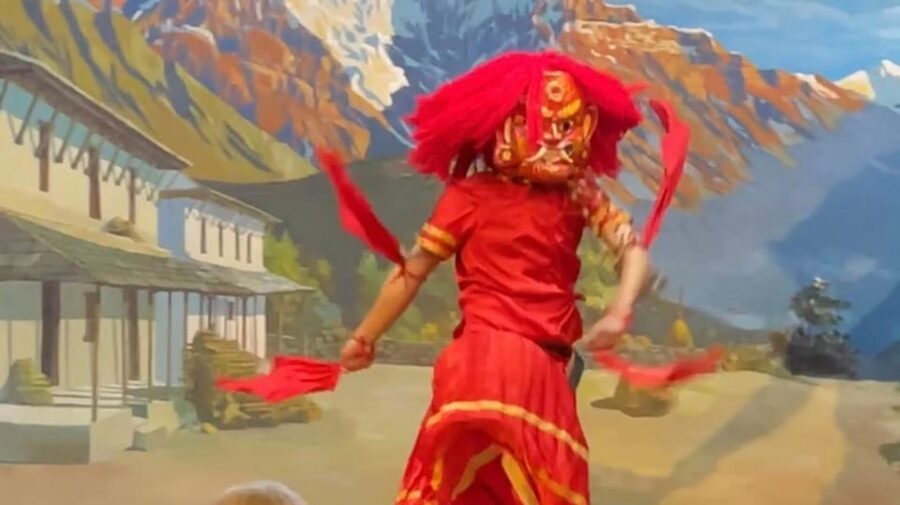
You’ll get a performance called the lake dance, described as an indigenous spectacle tied to Nepal’s waterways. Even if you don’t speak the language, this is the type of dance where the story travels through rhythm, movement, and atmosphere. It also gives the show a tonal change: it’s not just quick costume switching; it’s a named feature with its own identity.
The Sherpa-Referenced Energy
The performance descriptions point to dances representing everything from the plains up toward the Sherpa highlands. That broad geographic range is a smart way to show how Nepal isn’t one single culture with one single dance style. Different regions develop different movement patterns, music intensity, and performer styles.
A few more Kathmandu tours and experiences worth a look
Getting Up to Try Steps
Later in the night, dancers invite you to join in and learn a few steps. You might think you’ll be awkward. You probably will for about the first 30 seconds. Then you’ll realize most groups teach the basics in a friendly way, and you’ll be moving enough to feel part of the event. This is a key value point because it turns the night from passive consumption into a shared moment.
The Yak Encounter: Fun Photos, Real Animal Etiquette
This is the highlight many people hope for: a yak interaction where you can pose for photos. It’s presented as a memorable moment, and you may even share a brief interaction by tipping the yak for its presence.
When an animal is involved, keep it simple: treat the yak calmly and follow staff guidance. Don’t yank for a better angle. Don’t try to crowd it. And keep your camera ready, since this part is the kind of thing that lasts only a short while before the show moves on.
This is also where the rules matter more than you might expect. Bare feet are not allowed, and pets aren’t allowed either. So wear shoes or footwear you can keep on for the whole evening, especially if you think the yak area might involve uneven ground.
Timing, Atmosphere, and What Might Go Wrong (So You Can Plan Around It)
Most nights run smoothly, but it helps to know where small problems can pop up:
- Some experiences can feel less structured than you’d expect, especially around when the show begins. If you’re the type who needs a firm start time, mentally plan for “around” rather than “exactly at.”
- Lighting and seating can affect how photos turn out. If you’re trying to recreate a perfect picture from a promo photo, aim for flexible expectations and focus on capturing the moment rather than hunting the ideal angle.
- English explanation can vary in how detailed it feels. If you care about constant narration, look to the host for cues and ask questions during the meal or between performances.
Price and expectation management also matter here. You’re paying for a packaged meal and a dance program, not a private show. When you understand that, it’s easier to judge whether the value fits you.
Price and Value: Is $32 a Fair Deal for This Night?
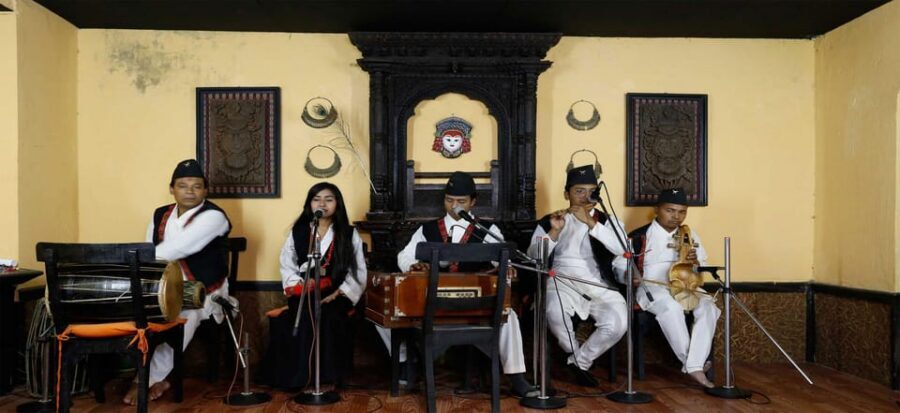
At $32 per person for a 3-hour dinner-and-show experience, the value is mostly about what’s included:
- Pickup from your hotel in Kathmandu
- Dinner with soup and snacks
- A traditional platter with rice, lentils, mixed vegetables, and protein choice
- Momo plus Mustang potatoes, fried chicken, and soybeans as part of the included spread
- Complimentary rakshi
- Traditional dance performances, plus a chance to learn a few steps
- Yak photo interaction
When you list it out like that, you’re paying for a full program, not just food. If you were to assemble this on your own—restaurant meal plus a dance show ticket plus transport—you’d likely spend more on the logistics than on the show itself.
The main “watch this” item is drinks. If you want bottled water, beer, or soft drinks, those are not included. So the final cost depends on how you drink.
For many visitors, this price hits a sweet spot: it’s not cheap enough to feel random, but it’s not so expensive that you need to stress about the value.
Who Should Book This Dinner Show (And Who Might Skip It)
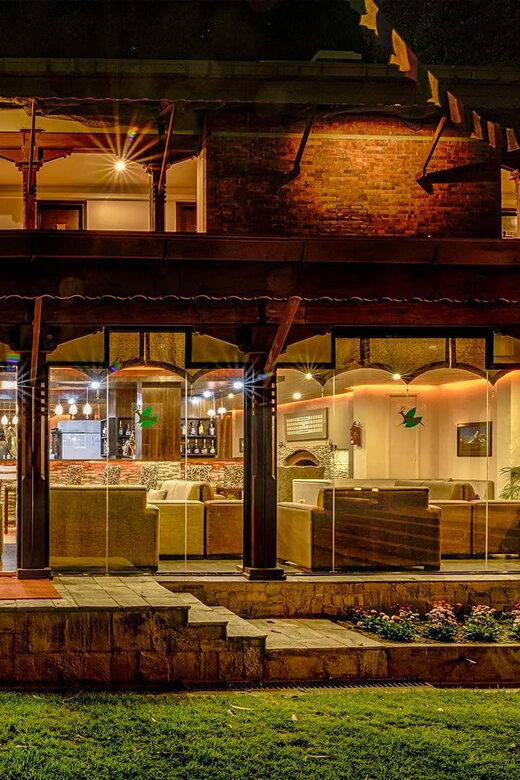
This works especially well if you’re:
- In Kathmandu for a short stay and want one clean evening plan
- Curious about Nepalese staples like momo and dal bhat without hunting multiple restaurants
- Interested in cultural performances tied to Nepal’s regions
- The type who enjoys light participation, like trying a few dance steps
It may not be the best match if you need:
- A very structured, English-heavy narration throughout every moment
- A highly “hands-off” experience where you never participate in group activities
Also, it’s not suitable for some categories based on the provided info: it’s not suitable for children under 3 ft (90 cm), and it’s listed as not suitable for visually impaired people.
If you’re going with someone who’s unsure about animal interactions, you can still enjoy the cultural dance and meal, but you should know the yak part is part of the program.
Quick Practical Checklist Before You Go
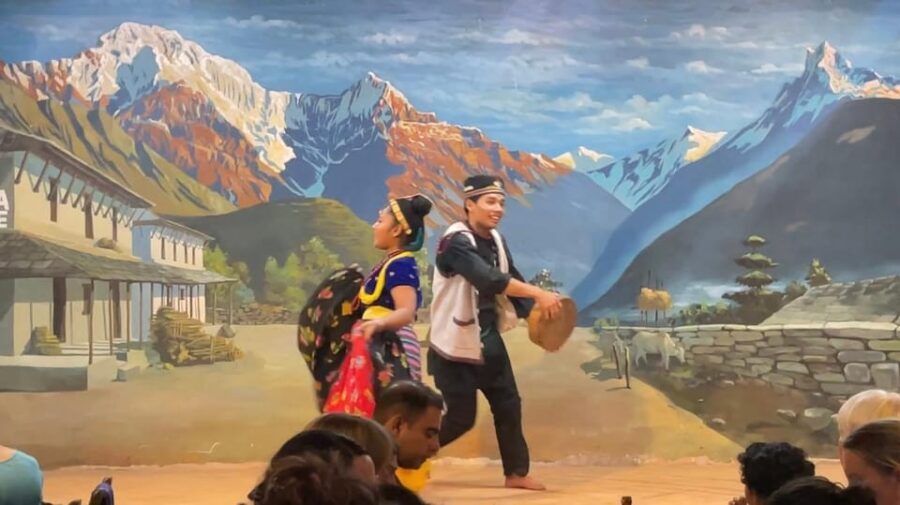
Bring a camera—this is the sort of night where you’ll want photos of the dance moments and yak interaction. Wear footwear you can keep on throughout; bare feet are not allowed.
If you can, eat a light lunch or snack before pickup. The dinner platter is the centerpiece, and you’ll enjoy the show more if you’re not too stuffed before it starts.
If you’re picky about beverages, plan on extra money for drinks beyond the complimentary rakshi. And if you pay by card, it’s smart to understand that card statements can include additional charges from currency conversion or processing, so double-check your totals.
Should You Book Sarita Holidays’ Cuisine and Dance Night?
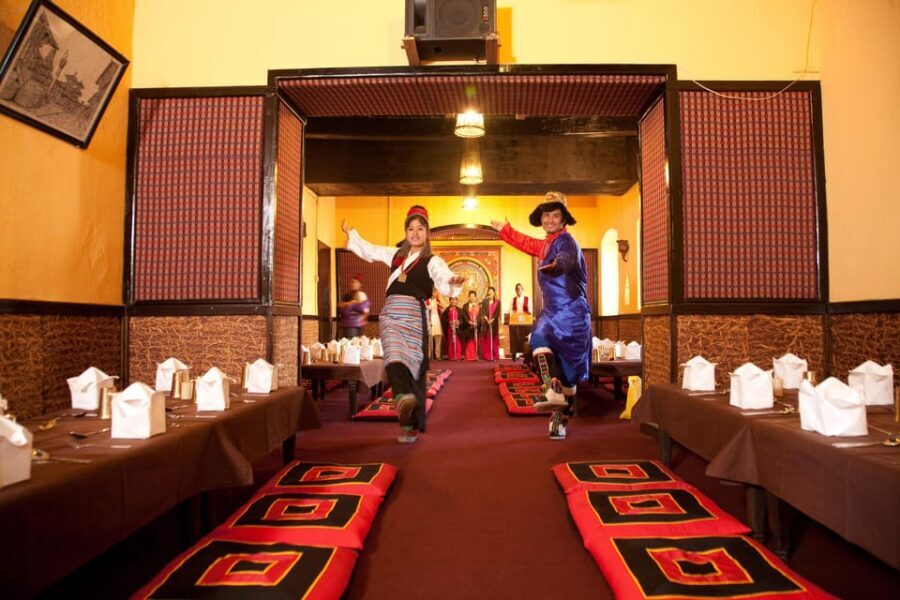
Yes, if you want a straightforward evening that combines food and culture in one booking. For most first-timers in Kathmandu, the biggest win is that you get a real Nepalese meal structure paired with dances that represent different parts of the country, plus a memorable yak photo moment.
Skip it (or at least adjust expectations) if you’re the kind of traveler who needs perfect photo conditions, crystal-clear start times, or nonstop detailed English explanations during the entire show. This is a group dinner experience. It’s meant to be fun and cultural, not a private performance.
If your goal is to eat well, watch traditional dance, and collect a few great Kathmandu memories without planning four separate things, this one is a strong choice.
FAQ
How long is the Kathmandu Nepalese cuisine dinner with traditional dance?
The experience lasts 3 hours.
What time do they pick me up from my hotel?
Pickup is scheduled at around 6:00 pm.
Where does the dinner show take place?
The dinner and dance show happen in Thamel, Kathmandu.
What food is included in the dinner?
Dinner includes soup, snacks, and a traditional platter with rice, lentils, mixed vegetables, plus a choice of fish, chicken, or wild boar (paneer is available for vegetarians). Momo dumplings are also included, along with items like Mustang potatoes, fried chicken, and soybeans.
Is rakshi included?
Yes. The dinner includes complimentary Nepali rakshi. Other drinks like beer, soft drinks, and bottled water are not included.
Can I choose a vegetarian option?
Yes. You can choose between vegetarian and non-vegetarian options, and the vegetarian platter includes paneer.
What does the yak interaction include?
You can pose for photos with a Himalayan yak, and you may also share a moment by tipping the yak for its presence.
What should I bring and what is not allowed?
Bring a camera. Pets are not allowed, and bare feet are not allowed.
Is it wheelchair accessible and suitable for children?
It is listed as wheelchair accessible. It is not suitable for children under 3 ft (90 cm) and it is listed as not suitable for visually impaired people.