Kathmandu temples, Chitwan wildlife, and Pokhara views in one week. What I like most is the smooth back-to-back routing that connects these big-hitters with door-to-door shuttles and a tourist bus plan that keeps you from juggling plans. I also like that the Chitwan days mix wildlife with people and place through jeep safari, canoeing on the Rapti River, and Tharu village activities. One thing to consider: not all entrance fees are included, and the schedule has early starts, especially for Sarangkot sunrise.
This is a value-focused tour run by Couch Adventure Nepal (CAN), and it’s built around practical guiding. English-speaking support is included during the Kathmandu and Pokhara city touring, and guests have praised staff service and even mentioned a guide named Krishna as a standout at a Holiday Inn stay. With a maximum group size of 30, you get a group feel without feeling completely lost in a crowd.
If you want a fast, well-organized Nepal sampler—culture in Kathmandu, nature in Chitwan, scenery in Pokhara—this works well. If you’re the type who likes slow travel with lots of free time each day, you’ll probably want to plan extra nights on your own.
In This Review
- Key things to know before you go
- Kathmandu to Chitwan to Pokhara: the week’s winning formula
- Kathmandu Valley temples and palace-era sights (Days 1–2)
- The jump to Chitwan: travel time, resort lunch, and that sunset shift (Day 3)
- Chitwan Day Two: jeep safari, Rapti canoeing, and Tharu culture (Day 4)
- Pokhara: from bird watching to lake and stupa stops (Day 5)
- Sarangkot sunrise and Pokhara’s highlights: one big morning payoff (Day 6)
- Hotels, meals, and what your $789.34 covers in real terms
- Group size, English support, and the pace you should expect
- Who should book this, and who might want a different style
- Should you book the 7 Days Nepal Tour with Couch Adventure Nepal?
- FAQ
- FAQ
- What cities does the 7-day tour cover?
- How does the tour handle airport and hotel transfers?
- Are intercity transfers included?
- How long is the tour?
- Is the city touring guided in English?
- What’s included for Chitwan activities?
- Is the Chitwan park permit included?
- What meals are included in the price?
- Are entrance fees included?
- How many people are in the group?
- What is the cancellation timeline for a full refund?
Key things to know before you go
- Kathmandu Valley highlights: Pashupatinath, Boudhanath, Swayambhunath, Kathmandu Durbar Square, and Narayanhiti Museum in one city block
- Chitwan safari with variety: jeep safari plus Rapti River canoeing, then Tharu village culture
- Pokhara built for early mornings: bird watching, then another sunrise push toward Sarangkot
- Entrance fees not always included: Pokhara and Kathmandu sightseeing fees are listed as not included, so budget a bit of cash
- Group size and pacing: up to 30 people, with long travel days using tourist buses between cities
Kathmandu to Chitwan to Pokhara: the week’s winning formula
The biggest win here is that Nepal’s three “must-see” zones are stitched together logically. You start in Kathmandu with classic temples and royal-era sights, then you switch into wildlife country for Chitwan, and finally you land in Pokhara for lake views, caves, and that famous mountain backdrop.
That routing matters. Kathmandu can feel overwhelming if you try to do everything independently, especially when you’re also planning transportation. By handling the intercity legs with a tourist bus plan and arranging airport/hotel transfers by private car, you keep the trip moving without the headache of figuring out buses, tickets, and timing on your own.
The trade-off is time. Seven days is not long enough for deep day trips in every direction, so you’ll feel the schedule compression—especially on days with big early starts. Still, the balance is good: you get wildlife action in Chitwan and then switch to calmer Pokhara rhythm, instead of just stacking temples or just stacking scenery.
A few more Kathmandu tours and experiences worth a look
Kathmandu Valley temples and palace-era sights (Days 1–2)
Your first Kathmandu day is straightforward: pickup from Kathmandu International Airport or your location, then a private car transfer to the hotel. That’s a smart start if you land jet-lagged or arrive later in the day. Getting to the hotel without wrestling taxis or local directions reduces stress fast.
On the main Kathmandu touring day, you hit the valley’s core landmarks:
- Pashupatinath Temple: one of Nepal’s best-known Hindu pilgrimage sites, set by the Bagmati River. Even if you’re not religious, it’s a place where you can watch rituals and daily life unfold with intense focus.
- Boudhanath Temple: a massive Buddhist stupa area where you’ll notice a different kind of devotion—chanting rhythms, prayer practices, and the everyday flow around the shrine.
- Swayambhunath (Monkey Temple): the famous hilltop stupa with views over Kathmandu. The “monkey temple” vibe is real, but what you’ll remember most is the panorama and the atmosphere.
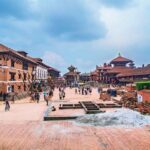
- Kathmandu Durbar Square: the historic royal palace square and surrounding monuments. It’s the kind of place where you can see how power and artistry shaped the city’s layout.
- Narayanhiti Museum (latest Royal Palace): a palace-to-museum stop that helps connect Kathmandu’s heritage to the more recent royal story.
Two practical notes. First, temple days can mean changing levels of crowding and walking uneven surfaces, so wear grippy shoes. Second, entrance fees for sightseeing in Kathmandu are not listed as included, so plan for a few paid stops even if some items are described with free admission ticket status for the tour.
The jump to Chitwan: travel time, resort lunch, and that sunset shift (Day 3)
After an early 7am start, you transfer to the bus station and take about a 5-hour drive to Chitwan. That’s a long ride, but it’s also why the itinerary feels efficient. By the time you reach Chitwan, you’re not just “traveling through”—you’re ready to begin the nature side of Nepal right away.
Once you arrive, the tour transfers you to the resort. Lunch is provided at the resort, and then the day turns to softer nature pacing: a nature walk and a sunset tour.
That sunset shift is more than just a pleasant add-on. In Chitwan, light changes how the park feels. Wildlife sightings can be more active at certain times of day, and even when animals stay off-camera, you still get that “close to the wild” mood—birds, river edges, and the sense of being in a working ecosystem rather than a theme park.
This day is listed as admission ticket free, so most of what you pay for is already covered by the tour structure (and the Chitwan park permit is included overall, which is a big deal for actually entering the right areas).
Chitwan Day Two: jeep safari, Rapti canoeing, and Tharu culture (Day 4)
Chitwan is where the tour earns its keep. Instead of just one safari session, you get multiple formats of seeing wildlife and understanding local life.
The included activities are:
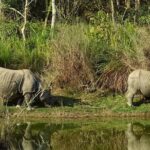
- Jeep safari: for the classic chance to spot larger animals and cover more ground than on foot.
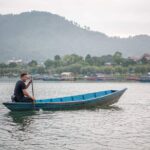
- Canoeing on the Rapti River: a different viewpoint. From the water, the park edges and birdlife feel closer, and you’re moving quietly through a corridor that can bring surprising sightings.
- Jungle museum tour: a way to make the park feel less random. You’ll get context for the habitat and species, which helps you notice things later during safari and walks.
- Tharu village tour plus Tharu stick dance program: this is the cultural half that prevents Chitwan from being only about wildlife.
One reason this mix works: wildlife parks can be hit-or-miss on animal sightings on any single day. When the itinerary includes cultural programs and education (like the jungle museum) plus multiple outing styles, you still leave with more than just a few photos.
If you’re sensitive to long days, note that Chitwan activities are packaged into a full day block, so you’ll be on the move. Bring what you can for heat and possible rain (the data doesn’t specify weather, but Chitwan’s seasons vary). At minimum, plan for water and sun protection.
Pokhara: from bird watching to lake and stupa stops (Day 5)
Pokhara is your reset button. After early morning bird watching, you eat breakfast and then head to Pokhara by bus (about 6 hours).
Bird watching is a neat early choice because it makes the day feel “local,” not just tourist sightseeing. Even if you’re not a hardcore birder, you’re likely to notice the sounds, the movement, and the calm pace that Pokhara is known for.
In Pokhara, the tour keeps you on a sightseeing track that focuses on iconic viewpoints and quick, high-reward stops later on:
- water and nature elements,
- a spiritual landmark, and
- lake scenery.
Entrance fees in Pokhara sightseeing are listed as not included, so again, budget a bit for paid entry points.




Sarangkot sunrise and Pokhara’s highlights: one big morning payoff (Day 6)
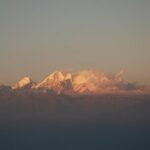
Day 6 starts early—5:30am—for a sunrise tour to Sarangkot. This is the moment in Pokhara many people dream about: a mountain-facing start with sky light that changes fast. Even if clouds block views, the experience is still about the morning atmosphere and the way the valley wakes up.
After sunrise, the schedule keeps rolling through Pokhara’s major attractions in a single day block:
- Waterfall
- Cave
- Mountain Museum
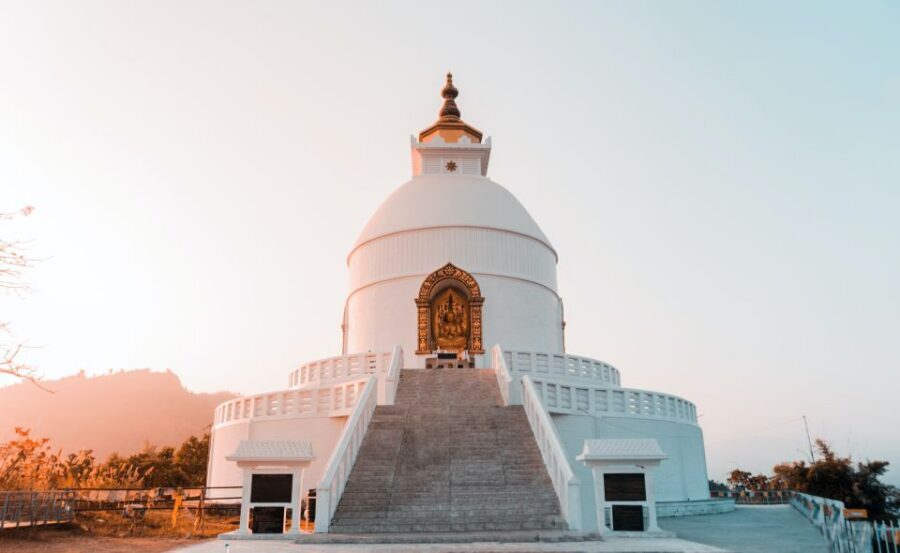
- World Peace Stupa
- Fewa Lake
A quick reality check: the day is packed, and travel within Pokhara can eat up time. The upside is that you get a “greatest hits” approach without needing to organize guides and separate bookings. The downside is fewer slow moments for lingering.
Day 6 is specifically marked as admission ticket not included, so entrance costs are very likely to pop up here. If you want smooth logistics, carry some cash and keep a little buffer in your budget.
Hotels, meals, and what your $789.34 covers in real terms
The price is $789.34 per person, which is the key question: does it feel worth it for what you get? For this itinerary, the value comes from three things.
First, you’re not only paying for guiding. You’re paying for a full transportation chain: airport/hotel shuttle by private car, then tourist bus transfers between Kathmandu, Chitwan, and Pokhara. Intercity logistics in Nepal can be time-consuming and confusing if you’re doing it alone.
Second, meals are partially covered. The tour includes:
- Breakfast (2)
- Lunch (2)
- Dinner (2)
Not all meals are included, and drinks are not included either. Still, getting two lunches and two dinners handled saves you money and reduces decision fatigue.
Third, Chitwan costs that matter are handled. The Chitwan park permit is included, and Chitwan activities (jeep safari, canoeing, jungle museum, Tharu village, stick dance program) are included as per the itinerary. That combination makes a big difference because safari fees and permits can add up quickly if arranged separately.
Hotels are listed at 2-star level in Kathmandu, Pokhara, and Chitwan. That usually means clean and functional, not luxury. If you like comfortable beds and quiet at night, choose travel expectations accordingly.
Also, you’ll get a mobile ticket, which is handy when you’re juggling early pickups.
Group size, English support, and the pace you should expect
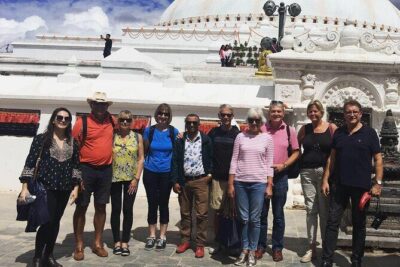
This tour runs with a maximum of 30 travelers. That’s large enough to feel social, but small enough that you’re unlikely to be totally invisible. You’ll also notice the itinerary relies on fixed meeting times and timed transfers, which keeps things efficient.
English-speaking support is listed during the city tour in Kathmandu and Pokhara. The Chitwan portion includes activities and park access, but the data doesn’t explicitly say the same language support applies to every single Chitwan moment. In practice, you’ll still have guidance for the activities, but if you’re planning to ask lots of questions during every handoff, you might find it easiest to confirm language coverage directly.
One service highlight from guest feedback: staff attentiveness. Some guests specifically called out a guide named Krishna as memorable during a Holiday Inn stay. That lines up with what you want on a trip like this: someone who can keep timelines realistic and explain what you’re seeing in plain words.
Who should book this, and who might want a different style
This tour suits you if you want:
- a first-time Nepal route with big variety,
- structured sightseeing (temples in Kathmandu, wildlife in Chitwan, scenery in Pokhara),
- and mostly handled logistics.
It also fits well if you travel with a friend or group and want to reduce planning work but still stay independent enough to enjoy each stop on its own terms.
You might want a different plan if you:
- dislike early starts (Sarangkot sunrise is non-negotiable here),
- need lots of downtime every day,
- or hate paying entrance fees on arrival (Pokhara and Kathmandu sightseeing fees are listed as not included).
Should you book the 7 Days Nepal Tour with Couch Adventure Nepal?
If you want a smart, efficient sampler of Nepal’s culture + nature + heritage, I think this is a good bet. You’ll get the Kathmandu classics, proper Chitwan activities (not just a drive-by), and a Pokhara day built around sunrise and iconic stops on Fewa Lake. The service reputation, including praise for staff and guide Krishna, supports the idea that you won’t feel like you’re touring alone inside a machine.
Book it if your priority is getting from place to place with minimal hassle and clear experiences. I’d pass or modify if you’re hoping for lots of free time, or if your budget can’t handle extra entrance fees in Pokhara and Kathmandu.
FAQ
FAQ
What cities does the 7-day tour cover?
It covers Kathmandu, Chitwan, and Pokhara.
How does the tour handle airport and hotel transfers?
You get airport and hotel shuttle by private car, plus pickup from Kathmandu International Airport (or your location) on day 1.
Are intercity transfers included?
Yes. Intercity transfers are included by tourist bus for the Kathmandu–Chitwan–Pokhara–Kathmandu route.
How long is the tour?
The tour is listed as 7 days (approximately).
Is the city touring guided in English?
Yes, English speaking support is included during the city tour in Kathmandu and Pokhara.
What’s included for Chitwan activities?
Jeep safari, canoeing in the Rapti River, jungle museum tour, Tharu village tour, and a Tharu stick dance program.
Is the Chitwan park permit included?
Yes, the Chitwan park permit is included.
What meals are included in the price?
Breakfast is included 2 times, lunch is included 2 times, and dinner is included 2 times. Other meals and drinks are available for purchase.
Are entrance fees included?
Entrance fees during sightseeing in Pokhara and Kathmandu are listed as not included.
How many people are in the group?
The tour has a maximum of 30 travelers.
What is the cancellation timeline for a full refund?
You can cancel up to 3 days in advance for a full refund. If you cancel less than 3 full days before the start time, the amount paid is not refunded.