REVIEW · KATHMANDU
Kathmandu Heritage Sites Joining Tours
Book on Viator →Operated by Outshine Adventure Pvt Ltd · Bookable on Viator
Walking into Kathmandu’s oldest rituals. This tour strings together four headline heritage stops, from Swayambhunath hill views to Pashupatinath’s sacred Hindu atmosphere, with a smooth group day built around major landmarks. I especially like the big, efficient hit of key sites in a single outing and the fact that you’re not left to figure out transport on your own. One thing to watch: the $55 price covers group transportation, but entrance fees and a guide are not included, so your day’s total will be higher once you add tickets and tips.
In practice, what you get is a classic Kathmandu Valley overview day: climb a few dozen steps at Swayambhunath, wander Durbar Square’s old-world complex, circle the huge Boudhanath stupa, then end at Pashupatinath. It’s a lot to cover, and it works best if you’re okay with a schedule that keeps moving.
In This Review
- Key Things to Know Before You Go
- What This Tour Really Gives You in One Day
- The big catch: money for tickets and help
- Price and Logistics: Is $55 a Good Deal?
- Morning Start: Meeting Point and How the Day Flows
- Stop 1: Swayambhunath Temple and the Kathmandu Valley View
- What to be careful about
- Stop 2: Kathmandu Durbar Square, Kasthamandap, and Old-Palace Energy
- Possible drawback
- Stop 3: Boudhanath Stupa and Why Size Matters
- Why this stop is worth your effort
- Stop 4: Pashupatinath Temple and the Sacred Hindu Experience
- A practical note
- Guides, Communication, and the Human Side of Outshine Adventure
- Group Size and the Pace: Good for Efficiency, Not for Wandering
- What to Budget Beyond the Ticket Price
- Who This Tour Suits Best
- Should You Book Kathmandu Heritage Sites Joining Tours?
- FAQ
- FAQ
- How long is the Kathmandu heritage sites joining tour?
- What time does the tour start, and where do we meet?
- Where are the main stops on the itinerary?
- Is the entrance fees included in the $55 price?
- What’s included in the tour price?
- Is a guide included?
- How many people are in the group?
Key Things to Know Before You Go
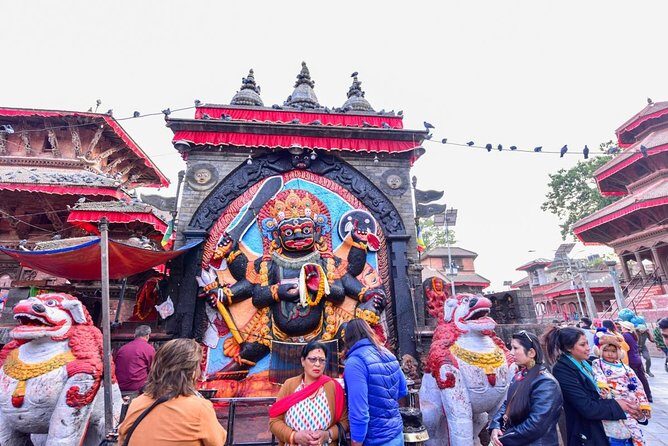
- A tight 6–8 hour route that covers four of the most famous spiritual landmarks in Kathmandu Valley
- Group transport with a driver is included, keeping the logistics simple
- Swayambhunath’s panoramic view is the kind you don’t get from street level anywhere else
- Boudhanath is UNESCO-listed and massive—expect stupa-scale, not just a quick stop
- Pashupatinath is early-Hindu-mecca energy, with sadhus, markets, and plenty to notice
- Max 15 travelers, so it’s not a cattle-car experience, but it is still a group
What This Tour Really Gives You in One Day
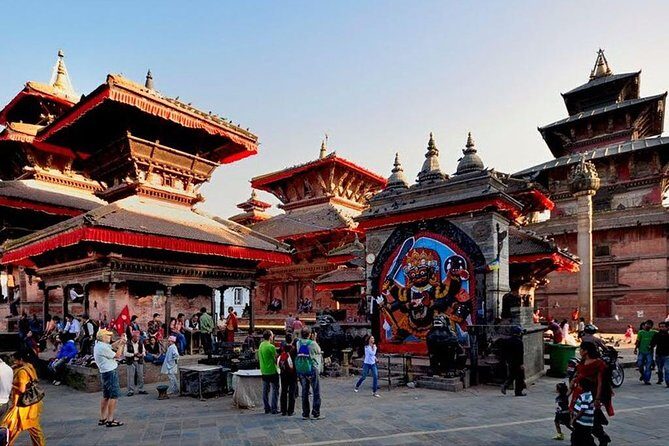
This is the kind of Kathmandu tour that’s made for “first-timers with limited time.” You start in the morning, get transported together, and spend your day moving through some of the most recognized spiritual and historical centers in the valley. The value isn’t only that you hit famous sites—it’s the order and flow: you begin with a hilltop viewpoint, then move into classic old-town heritage, then shift into Buddhist stupa world, and finish with the intensity of Pashupatinath.
If you like architecture, symbols, and religious spaces that feel lived-in, you’ll appreciate the variety packed into one outing. You’re not just photographing from the curb; each stop is designed to give you enough time to look closely and understand what you’re seeing—at least in broad strokes.
You can also read our reviews of more historical tours in Kathmandu

The big catch: money for tickets and help
The listed price is $55 per person, and transportation as a group with a driver is included. Entrance fees, guide costs, meals, and tips are not included. So your real budget is the tour price plus ticket(s) and any optional guide support, plus what you choose for food and tips during the day.
Price and Logistics: Is $55 a Good Deal?
At $55, you’re paying for time efficiency and group transport. In Kathmandu, getting around can be the difference between a relaxing day and a stressful one, especially if you’re managing a route with multiple stops. Here, the transport piece is handled, and the tour runs about 6 to 8 hours.
Where value can slip is if you assume everything is included. Admission fees are not included, and guide fees are listed as not included too. If you want a deeper explanation at each site, you may end up paying extra depending on what your booking includes on the ground.
That said, because the route covers major landmarks—Kathmandu Durbar Square, Swayambhunath, Boudhanath, and Pashupatinath—you’re still likely to feel like you got your money’s worth as long as you plan for tickets and for the pace of a half-day itinerary.
Morning Start: Meeting Point and How the Day Flows
The tour starts at 9:15 am with the meeting point at Paknajol Marg, Kathmandu 44600. Your pickup is described as coming from Outshine Adventure around 9:30, and then the tour begins from there.
This timing matters. You want daylight for Swayambhunath’s hilltop climb and good viewing conditions for the valley panorama. It also helps you beat the heavier crowds that tend to build later in the morning. Because you’re moving between four major sites, starting on time keeps the schedule realistic.
The group size is capped at 15 travelers, which usually means less waiting around than in larger tours. You’ll still be in a group rhythm—pause, regroup, go—but it’s not designed for a private, slow, “wander anywhere” day.
Stop 1: Swayambhunath Temple and the Kathmandu Valley View
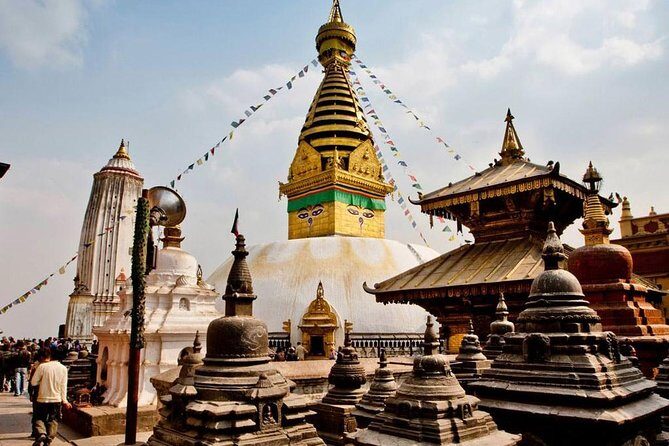
Your first major stop is Swayambhunath Temple, also commonly called the Monkey Temple area in practice. It sits west of central Kathmandu on a hill, and you reach it by climbing a set of steps. The highlight here is twofold:
1) The hilltop panoramic view of the Kathmandu Valley
2) The fact that the viewpoints are hard to replicate from anywhere else in the city
Spend your time slowly at the top, not just at the first photo angle. Take a moment to orient yourself to the valley—this makes the rest of the day feel connected instead of like a string of random stops.





What to be careful about
Swayambhunath involves stairs. If you’re sensitive to walking uphill or large crowds, you’ll want to pace yourself. Also, since the admission ticket isn’t included, you should plan to pay for entry separately.
Stop 2: Kathmandu Durbar Square, Kasthamandap, and Old-Palace Energy
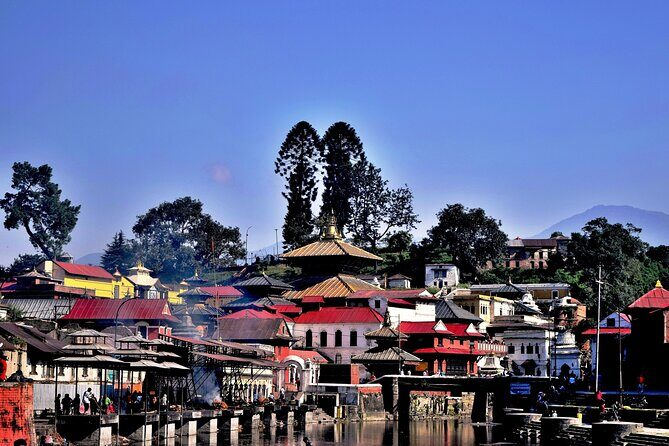
Next comes Kathmandu Durbar Square, an ancient palace complex and one of the most significant heritage areas in the valley. This stop isn’t just about one building. It’s about the way the area feels: temples, courtyards, and nearby Basantapur activity all part of the same historic zone.
A specific highlight you’ll want to look for is the Kasthamandap, described as one of the oldest surviving buildings in the Kathmandu Valley. In other words, you’re not just touring a pretty square—you’re stepping into a place that’s part of how Kathmandu’s story is told through stone.
You’re given about 2 hours here, which is a good amount of time if you like to look up at details as well as walk around. If you only “power-walk” through, you might miss what makes Durbar Square special.
Possible drawback
Because this is a major central heritage area, it can feel crowded and active depending on the day and time. If you’re looking for quiet reflection, plan for short breaks when you can find space.
Stop 3: Boudhanath Stupa and Why Size Matters
After Durbar Square, you head to Boudhanath Stupa, about 5 km (roughly 3 miles) northeast of central Kathmandu. This is one of those places where scale changes how you feel about the site.
The stupa is described as 390 feet (120 meters) in diameter, and it’s considered one of the largest stupas in the world. It’s also recognized as a UNESCO World Heritage Site since 1979—so this is not just local importance. It’s internationally protected heritage.
You’ll get a short stop time listed as 2 minutes in the itinerary details, which is on the quick side. In real life, time on the ground can vary depending on group flow and how long entry and regrouping take. If you want more than a stop-and-stare moment, consider arriving mentally ready to prioritize one thing: the stupa itself and the ritual atmosphere around it.
Why this stop is worth your effort
Boudhanath gives you a different religious “language” than Durbar Square and Pashupatinath. The stupa is the centerpiece, and you can connect the symbolism with what you’ll see at Swayambhunath later (and how Buddhist and Hindu traditions shape different parts of the city).
Stop 4: Pashupatinath Temple and the Sacred Hindu Experience
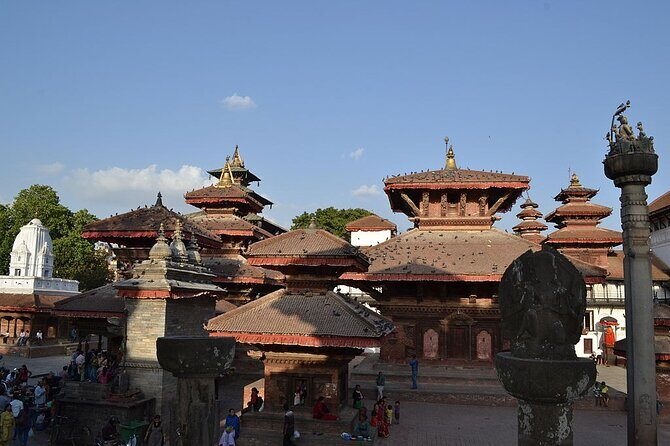
Your final major stop is Pashupatinath Temple, widely described as the holiest Hindu shrine in Nepal. It dates to the early 5th century, which means you’re looking at centuries of ongoing religious meaning, not a monument preserved behind ropes.
The experience here is also about people and daily life. You can observe Hindu sadhus, see markets filled with people, and you’ll likely notice monkeys around the area. If you’re the kind of traveler who likes sensing a place rather than just reading signs, this is the moment in the itinerary that can feel the most alive.
The itinerary lists about 1 minute at this stop, which again signals a schedule that may vary in practice. In a day like this, Pashupatinath may be where you want to slow down the most—because once you leave, it’s gone and you can’t “come back later.”
A practical note
Admission tickets aren’t included, so keep cash or your preferred payment method ready for any entry fees. Also, because Pashupatinath is a sacred religious site, be mindful of how you dress and how you behave. This is one place where basic courtesy matters more than getting the perfect angle.
Guides, Communication, and the Human Side of Outshine Adventure
Even though the tour price lists guide fees as not included, the overall experience you’re aiming for is guided understanding during the day—especially when you’re moving between Hindu and Buddhist sacred spaces.
One positive theme tied to the operator, Outshine Adventure Pvt Ltd, is professional handling and helpful communication. The name Gokul Sapkota appears as the person coordinating, with staff who step in to support what you need. In at least one case, a guest who didn’t speak English was able to communicate with a guide named Siri, which matters if you’re worried you’ll feel lost.
If you want the most from these sites, I’d treat this as your check-the-details tour: ask what level of interpretation is included in your booking, and whether you’ll have someone who can explain what you’re seeing at each stop.
Group Size and the Pace: Good for Efficiency, Not for Wandering
This tour is capped at 15 travelers and runs 6–8 hours. That puts it into the sweet spot for people who want the highlights without committing a full day.
But it’s not built for long, personal detours. You’ll be moving stop to stop, and some stops have short listed times. If you know you want extra time at a site—like spending more time circling Boudhanath’s stupa area or lingering at Pashupatinath—this is where having a flexible expectation helps.
The upside of a group tour like this is that you can get your bearings fast. You’ll come away understanding how the valley’s major heritage locations relate to each other spatially and spiritually.
What to Budget Beyond the Ticket Price
Your baseline is $55 per person, but plan for these extras since they aren’t included:
- Entrance fees for the sites
- Guide (listed as not included, so check what your booking includes)
- Meal during the day
- Tips
To keep it simple: think of the tour price as covering transport and the route, not covering every fee and every service. If you’re traveling with a tight daily budget, bring a bit of cushion for tickets.
Who This Tour Suits Best
This is a strong fit if:
- You’re seeing Kathmandu for the first time and want the headline heritage circuit
- You prefer group logistics that reduce the stress of planning transport
- You like religious sites where you can watch rituals and people, not just view buildings
It may be less ideal if:
- You want a very slow, private, off-the-map day
- You strongly prefer to handle everything independently with your own guide and tickets
- You need extra time for stairs or long walking segments
Should You Book Kathmandu Heritage Sites Joining Tours?
I’d book it if your goal is a high-visibility Kathmandu Valley overview in one morning-to-afternoon stretch. The route covers major anchors—Swayambhunath, Kathmandu Durbar Square, Boudhanath, and Pashupatinath—and the included group transport keeps you moving without constant taxi planning.
I’d pause before booking if you hate feeling rushed between stops, or if you’re hoping the $55 includes entrance fees and a guide. Since those items are listed as not included, you’ll want to confirm totals and expectations so you aren’t surprised later in the day.
If you do book, come prepared for stairs at Swayambhunath, plan for separate site entry payments, and decide ahead of time which stop you want to spend the most time absorbing—because you can’t maximize all four equally in one day.
FAQ
FAQ
How long is the Kathmandu heritage sites joining tour?
The tour lasts about 6 to 8 hours.
What time does the tour start, and where do we meet?
It starts at 9:15 am, and the meeting point is Paknajol Marg, Kathmandu 44600, Nepal.
Where are the main stops on the itinerary?
The route includes Swayambhunath Temple, Kathmandu Durbar Square, Boudhanath Stupa, and Pashupatinath Temple.
Is the entrance fees included in the $55 price?
No. Entrance fees are not included, and mobile tickets are mentioned for the experience.
What’s included in the tour price?
Transportation as a group size with a driver is included.
Is a guide included?
No. The guide is listed as not included, so you should plan for that if you want guided explanations.
How many people are in the group?
The tour has a maximum of 15 travelers.