REVIEW · KATHMANDU
Kathmandu introductory tour, a typical day trip in Kathmandu
Book on Viator →Operated by Himalayan Travel Consultant · Bookable on Viator
Monkeys, prayer wheels, and rituals in one day. This Kathmandu intro tour gives you a smart hit list of UNESCO-classified sights around the Valley, guided by an experienced guide and handled in a comfortable air-conditioned car. You’ll move from hilltop viewpoints to sacred squares to the big stupa complex without spending the day guessing what’s where.
Two things I really like: the guide depth and the comfort. When you’ve only got hours in Kathmandu, a good guide makes the difference between seeing temples and actually understanding what you’re looking at—and the AC car helps when your day turns hot and slow.
One heads-up: monument entry tickets and food aren’t included, so you’ll want to bring extra cash (or card access where available) for entrances, snacks, and a few optional extras.
In This Review
- Key highlights at a glance
- Why this Kathmandu intro tour works for a first visit
- Price and value: what $50 buys you (and what it doesn’t)
- Pickup, timing, and how the day flows
- Stop 1: Swayambhunath Temple and the monkey-viewpoint moment
- Stop 2: Kathmandu Durbar Square and the Taleju connection
- Stop 3: Boudhanath Stupa, prayer wheels, and doing Kora the right way
- Stop 4: Pashupatinath Temple and watching rituals from the left bank
- Your guide matters more than you think
- What to bring for a smooth day (no surprises)
- Who this tour is best for
- Should you book this Kathmandu intro tour?
- FAQ
- How long is the Kathmandu introductory tour?
- What time does the tour start?
- Does the tour include pickup and transportation?
- Is the tour private?
- Are entrance tickets included?
- Is food included in the price?
- What happens if I cancel?
Key highlights at a glance
- Experienced guide who helps you connect the stories behind each site
- Air-conditioned car with pickup for a lower-stress day
- UNESCO-listed Kathmandu Valley classics packed into about 6–8 hours
- Swayambhunath’s monkey temple vibe, plus prayer flags (Lungta)
- Boudhanath’s Kora route and prayer wheels for a very Buddhist way to wander
- Pashupatinath’s special viewing angle for Hindu cremation rituals (from the left bank)
Why this Kathmandu intro tour works for a first visit
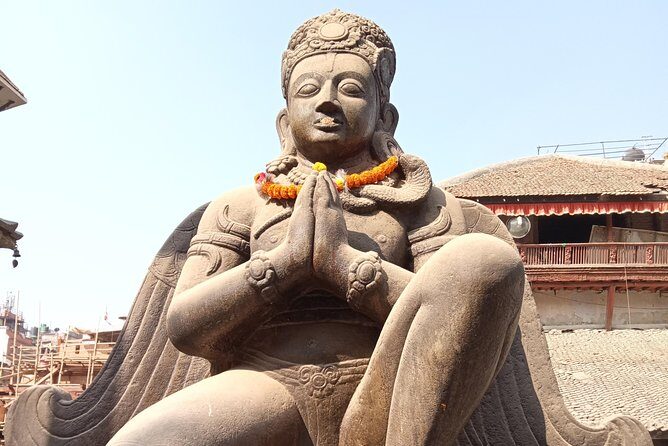
If Kathmandu feels like a swirl of traffic, temples, and requests for taxi rides, this type of day tour can be a relief. You’re not doing a random hop-and-pray. You’re following a route that hits several of the best-known UNESCO sites in the Kathmandu Valley, with a reliable operator and an experienced guide steering the day.
The pace is built for real-world touring. Each stop is long enough to see what matters, but short enough that you’re not stuck for hours at just one place. And because it’s a private activity for your group, you’re not forced into a loud, slow-moving crowd dynamic.
You’ll start at 9:15 am, which is smart in a city where mornings can feel calmer than afternoons. Also, you get a mobile ticket, so you’re not juggling printed vouchers on a busy day.
A few more Kathmandu tours and experiences worth a look
Price and value: what $50 buys you (and what it doesn’t)
The price is $50 per person for about 6–8 hours, and that includes two big-ticket items: an experienced tour guide and an air-conditioned car. For a first-timer day—especially if you’re juggling limited time—that’s often the best value you can buy. You’re paying for planning, timing, and someone who knows how to navigate crowds and site etiquette.
What’s not included matters too. Admission tickets, food and drink, and tips are on you. At sacred sites, entry fees can add up, and you’ll also want water and something to eat before the afternoon wears you down. There’s also an optional cost for photos with sadhus at Pashupatinath, so keep a little extra aside if that’s on your wish list.
If you’re traveling as a group, there are group discounts, which can make this feel like a bargain compared with hiring private transport without a guide.
Pickup, timing, and how the day flows
This is the kind of tour that removes friction. You can get pickup, then spend your day traveling by car between four major stops. That matters because Kathmandu traffic can be chaotic, and waiting in place can waste your sightseeing time.
You’ll likely feel the day as:
- a morning focused on views and temple entrances
- a mid-day shift to temples and historic squares
- an afternoon that goes more ritual and cultural
- a finish that circles back to major Hindu practice areas
You’ll also want to plan for uneven ground and stairs. Some sites are very walkable, others require real climbing, and the surface can be rough. Shoes and socks choices matter more than you’d think.
Stop 1: Swayambhunath Temple and the monkey-viewpoint moment
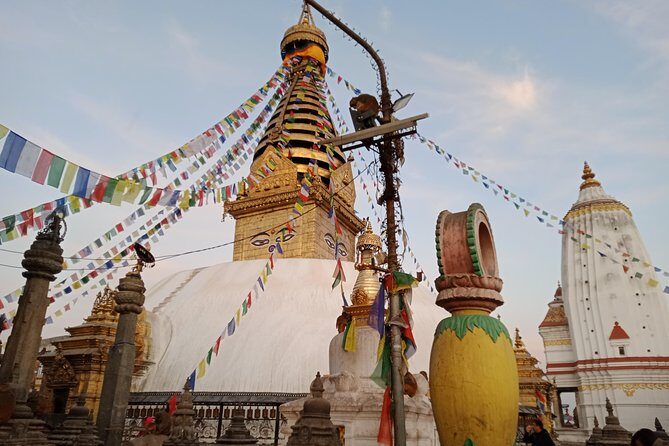
Swayambhunath (often called the Monkey Temple) is one of those places you notice from a distance, because it sits high above the city. The moment you step into the area, you get the mix Kathmandu does best: sacred symbolism and everyday chaos—especially the monkeys.
Plan for a climb. You’ll have to make some steps from the parking area up to the temple complex. The effort is worth it because the view over the Kathmandu Valley is part of what makes the stop memorable. Even when the air isn’t crystal clear, you can still feel the scale of the city spread out below.
What to look for:
- Prayer flags (Lungta) flutter around the temple spaces. These are not just decorations; they signal the presence of Buddhist prayer in physical form.
- The big stupa area has that classic Kathmandu look—simple, grounded, and instantly recognizable once you’ve seen it once.
- Monkeys are a reality here. You don’t need to panic, but you do need to be careful with loose items and food.
Ticket note: admission isn’t included for this stop, so budget time and a little money for entry if the fee applies when you visit.
Stop 2: Kathmandu Durbar Square and the Taleju connection
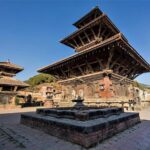
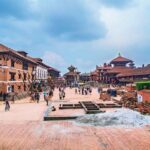
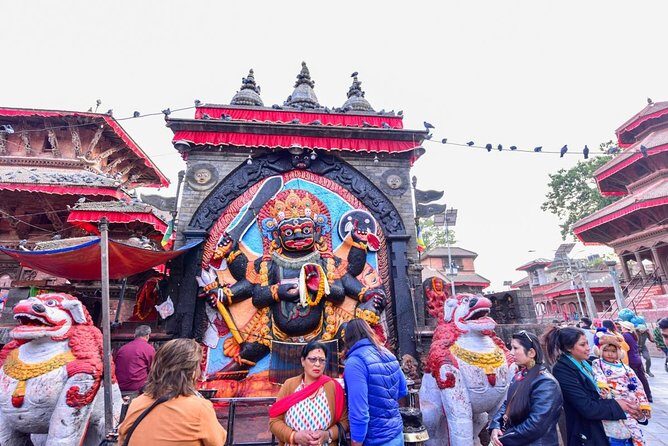
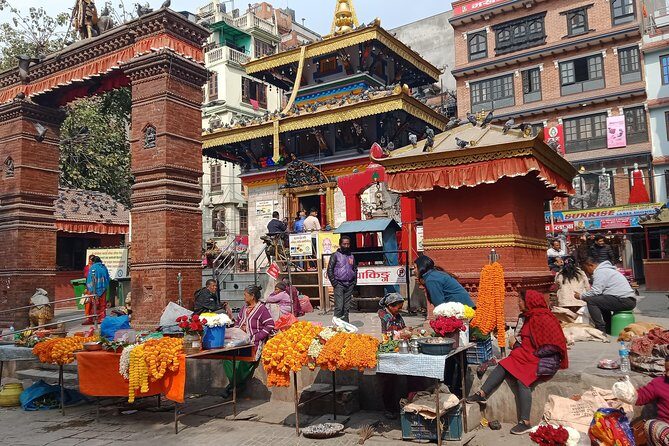
Kathmandu Durbar Square is the kind of place where you can’t rush. It’s a central historic area with a palace complex and many temples that date back to the 16th and 17th centuries. You’re not just looking at buildings; you’re looking at centuries of patronage, power, and religion layered into stone.
This stop gives you context. After Swayambhunath’s hillside spirituality, Durbar Square shows you Kathmandu as a royal and ritual center. You’ll see the larger temple structures, multiple courtyards, and the feel of a place designed for ceremonies and gatherings.
One detail that sticks: the tallest temple for the tutelary deity of the Royal family, Taleju. The information you’ll hear from your guide helps you understand why Taleju still matters and how old practice can continue into modern religious life. You may also learn that during the biggest Hindu festival of Dashain, animal sacrifice has been part of tradition—handled through specific religious frameworks.
Ticket note: monument entry isn’t included here either, so expect an added cost at the gate.
Practical consideration: Durbar Square can get crowded, especially as the morning stretches. Wear shoes you’re comfortable walking in for uneven stone surfaces, and keep your attention on your guide when it’s busy—you’ll waste less time.






Stop 3: Boudhanath Stupa, prayer wheels, and doing Kora the right way
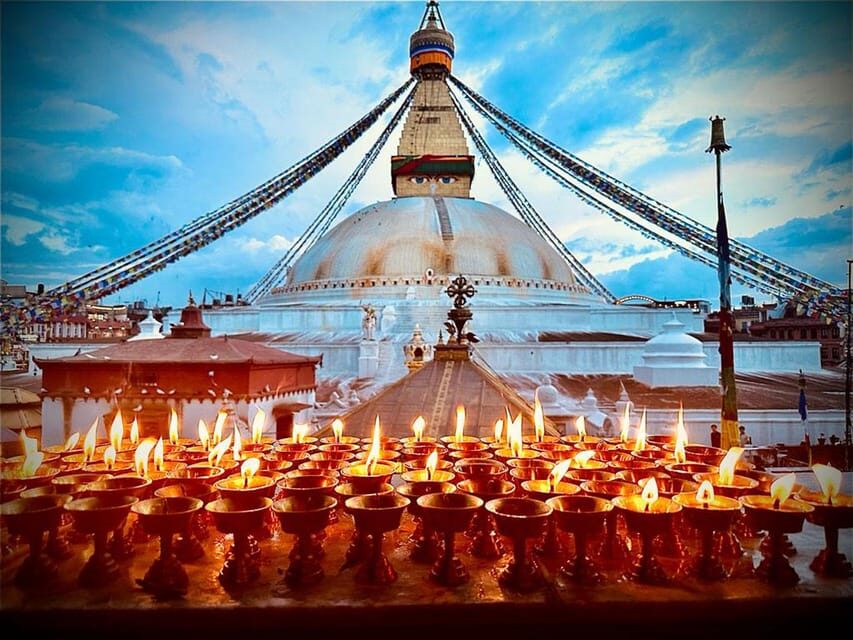
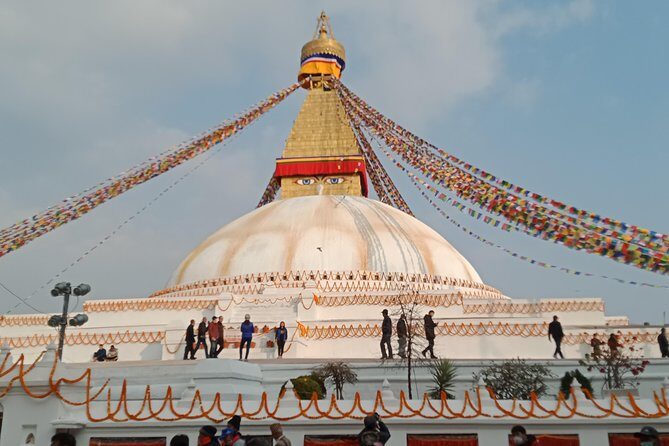
Boudhanath Stupa is the big one in Nepal. It’s the kind of landmark you’ll recognize immediately from photos, but up close it hits differently. The main event here is the Kora—walking around the stupa—along with prayer wheels placed around the route.
This is where the tour feels especially “real-world.” Instead of just stopping to look, you’re participating in the rhythm of what worshippers do: slow circling, hand contact with ceremonial surfaces, and the steady motion of prayer wheels as you move along the perimeter.
What you’ll likely notice:
- The scale of the stupa feels almost architectural—like it anchors the entire neighborhood.
- Monks and monasteries in the area may open during the afternoon. If your timing lines up, you might get a chance to step inside.
- If you enter monasteries, you’ll want to be ready for barefoot rules. Your guide will help you understand the etiquette quickly.
Ticket note: again, admission tickets aren’t included for this stop, so plan for fees when you arrive.
Quiet tip: bring a little patience. Kora is supposed to be unhurried. If you try to sprint through, you miss the point.
Stop 4: Pashupatinath Temple and watching rituals from the left bank
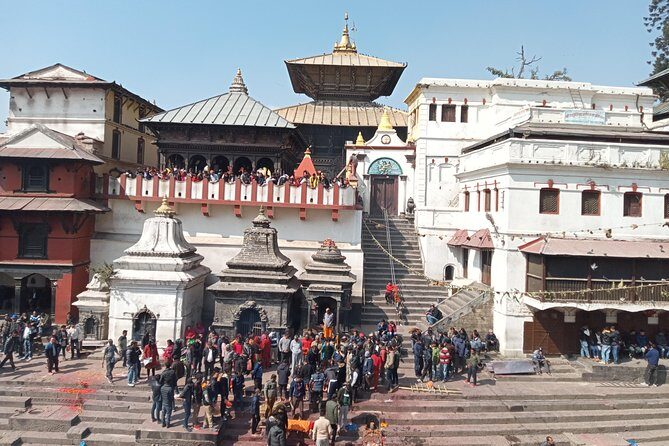
Pashupatinath is the spiritual powerhouse for Hindu cremation rituals in the Kathmandu area. The main temple is closed for visitors, but don’t assume that means you’ll see nothing. What you can see is the human side of religion—the rituals taking place along the river.
Your guide will position you so you can observe the cremation ceremonies from the left bank of the river. Ceremonies take place on the right bank, but your viewing access is managed from where visitors are allowed. This is one of the biggest reasons to do the tour with a guide: you don’t want to guess your way through sensitive viewing zones.
Also keep expectations clear on photography. You can take photos with sadhus (religious men), but it requires extra payment. Your guide will let you know how to do it properly, and you’ll avoid awkward misunderstandings by asking first.
Ticket note: monument entry isn’t included for this stop, and even if you can’t enter the main temple, you may still encounter fees tied to access areas.
How to handle the emotional weight: cremation rituals can be intense. If you’re sensitive to that kind of scene, you can keep a respectful distance while still seeing what you came for—religion in action, not just religion on display.
Your guide matters more than you think
The operator behind this tour runs it with experienced guides, and the evidence shows up in the guide styles people talk about. Guides like Siri have been noted for friendly, fluent guidance, including Spanish for those who need it. Another guide named Sheree has been described as attentive and responsible, with a cheerful, high-knowledge approach.
Even if your guide isn’t Siri or Sheree, the key is the same: they should help you make sense of what’s in front of you. That includes:
- where to stand and what not to do
- how to read symbols like prayer flags (Lungta)
- which areas are for worship versus viewing
- how to handle barefoot or entry rules without turning it into a negotiation with the site staff
Because it’s private for your group, your guide can usually adjust questions, timing, and pace to fit your comfort level.
What to bring for a smooth day (no surprises)
You’ll have a long day outdoors and walking between religious sites, so bring the practical stuff:
- Comfortable walking shoes (stairs and rough ground are likely)
- Light layers (mornings can feel cooler, afternoons warmer)
- Water and a small snack stash since food isn’t included
- Sunglasses and sun protection
- Cash for monument entry fees and any optional photo costs
- A plan for clothing rules: bring something you can wear respectfully at temples
Also: keep your phone charged. You’ll want photos, but remember that some areas can limit photography.
Who this tour is best for
This works best if you:
- have only one day in Kathmandu and want the big UNESCO highlights
- prefer a structured route to reduce decision fatigue
- like learning context from a guide rather than just photographing buildings
- want comfortable transport in an AC car during a long sightseeing day
It may be less ideal if you hate walking stairs, dislike any exposure to cremation rituals, or want a very flexible itinerary with long free time at just one site.
Should you book this Kathmandu intro tour?
Yes—if your goal is to get your bearings fast and see Kathmandu Valley’s top landmarks in a single day. The combination of an experienced guide and air-conditioned car makes the day feel manageable, and the site choices are strong: Swayambhunath for viewpoint and symbols, Durbar Square for historic royal-era architecture, Boudhanath for Kora prayer-wheel culture, and Pashupatinath for an unforgettable look at Hindu ritual practice.
Book it if you can handle:
- entrance fees and meals you pay for separately
- stairs and barefoot etiquette where required
- the emotional intensity of watching cremation rituals from the permitted viewing area
If you want a guided, respectful introduction to Kathmandu’s spiritual geography, this is a solid bet.
FAQ
How long is the Kathmandu introductory tour?
It runs about 6 to 8 hours.
What time does the tour start?
The start time is 9:15 am.
Does the tour include pickup and transportation?
Pickup is offered, and the tour includes an air-conditioned car.
Is the tour private?
Yes. Only your group will participate.
Are entrance tickets included?
No. Monument entrance tickets are not included.
Is food included in the price?
No. Food and drink are not included, and tips are also not included.
What happens if I cancel?
This experience is non-refundable and cannot be changed for any reason.