REVIEW · KATHMANDU
Kathmandu: Private/Group Tour to 7 UNESCO Sites with Lunch
Book on Viator →Operated by Himalayan Social Journey · Bookable on Viator
Seven UNESCO stops, one long Kathmandu day.
This tour strings together the big hitters of Kathmandu Valley: the Durbar Squares (Kathmandu, Patan, Bhaktapur) and four major religious sites (Swayambhunath, Changu Narayan, Pashupatinath, Boudhanath). With hotel pickup, guided explanations, and a logical route, you get a full cultural sweep without needing to stitch together separate tickets and transport.
I especially like how the schedule focuses on moving you site to site efficiently, so the day feels purposeful instead of chaotic. I also like that the organizer includes a snack-style lunch setup and bottled water, which matters when you’re out for about 7–8 hours.
One possible drawback: entrance fees are not included, and the total can add up quickly if you plan to visit every site. You’ll want to budget extra before you go, because the day is already packed and you won’t want money surprises at the gates.
In This Review
- Key highlights that make this UNESCO day worth it
- The value: what you pay for (and what actually costs extra)
- How the routing works: a tight circuit with smart time management
- Stop 1: Swayambhunath (Monkey Temple) and the first big viewpoint
- Stop 2: Kathmandu Durbar Square—palaces, courtyards, and the old-city core
- Stop 3: Patan Durbar Square—slower pace, bigger payoff
- Stop 4: Changu Narayan Temple—small stop, big age
- Stop 5: Bhaktapur Durbar Square—your best time block
- Stop 6: Pashupatinath—Bagmati River, Hindu temple energy, respectful viewing
- Stop 7: Boudhanath Stupa—Tibetan monastery streets and a huge shrine
- Lunch that keeps you going: pastries, banana, and juice
- Getting the most out of a one-day UNESCO whirlwind
- Weather and pacing: what can affect your day
- Who should book this UNESCO circuit
- Should you book it?
- FAQ
- How long is the Kathmandu 7 UNESCO sites tour?
- What is included in the tour price?
- Are entrance fees included for the UNESCO sites?
- Which UNESCO sites are visited?
- Is pickup from my hotel included?
- Does the tour use a guide, and what language do they speak?
- How many people are in the group?
- What happens if weather is bad?
- Is there free cancellation?
Key highlights that make this UNESCO day worth it
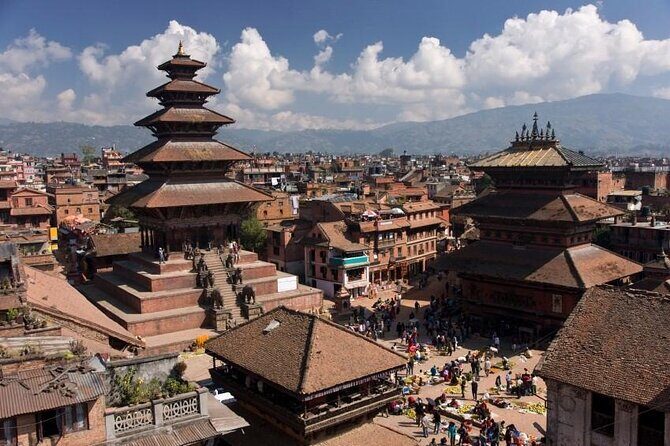
- All seven Kathmandu Valley UNESCO sites in one run, with travel time built into a 7–8 hour day
- Pickup and drop-off included, which saves you the hassle of arranging transport in busy areas
- A small-ish group (up to 25) on sharing transportation, so you keep momentum without being stuck in a huge crowd
- Lunch snacks and bottled water included, helpful when you’re between sites most of the day
- Short, timed visits that help you see everything even if you do not want to spend hours inside each complex
The value: what you pay for (and what actually costs extra)
The headline price is $50 per person for a one-day circuit. For Kathmandu, that’s a solid baseline rate for guided transport plus a structured way to cover seven UNESCO sites.
But here’s the math that matters: entrance fees are separate. Four sites charge $20 per person (Patan, Boudha, Swayambhu, Pashupati), and three sites charge $24 per person (Kathmandu, Changu Narayan, Bhaktapur). If you’re doing all seven, that totals $152 per person in entrance fees on top of the $50 tour price. In other words, you’re mostly paying for logistics and guidance with the tour fee, while the UNESCO complexes are priced separately.
The good news is the day is built to justify that entry cost: you’re not picking just one or two monuments and calling it a tour. You’re seeing the whole UNESCO map of the Kathmandu Valley in one shot.
You can also read our reviews of more private tours in Kathmandu


How the routing works: a tight circuit with smart time management
This isn’t a slow “linger forever” kind of day. It’s closer to a guided greatest-hits playlist: quick orientations, then time at each site that ranges from about 25 minutes to 2 hours depending on the location.
That timing is exactly why the tour works for many people. If you only have one full day in Kathmandu, you get an overview that you can later deepen on your own. If you prefer to be in motion and hate decision-making, you’ll like the structure.
You’re also traveling between sites for part of the day, so the value comes from having transport and a guide handled. Without that, you’d be figuring out routes, entrance lines, and where to eat while trying to beat daylight and traffic.
Stop 1: Swayambhunath (Monkey Temple) and the first big viewpoint
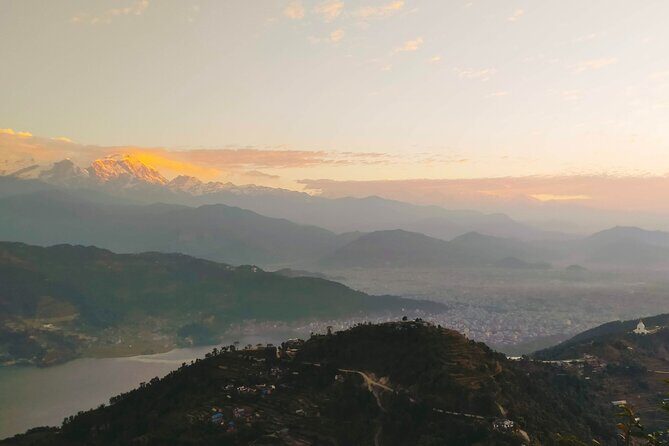
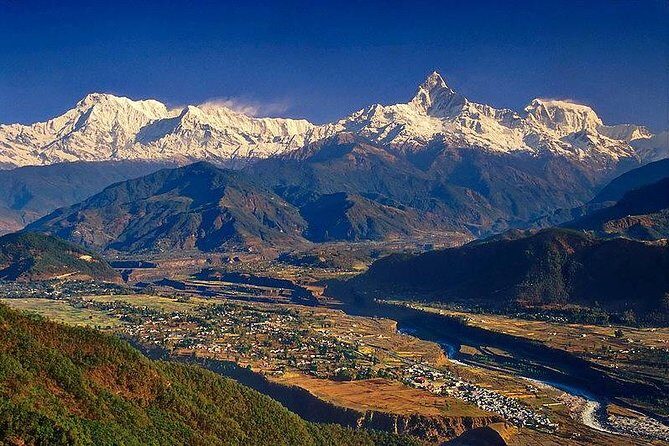
Your day starts at Swayambhunath, a Buddhist stupa complex that’s often called the Monkey Temple. You can expect the well-known monkey presence around the area, and the payoff is the view: the site sits high enough to look out over the Kathmandu Valley.
Time here is about 35 minutes. That’s enough for a first walk, a few photos, and a chance to take in the scale of what you’ll be exploring later. What you might notice early is how Swayambhunath sets the tone for the whole itinerary—religious sites in Kathmandu are not museum exhibits. They’re living spaces with constant movement around them.
Practical note: at a place like this, you’ll want to keep your phone and small items secure. You’re not going there alone with a quiet guidebook vibe.
Stop 2: Kathmandu Durbar Square—palaces, courtyards, and the old-city core
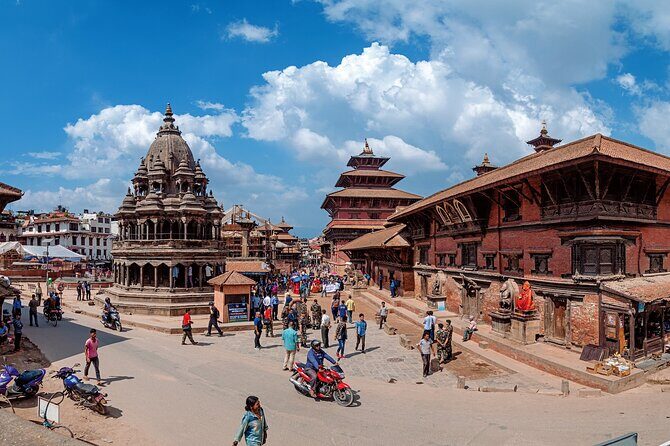
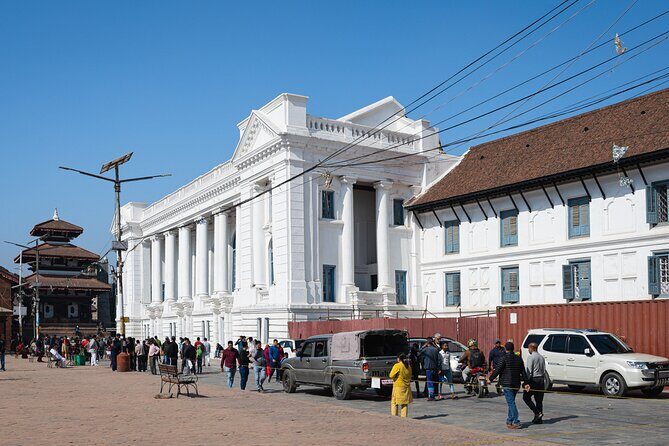
Next up is Kathmandu Durbar Square, right in the heart of old Kathmandu. This durbar square is surrounded by palaces, courtyards, and temples, so the atmosphere feels layered even when you’re walking quickly.
You’ll get about 1 hour here, which is a balanced amount. Long enough to get a sense of the architecture and the way the courtyards connect, but short enough that the day doesn’t stall.
A drawback to plan for: Durbar squares can be busy and uneven. The ground and steps can slow you down, so comfortable shoes matter more than you think.
Stop 3: Patan Durbar Square—slower pace, bigger payoff
Then you head toward Patan Durbar Square (in Lalitpur), roughly 5 km from central Kathmandu. Patan has a reputation for showing a close relationship between Buddhism and Hinduism in its design and visual language, and it shows in how the spaces feel.
This stop gets about 1 hour 30 minutes, the longest session besides Bhaktapur. That extra time helps here, because Patan rewards the kind of “stop and look” that’s hard to do when your schedule is constantly moving.
If you like architecture and carved details, you’ll likely get more enjoyment from this stop than the shorter ones. If you’re more about big-picture context, the extra time still works, because your guide can anchor what you’re seeing.
A few more Kathmandu tours and experiences worth a look


Stop 4: Changu Narayan Temple—small stop, big age
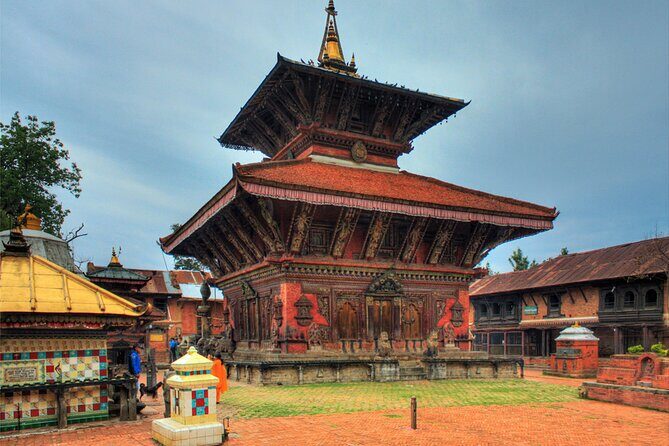
After Patan, the route brings you to Changu Narayan Temple, set on a hilltop near Bhaktapur. This one is older in the way it matters: it’s believed to date back to the 4th century during the Lichhavi dynastic era.
Time is shorter here, about 25 minutes. That makes it more of a focused visit than a long wander. You’re going to want to arrive ready to pay attention quickly—look for the temple’s age cues, take in the surroundings, and then keep moving.
If you’re the type who enjoys long hikes or lingering viewpoints, this will feel like a brief taste. On a seven-site day, that’s the trade: you get everything once, not everything at leisure.
Stop 5: Bhaktapur Durbar Square—your best time block
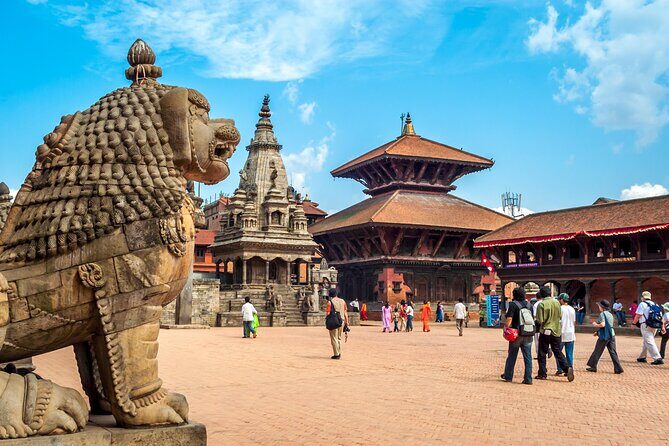
Bhaktapur Durbar Square is one of the biggest moments of the circuit, and the schedule reflects that. You’ll spend about 2 hours here, which is ideal for absorbing the medieval architecture, temples, and palaces without feeling rushed.
Bhaktapur often feels different from the other durbar squares because it’s so tightly preserved and structured. That means you can see the visual logic of the city in a way that’s hard to catch when you’re only there for an hour.
This is a great stop if you like photography or if you want a bit more breathing room. Just be ready for crowds and uneven steps, especially when you move from one courtyard perspective to another.
Stop 6: Pashupatinath—Bagmati River, Hindu temple energy, respectful viewing
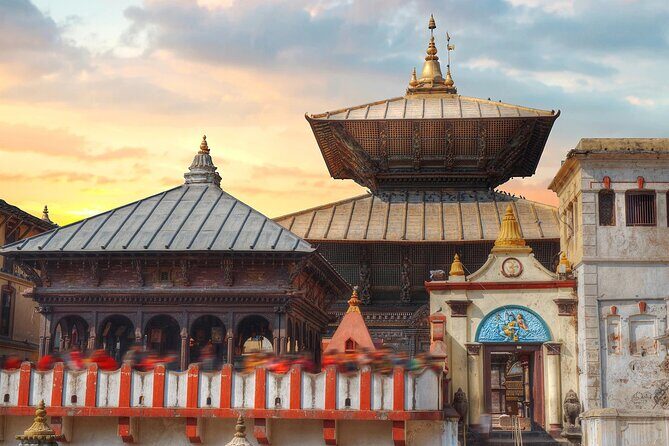
Then you arrive at Pashupatinath Temple, one of the major Hindu temples in Nepal. It sits on the bank of the sacred Bagmati River, which gives the setting a strong, sensory context—movement of people, river life, and ritual rhythms.
You’ll have about 1 hour here. That’s usually enough to take in the main areas and understand why people come from all over the world. It’s also a stop where etiquette matters. Dress and behavior that show respect go a long way, and you’ll want to follow your guide’s pace.
One more practical point: if you’re hoping for quiet, contemplative silence, manage expectations. Places tied to active worship often feel busy, even when you’re standing in a respectful spot.
Stop 7: Boudhanath Stupa—Tibetan monastery streets and a huge shrine
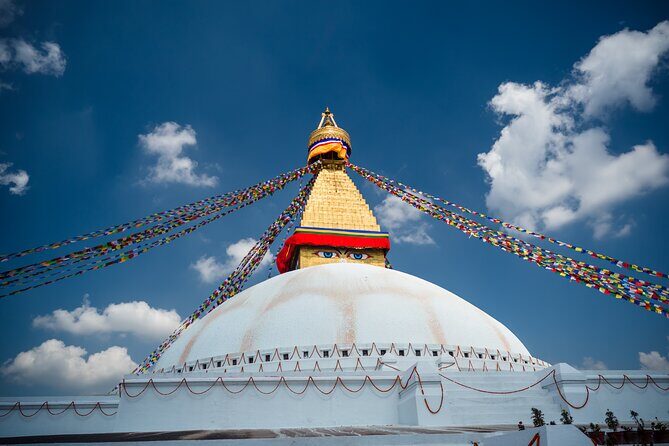
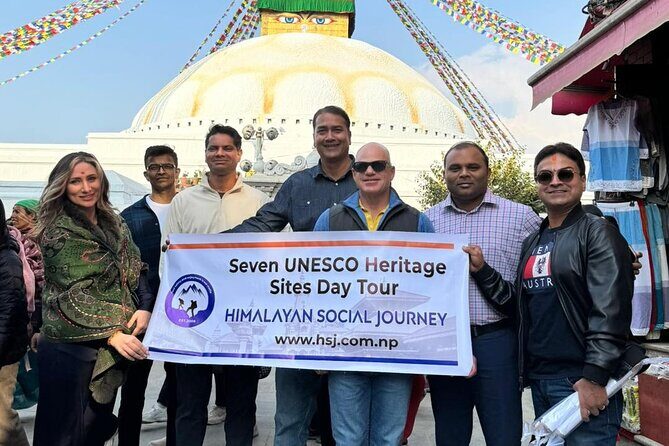
To close the loop, you visit Boudhanath Stupa. This site is considered one of the largest stupas in the world and dates to around the 4th century. Around it, the area feels like a Tibetan neighborhood, with monasteries and spiritual life making the setting distinct from the durbar squares.
Time is about 40 minutes, which is short but workable. You’ll likely spend some of that walking around the stupa and checking out surrounding monasteries and streets. The stupa is the centerpiece, and your guide can help you read what you’re seeing quickly.
If you want the most relaxing end to the day, this stop often does it. The tone is different than the palace-heavy areas, and the huge shrine gives you a clear “anchor” for your final photos.
Lunch that keeps you going: pastries, banana, and juice
Lunch on this tour is not a sit-down meal. Instead, you get croissant, muffin, danish, cookies, banana, and juice, plus bottled water.
I like this setup for one reason: it’s reliable. It keeps you from losing time searching for food between UNESCO stops. And because you’re out for 7–8 hours, having something in your bag that won’t disappear at the wrong moment is a win.
If you’re someone who needs a proper meal to feel human again, you might want to carry a little extra snack of your own. Just keep it simple—this tour’s timing is tight, and you’ll want to stay flexible.
Getting the most out of a one-day UNESCO whirlwind
This kind of tour rewards preparation. You’ll be walking between sites and switching contexts constantly, so go with comfortable shoes and clothing that works for temples. If you have sunglasses and sunscreen, bring them. Kathmandu sun can be sneaky even when the air feels pleasant.
Also, bring a phone battery strategy. You’ll be taking photos at several major monuments, and you only get this one-day overview once. A portable charger is one of those “boring but worth it” items.
Finally, keep your expectations aligned with the schedule. You’re not doing a deep study of one complex; you’re getting a coherent map of how UNESCO defines the Kathmandu Valley. That’s still powerful, especially if you’re planning the rest of your Nepal trip afterward.
Weather and pacing: what can affect your day
The tour requires good weather. If conditions are poor, the operator offers a different date or a full refund.
It’s also worth knowing the day depends on enough participants to run. If you book close to travel time, don’t assume it’s guaranteed—watch for the confirmation window and plan a backup option.
The tour is also designed for most travelers to participate, but you’ll still be dealing with temple steps and uneven surfaces at multiple sites. If mobility is a concern, consider whether a shorter or more flexible plan might suit you better.
Who should book this UNESCO circuit
This is a great fit if you:
- Have one day and want a full UNESCO overview of Kathmandu Valley
- Prefer guided structure over independent navigation
- Want pickup and drop-off so you’re not spending energy on logistics
- Like the “see everything once” approach, then return later if something sparks your curiosity
It may be less ideal if you:
- Want long, slow time at each monument
- Hate extra entrance fee totals
- Need frequent breaks with a sit-down meal
For many people, the sweet spot is combining this tour with slower, independent time on the same trip. Use the guided day to build context, then go back to the sites that felt most meaningful.
Should you book it?
If you’re trying to cover the Kathmandu Valley UNESCO list in a single day, I think this one makes sense—especially because the route is structured and the experience is built around smooth movement from stop to stop. The included pickup, English-speaking guide, and lunch snacks reduce the daily friction that can otherwise ruin a sightseeing day.
Just go in with clear math on entrances. The tour fee is reasonable; the UNESCO site fees are the bigger part of the cost. If that extra budget works for you, this is a strong way to turn limited time into a real snapshot of Nepal’s monument zones.
FAQ
How long is the Kathmandu 7 UNESCO sites tour?
It runs about 7 to 8 hours (approx.), with travel time included between sites.
What is included in the tour price?
Hotel pickup and drop-off, sharing transportation, an English-speaking guide, government tax and service charge, lunch snacks (croissant, muffin, danish, cookies, banana, juice), and bottled water.
Are entrance fees included for the UNESCO sites?
No. Entrance fees are not included for all seven sites. The price list is split: 4 spots at $20 per person and 3 spots at $24 per person.
Which UNESCO sites are visited?
You visit Swayambhu Mahachaitya (Swayambhunath), Kathmandu Durbar Square, Patan Durbar Square, Changu Narayan Temple, Bhaktapur Durbar Square, Pashupatinath Temple, and Boudhanath Stupa.
Is pickup from my hotel included?
Yes, hotel pickup and drop-off are included.
Does the tour use a guide, and what language do they speak?
Yes. The tour includes an English-speaking guide.
How many people are in the group?
The tour has a maximum of 25 travelers.
What happens if weather is bad?
The tour requires good weather. If it’s canceled due to poor weather, you’ll be offered a different date or a full refund.
Is there free cancellation?
Yes. You can cancel up to 24 hours in advance for a full refund. If you cancel less than 24 hours before the start time, the amount you paid is not refunded.