REVIEW · KATHMANDU
Manaslu Circuit Trek
Book on Viator →Operated by Ace the Himalaya · Bookable on Viator
Manaslu Circuit feels like a Nepal that still has room to breathe. You’ll hike through controlled, less-crowded trekking terrain with dramatic Buddhist villages and big Himalayan views—all while your logistics are handled for you. I especially like how the route stays genuine (small settlements, monastery stops, and simple guesthouses) and how Ace the Himalaya pairs you with a guide team you can trust, like Sunil or Shyam, who focus on safety and pacing.
My other big win: the trek is built around practical acclimatization, not just checklists—so days like Samagaon (with options like Birendra Tal or a base-camp walk) help you arrive at the big crossing with your legs intact. The only real drawback to weigh is the physical challenge. This is a moderate-to-challenging trek with a long day over Larkya La Pass, plus you should plan for unpredictable mountain weather.
In This Review
- Key highlights you’ll actually feel on the trek
- Why Manaslu Circuit feels different than the big-name treks
- Price and what you truly get for $1,900
- The Kathmandu start: meeting your team and getting paperwork ready
- Day 2 to Machhakhola: long driving day, then you’re really on the trail
- Days 3 to 5: river valleys, hot springs, and the first real trekking effort
- Days 6 to 8: Lho and Samagaon, where the Manaslu views start feeling personal
- Day 9 to 10: Samdo and Dharamsala, moving toward Larkya La
- Day 11: Larkya La Pass day—steep effort, big panoramas, serious payoff
- Days 12 to 13: Tilche and Tal, easier walking plus a calmer valley mood
- Day 14: the 4WD return to Kathmandu and the ride-out reality check
- Day 15: airport drop-off and your last Himalayan morning
- Guides and porters: where the experience really gets shaped
- Is this tour for you?
- Should you book this Manaslu Circuit Trek?
- FAQ
- What’s the meeting point and start time for the Manaslu Circuit Trek?
- Is airport pickup included?
- How many days is the trek?
- What’s included for trekking permits?
- Are meals and lodging included?
- Do I get trekking equipment?
- Can I cancel and still get a refund?
Key highlights you’ll actually feel on the trek
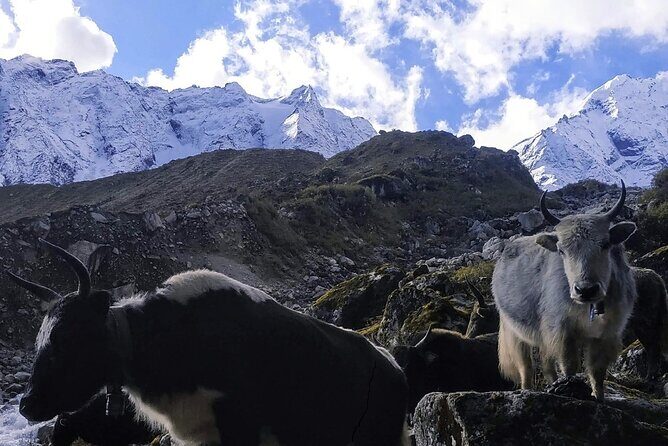
- Smaller-group feel (up to 15 travelers), with many departures running as a tight team
- Permits handled, including the restricted-area paperwork so you don’t juggle Nepal admin
- Real acclimatization days in Samagaon and flexibility for side walks
- Accomodation + meals built into the plan, from Kathmandu hotel nights to guesthouse dorms
- Guide and porter support that shows up in details, including route pace and guesthouse choices
- Included insulation gear (down jacket and sleeping bag), so you can pack lighter
Why Manaslu Circuit feels different than the big-name treks
Manaslu sits in a special zone of Nepal—open for trekking since 1991 and now managed with controlled entry. That “controlled” part matters. You get access to a circuit that’s famous for towering scenery, but it’s still far from the stampede you may associate with other trekking hotspots.
On this trek, you’re moving through a chain of ecosystems and cultures. One day you’ll feel the forest and river valley rhythm; another day you’ll be on drier, higher country where monasteries and stone details start to dominate the trail. The area’s biodiversity is a real thing here, but for you it shows up more simply: you’re not hiking the same view all day.
You can also read our reviews of more hiking tours in Kathmandu


Price and what you truly get for $1,900
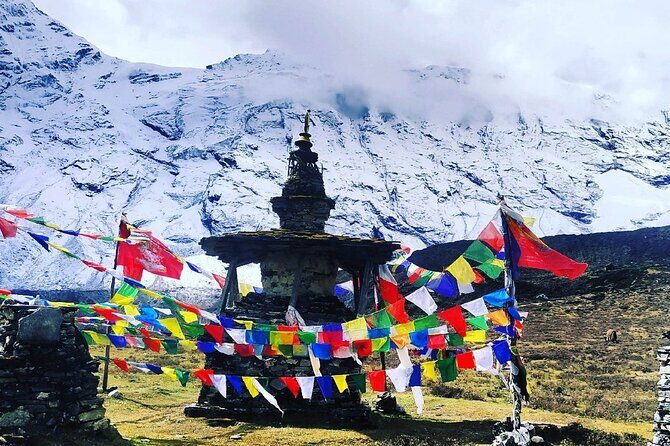
Let’s talk value, not just cost. At $1,900 per person, you’re not only paying for walking days. Your package covers Kathmandu hotel nights, sightseeing with entrance fees, airport transfers, a licensed English-speaking trekking guide, and a porter system (1 porter for every 2 clients). You also get tents-to-teahouse basics: guesthouse lodging for the trek and most meals.
It also includes the paperwork-heavy part. The tour lists all permits for trekking, including restricted-area access, plus government taxes and official expenses. For many trekkers, those permits can be the least fun part of planning. Here, you hand that responsibility over.
Two items are not included, and you should budget for them. Travel insurance that covers emergency high-altitude rescue/evacuation is not provided, and tips for trekking staff and the driver are expected. Also, you’ll handle meals in Kathmandu on your own.
The Kathmandu start: meeting your team and getting paperwork ready
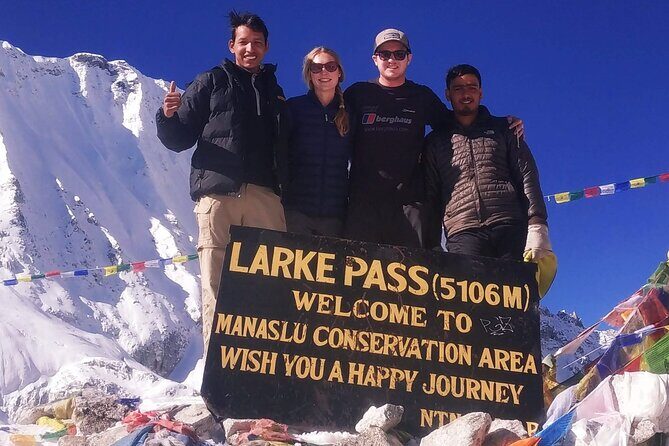
Your trek begins at Tribhuvan International Airport in Kathmandu. You’ll be met and transferred by private tourist vehicle to your hotel. Day 1 also includes a pre-trek meeting in Ace the Himalaya’s office (on Day 1 or Day 2), which is where you confirm the plan and meet your guide.
This is a practical moment you shouldn’t rush. Bring your passport, three passport-size photos, and a readable copy of your travel insurance policy. You’ll clear any due balance, sign the legally binding forms, and go through the non-liability disclaimer.
I like that these steps are built into the tour. In mountain country, small paperwork issues can become big delays. Getting them handled early helps you focus on breathing at altitude.
Day 2 to Machhakhola: long driving day, then you’re really on the trail
On Day 2, you head from Kathmandu toward Dhading Besi, then continue on bumpy dirt roads to Machhakhola, the usual starting point for your trek. The driving time ranges up to 8–10 hours, and this part is where you’ll feel the difference between “good roads” and “real roads.”
A private 4WD vehicle and an experienced driver are part of the plan. That matters because it reduces the fatigue you’d otherwise stack on top of your first trekking day.
Tip: plan for a rougher ride than you might expect if you’re used to smooth highways. Hydrate, eat a solid lunch before you leave, and keep your first-day daypack organized.
Days 3 to 5: river valleys, hot springs, and the first real trekking effort
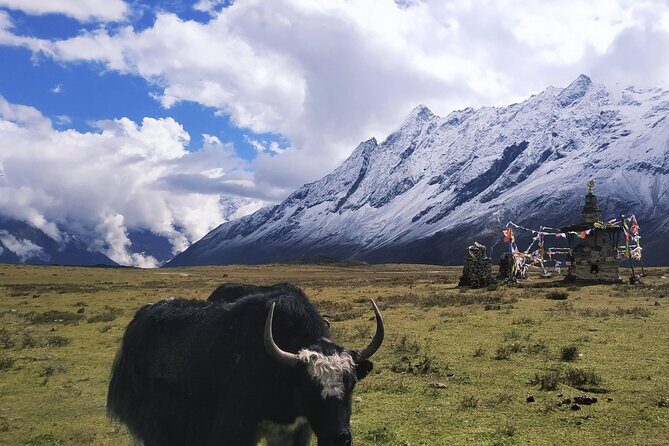
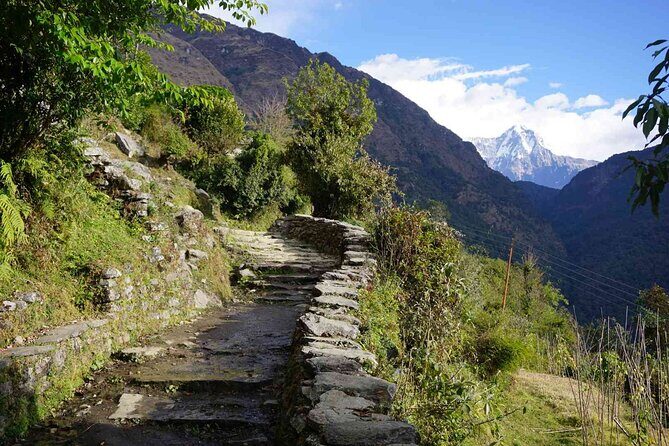
Day 3 takes you to Jagat, starting after crossing the Machha River and Khrola Besi. You’ll pass the hot springs area called Tatopani before continuing along a forest trail. The river valley atmosphere shifts as elevation rises—rapids, scenery changes, and the feeling that the trek is “starting for real.”
Day 4 moves you to Deng, with a terraced hill ascent and views of Sringi Himal (7,177 m). There’s also a notable bamboo forest section. This day is a steady build: the valley narrows and the trail climbs upstream of the Deng River through small villages.
Day 5 is your “longer and harder” day early in the itinerary, reaching Ghap (2,660 m). You’ll walk through flowering mustard fields, then hear the sound of a waterfall near your arrival. The description mentions ancient writings and stone art—small details like that are often what make an uncrowded trek more memorable than the big photo stops.
If you’re a first-timer, treat these days as training. You’re learning your pace and how your body handles repeated climbs.






Days 6 to 8: Lho and Samagaon, where the Manaslu views start feeling personal
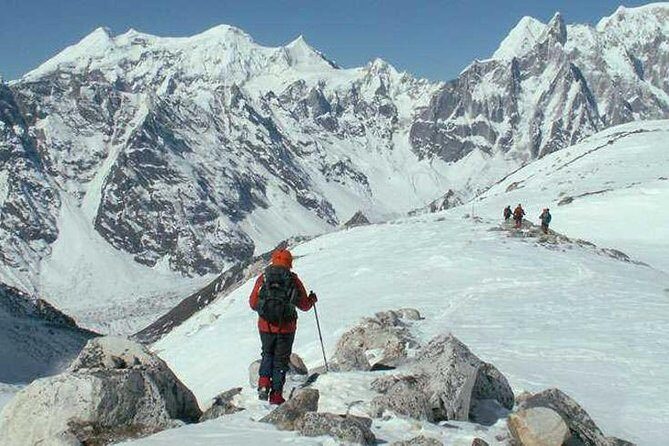
Day 6 brings you to Lho, and it’s one of the more scenic segments because you’re walking with constant mountain context. You’ll trek toward Namrung for lunch with views of Ganesh and Siringi Himal, then continue across the Hinan River and onward through the valley terrain.
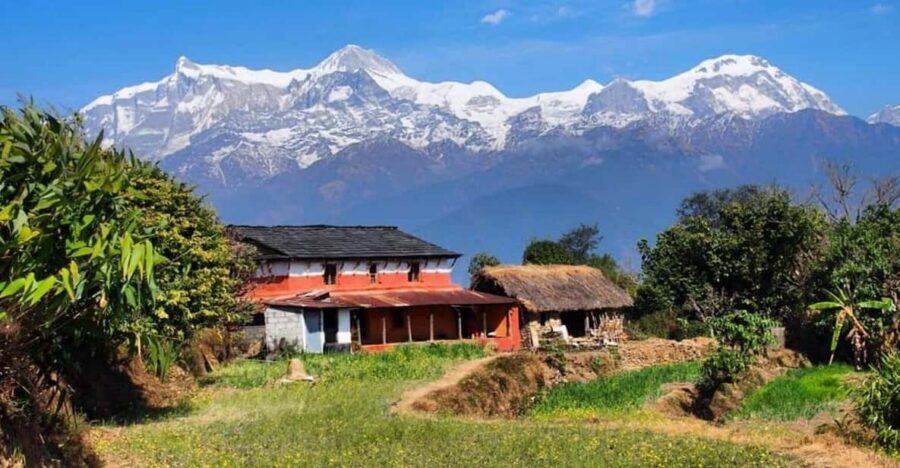
Day 7 heads to Samagaon. From Lho you can see peaks like Manaslu (8,150 m) and Manaslu North (7,774 m), and you’ll also visit Ribung Gompa. Even if you aren’t a monastery person, these stops change the pace: you slow down, look, and notice how locals live alongside the mountains.
Day 8 is an acclimatization day in Samagaon—one of the best ideas in this whole plan. You can explore around town, visit Pungyen Gompa and Birendra Tal (about 4–5 hours), or hike to Manaslu Base Camp and return (about 7–8 hours). The choice is useful because weather can shift fast, and your energy may not match someone else’s.
From the feedback I saw, strong guides like Janu and Sushanta tend to help you pick the option that fits the day instead of forcing a single route for everyone.
Day 9 to 10: Samdo and Dharamsala, moving toward Larkya La
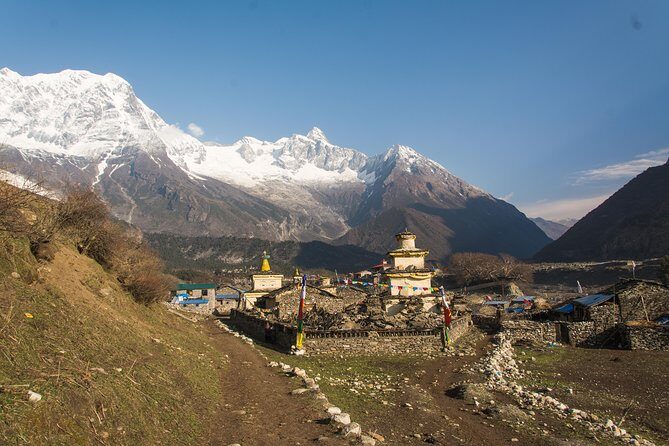
Day 9 takes you to Samdo, described as one of the most remote permanent settlements. The trail begins with a terraced hill climb opposite the Budhi Gandaki River, then continues toward Samdo. This day feels like transition: you’re leaving the busier-feeling village rhythm and getting deeper into high-country trekking.
Day 10 reaches Dharamsala (also called Larke Phedi). You’ll pass a trail similar to the Samagaon-to-Samdo direction. The lodging is a small stone guesthouse with basic facilities and dormitory-style rooms.
This matters for your comfort planning. Don’t expect hotel-level bedding. Your goal is to sleep, keep warm, and preserve energy because the next day is long.
Day 11: Larkya La Pass day—steep effort, big panoramas, serious payoff
Day 11 is the centerpiece. You climb toward Cho Chanda, then slowly head uphill toward the snowed-up pass. Once at the top, the views are spelled out clearly: Himlung Himal, Cheo Himal, Gyagi Kung, Kang Kuru, and Annapurna II.
Then comes the hard part: the descent is described as steep, through moraines, toward Bhimtang. This is where trekking poles can become your best friend (if you use them). Your knees will thank you for steady, careful steps.
If you want one practical piece of advice, it’s this: treat the pass as a long work session. Don’t sprint. Eat and drink. Let the view happen on the way up.
Days 12 to 13: Tilche and Tal, easier walking plus a calmer valley mood
Day 12 drops the intensity. You start with a gentle climb through paddy fields toward the Karcha La Pass, then descend through fig trees and rhododendron forests to Tilche. The wording suggests a more manageable day, which is exactly what you want right after a major pass.
Day 13 moves you toward Tal, passing through more populated villages. You’ll reach Dharapani (1,860 m) for lunch, then continue through the Annapurna Circuit section feel—streams, wheat fields, and a suspension bridge over the Marshyangdi River. Tal arrives on the riverbank with a waterfall to enjoy.
This is the day where you feel the switch from “high pass endurance” to “valley walking.” Your legs may still be tired, but the pace feels more social.
Day 14: the 4WD return to Kathmandu and the ride-out reality check
After trekking, you take a 4WD vehicle toward Kathmandu via Besisahar. The road is rough up to Besisahar and smoother after. The drive typically takes 8–9 hours, with river and hill scenery along the highway.
You’ll likely be tired from the trek. Still, the ride is long enough that you should plan for comfort: bring a warm layer, keep essentials accessible, and expect bumps.
Day 15: airport drop-off and your last Himalayan morning
The trip ends back at the airport transfer point. An airport representative drops you at Kathmandu International Airport for your final flight.
Take a moment here. Manaslu Circuit isn’t just a list of elevations; it’s a sequence of villages, monasteries, river valleys, and that rare feeling of not being surrounded by constant trek traffic.
Guides and porters: where the experience really gets shaped
Ace the Himalaya’s strongest value shows up in the human side. Across the feedback, guides repeatedly came across as calm, friendly, and safety-aware. Names that show up often include Sunil, Shyam, Janu, Ram, Sushanta, and Ganesh Khanal. Porters mentioned include Dilip, Ajit Gurung, and others like Rohin and Dilib.
One story that stood out was how closely some teams worked together—one trek included a guide plus a porter who made evening downtime fun, even playing cards after the day’s walk. That might sound small, but it’s actually how you judge a trek operator: they’re not just managing route points; they’re managing your day-to-day stress.
Is this tour for you?
You’ll probably love this trek if you:
- want a less crowded circuit with authentic villages rather than constant crowds
- prefer an organized plan with permits, guide, and porter support handled for you
- like the idea of acclimatization and optional side walks in Samagaon
You should think twice if you:
- don’t want long driving days and basic lodging transitions (especially around Dharamsala)
- aren’t comfortable with the steep climb/descent day over Larkya La
- hate carrying your own “small things” (personal gear is not included, and Kathmandu meals are on you)
Should you book this Manaslu Circuit Trek?
If your goal is an organized, safety-minded Manaslu Circuit experience with paperwork taken care of and a strong team behind you, I’d say this is an excellent fit. The price includes many of the hardest-to-handle parts—permits, guide, porter staffing, lodging, and most meals—so you spend your energy hiking, not problem-solving.
Book it if you’re ready to work for big views and don’t mind that weather can change your rhythm. Skip it only if you’re looking for an easy walk with consistent comfort upgrades. This trek rewards steady pacing and a good attitude.
FAQ
What’s the meeting point and start time for the Manaslu Circuit Trek?
You’ll meet at Tribhuvan Airport in Kathmandu, Nepal. The listed start time is 8:00 am, and an airport representative handles pickup.
Is airport pickup included?
Yes. The package includes airport transfers in Kathmandu.
How many days is the trek?
The duration is listed as 15 days (approx.).
What’s included for trekking permits?
All permits for trekking are included, including restricted-area access.
Are meals and lodging included?
Yes. You get hotel lodging in Kathmandu for 2 nights, then guesthouse accommodations for 12 nights. Meals included are 14 breakfasts, 13 lunches, and 13 dinners. Meals in Kathmandu are not included.
Do I get trekking equipment?
Yes. The tour includes a down jacket and a sleeping bag, with the gear to be returned.
Can I cancel and still get a refund?
You can cancel up to 6 days in advance for a full refund. For a 50% refund, cancel 2–6 full days before the experience start time. Less than 2 days before the start is not refunded. If weather forces cancellation, you’ll be offered a different date or a full refund.