REVIEW · KATHMANDU
PashupatiNath and BoudhaNath – Private/Small Group
Book on Viator →Operated by Amazing Kathmandu Tours · Bookable on Viator
Two faiths, one city, and very human rituals. This small-group walk-through helps you understand Hinduism and Buddhism in Nepal, plus how people live side by side, down to shared food culture. I especially like the small group size (up to 5) and the way your guide explains the 16 Samskaras in plain language rather than leaving you to guess at symbolism.
The other thing I like is the flexibility built into the experience. If you want to catch a particular ceremony moment, a good guide can adjust the route timing, and the tour also uses a mobile ticket to keep things simple. The main thing to think about: the big entrance fees at Pashupatinath and Boudhanath are not included, and they must be paid in cash at the gates.
You’ll finish at Boudhanath Gate with time to wander the stupa area on your own, which is perfect if you want to slow down for prayer wheels, photos, and questions. If you enjoy being shown what you’re looking at, this is a strong value for Kathmandu’s spiritual landmarks.
In This Review
- Key Things You’ll Get From This Pashupatinath and Boudhanath Tour
- Why Pashupatinath and Boudhanath Work So Well Together
- Timing, Group Size, and Where You Start (So You Don’t Waste Time)
- Pashupatinath Temple: What You’re Allowed to See and Why a Guide Matters
- Practical note for your visit
- Aryaghat Crematoria: Understanding Last Rites Without Getting Lost
- What you should consider
- Mrigasthali Deer Park: A Myth Link That Changes How You See the Area
- Bonus value
- Gorakhnath Mandir and Guhyeshwari Shaktipeeth: The Road Turns Into a Lesson
- Boudhanath Stupa: The Tibetan Buddhism Basics You’ll Recognize Instantly
- Why this is valuable
- Guru Lhakhang Monastery and Padmasambhava: Spotting Sacred Roles
- Thanka Center: Mandalas, Paintings, and Healing Bowls
- Price and Entrance Fees: What You Really Pay (and Why It Still Makes Sense)
- What This Tour Feels Like in Real Life (The Good Parts First)
- Who Should Book This, and Who Might Want to Think Twice
- Should You Book PashupatiNath and BoudhaNath Private/Small Group?
- FAQ
- How long is the tour?
- What is the maximum group size?
- Is an English-speaking guide included?
- Where does the tour start and end?
- Are entrance fees included?
- How much are the entrance fees for Pashupatinath and Boudhanath?
- Is the tour ticket provided digitally?
- Is the tour suitable for most people?
- Are service animals allowed?
- Can I get a full refund if I cancel?
Key Things You’ll Get From This Pashupatinath and Boudhanath Tour
- A tight, up-close route linking Hindu last rites with Tibetan Buddhist practice
- Clear explanations of Shodasha Samskaras and the ideas behind major rituals
- Boudhanath Stupa basics you can actually use on site (not just facts)
- Art and symbolism at a Thanka center, plus a look at a typical monastery
- Small-group format that leaves room for your questions and schedule tweaks
- Simple logistics: English-speaking guide, near public transportation, mobile ticket
Why Pashupatinath and Boudhanath Work So Well Together
Kathmandu is a place where religion isn’t stuck in a museum. It’s on the streets, in the courtyards, and in the daily routines of real people. That’s exactly why I like the pairing of Pashupatinath and Boudhanath: you get Hinduism’s lifecycle rituals and last rites at Pashupatinath, then you switch gears to Tibetan Buddhist practice at Boudhanath.
You’ll also get a sense of religious harmony in Nepal, not as a slogan but as something you can observe. Even the route’s focus on shared meaning, respect, and symbolism helps you see how the two traditions coexist in the same city space—and why people can move between them with genuine curiosity.
And because the group is capped at 5, the tour feels more like guided conversation than a rushed bus commentary. Your guide can answer the questions that pop up when you’re staring at carved details, ritual tools, prayer flags, or painted mandalas.
You can also read our reviews of more private tours in Kathmandu


Timing, Group Size, and Where You Start (So You Don’t Waste Time)
This experience runs for about 3 hours. That matters, because Pashupatinath and Boudhanath are not quick stops if you want understanding. In a short window, the only way this works is with good pacing and a guide who knows what to point out first.
You’ll meet at Gaushala Bus Stop (Ring Rd) and end at Boudhanath Gate. The end point is convenient: it puts you right where you can keep exploring if you still have energy, or head back without having to backtrack across the city.
With a maximum group size of 5, you’ll likely feel less crowded at the temples and viewpoints. That’s a real advantage when you’re trying to hear explanations over wind, chanting, and general site activity.
Pashupatinath Temple: What You’re Allowed to See and Why a Guide Matters
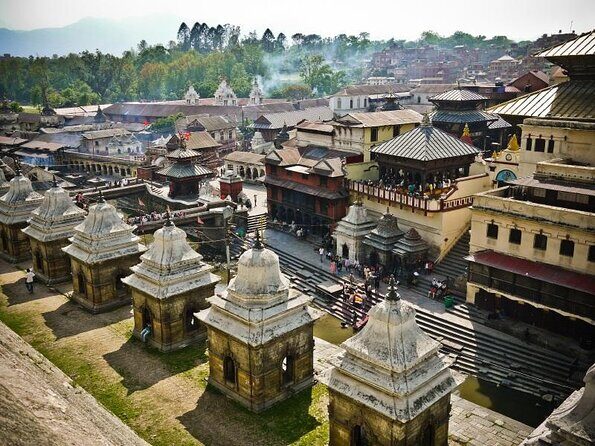
Pashupatinath Temple is one of the most important Hindu sites in the Kathmandu Valley, and it draws devotees from around the world. One key reality to know up front: only Hindus are allowed inside the main temple. So instead of pretending you’ll access every part, you’ll pass by toward Aryaghat, which is where the last-rites area is.
This is where a guide makes a big difference. Without context, Pashupatinath can feel like a maze of smoke, stone, and sacred visuals. With context, you start noticing patterns: what people do, what they bring, and what the ceremonies are communicating.
You’ll also learn the framework of Hindu rites around life and death, including Shodasha Samskaras (16 rites of passage). Even if you don’t memorize the list, hearing how the rites mark major transitions helps you understand why the scene near the crematoria feels so ritual-driven rather than random.
Practical note for your visit
Dress respectfully. You’ll be moving between active religious areas, and you’ll be close to ongoing practices. Keep your attitude calm and observant, not “tour mode.” You’ll get more out of it.
Aryaghat Crematoria: Understanding Last Rites Without Getting Lost
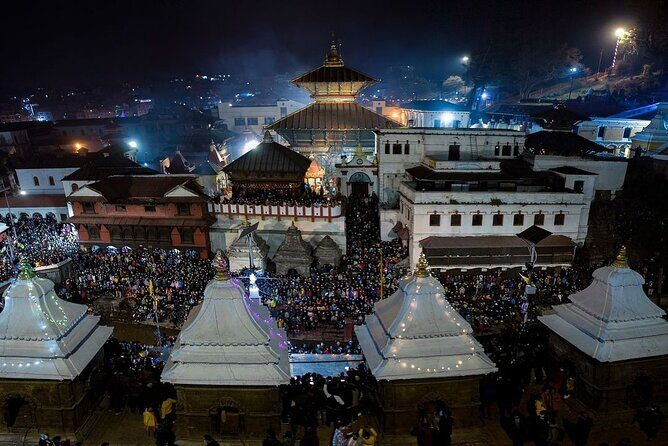
Aryaghat is famous because it’s a place where you can see how Hindu last rites are performed. In this part of the tour, the guide focuses on the 16 rites of passage and how they connect to belief about life transitions, family roles, and ritual meaning.
There’s no way to make crematoria scenes “comfortable” for everyone. But with a guide explaining what you’re seeing and why it happens, you’re less likely to feel like an outsider watching something incomprehensible. You’re more like a student of symbolism: the rituals become readable.
This stop is also useful if you’re the type of person who wants to ask questions. With only up to 5 people, it’s easier to get answers to the awkward ones that matter: Why these steps? Why these objects? Why this sequence?



What you should consider
If you’re sensitive to death-related rituals, take that seriously before you go. The tour is short, but this is the most direct last-rites segment.
Mrigasthali Deer Park: A Myth Link That Changes How You See the Area
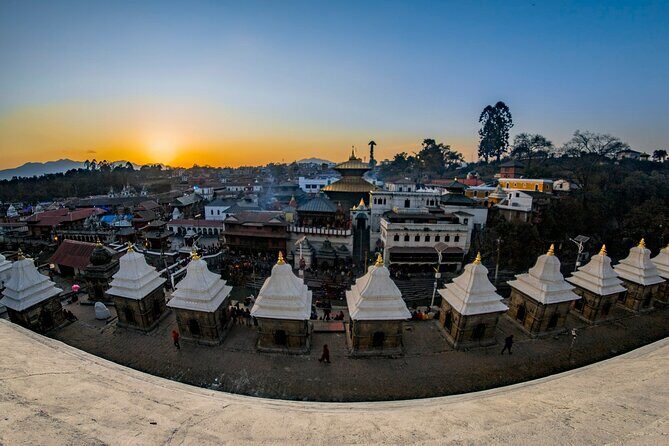
After the crematoria focus, the tour shifts to Mrigasthali Deer Park for a calmer, shorter segment. Here you’ll hear the story of Lord Shiva’s journey to the place, and how it got its name. It’s a change of pace, but it still fits the tour’s theme: religion explained through place-based stories.
This stop is only about 15 minutes, so don’t expect a long nature outing. Think of it as a “myth map” moment. You’ll leave with another layer of meaning for the Kathmandu Valley geography around you.
Bonus value
This is the kind of stop that helps your brain stop treating the temples as isolated photo spots. It connects sacred stories to the land you’re standing on.
Gorakhnath Mandir and Guhyeshwari Shaktipeeth: The Road Turns Into a Lesson
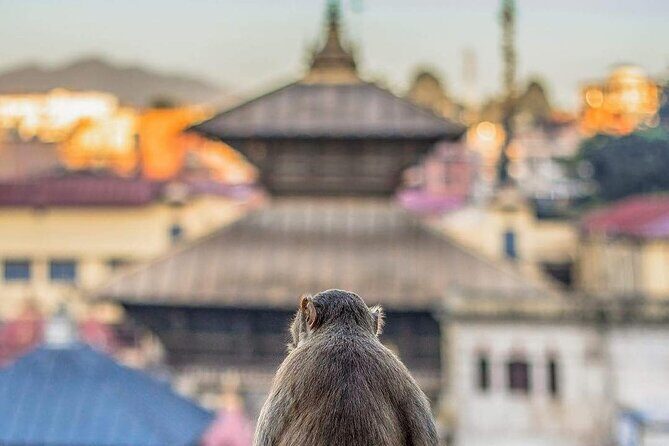
From Mrigasthali, you rest at Gorakhnath Mandir, where the guide shares the story of Guru Gorakhnath. This is another example of how the tour keeps religion grounded in narrative rather than only doctrine.
Then you continue toward Guhyeshwari Shaktipeeth and hear the story of Satidevi, along with the concept of Shaktipeeth. These stops matter because they show how Hindu beliefs spread through sacred person-stories and sacred geography, not just through temples alone.
You’ll also spend about 20 minutes reaching Boudhanath. That transition time is useful. It gives you a mental reset: last rites and Shiva stories settle, then you’re ready for Tibetan Buddhism at the stupa.
Guhyeshwari’s ticket is listed as free for this tour, which is a nice cost-saving detail if you’re tracking expenses.
Boudhanath Stupa: The Tibetan Buddhism Basics You’ll Recognize Instantly
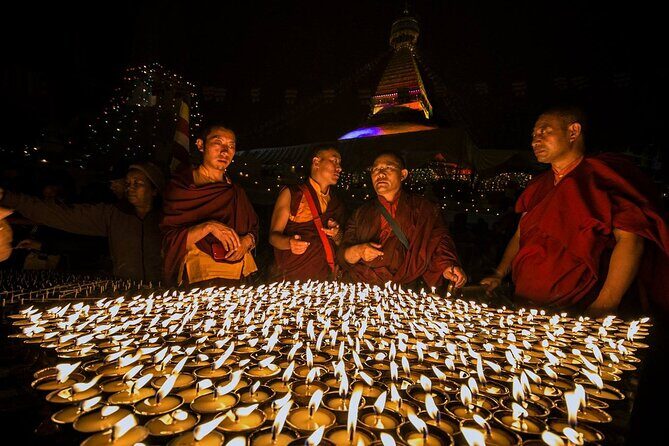
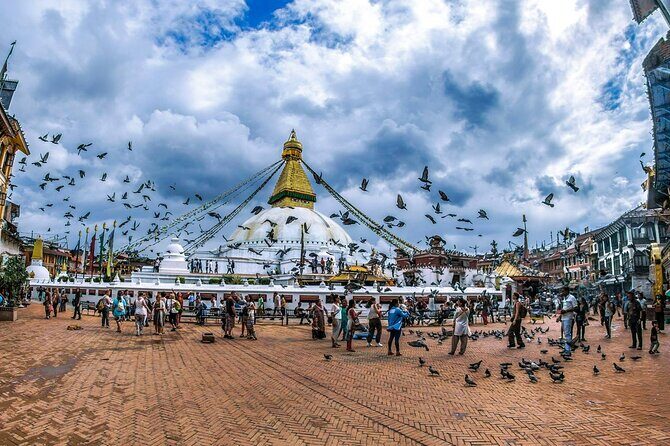
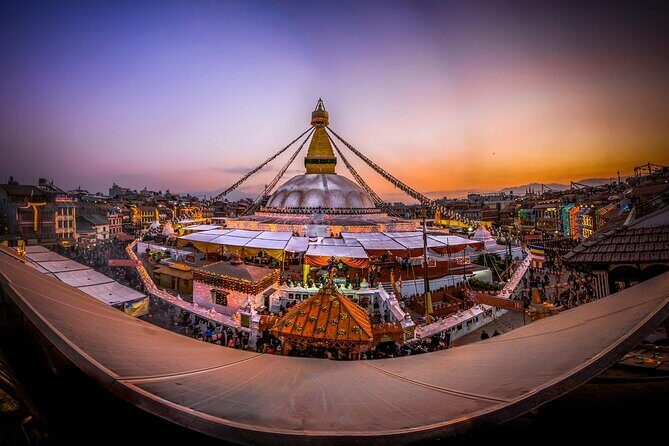
Boudhanath Stupa is described as the second largest stupa of this kind in the world, and it’s a major center for Tibetan Buddhism (Vajrayana Buddhism). This isn’t just a sightseeing stop. You’ll explore the basics in a way that connects practice to what you see in front of you.
The guide’s explanations cover practical visual cues and core concepts, including:
- prayer flags
- the five elements
- the four noble truths
- the eightfold path
Once you have those anchors, the stupa doesn’t feel like a big white monument. It becomes a teaching tool you can mentally label as you circle, observe, and ask questions.
Why this is valuable
I find that most stupa visits fail when they turn into “look up, take photo, move on.” Here, you’re given a simple explanation map. It helps you enjoy what’s happening rather than just watch it.
Guru Lhakhang Monastery and Padmasambhava: Spotting Sacred Roles
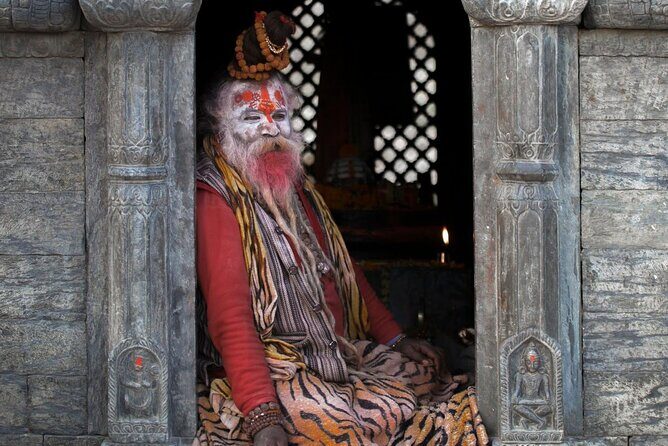
Next up is Guru Lhakhang Monastery. You’ll see what a typical Buddhist monastery looks like and learn about Guru Padmasambhava and the Dharma Chakra Pariwartana. Even if you only catch the gist, it helps you understand why monks and symbols are arranged the way they are.
This stop is only about 10 minutes, so the goal is orientation, not an academic lecture. But that orientation is exactly what makes the rest of Boudhanath more meaningful.
Thanka Center: Mandalas, Paintings, and Healing Bowls
The tour ends at Boudha Stupa Thanka Center, where you learn about Thanka art and the concept of mandala. This segment is one of the better ways to understand Vajrayana Buddhism because it turns abstract ideas into something visual and learnable.
You’ll also get basics about healing bowls. The tour’s framing here is important: you’re not just watching an art product. You’re seeing a tradition where visual design and sound tools are part of spiritual practice.
This stop is about 15 minutes, and after it wraps, you end at Boudhanath Gate. From there, you’re free to wander the stupa area and take in the atmosphere at your own pace.
Price and Entrance Fees: What You Really Pay (and Why It Still Makes Sense)
The tour price is $15 per person, and it’s a maximum 5-person group. That’s the part you pay upfront for the English-speaking guide and the structured route.
Entrance fees are not included for:
- Pashupatinath: NRP 1000 (about US$9)
- Boudhanath: NRP 400 (about US$4)
The experience notes that these should be paid in cash at the entrance, so plan ahead.
So, budget roughly $28 total per person if you’re covering the two main entrance fees. That sounds like a jump from $15, but the guide-led explanation is doing real work here. You’re paying for translation of symbols, ritual meaning, and the “what am I looking at” layer that most self-guided visits miss.
If you’re the type who would otherwise hire a private guide for just one temple, combining both Hindu and Buddhist sites in one short, guided session can feel like better value than paying separately.
What This Tour Feels Like in Real Life (The Good Parts First)
The highest praise you’ll see attached to this kind of guide-led route is consistency: people credit the guide for answering questions and for being flexible with what the group wants to see.
In particular, guide Santosh gets called out for connecting religion and history with everyday culture, and for being responsive when people asked to adjust timing to include an important ceremony moment. That’s not a small detail. When a guide can shift plans to match your priorities, the tour feels less like a checklist.
You’ll also notice how the tour keeps moving between:
- ritual spaces (Pashupatinath and Aryaghat)
- myth-and-place explanation (Mrigasthali)
- sacred-site storytelling (Gorakhnath, Guhyeshwari)
- symbolic practice (Boudhanath stupa basics)
- visual/spiritual learning (thank-a art and mandalas)
That variety is part of the value. You’re not stuck in one mode the whole time.
Who Should Book This, and Who Might Want to Think Twice
This tour is a great fit if you want:
- a short, guided orientation to Hinduism and Buddhism in Kathmandu
- explanations that focus on meaning, ceremony, and symbolism
- a small group where questions are welcome
- to connect what you see with the ideas behind it
It may be less ideal if:
- you dislike any death-related ritual viewing (Aryaghat is the direct last-rites segment)
- you prefer only casual sightseeing with minimal religious context
- you are trying to keep the trip ultra-low-cost, since cash entrance fees add up quickly
One more thing: because Boudhanath and Pashupatinath are active religious sites, your mood matters. If you walk in curious and respectful, the tour gives back a lot.
Should You Book PashupatiNath and BoudhaNath Private/Small Group?
Yes, if you want a guided, meaning-first introduction to Kathmandu’s two heavyweight spiritual landmarks in about 3 hours. The small group size, the structured stop-by-stop explanations, and the way the tour connects ritual scenes to clear concepts make it a strong use of limited time.
Book it especially if you like asking questions and getting context that helps you read what’s happening around you. Just go in knowing the cash entrance fees are extra, and keep your expectations realistic about what you can access inside Pashupatinath’s main temple.
If that sounds like your style of travel, this is a solid Kathmandu choice.
FAQ
How long is the tour?
The tour lasts about 3 hours.
What is the maximum group size?
The group size is capped at 5 people.
Is an English-speaking guide included?
Yes. An English-speaking guide is included.
Where does the tour start and end?
It starts at Gaushala Bus Stop (Ring Rd, Kathmandu) and ends at Boudha Stupa/Boudhanath Gate.
Are entrance fees included?
Some are included, but the tour notes that entrance fees for Pashupatinath and Boudhanath are not included and must be paid in cash at the entrance.
How much are the entrance fees for Pashupatinath and Boudhanath?
Pashupatinath is listed at NRP 1000 (about US$9) and Boudhanath is listed at NRP 400 (about US$4), paid in cash at the gate.
Is the tour ticket provided digitally?
Yes. The tour includes a mobile ticket.
Is the tour suitable for most people?
The tour indicates that most people can participate.
Are service animals allowed?
Yes, service animals are allowed.
Can I get a full refund if I cancel?
The tour offers free cancellation. You can cancel up to 24 hours in advance for a full refund.