REVIEW · KATHMANDU
Private 12-Day Manaslu Circuit Trekking in Kathmandu
Book on Viator →Operated by Nepal Alternative Treks & Expeditions Pvt. Ltd. · Bookable on Viator
That first hit of Himalayan altitude comes fast. This private 12-day Manaslu Circuit trek mixes Gurung culture with Tibetan-style villages, plus the big day over Larkya La Pass (~5,160m) and a satisfying return through quieter forest trails. I especially like how the trip is built around real route variety—green river valleys early, high barren terrain later—and how logistics are handled end-to-end with guides, permits, and overland transport.
Two things I like a lot: the professional guide/porter support (and names like Tej, Nauser, Laxman, Sanjay, Kumar, and Yugal come up in the operator’s work) and the practical inclusions like an oxygen meter and water purification. The main drawback to consider is simple: this route is demanding on altitude and conditions, and at least one stretch is noted as prone to landslides—so you need to go in ready, not casual.
In This Review
- Key highlights
- Why Manaslu Circuit feels different from other Nepal treks
- From Kathmandu to Machhakhola: the Prithvi Highway start you don’t forget
- Jagat via Sal forests and Tatopani hot springs
- Deng: dense forests, wildlife country, and village life along Budhi Gandaki
- Namrung: suspension bridges, Magar villages, and the tricky landslide zone
- Lho and the shift into Tibetan culture: Mani walls and stone houses
- Sama Gaon: pine/rhododendron forests, then a rest day with Pung Gyan Gompa
- Samdo: the trail turns barren, and the mountain gets personal
- Dharmashala: rocky terrain, suspension bridge time, and big mountain names
- Larkya La Pass (5160m): the day that makes the whole circuit click
- Bimthang to Dharapani: harder than it sounds, then forests again
- Jeep to Besisahar and back to Kathmandu via Prithvi Highway and Trishuli River
- Permits, porters, and oxygen meter: what the $960 really covers
- Guides and real support: the human side of this trek
- A practical packing checklist for a Larkya La Pass circuit
- Who should book this private Manaslu Circuit trek
- Should you book this Manaslu Circuit trek?
- FAQ
- What’s the duration and starting time for the Manaslu Circuit trek?
- How much does the private Manaslu Circuit trek cost?
- Is this a private tour?
- What permits are included?
- What’s the highest point on the trek?
- How much trekking time should I expect each day?
- What’s included for meals and trekking support?
- What’s not included?
- What happens if weather is bad?
Key highlights
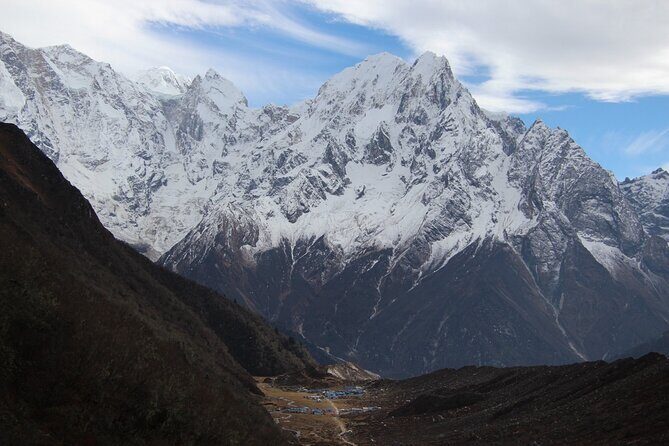
- Larkya La Pass crossing around 5,160m with huge views of Larkya, Mansiri, Cheo, and Himlung Himal ranges
- Budhi Gandaki River route variety, from dense sal forests and bamboo to barren high trails
- Hot springs at Tatopani (a real comfort break, not a gimmick)
- Tibetan-culture feel in the higher villages, with Mani walls and stone houses
- Pung Gyan Gompa day from Sama Gaon, plus village time with locals
- Trek support setup: oxygen meter, first aid, water purification, duffle bags, and included porter/guide expenses
Why Manaslu Circuit feels different from other Nepal treks
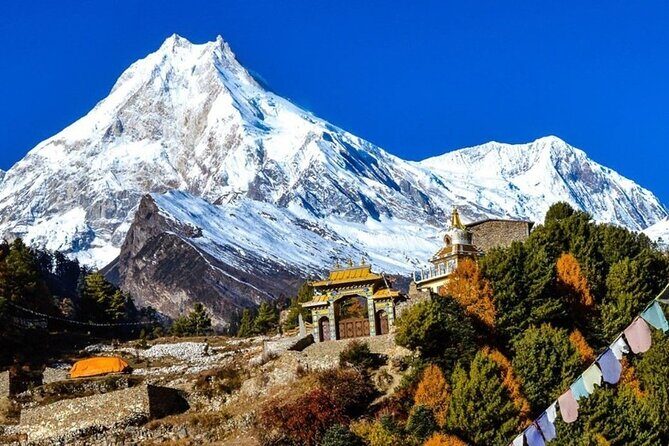
Manaslu is the “serious” circuit: it has the beauty you want, but it’s not trying to be too cute or too easy. On this trek, you watch the region change day by day—first jungle and river life, then Tibetan-style settlements, and finally the stark high country where the mountains feel close enough to argue with.
I also like that the route doesn’t treat culture as a side quest. You’re moving through Gurung community country, then into Tibetan-influenced areas as altitude climbs, with village stops that make more sense than quick photo stops. You end up with a trek that feels like two trips welded together: a cultural walk in the lower valleys and a high-altitude trek in the remote upper sections.
And because this is a private trek, the rhythm usually feels steadier. Instead of being shoved into a crowded group tempo, you can keep a pace that matches your gear, your comfort, and your altitude tolerance.
You can also read our reviews of more private tours in Kathmandu


From Kathmandu to Machhakhola: the Prithvi Highway start you don’t forget
You start from Kathmandu with a bus drive along the Prithvi Highway and a long travel day that’s part road trip, part altitude rehearsal. The route goes past Dhading Bensi, then the road climbs toward Gola Bhanjyang and drops down toward Ankhu Khola before crossing the Budhi Gandaki River at Arughat. The day ends in Machhakhola after about 10 hours of overland travel.
What makes this first day worthwhile is that you’re already getting the Manaslu-and-Ganesh views before your boots hit dirt. You’ll also notice the terrain gradually sharpening—villages, terraced farms, and river corridors become your mental map for the trek ahead.
Practical note: a long drive can make your legs feel stiff on Day 2. I’d plan simple stuff—hydrate, do light stretching, and keep your warm layers within easy reach. You’ll thank yourself.
Jagat via Sal forests and Tatopani hot springs
Day 2 is a gentler on-ramp: about 7 hours of trekking from the riverbank into forest. You follow the Budhi Gandaki River, then ascend through dense sal forests. The trail leads you to Tatopani, where natural hot water springs sit right alongside the trekking life.
This is the kind of stop that can save a trek. Hot springs don’t magically solve altitude, but they can reduce the misery that makes you walk slower than you need to. If you like water and you’re not too bothered by cold weather afterward, this is one of the most satisfying “we earned this” moments on the whole route.
You finish the day reaching Jagat and overnight there, still close enough to the river valley that Day 3 doesn’t feel like you got dropped into the deep end.
Deng: dense forests, wildlife country, and village life along Budhi Gandaki
On Day 3, you trek around 8 hours after permits are approved. You move through dense tropical forest and keep walking alongside the Budhi Gandaki River. The route is described as shelter to rare wildlife, which is a polite reminder to slow down, stay respectful, and avoid rushing through every bend like you’re on a treadmill.
As you continue, you pass village names that help you picture the route in your head—Bhatti Khola and Philim are part of the wayfinding. Then you cross a bamboo forest and reach Deng.
What I like here is that this stretch builds your endurance without throwing you into the highest, rockiest terrain too early. You get to settle into the daily routine: steady pace, water breaks, and the quiet satisfaction of moving forward one ridge at a time.
Namrung: suspension bridges, Magar villages, and the tricky landslide zone
Day 4 runs about 5 hours, but it includes a “be alert” moment. You cross a suspension bridge, then continue over uneven trails toward Bihi Phedi and Ghap. From Ghap, the route is described as dangerous and prone to dry landslides.
That doesn’t mean you panic. It means you pay attention. You go slower on those sections, keep spacing between hikers, and follow your guide’s cues about where the safer footing is. The best trekkers I’ve traveled with don’t try to win the trail—they read it.
After the landslide-prone zone, you pass several Magar villages and arrive at Namrung for the night. This part of the trek is where you can feel the cultural blend setting in: you’re still in Nepal’s village world, but the trail is gradually prepping you for the Tibetan-style landscapes higher up.
You can also read our reviews of more hiking tours in Kathmandu


Lho and the shift into Tibetan culture: Mani walls and stone houses
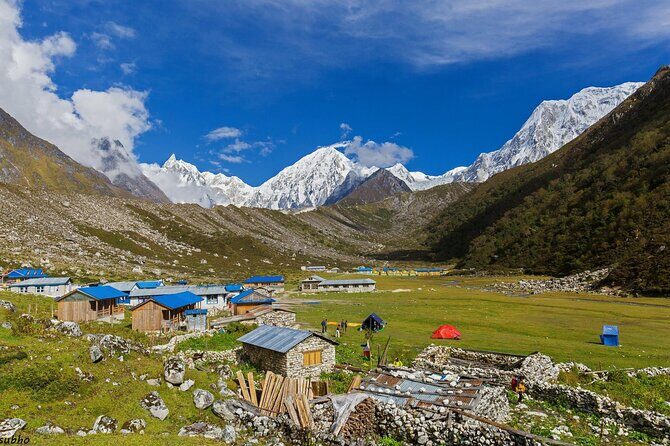
Day 5 is about 4 hours and marks a noticeable shift. As you gain altitude, the vegetation and culture change. You’re moving into areas with strong Tibetan cultural influence, and the trek includes Mani walls and stone houses.
Along the way, you get mountain views like Mt Manaslu (8163m). That number matters less than the feeling it creates: you’re no longer walking around the mountain. You’re walking toward it.
Then you reach Lho for overnight. Lho is a good place to start thinking about cold-weather habits: warm layers ready early, gloves and hats in play, and keeping your breathing controlled on every gradual rise.
Sama Gaon: pine/rhododendron forests, then a rest day with Pung Gyan Gompa
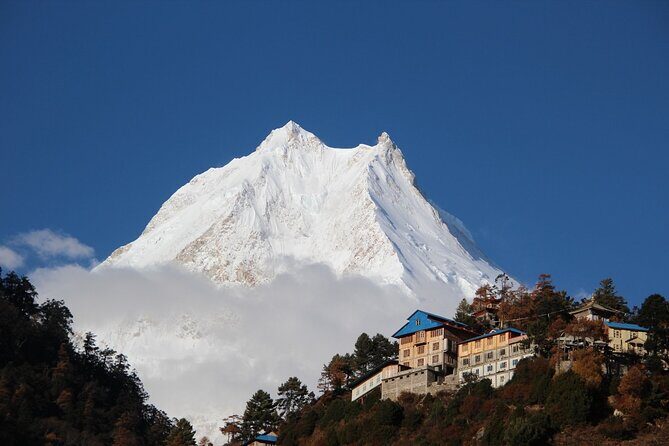
Day 6 takes about 5 hours to reach Sama Gaon. The path goes through pine and rhododendron forests, and the views of Mt Manaslu (8163m) follow you along much of the trail. This is one of those days where the walking feels like it’s powered by scenery.
Then comes Day 7, your rest day in Sama Gaon. You’ll explore the village, interact with locals, and hike to Pung Gyan Gompa. This is listed as a route you’ll enjoy for views of Manaslu and surrounding mountains.
Why the rest day matters: acclimatization. That’s not just a lecture. It’s the difference between arriving tired and arriving confident enough to handle the high, exposed parts later.
A small but real bonus: the evening local food and conversation can make this day feel less like “recovery” and more like “this is what trekking is for.”
Samdo: the trail turns barren, and the mountain gets personal
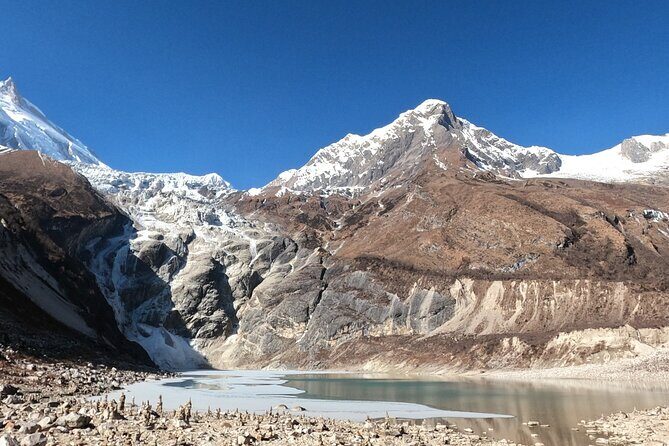
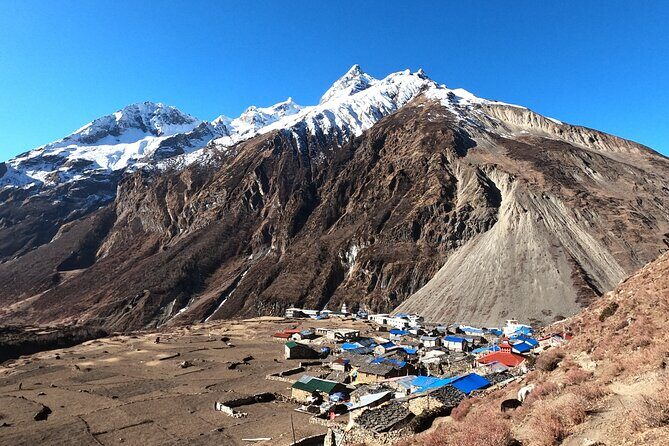
Day 8 runs about 4 hours to Samdo. After Sama Gaon, the pine forest starts getting sparser. The land becomes barren, and you’re walking through a more remote, isolated section while Mt Manaslu still stays in view.
This is the day where Manaslu starts feeling close in a way that’s hard to explain until you’re there. It’s not just big. It’s present. Your senses switch: fewer distractions, more attention on footing, breath, and pacing.
Overnight in Samdo sets you up for Day 9, which keeps climbing in seriousness.
Dharmashala: rocky terrain, suspension bridge time, and big mountain names
Day 9 is about 5 hours and is framed as one of the trek’s important days. You trek west with views of peaks like Naike and Pangbuche. After breakfast in Samdo, you cross a suspension bridge, then continue on uneven, rocky ground.
The route to Dharmashala includes views of Manaslu and the Himal Chuli range. You reach Dharmashala for overnight.
If you’ve been feeling good, this day can still remind you to respect altitude. The trail may not be the steepest, but the rock and the exposure keep your effort high.
Larkya La Pass (5160m): the day that makes the whole circuit click
Day 10 is the headline—about 8 hours total, and it’s the day that crosses Larkya La Pass. The description is clear: you’ll move through barren, remote terrain, and the pass involves rough and snowy trails, with the pass listed around 5,160m (the overview also references ~5,106m).
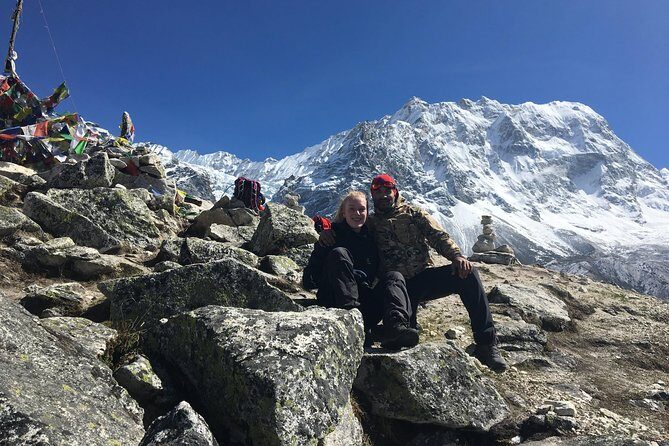
From the top, you’re rewarded with views of Larkya, Mansiri, Cheo, and Himlung Himal ranges. Then you descend from the pass with panoramic mountain-and-glacier views while heading to Bimthang for the night.
This is where good planning matters most. If you’ve been dragging yourself for a few days, the pass day will feel harder than it should. If you’ve paced well, hydrated, and kept your layers sorted, you’ll still feel the altitude—but you’ll manage it.
I also appreciate that the included setup includes an oxygen meter, plus first aid and water purification. I don’t expect that gear to replace smart trekking habits, but it supports them.
Bimthang to Dharapani: harder than it sounds, then forests again
Day 11 is about 7 hours, and it’s described as more comfortable than the last few days. You descend through pine and rhododendron forests of the Manaslu region, and you still get mountain views along the way.
The point of this day is re-entry. Your body is still adjusting, but you’re no longer in that barren pass-world. Overnight in Dharapani finishes the trekking part nicely.
This is also a day to keep your legs calm. Descents can be the real knee-tax, especially after Larkya day.
Jeep to Besisahar and back to Kathmandu via Prithvi Highway and Trishuli River
Day 12 ends the trek with a long travel day. After breakfast in Bimthang? (You leave from Dharapani on Day 12 per the schedule), you take a jeep to Besisahar—about 4 hours. Then you board the bus to Kathmandu, with a total drive described as about 4 more hours alongside the Trishuli River after you rejoin the Prithvi Highway.
You’ll pass villages, terraced fields, and typical Nepali houses. The route is scenic in a grounded, everyday way—not just mountain posters.
Finally, you’re transferred to your hotel in Kathmandu.
One practical caution: because this day is long, you’ll want a plan for luggage, warmth, and snacks. Even when the trek ends, Nepal travel can still feel like Nepal travel.
Permits, porters, and oxygen meter: what the $960 really covers
At $960 per person, this trek isn’t cheap in local terms, but it’s also not “marketing expensive.” You’re paying for the whole working machine behind the scenes.
From the included list, you get:
- Guided trekking with a professional guide plus required porters and their expenses
- Permits: MCAP, ACAP, local entry fee, and a Manaslu Special permit
- Route and safety support: trek map, oxygen meter, first aid, and water purification
- Overland transport through the Kathmandu-to-trail and return sections
That matters because permits and guiding time can make or break your trek experience. And when you’re in high terrain, “someone else handled the paperwork and logistics” is worth more than people think.
What you should double-check: the provided info says hotel/lodge accommodation in Kathmandu is included, but it also lists hotel accommodation in Kathmandu under not included. So treat that as a confirmation point before you pay the final balance—ask exactly what’s covered for Kathmandu nights.
Also not included (so budget these):
- Travel insurance
- Tips for guide/porters
- Hot water/hot shower, plus alcoholic drinks and other hard/soft drinks
- Hotel accommodation in Kathmandu (as noted above—again, confirm)
Guides and real support: the human side of this trek
A lot of trekking companies look good on paper. What stands out with Nepal Alternative Treks & Expeditions is the emphasis on real people and follow-through. The names that show up in their support network include Tej (the company owner in responses), and guides like Laxman, Nauser, Sanjay, Kumar, and Yugal.
I also like the honest handling of serious situations: one guest reports needing helicopter rescue and still credits the company with high-quality assistance. That’s not a promise you should count on, but it does tell me the operator understands risk and emergency needs.
For you, the takeaway is straightforward. When the mountains get weird—and they can—your best ally is a guide who reacts quickly, communicates clearly, and knows the terrain and decision points.
A practical packing checklist for a Larkya La Pass circuit
You’re moving from forests into a pass that can involve rough and snowy trails. So plan for temperature swings, not just one weather mood.
Bring:
- Warm layers for Day 10 (you’ll be higher and colder on the pass crossing)
- Gloves and a hat (hands freeze faster than you think)
- Reliable traction for rocky and snowy footing
- A system for staying hydrated (water purification is included, but you still need to drink)
- Simple rain protection (even if it’s not a forecast guarantee)
Also, pace and food matter. This trek’s walking days are listed around 4 to 8 hours, but the effort ramps as altitude rises. Don’t wait until you feel awful to slow down. Start conservatively.
Who should book this private Manaslu Circuit trek
This one fits best if you:
- Want a private group experience with guide/porter support
- Are comfortable with a serious high-altitude day over Larkya La Pass
- Like cultural variety: Gurung communities, then Tibetan-influenced villages
- Prefer a route that builds from forests to barren highs rather than jumping straight into the hardest terrain
It might not be the best fit if you:
- Want an easy walk with minimal altitude pressure
- Expect a warm-weather trek the whole way
- Don’t want to deal with long transit days in Nepal (Day 1 and Day 12 are both heavy travel)
If you’re the kind of traveler who plans well and enjoys the slow grind of trekking, you’ll likely enjoy this route a lot.
Should you book this Manaslu Circuit trek?
If your goal is a classic Manaslu experience with strong support and a real shot at summiting Larkya La Pass, I’d say yes—with two conditions. First, be honest about fitness and altitude tolerance. Second, confirm what’s included for Kathmandu lodging, since the info provided is contradictory.
If those boxes check out, this trek offers strong value: permits plus experienced guiding plus safety-minded inclusions, all wrapped into a route that changes dramatically from day to day.
FAQ
What’s the duration and starting time for the Manaslu Circuit trek?
The trek is listed as 12 days (approx.) and the start time is 7:15 am. The meeting point is at Nepal Alternative Treks & Expeditions, Post Box No: 8169, Raniban Marg 136/205, Nagarjun, Kathmandu.
How much does the private Manaslu Circuit trek cost?
The price is $960 per person.
Is this a private tour?
Yes. It’s described as a private tour/activity, meaning only your group participates.
What permits are included?
The included list mentions MCAP, ACAP, local entry fee, and Manaslu Special permit.
What’s the highest point on the trek?
You cross Larkya La Pass, listed as 5160m in the day-by-day description (and 5106m in the overview text).
How much trekking time should I expect each day?
Trekking hours in the schedule range from about 4 to 8 hours on trekking days, with longer overland travel on the first and last days. For example, the initial drive is about 10 hours, and the final travel day totals about 9 hours.
What’s included for meals and trekking support?
The package lists breakfast (12), lunch (12), and dinner (11). It also includes items like a trek map, oxygen meter, duffle bags, first aid, and water purification.
What’s not included?
Not included are travel insurance, tips for guide/porters, hard and soft table drinks (like tea/coffee), alcoholic drinks, and hot water/hot shower. The info also lists hotel accommodation in Kathmandu as not included, so confirm exactly what you’ll have in Kathmandu.
What happens if weather is bad?
The experience requires good weather. If it’s canceled due to poor weather, you’ll be offered a different date or a full refund. There is also free cancellation up to 24 hours before the start time for a full refund.