REVIEW · KATHMANDU
Private Day Tour: Patan and Bhaktapur from Kathmandu
Book on Viator →Operated by Pigeon Travel And Tours Pvt Ltd · Bookable on Viator
Patan and Bhaktapur are age-old storybooks in stone. This private 7-hour tour connects two UNESCO Durbar Squares with a guide who explains the Newari craft and temple design—and also how the 2015 earthquake shaped what people see today. I love the hands-on pacing: walking the squares rather than speeding through them, and getting a short stop for carpet weaving at a Tibetan handicraft center. The one drawback to plan around is timing: you’ll be on your feet for a big chunk of the morning and late day, and lunch is your responsibility.
One more thing I like for real-world travelers is what’s included: hotel pickup and drop-off, private vehicle, entrance fees, a licensed guide, bottled water, and even free WiFi. That means fewer little decisions and fewer surprise charges when you just want the day to run smoothly.
In This Review
- Key things that make this tour worth your time
- Patan Durbar Square: Newari design you’ll start noticing fast
- Jawalakhel crafts stop: a short cultural intermission with real context
- Bhaktapur Durbar Square: the monuments feel closer together
- Lunch in the square: why this timing is smart
- The guide’s storytelling: history, craft, and the 2015 earthquake
- Price and value: what you get for $105 per person
- Logistics that make the day easier (and what to plan for)
- Best for: who this tour suits best
- Should you book this Patan and Bhaktapur private day tour?
- FAQ
- What time does the tour start?
- How long is the tour?
- Is hotel pickup and drop-off included?
- Are entrance fees included for Patan Durbar Square and Bhaktapur Durbar Square?
- Is lunch included?
- Is this tour private?
- What is the cancellation policy?
Key things that make this tour worth your time
- Two UNESCO Durbar Squares on one day, with guided walking through the main courtyards and monuments
- Newari architecture pointers in Patan’s Mul Chowk, Sundari Chowk, and Keshav Narayan Chowk
- Tibetan handicraft stop in Jawalakhel, with a carpet weaving demonstration
- Bhaktapur highlights like the 55-Window Palace, Golden Gate, Lion Gate, and Potter’s Square
- Lunch time inside Bhaktapur’s square, so you’re not rushed to eat somewhere else
- Private guide + private vehicle, so your pace is actually yours
Patan Durbar Square: Newari design you’ll start noticing fast
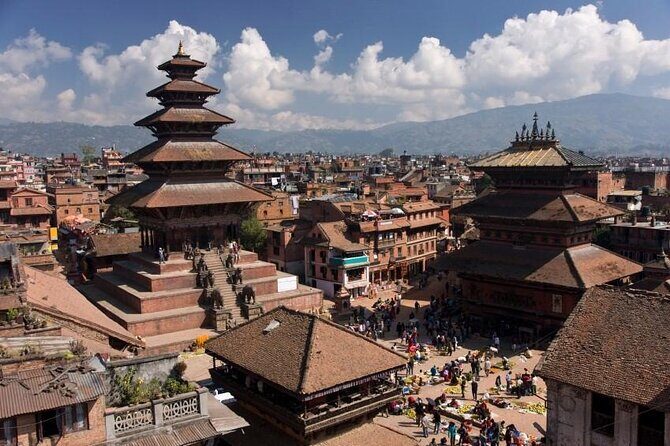
Patan (also called Lalitpur) sits across the Bagmati River from Kathmandu, and the drive is an easy warm-up before you start walking. The big payoff here is that Patan’s Durbar Square isn’t just a pretty backdrop. It’s a compact lesson in how Newari communities built power, worship, and artistry into public space.
Your visit centers on Patan Durbar Square, one of three Durbar Squares in the Kathmandu Valley that UNESCO lists. A guide’s presence matters a lot because you’ll learn what you’re looking at: royal palace leftovers, temple forms, stone and metalwork, and the little architectural choices that show local skill and local priorities.
As you move through the square, you’ll get pointed attention at courtyards including Mul Chowk, Sundari Chowk, and Keshav Narayan Chowk. That kind of stop-and-look makes the design feel less random. You start seeing patterns—how guardians, doorways, and carved details lead your eye, and how space inside the complex is used for ceremony and community.
One specific temple that tends to catch people’s attention is Krishna Mandir. It was built in 1637 under King Siddhi Narsingh Malla and is known for being constructed of stone. Even if you’re not a hardcore architecture nerd, you’ll feel the solidity of the place. The carvings and bronze gateways also help explain why Patan is often described as a city of fine arts and metalwork.
Where this stop can feel tough: Patan Durbar Square is a walking-focused experience. If you’re carrying a heavy daypack or you don’t like uneven stone, bring comfortable shoes and keep hydration in mind (bottled water is included, which is a nice practical touch).
You can also read our reviews of more private tours in Kathmandu


Jawalakhel crafts stop: a short cultural intermission with real context
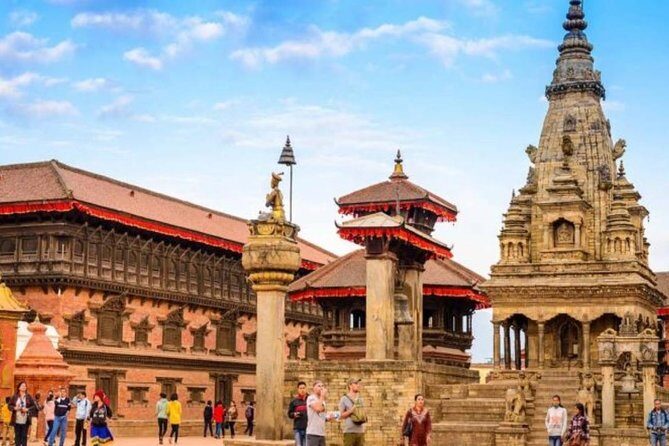
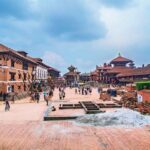
After Patan, the itinerary adds a quick shift in pace: a visit to a Tibetan handicraft center in Jawalakhel, with time to watch a carpet weaving demonstration.
This isn’t there just to break up the day. The point is to give you a different kind of cultural lens. Temples and palaces show what people built for kings and gods. Crafts show what people build for everyday life and trade. Watching weaving being done (even for a limited time) helps you connect that background to the textures and quality you might recognize later if you shop.
If you’re the type who likes souvenirs but hates the pressure, this kind of stop can be your friend. You get a chance to see the craft process first, so any purchase feels less like buying a label and more like supporting a skill.
What to watch for: Since food and drinks aren’t included, you’ll want to keep an eye on energy and timing. This stop is short, so use it to refocus rather than expect a full shopping spree.
Bhaktapur Durbar Square: the monuments feel closer together
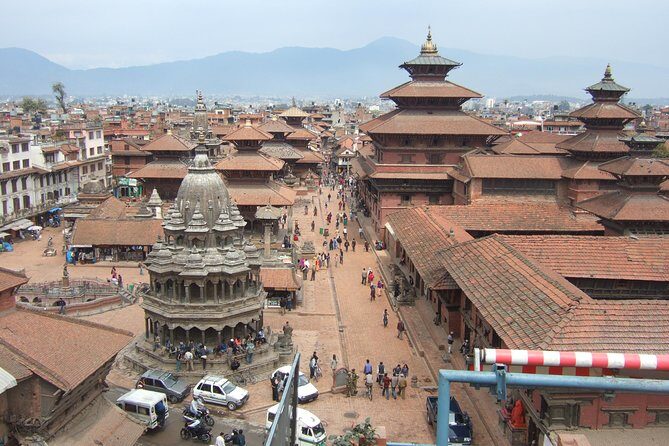
Next you head to Bhaktapur, known locally as Bhadgaon. It’s about 14 km east of Kathmandu, and the drive gives you a clean transition from Patan’s setting to Bhaktapur’s distinct mood.
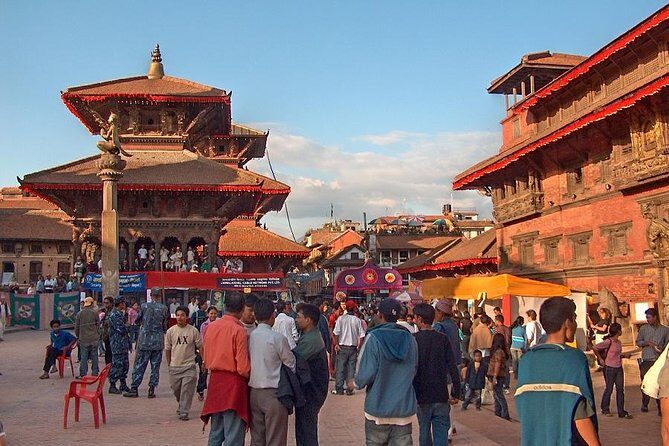
Bhaktapur Durbar Square is also UNESCO World Heritage Site, and it’s arranged around what used to be the royal seat of the old Bhaktapur kingdom. What I like about how this tour frames Bhaktapur is that it doesn’t treat the square as a single attraction. It’s really a cluster of distinct areas—Durbar Square, Taumadhi Square, Dattatreya Square, and Potter’s Square—often discussed collectively under the informal name Bhaktapur Durbar Square.
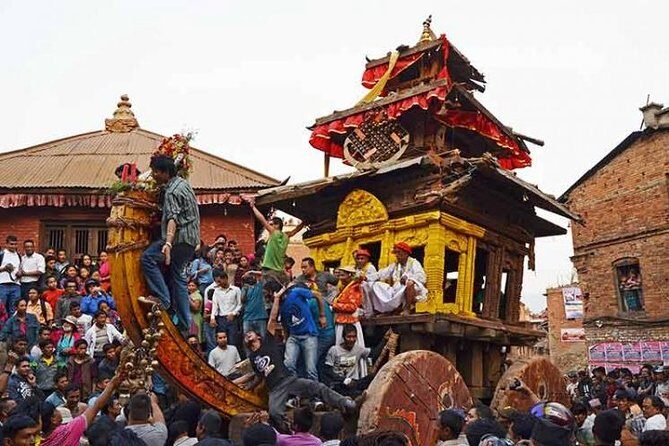
Highlights here aren’t just random big-name sights. They’re tied to how the city expressed authority, faith, and public spectacle.
- 55-Window Palace: This is the kind of landmark where photos do it only half justice. Up close, you start noticing how openings and ornamentation create rhythm across the façade.
- Golden Gate: The name gets your attention, but the real value is understanding its role in the complex layout.
- Lion Gate: It’s a reminder of how guardian imagery and symbolic entrances mattered in royal spaces.
- Potter’s Square: It’s a place where the city feels practical, not only ceremonial.
You’ll also have time at National Art Gallery if it’s included in your route through the square’s areas. The guide’s job is to point out what’s easy to miss if you’re doing this on your own—small details, placements, and the meaning behind architectural choices.
Lunch in the square: why this timing is smart
The tour builds in a break for traditional lunch in Bhaktapur’s square. That timing is more valuable than it sounds.
If you eat too early, you miss the chance to keep looking without rushing. If you eat too late, you risk your energy getting low right when you want to take in the palace and gateway areas. Here, lunch lands right inside the experience window, so you can eat without having to plan a separate detour.
And because the tour includes your guide and vehicle, you don’t need to worry about scrambling for a ride afterward. You just rejoin the itinerary when you’re ready.
What’s not included: Food and drinks are not included, so set aside cash or a card for your meal. The upside is that you can choose what fits your taste and budget.
The guide’s storytelling: history, craft, and the 2015 earthquake
One of the best parts of this style of tour is that you don’t just get facts. You get connections.
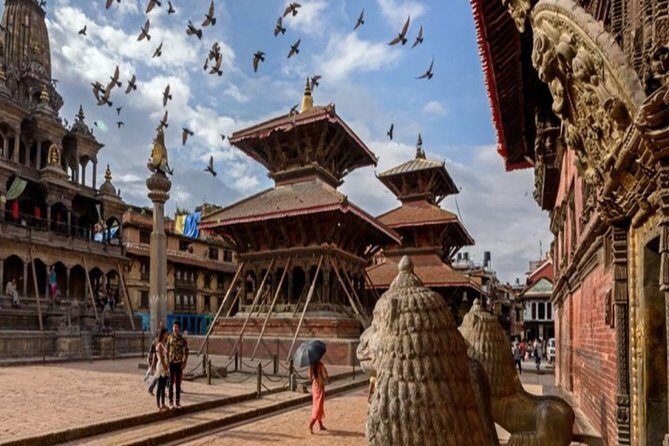
Your guide shares context about Kathmandu Valley history and the impact of the 2015 earthquake on the region. That matters because these sites aren’t museum props. They’ve been part of real lives, and recovery efforts affect what you see, how the spaces are maintained, and how people understand what still stands.
I also like that the itinerary mixes two kinds of learning: stone-and-bronze heritage in Patan and palace-gate city planning in Bhaktapur, plus a craft demonstration with the Tibetan weaving stop. Together, it creates a full picture of what preservation means—architecture and skills both need care.




Price and value: what you get for $105 per person
At $105 per person, this tour sits in the middle of the “private day tour” range—meaning it’s not the cheapest option, but it doesn’t feel overpriced for what’s covered.
Here’s where the value comes from:
- Hotel pickup and drop-off: You avoid time wasted finding starting points.
- Private vehicle: You’re not negotiating shared transport between two different cities and their Durbar Square walking routes.
- Licensed guide: This is the key ingredient for making Durbar Squares more than a photo stop.
- Entrance fees included: Costs like temple/monument tickets can add up, especially when you hit multiple sites.
- Bottled water and free WiFi: Small things, but they reduce friction.
The main thing you’ll pay separately for is food and drinks. Also, if you’re hoping for a super relaxed day with lots of long café hangs, this itinerary is still structured around sightseeing time. It’s built for seeing.
Who should care about the value angle: If you’re comparing against doing these spots in taxis with a driver but no guiding, the guide + entry fees are often what tip the balance. If you’re already confident navigating on your own and don’t mind reading on signage, then the cost might feel less justified. But if you want the story behind the stones, it’s a practical buy.
Logistics that make the day easier (and what to plan for)
This is a private tour, so it’s just your group with the guide and vehicle. The start time is 10:00 am, and the total duration is about 7 hours.
A few practical notes that matter:
- The experience includes two main walking segments, each with around 2 hours at Patan Durbar Square and Bhaktapur Durbar Square.
- You’ll want comfortable footwear. Durbar Square areas involve uneven stone and lots of short-to-medium walks.
- You’ll be in a mix of outdoor courtyards and open plazas, so bring sunscreen and a hat if you’re traveling in brighter weather.
- The tour is listed as near public transportation and suitable for most travelers who can participate, but this is still a walking day.
Also, free cancellation is available, with a refund if you cancel far enough in advance of the local start time. That gives you flexibility if plans shift.
Best for: who this tour suits best
I think this day works especially well if:
- you want a guided introduction to both Patan and Bhaktapur rather than a self-paced checklist
- you care about architecture and history and like knowing what each building is for
- you’re interested in learning the human side—how craft traditions and rebuilding efforts connect
- you’d rather spend time walking with context than hunting for the next spot
It might be less ideal if you want a totally slow day with minimal walking, or if you expect lunch to be a full included meal with drinks.
Should you book this Patan and Bhaktapur private day tour?
I’d book it if you’re trying to make your Kathmandu Valley time count with the right mix of UNESCO sites, guided explanations, and a craft-focused cultural break. The itinerary is efficient without feeling like a sprint, and the inclusion of entrance fees plus pickup/drop-off reduces the usual day-tour headache.
Skip it (or at least reconsider) if you’re on a strict shoe-leather limit, or if you already have your own plan and you’re comfortable exploring these complexes without a guide.
In short: if you want Patan and Bhaktapur to feel like living places instead of “I saw it” photos, this private format is a smart way to do it.
FAQ
What time does the tour start?
The tour start time is 10:00 am.
How long is the tour?
The duration is approximately 7 hours.
Is hotel pickup and drop-off included?
Yes. Hotel pickup and drop-off are included.
Are entrance fees included for Patan Durbar Square and Bhaktapur Durbar Square?
Yes. Current taxes and temple/monuments entry fees are included.
Is lunch included?
No. Food and drinks are not included, though there is time for lunch in Bhaktapur’s square.
Is this tour private?
Yes. It’s a private tour/activity, so only your group participates.
What is the cancellation policy?
Free cancellation is available. You can cancel up to 24 hours in advance of the experience for a full refund. If you cancel less than 24 hours before the start time, the amount paid is not refunded.